1© Life Cycle Engineering 2013© Life Cycle Engineering 2013 1© Life Cycle Engineering 2008
Leveraging the ISO Standard to Manage Risk and Realize Value of Your
Organization’s Assets
Randy Heisler LCE
ISO 55000
2© Life Cycle Engineering 2013
Why Standards?
Without them bad things can happen!
3© Life Cycle Engineering 2013
The Need for Standards
Stability
Level differences in how business around the world is
grown and managed
Increased concern over risk awareness
Industrial disasters, financial instability, civil unrest and
economic duress of certain nations
Balancing force for international trade
4© Life Cycle Engineering 2013
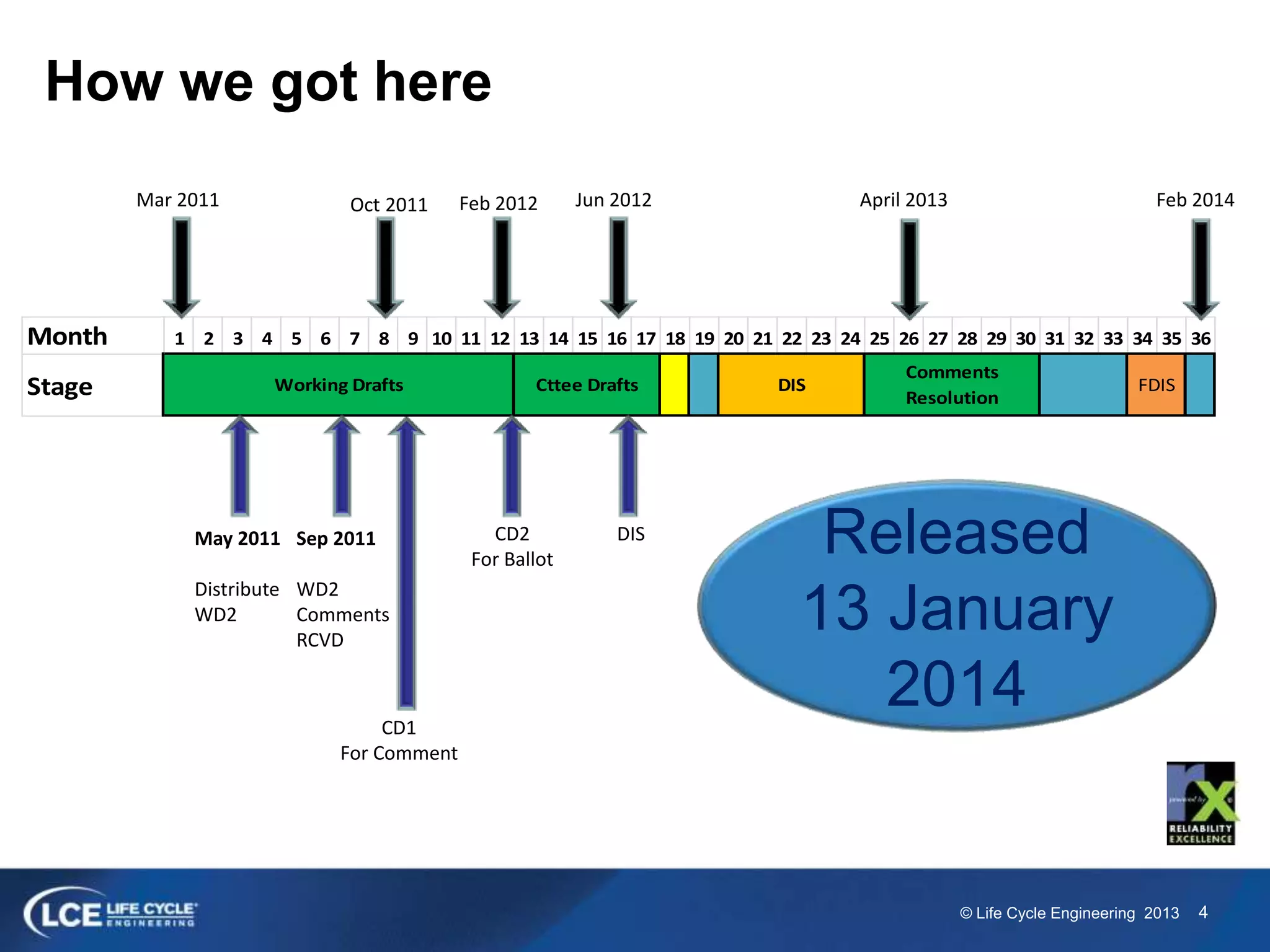
How we got here
Feb 2014
CD1
For Comment
Month 1 2 3 4 5 6 7 8 9 10 11 12 13 14 15 16 17 18 19 20 21 22 23 24 25 26 27 28 29 30 31 32 33 34 35 36
Stage Working Drafts Cttee Drafts DIS
Comments
Resolution
FDIS
April 2013Jun 2012Feb 2012Oct 2011Mar 2011
May 2011
Distribute
WD2
Sep 2011
WD2
Comments
RCVD
CD2
For Ballot
DIS
Released
13 January
2014
5© Life Cycle Engineering 2013
ISO 55000 Primary Documents
A set of three standards issued by the International
Organization for Standardization
 ISO 55000 – Terms and Definitions
 ISO 55001 – Requirements
 ISO 55002 – Guidance
Will be harmonized at a high level with other managing
systems like
 ISO 9001 (quality)
 ISO 14001 (environmental)
 ISO 50000 (energy sustainability)
6© Life Cycle Engineering 2013
Important ISO 55000 Themes
Value
recognition
Risk-based
Optimization
of cost, risk
&
performance
Aligned
objectives
Transparent
decision
making
Recognize
impact of
long life
cycle issues
7© Life Cycle Engineering 2013
ISO 55000: Definitions
• Asset – something with potential value to an
organization and for which the organization
has a responsibility
• Asset System - group of assets that interact
and/or are interrelated so as to deliver a
required business function or service
• Asset Management – actions that enable the
realization of value from assets
8© Life Cycle Engineering 2013
ASSET MANAGEMENT
9© Life Cycle Engineering 2013
Fundamentals of Asset Management
• Assets exist to provide value to the organization and its
stakeholders
Value
• Asset management translates the organizational objectives into
technical and financial decisions and plans
Alignment
• Leadership and workplace culture are determinants of realization of
value
Leadership
• Asset management gives assurance that assets will fulfill their
required purpose.
Assurance
10© Life Cycle Engineering 2013
Asset Management Expanded View
Corporate/
Organization
Management
Asset
Management
System
Management Asset Portfolio
Management Asset Systems
Manage Individual Assets
Organizational Strategic Goals
Capital investment value,
Performance and sustainability
Systems performance,
cost & risk optimization
Asset life cycle
costs, risks &
performance Create/
Acquire Utilize Maintain
Renew/
Dispose
11© Life Cycle Engineering 2013
Asset Management System
Section 4.4
The organization shall establish, implement, maintain
and continually improve an asset management
system including the processes needed and their
interactions.
The organization shall develop an asset management
strategy which includes documentation of the role of
the asset management system in supporting
achievement of the asset management objectives.
12© Life Cycle Engineering 2013
Asset
portfolio
Managing the
organization
Asset
management
Asset
management
system
Coordinated activity to realize value
from assets
Set of interrelated or interacting
elements to establish
asset management policy,
objectives and processes to
achieve objectives
Assets within the scope of
the asset management system
Benefit: Provides risk control and gives assurance to meet objectives
Relationship of asset management to the
asset management system
13© Life Cycle Engineering 2013
Key documents for asset management
system
1
2
3
4
Asset management policy
Asset management strategy
Asset management objectives
Asset management plan
 Dependent upon organizational objectives and organizational plan
14© Life Cycle Engineering 2013
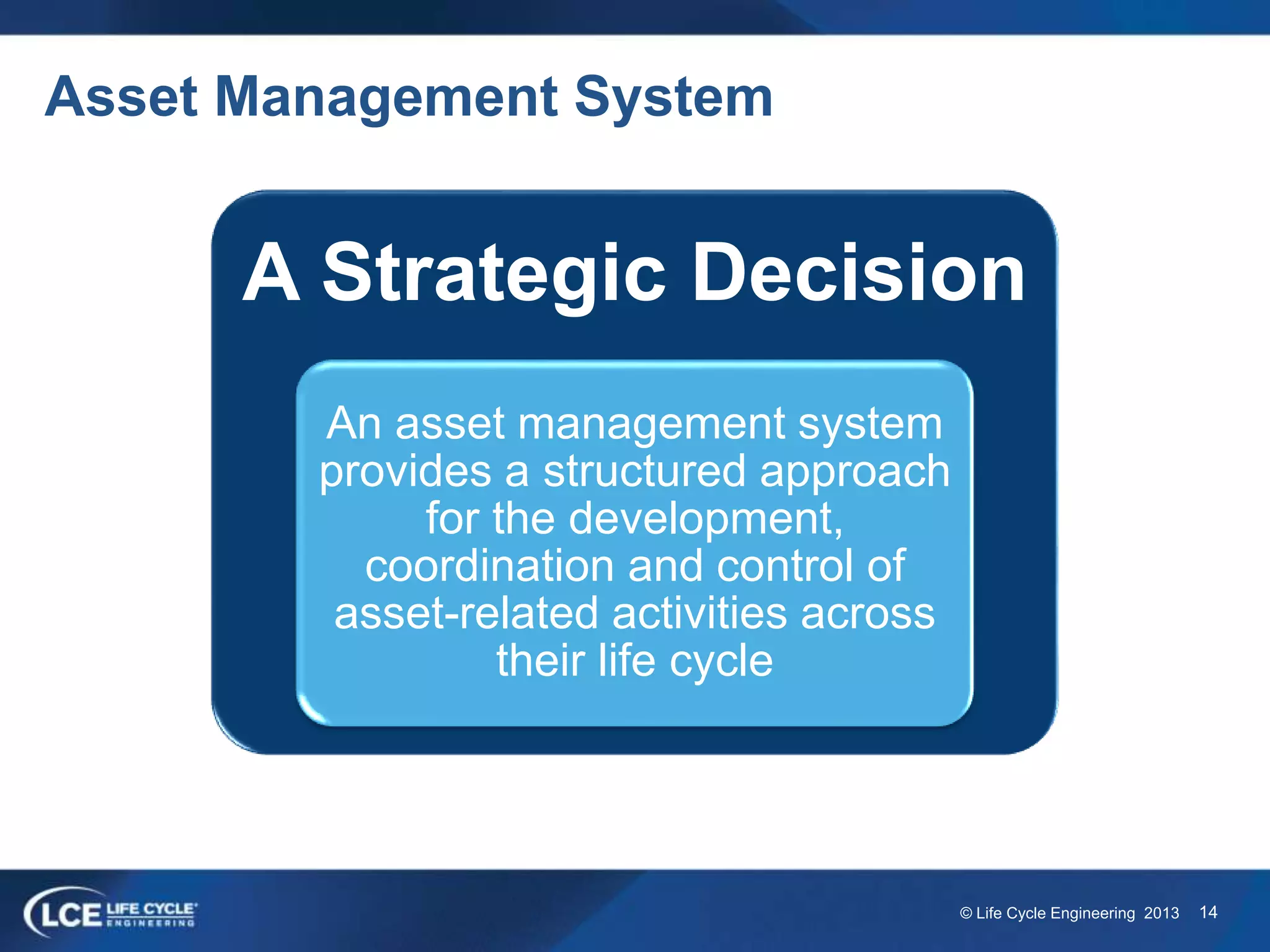
Asset Management System
A Strategic Decision
An asset management system
provides a structured approach
for the development,
coordination and control of
asset-related activities across
their life cycle
15© Life Cycle Engineering 2013
Role of leadership
• Demonstrate leadership and
commitment
• Establish an asset management policy
and strategy
• Define organizational roles and
responsibilities
16© Life Cycle Engineering 2013
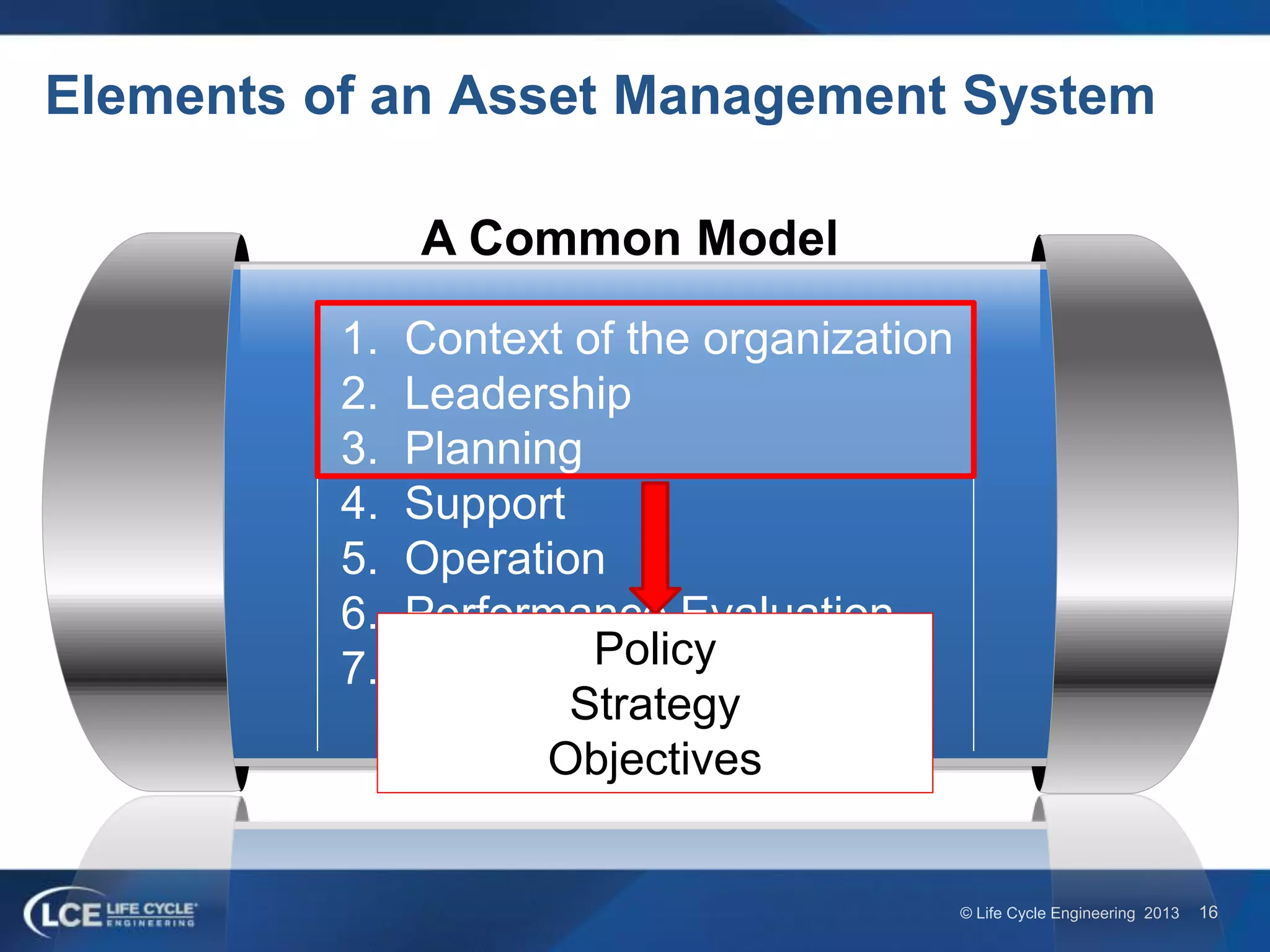
Elements of an Asset Management System
A Common Model
1. Context of the organization
2. Leadership
3. Planning
4. Support
5. Operation
6. Performance Evaluation
7. ImprovementPolicy
Strategy
Objectives
17© Life Cycle Engineering 2013
Context of the Organization
Considerations
External and internal context
Stakeholder needs and expectations
(external and internal)
Scope of the asset management system
18© Life Cycle Engineering 2013
Leadership Considerations
Leadership and commitment
Roles and responsibilities
Change management competency
19© Life Cycle Engineering 2013
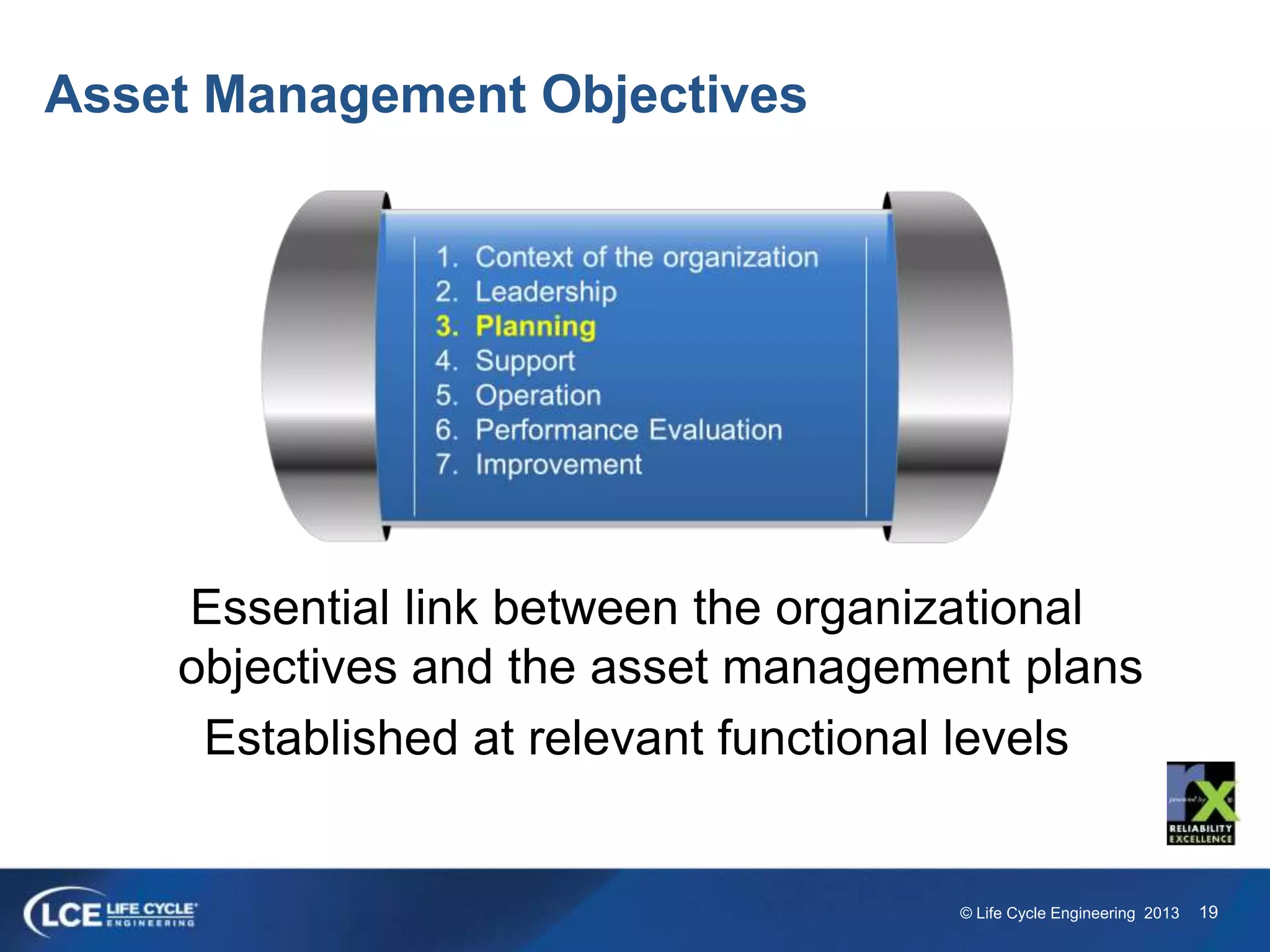
Asset Management Objectives
Essential link between the organizational
objectives and the asset management plans
Established at relevant functional levels
20© Life Cycle Engineering 2013
CREATING THE POLICY
21© Life Cycle Engineering 2013
Requirements for AM Policy
1 Consistency
2 Appropriateness
3 Compliance
4 Principles and framework
5 Continual improvement
22© Life Cycle Engineering 2013
Policy Overview
Policy documents can contain:
1. Purpose statement
2. Applicability and scope
3. Effective date
4. Responsibilities
5. Policy statements
23© Life Cycle Engineering 2013
CREATING THE STRATEGY
24© Life Cycle Engineering 2013
Establish an Asset Management Strategy
• A strategy describes how to realize the policy
• A roadmap for how to get from here to there
• An approach for implementation
25© Life Cycle Engineering 2013
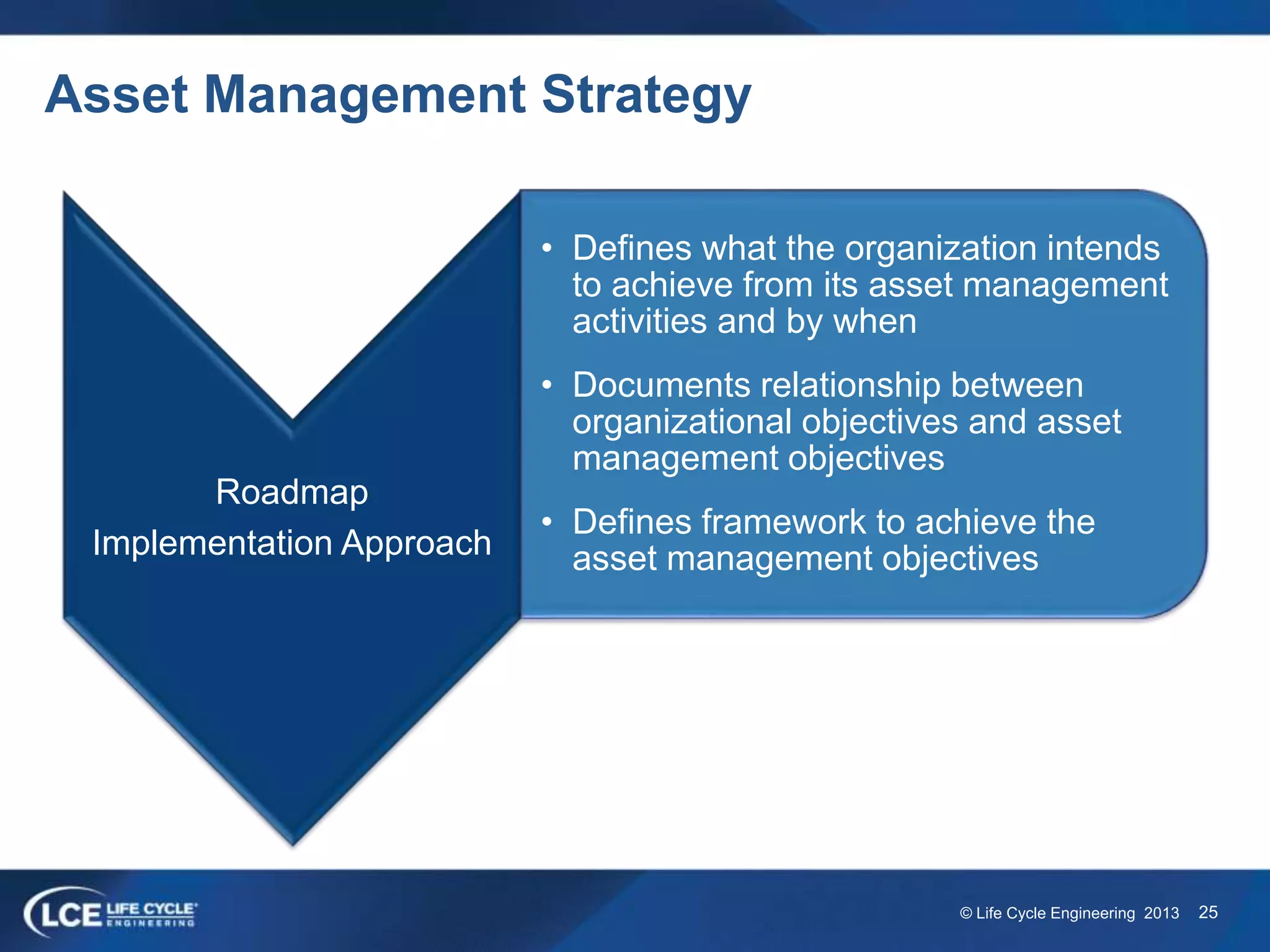
Roadmap
Implementation Approach
• Defines what the organization intends
to achieve from its asset management
activities and by when
• Documents relationship between
organizational objectives and asset
management objectives
• Defines framework to achieve the
asset management objectives
Asset Management Strategy
26© Life Cycle Engineering 2013
Requirements of an AM Strategy
1
2
3
4
Consistency
Risk-based approach
Lifecycle approach
Framework
5 Stakeholders
6 Functional performance
7 Continual improvement
8 Change management
27© Life Cycle Engineering 2013
ASSET MANAGEMENT OBJECTIVES
28© Life Cycle Engineering 2013
Asset Management Objectives
Essential link between the organizational
objectives and the asset management plans
29© Life Cycle Engineering 2013
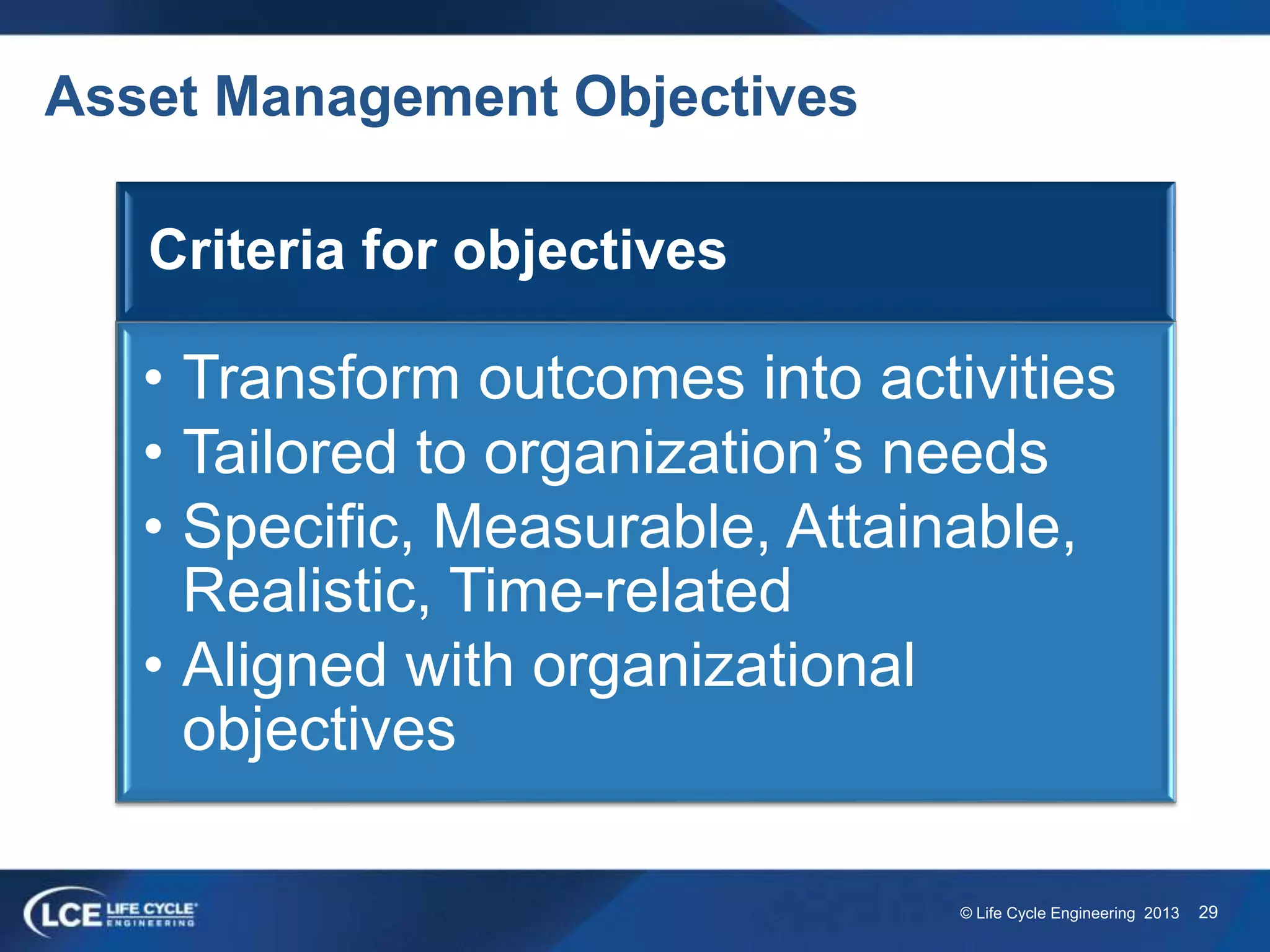
Asset Management Objectives
Criteria for objectives
• Transform outcomes into activities
• Tailored to organization’s needs
• Specific, Measurable, Attainable,
Realistic, Time-related
• Aligned with organizational
objectives
30© Life Cycle Engineering 2013
Example Objectives
1.Improve availability to benchmark standards
2.Reduce hazardous chemical byproducts by 30% over 3 years
3.Assure U.S. defined environmental standards achieved in
developing markets
4.Extend asset useful life through reuse of equipment
5.New capital investment will focus on total cost of ownership
across asset life cycle
6.Improve organizational problem solving capabilities as a
key success factor for continuous improvement
31© Life Cycle Engineering 2013
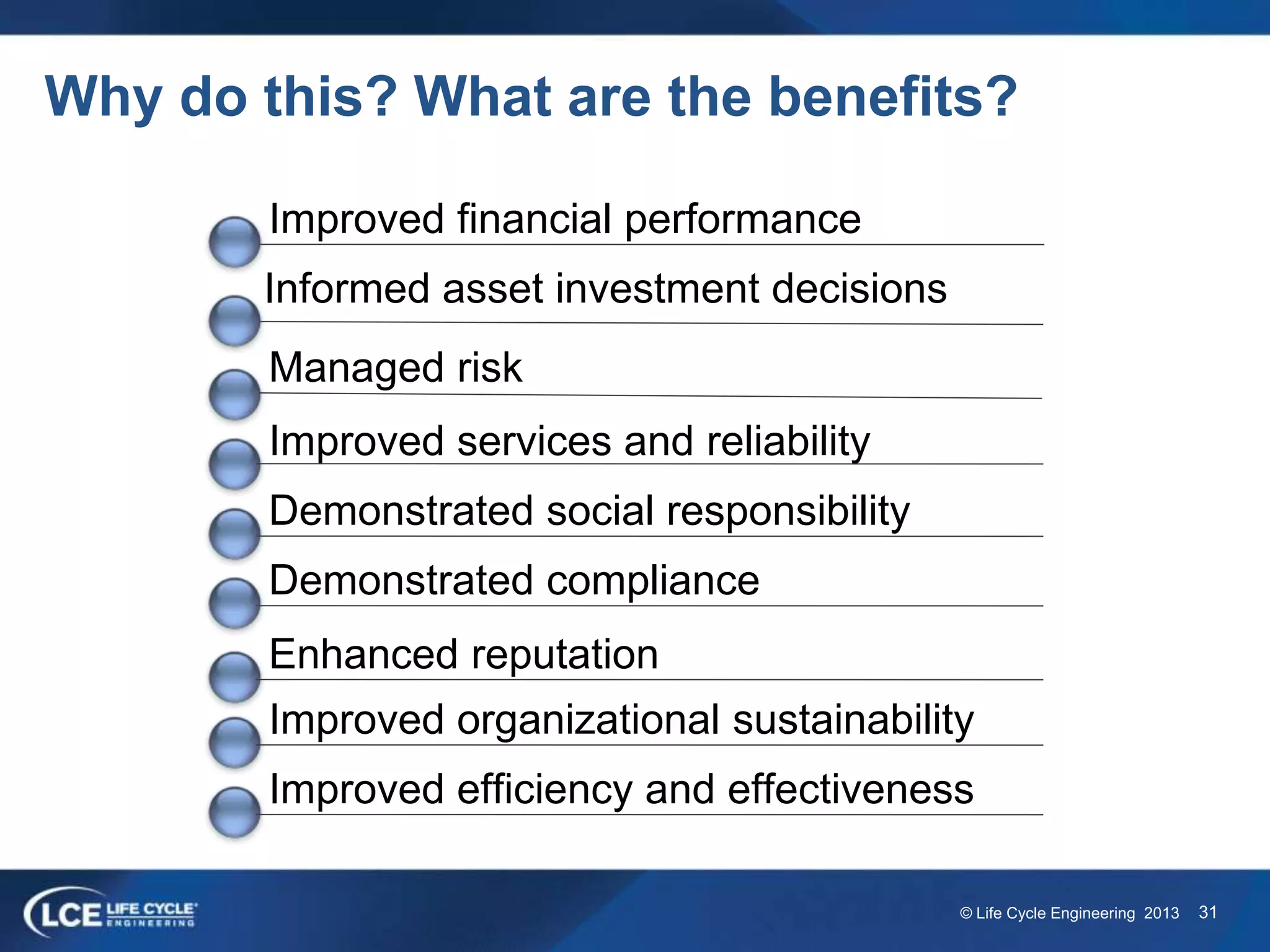
Why do this? What are the benefits?
Improved financial performance
Informed asset investment decisions
Managed risk
Improved services and reliability
Demonstrated social responsibility
Demonstrated compliance
Enhanced reputation
Improved organizational sustainability
Improved efficiency and effectiveness
32© Life Cycle Engineering 2013
Questions?
Randy Heisler
Life Cycle Engineering
rheisler@LCE.com
www.LCE.com

ISO 55000 Overview

  • 1.
    1© Life CycleEngineering 2013© Life Cycle Engineering 2013 1© Life Cycle Engineering 2008 Leveraging the ISO Standard to Manage Risk and Realize Value of Your Organization’s Assets Randy Heisler LCE ISO 55000
  • 2.
    2© Life CycleEngineering 2013 Why Standards? Without them bad things can happen!
  • 3.
    3© Life CycleEngineering 2013 The Need for Standards Stability Level differences in how business around the world is grown and managed Increased concern over risk awareness Industrial disasters, financial instability, civil unrest and economic duress of certain nations Balancing force for international trade
  • 4.
    4© Life CycleEngineering 2013 How we got here Feb 2014 CD1 For Comment Month 1 2 3 4 5 6 7 8 9 10 11 12 13 14 15 16 17 18 19 20 21 22 23 24 25 26 27 28 29 30 31 32 33 34 35 36 Stage Working Drafts Cttee Drafts DIS Comments Resolution FDIS April 2013Jun 2012Feb 2012Oct 2011Mar 2011 May 2011 Distribute WD2 Sep 2011 WD2 Comments RCVD CD2 For Ballot DIS Released 13 January 2014
  • 5.
    5© Life CycleEngineering 2013 ISO 55000 Primary Documents A set of three standards issued by the International Organization for Standardization  ISO 55000 – Terms and Definitions  ISO 55001 – Requirements  ISO 55002 – Guidance Will be harmonized at a high level with other managing systems like  ISO 9001 (quality)  ISO 14001 (environmental)  ISO 50000 (energy sustainability)
  • 6.
    6© Life CycleEngineering 2013 Important ISO 55000 Themes Value recognition Risk-based Optimization of cost, risk & performance Aligned objectives Transparent decision making Recognize impact of long life cycle issues
  • 7.
    7© Life CycleEngineering 2013 ISO 55000: Definitions • Asset – something with potential value to an organization and for which the organization has a responsibility • Asset System - group of assets that interact and/or are interrelated so as to deliver a required business function or service • Asset Management – actions that enable the realization of value from assets
  • 8.
    8© Life CycleEngineering 2013 ASSET MANAGEMENT
  • 9.
    9© Life CycleEngineering 2013 Fundamentals of Asset Management • Assets exist to provide value to the organization and its stakeholders Value • Asset management translates the organizational objectives into technical and financial decisions and plans Alignment • Leadership and workplace culture are determinants of realization of value Leadership • Asset management gives assurance that assets will fulfill their required purpose. Assurance
  • 10.
    10© Life CycleEngineering 2013 Asset Management Expanded View Corporate/ Organization Management Asset Management System Management Asset Portfolio Management Asset Systems Manage Individual Assets Organizational Strategic Goals Capital investment value, Performance and sustainability Systems performance, cost & risk optimization Asset life cycle costs, risks & performance Create/ Acquire Utilize Maintain Renew/ Dispose
  • 11.
    11© Life CycleEngineering 2013 Asset Management System Section 4.4 The organization shall establish, implement, maintain and continually improve an asset management system including the processes needed and their interactions. The organization shall develop an asset management strategy which includes documentation of the role of the asset management system in supporting achievement of the asset management objectives.
  • 12.
    12© Life CycleEngineering 2013 Asset portfolio Managing the organization Asset management Asset management system Coordinated activity to realize value from assets Set of interrelated or interacting elements to establish asset management policy, objectives and processes to achieve objectives Assets within the scope of the asset management system Benefit: Provides risk control and gives assurance to meet objectives Relationship of asset management to the asset management system
  • 13.
    13© Life CycleEngineering 2013 Key documents for asset management system 1 2 3 4 Asset management policy Asset management strategy Asset management objectives Asset management plan  Dependent upon organizational objectives and organizational plan
  • 14.
    14© Life CycleEngineering 2013 Asset Management System A Strategic Decision An asset management system provides a structured approach for the development, coordination and control of asset-related activities across their life cycle
  • 15.
    15© Life CycleEngineering 2013 Role of leadership • Demonstrate leadership and commitment • Establish an asset management policy and strategy • Define organizational roles and responsibilities
  • 16.
    16© Life CycleEngineering 2013 Elements of an Asset Management System A Common Model 1. Context of the organization 2. Leadership 3. Planning 4. Support 5. Operation 6. Performance Evaluation 7. ImprovementPolicy Strategy Objectives
  • 17.
    17© Life CycleEngineering 2013 Context of the Organization Considerations External and internal context Stakeholder needs and expectations (external and internal) Scope of the asset management system
  • 18.
    18© Life CycleEngineering 2013 Leadership Considerations Leadership and commitment Roles and responsibilities Change management competency
  • 19.
    19© Life CycleEngineering 2013 Asset Management Objectives Essential link between the organizational objectives and the asset management plans Established at relevant functional levels
  • 20.
    20© Life CycleEngineering 2013 CREATING THE POLICY
  • 21.
    21© Life CycleEngineering 2013 Requirements for AM Policy 1 Consistency 2 Appropriateness 3 Compliance 4 Principles and framework 5 Continual improvement
  • 22.
    22© Life CycleEngineering 2013 Policy Overview Policy documents can contain: 1. Purpose statement 2. Applicability and scope 3. Effective date 4. Responsibilities 5. Policy statements
  • 23.
    23© Life CycleEngineering 2013 CREATING THE STRATEGY
  • 24.
    24© Life CycleEngineering 2013 Establish an Asset Management Strategy • A strategy describes how to realize the policy • A roadmap for how to get from here to there • An approach for implementation
  • 25.
    25© Life CycleEngineering 2013 Roadmap Implementation Approach • Defines what the organization intends to achieve from its asset management activities and by when • Documents relationship between organizational objectives and asset management objectives • Defines framework to achieve the asset management objectives Asset Management Strategy
  • 26.
    26© Life CycleEngineering 2013 Requirements of an AM Strategy 1 2 3 4 Consistency Risk-based approach Lifecycle approach Framework 5 Stakeholders 6 Functional performance 7 Continual improvement 8 Change management
  • 27.
    27© Life CycleEngineering 2013 ASSET MANAGEMENT OBJECTIVES
  • 28.
    28© Life CycleEngineering 2013 Asset Management Objectives Essential link between the organizational objectives and the asset management plans
  • 29.
    29© Life CycleEngineering 2013 Asset Management Objectives Criteria for objectives • Transform outcomes into activities • Tailored to organization’s needs • Specific, Measurable, Attainable, Realistic, Time-related • Aligned with organizational objectives
  • 30.
    30© Life CycleEngineering 2013 Example Objectives 1.Improve availability to benchmark standards 2.Reduce hazardous chemical byproducts by 30% over 3 years 3.Assure U.S. defined environmental standards achieved in developing markets 4.Extend asset useful life through reuse of equipment 5.New capital investment will focus on total cost of ownership across asset life cycle 6.Improve organizational problem solving capabilities as a key success factor for continuous improvement
  • 31.
    31© Life CycleEngineering 2013 Why do this? What are the benefits? Improved financial performance Informed asset investment decisions Managed risk Improved services and reliability Demonstrated social responsibility Demonstrated compliance Enhanced reputation Improved organizational sustainability Improved efficiency and effectiveness
  • 32.
    32© Life CycleEngineering 2013 Questions? Randy Heisler Life Cycle Engineering rheisler@LCE.com www.LCE.com