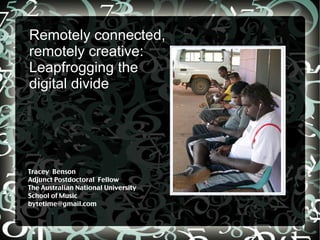
Remotely connected,
remotely creative:
Leapfrogging the
digital divide


Tracey Benson
Adjunct Postdoctoral Fellow
The Australian National University
School of Music
bytetime@gmail.com
Abstract

What does locative media from remote
Australian Indigenous communities look like?
How does access to 3G mobile phones impact
communications? What media is being
created on these devices?

This paper discusses some of the strategies
and technologies being used in remote
Australia to leapfrog the digital divide; scoping
the potential to introduce tools that encourage
creative development and collaborative
cultural engagement focused on skills sharing.
Background


 
   Interest in accessible and usable web design for
 flexible delivery
 
   Massive takeup of 3G phones in remote
 Indigenous communities
 
  Volunteering for Indigenous Community
 Volunteers
Identifying a potential need


 
  The National Broadband Network is user pays
 and will not be available in many areas
 
  People are already leapfrogging the digital
 divide in areas where there is 3G access
 
   Increased access to online communities via
 mobiles facilitate a range of benefits – preserving
 culture, increasing literacy, communicating with
 family
Some facts and figures
Cultural need for appropriate
engagement
 
     The benefits of working collaboratively
 
  Projects driven by community need and owned
 by the community
 
     Why is it so important?
Relevant research


 
   Massive takeup of 3G phones in remote
 Indigenous communities even where there is no
 coverage
 
  One study reported that in three communities
 where there was no mobile network access that
 an average of 60% of residents owned a mobile
 phone
A mobile revolution


http://www.youtube.com/watch?v=0BZ47884msw
Indigenous owned
media production
About RIPIA: Remote Indigenous
  Public Internet Access

In 2010 the Project
was delivered to 19
Indigenous
communities. In
2011 the Project
will be delivered to
40 Indigenous
communities
including the 19
communities from
2010.
NT Library Wiki
Acknowledements


Community software
Social Media


http://www.youtube.com/watch?v=O-MucVWo-Pw
Next Steps


 
   Focusing on collaboration with people in
 remote communities to co-create tools for
 sharing culture and promoting community
 projects
 
     Working closely with RIPIA communities
 
  Monitoring implementation of 3G and
 satellite broadband networks
This diagram is a great
representation of the
research process so
far – except I haven't
quite made it to the
end yet!!
Acknowledgements
Thanks to Martin Drury, Bronwyn Pollock, Andrew,
Taylor, Nicholas Kirlew, Jim Best, Metta Young, Susan
Schuller, Julie Hodgkinson, Aaron Corn, Catherine
Wohlan, Clare Maclean, Inge Kral, Fiona Sivyer, and
Liam Campbell

"Remotely connected, remotely creative" Isea2011 by Tracey Benson

  • 1.
    Remotely connected, remotely creative: Leapfroggingthe digital divide Tracey Benson Adjunct Postdoctoral Fellow The Australian National University School of Music bytetime@gmail.com
  • 2.
    Abstract What does locativemedia from remote Australian Indigenous communities look like? How does access to 3G mobile phones impact communications? What media is being created on these devices? This paper discusses some of the strategies and technologies being used in remote Australia to leapfrog the digital divide; scoping the potential to introduce tools that encourage creative development and collaborative cultural engagement focused on skills sharing.
  • 3.
    Background  Interest in accessible and usable web design for flexible delivery  Massive takeup of 3G phones in remote Indigenous communities  Volunteering for Indigenous Community Volunteers
  • 4.
    Identifying a potentialneed  The National Broadband Network is user pays and will not be available in many areas  People are already leapfrogging the digital divide in areas where there is 3G access  Increased access to online communities via mobiles facilitate a range of benefits – preserving culture, increasing literacy, communicating with family
  • 5.
  • 6.
    Cultural need forappropriate engagement  The benefits of working collaboratively  Projects driven by community need and owned by the community  Why is it so important?
  • 7.
    Relevant research  Massive takeup of 3G phones in remote Indigenous communities even where there is no coverage  One study reported that in three communities where there was no mobile network access that an average of 60% of residents owned a mobile phone
  • 8.
  • 9.
  • 10.
    About RIPIA: RemoteIndigenous Public Internet Access In 2010 the Project was delivered to 19 Indigenous communities. In 2011 the Project will be delivered to 40 Indigenous communities including the 19 communities from 2010.
  • 11.
  • 12.
  • 13.
  • 14.
    Next Steps  Focusing on collaboration with people in remote communities to co-create tools for sharing culture and promoting community projects  Working closely with RIPIA communities  Monitoring implementation of 3G and satellite broadband networks
  • 16.
    This diagram isa great representation of the research process so far – except I haven't quite made it to the end yet!!
  • 17.
    Acknowledgements Thanks to MartinDrury, Bronwyn Pollock, Andrew, Taylor, Nicholas Kirlew, Jim Best, Metta Young, Susan Schuller, Julie Hodgkinson, Aaron Corn, Catherine Wohlan, Clare Maclean, Inge Kral, Fiona Sivyer, and Liam Campbell