PRESENTATION ON SEMINAR
Prepared by Chaitanya Pandare.
T.Y.B.TECH Automobile 1301010 D1
INTERNET OF THINGS
 “The Internet of Things is the network of physical
objects that contain embedded technology to
communicate and sense or interact with their
internal states or the external environment.”
PHASES OF EVOLUTION OF THE CONNECTED
CAR
ELEMENTS OF IOT
 1. RFID: It uses electromagnetic fields to
automatically identify and track tags attached to
objects.
GPS
 A GPS is a space-based radio positioning system
that combines computer mappingtechniques to
provide 24-hour three-dimensional position,
velocity, and time information to suitably equipped
users anywhere on or near the surface of the earth
(and sometimes off the earth).
 1. car navigation
 2. dynamic vehicle routing
 3.tracking rental cars
 4. Monitoring High Risk Auto Loans
 5. Aviation safety
SENSORS
 A sensor converts a non-electrical input into an
electrical signal that can be sent to an electronic
circuit
APPLICATIONS
 1.E-Tickets
 2. connected bus
 3.Intelligent speed adaption
 4. Vehicle control and management system
 5. Traffic management and control
 6. New transport scenarios
 7. Connected car
 8. Fog computing
 9.Autonomous driving
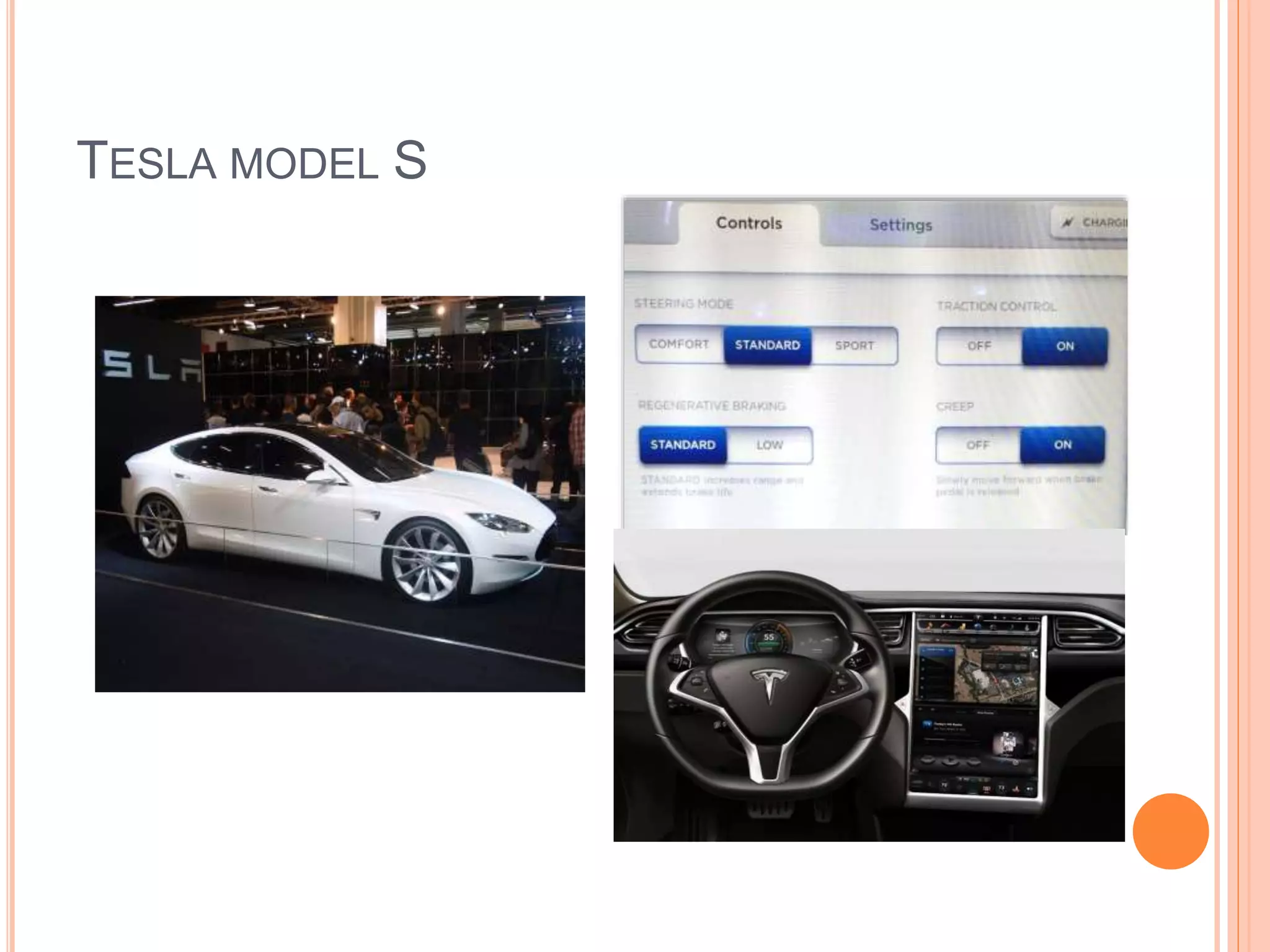
TESLA MODEL S
LIMITATIONS
 Privacy/Security
 Compatibility
 Complexity
CONCLUSION
 Automotive industry is connected with the world
with the IoT concept. IoT represents the next
evolution of the Internet. Due to various features of
internet, comfortness and safety of peoples is
increased. Given that humans advance and evolve
by turning data into information, knowledge, and
wisdom, IoT has the potential to change the world
as we know it today—for the better. How quickly we
get there is up to us. In early days very short
outcomes of IoT system were there, but now a day
and in future the outcomes are increasing rapidly.
REFERENCES
 Simom Ninan,Bharatha Gangula, Matthias von Alten, Brenna Sniderman ,Who owns the
road? The IoT-connected car of today—and tomorrow, Dololtte University Press, 18
August 2015
 Jayavardhana Gubbia, Rajkumar Buyya, Slaven Marusic, Marimuthu Palaniswami,
Internet of Things (IoT): A vision, architectural elements, and future directions, science
direct, 25 April 2013
 Ovidiu Vermesan, Peter friess, Internet of Things- from research and innovation to market
development, Rever publishers series in communication, 2 September 2014
 Bjorn Raunio,The internet of things, SE:s Internetguide, nr 16 − english edition Version, 5
November 2010
 Donghee Shin ,A social technical framework for IoT design, science direct, 12 April 2014
 www.en.wikipedia.com/internetofthings
 www.en.wikipedia.com/golblepositioningsensor
Iot

Iot

  • 1.
    PRESENTATION ON SEMINAR Preparedby Chaitanya Pandare. T.Y.B.TECH Automobile 1301010 D1
  • 2.
    INTERNET OF THINGS “The Internet of Things is the network of physical objects that contain embedded technology to communicate and sense or interact with their internal states or the external environment.”
  • 3.
    PHASES OF EVOLUTIONOF THE CONNECTED CAR
  • 4.
    ELEMENTS OF IOT 1. RFID: It uses electromagnetic fields to automatically identify and track tags attached to objects.
  • 5.
    GPS  A GPSis a space-based radio positioning system that combines computer mappingtechniques to provide 24-hour three-dimensional position, velocity, and time information to suitably equipped users anywhere on or near the surface of the earth (and sometimes off the earth).  1. car navigation  2. dynamic vehicle routing  3.tracking rental cars  4. Monitoring High Risk Auto Loans  5. Aviation safety
  • 6.
    SENSORS  A sensorconverts a non-electrical input into an electrical signal that can be sent to an electronic circuit
  • 7.
    APPLICATIONS  1.E-Tickets  2.connected bus  3.Intelligent speed adaption  4. Vehicle control and management system  5. Traffic management and control  6. New transport scenarios  7. Connected car  8. Fog computing  9.Autonomous driving
  • 8.
  • 9.
  • 10.
    CONCLUSION  Automotive industryis connected with the world with the IoT concept. IoT represents the next evolution of the Internet. Due to various features of internet, comfortness and safety of peoples is increased. Given that humans advance and evolve by turning data into information, knowledge, and wisdom, IoT has the potential to change the world as we know it today—for the better. How quickly we get there is up to us. In early days very short outcomes of IoT system were there, but now a day and in future the outcomes are increasing rapidly.
  • 11.
    REFERENCES  Simom Ninan,BharathaGangula, Matthias von Alten, Brenna Sniderman ,Who owns the road? The IoT-connected car of today—and tomorrow, Dololtte University Press, 18 August 2015  Jayavardhana Gubbia, Rajkumar Buyya, Slaven Marusic, Marimuthu Palaniswami, Internet of Things (IoT): A vision, architectural elements, and future directions, science direct, 25 April 2013  Ovidiu Vermesan, Peter friess, Internet of Things- from research and innovation to market development, Rever publishers series in communication, 2 September 2014  Bjorn Raunio,The internet of things, SE:s Internetguide, nr 16 − english edition Version, 5 November 2010  Donghee Shin ,A social technical framework for IoT design, science direct, 12 April 2014  www.en.wikipedia.com/internetofthings  www.en.wikipedia.com/golblepositioningsensor