In-Vitro mutant selection for biotic stresses in PlantsIn-Vitro mutant selection for biotic stresses in Plants
A. Manivannan
Scientist (Genetics)
DMR, New Delhi
APPLICATION OF CELLULAR MANIPULATIONSAPPLICATION OF CELLULAR MANIPULATIONS
In-vitro selection
one of somaclonal variation method. Its effectiveness
and efficiency are due to its ability of changing the
plant to the desired character, either by applying a
selection agent on the culture media or by giving
particular condition to change the somaclone with
the required character
In- vitro mutagenesis :
The production of either random or specific mutations
out side the cells natural environment.
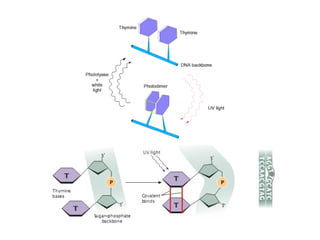
1.Physical Agents
2.Chemical Mutagens
3.Colchicine
4.Transposan mediated Mutagenesis
5.Site Directed Mutagenesis
6.Somaclonal variation
Type of Mutation InductionType of Mutation Induction
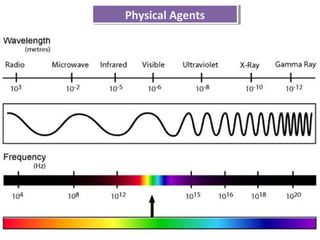
Physical AgentsPhysical Agents
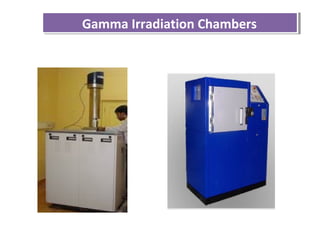
Gamma Irradiation ChambersGamma Irradiation Chambers
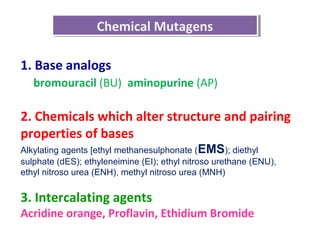
Chemical MutagensChemical Mutagens
1. Base analogs
bromouracil (BU) aminopurine (AP)
2. Chemicals which alter structure and pairing
properties of bases
Alkylating agents [ethyl methanesulphonate (EMS); diethyl
sulphate (dES); ethyleneimine (EI); ethyl nitroso urethane (ENU),
ethyl nitroso urea (ENH), methyl nitroso urea (MNH)
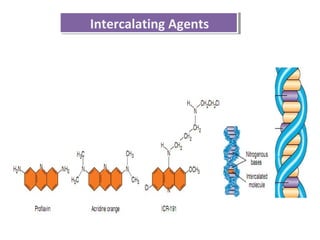
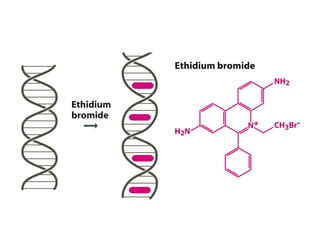
3. Intercalating agents
Acridine orange, Proflavin, Ethidium Bromide
Intercalating AgentsIntercalating Agents
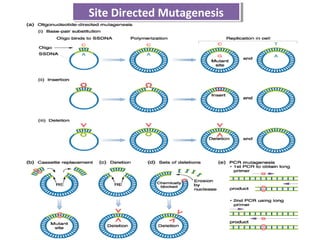
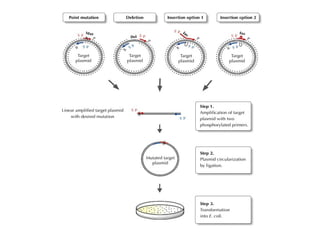
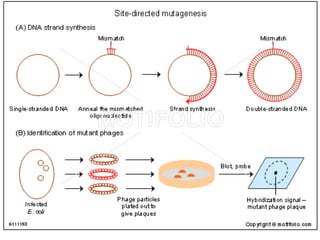
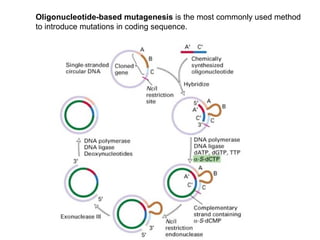
Site Directed MutagenesisSite Directed Mutagenesis
Oligonucleotide-based mutagenesis is the most commonly used method
to introduce mutations in coding sequence.
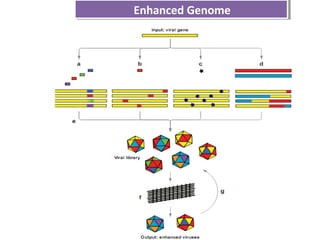
Enhanced GenomeEnhanced Genome
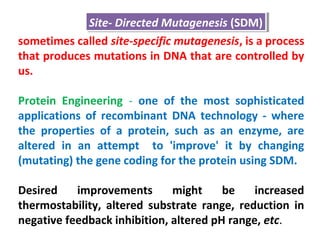
sometimes called site-specific mutagenesis, is a process
that produces mutations in DNA that are controlled by
us.
Protein Engineering - one of the most sophisticated
applications of recombinant DNA technology - where
the properties of a protein, such as an enzyme, are
altered in an attempt to 'improve' it by changing
(mutating) the gene coding for the protein using SDM.
Desired improvements might be increased
thermostability, altered substrate range, reduction in
negative feedback inhibition, altered pH range, etc.
Site- Directed Mutagenesis (SDM)Site- Directed Mutagenesis (SDM)
Somatic Embryos:
This system, based on single-cell origin of regenerated plants, allows
the treatment of large populations and the rapid generation of
homo-histonts (i.e., non-chimeric plants).
Choice of Explant for invitro mutagenesisChoice of Explant for invitro mutagenesis
Choice of Plant Material
A preliminary key step toward the successful use of
micropropagation for mutation breeding is the choice of the
mother plant, since the starting material should provide a reliable
genetic basis and high phytosanitary levels (Ahloowalia,
1998).
Virus- free mother plants are the best starting material for tissue
culture initiation.
(a) Originate from a single cell, which minimises
or eliminates chimera, depending on the
plant species
(b) Somatic embryo cell suspension is ideal
for mutation induction due to the production of
direct mutant somatic embryos
(c) Behave like zygotic embryos in germination
(d) Single somatic embryo can be encapsulated
(e) Most suitable approach for plant regeneration of
woody species
(f) Somatic embryos can be produced in a bioreactor,
which can be automated for large scale production of
somatic embryos
Advantages of somatic embryogenesisAdvantages of somatic embryogenesis
Mutagen treatment of in vitro tissues enhances the frequency rate of spontaneous
mutations that may result in a range of mutation spectrum (Jain and Maluszynski,
2004).
Chemical mutagens
• easy to handle, especially when using cell suspension.
• don’t require special equipment used for radiation treatment.
Normally, chimeras are a major problem in regenerated plants by
mutagen treatment of multi-cellular structures, such as shoot tips or
axillary buds. Mutagen treatment of shoot tips or other organs leads to chimeras
that require repeated vegetative propagation up to M1V4 level in order to
dissociate the chimeras (Jain, 2000; Predrieri, 2001).
Roux et al. (2001) reduced cytochimeras by colchicine treatment in three banana
micropropagation systems shoot tip culture, using multi-apexing culture and a corm
slice technique.
plant breeders prefer solid or periclinal mutants to developing mutant cultivars.
In-vitro mutagen treatmentIn-vitro mutagen treatment
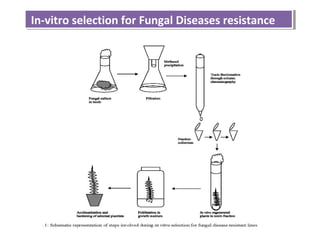
First In-vitro selection for disease resistance
conducted by Carlson (1973) for Tabotoxcin
(Methionine sulfoximine) produced by Pseudomonas
syringae p. var. tabaci in Tobacco
In-vitro selectionIn-vitro selection
It can be employed for selection for both Biotic
stress resistance and Abiotic stress tolerance
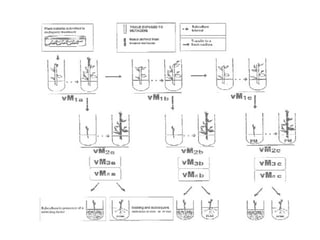
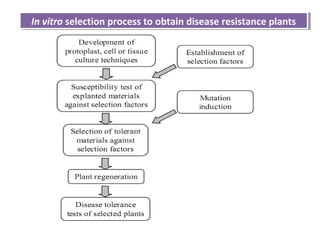
In vitro selection process to obtain disease resistance plantsIn vitro selection process to obtain disease resistance plants
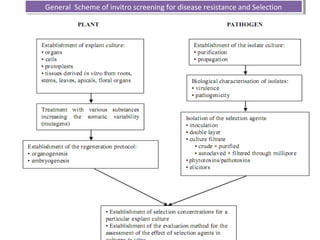
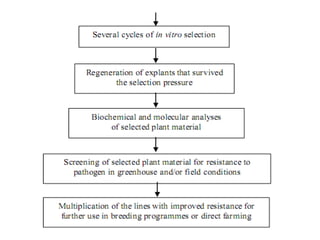
General Scheme of invitro screening for disease resistance and SelectionGeneral Scheme of invitro screening for disease resistance and Selection
In-vitro selection for Fungal Diseases resistanceIn-vitro selection for Fungal Diseases resistance
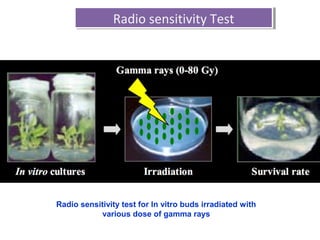
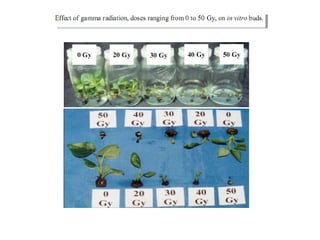
Radio sensitivity test for In vitro buds irradiated with
various dose of gamma rays
Radio sensitivity TestRadio sensitivity Test
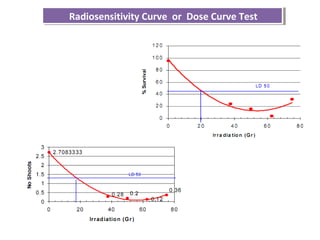
Radiosensitivity Curve or Dose Curve TestRadiosensitivity Curve or Dose Curve Test
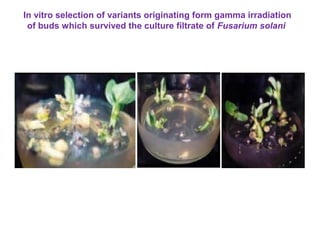
In vitro selection of variants originating form gamma irradiation
of buds which survived the culture filtrate of Fusarium solani
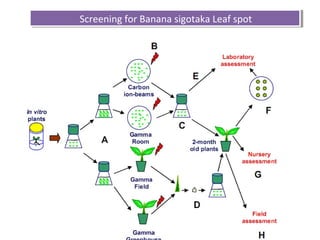
Screening for Banana sigotaka Leaf spotScreening for Banana sigotaka Leaf spot
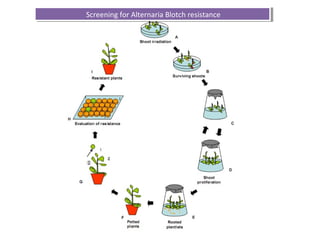
Screening for Alternaria Blotch resistanceScreening for Alternaria Blotch resistance
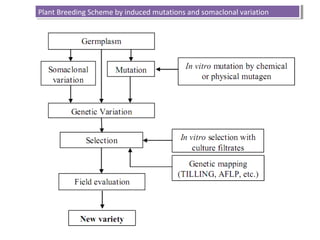
Plant Breeding Scheme by induced mutations and somaclonal variationPlant Breeding Scheme by induced mutations and somaclonal variation
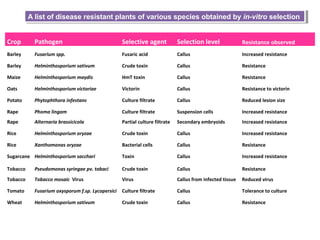
Crop Pathogen Selective agent Selection level Resistance observed
Barley Fusarium spp. Fusaric acid Callus Increased resistance
Barley Helminthosporium sativum Crude toxin Callus Resistance
Maize Helminthosporium maydis HmT toxin Callus Resistance
Oats Helminthosporium victoriae Victorin Callus Resistance to victorin
Potato Phytophthora infestans Culture filtrate Callus Reduced lesion size
Rape Phoma lingam Culture filtrate Suspension cells Increased resistance
Rape Alternaria brassicicola Partial culture filtrate Secondary embryoids Increased resistance
Rice Helminthosporium oryzae Crude toxin Callus Increased resistance
Rice Xanthomonas oryzae Bacterial cells Callus Resistance
Sugarcane Helminthosporium sacchari Toxin Callus Increased resistance
Tobacco Pseudomonas syringae pv. tabaci Crude toxin Callus Resistance
Tobacco Tobacco mosaic Virus Virus Callus from infected tissue Reduced virus
Tomato Fusarium oxysporum f.sp. Lycopersici Culture filtrate Callus Tolerance to culture
Wheat Helminthosporium sativum Crude toxin Callus Resistance
A list of disease resistant plants of various species obtained by in-vitro selectionA list of disease resistant plants of various species obtained by in-vitro selection
Invitro mutation selection for biotic stresses in Plants

Invitro mutation selection for biotic stresses in Plants

  • 1.
    In-Vitro mutant selectionfor biotic stresses in PlantsIn-Vitro mutant selection for biotic stresses in Plants A. Manivannan Scientist (Genetics) DMR, New Delhi
  • 2.
    APPLICATION OF CELLULARMANIPULATIONSAPPLICATION OF CELLULAR MANIPULATIONS In-vitro selection one of somaclonal variation method. Its effectiveness and efficiency are due to its ability of changing the plant to the desired character, either by applying a selection agent on the culture media or by giving particular condition to change the somaclone with the required character In- vitro mutagenesis : The production of either random or specific mutations out side the cells natural environment.
  • 3.
    1.Physical Agents 2.Chemical Mutagens 3.Colchicine 4.Transposanmediated Mutagenesis 5.Site Directed Mutagenesis 6.Somaclonal variation Type of Mutation InductionType of Mutation Induction
  • 4.
  • 6.
    Gamma Irradiation ChambersGammaIrradiation Chambers
  • 7.
    Chemical MutagensChemical Mutagens 1.Base analogs bromouracil (BU) aminopurine (AP) 2. Chemicals which alter structure and pairing properties of bases Alkylating agents [ethyl methanesulphonate (EMS); diethyl sulphate (dES); ethyleneimine (EI); ethyl nitroso urethane (ENU), ethyl nitroso urea (ENH), methyl nitroso urea (MNH) 3. Intercalating agents Acridine orange, Proflavin, Ethidium Bromide
  • 8.
  • 10.
    Site Directed MutagenesisSiteDirected Mutagenesis
  • 13.
    Oligonucleotide-based mutagenesis isthe most commonly used method to introduce mutations in coding sequence.
  • 14.
  • 15.
    sometimes called site-specificmutagenesis, is a process that produces mutations in DNA that are controlled by us. Protein Engineering - one of the most sophisticated applications of recombinant DNA technology - where the properties of a protein, such as an enzyme, are altered in an attempt to 'improve' it by changing (mutating) the gene coding for the protein using SDM. Desired improvements might be increased thermostability, altered substrate range, reduction in negative feedback inhibition, altered pH range, etc. Site- Directed Mutagenesis (SDM)Site- Directed Mutagenesis (SDM)
  • 16.
    Somatic Embryos: This system,based on single-cell origin of regenerated plants, allows the treatment of large populations and the rapid generation of homo-histonts (i.e., non-chimeric plants). Choice of Explant for invitro mutagenesisChoice of Explant for invitro mutagenesis Choice of Plant Material A preliminary key step toward the successful use of micropropagation for mutation breeding is the choice of the mother plant, since the starting material should provide a reliable genetic basis and high phytosanitary levels (Ahloowalia, 1998). Virus- free mother plants are the best starting material for tissue culture initiation.
  • 17.
    (a) Originate froma single cell, which minimises or eliminates chimera, depending on the plant species (b) Somatic embryo cell suspension is ideal for mutation induction due to the production of direct mutant somatic embryos (c) Behave like zygotic embryos in germination (d) Single somatic embryo can be encapsulated (e) Most suitable approach for plant regeneration of woody species (f) Somatic embryos can be produced in a bioreactor, which can be automated for large scale production of somatic embryos Advantages of somatic embryogenesisAdvantages of somatic embryogenesis
  • 18.
    Mutagen treatment ofin vitro tissues enhances the frequency rate of spontaneous mutations that may result in a range of mutation spectrum (Jain and Maluszynski, 2004). Chemical mutagens • easy to handle, especially when using cell suspension. • don’t require special equipment used for radiation treatment. Normally, chimeras are a major problem in regenerated plants by mutagen treatment of multi-cellular structures, such as shoot tips or axillary buds. Mutagen treatment of shoot tips or other organs leads to chimeras that require repeated vegetative propagation up to M1V4 level in order to dissociate the chimeras (Jain, 2000; Predrieri, 2001). Roux et al. (2001) reduced cytochimeras by colchicine treatment in three banana micropropagation systems shoot tip culture, using multi-apexing culture and a corm slice technique. plant breeders prefer solid or periclinal mutants to developing mutant cultivars. In-vitro mutagen treatmentIn-vitro mutagen treatment
  • 20.
    First In-vitro selectionfor disease resistance conducted by Carlson (1973) for Tabotoxcin (Methionine sulfoximine) produced by Pseudomonas syringae p. var. tabaci in Tobacco In-vitro selectionIn-vitro selection It can be employed for selection for both Biotic stress resistance and Abiotic stress tolerance
  • 22.
    In vitro selectionprocess to obtain disease resistance plantsIn vitro selection process to obtain disease resistance plants
  • 23.
    General Scheme ofinvitro screening for disease resistance and SelectionGeneral Scheme of invitro screening for disease resistance and Selection
  • 25.
    In-vitro selection forFungal Diseases resistanceIn-vitro selection for Fungal Diseases resistance
  • 26.
    Radio sensitivity testfor In vitro buds irradiated with various dose of gamma rays Radio sensitivity TestRadio sensitivity Test
  • 28.
    Radiosensitivity Curve orDose Curve TestRadiosensitivity Curve or Dose Curve Test
  • 32.
    In vitro selectionof variants originating form gamma irradiation of buds which survived the culture filtrate of Fusarium solani
  • 33.
    Screening for Bananasigotaka Leaf spotScreening for Banana sigotaka Leaf spot
  • 34.
    Screening for AlternariaBlotch resistanceScreening for Alternaria Blotch resistance
  • 35.
    Plant Breeding Schemeby induced mutations and somaclonal variationPlant Breeding Scheme by induced mutations and somaclonal variation
  • 36.
    Crop Pathogen Selectiveagent Selection level Resistance observed Barley Fusarium spp. Fusaric acid Callus Increased resistance Barley Helminthosporium sativum Crude toxin Callus Resistance Maize Helminthosporium maydis HmT toxin Callus Resistance Oats Helminthosporium victoriae Victorin Callus Resistance to victorin Potato Phytophthora infestans Culture filtrate Callus Reduced lesion size Rape Phoma lingam Culture filtrate Suspension cells Increased resistance Rape Alternaria brassicicola Partial culture filtrate Secondary embryoids Increased resistance Rice Helminthosporium oryzae Crude toxin Callus Increased resistance Rice Xanthomonas oryzae Bacterial cells Callus Resistance Sugarcane Helminthosporium sacchari Toxin Callus Increased resistance Tobacco Pseudomonas syringae pv. tabaci Crude toxin Callus Resistance Tobacco Tobacco mosaic Virus Virus Callus from infected tissue Reduced virus Tomato Fusarium oxysporum f.sp. Lycopersici Culture filtrate Callus Tolerance to culture Wheat Helminthosporium sativum Crude toxin Callus Resistance A list of disease resistant plants of various species obtained by in-vitro selectionA list of disease resistant plants of various species obtained by in-vitro selection