INVESTIGATION
OBJECTIVES
TYPES
DEFINITION OF INVESTIGATION
• Definition of Investigation
• Content:
• Investigation refers to a systematic process of examining facts, records,
and activities to uncover the truth or solve a particular problem.
• It involves collecting evidence, interviewing witnesses, and analyzing
data to make informed decisions.
• Investigations can be conducted internally or externally depending on
the nature of the issue.
OBJECTIVES OF INVESTIGATION
• Uncovering Fraud or Mismanagement: Detecting and preventing
fraudulent activities or unethical practices.
• Ensuring Legal and Regulatory Compliance: Ensuring the
company follows laws and regulations, avoiding legal issues.
• Providing Evidence for Legal Proceedings: Collecting crucial
information for potential lawsuits or regulatory actions.
OBJECTIVES OF INVESTIGATION
• Improving Business Operations: Identifying inefficiencies or
weaknesses in business operations.
• Protecting the Interests of Stakeholders: Safeguarding the
interests of shareholders, employees, and customers.
• Maintaining Organizational Integrity: Ensuring that the company
operates with transparency and upholds ethical standards.
TYPES OF INVESTIGATION
• Internal Investigation: Conducted within the organization by the
company’s own team or internal auditors.
• Focus on internal controls, financial records, and employee behavior.
• External Investigation: Conducted by external professionals,
auditors, or regulatory bodies.
• External investigations ensure objectivity and compliance with
industry standards.
ROUTINE AUDITING INVESTIGATIONS
• Purpose: To verify the accuracy and completeness of financial
statements.
• Methods: Detailed examination of transactions, financial records,
and internal controls.
• Objective: Ensure financial statements adhere to applicable
accounting standards (e.g., GAAP or IFRS).
FORENSIC AUDITING INVESTIGATIONS
• Purpose: To uncover fraudulent activities, financial crimes, or
misappropriation of assets.
• Methods: Data analysis, interviews, and forensic tools to trace
fraudulent transactions.
• Objective: Gather evidence for potential legal proceedings or
regulatory actions.
INTERNAL INVESTIGATIONS IN AUDITING
• Purpose: Conducted by the company’s internal audit team to
examine operations, policies, and compliance.
• Methods: Reviewing internal controls, conducting risk
assessments, and interviewing staff.
• Objective: Identify inefficiencies, non-compliance with policies,
or potential fraud internally before it escalates.
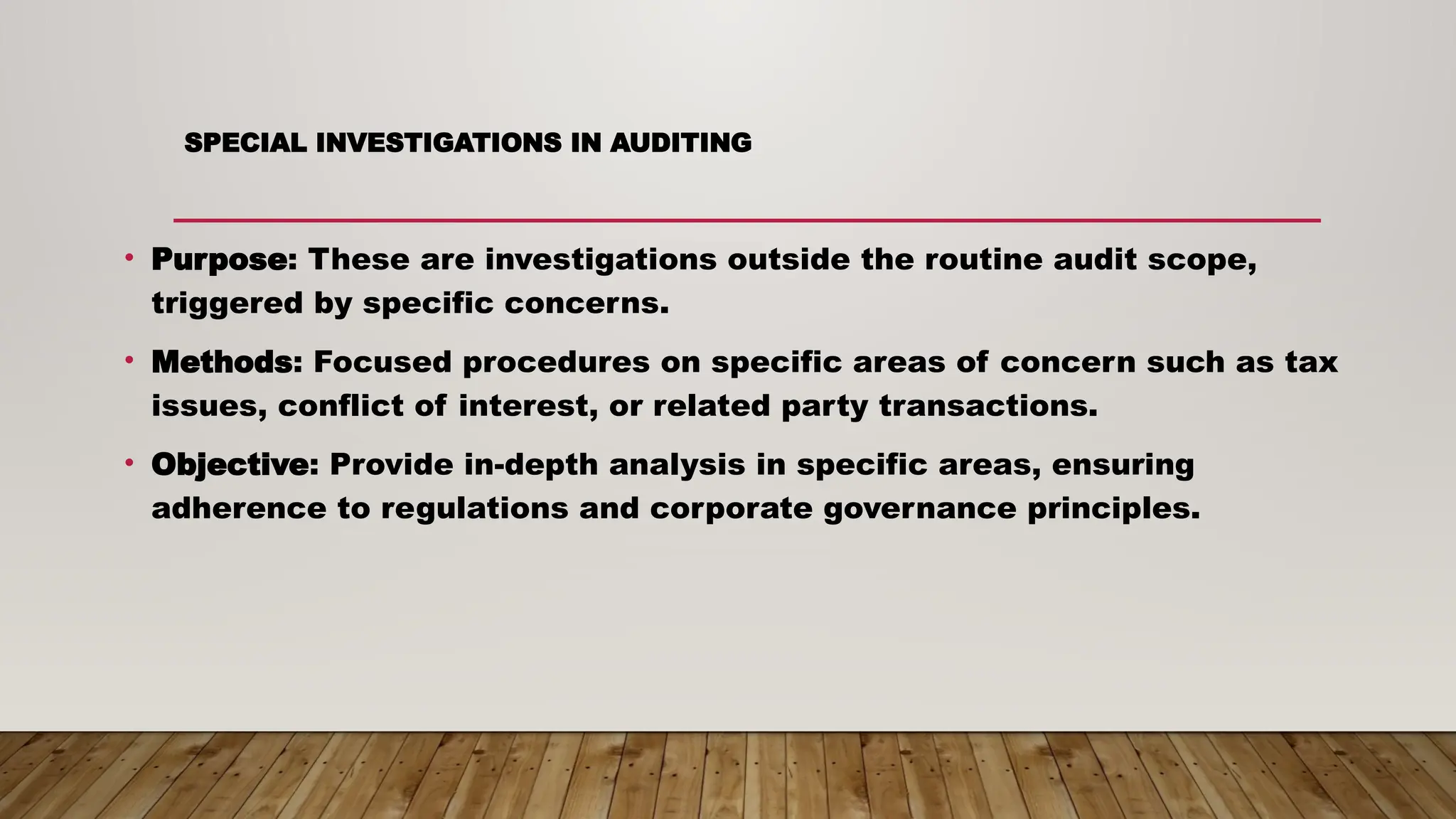
SPECIAL INVESTIGATIONS IN AUDITING
• Purpose: These are investigations outside the routine audit scope,
triggered by specific concerns.
• Methods: Focused procedures on specific areas of concern such as tax
issues, conflict of interest, or related party transactions.
• Objective: Provide in-depth analysis in specific areas, ensuring
adherence to regulations and corporate governance principles.

INVESTIGATION IN AUDITING-OBJECTIVES,TYPES.pptx

  • 1.
  • 2.
    DEFINITION OF INVESTIGATION •Definition of Investigation • Content: • Investigation refers to a systematic process of examining facts, records, and activities to uncover the truth or solve a particular problem. • It involves collecting evidence, interviewing witnesses, and analyzing data to make informed decisions. • Investigations can be conducted internally or externally depending on the nature of the issue.
  • 3.
    OBJECTIVES OF INVESTIGATION •Uncovering Fraud or Mismanagement: Detecting and preventing fraudulent activities or unethical practices. • Ensuring Legal and Regulatory Compliance: Ensuring the company follows laws and regulations, avoiding legal issues. • Providing Evidence for Legal Proceedings: Collecting crucial information for potential lawsuits or regulatory actions.
  • 4.
    OBJECTIVES OF INVESTIGATION •Improving Business Operations: Identifying inefficiencies or weaknesses in business operations. • Protecting the Interests of Stakeholders: Safeguarding the interests of shareholders, employees, and customers. • Maintaining Organizational Integrity: Ensuring that the company operates with transparency and upholds ethical standards.
  • 5.
    TYPES OF INVESTIGATION •Internal Investigation: Conducted within the organization by the company’s own team or internal auditors. • Focus on internal controls, financial records, and employee behavior. • External Investigation: Conducted by external professionals, auditors, or regulatory bodies. • External investigations ensure objectivity and compliance with industry standards.
  • 6.
    ROUTINE AUDITING INVESTIGATIONS •Purpose: To verify the accuracy and completeness of financial statements. • Methods: Detailed examination of transactions, financial records, and internal controls. • Objective: Ensure financial statements adhere to applicable accounting standards (e.g., GAAP or IFRS).
  • 7.
    FORENSIC AUDITING INVESTIGATIONS •Purpose: To uncover fraudulent activities, financial crimes, or misappropriation of assets. • Methods: Data analysis, interviews, and forensic tools to trace fraudulent transactions. • Objective: Gather evidence for potential legal proceedings or regulatory actions.
  • 8.
    INTERNAL INVESTIGATIONS INAUDITING • Purpose: Conducted by the company’s internal audit team to examine operations, policies, and compliance. • Methods: Reviewing internal controls, conducting risk assessments, and interviewing staff. • Objective: Identify inefficiencies, non-compliance with policies, or potential fraud internally before it escalates.
  • 9.
    SPECIAL INVESTIGATIONS INAUDITING • Purpose: These are investigations outside the routine audit scope, triggered by specific concerns. • Methods: Focused procedures on specific areas of concern such as tax issues, conflict of interest, or related party transactions. • Objective: Provide in-depth analysis in specific areas, ensuring adherence to regulations and corporate governance principles.