Consumer Behaviour
MEANING
NEED OR STUDYING OF CONSUMER BEHAVIOUR
FACTOR INFLUENCING CONSUMER BEHAVIOUR
BUYERS DECISION MAKING PROCESS
MEANING
Consumer behavior refers to the study which analyzes
how consumers make decisions about their wants,
needs, buying or act with respect to a product,
service or organization. It is very critical to
understand the behavior of consumers to analyze the
behavior of potential consumers towards a new
product or service.
Needs for Studying Consumer Behavior
Understanding consumer behavior is important for several reasons:
Targeting and Segmentation: It helps businesses segment the market and identify specific
groups of consumers based on their needs, preferences, and behaviors.
Product Development: By understanding what consumers value, businesses can design
products that meet their needs and preferences.
Marketing Strategy: It helps in creating effective marketing campaigns, pricing strategies,
and promotional efforts that resonate with consumers.
Customer Retention: Knowing consumer behavior allows companies to create strategies that
improve customer satisfaction and loyalty, leading to repeat business.
Competitive Advantage: Firms that understand consumer behavior can anticipate shifts in
demand and stay ahead of competitors.
Factors Influencing Consumer
Behaviour
Psychological Factors:
Motivation: The internal drive to fulfill needs or desires (e.g., hunger,
status).
Perception: How a consumer views a product or brand (e.g., positive
or negative experiences).
Learning: Past experiences that shape future purchasing decisions.
Beliefs and Attitudes: Consumer opinions and mental assessments
about products or brands.
Factors Influencing Consumer
Behaviour
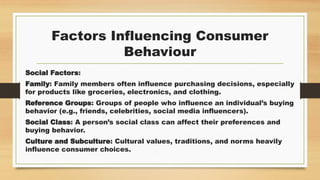
Social Factors:
Family: Family members often influence purchasing decisions, especially
for products like groceries, electronics, and clothing.
Reference Groups: Groups of people who influence an individual’s buying
behavior (e.g., friends, celebrities, social media influencers).
Social Class: A person’s social class can affect their preferences and
buying behavior.
Culture and Subculture: Cultural values, traditions, and norms heavily
influence consumer choices.
Factors Influencing Consumer
Behaviour
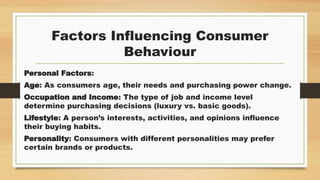
Personal Factors:
Age: As consumers age, their needs and purchasing power change.
Occupation and Income: The type of job and income level
determine purchasing decisions (luxury vs. basic goods).
Lifestyle: A person’s interests, activities, and opinions influence
their buying habits.
Personality: Consumers with different personalities may prefer
certain brands or products.
Factors Influencing Consumer
Behaviour
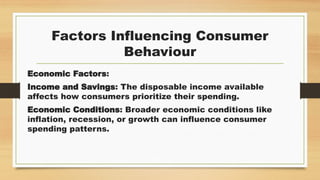
Economic Factors:
Income and Savings: The disposable income available
affects how consumers prioritize their spending.
Economic Conditions: Broader economic conditions like
inflation, recession, or growth can influence consumer
spending patterns.
Factors Influencing Consumer
Behaviour
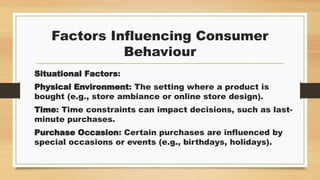
Situational Factors:
Physical Environment: The setting where a product is
bought (e.g., store ambiance or online store design).
Time: Time constraints can impact decisions, such as last-
minute purchases.
Purchase Occasion: Certain purchases are influenced by
special occasions or events (e.g., birthdays, holidays).
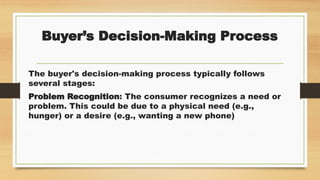
Buyer’s Decision-Making Process
The buyer's decision-making process typically follows
several stages:
Problem Recognition: The consumer recognizes a need or
problem. This could be due to a physical need (e.g.,
hunger) or a desire (e.g., wanting a new phone)
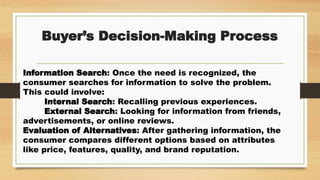
Buyer’s Decision-Making Process
Information Search: Once the need is recognized, the
consumer searches for information to solve the problem.
This could involve:
Internal Search: Recalling previous experiences.
External Search: Looking for information from friends,
advertisements, or online reviews.
Evaluation of Alternatives: After gathering information, the
consumer compares different options based on attributes
like price, features, quality, and brand reputation.
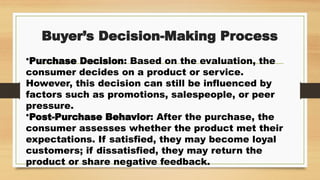
Buyer’s Decision-Making Process
•Purchase Decision: Based on the evaluation, the
consumer decides on a product or service.
However, this decision can still be influenced by
factors such as promotions, salespeople, or peer
pressure.
•Post-Purchase Behavior: After the purchase, the
consumer assesses whether the product met their
expectations. If satisfied, they may become loyal
customers; if dissatisfied, they may return the
product or share negative feedback.

Consumer Behaviour,Needs,factors influencing consumer behaviour.pptx

  • 1.
    Consumer Behaviour MEANING NEED ORSTUDYING OF CONSUMER BEHAVIOUR FACTOR INFLUENCING CONSUMER BEHAVIOUR BUYERS DECISION MAKING PROCESS
  • 2.
    MEANING Consumer behavior refersto the study which analyzes how consumers make decisions about their wants, needs, buying or act with respect to a product, service or organization. It is very critical to understand the behavior of consumers to analyze the behavior of potential consumers towards a new product or service.
  • 3.
    Needs for StudyingConsumer Behavior Understanding consumer behavior is important for several reasons: Targeting and Segmentation: It helps businesses segment the market and identify specific groups of consumers based on their needs, preferences, and behaviors. Product Development: By understanding what consumers value, businesses can design products that meet their needs and preferences. Marketing Strategy: It helps in creating effective marketing campaigns, pricing strategies, and promotional efforts that resonate with consumers. Customer Retention: Knowing consumer behavior allows companies to create strategies that improve customer satisfaction and loyalty, leading to repeat business. Competitive Advantage: Firms that understand consumer behavior can anticipate shifts in demand and stay ahead of competitors.
  • 4.
    Factors Influencing Consumer Behaviour PsychologicalFactors: Motivation: The internal drive to fulfill needs or desires (e.g., hunger, status). Perception: How a consumer views a product or brand (e.g., positive or negative experiences). Learning: Past experiences that shape future purchasing decisions. Beliefs and Attitudes: Consumer opinions and mental assessments about products or brands.
  • 5.
    Factors Influencing Consumer Behaviour SocialFactors: Family: Family members often influence purchasing decisions, especially for products like groceries, electronics, and clothing. Reference Groups: Groups of people who influence an individual’s buying behavior (e.g., friends, celebrities, social media influencers). Social Class: A person’s social class can affect their preferences and buying behavior. Culture and Subculture: Cultural values, traditions, and norms heavily influence consumer choices.
  • 6.
    Factors Influencing Consumer Behaviour PersonalFactors: Age: As consumers age, their needs and purchasing power change. Occupation and Income: The type of job and income level determine purchasing decisions (luxury vs. basic goods). Lifestyle: A person’s interests, activities, and opinions influence their buying habits. Personality: Consumers with different personalities may prefer certain brands or products.
  • 7.
    Factors Influencing Consumer Behaviour EconomicFactors: Income and Savings: The disposable income available affects how consumers prioritize their spending. Economic Conditions: Broader economic conditions like inflation, recession, or growth can influence consumer spending patterns.
  • 8.
    Factors Influencing Consumer Behaviour SituationalFactors: Physical Environment: The setting where a product is bought (e.g., store ambiance or online store design). Time: Time constraints can impact decisions, such as last- minute purchases. Purchase Occasion: Certain purchases are influenced by special occasions or events (e.g., birthdays, holidays).
  • 9.
    Buyer’s Decision-Making Process Thebuyer's decision-making process typically follows several stages: Problem Recognition: The consumer recognizes a need or problem. This could be due to a physical need (e.g., hunger) or a desire (e.g., wanting a new phone)
  • 10.
    Buyer’s Decision-Making Process InformationSearch: Once the need is recognized, the consumer searches for information to solve the problem. This could involve: Internal Search: Recalling previous experiences. External Search: Looking for information from friends, advertisements, or online reviews. Evaluation of Alternatives: After gathering information, the consumer compares different options based on attributes like price, features, quality, and brand reputation.
  • 11.
    Buyer’s Decision-Making Process •PurchaseDecision: Based on the evaluation, the consumer decides on a product or service. However, this decision can still be influenced by factors such as promotions, salespeople, or peer pressure. •Post-Purchase Behavior: After the purchase, the consumer assesses whether the product met their expectations. If satisfied, they may become loyal customers; if dissatisfied, they may return the product or share negative feedback.