ME6401 – Kinematics of Machinery
Unit 1 – Basics of mechanism
Inversion of mechanisms
Presented by,
R.SUBHAA,
AP/Mech
Content
• Inversion of mechanism
• Inversion of four bar chain
• Inversion of single slider crank chain
• Inversion of double slider crank chain
Inversion of Mechanism
• When the number of links in kinematics chain
is more than three, the chain is known as
mechanism.
• When one link of the kinematic chain at the
time is fixed, give the different mechanism of
the kinematic chain.
• The method of generating different mechanism
by fixing a link is called the “inversion of
mechanism”.
• The number of inversion is equal to the
number of link in the kinematic chain.
• The inversion of mechanism may be classified
as;
1) Inversion of four bar chain
2) Inversion of single slider crank chain
3) Inversion of double slider chain
1) Inversion of four bar
chain
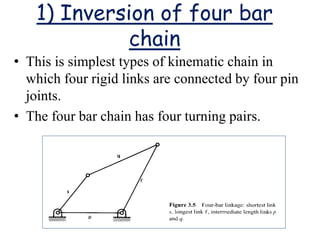
• This is simplest types of kinematic chain in
which four rigid links are connected by four pin
joints.
• The four bar chain has four turning pairs.
• Link 1 & 2 forms first turning pair, link 2 & 3
forms second turning pair, link 3 & 4 forms third
turning pair, link 4 & 1 forms fourth turning pair.
• A link which can make complete revolution is
known as crank.
• The fixed link is known as frame.
• The opposite link of frame is known as
connecting rod.
• The oscillating fourth link is known as lever or
rocker.
Animations
2) Inversion of single slider
crank chain
• In mechanism when there is one sliding member,
the four bar chain is known as single slider crank
chain.
• The inversion of slider crank chain are pendulum
pump, oscillating cylinder engine, rotary internal
combustion engine, crank and slotted lever quick-
return motion mechanism and whitworth quick-
return motion mechanism.
[a] Pendulum pump:
• When the sliding pair is
fixed, the mechanism is
known as pendulum pump.
• As the figure, link 2 (crank)
rotates, link 3 (connecting
rod) oscillates about a pin C
and the piston attached to
piston rod (link 1)
reciprocates in the cylinder.
[b] Oscillating cylinder engine:
• In this mechanism link 3 is fixed. The link 2
rotates, the link 1 (piston rod) reciprocate and
the link 4 (cylinder) oscillate about a pin A.
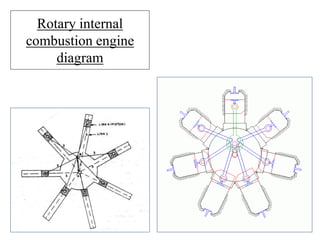
[c] Rotary internal combustion engine:
• This mechanism is used in multi cylinder
engine.
• It consists of several cylinders in one plane and
all revolve about fixed center O, as shown
figure.
• The crank (link 2) is fixed.
• When the connecting rod (link 4) rotates, the
piston (link 3) reciprocates inside the cylinder
forming link 1.
Rotary internal
combustion engine
diagram
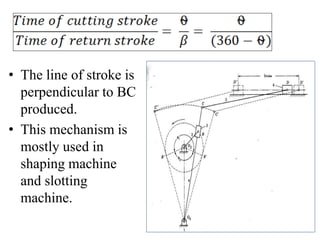
[d] Crank and slotted lever quick-
return motion mechanism:
• In this mechanism, link 1 is slider which slide in
slotted lever.
• The slotted lever is link 4. link 3 is fixed where
the center of crank attached.
• Link 2 is crank which rotates in clockwise
direction.
• Link 4 is the arm which oscillates about point C.
• A short link DE transmits the motion with
reciprocates with the tool along line of stroke.
• The line of stroke is
perpendicular to BC
produced.
• This mechanism is
mostly used in
shaping machine
and slotting
machine.
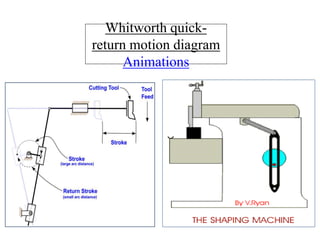
Whitworth quick-
return motion diagram
Animations
3) Inversion of Double
slider crank chain
• There are four type of inversion of double
slider crank chain mechanism as:
[a] Elliptical trammel
[b] Scotch yoke mechanism
[c] Oldham’s coupling
[d] Donkey Pump
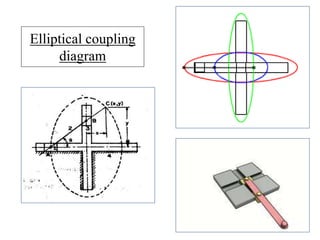
[a] Elliptical Coupling:
• In this mechanism two slots are cut at right
angles in a plane which is fixed.
• Two blocks slide in these two slots.
• Two sliding blocks form two links, which are of
sliding type.
• Two sliding blocks are connected by one link.
• Point on this link at anywhere generate ellipse,
when any ne blocks slides in its slot.
Elliptical coupling
diagram
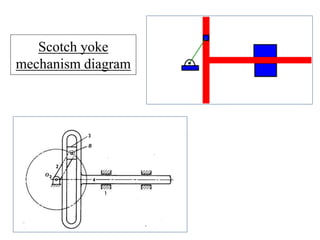
[b] Scotch yoke mechanism:
• This mechanism converts rotary motion to
reciprocating motion (simple harmonic motion).
• It is used in vibration exciter to produce vibration
of desired frequency.
• This Chain has two revolute pairs and two
prismatic pairs.
• The first inversion is with a link with revolute
pair and prismatic pair is fixed.
Scotch yoke
mechanism diagram
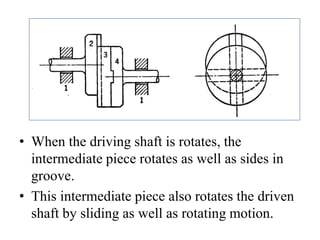
[c] Oldham’s Coupling:
• When the distance between two shaft axes is
small, motion is transmitted by oldham’s
coupling.
• At the end of both the shafts there is flanges.
• This flange forms links 2 and 4.
• Both this links forms a turning pair with link 3.
• There is a diametrical slot on both the flange.
• An intermediate piece have a diametrical outside
tongues at right angle on both sides.
• When the driving shaft is rotates, the
intermediate piece rotates as well as sides in
groove.
• This intermediate piece also rotates the driven
shaft by sliding as well as rotating motion.
Inversions.ppt

Inversions.ppt

  • 1.
    ME6401 – Kinematicsof Machinery Unit 1 – Basics of mechanism Inversion of mechanisms Presented by, R.SUBHAA, AP/Mech
  • 2.
    Content • Inversion ofmechanism • Inversion of four bar chain • Inversion of single slider crank chain • Inversion of double slider crank chain
  • 3.
    Inversion of Mechanism •When the number of links in kinematics chain is more than three, the chain is known as mechanism. • When one link of the kinematic chain at the time is fixed, give the different mechanism of the kinematic chain. • The method of generating different mechanism by fixing a link is called the “inversion of mechanism”.
  • 4.
    • The numberof inversion is equal to the number of link in the kinematic chain. • The inversion of mechanism may be classified as; 1) Inversion of four bar chain 2) Inversion of single slider crank chain 3) Inversion of double slider chain
  • 5.
    1) Inversion offour bar chain • This is simplest types of kinematic chain in which four rigid links are connected by four pin joints. • The four bar chain has four turning pairs.
  • 6.
    • Link 1& 2 forms first turning pair, link 2 & 3 forms second turning pair, link 3 & 4 forms third turning pair, link 4 & 1 forms fourth turning pair. • A link which can make complete revolution is known as crank. • The fixed link is known as frame. • The opposite link of frame is known as connecting rod. • The oscillating fourth link is known as lever or rocker. Animations
  • 7.
    2) Inversion ofsingle slider crank chain • In mechanism when there is one sliding member, the four bar chain is known as single slider crank chain. • The inversion of slider crank chain are pendulum pump, oscillating cylinder engine, rotary internal combustion engine, crank and slotted lever quick- return motion mechanism and whitworth quick- return motion mechanism.
  • 8.
    [a] Pendulum pump: •When the sliding pair is fixed, the mechanism is known as pendulum pump. • As the figure, link 2 (crank) rotates, link 3 (connecting rod) oscillates about a pin C and the piston attached to piston rod (link 1) reciprocates in the cylinder.
  • 9.
    [b] Oscillating cylinderengine: • In this mechanism link 3 is fixed. The link 2 rotates, the link 1 (piston rod) reciprocate and the link 4 (cylinder) oscillate about a pin A.
  • 10.
    [c] Rotary internalcombustion engine: • This mechanism is used in multi cylinder engine. • It consists of several cylinders in one plane and all revolve about fixed center O, as shown figure. • The crank (link 2) is fixed. • When the connecting rod (link 4) rotates, the piston (link 3) reciprocates inside the cylinder forming link 1.
  • 11.
  • 12.
    [d] Crank andslotted lever quick- return motion mechanism: • In this mechanism, link 1 is slider which slide in slotted lever. • The slotted lever is link 4. link 3 is fixed where the center of crank attached. • Link 2 is crank which rotates in clockwise direction. • Link 4 is the arm which oscillates about point C. • A short link DE transmits the motion with reciprocates with the tool along line of stroke.
  • 13.
    • The lineof stroke is perpendicular to BC produced. • This mechanism is mostly used in shaping machine and slotting machine.
  • 14.
  • 15.
    3) Inversion ofDouble slider crank chain • There are four type of inversion of double slider crank chain mechanism as: [a] Elliptical trammel [b] Scotch yoke mechanism [c] Oldham’s coupling [d] Donkey Pump
  • 16.
    [a] Elliptical Coupling: •In this mechanism two slots are cut at right angles in a plane which is fixed. • Two blocks slide in these two slots. • Two sliding blocks form two links, which are of sliding type. • Two sliding blocks are connected by one link. • Point on this link at anywhere generate ellipse, when any ne blocks slides in its slot.
  • 17.
  • 18.
    [b] Scotch yokemechanism: • This mechanism converts rotary motion to reciprocating motion (simple harmonic motion). • It is used in vibration exciter to produce vibration of desired frequency. • This Chain has two revolute pairs and two prismatic pairs. • The first inversion is with a link with revolute pair and prismatic pair is fixed.
  • 19.
  • 20.
    [c] Oldham’s Coupling: •When the distance between two shaft axes is small, motion is transmitted by oldham’s coupling. • At the end of both the shafts there is flanges. • This flange forms links 2 and 4. • Both this links forms a turning pair with link 3. • There is a diametrical slot on both the flange. • An intermediate piece have a diametrical outside tongues at right angle on both sides.
  • 21.
    • When thedriving shaft is rotates, the intermediate piece rotates as well as sides in groove. • This intermediate piece also rotates the driven shaft by sliding as well as rotating motion.