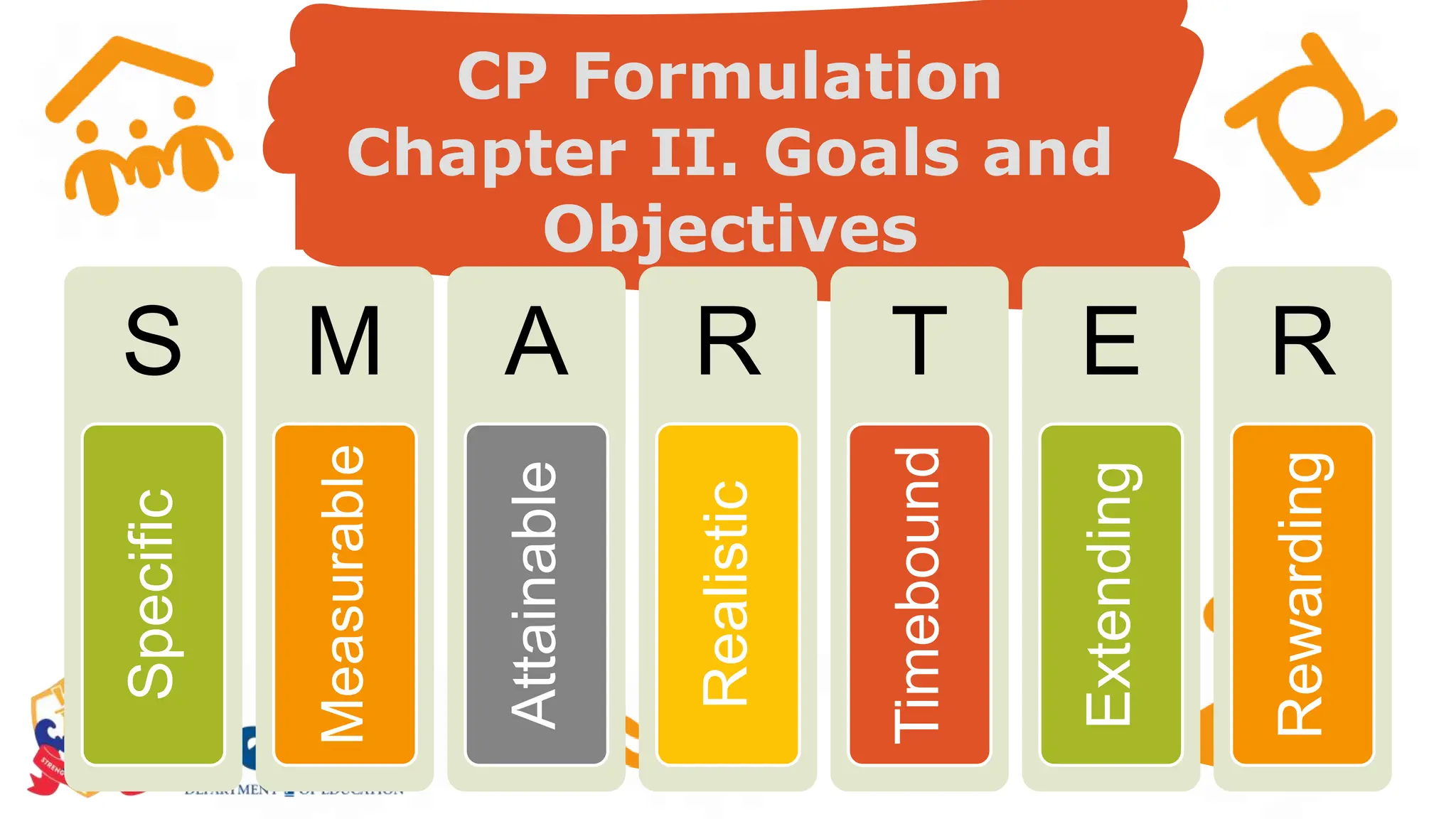
This document provides an introduction to contingency planning. It discusses that contingency planning is a process for analyzing potential hazardous events and establishing advance arrangements to enable effective responses. Over 43,000 schools in the Philippines are at risk from natural and human-induced hazards such as tropical cyclones, floods, earthquakes, volcanic eruptions, and armed conflicts. Contingency planning helps protect lives and property, ensures availability of resources, and enhances coordination. The key components of an effective contingency plan include being hazard-specific, flexible, including alternative actions, and updated annually. The benefits of contingency planning include saving lives and minimizing damage from disasters.