But First, A Little About Me
 My name’s Lee Theobald. Hello!
 Twitter: @Leesy
 Never updated blog:
http://www.ltheobald.co.uk/
 I’m a developer at a small search company
in Cambridge called Open Objects.
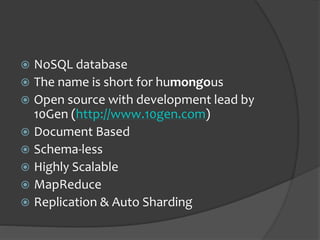
 NoSQL database
 The name is short for humongous
 Open source with development lead by
10Gen (http://www.10gen.com)
 Document Based
 Schema-less
 Highly Scalable
 MapReduce
 Replication & Auto Sharding
Document Store
 Data is stored in the form of JSON data.
{
"_id" : ObjectId("4ccbfc75bd163019417c27f8"),
"title": “Hello World! ",
"author": {
"firstname": "Joe",
"lastname": "Bloggs"
},
"tags": ["test", "foo", "bar"]
}
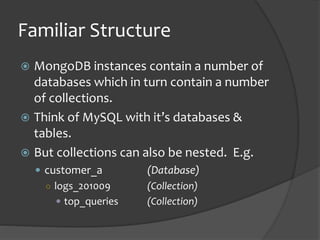
Familiar Structure
 MongoDB instances contain a number of
databases which in turn contain a number
of collections.
 Think of MySQL with it’s databases &
tables.
 But collections can also be nested. E.g.
 customer_a (Database)
○ logs_201009 (Collection)
 top_queries (Collection)
Inserts – Easy As Pie!
use cookbook;
db.desserts.save({
name: "Cherry Pie",
ingredients: ["cherries", "pie"],
cooking_time: 30
});
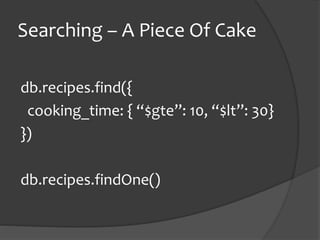
Searching – A Piece Of Cake
db.recipes.find({
cooking_time: { “$gte”: 10, “$lt”: 30}
})
db.recipes.findOne()
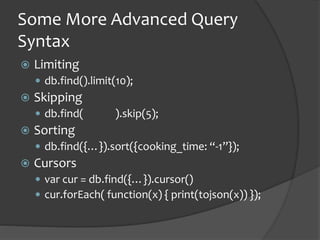
Some More Advanced Query
Syntax
 Limiting
 db.find().limit(10);
 Skipping
 db.find( ).skip(5);
 Sorting
 db.find({…}).sort({cooking_time: “-1”});
 Cursors
 var cur = db.find({…}).cursor()
 cur.forEach( function(x) { print(tojson(x)) });
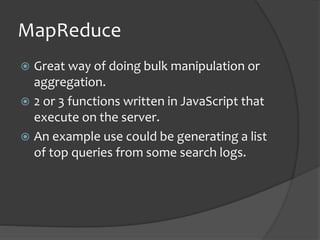
MapReduce
 Great way of doing bulk manipulation or
aggregation.
 2 or 3 functions written in JavaScript that
execute on the server.
 An example use could be generating a list
of top queries from some search logs.
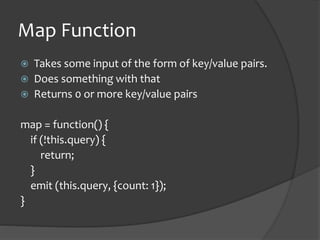
Map Function
 Takes some input of the form of key/value pairs.
 Does something with that
 Returns 0 or more key/value pairs
map = function() {
if (!this.query) {
return;
}
emit (this.query, {count: 1});
}
Reduce Function
 Takes the results from the map function
 Does something (normally combine the results)
 Produces output in key/value pairs
reduce = function(key, values) {
var count = 0;
values.forEach(function(v) {
count += v[‘count’];
}
return {count: count;}
}
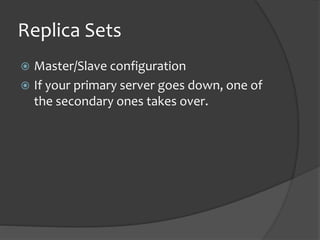
Replica Sets
 Master/Slave configuration
 If your primary server goes down, one of
the secondary ones takes over.
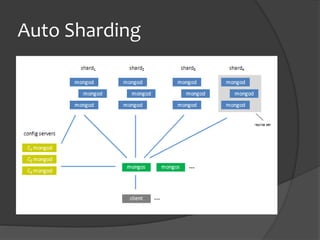
Auto Sharding
But Why Not Try It Yourself
 Download it at: http://www.mongodb.org
 Online tutorial
at:http://www.mongodb.org/display/DOCS
/Tutorial
 Some handy MongoDB sites:
 MongoDB Cookbook:
http://cookbook.mongodb.org/
 Kyle Banker’s blog:
http://kylebanker.com/blog/
Introduction tomongodb

Introduction tomongodb

  • 2.
    But First, ALittle About Me  My name’s Lee Theobald. Hello!  Twitter: @Leesy  Never updated blog: http://www.ltheobald.co.uk/  I’m a developer at a small search company in Cambridge called Open Objects.
  • 4.
     NoSQL database The name is short for humongous  Open source with development lead by 10Gen (http://www.10gen.com)  Document Based  Schema-less  Highly Scalable  MapReduce  Replication & Auto Sharding
  • 5.
    Document Store  Datais stored in the form of JSON data. { "_id" : ObjectId("4ccbfc75bd163019417c27f8"), "title": “Hello World! ", "author": { "firstname": "Joe", "lastname": "Bloggs" }, "tags": ["test", "foo", "bar"] }
  • 6.
    Familiar Structure  MongoDBinstances contain a number of databases which in turn contain a number of collections.  Think of MySQL with it’s databases & tables.  But collections can also be nested. E.g.  customer_a (Database) ○ logs_201009 (Collection)  top_queries (Collection)
  • 7.
    Inserts – EasyAs Pie! use cookbook; db.desserts.save({ name: "Cherry Pie", ingredients: ["cherries", "pie"], cooking_time: 30 });
  • 8.
    Searching – APiece Of Cake db.recipes.find({ cooking_time: { “$gte”: 10, “$lt”: 30} }) db.recipes.findOne()
  • 9.
    Some More AdvancedQuery Syntax  Limiting  db.find().limit(10);  Skipping  db.find( ).skip(5);  Sorting  db.find({…}).sort({cooking_time: “-1”});  Cursors  var cur = db.find({…}).cursor()  cur.forEach( function(x) { print(tojson(x)) });
  • 10.
    MapReduce  Great wayof doing bulk manipulation or aggregation.  2 or 3 functions written in JavaScript that execute on the server.  An example use could be generating a list of top queries from some search logs.
  • 11.
    Map Function  Takessome input of the form of key/value pairs.  Does something with that  Returns 0 or more key/value pairs map = function() { if (!this.query) { return; } emit (this.query, {count: 1}); }
  • 12.
    Reduce Function  Takesthe results from the map function  Does something (normally combine the results)  Produces output in key/value pairs reduce = function(key, values) { var count = 0; values.forEach(function(v) { count += v[‘count’]; } return {count: count;} }
  • 13.
    Replica Sets  Master/Slaveconfiguration  If your primary server goes down, one of the secondary ones takes over.
  • 14.
  • 15.
    But Why NotTry It Yourself  Download it at: http://www.mongodb.org  Online tutorial at:http://www.mongodb.org/display/DOCS /Tutorial  Some handy MongoDB sites:  MongoDB Cookbook: http://cookbook.mongodb.org/  Kyle Banker’s blog: http://kylebanker.com/blog/