open-source, high-performance,
schema-free, document-oriented
           database
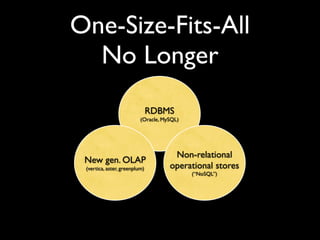
One-Size-Fits-All
  No Longer
                               RDBMS
                          (Oracle, MySQL)


                                      Non-relational
 New gen. OLAP
 (vertica, aster, greenplum)         operational stores
                                            (“NoSQL”)
NoSQL really means:

non-relational next generation
operational datastores and databases
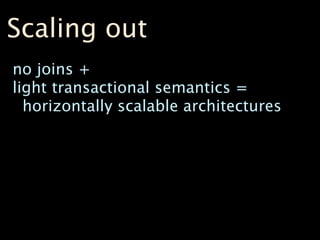
Scaling out
no joins +
light transactional semantics =
  horizontally scalable architectures
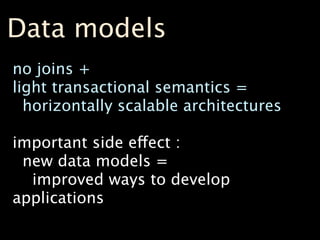
Data models
no joins +
light transactional semantics =
  horizontally scalable architectures

important side effect :
 new data models =
  improved ways to develop
applications
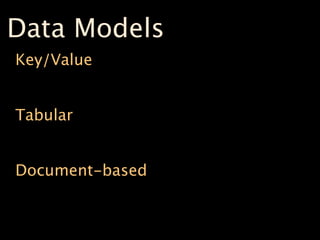
Data Models
Key/Value


Tabular


Document-based
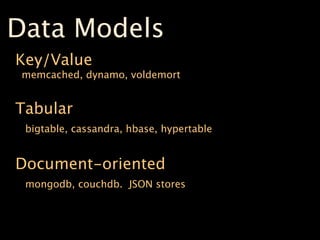
Data Models
Key/Value
 memcached, dynamo, voldemort


Tabular
 bigtable, cassandra, hbase, hypertable


Document-oriented
 mongodb, couchdb. JSON stores
JSON-style documents
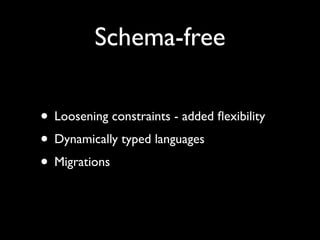
Schema-free

• Loosening constraints - added flexibility
• Dynamically typed languages
• Migrations
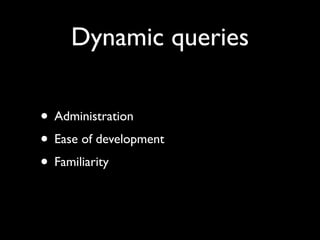
Dynamic queries

• Administration
• Ease of development
• Familiarity
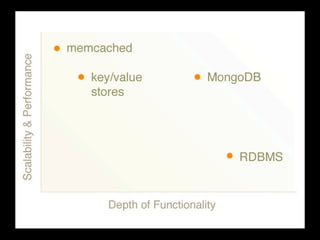
Focus on performance
Replication
Auto-sharding
Many supported
platforms / languages
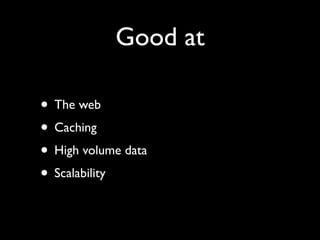
Good at

• The web
• Caching
• High volume data
• Scalability
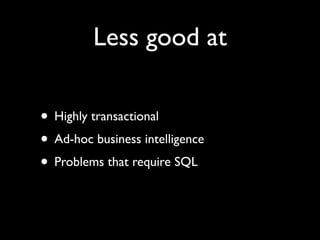
Less good at

• Highly transactional
• Ad-hoc business intelligence
• Problems that require SQL
MongoDB Basics
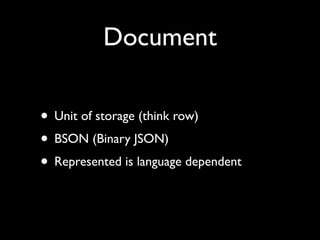
Document

• Unit of storage (think row)
• BSON (Binary JSON)
• Represented is language dependent
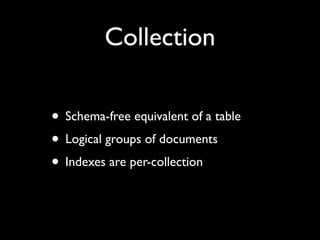
Collection

• Schema-free equivalent of a table
• Logical groups of documents
• Indexes are per-collection
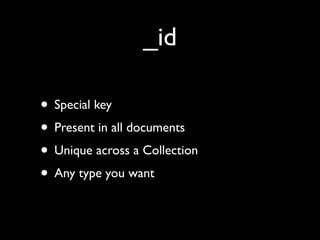
_id

• Special key
• Present in all documents
• Unique across a Collection
• Any type you want
Blog back-end
Post

{author: “mike”,
 date: new Date(),
 text: “my blog post...”,
 tags: [“mongodb”, “codemash”]}
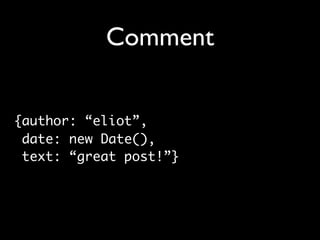
Comment


{author: “eliot”,
 date: new Date(),
 text: “great post!”}
New post

post = {author: “mike”,
  date: new Date(),
  text: “my blog post...”,
  tags: [“mongodb”, “codemash”]}

db.posts.save(post)
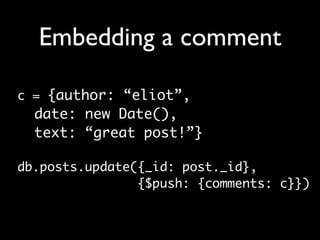
Embedding a comment

c = {author: “eliot”,
  date: new Date(),
  text: “great post!”}

db.posts.update({_id: post._id},
                {$push: {comments: c}})
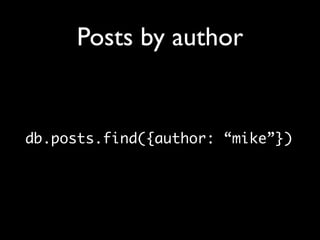
Posts by author


db.posts.find({author: “mike”})
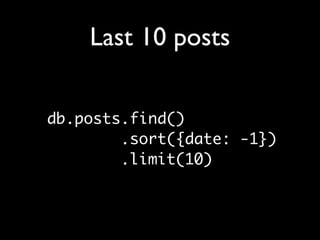
Last 10 posts

db.posts.find()
        .sort({date: -1})
        .limit(10)
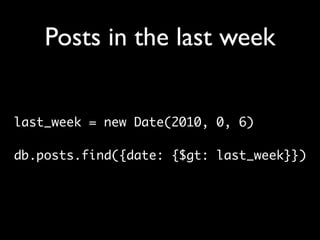
Posts in the last week


last_week = new Date(2010, 0, 6)

db.posts.find({date: {$gt: last_week}})
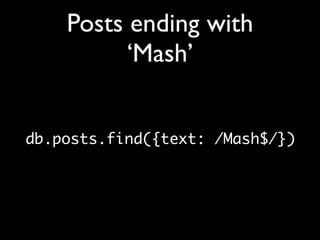
Posts ending with
          ‘Mash’


db.posts.find({text: /Mash$/})
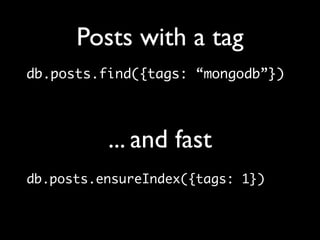
Posts with a tag
db.posts.find({tags: “mongodb”})


          ... and fast
db.posts.ensureIndex({tags: 1})
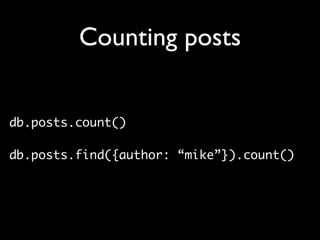
Counting posts


db.posts.count()

db.posts.find({author: “mike”}).count()
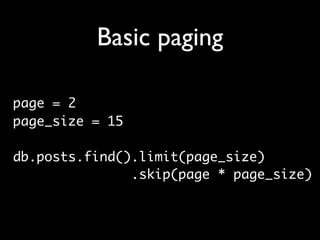
Basic paging

page = 2
page_size = 15

db.posts.find().limit(page_size)
               .skip(page * page_size)
Migration: adding titles
  • Easy - just start adding them:
post = {author: “mike”,
        date: new Date(),
        text: “another blog post...”,
        tags: [“codemash”],
        title: “Review from CodeMash”}

post_id = db.posts.save(post)
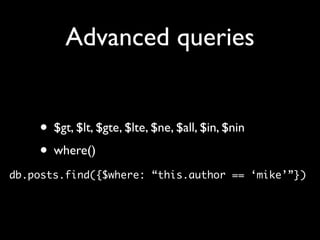
Advanced queries


    • $gt, $lt, $gte, $lte, $ne, $all, $in, $nin
    • where()
db.posts.find({$where: “this.author == ‘mike’”})
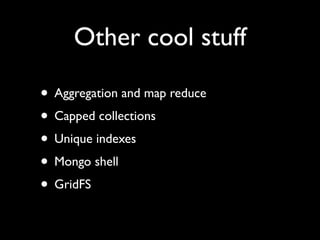
Other cool stuff

• Aggregation and map reduce
• Capped collections
• Unique indexes
• Mongo shell
• GridFS
• Download MongoDB
  http://www.mongodb.org

• Try it out
• Let us know what you think!
• http://www.mongodb.org
• irc.freenode.net#mongodb
• mongodb-user on google groups
• @mongodb, @mdirolf
• mike@10gen.com
• http://www.slideshare.net/mdirolf

MongoDB at CodeMash 2.0.1.0

Editor's Notes

  • #26 Collection (logical groupings of documents) Indexes are per-collection
  • #38 blog post twitter