Prof. Mrs D. A. Latthe
Assistant Professor
Dr. J. J. Magdum College of Engineering,
Jaysingpur
Introduction to Water Supply Scheme
Water Supply Scheme is divided into 3 parts:
• Data collection for water supply scheme
• Components and
• layout of water supply scheme
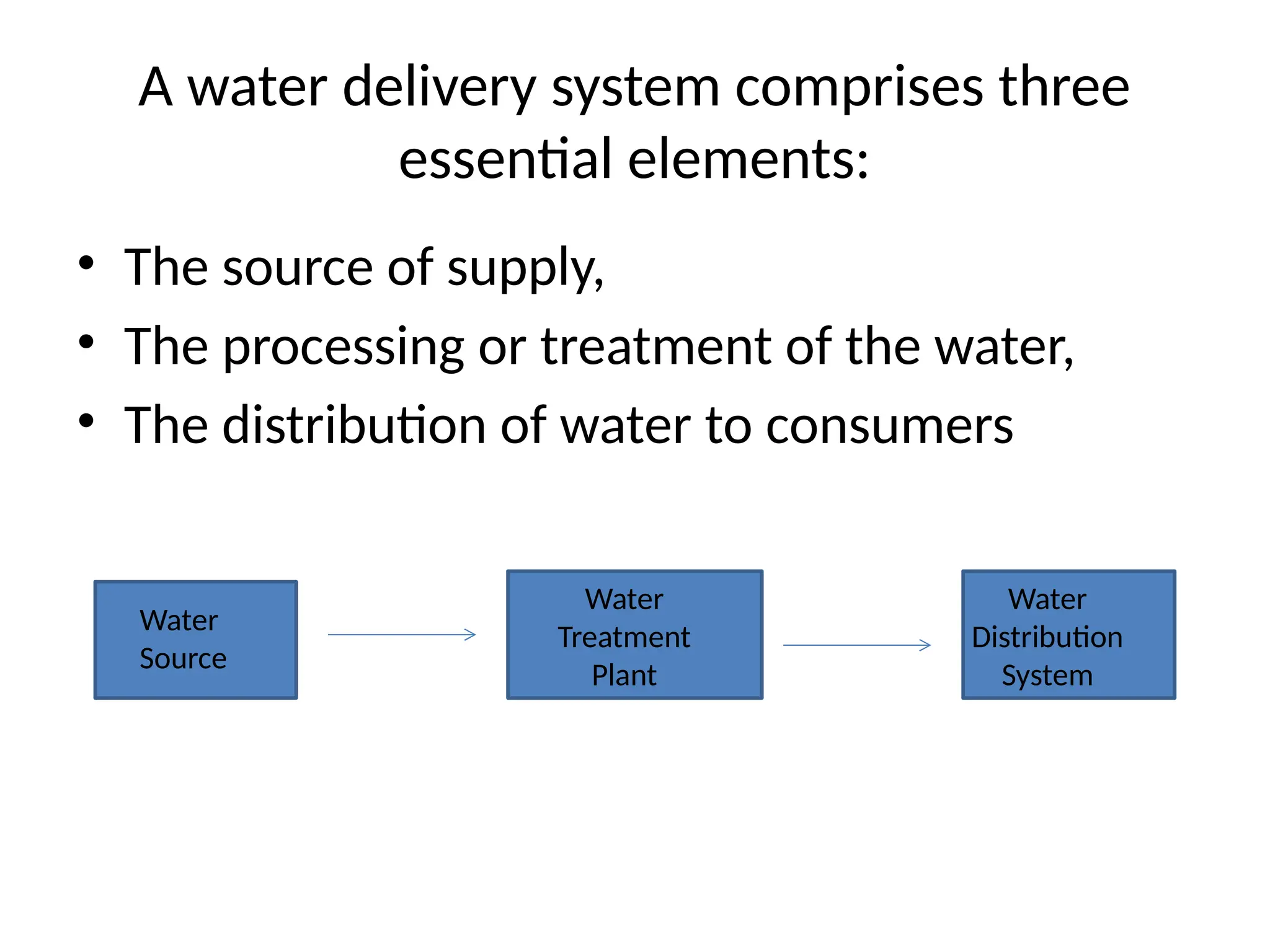
A water delivery system comprises three
essential elements:
• The source of supply,
• The processing or treatment of the water,
• The distribution of water to consumers
Water
Source
Water
Treatment
Plant
Water
Distribution
System
1. The source of supply
• The raw water source for a public water system
must have enough water to satisfy urban,
institutional, and industrial needs, as well as
fire-fighting demand. The most common kinds
of water are sourced either from the surface or
the ground.
• Wide rivers or dams are used to provide
surface water; a small stream can even be
ideal.
Sources of Water
• Ground water: Open well, tube well/bore well, hand pump
are sources which make water available from ground
• Open Well: Where ground water is available at low depth
(less than 15 meters - and water is available all year round,
open well is used.
• Hand Pump: Where safe ground water is available upto 60
m depth, hand pump is ideal choice for a cluster or
habitation.
• Bore Well/Tube Well: Where ground water is at greater
depth and open wells or hand pumps are not viable, bore
well or tube well is installed.
• Surface Water: River, pond, dam site are sources where
surface water is available.
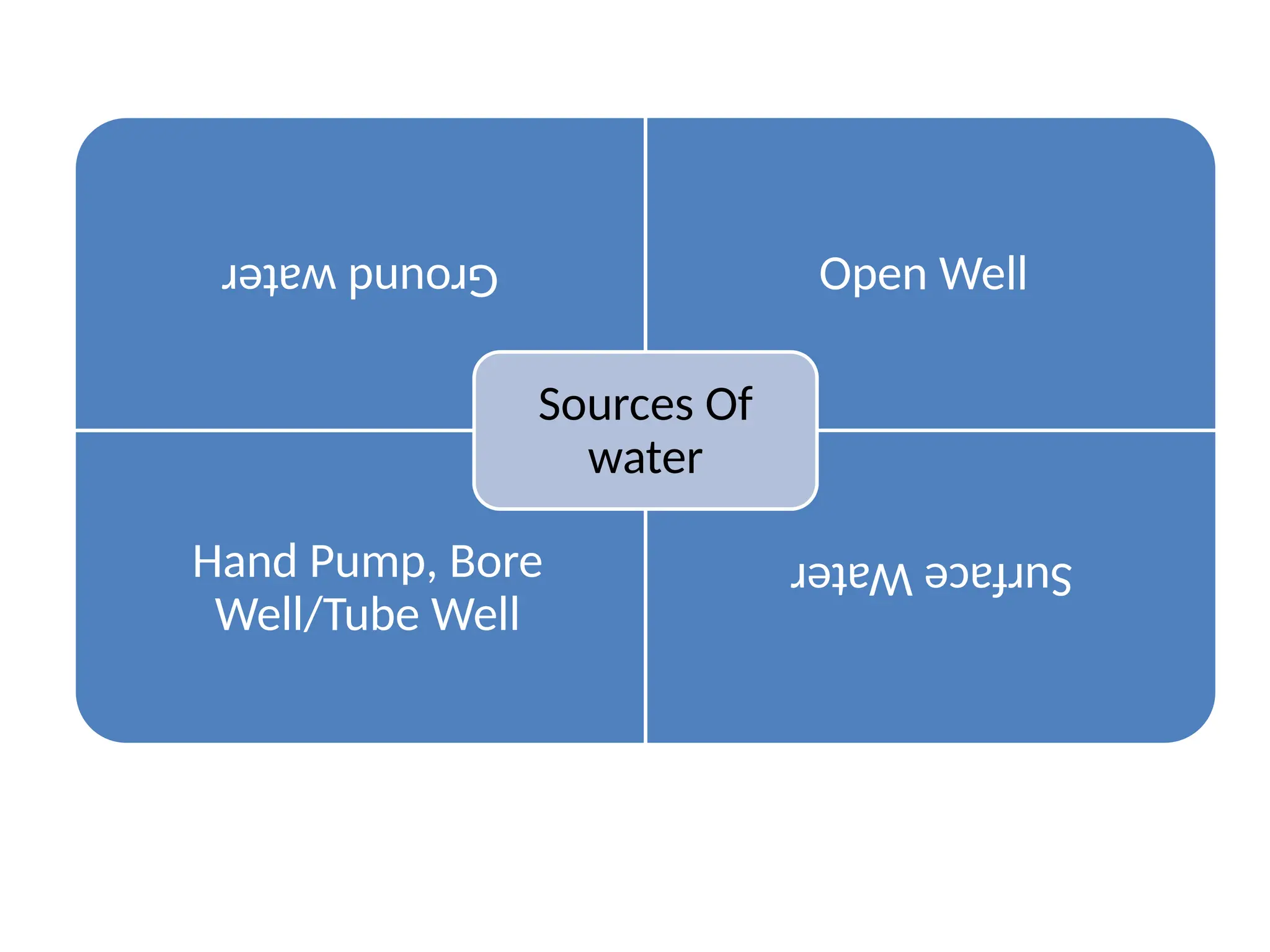
Ground
water Open Well
Hand Pump, Bore
Well/Tube Well
Surface
Water
Sources Of
water
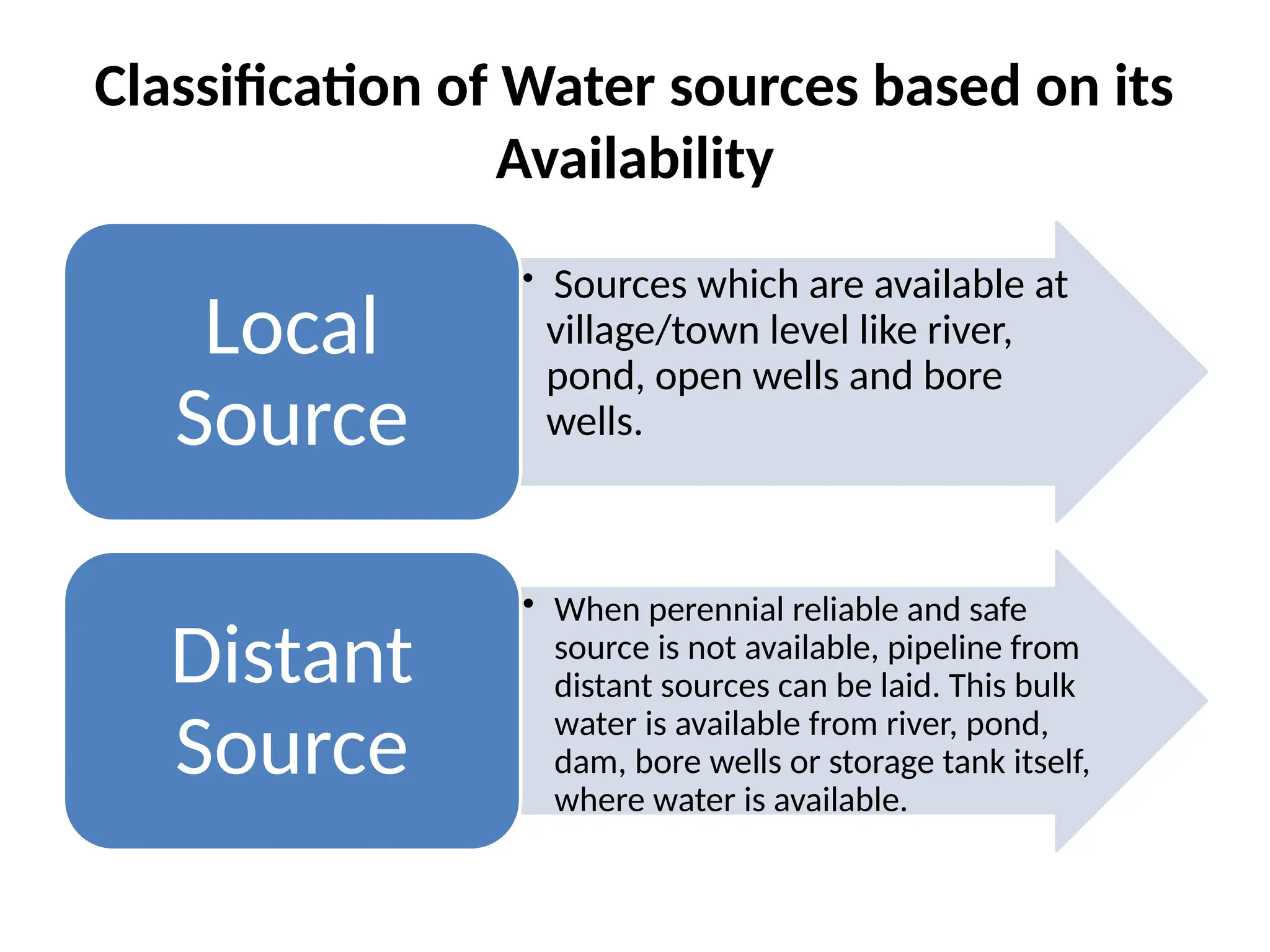
Classification of Water sources based on its
Availability
• Sources which are available at
village/town level like river,
pond, open wells and bore
wells.
Local
Source
• When perennial reliable and safe
source is not available, pipeline from
distant sources can be laid. This bulk
water is available from river, pond,
dam, bore wells or storage tank itself,
where water is available.
Distant
Source
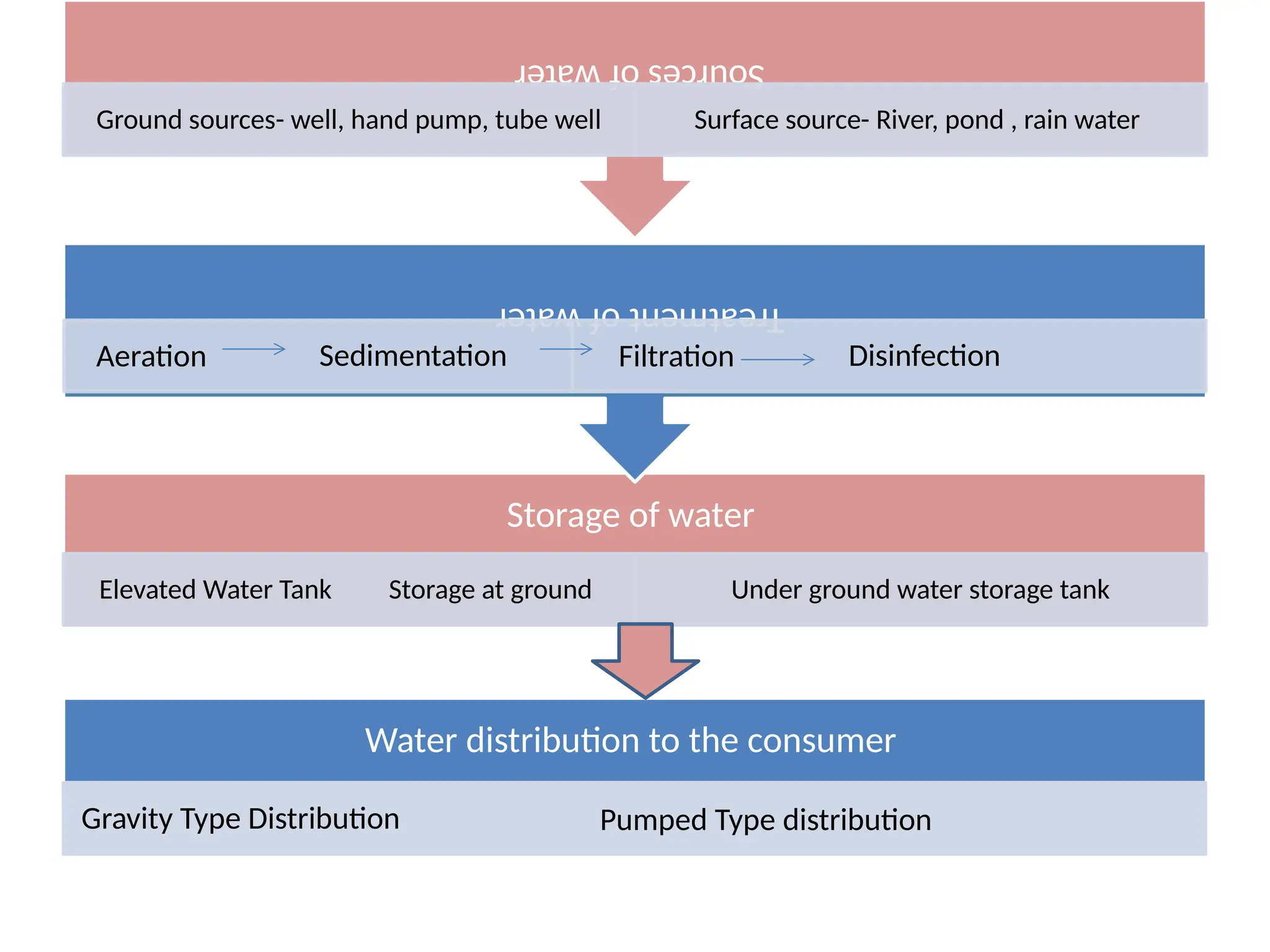
Storage of water
Elevated Water Tank Storage at ground Under ground water storage tank
Treatment
of
water
Aeration Filtration
Sources
of
water
Ground sources- well, hand pump, tube well Surface source- River, pond , rain water
Water distribution to the consumer
Sedimentation Disinfection
Pumped Type distribution
Gravity Type Distribution
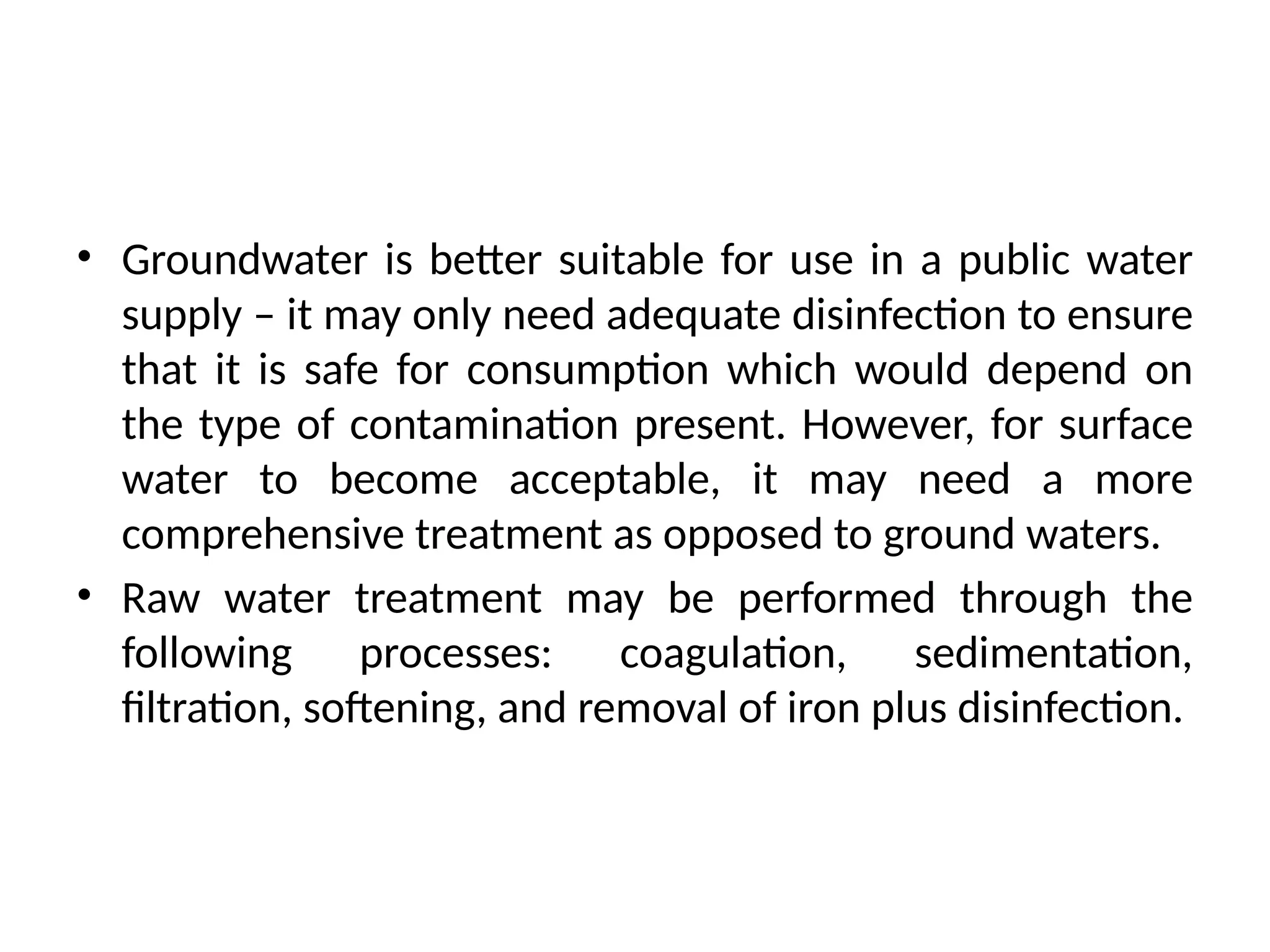
2. The process of treatment of the water
Need for water treatment:
• Surface water quality may vary since this type of water may contain
microorganisms that may or may not include organic or inorganic
particles and contain dissolved solids.
• Surface water may look, taste, and smell undesirable because it may
be contaminated with sewage, industrial waste, agricultural runoff,
and animal waste.
• Conversely, groundwater, although also contaminated because of
human activity, is way more clear, lacks color, and has lower
concentrations of microbes than its counterpart due to the natural
filtration system developed by the earth from the soil, sand, or gravel.
• Groundwater is better suitable for use in a public water
supply – it may only need adequate disinfection to ensure
that it is safe for consumption which would depend on
the type of contamination present. However, for surface
water to become acceptable, it may need a more
comprehensive treatment as opposed to ground waters.
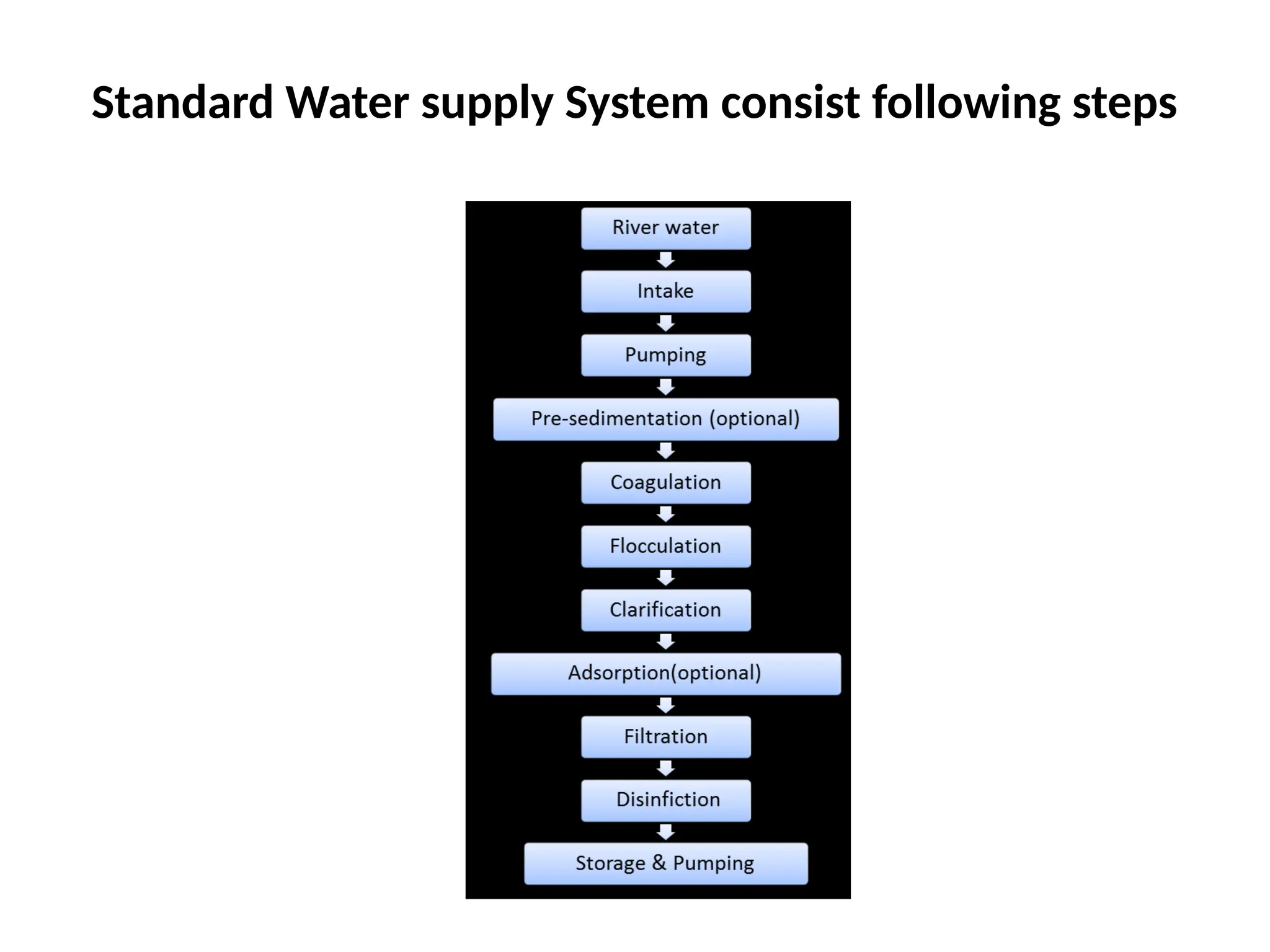
• Raw water treatment may be performed through the
following processes: coagulation, sedimentation,
filtration, softening, and removal of iron plus disinfection.
Standard Water supply System consist following steps
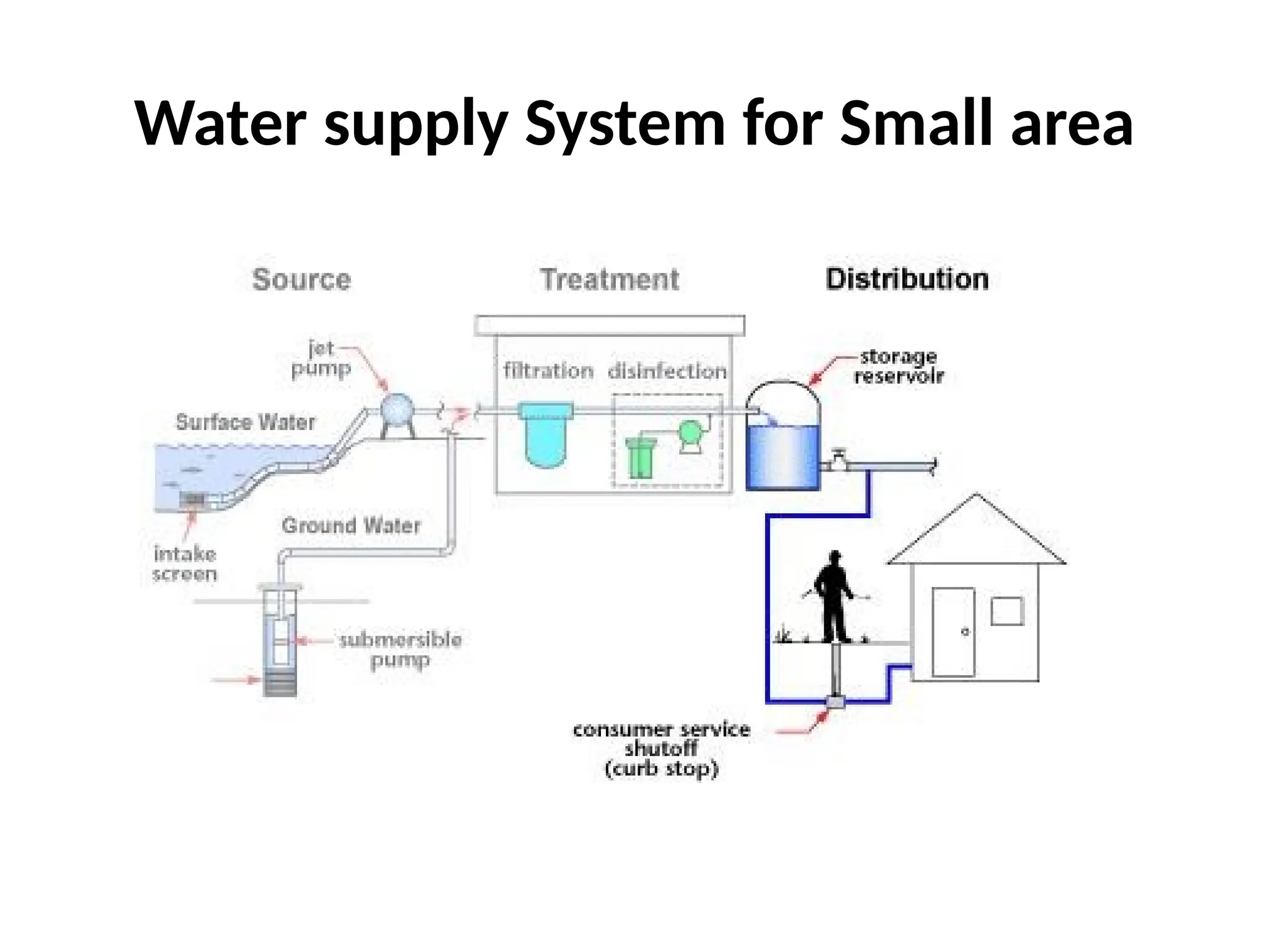
Water supply System for Small area
3.The distribution of water to consumers
• The distribution system is responsible for the
transportation of water from the treatment
plant to the would-be consumers.
• For efficient distribution, it is required that
water should reach end use with required flow
rate with needed pressure in the piping
system.
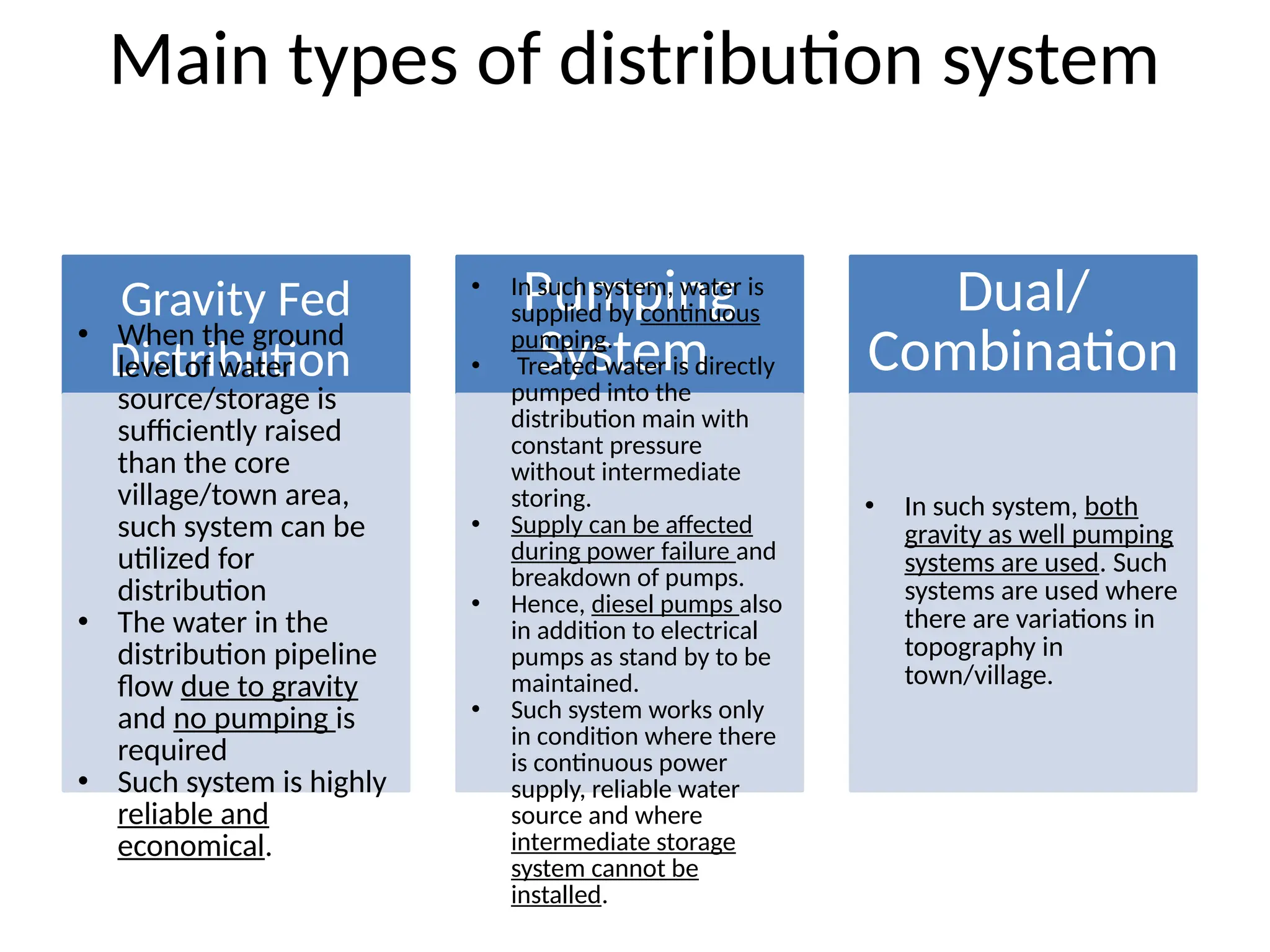
Main types of distribution system
Gravity Fed
Distribution
• When the ground
level of water
source/storage is
sufficiently raised
than the core
village/town area,
such system can be
utilized for
distribution
• The water in the
distribution pipeline
flow due to gravity
and no pumping is
required
• Such system is highly
reliable and
economical.
Pumping
System
• In such system, water is
supplied by continuous
pumping.
• Treated water is directly
pumped into the
distribution main with
constant pressure
without intermediate
storing.
• Supply can be affected
during power failure and
breakdown of pumps.
• Hence, diesel pumps also
in addition to electrical
pumps as stand by to be
maintained.
• Such system works only
in condition where there
is continuous power
supply, reliable water
source and where
intermediate storage
system cannot be
installed.
Dual/
Combination
• In such system, both
gravity as well pumping
systems are used. Such
systems are used where
there are variations in
topography in
town/village.
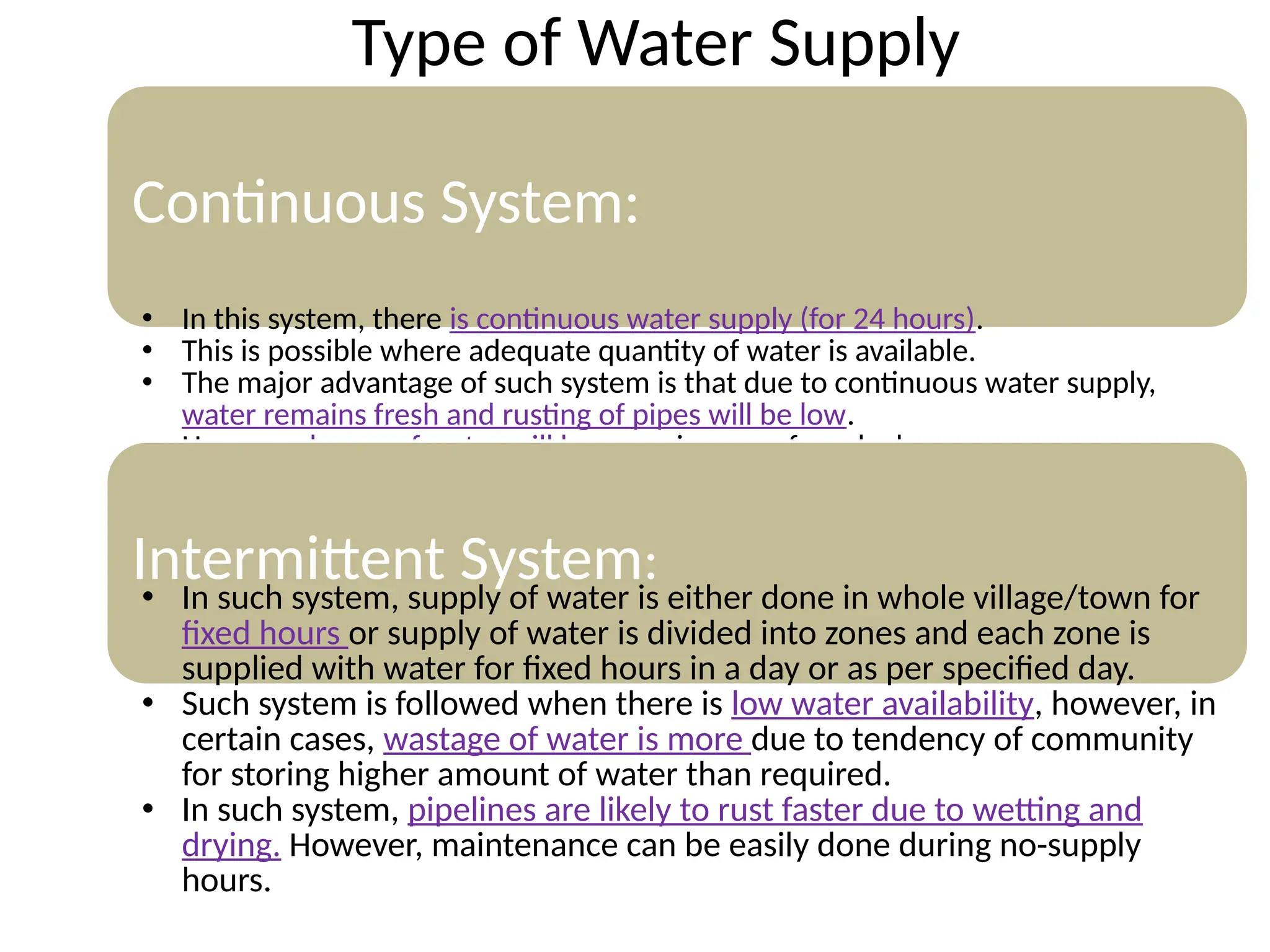
Type of Water Supply
Continuous System:
• In this system, there is continuous water supply (for 24 hours).
• This is possible where adequate quantity of water is available.
• The major advantage of such system is that due to continuous water supply,
water remains fresh and rusting of pipes will be low.
• However, losses of water will be more in case of any leakage.
Intermittent System:
• In such system, supply of water is either done in whole village/town for
fixed hours or supply of water is divided into zones and each zone is
supplied with water for fixed hours in a day or as per specified day.
• Such system is followed when there is low water availability, however, in
certain cases, wastage of water is more due to tendency of community
for storing higher amount of water than required.
• In such system, pipelines are likely to rust faster due to wetting and
drying. However, maintenance can be easily done during no-supply
hours.
Thank You

introduction to water supply scheme.pptx

  • 1.
    Prof. Mrs D.A. Latthe Assistant Professor Dr. J. J. Magdum College of Engineering, Jaysingpur Introduction to Water Supply Scheme
  • 2.
    Water Supply Schemeis divided into 3 parts: • Data collection for water supply scheme • Components and • layout of water supply scheme
  • 3.
    A water deliverysystem comprises three essential elements: • The source of supply, • The processing or treatment of the water, • The distribution of water to consumers Water Source Water Treatment Plant Water Distribution System
  • 4.
    1. The sourceof supply • The raw water source for a public water system must have enough water to satisfy urban, institutional, and industrial needs, as well as fire-fighting demand. The most common kinds of water are sourced either from the surface or the ground. • Wide rivers or dams are used to provide surface water; a small stream can even be ideal.
  • 5.
    Sources of Water •Ground water: Open well, tube well/bore well, hand pump are sources which make water available from ground • Open Well: Where ground water is available at low depth (less than 15 meters - and water is available all year round, open well is used. • Hand Pump: Where safe ground water is available upto 60 m depth, hand pump is ideal choice for a cluster or habitation. • Bore Well/Tube Well: Where ground water is at greater depth and open wells or hand pumps are not viable, bore well or tube well is installed. • Surface Water: River, pond, dam site are sources where surface water is available.
  • 6.
    Ground water Open Well HandPump, Bore Well/Tube Well Surface Water Sources Of water
  • 7.
    Classification of Watersources based on its Availability • Sources which are available at village/town level like river, pond, open wells and bore wells. Local Source • When perennial reliable and safe source is not available, pipeline from distant sources can be laid. This bulk water is available from river, pond, dam, bore wells or storage tank itself, where water is available. Distant Source
  • 8.
    Storage of water ElevatedWater Tank Storage at ground Under ground water storage tank Treatment of water Aeration Filtration Sources of water Ground sources- well, hand pump, tube well Surface source- River, pond , rain water Water distribution to the consumer Sedimentation Disinfection Pumped Type distribution Gravity Type Distribution
  • 9.
    2. The processof treatment of the water Need for water treatment: • Surface water quality may vary since this type of water may contain microorganisms that may or may not include organic or inorganic particles and contain dissolved solids. • Surface water may look, taste, and smell undesirable because it may be contaminated with sewage, industrial waste, agricultural runoff, and animal waste. • Conversely, groundwater, although also contaminated because of human activity, is way more clear, lacks color, and has lower concentrations of microbes than its counterpart due to the natural filtration system developed by the earth from the soil, sand, or gravel.
  • 10.
    • Groundwater isbetter suitable for use in a public water supply – it may only need adequate disinfection to ensure that it is safe for consumption which would depend on the type of contamination present. However, for surface water to become acceptable, it may need a more comprehensive treatment as opposed to ground waters. • Raw water treatment may be performed through the following processes: coagulation, sedimentation, filtration, softening, and removal of iron plus disinfection.
  • 11.
    Standard Water supplySystem consist following steps
  • 12.
    Water supply Systemfor Small area
  • 13.
    3.The distribution ofwater to consumers • The distribution system is responsible for the transportation of water from the treatment plant to the would-be consumers. • For efficient distribution, it is required that water should reach end use with required flow rate with needed pressure in the piping system.
  • 14.
    Main types ofdistribution system Gravity Fed Distribution • When the ground level of water source/storage is sufficiently raised than the core village/town area, such system can be utilized for distribution • The water in the distribution pipeline flow due to gravity and no pumping is required • Such system is highly reliable and economical. Pumping System • In such system, water is supplied by continuous pumping. • Treated water is directly pumped into the distribution main with constant pressure without intermediate storing. • Supply can be affected during power failure and breakdown of pumps. • Hence, diesel pumps also in addition to electrical pumps as stand by to be maintained. • Such system works only in condition where there is continuous power supply, reliable water source and where intermediate storage system cannot be installed. Dual/ Combination • In such system, both gravity as well pumping systems are used. Such systems are used where there are variations in topography in town/village.
  • 15.
    Type of WaterSupply Continuous System: • In this system, there is continuous water supply (for 24 hours). • This is possible where adequate quantity of water is available. • The major advantage of such system is that due to continuous water supply, water remains fresh and rusting of pipes will be low. • However, losses of water will be more in case of any leakage. Intermittent System: • In such system, supply of water is either done in whole village/town for fixed hours or supply of water is divided into zones and each zone is supplied with water for fixed hours in a day or as per specified day. • Such system is followed when there is low water availability, however, in certain cases, wastage of water is more due to tendency of community for storing higher amount of water than required. • In such system, pipelines are likely to rust faster due to wetting and drying. However, maintenance can be easily done during no-supply hours.
  • 16.