Water supply system's layout
Prof. Mrs. D. A. Latthe
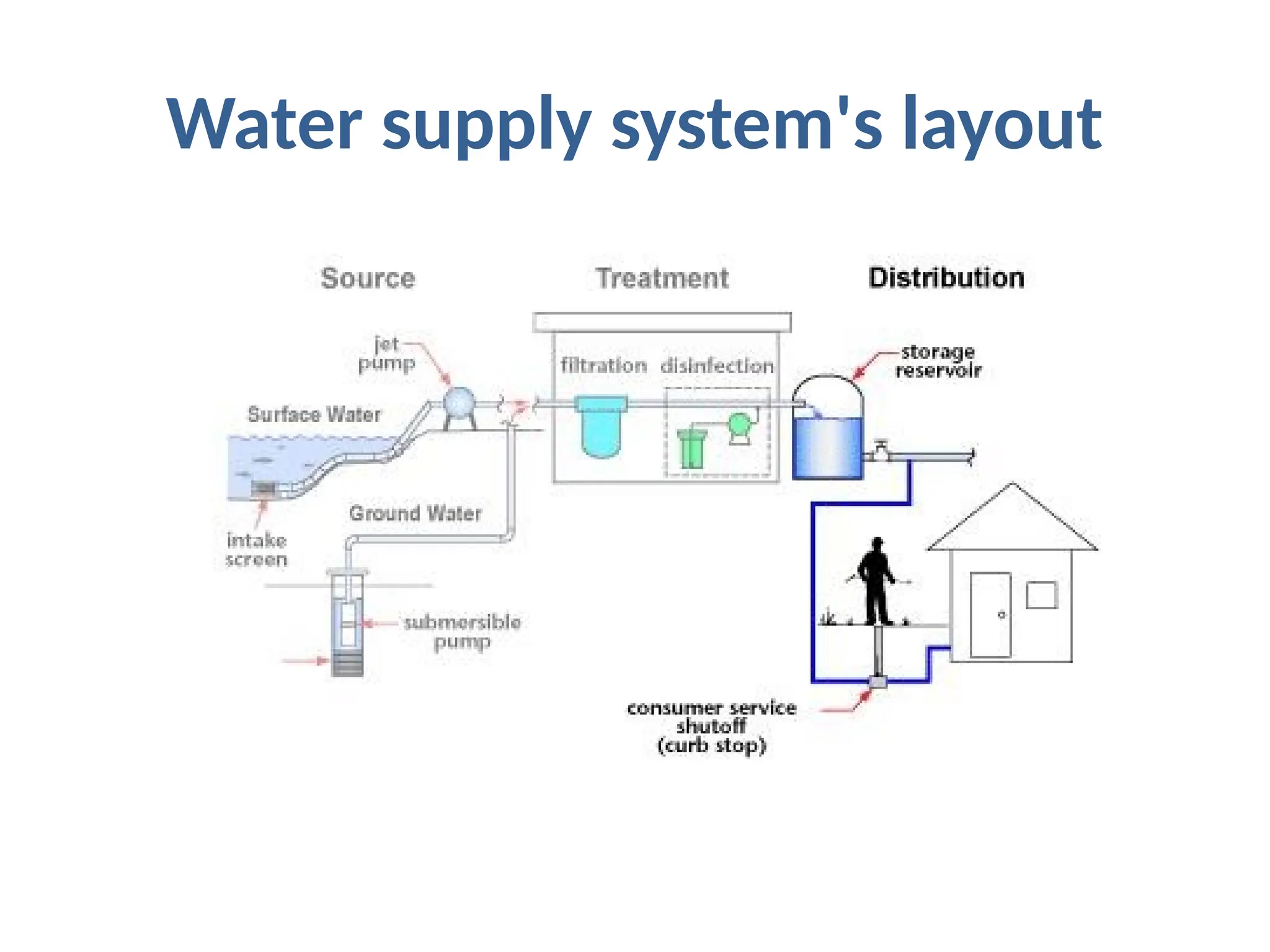
Water supply system's layout
• source, treatment, storage, and distribution
components.
• These components work together to deliver
potable water to consumers. The source (e.g.,
rivers, lakes, aquifers) provides raw water,
which is then treated to remove impurities.
• Treated water is stored in reservoirs or tanks
before being distributed through pipes to
homes and businesses.
Objective of water supply system
• To deliver safe wholesome water to the consumer
with quality, quantity, pressure, and at low cost.
• To make water available within easy reach of
consumers.
• To make adequate provisions for emergencies like
fire fighting, festivals, meetings, etc.
• To reduce environmental pollution and
unemployment.
• To protect from water born disease.
• To improve the economic condition of the locality
and maintain better sanitation.
1. Water Source:
• Surface Water: Rivers, lakes, and reservoirs
are common surface water sources.
• Groundwater: Wells and springs tap into
underground water reserves.
2. Treatment:
• Intake Structures: Facilities to withdraw water
from the source (e.g., dams, pumps).
• Treatment Plants: Processes to remove
contaminants like bacteria, sediments, and
chemicals. This may involve filtration,
disinfection (e.g., chlorination), and other
methods.
Treatment
• Screening
• Aeration
• Flocculation
• Sedimentation
• Filtration
• Disinfection
3. Storage:
• Reservoirs: Large-scale storage facilities (e.g.,
dams, elevated tanks) to maintain a consistent
water supply.
• Tanks: Smaller storage units, often used for
balancing supply and demand.
Storage reservoir
• Storage Reservoir
• Flood control Reservoir
• Multipurpose Reservoir
• Distribution Reservoir
• Surface Reservoir
• Elevated Reservoir
4. Distribution:
• Pumping Stations: Power the water through the distribution
network, especially when elevation changes require it.
• Transmission Mains: Large-diameter pipes that carry water from
treatment plants to storage and distribution areas.
• Distribution Networks: A system of interconnected pipes (mains,
sub-mains, and service lines) that deliver water to individual
properties.
• Valves: Control water flow and pressure within the system.
• Fire Hydrants: Provide a readily available water source for
firefighting.
• Service Connections: Individual connections to homes and
businesses.
Distribution system
• Dead end System
• Radial System
• Grid Iron System
• Ring System
Thank You!

water ditribution system- steps and types.pptx

  • 1.
    Water supply system'slayout Prof. Mrs. D. A. Latthe
  • 2.
  • 3.
    • source, treatment,storage, and distribution components. • These components work together to deliver potable water to consumers. The source (e.g., rivers, lakes, aquifers) provides raw water, which is then treated to remove impurities. • Treated water is stored in reservoirs or tanks before being distributed through pipes to homes and businesses.
  • 4.
    Objective of watersupply system • To deliver safe wholesome water to the consumer with quality, quantity, pressure, and at low cost. • To make water available within easy reach of consumers. • To make adequate provisions for emergencies like fire fighting, festivals, meetings, etc. • To reduce environmental pollution and unemployment. • To protect from water born disease. • To improve the economic condition of the locality and maintain better sanitation.
  • 5.
    1. Water Source: •Surface Water: Rivers, lakes, and reservoirs are common surface water sources. • Groundwater: Wells and springs tap into underground water reserves.
  • 6.
    2. Treatment: • IntakeStructures: Facilities to withdraw water from the source (e.g., dams, pumps). • Treatment Plants: Processes to remove contaminants like bacteria, sediments, and chemicals. This may involve filtration, disinfection (e.g., chlorination), and other methods.
  • 7.
    Treatment • Screening • Aeration •Flocculation • Sedimentation • Filtration • Disinfection
  • 8.
    3. Storage: • Reservoirs:Large-scale storage facilities (e.g., dams, elevated tanks) to maintain a consistent water supply. • Tanks: Smaller storage units, often used for balancing supply and demand.
  • 9.
    Storage reservoir • StorageReservoir • Flood control Reservoir • Multipurpose Reservoir • Distribution Reservoir • Surface Reservoir • Elevated Reservoir
  • 10.
    4. Distribution: • PumpingStations: Power the water through the distribution network, especially when elevation changes require it. • Transmission Mains: Large-diameter pipes that carry water from treatment plants to storage and distribution areas. • Distribution Networks: A system of interconnected pipes (mains, sub-mains, and service lines) that deliver water to individual properties. • Valves: Control water flow and pressure within the system. • Fire Hydrants: Provide a readily available water source for firefighting. • Service Connections: Individual connections to homes and businesses.
  • 11.
    Distribution system • Deadend System • Radial System • Grid Iron System • Ring System
  • 12.