


Introduction
to
Medical Sociology
Dr. Amarveer Singh Mehta
Assistant Professor
Deptt. Of Community Medicine
FH Medical College, Tundla.
Introduction
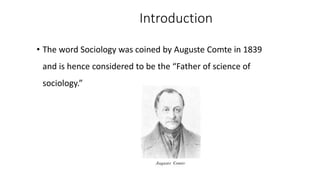
• The word Sociology was coined by Auguste Comte in 1839
and is hence considered to be the “Father of science of
sociology.”
Medical Sociology
Includes studies of
• Medical profession
• Relationship of medicine to public
• Role of social factor in etiology, incidence, prevalence
and interpretation of diseases.
• Sociology : Study of individual as well as group in society.
• Society : a group of individuals who have organized themselves
and follow a given way of life.
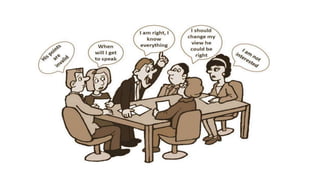
GROUP:
• Is a collection of human beings,
• Is an artificial creation.
• Membership is voluntary,
• Is always organised,
• Has always a specific purpose,
• Is marked by co-operation among members,
• May be temporary
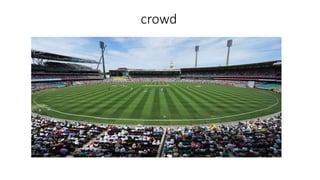
crowd
SOCIETY:
• Is a system of social relationships.
• Is a natural group whose membership is compulsory.
• Is organised
• Has only a general purpose,
• Marked by co-operation & conflicts
• Is permanent.
• Has essential elements
• Shows co-operation.
• Therefore a society is an organised group of people with complex patterns
of norms of interactions that arise among them.
Community
• A community is a social group determined by
geographical boundaries and/ or common values and
interests.
• Its members know and interacts with each other.
• It functions within a particular social structure and
exhibits and creates certain norms, values and social
institutions.
Community
• Structural communities are organised by geographical or political
boundaries.
• It could be as small as an ‘indoor patient’s community in a
hospital or increasingly larger, according to a mohalla, village,
slum, city, district, state or even a nation.
Role
• In a society, individuals are allocated roles.
• Sociologist have classified roles into ascribed and achieved,
according to whether a particular role is “given” by a virtue
of sex, age, and birth status or “acquired” by virtue of
education or otherwise.
Social Control Mechanisms
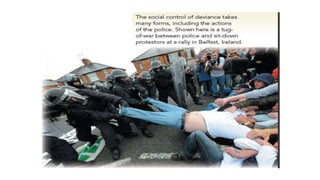
• In every society there are rules, formal and informal, for
the maintenance of relationships of authority and
subordinations.
• In the field of health, there are various Acts, some central
and others state or local which help to maintain standards
of health.
Social Control Mechanisms
• The informal social pressure may be exerted by powerful groups,
individuals or friends.
• These mechanisms work largely through reward and
punishment.
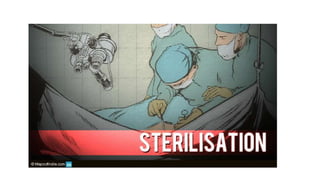
• e.g., In India, the government is offering a small financial reward
to those who undergo sterilization operation.
• It is a sort of informal social pressure to further the programme
of family planning in India.
Customs
• The mere existence of a society, the mere plurality of
individuals gives rise to customs.
• quite numerous and quite as powerful.
Customs
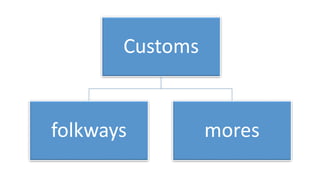
folkways mores
Customs
• The folkways are right ways of doing things in what is
regarded as the less vital areas of human conduct.
• The more stringent customs are called “mores”. The public
takes active parts in their enforcement.
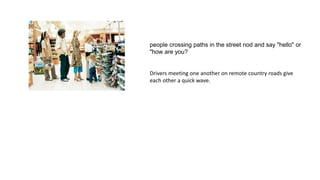
people crossing paths in the street nod and say "hello" or
"how are you?
Drivers meeting one another on remote country roads give
each other a quick wave.
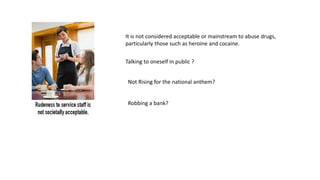
It is not considered acceptable or mainstream to abuse drugs,
particularly those such as heroine and cocaine.
Talking to oneself in public ?
Not Rising for the national anthem?
Robbing a bank?
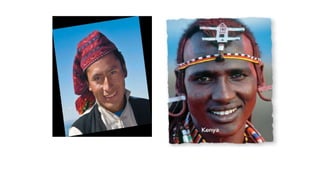
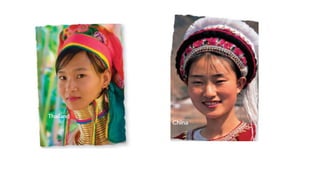
Culture
• Culture : “learned behaviour which has been socially
acquired”.
• Product of human societies, and man is largely a product of his
cultural environment.
• Transmitted from one generation to another through learning
processes.
• Culture stands for the customs, beliefs, laws, religion and
moral precepts, arts and other capabilities and skills acquired
by man as a member of society.
Culture
• Every culture has its own customs, some of which have a
profound influence on the incidence of disease.
• In developed countries, for example, cancer of the lung from
smoking and cirrhosis of liver from drinking alcohol are the
result of the abuse of widely proclaimed social habits.
• In India, chewing pan is associated with oral cancer.
Acculturation
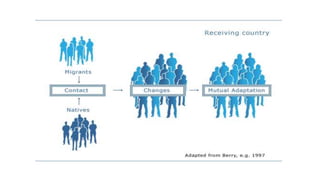
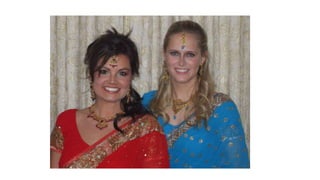
• Acculturation means “culture contact”.
• When there is contact between two people with different types
of culture, there is diffusion of culture both ways.
• There are various ways by which culture contact takes place.
Trade and commerce
Industrialization
Propagation of religion,
Education and
Conquest
Social problems
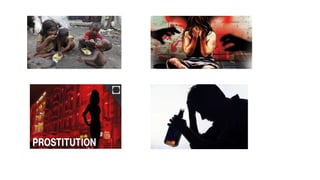
• In a community there are both individual and social
problems.
• Individual problems become social problems when they
affect a large number of people amounting to a threat to
the welfare or safety of the whole group.
Social pathology
• Describes the relation between disease and social conditions,
commonly linked to poverty, crime, delinquency and vagrancy.
• The social pathology has an important role in accident,
diabetes, cardiovascular diseases, cancer etc.
• Social surveys will disclose social pathology.
THANK YOU

Introduction to sociology

  • 1.
    Introduction to Medical Sociology Dr. AmarveerSingh Mehta Assistant Professor Deptt. Of Community Medicine FH Medical College, Tundla.
  • 2.
    Introduction • The wordSociology was coined by Auguste Comte in 1839 and is hence considered to be the “Father of science of sociology.”
  • 3.
    Medical Sociology Includes studiesof • Medical profession • Relationship of medicine to public • Role of social factor in etiology, incidence, prevalence and interpretation of diseases.
  • 4.
    • Sociology :Study of individual as well as group in society. • Society : a group of individuals who have organized themselves and follow a given way of life.
  • 5.
    GROUP: • Is acollection of human beings, • Is an artificial creation. • Membership is voluntary, • Is always organised, • Has always a specific purpose, • Is marked by co-operation among members, • May be temporary
  • 7.
  • 8.
    SOCIETY: • Is asystem of social relationships. • Is a natural group whose membership is compulsory. • Is organised • Has only a general purpose, • Marked by co-operation & conflicts • Is permanent. • Has essential elements • Shows co-operation. • Therefore a society is an organised group of people with complex patterns of norms of interactions that arise among them.
  • 10.
    Community • A communityis a social group determined by geographical boundaries and/ or common values and interests. • Its members know and interacts with each other. • It functions within a particular social structure and exhibits and creates certain norms, values and social institutions.
  • 11.
    Community • Structural communitiesare organised by geographical or political boundaries. • It could be as small as an ‘indoor patient’s community in a hospital or increasingly larger, according to a mohalla, village, slum, city, district, state or even a nation.
  • 16.
    Role • In asociety, individuals are allocated roles. • Sociologist have classified roles into ascribed and achieved, according to whether a particular role is “given” by a virtue of sex, age, and birth status or “acquired” by virtue of education or otherwise.
  • 17.
    Social Control Mechanisms •In every society there are rules, formal and informal, for the maintenance of relationships of authority and subordinations. • In the field of health, there are various Acts, some central and others state or local which help to maintain standards of health.
  • 18.
    Social Control Mechanisms •The informal social pressure may be exerted by powerful groups, individuals or friends. • These mechanisms work largely through reward and punishment. • e.g., In India, the government is offering a small financial reward to those who undergo sterilization operation. • It is a sort of informal social pressure to further the programme of family planning in India.
  • 21.
    Customs • The mereexistence of a society, the mere plurality of individuals gives rise to customs. • quite numerous and quite as powerful.
  • 22.
  • 23.
    Customs • The folkwaysare right ways of doing things in what is regarded as the less vital areas of human conduct. • The more stringent customs are called “mores”. The public takes active parts in their enforcement.
  • 24.
    people crossing pathsin the street nod and say "hello" or "how are you? Drivers meeting one another on remote country roads give each other a quick wave.
  • 25.
    It is notconsidered acceptable or mainstream to abuse drugs, particularly those such as heroine and cocaine. Talking to oneself in public ? Not Rising for the national anthem? Robbing a bank?
  • 26.
    Culture • Culture :“learned behaviour which has been socially acquired”. • Product of human societies, and man is largely a product of his cultural environment. • Transmitted from one generation to another through learning processes. • Culture stands for the customs, beliefs, laws, religion and moral precepts, arts and other capabilities and skills acquired by man as a member of society.
  • 29.
    Culture • Every culturehas its own customs, some of which have a profound influence on the incidence of disease. • In developed countries, for example, cancer of the lung from smoking and cirrhosis of liver from drinking alcohol are the result of the abuse of widely proclaimed social habits. • In India, chewing pan is associated with oral cancer.
  • 30.
    Acculturation • Acculturation means“culture contact”. • When there is contact between two people with different types of culture, there is diffusion of culture both ways. • There are various ways by which culture contact takes place. Trade and commerce Industrialization Propagation of religion, Education and Conquest
  • 33.
    Social problems • Ina community there are both individual and social problems. • Individual problems become social problems when they affect a large number of people amounting to a threat to the welfare or safety of the whole group.
  • 35.
    Social pathology • Describesthe relation between disease and social conditions, commonly linked to poverty, crime, delinquency and vagrancy. • The social pathology has an important role in accident, diabetes, cardiovascular diseases, cancer etc. • Social surveys will disclose social pathology.
  • 36.