INTRO TO CONTENT STRATEGY
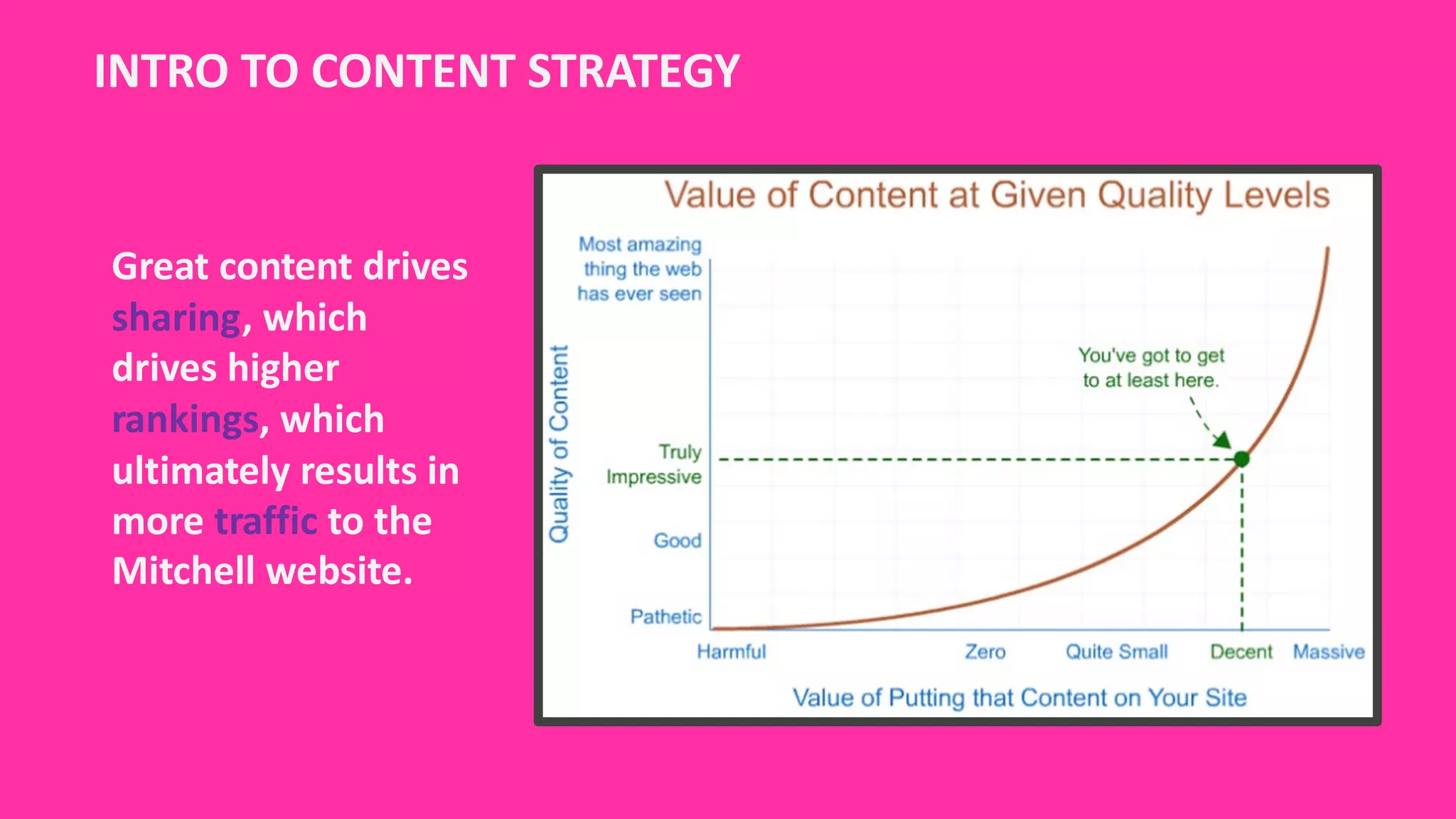
Great content drives
sharing, which
drives higher
rankings, which
ultimately results in
more traffic to the
Mitchell website.
INTRO TO CONTENT STRATEGY
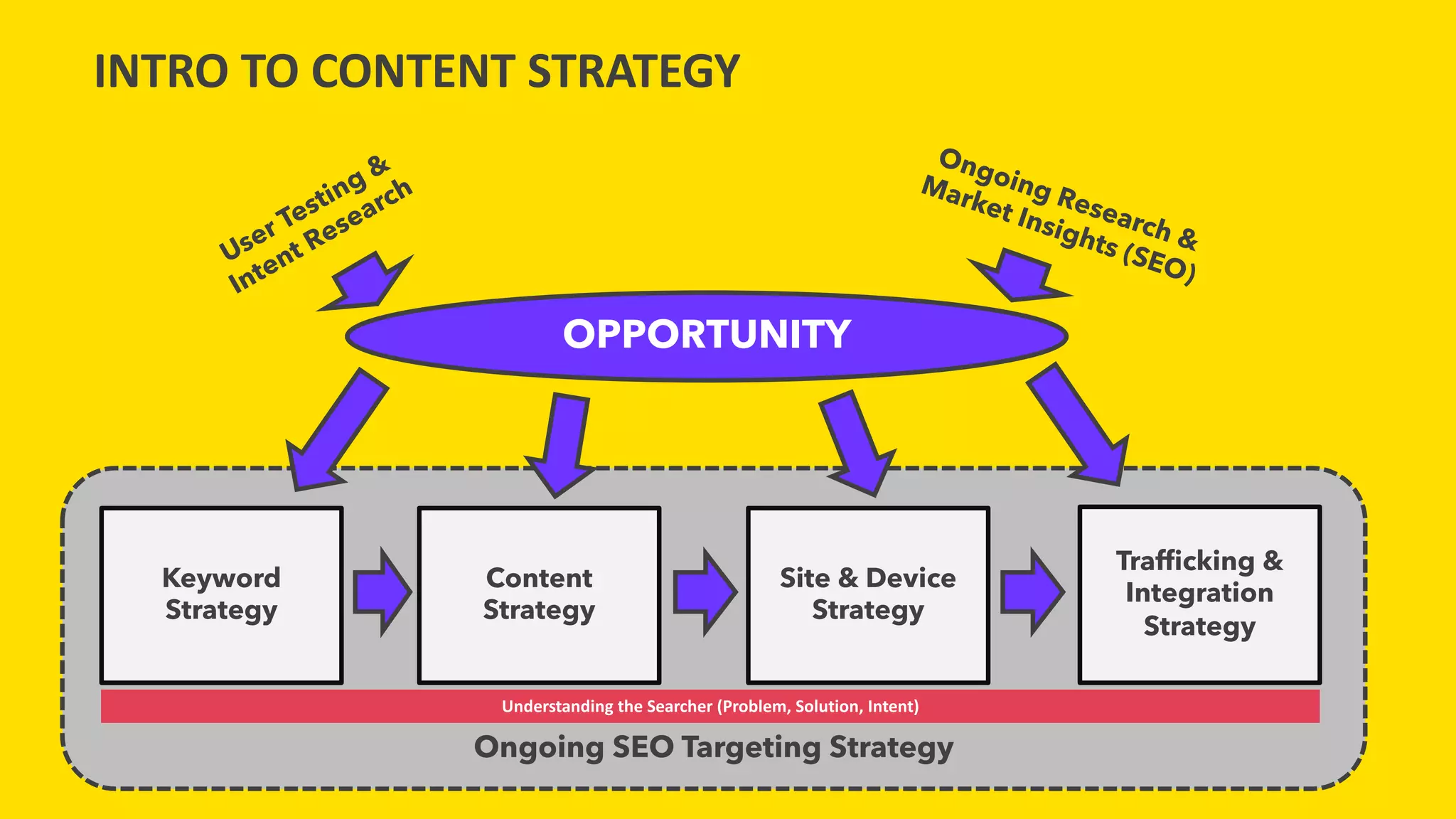
OPPORTUNITY
Keyword
Strategy
Content
Strategy
Site & Device
Strategy
Trafficking &
Integration
Strategy
Ongoing SEO Targeting Strategy
Ongoing Research &
Market Insights (SEO)
User Testing &
Intent Research
Understanding the Searcher (Problem, Solution, Intent)
INTRO TO CONTENT STRATEGY
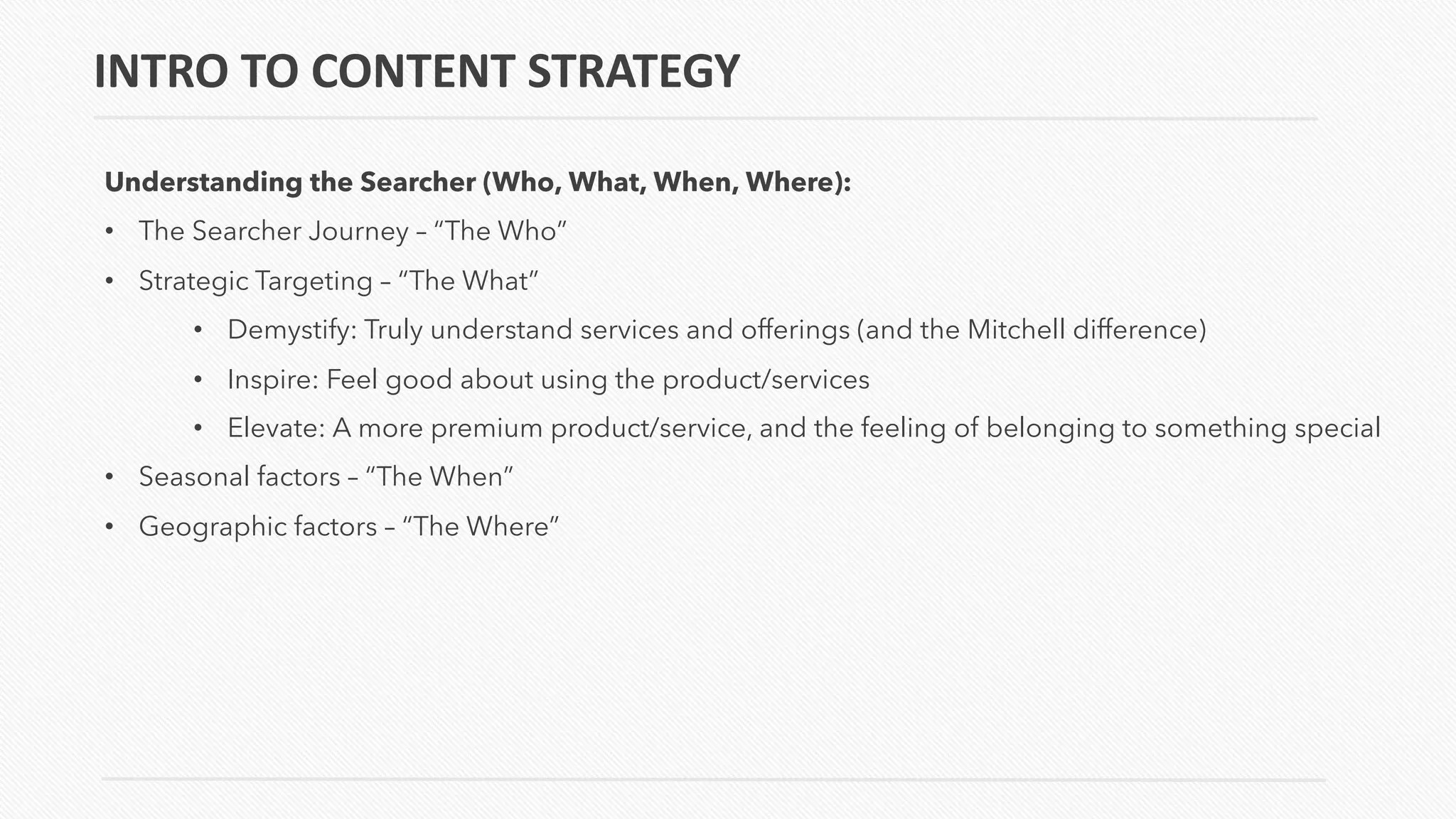
Understanding the Searcher (Who, What, When, Where):
• The Searcher Journey – “The Who”
• Strategic Targeting – “The What”
• Demystify: Truly understand services and offerings (and the Mitchell difference)
• Inspire: Feel good about using the product/services
• Elevate: A more premium product/service, and the feeling of belonging to something special
• Seasonal factors – “The When”
• Geographic factors – “The Where”
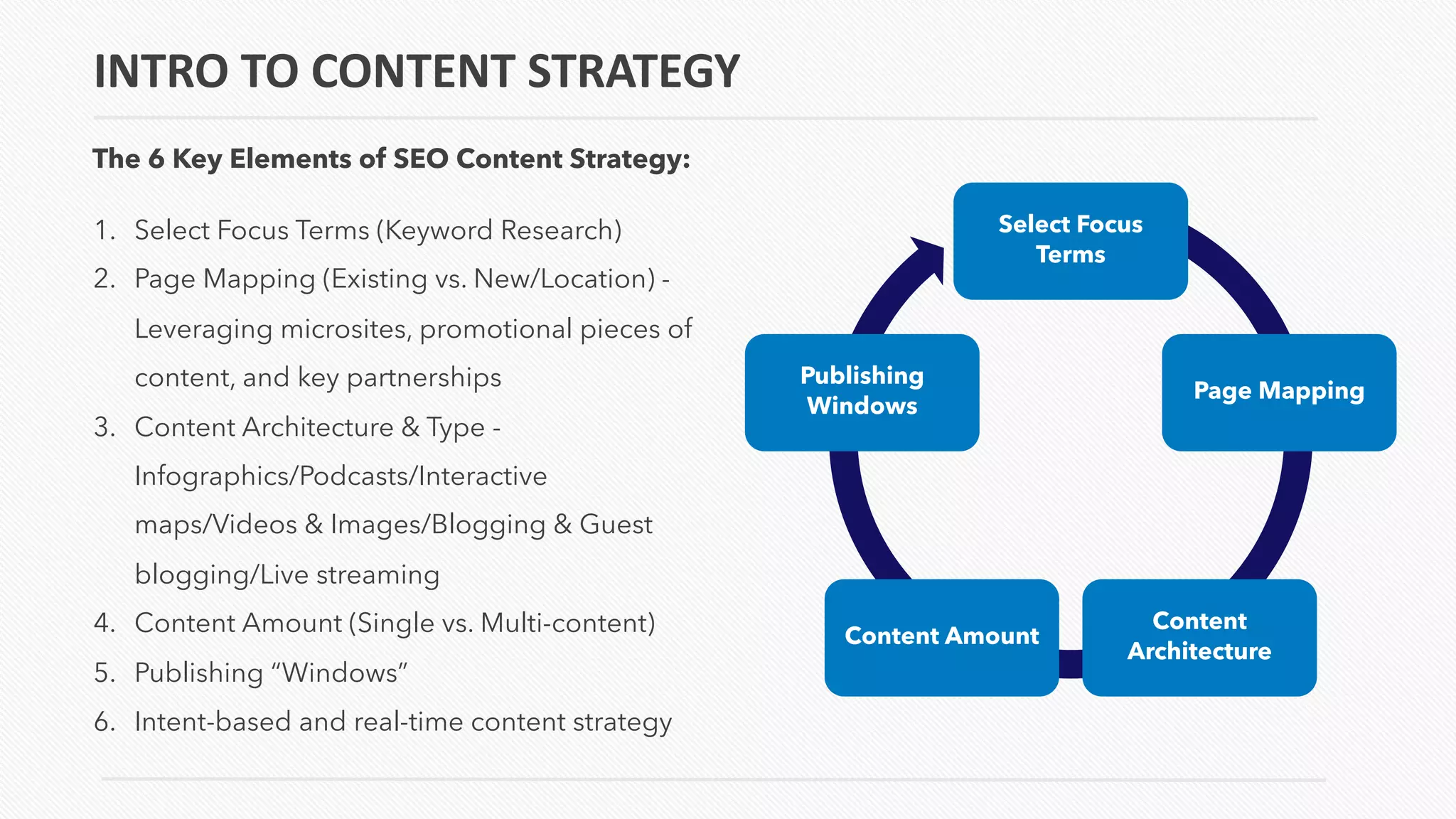
1. Select Focus Terms (Keyword Research)
2. Page Mapping (Existing vs. New/Location) -
Leveraging microsites, promotional pieces of
content, and key partnerships
3. Content Architecture & Type -
Infographics/Podcasts/Interactive
maps/Videos & Images/Blogging & Guest
blogging/Live streaming
4. Content Amount (Single vs. Multi-content)
5. Publishing “Windows”
6. Intent-based and real-time content strategy
The 6 Key Elements of SEO Content Strategy:
Select Focus
Terms
Page Mapping
Content
Architecture
Content Amount
Publishing
Windows
INTRO TO CONTENT STRATEGY
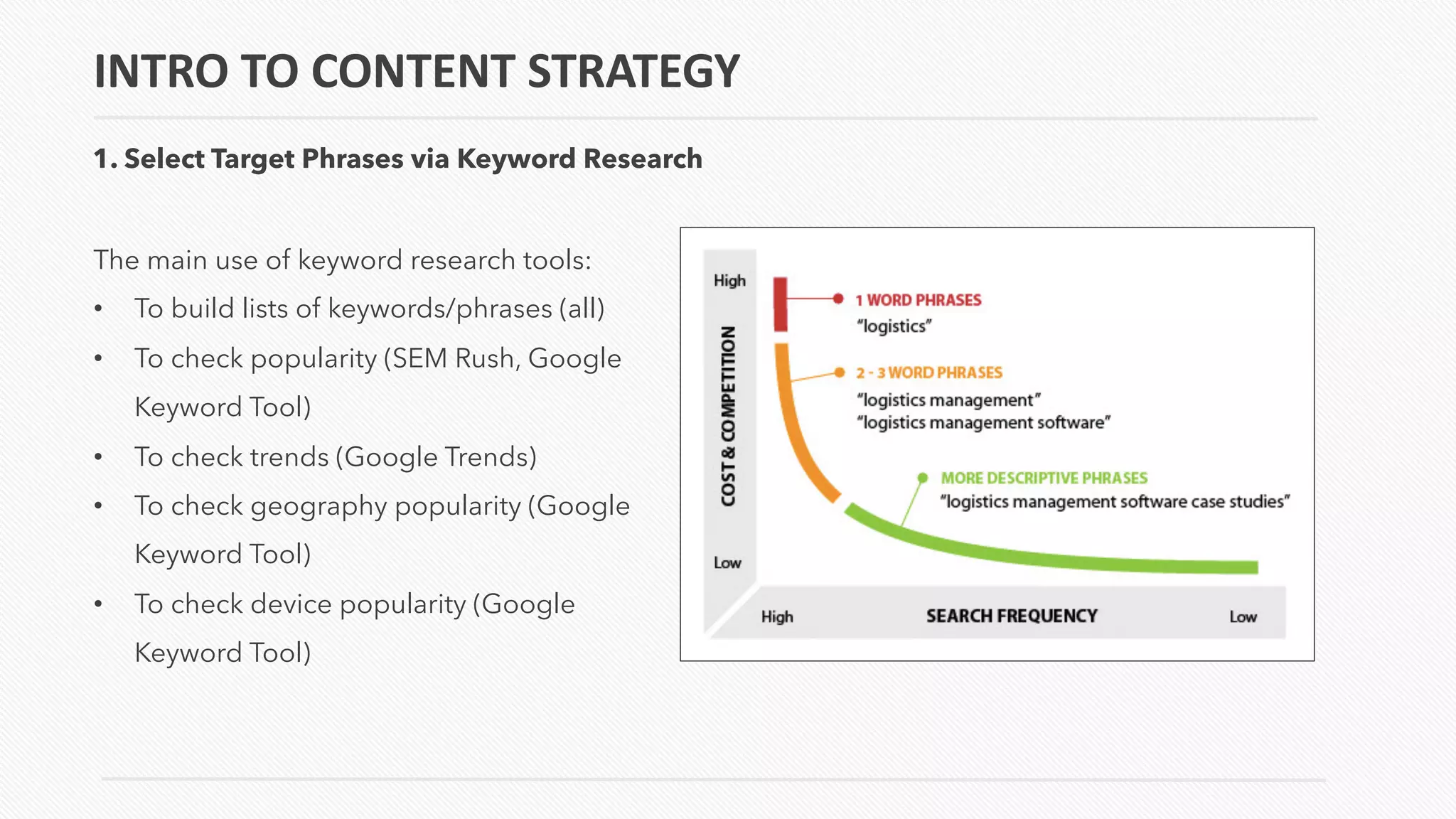
The main use of keyword research tools:
• To build lists of keywords/phrases (all)
• To check popularity (SEM Rush, Google
Keyword Tool)
• To check trends (Google Trends)
• To check geography popularity (Google
Keyword Tool)
• To check device popularity (Google
Keyword Tool)
INTRO TO CONTENT STRATEGY
1. Select Target Phrases via Keyword Research
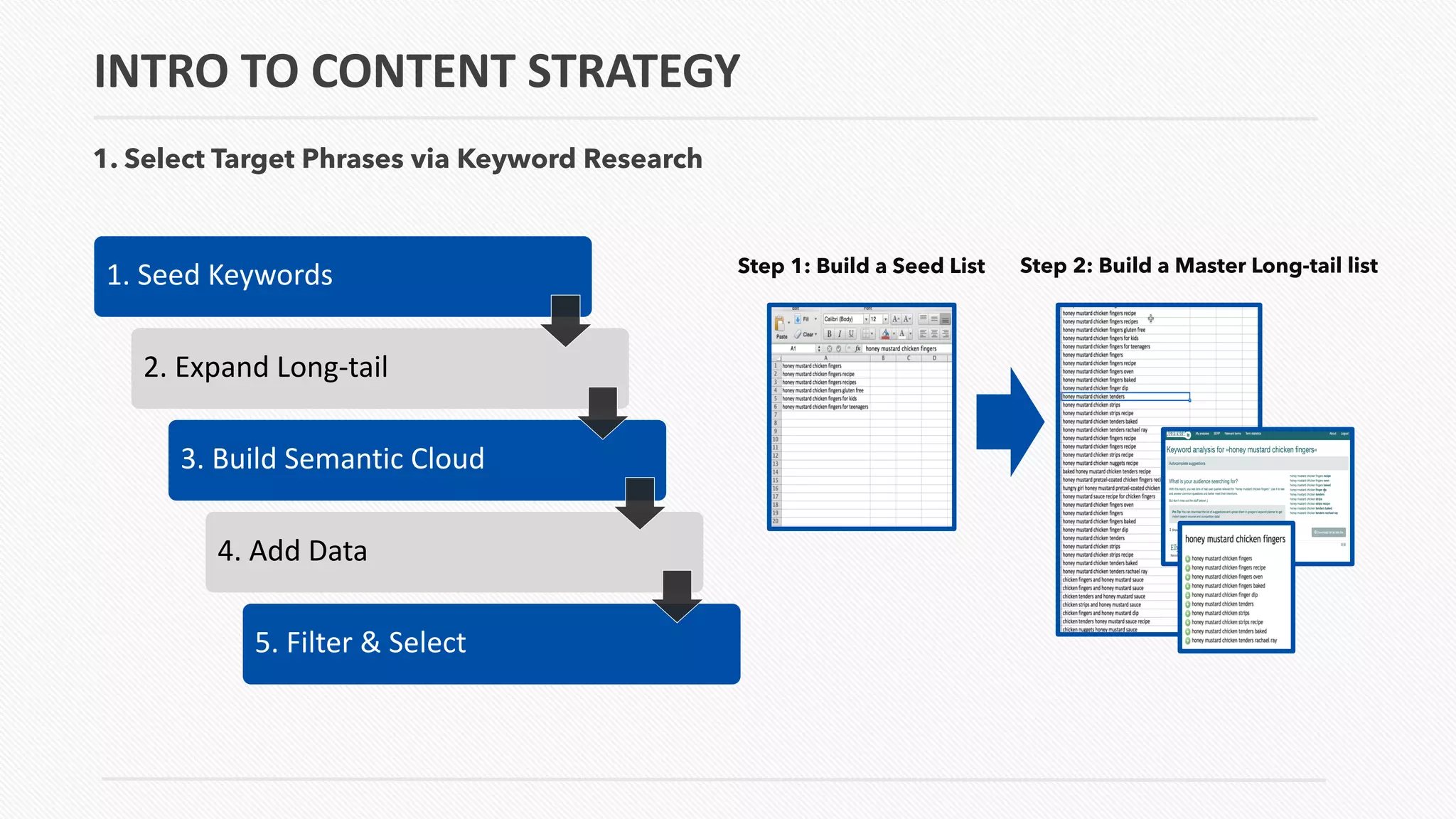
1. Seed Keywords
2. Expand Long-tail
3. Build Semantic Cloud
4. Add Data
5. Filter & Select
Step 1: Build a Seed List Step 2: Build a Master Long-tail list
INTRO TO CONTENT STRATEGY
1. Select Target Phrases via Keyword Research
INTRO TO CONTENT STRATEGY
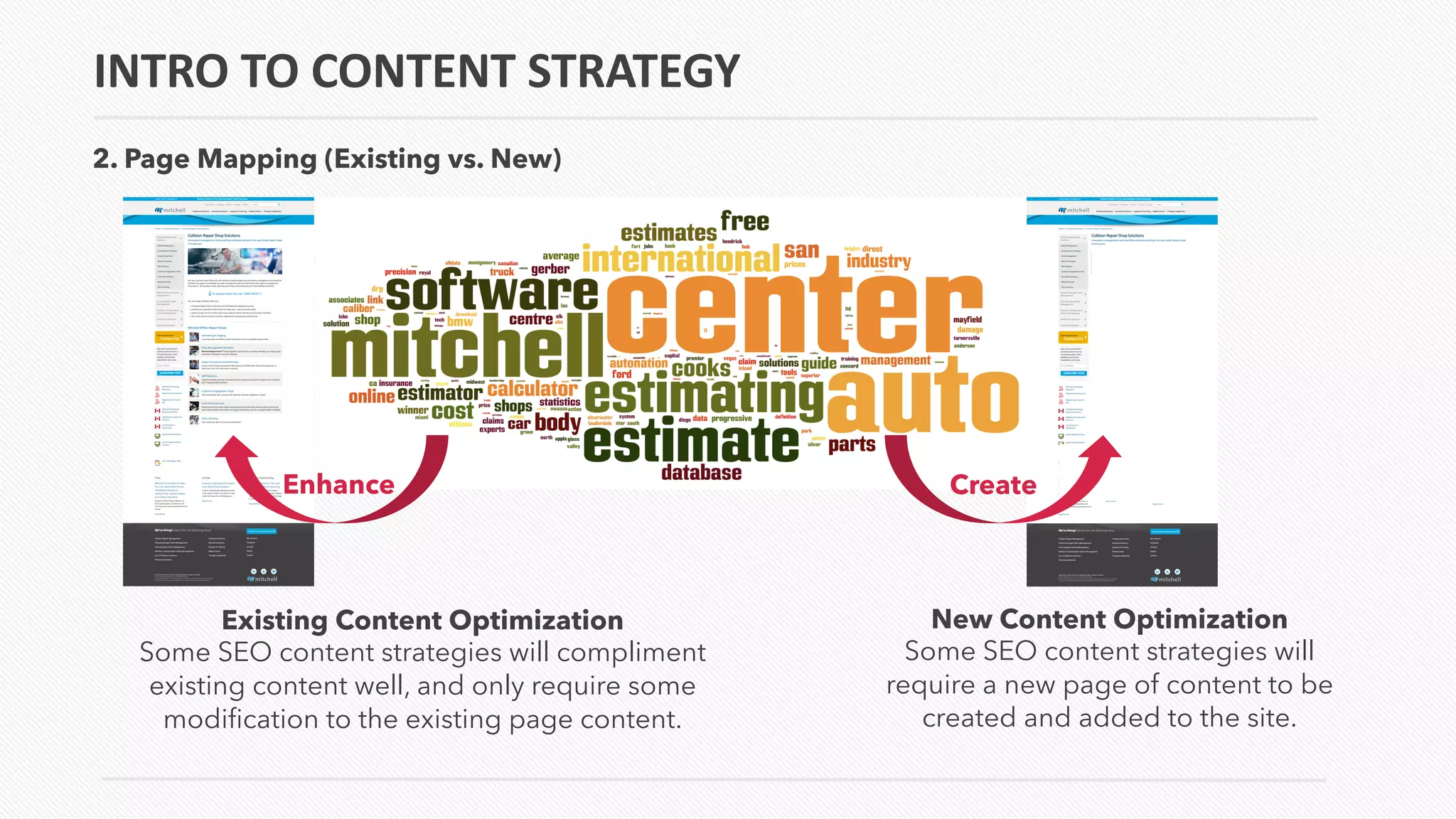
2. Page Mapping (Existing vs. New)
New Content Optimization
Some SEO content strategies will
require a new page of content to be
created and added to the site.
Existing Content Optimization
Some SEO content strategies will compliment
existing content well, and only require some
modification to the existing page content.
Enhance Create
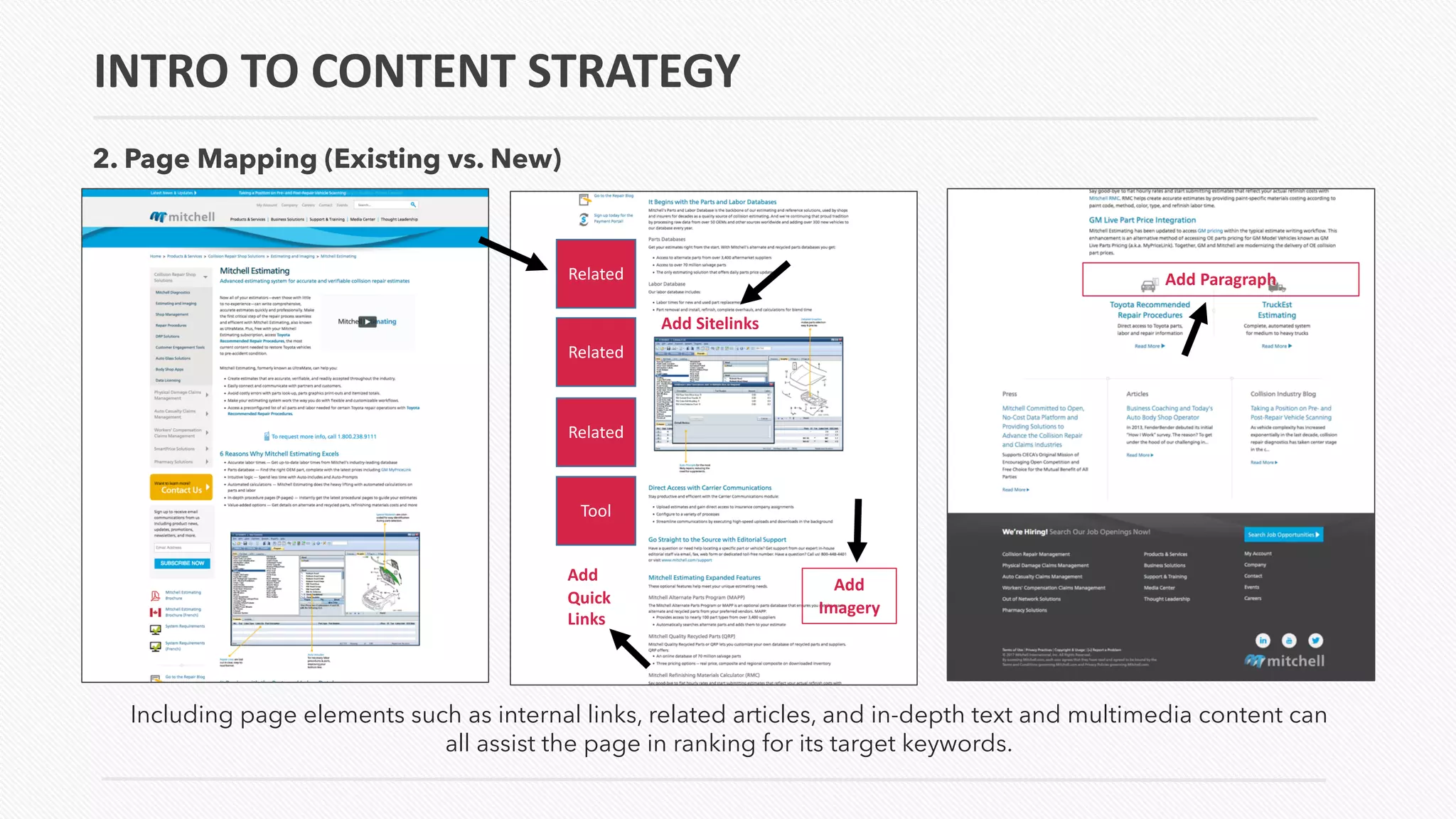
Including page elements such as internal links, related articles, and in-depth text and multimedia content can
all assist the page in ranking for its target keywords.
2. Page Mapping (Existing vs. New)
INTRO TO CONTENT STRATEGY
Related
Related
Related
Tool
Add Sitelinks
Add
Quick
Links
Add
Imagery
Add Paragraph
INTRO TO CONTENT STRATEGY
2. Page Mapping (Existing vs. New)
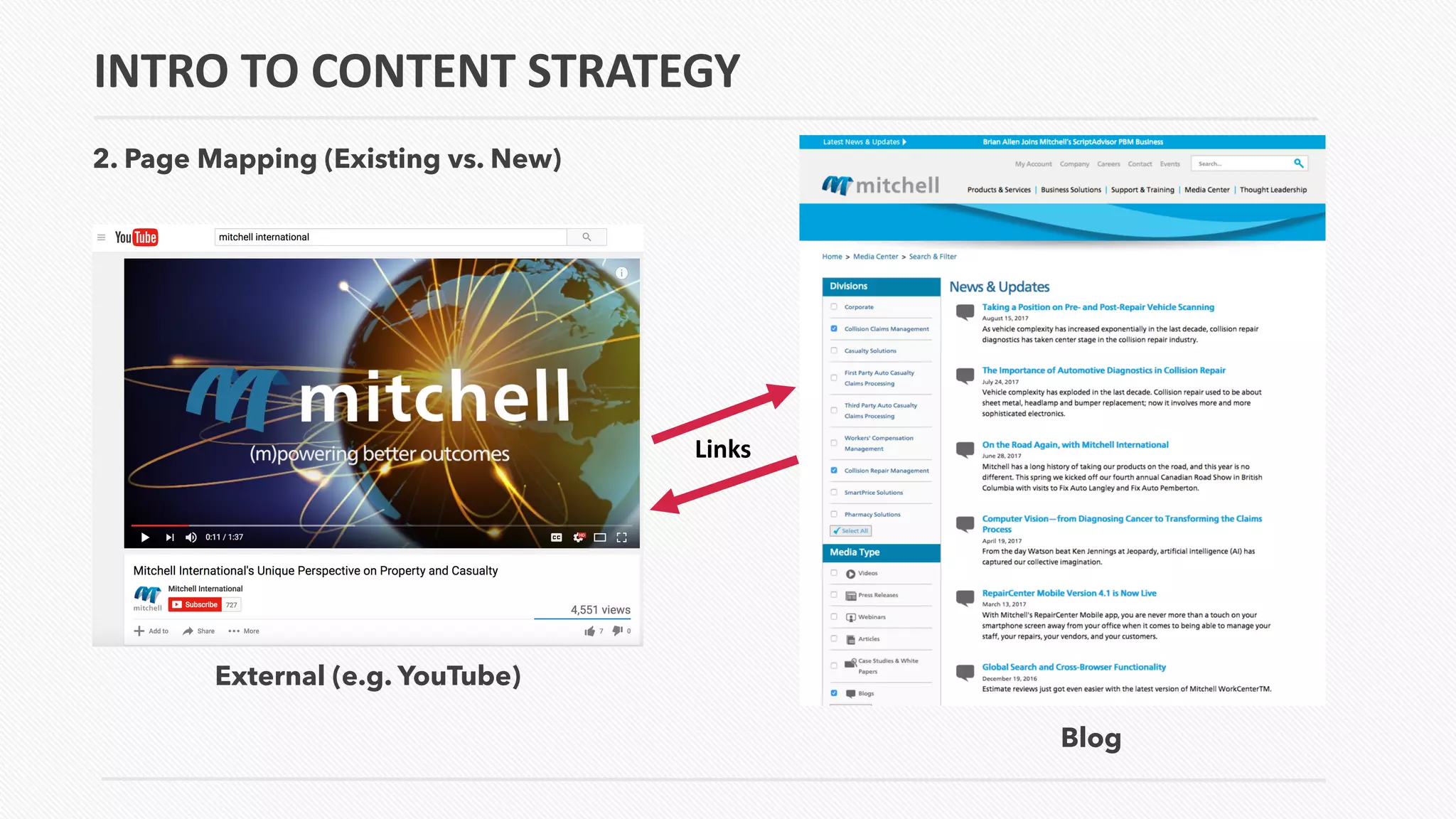
Blog
External (e.g. YouTube)
Links
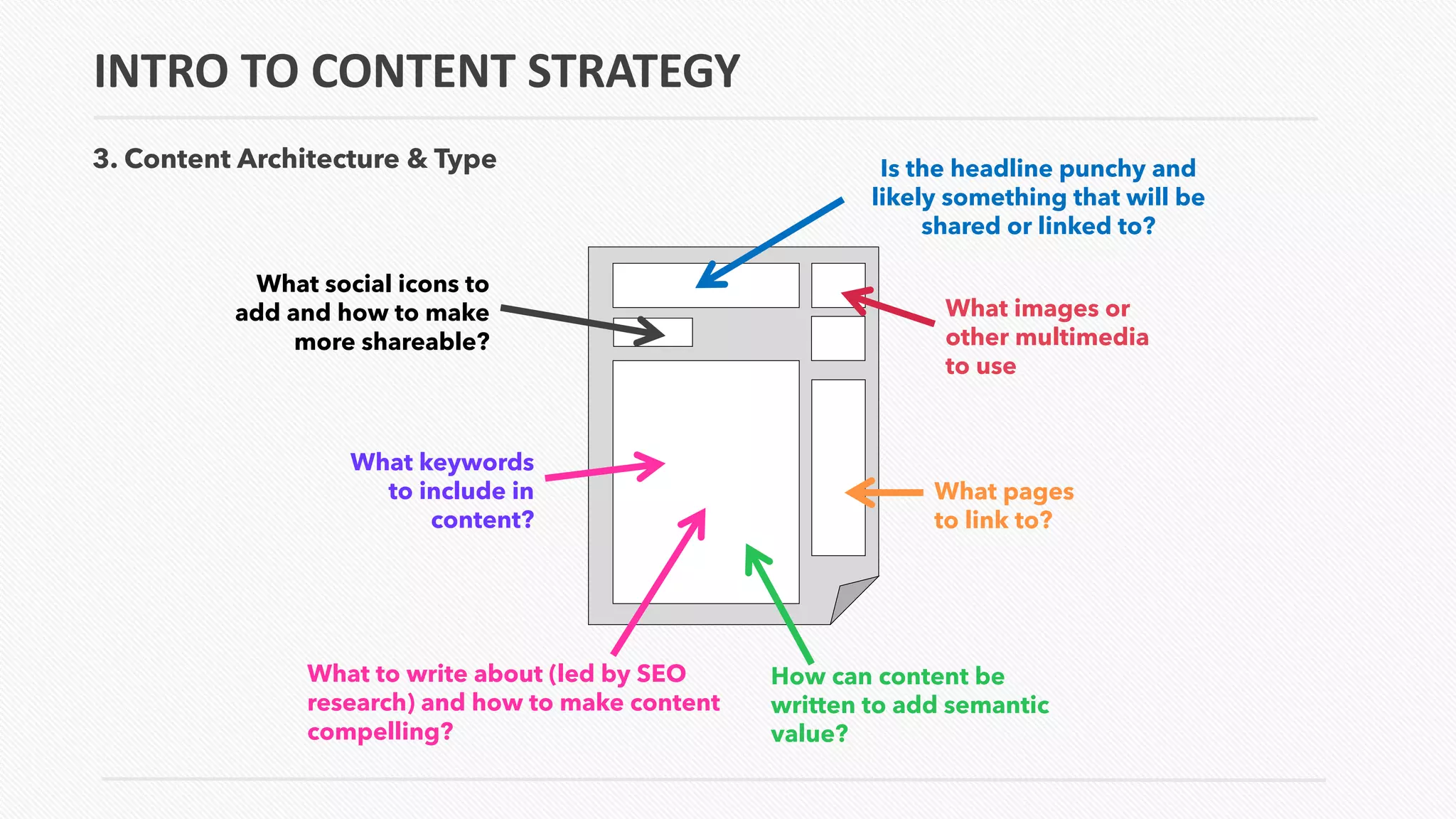
What images or
other multimedia
to use
What pages
to link to?
What to write about (led by SEO
research) and how to make content
compelling?
How can content be
written to add semantic
value?
What social icons to
add and how to make
more shareable?
What keywords
to include in
content?
Is the headline punchy and
likely something that will be
shared or linked to?
INTRO TO CONTENT STRATEGY
3. Content Architecture & Type
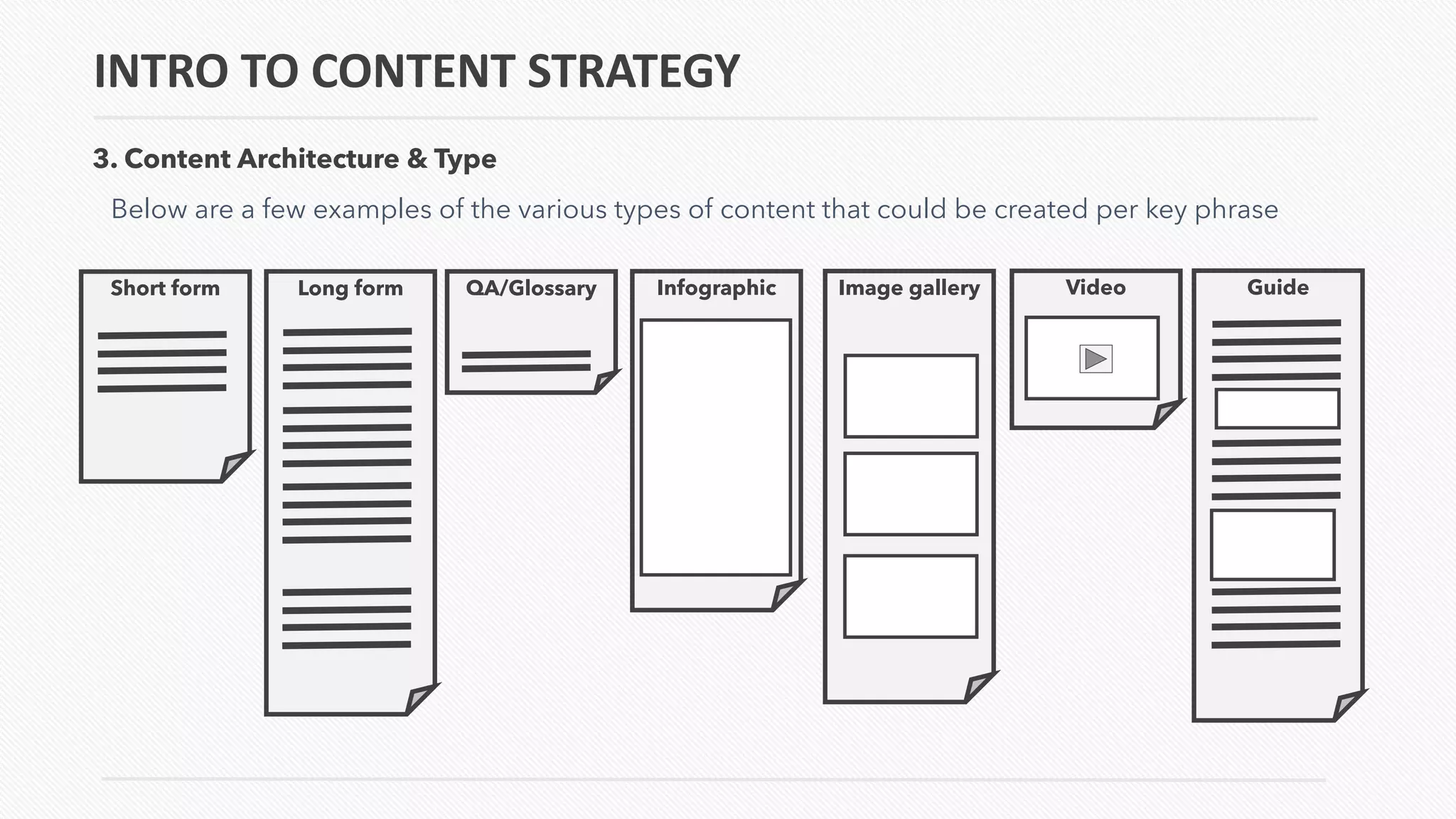
Short form Long form QA/Glossary Infographic Image gallery Video Guide
Below are a few examples of the various types of content that could be created per key phrase
INTRO TO CONTENT STRATEGY
3. Content Architecture & Type
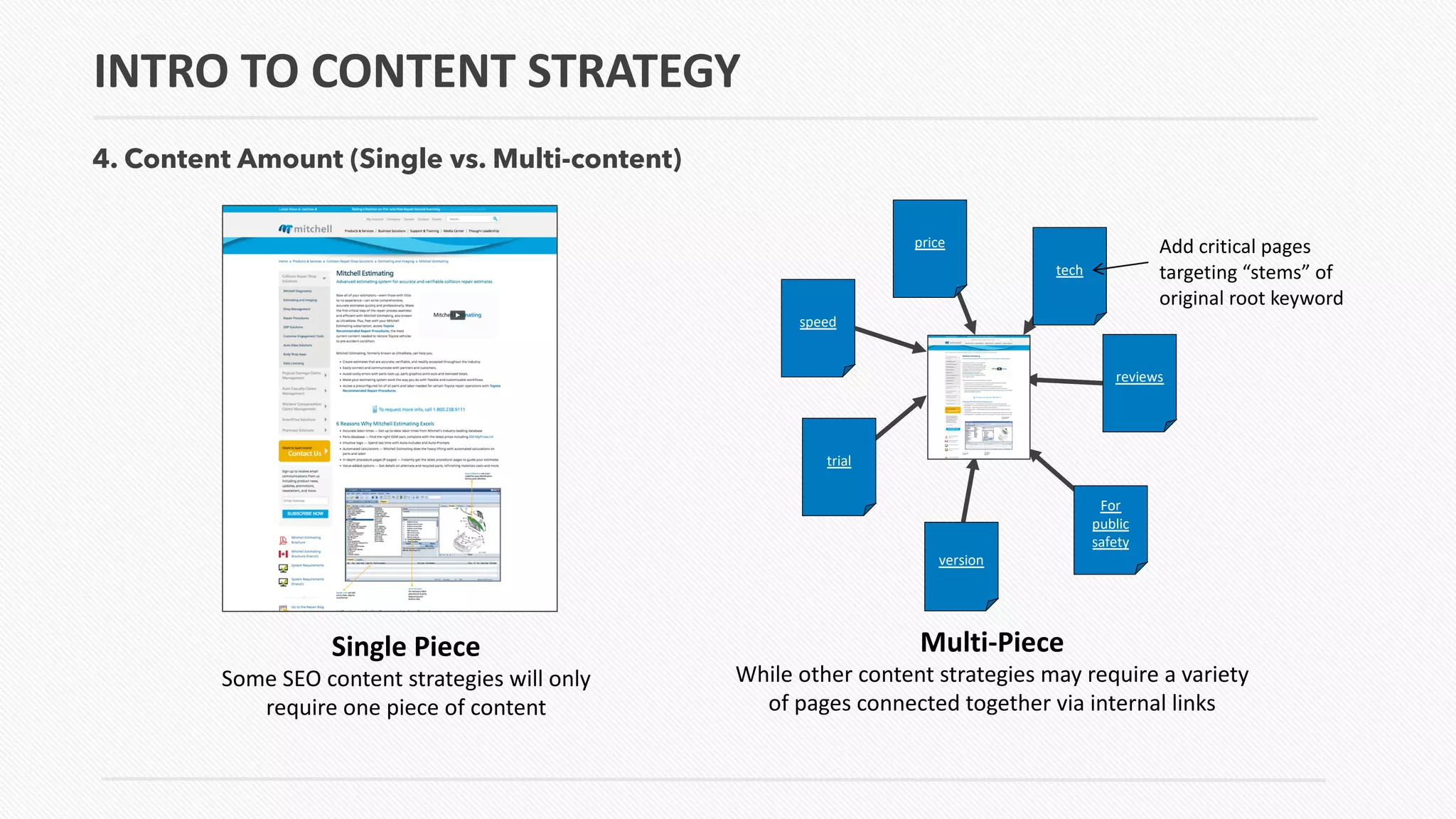
Single Piece
Some SEO content strategies will only
require one piece of content
Multi-Piece
While other content strategies may require a variety
of pages connected together via internal links
speed
price
tech
reviews
For
public
safety
version
trial
Add critical pages
targeting “stems” of
original root keyword
INTRO TO CONTENT STRATEGY
4. Content Amount (Single vs. Multi-content)
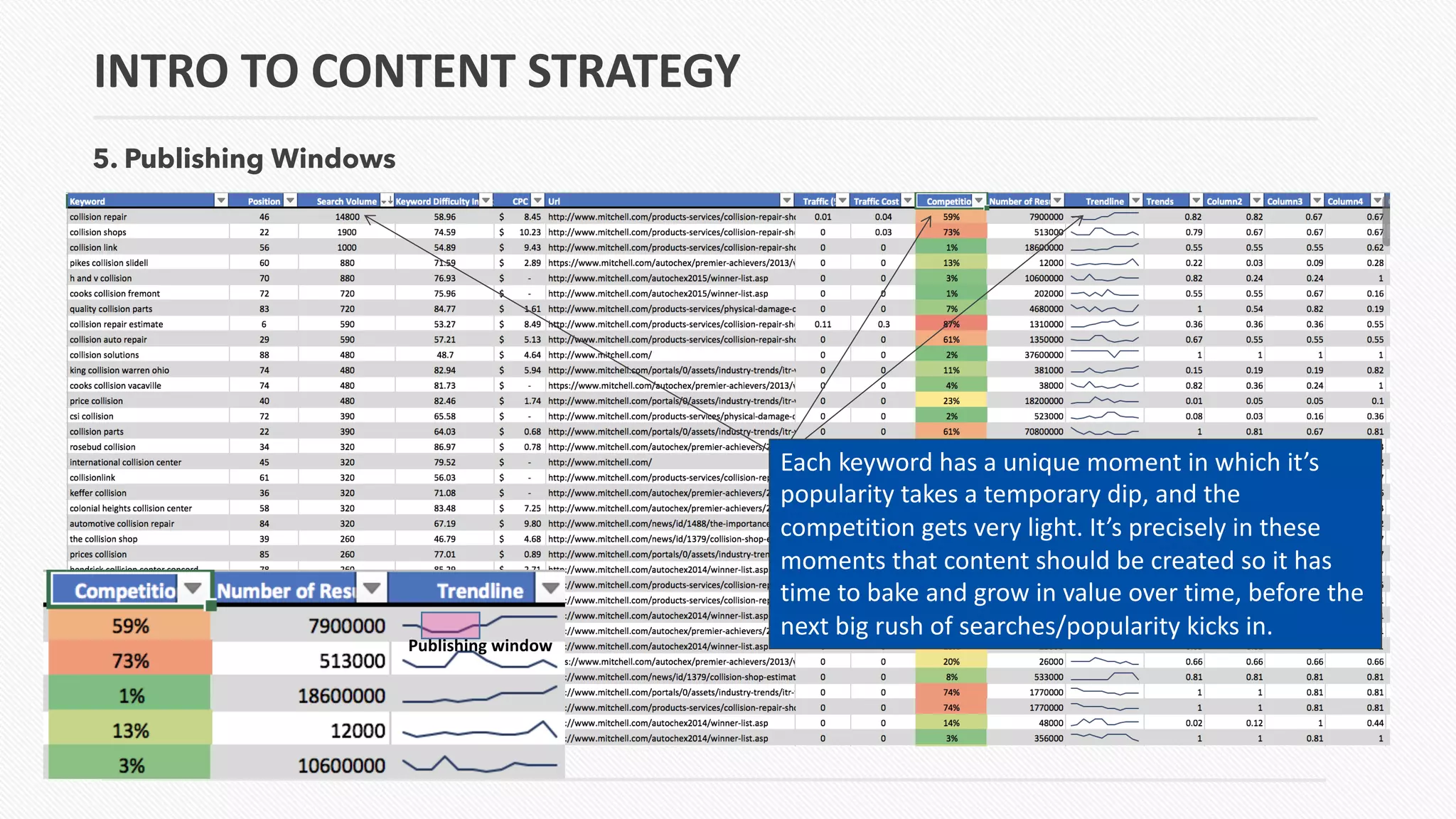
5. Publishing Windows
INTRO TO CONTENT STRATEGY
Publishing window
Each keyword has a unique moment in which it’s
popularity takes a temporary dip, and the
competition gets very light. It’s precisely in these
moments that content should be created so it has
time to bake and grow in value over time, before the
next big rush of searches/popularity kicks in.
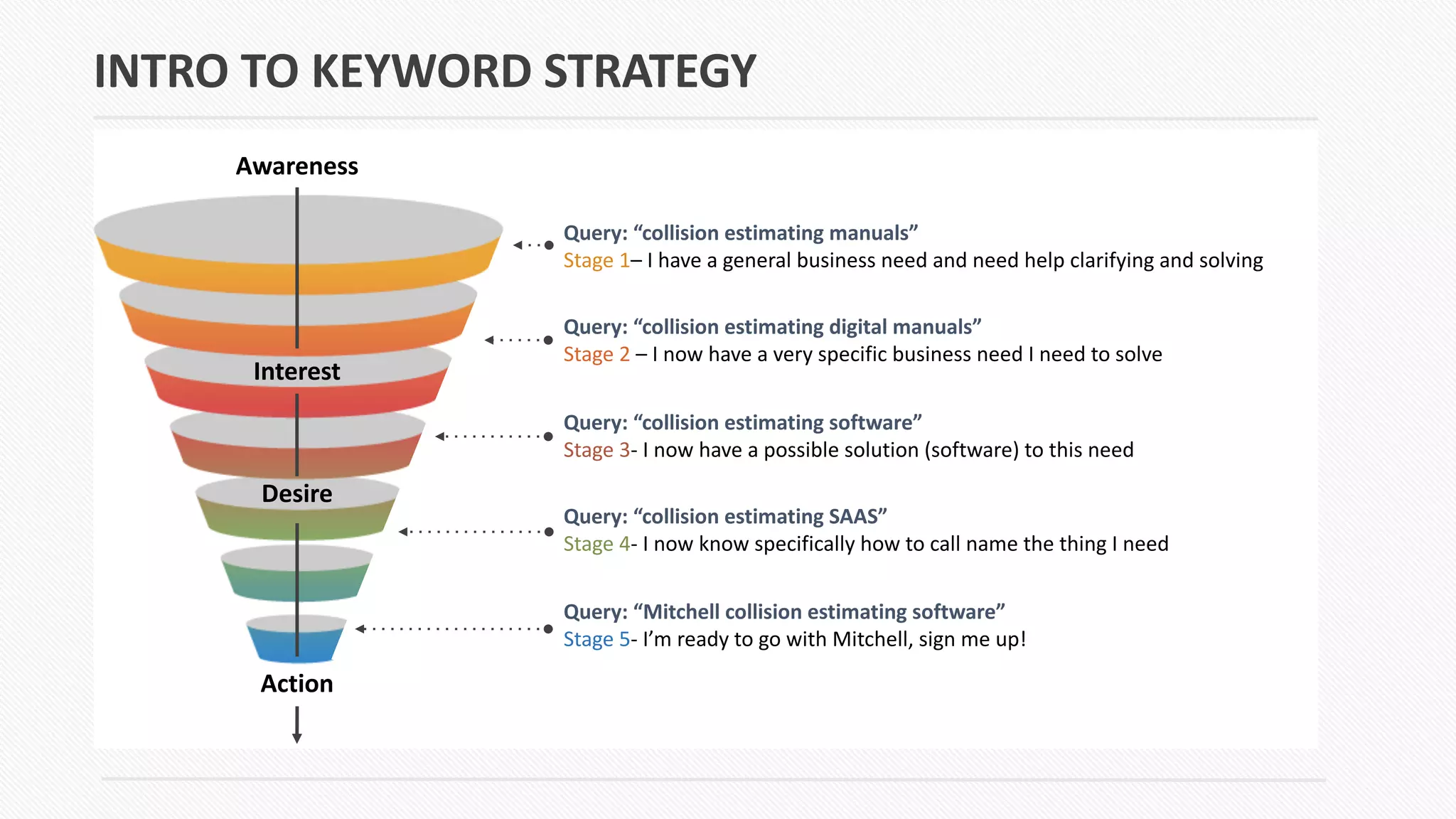
Query: “collision estimating manuals”
Stage 1– I have a general business need and need help clarifying and solving
Query: “collision estimating digital manuals”
Stage 2 – I now have a very specific business need I need to solve
Query: “collision estimating software”
Stage 3- I now have a possible solution (software) to this need
Query: “collision estimating SAAS”
Stage 4- I now know specifically how to call name the thing I need
Query: “Mitchell collision estimating software”
Stage 5- I’m ready to go with Mitchell, sign me up!
INTRO TO KEYWORD STRATEGY
Awareness
Interest
Desire
Action
INTRO TO KEYWORD STRATEGY
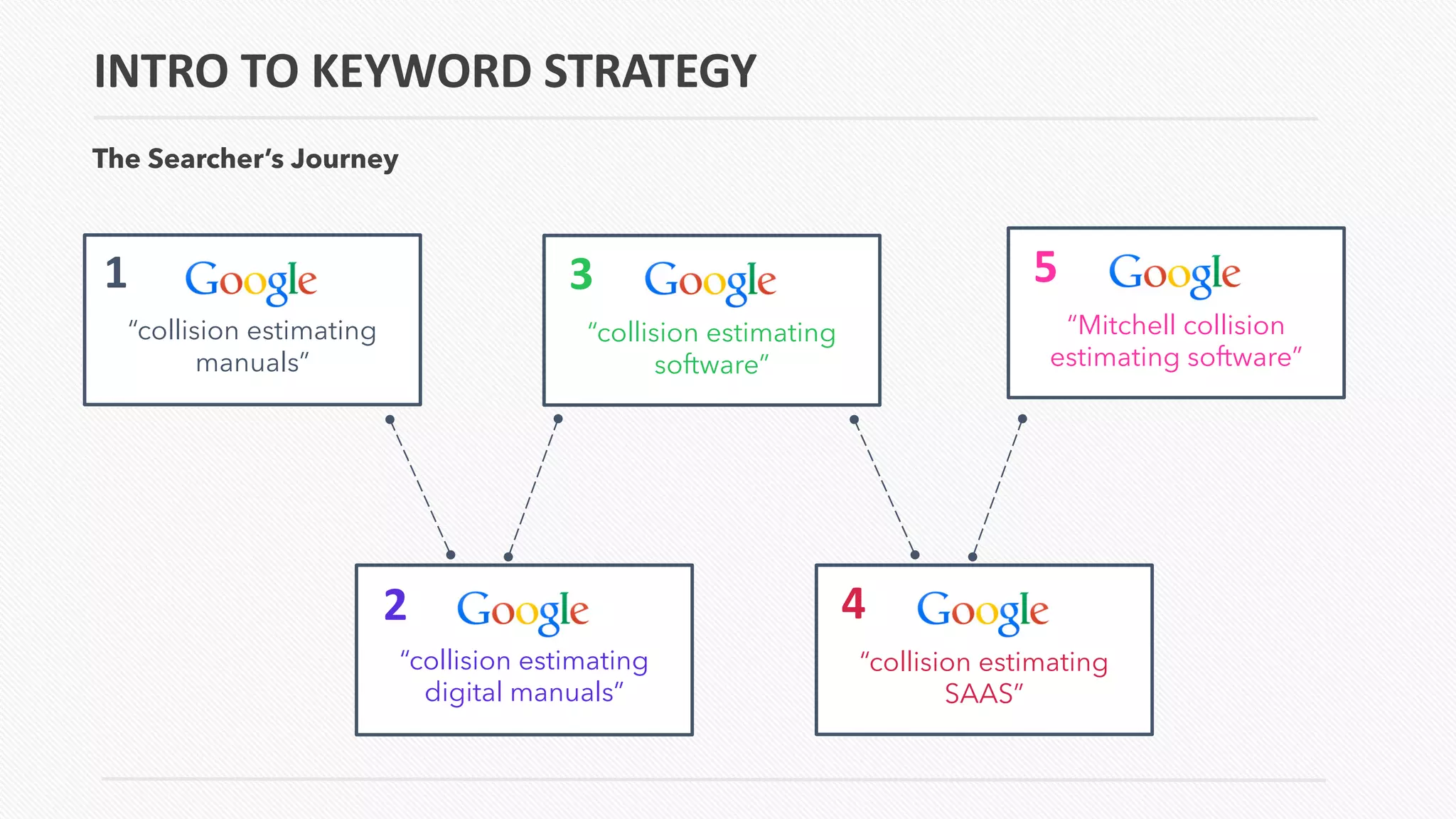
“collision estimating
manuals”
“collision estimating
digital manuals”
“collision estimating
software”
1
2
3
“collision estimating
SAAS”
4
“Mitchell collision
estimating software”
5
The Searcher’s Journey
INTRO TO KEYWORD STRATEGY
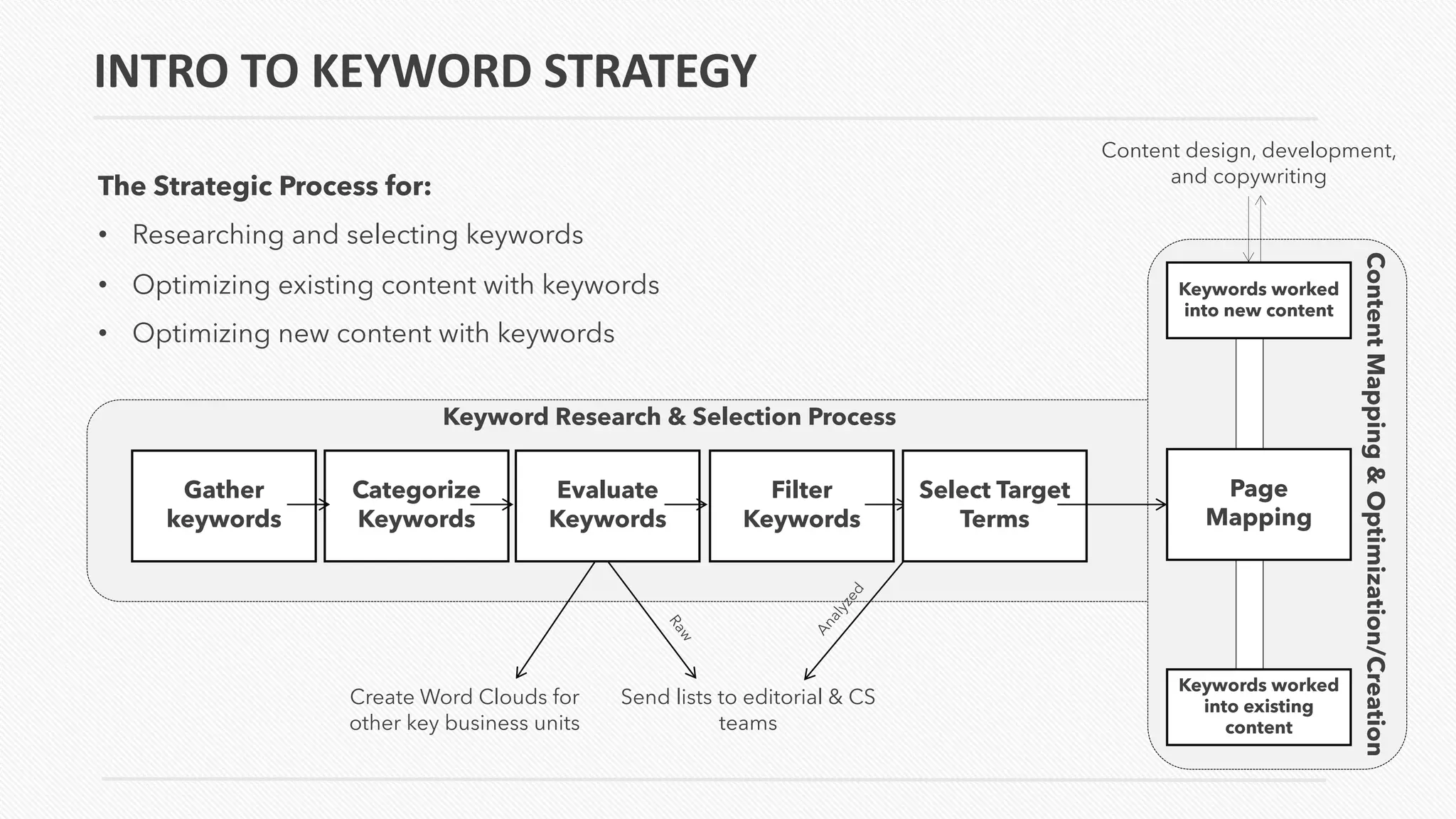
The Strategic Process for:
• Researching and selecting keywords
• Optimizing existing content with keywords
• Optimizing new content with keywords
Gather
keywords
Categorize
Keywords
Evaluate
Keywords
Filter
Keywords
Create Word Clouds for
other key business units
Send lists to editorial & CS
teams
Keyword Research & Selection Process
Select Target
Terms
A
n
a
l
y
z
e
d
R
a
w
Keywords worked
into new content
Keywords worked
into existing
content
Page
Mapping
Content design, development,
and copywriting
Content
Mapping
&
Optimization/Creation
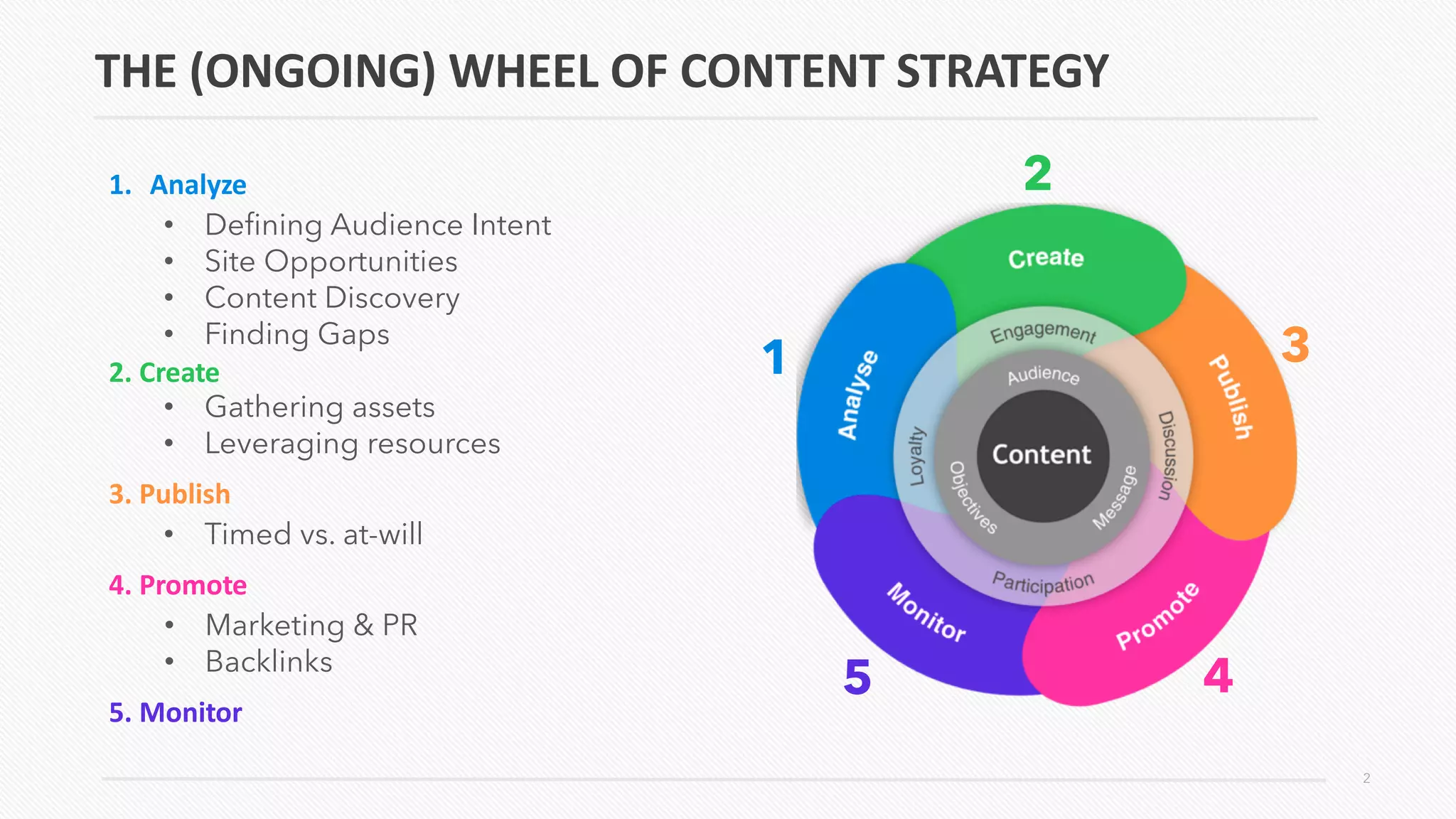
THE (ONGOING) WHEEL OF CONTENT STRATEGY
1. Analyze
• Defining Audience Intent
• Site Opportunities
• Content Discovery
• Finding Gaps
2. Create
• Gathering assets
• Leveraging resources
3. Publish
• Timed vs. at-will
4. Promote
• Marketing & PR
• Backlinks
5. Monitor
1
2
3
4
5
2
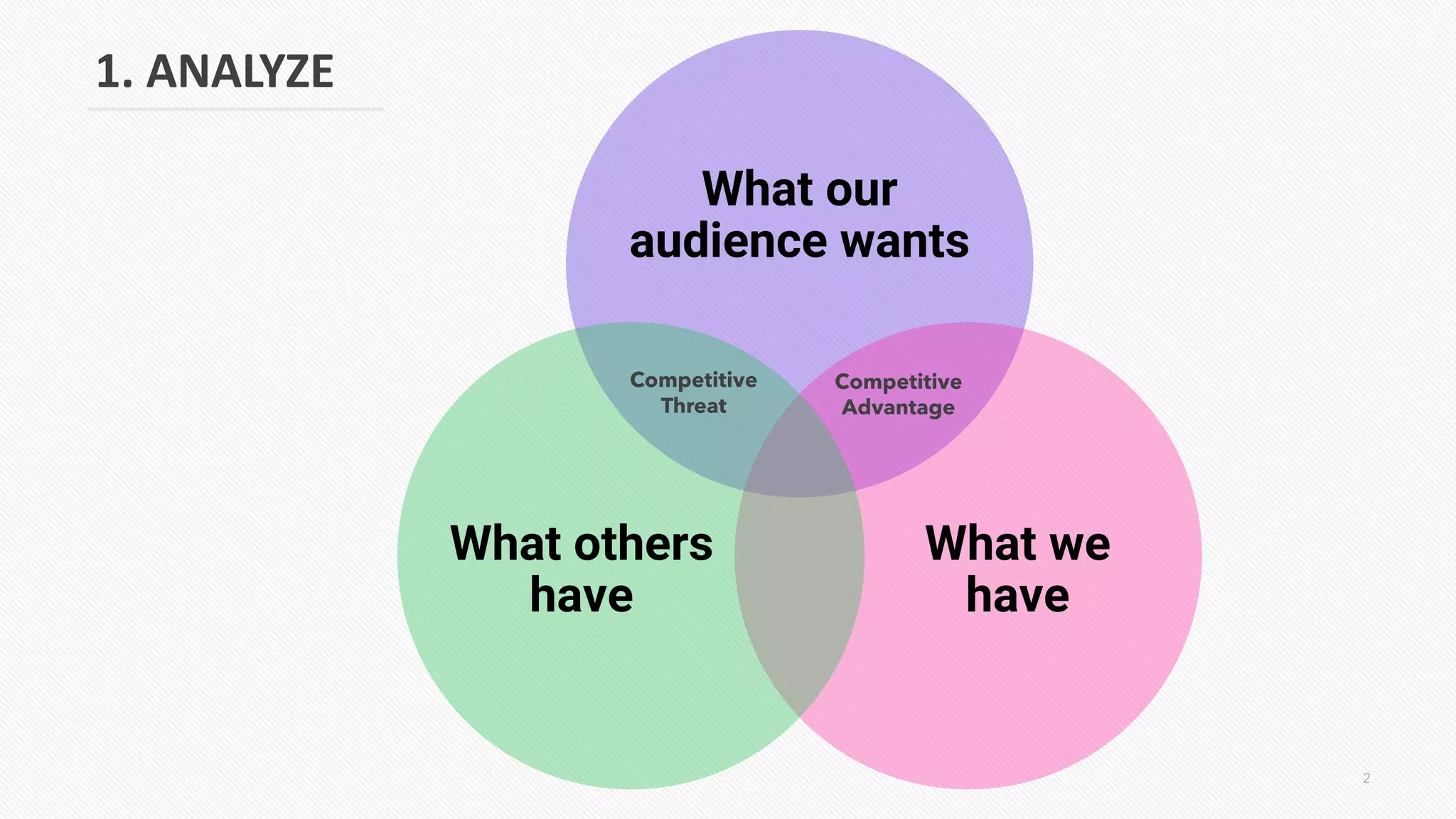
What our
audience wants
What we
have
What others
have
Competitive
Advantage
Competitive
Threat
1. ANALYZE
2
1. ANALYZE
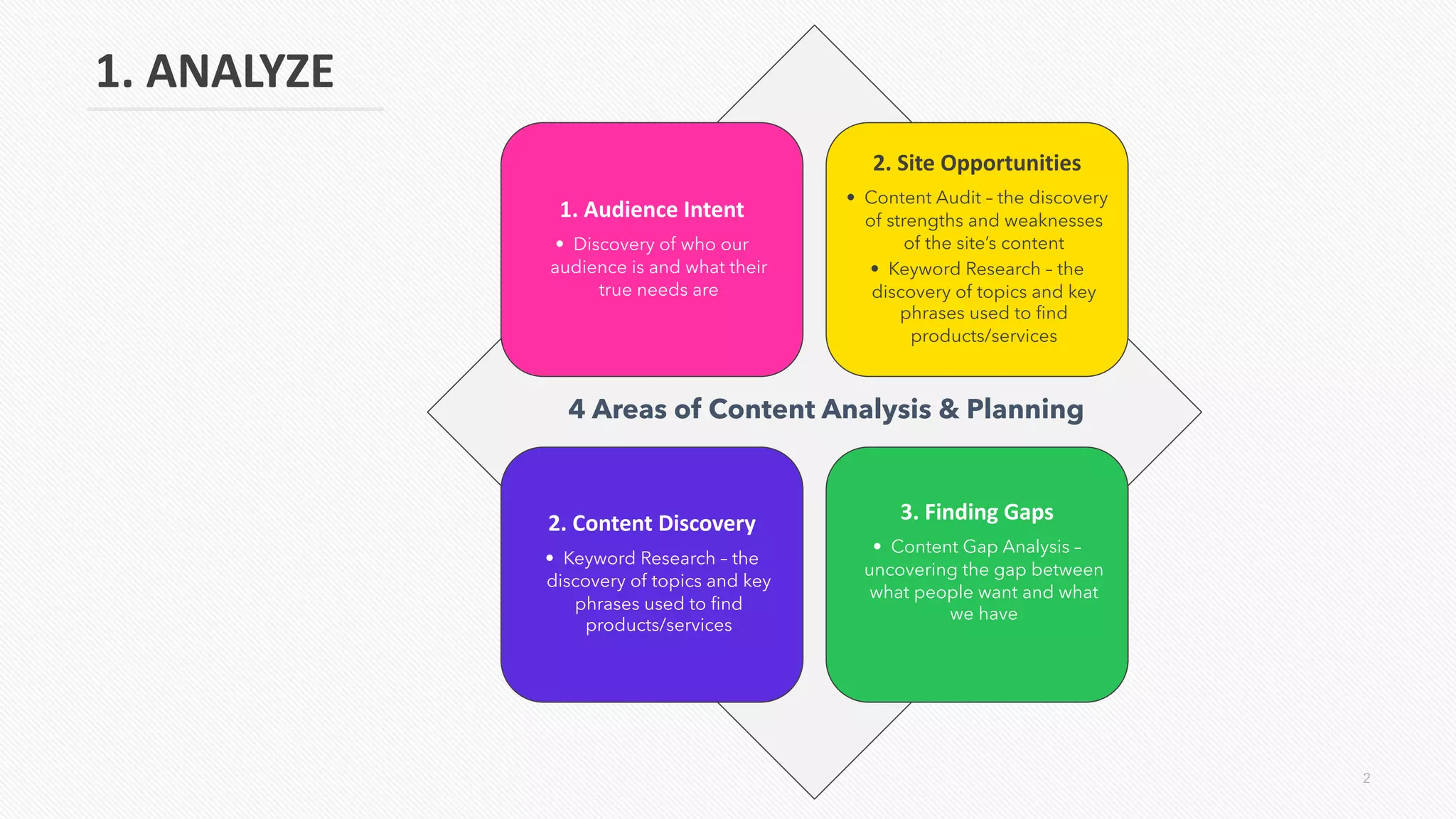
1. Audience Intent
• Discovery of who our
audience is and what their
true needs are
2. Site Opportunities
• Content Audit – the discovery
of strengths and weaknesses
of the site’s content
• Keyword Research – the
discovery of topics and key
phrases used to find
products/services
2. Content Discovery
• Keyword Research – the
discovery of topics and key
phrases used to find
products/services
3. Finding Gaps
• Content Gap Analysis –
uncovering the gap between
what people want and what
we have
4 Areas of Content Analysis & Planning
2

Introduction to seo keyword and content strategy

  • 1.
  • 2.
    INTRO TO CONTENTSTRATEGY Great content drives sharing, which drives higher rankings, which ultimately results in more traffic to the Mitchell website.
  • 3.
    INTRO TO CONTENTSTRATEGY OPPORTUNITY Keyword Strategy Content Strategy Site & Device Strategy Trafficking & Integration Strategy Ongoing SEO Targeting Strategy Ongoing Research & Market Insights (SEO) User Testing & Intent Research Understanding the Searcher (Problem, Solution, Intent)
  • 4.
    INTRO TO CONTENTSTRATEGY Understanding the Searcher (Who, What, When, Where): • The Searcher Journey – “The Who” • Strategic Targeting – “The What” • Demystify: Truly understand services and offerings (and the Mitchell difference) • Inspire: Feel good about using the product/services • Elevate: A more premium product/service, and the feeling of belonging to something special • Seasonal factors – “The When” • Geographic factors – “The Where”
  • 5.
    1. Select FocusTerms (Keyword Research) 2. Page Mapping (Existing vs. New/Location) - Leveraging microsites, promotional pieces of content, and key partnerships 3. Content Architecture & Type - Infographics/Podcasts/Interactive maps/Videos & Images/Blogging & Guest blogging/Live streaming 4. Content Amount (Single vs. Multi-content) 5. Publishing “Windows” 6. Intent-based and real-time content strategy The 6 Key Elements of SEO Content Strategy: Select Focus Terms Page Mapping Content Architecture Content Amount Publishing Windows INTRO TO CONTENT STRATEGY
  • 6.
    The main useof keyword research tools: • To build lists of keywords/phrases (all) • To check popularity (SEM Rush, Google Keyword Tool) • To check trends (Google Trends) • To check geography popularity (Google Keyword Tool) • To check device popularity (Google Keyword Tool) INTRO TO CONTENT STRATEGY 1. Select Target Phrases via Keyword Research
  • 7.
    1. Seed Keywords 2.Expand Long-tail 3. Build Semantic Cloud 4. Add Data 5. Filter & Select Step 1: Build a Seed List Step 2: Build a Master Long-tail list INTRO TO CONTENT STRATEGY 1. Select Target Phrases via Keyword Research
  • 8.
    INTRO TO CONTENTSTRATEGY 2. Page Mapping (Existing vs. New) New Content Optimization Some SEO content strategies will require a new page of content to be created and added to the site. Existing Content Optimization Some SEO content strategies will compliment existing content well, and only require some modification to the existing page content. Enhance Create
  • 9.
    Including page elementssuch as internal links, related articles, and in-depth text and multimedia content can all assist the page in ranking for its target keywords. 2. Page Mapping (Existing vs. New) INTRO TO CONTENT STRATEGY Related Related Related Tool Add Sitelinks Add Quick Links Add Imagery Add Paragraph
  • 10.
    INTRO TO CONTENTSTRATEGY 2. Page Mapping (Existing vs. New) Blog External (e.g. YouTube) Links
  • 11.
    What images or othermultimedia to use What pages to link to? What to write about (led by SEO research) and how to make content compelling? How can content be written to add semantic value? What social icons to add and how to make more shareable? What keywords to include in content? Is the headline punchy and likely something that will be shared or linked to? INTRO TO CONTENT STRATEGY 3. Content Architecture & Type
  • 12.
    Short form Longform QA/Glossary Infographic Image gallery Video Guide Below are a few examples of the various types of content that could be created per key phrase INTRO TO CONTENT STRATEGY 3. Content Architecture & Type
  • 13.
    Single Piece Some SEOcontent strategies will only require one piece of content Multi-Piece While other content strategies may require a variety of pages connected together via internal links speed price tech reviews For public safety version trial Add critical pages targeting “stems” of original root keyword INTRO TO CONTENT STRATEGY 4. Content Amount (Single vs. Multi-content)
  • 14.
    5. Publishing Windows INTROTO CONTENT STRATEGY Publishing window Each keyword has a unique moment in which it’s popularity takes a temporary dip, and the competition gets very light. It’s precisely in these moments that content should be created so it has time to bake and grow in value over time, before the next big rush of searches/popularity kicks in.
  • 15.
    Query: “collision estimatingmanuals” Stage 1– I have a general business need and need help clarifying and solving Query: “collision estimating digital manuals” Stage 2 – I now have a very specific business need I need to solve Query: “collision estimating software” Stage 3- I now have a possible solution (software) to this need Query: “collision estimating SAAS” Stage 4- I now know specifically how to call name the thing I need Query: “Mitchell collision estimating software” Stage 5- I’m ready to go with Mitchell, sign me up! INTRO TO KEYWORD STRATEGY Awareness Interest Desire Action
  • 16.
    INTRO TO KEYWORDSTRATEGY “collision estimating manuals” “collision estimating digital manuals” “collision estimating software” 1 2 3 “collision estimating SAAS” 4 “Mitchell collision estimating software” 5 The Searcher’s Journey
  • 17.
    INTRO TO KEYWORDSTRATEGY The Strategic Process for: • Researching and selecting keywords • Optimizing existing content with keywords • Optimizing new content with keywords Gather keywords Categorize Keywords Evaluate Keywords Filter Keywords Create Word Clouds for other key business units Send lists to editorial & CS teams Keyword Research & Selection Process Select Target Terms A n a l y z e d R a w Keywords worked into new content Keywords worked into existing content Page Mapping Content design, development, and copywriting Content Mapping & Optimization/Creation
  • 18.
    THE (ONGOING) WHEELOF CONTENT STRATEGY 1. Analyze • Defining Audience Intent • Site Opportunities • Content Discovery • Finding Gaps 2. Create • Gathering assets • Leveraging resources 3. Publish • Timed vs. at-will 4. Promote • Marketing & PR • Backlinks 5. Monitor 1 2 3 4 5 2
  • 19.
    What our audience wants Whatwe have What others have Competitive Advantage Competitive Threat 1. ANALYZE 2
  • 20.
    1. ANALYZE 1. AudienceIntent • Discovery of who our audience is and what their true needs are 2. Site Opportunities • Content Audit – the discovery of strengths and weaknesses of the site’s content • Keyword Research – the discovery of topics and key phrases used to find products/services 2. Content Discovery • Keyword Research – the discovery of topics and key phrases used to find products/services 3. Finding Gaps • Content Gap Analysis – uncovering the gap between what people want and what we have 4 Areas of Content Analysis & Planning 2