Semester: Fall 2020
NUML
Lahore Campus
BS I
Introduction to
Mass Communication
Course Code: MCCC-111
Cou rse In stru c tor
Ali Haider Saeed
L e c t u r e r, N U M L L a h o r e C a m p u s
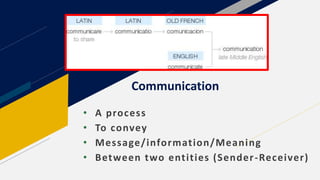
Communication
• A process
• To convey
• Message/information/Meaning
• Between two entities (Sender-Receiver)
Types of Communication
Verb al vs Non Verb al
Verb al Commu n ication
D e l i v e r i n g i n fo r m a t i o n o r m e a n i n g t h ro u g h
W O R D S . I t c a n b e s p o ke n o r o ra l .
Non Verb al Commu n ication
S en d in g a message with ou t word s, like u se of
sig n , sy mb ols, gestu res, color, ton es, ac tion s etc .
Types of Communication
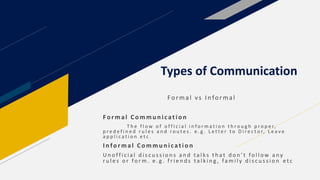
Formal vs Informal
Formal Commu n ication
T h e f l o w o f o f f i c i a l i n f o r m a t i o n t h r o u g h p r o p e r,
p r e d e f i n e d r u l e s a n d r o u t e s . e . g . L e t t e r t o D i r e c t o r, L e a v e
a p p l i c a t i o n e t c .
I nformal Commu n ication
U n o f f i c i a l d i s c u s s i o n s a n d t a l k s t h a t d o n ’ t fo l l o w a ny
r u l e s o r fo r m . e . g . f r i e n d s t a l k i n g , fa m i l y d i s c u s s i o n e t c
Types of Communication
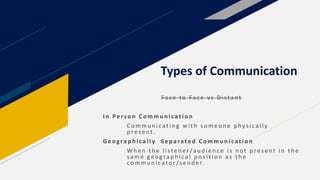
Fa c e to Fa c e vs D i sta n t
I n Pe rs o n C o m m u n i c a t i o n
C o m m u n i c a t i n g w i t h s o m e o n e p hy s i c a l l y
p re s e nt .
G e o g ra p h i c a l l y S e p a ra te d C o m m u n i c a t i o n
W h e n t h e l i ste n e r /a u d i e n c e i s n o t p re s e n t i n t h e
s a m e ge o g ra p h i c a l p o s i t i o n a s t h e
c o m m u n i c a to r /s e n d e r.
Types of Communication
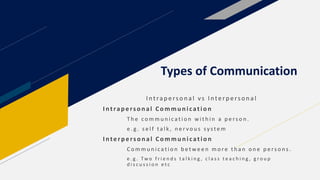
Intrap erson al vs Interp erson a l
I ntrap ers on al Commu n ication
T h e c o m m u n i c a t i o n w i t h i n a p e rs o n .
e . g . s e l f t a l k , n e r v o u s sy s t e m
I nterp ers on al Commu n ication
C o m m u n i c a t i o n b e t w e e n m o re t h a n o n e p e rs o n s .
e . g . Tw o f r i e n d s t a l k i n g , c l a s s t e a c h i n g , g r o u p
d i s c u s s i o n e t c
Types of Communication
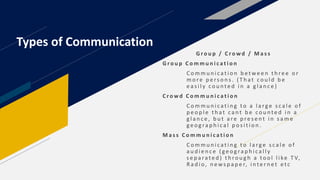
G r o u p / C r o w d / M a s s
G r o u p C o m m u n i c a t i o n
C o m m u n i c a t i o n b e t w e e n t h re e o r
m o re p e rs o n s . ( T h a t c o u l d b e
e a s i l y c o u n t e d i n a g l a n c e )
C r o w d C o m m u n i c a t i o n
C o m m u n i c a t i n g t o a l a rg e s c a l e o f
p e o p l e t h a t c a n t b e c o u n t e d i n a
g l a n c e , b u t a re p re s e n t i n s a m e
g e o g ra p h i c a l p o s i t i o n .
M a s s C o m m u n i c a t i o n
C o m m u n i c a t i n g t o l a rg e s c a l e o f
a u d i e n c e ( g e o g ra p h i c a l l y
s e p a ra t e d ) t h ro u g h a t o o l l i ke T V,
R a d i o, n e w s p a p e r, i n te r n e t e tc
What is MASS
Communication
• Communication on large scale
• Wide range of people/audience
• Geographically separated audience
• Use of a communication tool/channel
Elements of Communication?
• Sender
• Message
• Channel / Medium
• Receiver
• Feedback
• Intra Personal
• Inter Personal
• Group Communication
• Crowd Communication
• Mass Communication
• Print
• Electronic
• TV, Radio
• Digital/Online
Kinds of Communication
• What is a model?
• Discussion
• Activity/Assignment
Models of Communication
FR
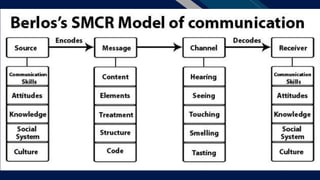
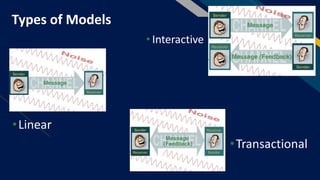
Models in Communication
•Communication models are systematic representations of
the process
•Help in understanding how communication works can be
done.
•They show the process in symbols.
•General perspectives on communication by
breaking communication from complex to simple and
keeps the components in order.
FR
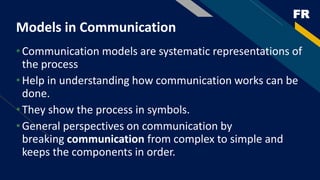
Shannon & Weaver’s MODEL
• 1948
• Mother of All
Models
• Mathematical
Theory of
Communication
• Claud Elwood
Shannon&
Warren Weaver
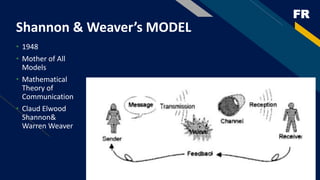
Shannon & Weaver Model 1948
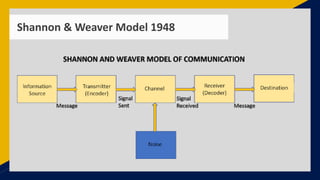
FR
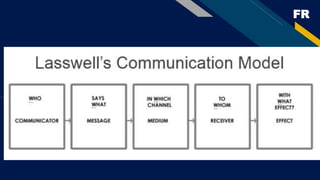
FR
FR
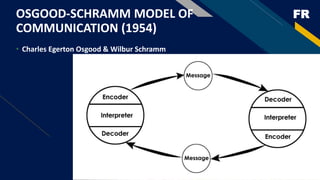
OSGOOD-SCHRAMM MODEL OF
COMMUNICATION (1954)
• Charles Egerton Osgood & Wilbur Schramm
FR
Types of Models
NUML
Lahore Campus
Thank You!
For Being Such a
Wonderful Class

Introduction to Mass Communication : Foundation

  • 1.
  • 2.
    BS I Introduction to MassCommunication Course Code: MCCC-111 Cou rse In stru c tor Ali Haider Saeed L e c t u r e r, N U M L L a h o r e C a m p u s
  • 3.
    Communication • A process •To convey • Message/information/Meaning • Between two entities (Sender-Receiver)
  • 4.
    Types of Communication Verbal vs Non Verb al Verb al Commu n ication D e l i v e r i n g i n fo r m a t i o n o r m e a n i n g t h ro u g h W O R D S . I t c a n b e s p o ke n o r o ra l . Non Verb al Commu n ication S en d in g a message with ou t word s, like u se of sig n , sy mb ols, gestu res, color, ton es, ac tion s etc .
  • 5.
    Types of Communication Formalvs Informal Formal Commu n ication T h e f l o w o f o f f i c i a l i n f o r m a t i o n t h r o u g h p r o p e r, p r e d e f i n e d r u l e s a n d r o u t e s . e . g . L e t t e r t o D i r e c t o r, L e a v e a p p l i c a t i o n e t c . I nformal Commu n ication U n o f f i c i a l d i s c u s s i o n s a n d t a l k s t h a t d o n ’ t fo l l o w a ny r u l e s o r fo r m . e . g . f r i e n d s t a l k i n g , fa m i l y d i s c u s s i o n e t c
  • 6.
    Types of Communication Fac e to Fa c e vs D i sta n t I n Pe rs o n C o m m u n i c a t i o n C o m m u n i c a t i n g w i t h s o m e o n e p hy s i c a l l y p re s e nt . G e o g ra p h i c a l l y S e p a ra te d C o m m u n i c a t i o n W h e n t h e l i ste n e r /a u d i e n c e i s n o t p re s e n t i n t h e s a m e ge o g ra p h i c a l p o s i t i o n a s t h e c o m m u n i c a to r /s e n d e r.
  • 7.
    Types of Communication Intraperson al vs Interp erson a l I ntrap ers on al Commu n ication T h e c o m m u n i c a t i o n w i t h i n a p e rs o n . e . g . s e l f t a l k , n e r v o u s sy s t e m I nterp ers on al Commu n ication C o m m u n i c a t i o n b e t w e e n m o re t h a n o n e p e rs o n s . e . g . Tw o f r i e n d s t a l k i n g , c l a s s t e a c h i n g , g r o u p d i s c u s s i o n e t c
  • 8.
    Types of Communication Gr o u p / C r o w d / M a s s G r o u p C o m m u n i c a t i o n C o m m u n i c a t i o n b e t w e e n t h re e o r m o re p e rs o n s . ( T h a t c o u l d b e e a s i l y c o u n t e d i n a g l a n c e ) C r o w d C o m m u n i c a t i o n C o m m u n i c a t i n g t o a l a rg e s c a l e o f p e o p l e t h a t c a n t b e c o u n t e d i n a g l a n c e , b u t a re p re s e n t i n s a m e g e o g ra p h i c a l p o s i t i o n . M a s s C o m m u n i c a t i o n C o m m u n i c a t i n g t o l a rg e s c a l e o f a u d i e n c e ( g e o g ra p h i c a l l y s e p a ra t e d ) t h ro u g h a t o o l l i ke T V, R a d i o, n e w s p a p e r, i n te r n e t e tc
  • 9.
    What is MASS Communication •Communication on large scale • Wide range of people/audience • Geographically separated audience • Use of a communication tool/channel
  • 10.
    Elements of Communication? •Sender • Message • Channel / Medium • Receiver • Feedback
  • 11.
    • Intra Personal •Inter Personal • Group Communication • Crowd Communication • Mass Communication • Print • Electronic • TV, Radio • Digital/Online Kinds of Communication
  • 12.
    • What isa model? • Discussion • Activity/Assignment Models of Communication
  • 13.
    FR Models in Communication •Communicationmodels are systematic representations of the process •Help in understanding how communication works can be done. •They show the process in symbols. •General perspectives on communication by breaking communication from complex to simple and keeps the components in order.
  • 14.
    FR Shannon & Weaver’sMODEL • 1948 • Mother of All Models • Mathematical Theory of Communication • Claud Elwood Shannon& Warren Weaver
  • 15.
    Shannon & WeaverModel 1948
  • 16.
  • 17.
  • 18.
    FR OSGOOD-SCHRAMM MODEL OF COMMUNICATION(1954) • Charles Egerton Osgood & Wilbur Schramm
  • 19.
  • 20.
    NUML Lahore Campus Thank You! ForBeing Such a Wonderful Class