WHAT IS DEVELOPMENT
Growth is increase in size
Development is a process that involves growth in function and
capability. Includes positive changes, progress in an individual
Rapid change in size is growth
Rapid change in form, size, behaviour is development
Involves physical, emotional, social and behavioural changes
3.
What is LifespanDevelopment
Field of study that examines patterns of growth, change and stability in
behaviour that occur throughout the entire life span
Focus on human development
Scientific approach (focus on observations, empirical approach, test
assumptions)
Areas in lifespan development
Physical development
Cognitive development
Personality development
Social development
4.
Areas in Development
Physical; Changes in body’s physical makeup including brain,
muscles, senses, nervous system
Cognitive: change in intellectual capabilities influence an
individual’s behaviour
Personality: Involving ways that the enduring characteristics that
differentiate one person from another change over the life span
Social: way in which individual’s interactions with others and
social relationships grow, change and remain stable over time
5.
Features of LifeSpanDevelopment
1) Continuous vs Discontinuous Change ; Gradual vs Disjointed
change in development
Continuous- Involves gradual change
Discontinuous- Devlpt occurs in distinct stages (Eg Freud’s
theory)
2) Nature v/s Nurture: Influence of genes and heredity vs
Influence of shared environment on development
3) Cohort: Group of people born at around the same time and
in/around the same place
6.
Features.. Contd.
4)Critical period v/s Sensitive Period:
Critical period: Specific time during development when a particular
event has its greatest consequences and presence of certain
environmental stimuli is necessary for development to proceed
normally
Sensitive period: point in devlpt where organisms are particularly
susceptible to certain kinds of stimuli in their envt. but absence does
not produce irreversible consequences
5) Age graded influence
History graded influence
Culture graded influence
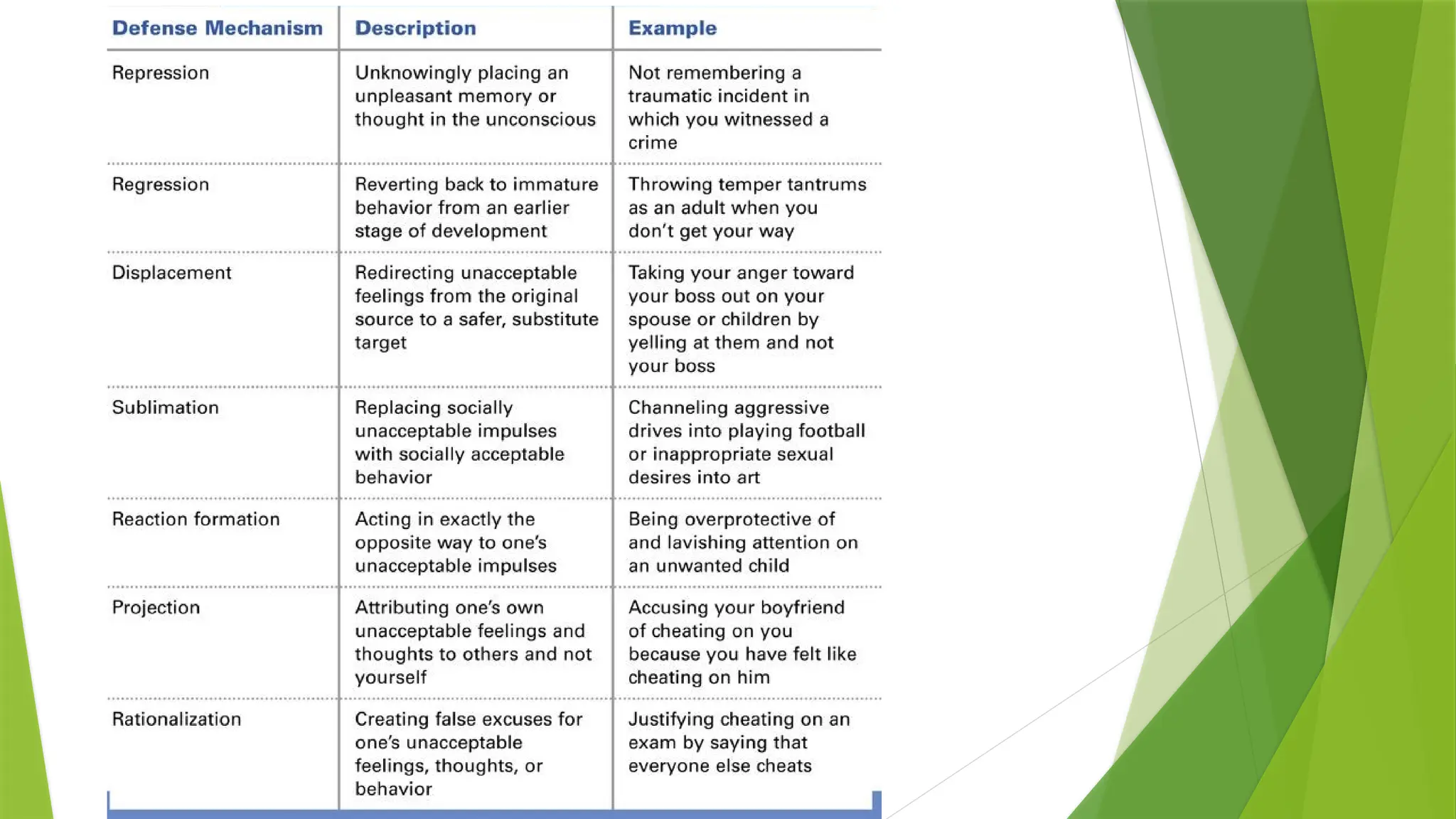
Psychodynamic Perspective
1) Freud’sPsychoanalytic theory
Sigmund Freud
Personality- id, ego, superego
Psychosexual development occurs as children pass through series of
stages
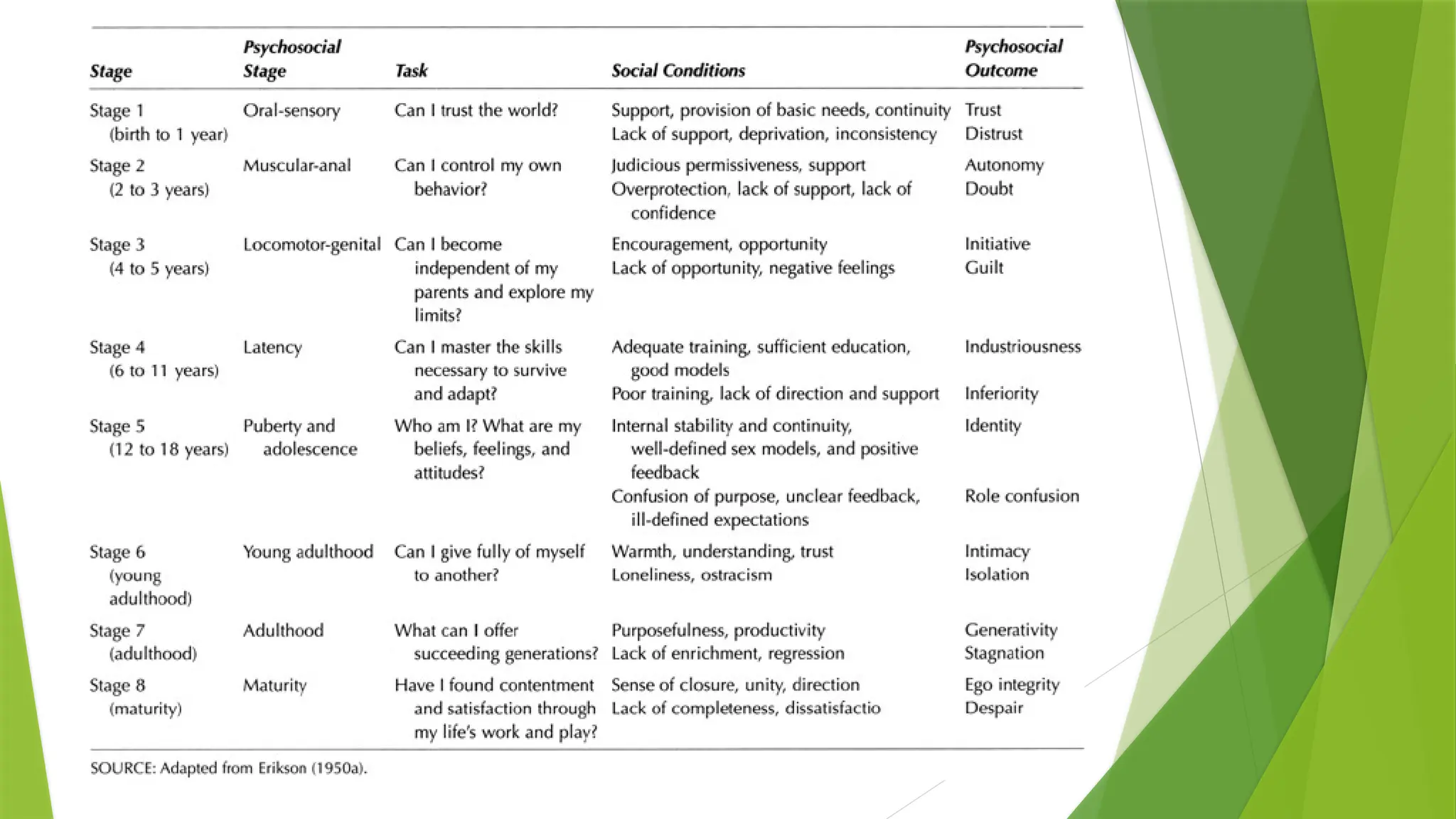
2) Erikson’s Psychosocial theory
Erik Erikson
Eight distinct stages of development
Psychosocial development encompasses changes in our interactions
with and understanding of one another as well as ourselves as
members of society
9.
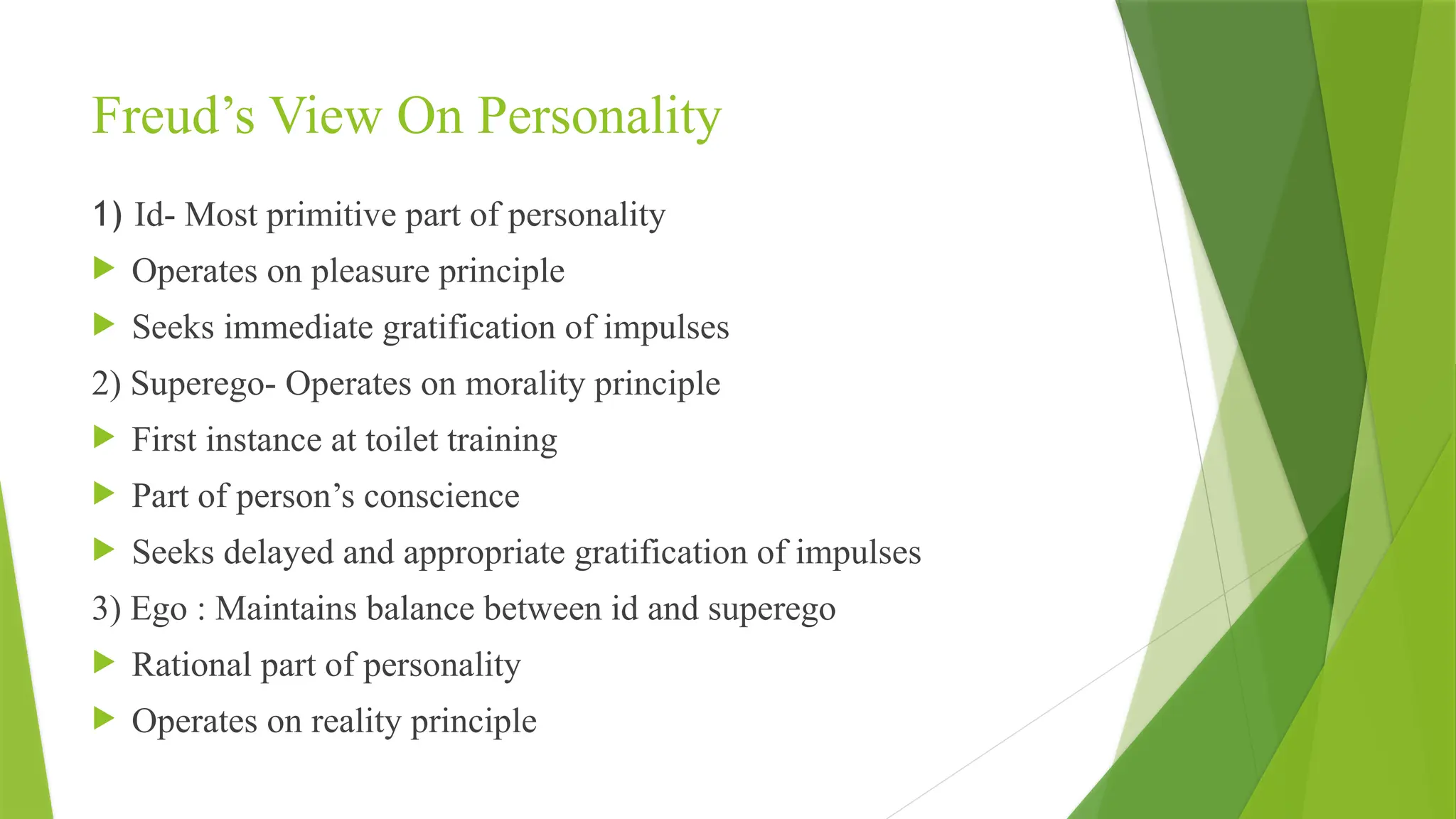
Freud’s View OnPersonality
1) Id- Most primitive part of personality
Operates on pleasure principle
Seeks immediate gratification of impulses
2) Superego- Operates on morality principle
First instance at toilet training
Part of person’s conscience
Seeks delayed and appropriate gratification of impulses
3) Ego : Maintains balance between id and superego
Rational part of personality
Operates on reality principle
10.
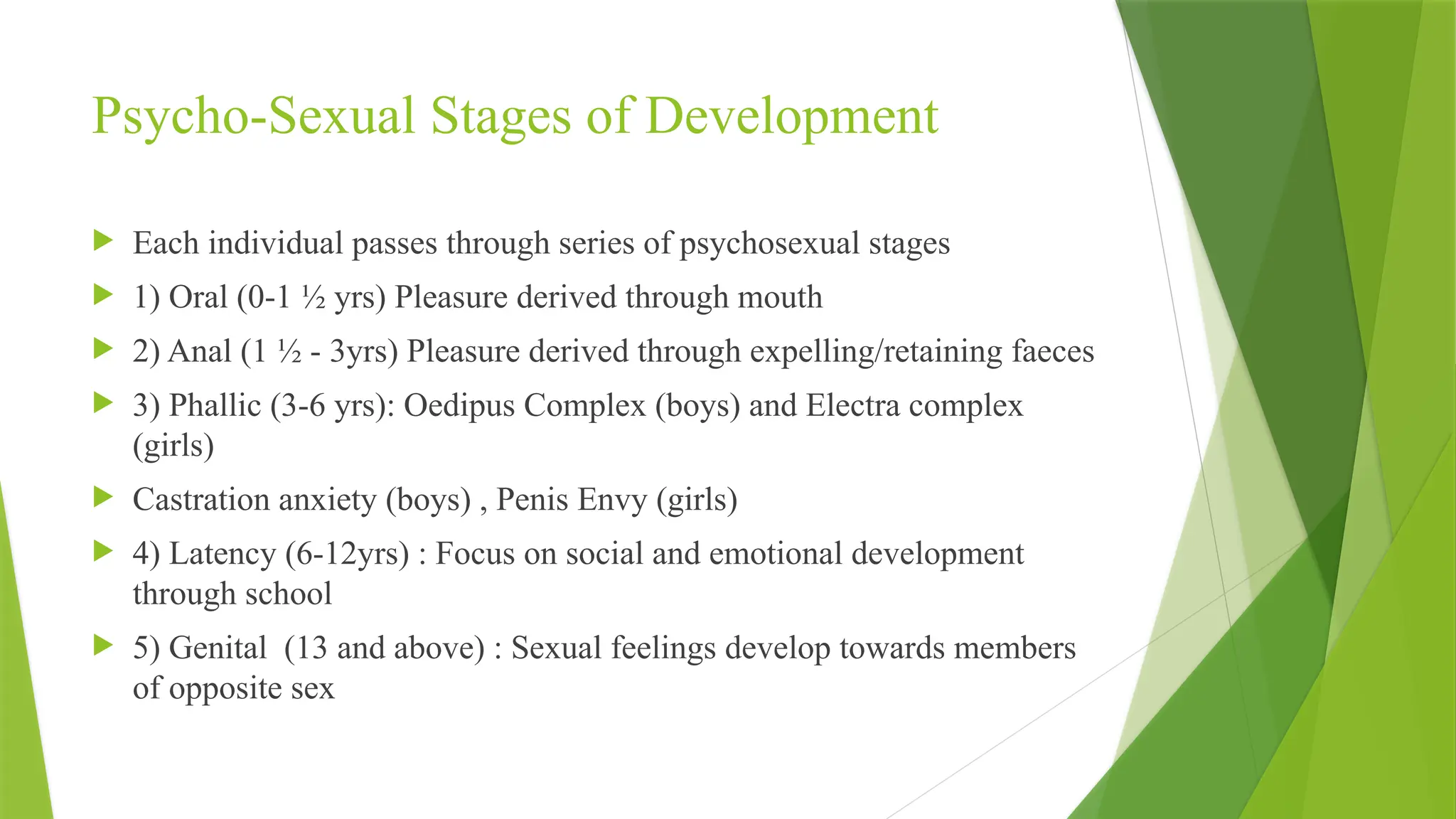
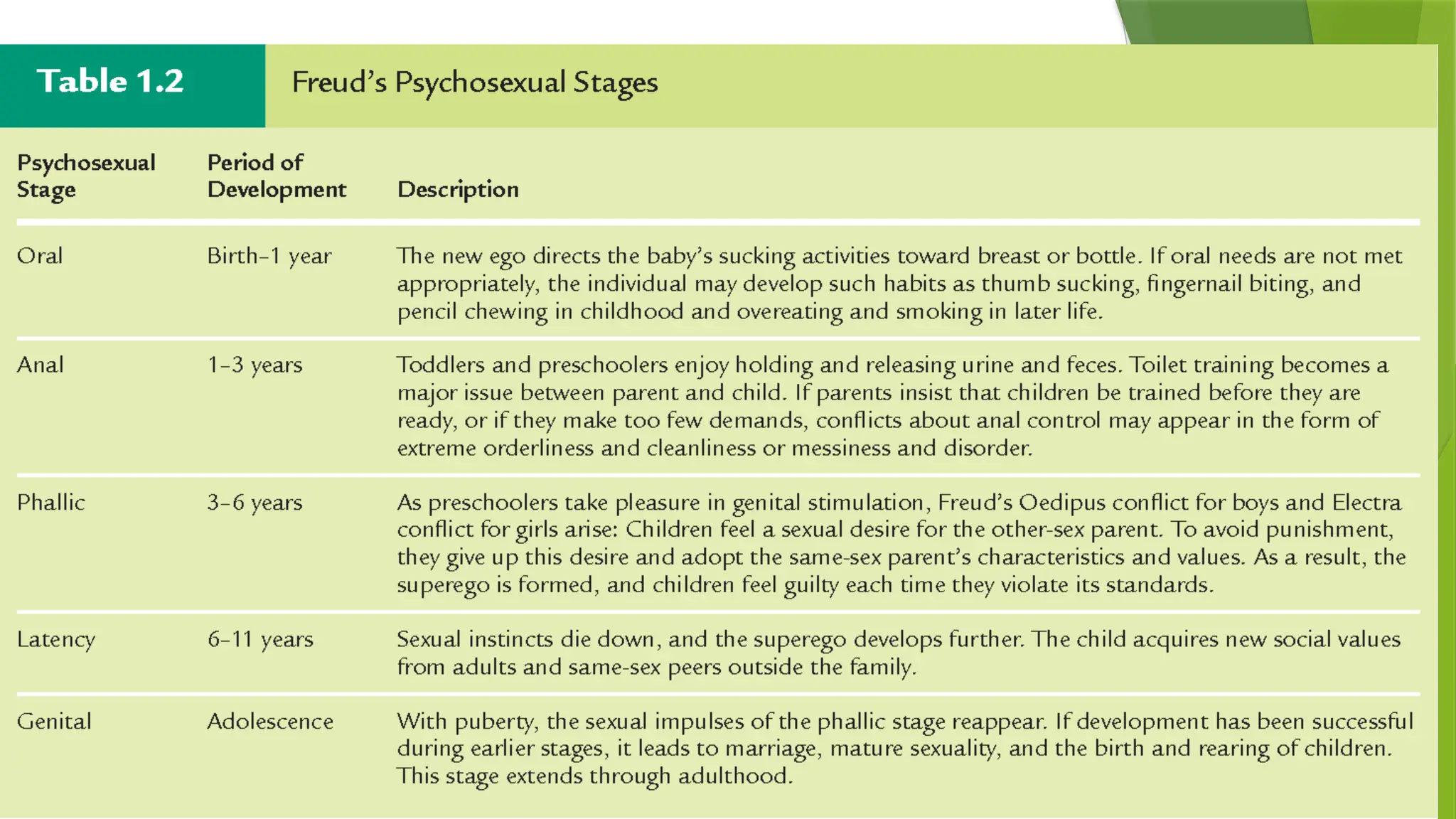
Psycho-Sexual Stages ofDevelopment
Each individual passes through series of psychosexual stages
1) Oral (0-1 ½ yrs) Pleasure derived through mouth
2) Anal (1 ½ - 3yrs) Pleasure derived through expelling/retaining faeces
3) Phallic (3-6 yrs): Oedipus Complex (boys) and Electra complex
(girls)
Castration anxiety (boys) , Penis Envy (girls)
4) Latency (6-12yrs) : Focus on social and emotional development
through school
5) Genital (13 and above) : Sexual feelings develop towards members
of opposite sex
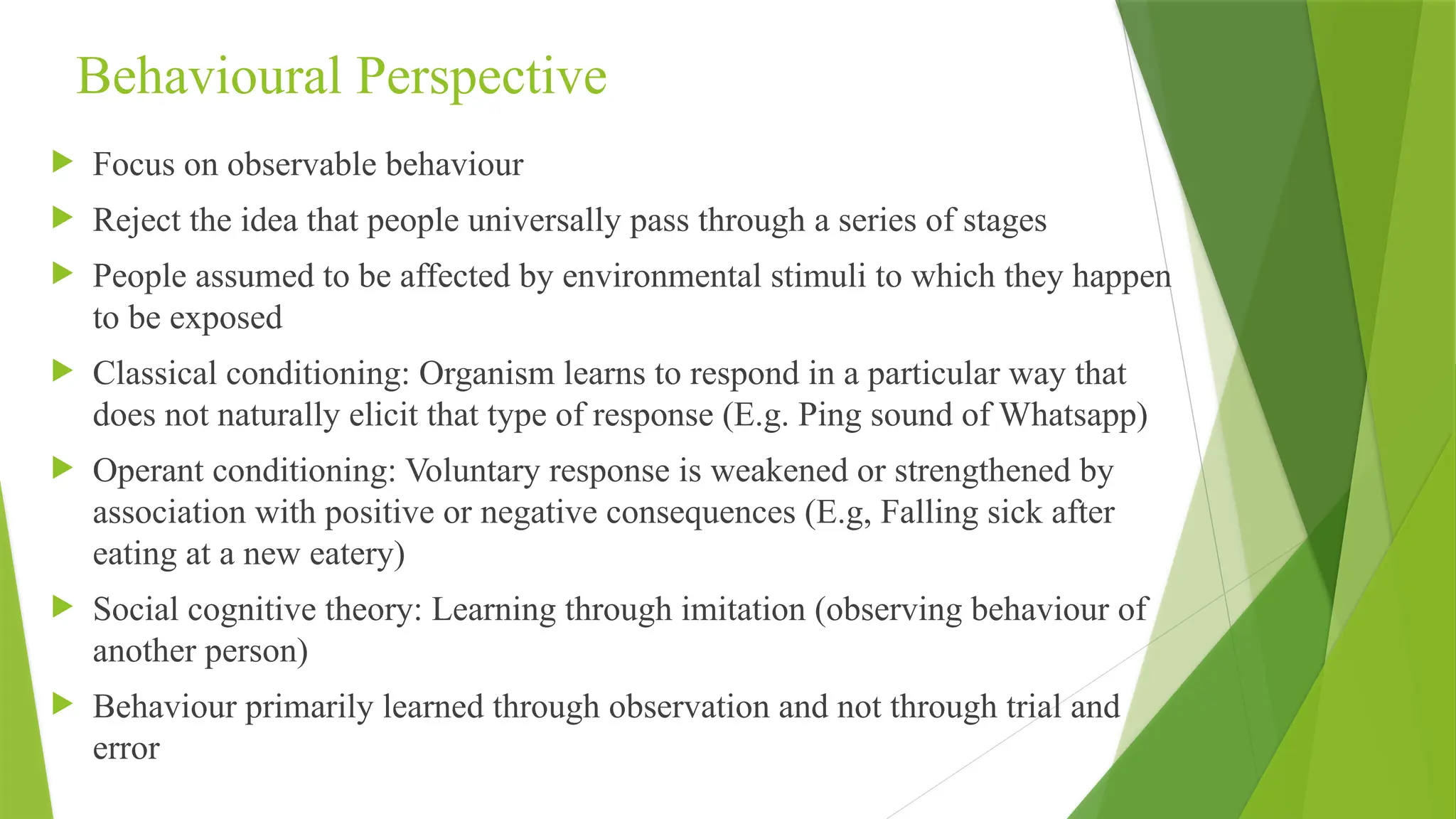
Behavioural Perspective
Focuson observable behaviour
Reject the idea that people universally pass through a series of stages
People assumed to be affected by environmental stimuli to which they happen
to be exposed
Classical conditioning: Organism learns to respond in a particular way that
does not naturally elicit that type of response (E.g. Ping sound of Whatsapp)
Operant conditioning: Voluntary response is weakened or strengthened by
association with positive or negative consequences (E.g, Falling sick after
eating at a new eatery)
Social cognitive theory: Learning through imitation (observing behaviour of
another person)
Behaviour primarily learned through observation and not through trial and
error
16.
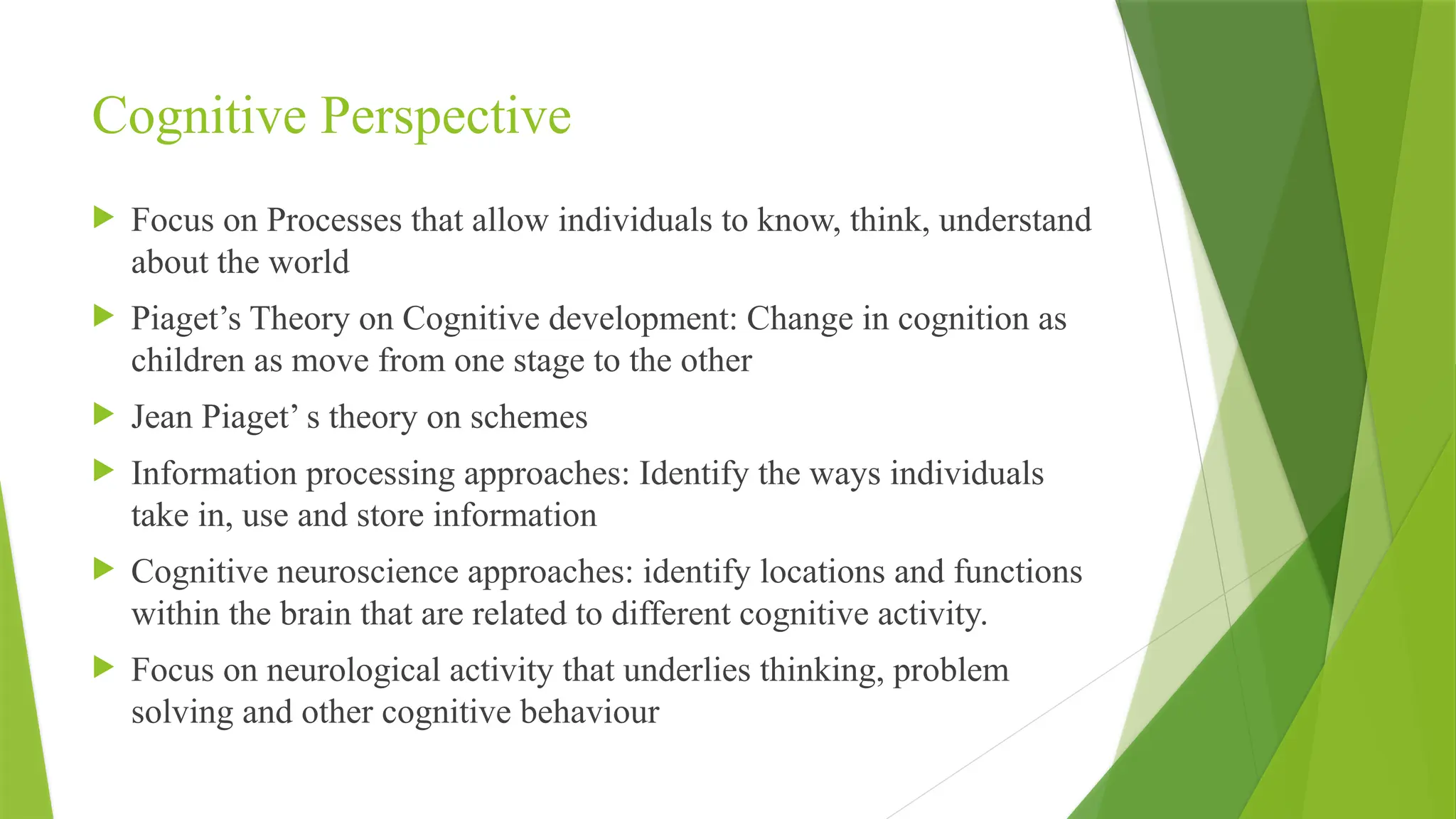
Cognitive Perspective
Focuson Processes that allow individuals to know, think, understand
about the world
Piaget’s Theory on Cognitive development: Change in cognition as
children as move from one stage to the other
Jean Piaget’ s theory on schemes
Information processing approaches: Identify the ways individuals
take in, use and store information
Cognitive neuroscience approaches: identify locations and functions
within the brain that are related to different cognitive activity.
Focus on neurological activity that underlies thinking, problem
solving and other cognitive behaviour
17.
Humanistic Perspective
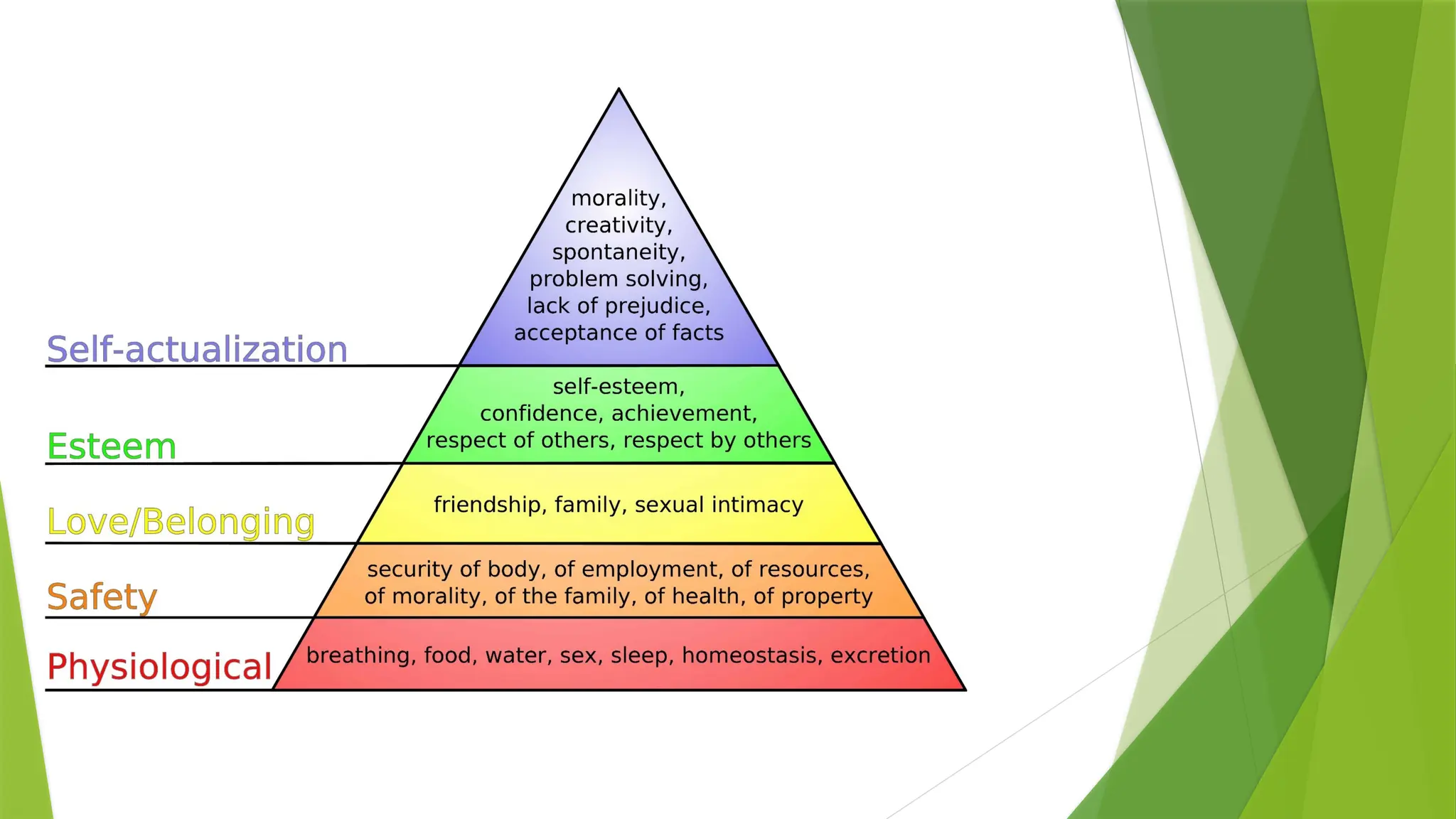
AbrahamMaslow
Carl Rogers: need for positive regard
Emphasis on free will, ability of humans to make choices and
decisions about their lives and control their behaviour
Self actualisation- state of self fulfilment in which people reach
their highest potential in their own unique way.
Humans are innately good
19.
Contextual Perspective
Focuson relationship between individuals and
physical, cognitive, personality and social worlds
Person’s development cannot be viewed without
looking at his/her social or cultural context
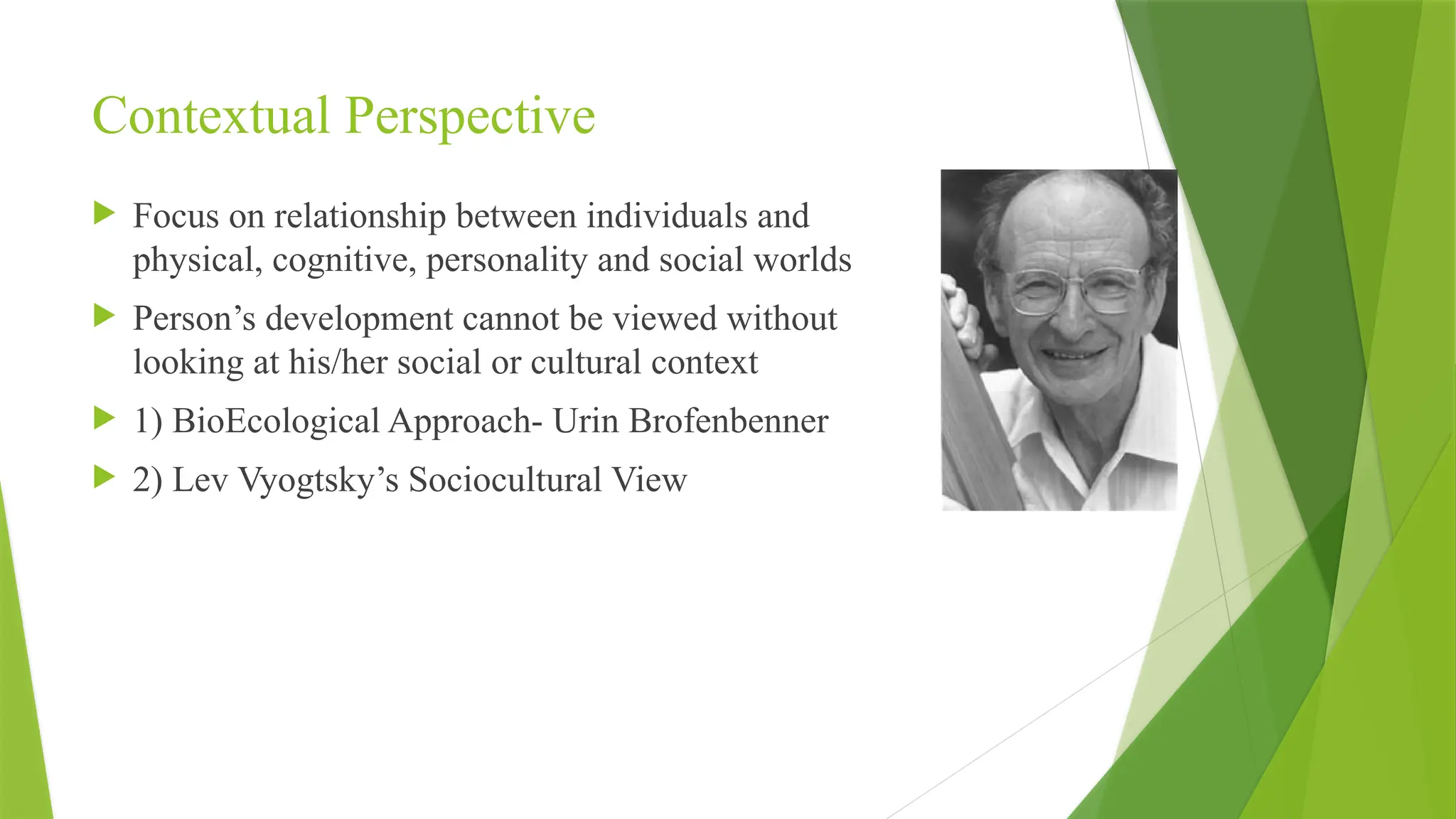
1) BioEcological Approach- Urin Brofenbenner
2) Lev Vyogtsky’s Sociocultural View
20.
Lev Vyogtsky’s SocioculturalView
Lev Vyogtsky
How cognitive development proceeds as a result of social
interactions with members of society
Reciprocal transaction between individual and environment
Children develop understanding of envt through play and
problem solving
scaffolding
21.
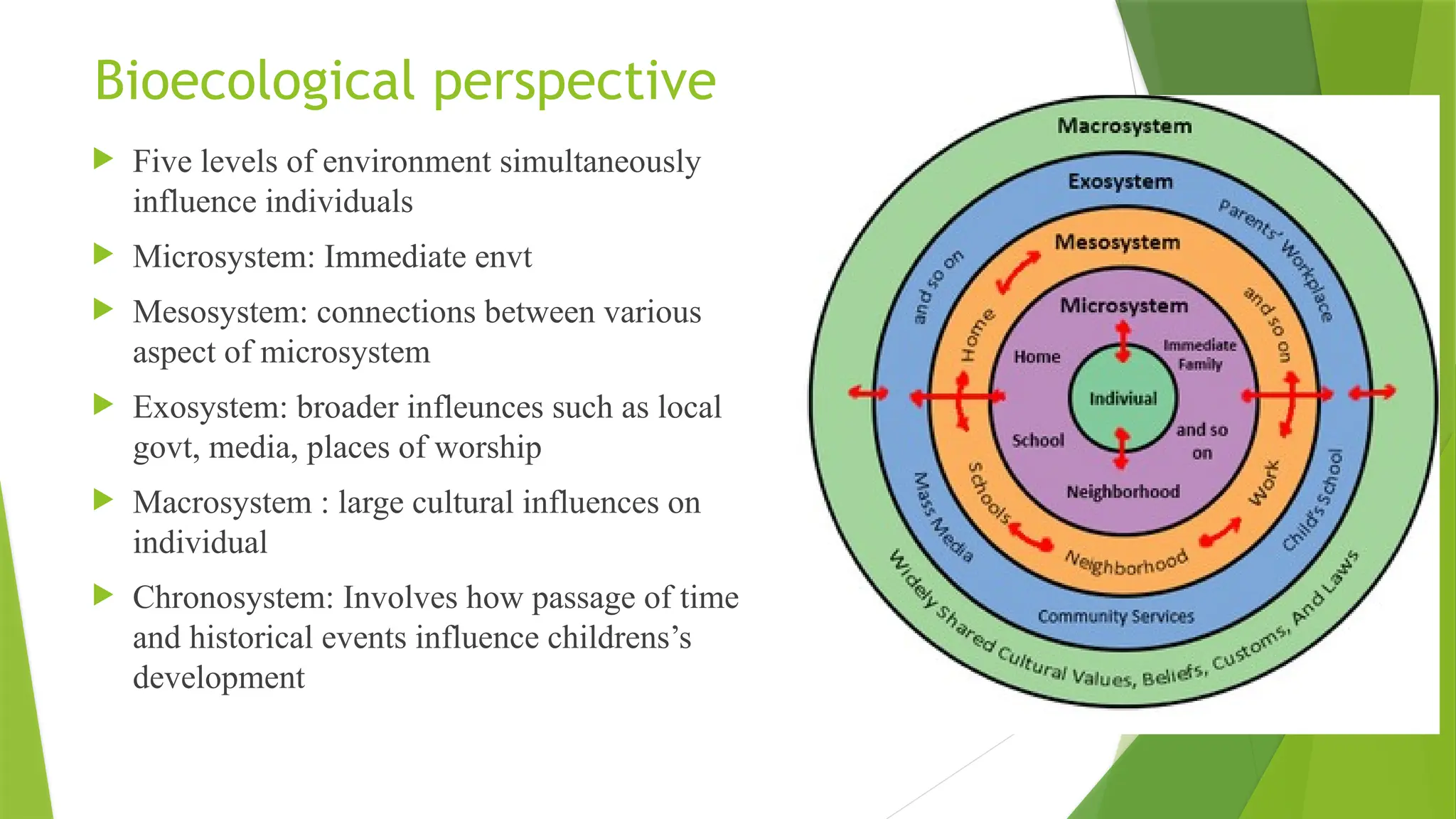
Bioecological perspective
Fivelevels of environment simultaneously
influence individuals
Microsystem: Immediate envt
Mesosystem: connections between various
aspect of microsystem
Exosystem: broader infleunces such as local
govt, media, places of worship
Macrosystem : large cultural influences on
individual
Chronosystem: Involves how passage of time
and historical events influence childrens’s
development
22.
Evolutionary Perspective
KonradLorenz (geese- imprinting)
Theory seeks to identify behaviour that is as a result of genetic
inheritance from our ancestors
This perspective draws heavily on field on ethology, which
examines ways in which our biological makeup influence our
behaviour
Assessment: No good way to test theories
Insufficient attention paid to environment and social factors
23.
Factors Influencing Humandevelopment
1) Genes and Heredity
2) Hormones
3) Nutrition
4) Socio-economic factors
5) Biological sex
24.
Genes And Heredity
Genes : Basic unit of genetic information.
Chromosome: Rod shaped portions of DNA that are organised in
23 pairs and contain genes
Genotype: The underlying combination of genetic material
present in an organism
Phenotype: The observable trait: trait that is actually seen
Dominant trait: Trait that is expressed when two competing traits
are present
Recessive trait: Trait within an organism that is present but not
expressed
25.
Chromosomal Abnormalities
Klinefilter’ssyndrome (XXY): Extreme height, enlarged breasts,
underdeveloped genitals
Sickle cell anemia (red blood cells in shape of sickle ): Stunted
growth, yellowishness of eyes
Fragile X syndrome: Gene injured on X chromosome. Leads to
moderate mental retardation
Down syndrome : Trisomy 21. Extra chromosome on 21st
pair.
Children have mongloid features and mental retardation
Turner syndrome : Absence of X chromosome