PG Cert: developing professional practice in HE Introduction to the course 1 14 September 09 9.30 – 12.30 Rachel Stubley and Simon Haslett
Session objectives to get to know the group to identify the requirements and share expectations of the course to identify professional development opportunities for this year to critically analyse contrasting approaches to teaching to reflect on one’s own “philosophy of learning”
Introductions Do you ever use icebreaker activities – when and why/why not? Use the card supplied to write your name, subject(s) taught and a chosen symbol/image to help us remember you
PG Cert overview Assessment: Action research Teaching practice/self evaluation Other evidence This year’s programme (see sheet)
Introduction to CELT Newport professional development programme Human Resources Research and Enterprise Department Centre for Excellence in Learning and Teaching What is CELT? How can I get involved?
CELT Umbrella Draw together existing PedR activity across the institution. CELT Beacon Beacon of PedR and teaching excellence in the HE landscape. Stats Total CELT contacts: 733 Conference delegates: 180 (up 50%) Conference papers: 62 Proceedings papers: 20 CELT Journal papers: 14 CELT Launch & Workshops: 198 CELT
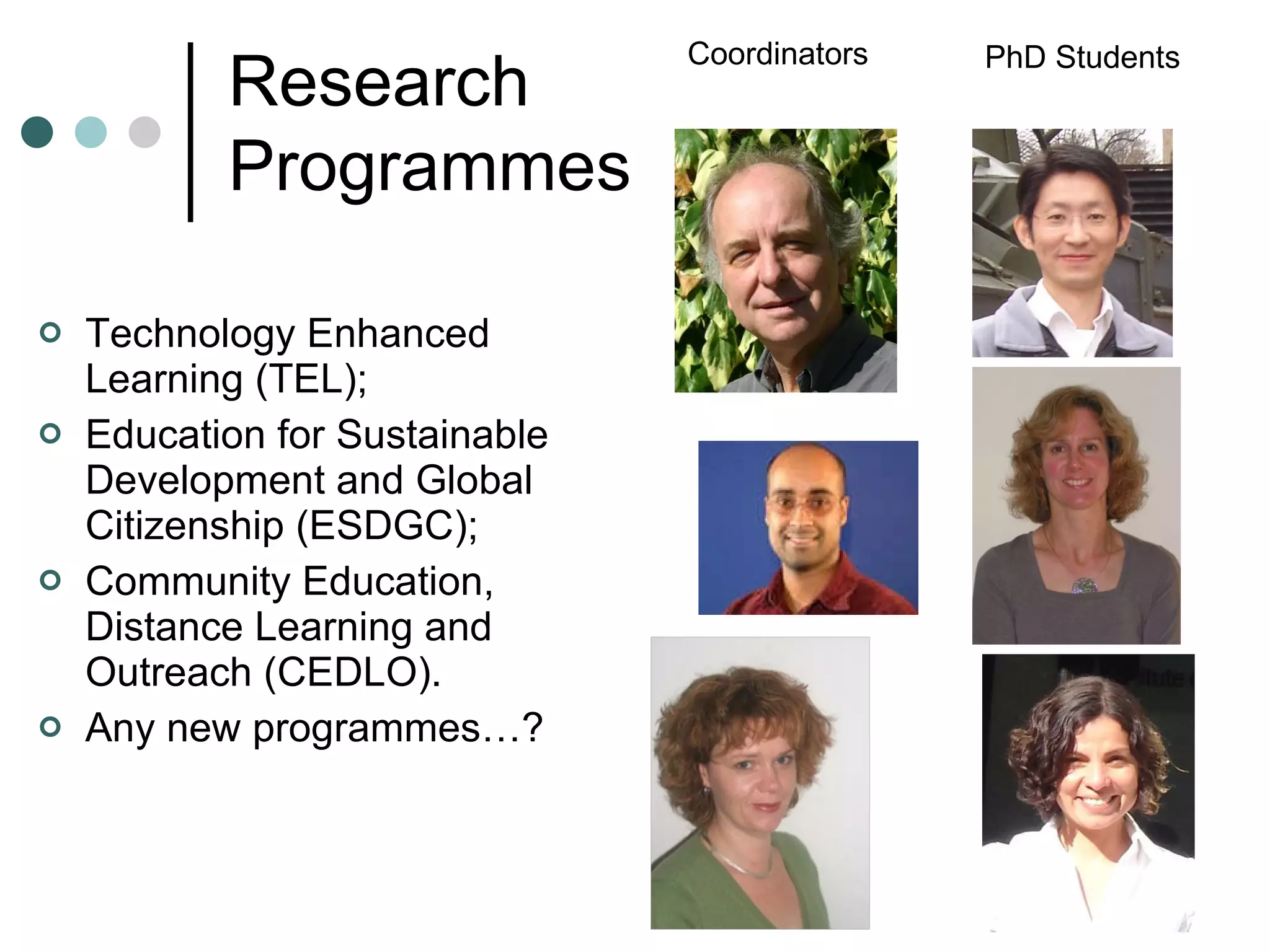
Technology Enhanced Learning (TEL); Education for Sustainable Development and Global Citizenship (ESDGC); Community Education, Distance Learning and Outreach (CEDLO). Any new programmes…? Coordinators PhD Students Research Programmes
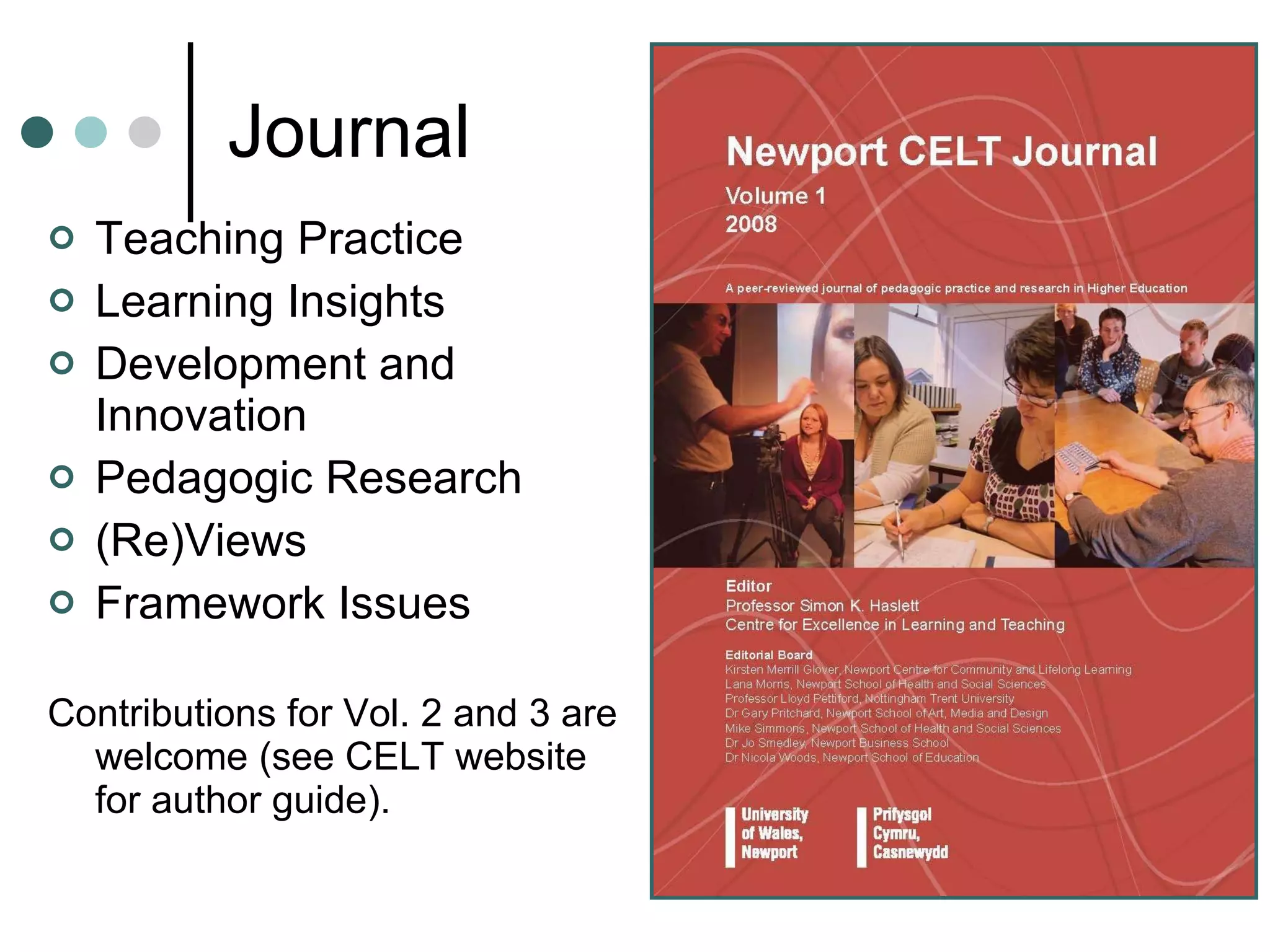
Teaching Practice Learning Insights Development and Innovation Pedagogic Research (Re)Views Framework Issues Contributions for Vol. 2 and 3 are welcome (see CELT website for author guide). Journal
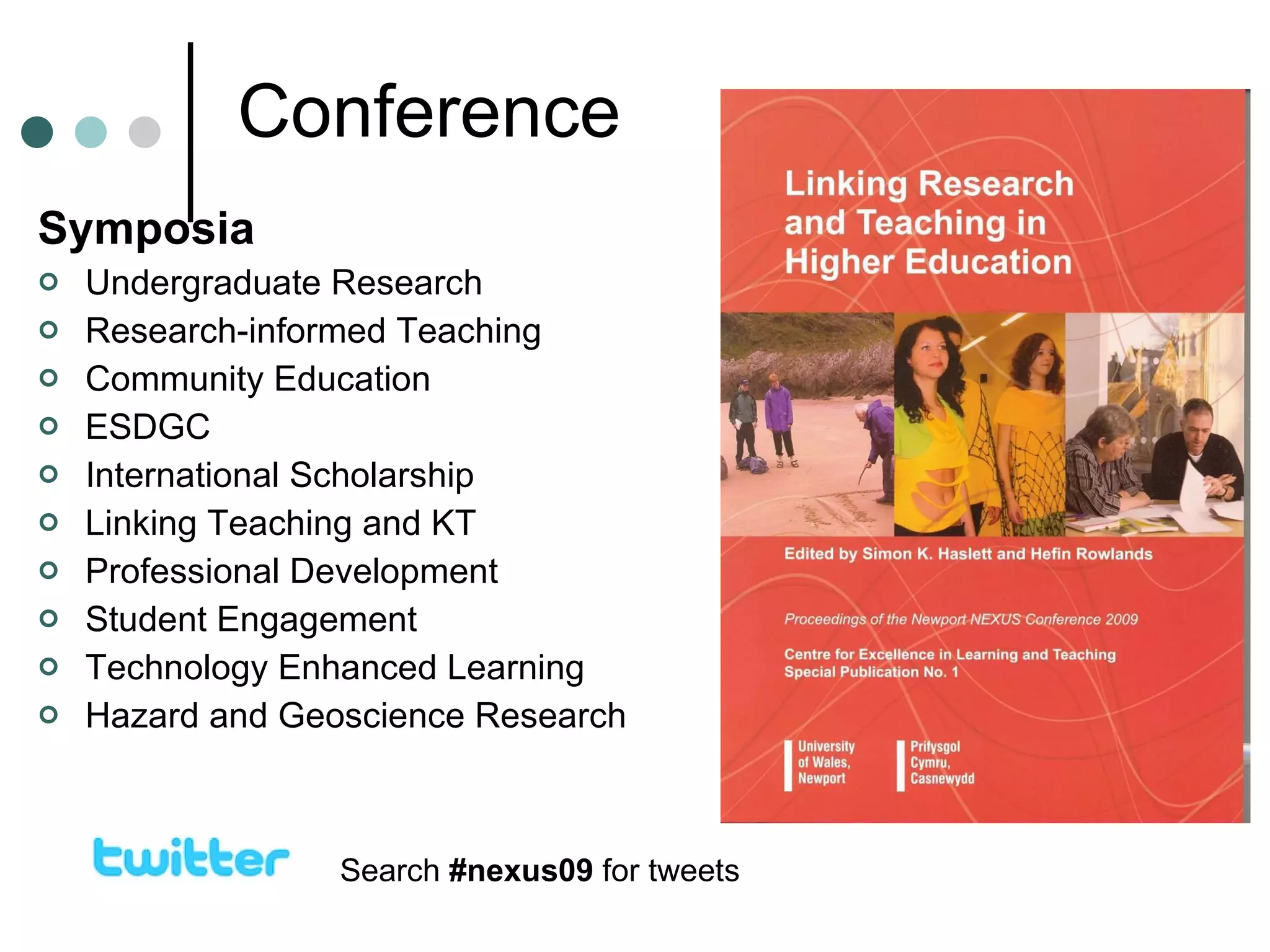
Symposia Undergraduate Research Research-informed Teaching Community Education ESDGC International Scholarship Linking Teaching and KT Professional Development Student Engagement Technology Enhanced Learning Hazard and Geoscience Research Search  #nexus09  for tweets Conference
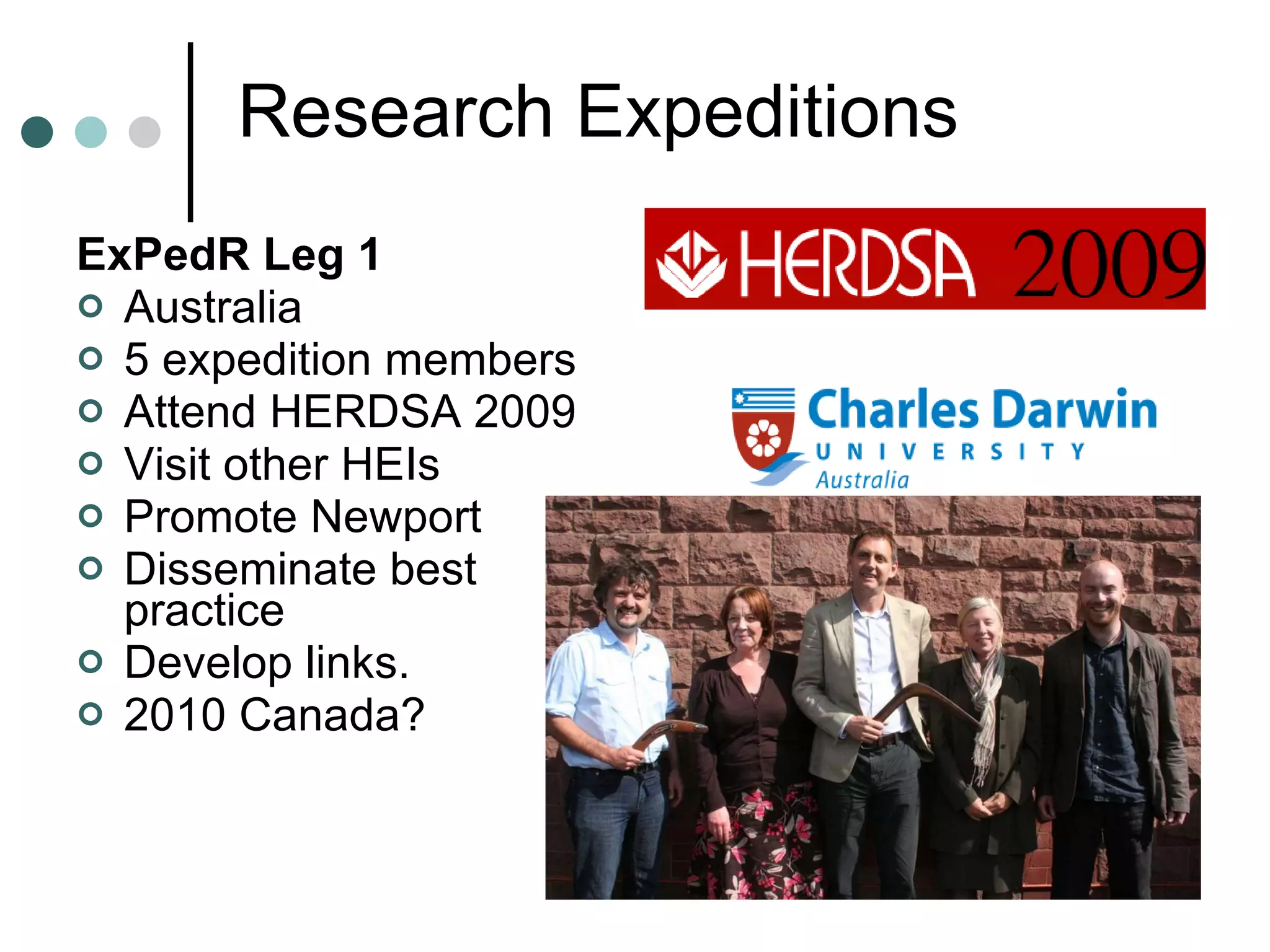
ExPedR Leg 1 Australia 5 expedition members Attend HERDSA 2009 Visit other HEIs Promote Newport Disseminate best practice Develop links. 2010 Canada? Research Expeditions
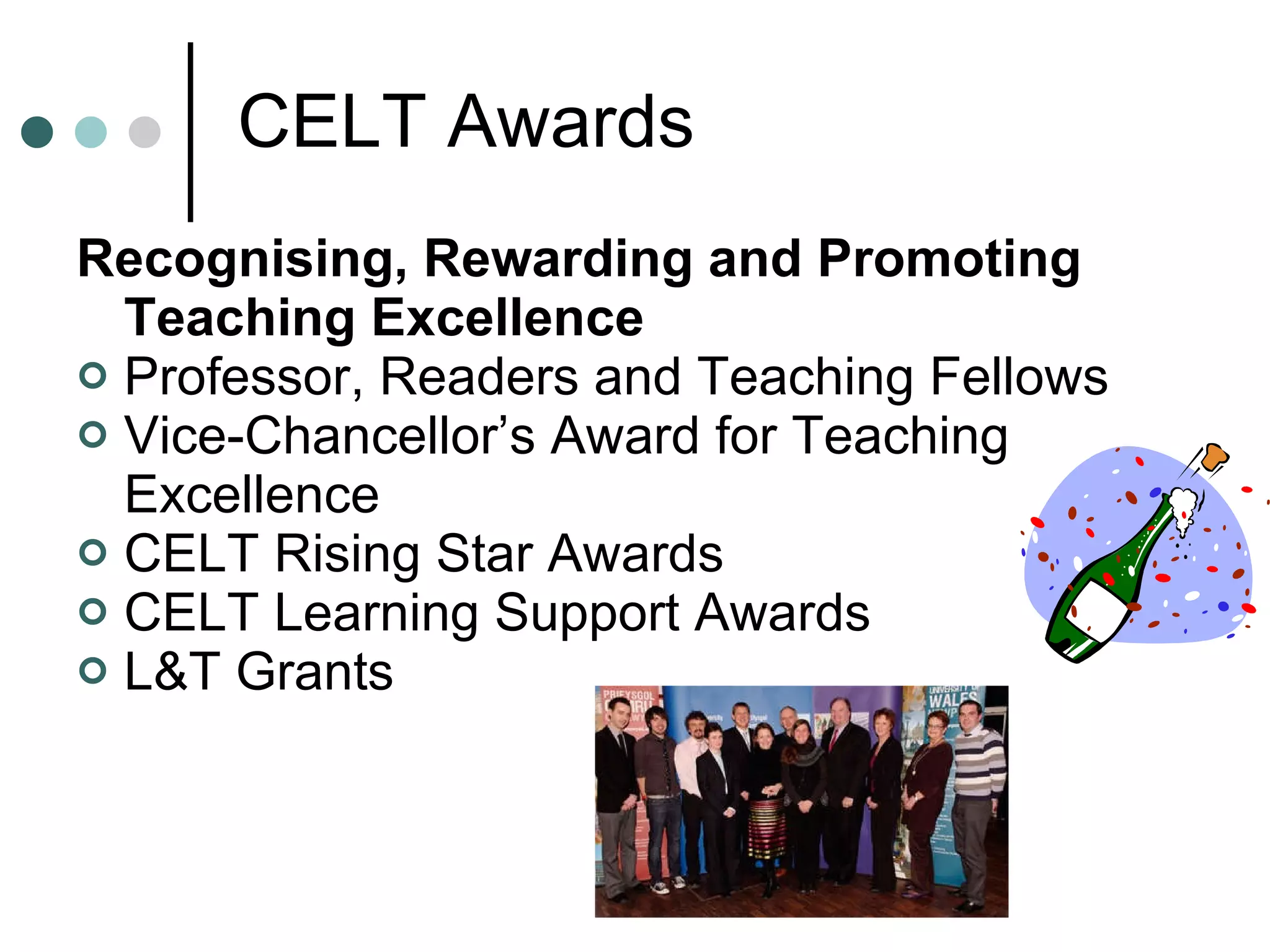
Recognising, Rewarding and Promoting Teaching Excellence Professor, Readers and Teaching Fellows Vice-Chancellor’s Award for Teaching Excellence CELT Rising Star Awards CELT Learning Support Awards L&T Grants CELT Awards
Expectations of the course Please discuss with colleagues and record your views on flip chart paper: Hopes Concerns We will study these and aim to address them
Approaches to learning Discuss the scenarios on p.52 of the handbook What are the strengths/limitations of each approach? Consider the views of some writers on education and learning (see handout)
Deep and surface learning A useful concept for developing teaching and learning in HE (see Ramsden 2003, Biggs 2007) Has been criticised (see Haggis 2003) these are approaches to  learning avoid labelling  students  as deep or surface learners!
References ARMITAGE, A. et al (2003)  Teaching and Training in Post-compulsory Education  2 nd  Edition. Maidenhead: Open University Press BIGGS, J & TANG, C. (2007)  Teaching for Quality Learning at University   3 rd  Edition. Maidenhead: Society for Research into Higher Education and Open University Press RAMSDEN P. (2003)  Learning to Teach in Higher Education   2 nd  Edition.   London: Routledge.

Introduction to Learning and Teaching in Higher Education (Part 1)

  • 1.
    PG Cert: developingprofessional practice in HE Introduction to the course 1 14 September 09 9.30 – 12.30 Rachel Stubley and Simon Haslett
  • 2.
    Session objectives toget to know the group to identify the requirements and share expectations of the course to identify professional development opportunities for this year to critically analyse contrasting approaches to teaching to reflect on one’s own “philosophy of learning”
  • 3.
    Introductions Do youever use icebreaker activities – when and why/why not? Use the card supplied to write your name, subject(s) taught and a chosen symbol/image to help us remember you
  • 4.
    PG Cert overviewAssessment: Action research Teaching practice/self evaluation Other evidence This year’s programme (see sheet)
  • 5.
    Introduction to CELTNewport professional development programme Human Resources Research and Enterprise Department Centre for Excellence in Learning and Teaching What is CELT? How can I get involved?
  • 6.
    CELT Umbrella Drawtogether existing PedR activity across the institution. CELT Beacon Beacon of PedR and teaching excellence in the HE landscape. Stats Total CELT contacts: 733 Conference delegates: 180 (up 50%) Conference papers: 62 Proceedings papers: 20 CELT Journal papers: 14 CELT Launch & Workshops: 198 CELT
  • 7.
    Technology Enhanced Learning(TEL); Education for Sustainable Development and Global Citizenship (ESDGC); Community Education, Distance Learning and Outreach (CEDLO). Any new programmes…? Coordinators PhD Students Research Programmes
  • 8.
    Teaching Practice LearningInsights Development and Innovation Pedagogic Research (Re)Views Framework Issues Contributions for Vol. 2 and 3 are welcome (see CELT website for author guide). Journal
  • 9.
    Symposia Undergraduate ResearchResearch-informed Teaching Community Education ESDGC International Scholarship Linking Teaching and KT Professional Development Student Engagement Technology Enhanced Learning Hazard and Geoscience Research Search #nexus09 for tweets Conference
  • 10.
    ExPedR Leg 1Australia 5 expedition members Attend HERDSA 2009 Visit other HEIs Promote Newport Disseminate best practice Develop links. 2010 Canada? Research Expeditions
  • 11.
    Recognising, Rewarding andPromoting Teaching Excellence Professor, Readers and Teaching Fellows Vice-Chancellor’s Award for Teaching Excellence CELT Rising Star Awards CELT Learning Support Awards L&T Grants CELT Awards
  • 12.
    Expectations of thecourse Please discuss with colleagues and record your views on flip chart paper: Hopes Concerns We will study these and aim to address them
  • 13.
    Approaches to learningDiscuss the scenarios on p.52 of the handbook What are the strengths/limitations of each approach? Consider the views of some writers on education and learning (see handout)
  • 14.
    Deep and surfacelearning A useful concept for developing teaching and learning in HE (see Ramsden 2003, Biggs 2007) Has been criticised (see Haggis 2003) these are approaches to learning avoid labelling students as deep or surface learners!
  • 15.
    References ARMITAGE, A.et al (2003) Teaching and Training in Post-compulsory Education 2 nd Edition. Maidenhead: Open University Press BIGGS, J & TANG, C. (2007) Teaching for Quality Learning at University 3 rd Edition. Maidenhead: Society for Research into Higher Education and Open University Press RAMSDEN P. (2003) Learning to Teach in Higher Education 2 nd Edition. London: Routledge.