


Introduction to dental communityDR. Rabab Salama
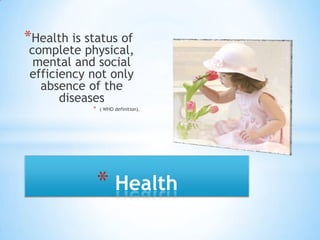
Health is status of complete physical, mental and social efficiency not only absence of the diseases ( WHO definition). Health
Dental public healthDeals with the whole community rather than the individuals so, it called community dentistry.Public health is health of people in certain community
Dental public healthThe art and science of preventing and controlling dental diseases in addition to promoting the dental health through organized community efforts.
Dental public health concern with
1.Dental health education to the public.2.Preventing and controlling of dental diseases.3.The applied dental researches.4.Providing dental care programs that include the prevention and treatment.
Aim of the dental public health course
1.To give better understanding of the patient that should be treated as a part of the community rather than a specific case that needs treatment.2.To realize the importance of implanting the future dental practice based on the regular maintenance of care and utilization of preventive measures.
3.To provide the specialized skills and knowledge that will enhance the future practice dentistry.4.To identify the community health problems and suggest approaches for their correction.
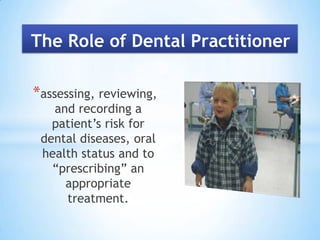
The Role of Dental Practitionerassessing, reviewing, and recording a patient’s risk for dental diseases, oral health status and to “prescribing” an appropriate treatment.
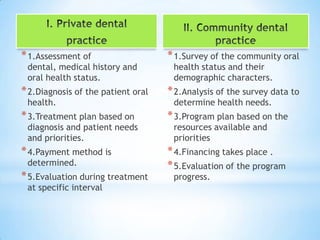
Role of dental practitioner in private and community practice
I. Private dental practiceII. Community dental practice1.Survey of the community oral health status and their demographic characters.2.Analysis of the survey data to determine health needs.3.Program plan based on the resources available and priorities4.Financing takes place .5.Evaluation of the program progress.1.Assessment of dental, medical history and oral health status.2.Diagnosis of the patient oral health. 3.Treatment plan based on diagnosis and patient needs and priorities.4.Payment method is determined.5.Evaluation during treatment at specific interval
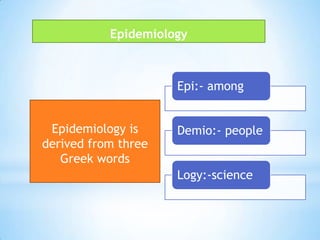
EpidemiologyEpidemiology is derived from three Greek words
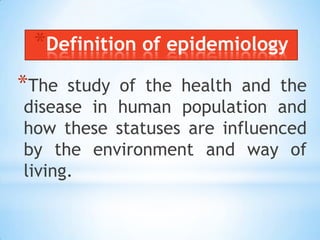
Definition of epidemiologyThe study of the health and the disease in human population and how these statuses are influenced by the environment and way of living.
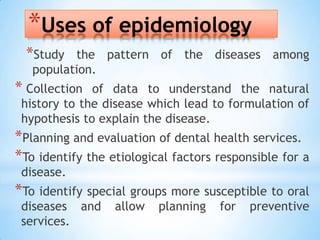
Uses of epidemiologyStudy the pattern of the diseases among population. Collection of data to understand the natural history to the disease which lead to formulation of hypothesis to explain the disease.Planning and evaluation of dental health services.To identify the etiological factors responsible for a disease.To identify special groups more susceptible to oral diseases and allow planning for preventive services.
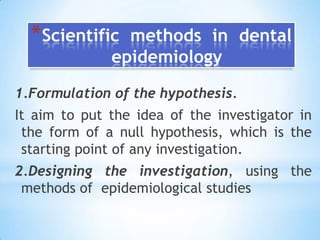
Scientific methods in dental epidemiology1.Formulation of the hypothesis.It aim to put the idea of the investigator in the form of a null hypothesis, which is the starting point of any investigation.2.Designing the investigation, using the methods of  epidemiological studies
3.Selection of the sample.4.Conducting the investigation, with the main three aspects when conduct the examinationsThe examination method.The diagnostic criteria.The indices used for measurements.
5.Analysis of data.6.Drawing the conclusion. 7.Publishing the results.
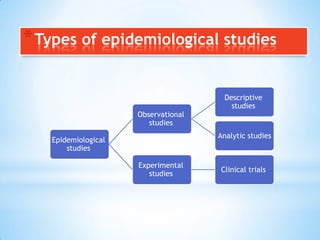
Types of epidemiological studies
Prevention of the oral diseases
Prevention of the oral diseasesMany diseases are preventable through simple, non-medical methods as most common oral diseases (dental caries and periodontal diseases). Prevention of oral diseases depends upon data collected from the epidemiology of the diseases which can identify the etiological factors concern with the diseases and find the methods to control or prevent it.
Prevention can divided into the following levels of preventive services1-Primary-Primary preventive services:It is instruction and education of expectant mother (pregnant) to keep good oral hygiene of the child and include prevention
2-Primary preventive services:It is to prevent the initiation of the disease; they are designated as service that provides:Health promotion and specific protection.
Specific protection activity includes services that are designated to protect against disease agent by decreasing the susceptibility of host or by establishing barrier against environment
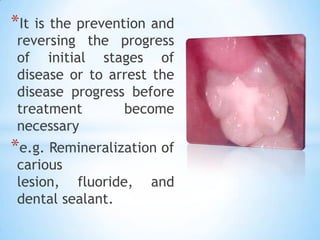
It is the prevention and reversing the progress of initial stages of disease or to arrest the disease progress before treatment become necessary e.g. Remineralization of carious lesion, fluoride, and dental sealant.
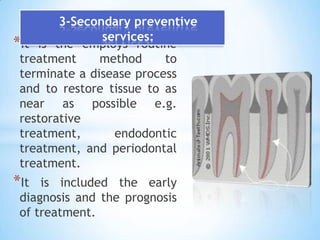
3-Secondary preventive services:It is the employs routine treatment method to terminate a disease process and to restore tissue to as near as possible e.g. restorative treatment, endodontic treatment, and periodontal treatment.It is included the early diagnosis and the prognosis of treatment.
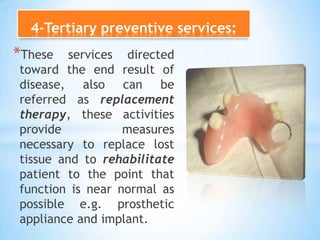
4-Tertiary preventive services:These services directed toward the end result of disease, also can be referred as replacement therapy, these activities provide measures necessary to replace lost tissue and to rehabilitate patient to the point that function is near normal as possible e.g. prosthetic appliance and implant.

Introduction to dental community pwer points

  • 1.
    Introduction to dentalcommunityDR. Rabab Salama
  • 2.
    Health is statusof complete physical, mental and social efficiency not only absence of the diseases ( WHO definition). Health
  • 3.
    Dental public healthDealswith the whole community rather than the individuals so, it called community dentistry.Public health is health of people in certain community
  • 4.
    Dental public healthTheart and science of preventing and controlling dental diseases in addition to promoting the dental health through organized community efforts.
  • 5.
  • 6.
    1.Dental health educationto the public.2.Preventing and controlling of dental diseases.3.The applied dental researches.4.Providing dental care programs that include the prevention and treatment.
  • 7.
    Aim of thedental public health course
  • 8.
    1.To give betterunderstanding of the patient that should be treated as a part of the community rather than a specific case that needs treatment.2.To realize the importance of implanting the future dental practice based on the regular maintenance of care and utilization of preventive measures.
  • 9.
    3.To provide thespecialized skills and knowledge that will enhance the future practice dentistry.4.To identify the community health problems and suggest approaches for their correction.
  • 10.
    The Role ofDental Practitionerassessing, reviewing, and recording a patient’s risk for dental diseases, oral health status and to “prescribing” an appropriate treatment.
  • 11.
    Role of dentalpractitioner in private and community practice
  • 12.
    I. Private dentalpracticeII. Community dental practice1.Survey of the community oral health status and their demographic characters.2.Analysis of the survey data to determine health needs.3.Program plan based on the resources available and priorities4.Financing takes place .5.Evaluation of the program progress.1.Assessment of dental, medical history and oral health status.2.Diagnosis of the patient oral health. 3.Treatment plan based on diagnosis and patient needs and priorities.4.Payment method is determined.5.Evaluation during treatment at specific interval
  • 13.
  • 14.
    Definition of epidemiologyThestudy of the health and the disease in human population and how these statuses are influenced by the environment and way of living.
  • 15.
    Uses of epidemiologyStudythe pattern of the diseases among population. Collection of data to understand the natural history to the disease which lead to formulation of hypothesis to explain the disease.Planning and evaluation of dental health services.To identify the etiological factors responsible for a disease.To identify special groups more susceptible to oral diseases and allow planning for preventive services.
  • 16.
    Scientific methods indental epidemiology1.Formulation of the hypothesis.It aim to put the idea of the investigator in the form of a null hypothesis, which is the starting point of any investigation.2.Designing the investigation, using the methods of epidemiological studies
  • 17.
    3.Selection of thesample.4.Conducting the investigation, with the main three aspects when conduct the examinationsThe examination method.The diagnostic criteria.The indices used for measurements.
  • 18.
    5.Analysis of data.6.Drawingthe conclusion. 7.Publishing the results.
  • 19.
  • 20.
    Prevention of theoral diseases
  • 21.
    Prevention of theoral diseasesMany diseases are preventable through simple, non-medical methods as most common oral diseases (dental caries and periodontal diseases). Prevention of oral diseases depends upon data collected from the epidemiology of the diseases which can identify the etiological factors concern with the diseases and find the methods to control or prevent it.
  • 22.
    Prevention can dividedinto the following levels of preventive services1-Primary-Primary preventive services:It is instruction and education of expectant mother (pregnant) to keep good oral hygiene of the child and include prevention
  • 23.
    2-Primary preventive services:Itis to prevent the initiation of the disease; they are designated as service that provides:Health promotion and specific protection.
  • 24.
    Specific protection activityincludes services that are designated to protect against disease agent by decreasing the susceptibility of host or by establishing barrier against environment
  • 25.
    It is theprevention and reversing the progress of initial stages of disease or to arrest the disease progress before treatment become necessary e.g. Remineralization of carious lesion, fluoride, and dental sealant.
  • 26.
    3-Secondary preventive services:Itis the employs routine treatment method to terminate a disease process and to restore tissue to as near as possible e.g. restorative treatment, endodontic treatment, and periodontal treatment.It is included the early diagnosis and the prognosis of treatment.
  • 27.
    4-Tertiary preventive services:Theseservices directed toward the end result of disease, also can be referred as replacement therapy, these activities provide measures necessary to replace lost tissue and to rehabilitate patient to the point that function is near normal as possible e.g. prosthetic appliance and implant.