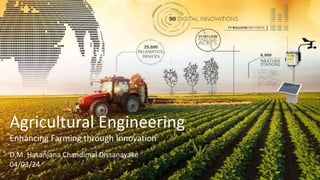

Agricultural Engineering
Enhancing Farming through Innovation
D.M. Hasanjana Chandimal Dissanayake
04/03/24
Content
• Introduction
• Core Areas of Agricultural Engineering
• Impact of Agricultural Engineering
• Challenges in Agricultural Engineering
• Future Directions
• Role of Agricultural Engineers
• References
Introduction
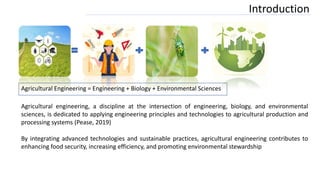
Agricultural Engineering = Engineering + Biology + Environmental Sciences
Agricultural engineering, a discipline at the intersection of engineering, biology, and environmental
sciences, is dedicated to applying engineering principles and technologies to agricultural production and
processing systems (Pease, 2019)
By integrating advanced technologies and sustainable practices, agricultural engineering contributes to
enhancing food security, increasing efficiency, and promoting environmental stewardship
Core Areas of Agricultural Engineering
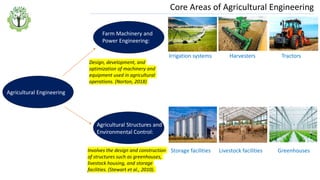
Agricultural Engineering
Farm Machinery and
Power Engineering:
Agricultural Structures and
Environmental Control:
Involves the design and construction
of structures such as greenhouses,
livestock housing, and storage
facilities. (Stewart et al., 2010).
Design, development, and
optimization of machinery and
equipment used in agricultural
operations. (Norton, 2018)
Irrigation systems Harvesters Tractors
Storage facilities Livestock facilities Greenhouses
Core Areas of Agricultural Engineering
Agricultural Engineering
Soil and Water
Conservation Engineering
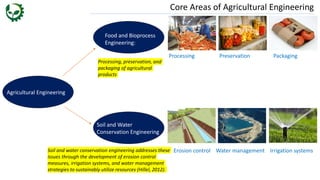
Soil and water conservation engineering addresses these
issues through the development of erosion control
measures, irrigation systems, and water management
strategies to sustainably utilize resources (Hillel, 2012).
Processing, preservation, and
packaging of agricultural
products
Processing Preservation Packaging
Erosion control Water management Irrigation systems
Food and Bioprocess
Engineering:
Impact of Agricultural Engineering
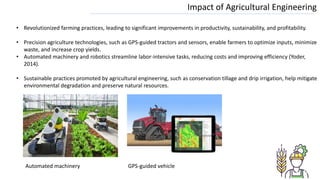
• Revolutionized farming practices, leading to significant improvements in productivity, sustainability, and profitability.
• Precision agriculture technologies, such as GPS-guided tractors and sensors, enable farmers to optimize inputs, minimize
waste, and increase crop yields.
• Automated machinery and robotics streamline labor-intensive tasks, reducing costs and improving efficiency (Yoder,
2014).
• Sustainable practices promoted by agricultural engineering, such as conservation tillage and drip irrigation, help mitigate
environmental degradation and preserve natural resources.
Automated machinery GPS-guided vehicle
Challenges in Agricultural Engineering
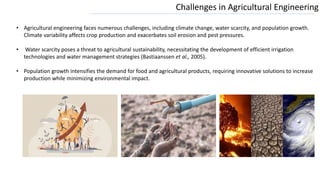
• Agricultural engineering faces numerous challenges, including climate change, water scarcity, and population growth.
Climate variability affects crop production and exacerbates soil erosion and pest pressures.
• Water scarcity poses a threat to agricultural sustainability, necessitating the development of efficient irrigation
technologies and water management strategies (Bastiaanssen et al., 2005).
• Population growth intensifies the demand for food and agricultural products, requiring innovative solutions to increase
production while minimizing environmental impact.
Future Directions
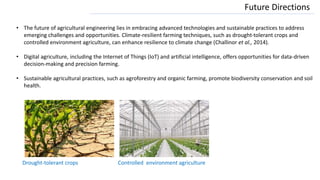
• The future of agricultural engineering lies in embracing advanced technologies and sustainable practices to address
emerging challenges and opportunities. Climate-resilient farming techniques, such as drought-tolerant crops and
controlled environment agriculture, can enhance resilience to climate change (Challinor et al., 2014).
• Digital agriculture, including the Internet of Things (IoT) and artificial intelligence, offers opportunities for data-driven
decision-making and precision farming.
• Sustainable agricultural practices, such as agroforestry and organic farming, promote biodiversity conservation and soil
health.
Drought-tolerant crops Controlled environment agriculture
Role of Agricultural Engineers
• They collaborate with farmers, scientists, policymakers, and industry stakeholders to develop and implement solutions
that address complex challenges. By integrating interdisciplinary knowledge and leveraging cutting-edge technologies,
agricultural engineers contribute to enhancing food security, environmental conservation, and rural development.
References:
Bastiaanssen, W. G. M., et al. (2005). Remote sensing in water resources management: The state of the art. UNESCO.
Challinor, A. J., et al. (2014). A meta-analysis of crop yield under climate change and adaptation. Nature Climate Change, 4(4), 287–291.
Hillel, D. (2012). Introduction to Environmental Soil Physics. Elsevier.
Kumar, A., & Goyal, S. (2016). Recent trends in agricultural engineering: A review. Journal of Scientific and Industrial Research, 75(2), 81–88.
Norton, L. D. (2018). Agricultural Mechanization and Automation. CRC Press.
Pease, W. S. (2019). Principles of Agricultural Engineering, Volume 1: Farm Power, Machinery, and Mechanization. ABE.
Stewart, B. A., et al. (2010). Irrigation of Agricultural Crops (2nd ed.). Agronomy Monograph No. 30. ASA, CSSA, and SSSA.
Yoder, R. E. (2014). Agricultural Robots: Mechanisms and Practice. CRC Press.
Q&A:

Introduction to Agricultural Engineering.pptx

  • 1.
    Agricultural Engineering Enhancing Farmingthrough Innovation D.M. Hasanjana Chandimal Dissanayake 04/03/24
  • 2.
    Content • Introduction • CoreAreas of Agricultural Engineering • Impact of Agricultural Engineering • Challenges in Agricultural Engineering • Future Directions • Role of Agricultural Engineers • References
  • 3.
    Introduction Agricultural Engineering =Engineering + Biology + Environmental Sciences Agricultural engineering, a discipline at the intersection of engineering, biology, and environmental sciences, is dedicated to applying engineering principles and technologies to agricultural production and processing systems (Pease, 2019) By integrating advanced technologies and sustainable practices, agricultural engineering contributes to enhancing food security, increasing efficiency, and promoting environmental stewardship
  • 4.
    Core Areas ofAgricultural Engineering Agricultural Engineering Farm Machinery and Power Engineering: Agricultural Structures and Environmental Control: Involves the design and construction of structures such as greenhouses, livestock housing, and storage facilities. (Stewart et al., 2010). Design, development, and optimization of machinery and equipment used in agricultural operations. (Norton, 2018) Irrigation systems Harvesters Tractors Storage facilities Livestock facilities Greenhouses
  • 5.
    Core Areas ofAgricultural Engineering Agricultural Engineering Soil and Water Conservation Engineering Soil and water conservation engineering addresses these issues through the development of erosion control measures, irrigation systems, and water management strategies to sustainably utilize resources (Hillel, 2012). Processing, preservation, and packaging of agricultural products Processing Preservation Packaging Erosion control Water management Irrigation systems Food and Bioprocess Engineering:
  • 6.
    Impact of AgriculturalEngineering • Revolutionized farming practices, leading to significant improvements in productivity, sustainability, and profitability. • Precision agriculture technologies, such as GPS-guided tractors and sensors, enable farmers to optimize inputs, minimize waste, and increase crop yields. • Automated machinery and robotics streamline labor-intensive tasks, reducing costs and improving efficiency (Yoder, 2014). • Sustainable practices promoted by agricultural engineering, such as conservation tillage and drip irrigation, help mitigate environmental degradation and preserve natural resources. Automated machinery GPS-guided vehicle
  • 7.
    Challenges in AgriculturalEngineering • Agricultural engineering faces numerous challenges, including climate change, water scarcity, and population growth. Climate variability affects crop production and exacerbates soil erosion and pest pressures. • Water scarcity poses a threat to agricultural sustainability, necessitating the development of efficient irrigation technologies and water management strategies (Bastiaanssen et al., 2005). • Population growth intensifies the demand for food and agricultural products, requiring innovative solutions to increase production while minimizing environmental impact.
  • 8.
    Future Directions • Thefuture of agricultural engineering lies in embracing advanced technologies and sustainable practices to address emerging challenges and opportunities. Climate-resilient farming techniques, such as drought-tolerant crops and controlled environment agriculture, can enhance resilience to climate change (Challinor et al., 2014). • Digital agriculture, including the Internet of Things (IoT) and artificial intelligence, offers opportunities for data-driven decision-making and precision farming. • Sustainable agricultural practices, such as agroforestry and organic farming, promote biodiversity conservation and soil health. Drought-tolerant crops Controlled environment agriculture
  • 9.
    Role of AgriculturalEngineers • They collaborate with farmers, scientists, policymakers, and industry stakeholders to develop and implement solutions that address complex challenges. By integrating interdisciplinary knowledge and leveraging cutting-edge technologies, agricultural engineers contribute to enhancing food security, environmental conservation, and rural development.
  • 10.
    References: Bastiaanssen, W. G.M., et al. (2005). Remote sensing in water resources management: The state of the art. UNESCO. Challinor, A. J., et al. (2014). A meta-analysis of crop yield under climate change and adaptation. Nature Climate Change, 4(4), 287–291. Hillel, D. (2012). Introduction to Environmental Soil Physics. Elsevier. Kumar, A., & Goyal, S. (2016). Recent trends in agricultural engineering: A review. Journal of Scientific and Industrial Research, 75(2), 81–88. Norton, L. D. (2018). Agricultural Mechanization and Automation. CRC Press. Pease, W. S. (2019). Principles of Agricultural Engineering, Volume 1: Farm Power, Machinery, and Mechanization. ABE. Stewart, B. A., et al. (2010). Irrigation of Agricultural Crops (2nd ed.). Agronomy Monograph No. 30. ASA, CSSA, and SSSA. Yoder, R. E. (2014). Agricultural Robots: Mechanisms and Practice. CRC Press.
  • 11.