Introduction to Agile
Roko Roić, Agile Adria 2013.
Tweet @rroic, Mail rroic@croz.net, Visit www.croz.net
Agenda
• Why are we here today
• Principles of Agile thought
• Highlighted ceremonies and artefacts
• Enjoy the show
Why are we here today
Also known as The History Of Agile and Lean
Why are we here today?
there is a better way
Because
to create products
Why are we here today?
battle-tested
It has been
globally and locally
Why are we here today?
this way is already
&
mainstream
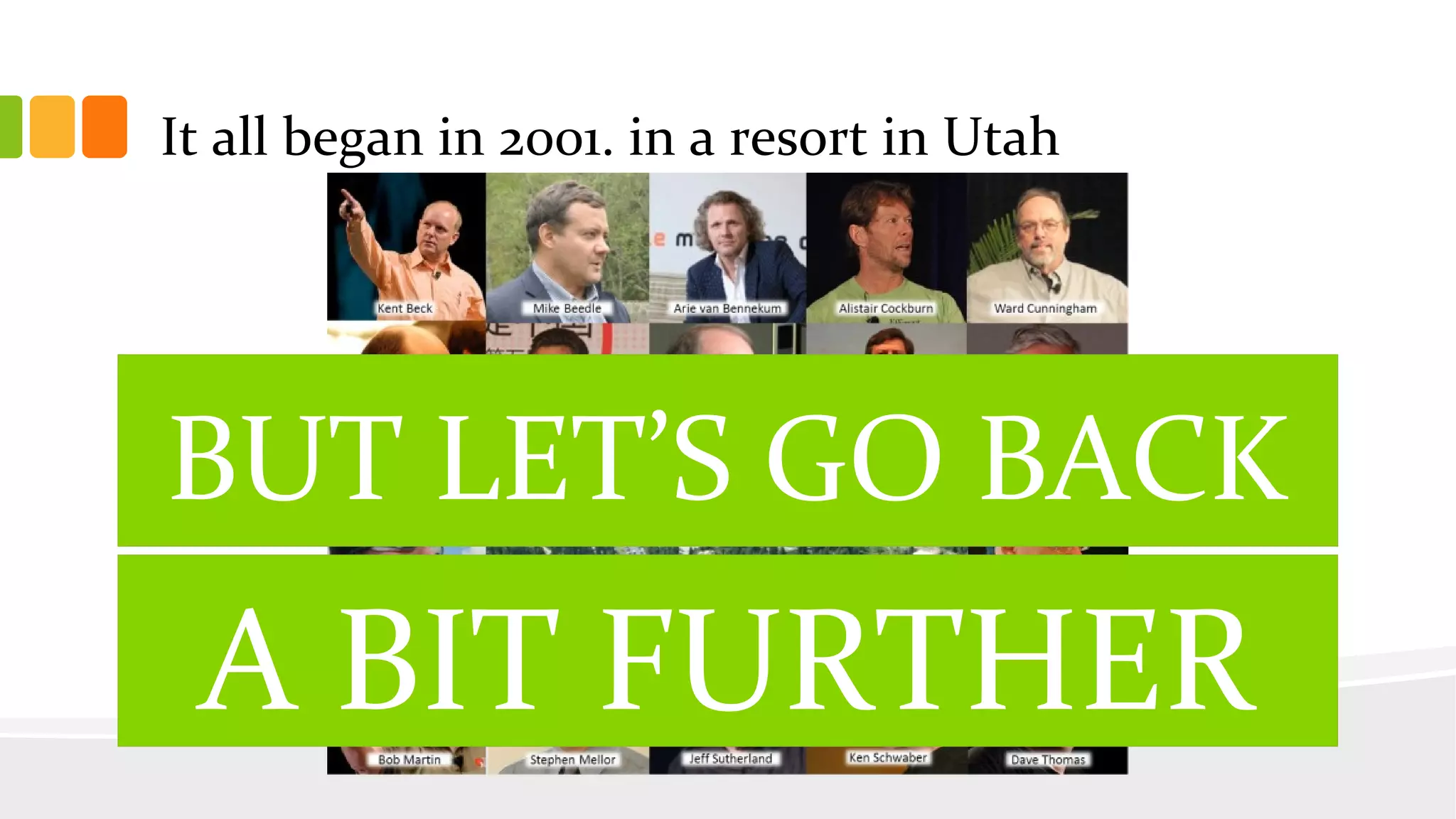
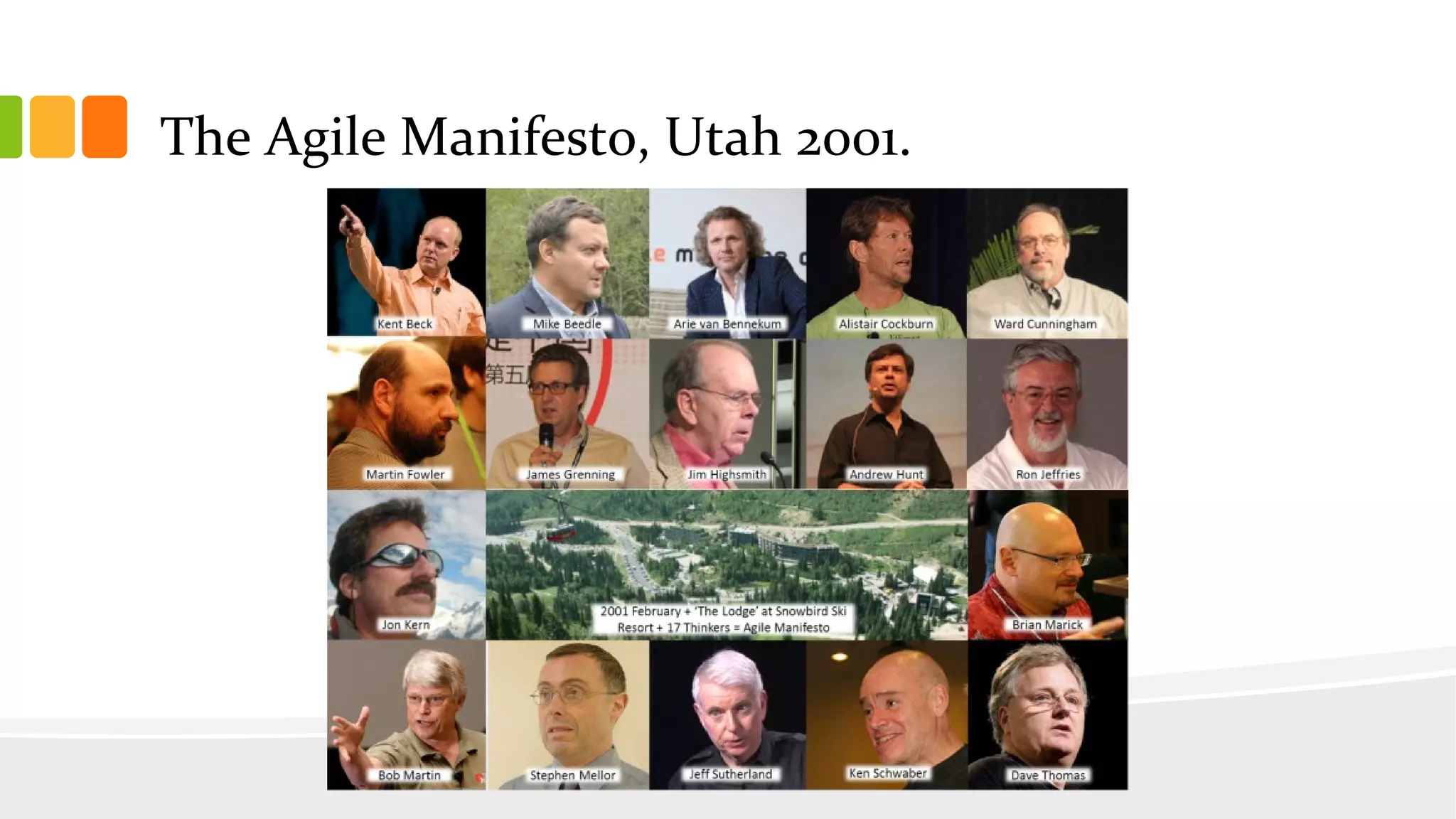
It all began in 2001. in a resort in Utah
BUT WAIT!BUT LET’S GO BACK
A BIT FURTHER
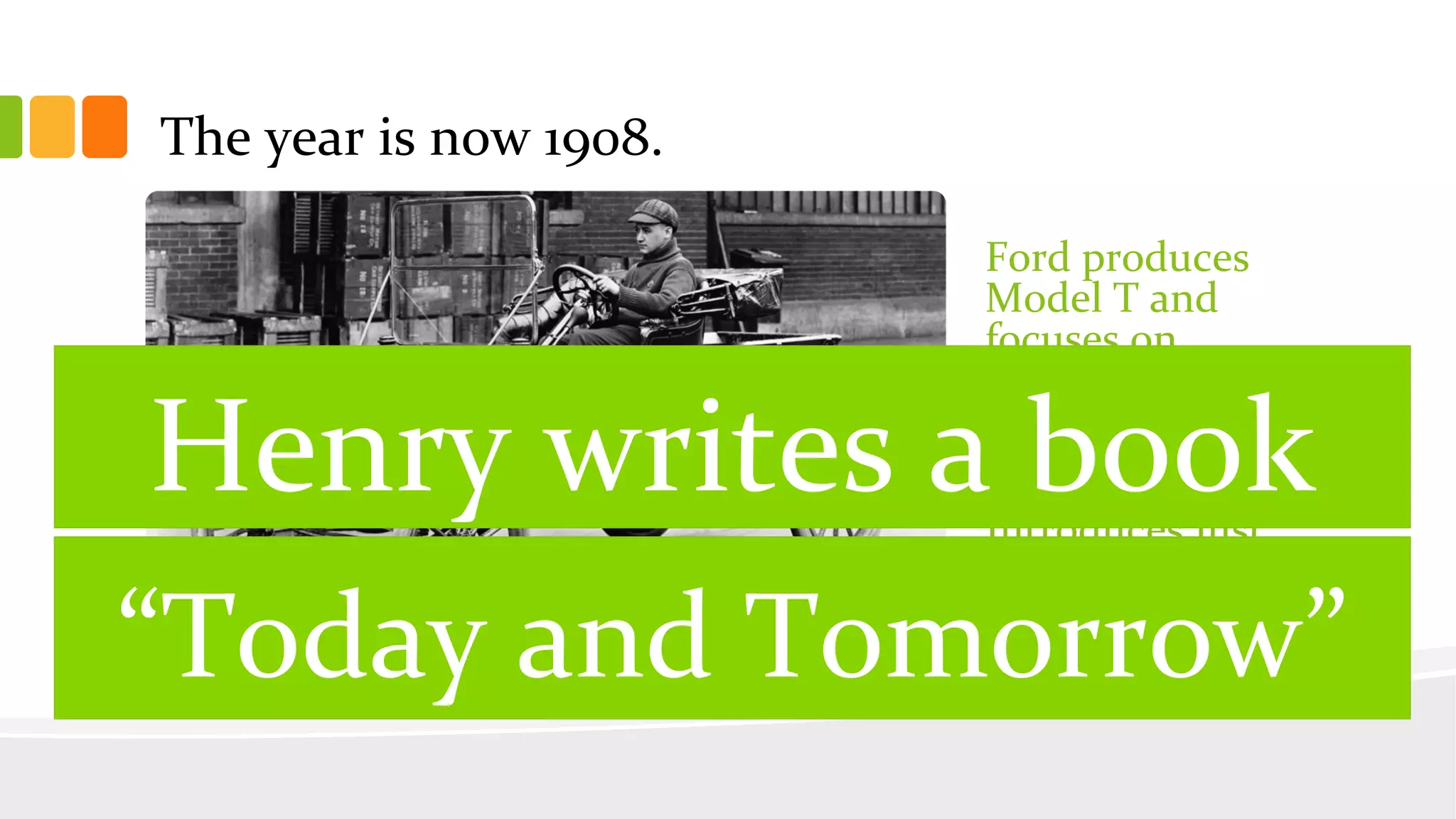
The year is now 1908.
Ford produces
Model T and
focuses on
eliminating
waste in
production.
Introduces Just
In Time
practice.
Henry writes a book
“Today and Tomorrow”
In come the Japanese. Time is just after WW2.
Toyota
Production
System is born.
The age of Lean
Manufacturing
has begun.
Japanese read the book ;)
Visit some supermarkets
And start thinking...
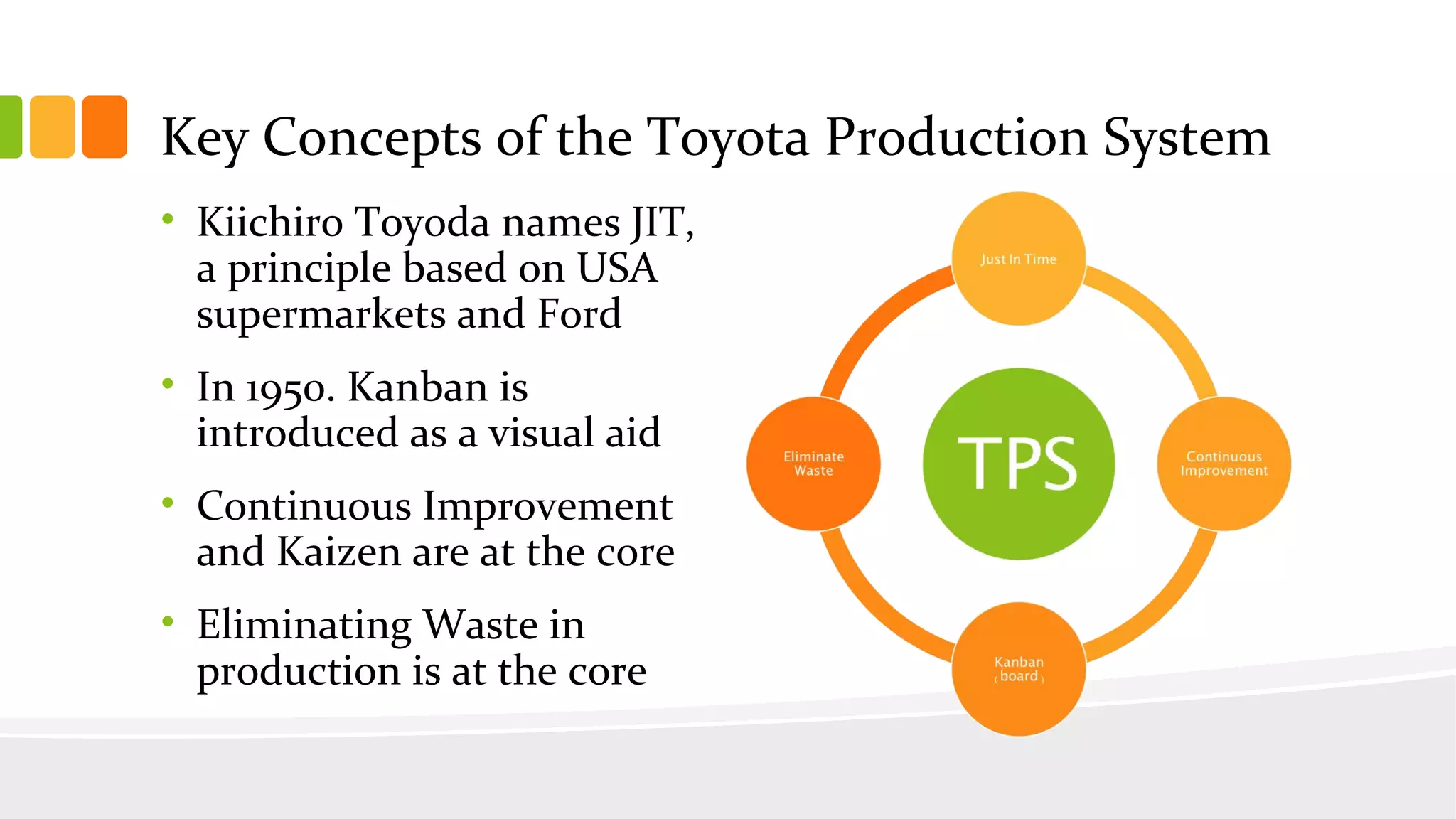
Key Concepts of the Toyota Production System
• Kiichiro Toyoda names JIT,
a principle based on USA
supermarkets and Ford
• In 1950. Kanban is
introduced as a visual aid
• Continuous Improvement
and Kaizen are at the core
• Eliminating Waste in
production is at the core
Timeline of what is to become “Lean”
• 1973. first internal manual describes TPS
• 1977. first english article on TPS
• 1979. MIT starts investigating TPS
• 1982. TPS first translated to English
• 1983. Toyota and GM implement TPS for the 1st time out of
Japan
• 1987. Term “Lean” coined to explain the underlying principles of
TPS
And then again,
some books got written
Lean is born and we are back from Japan
And how is this connected to Agile?
Lean and Agile share ideas
And how did Agile come to this world?
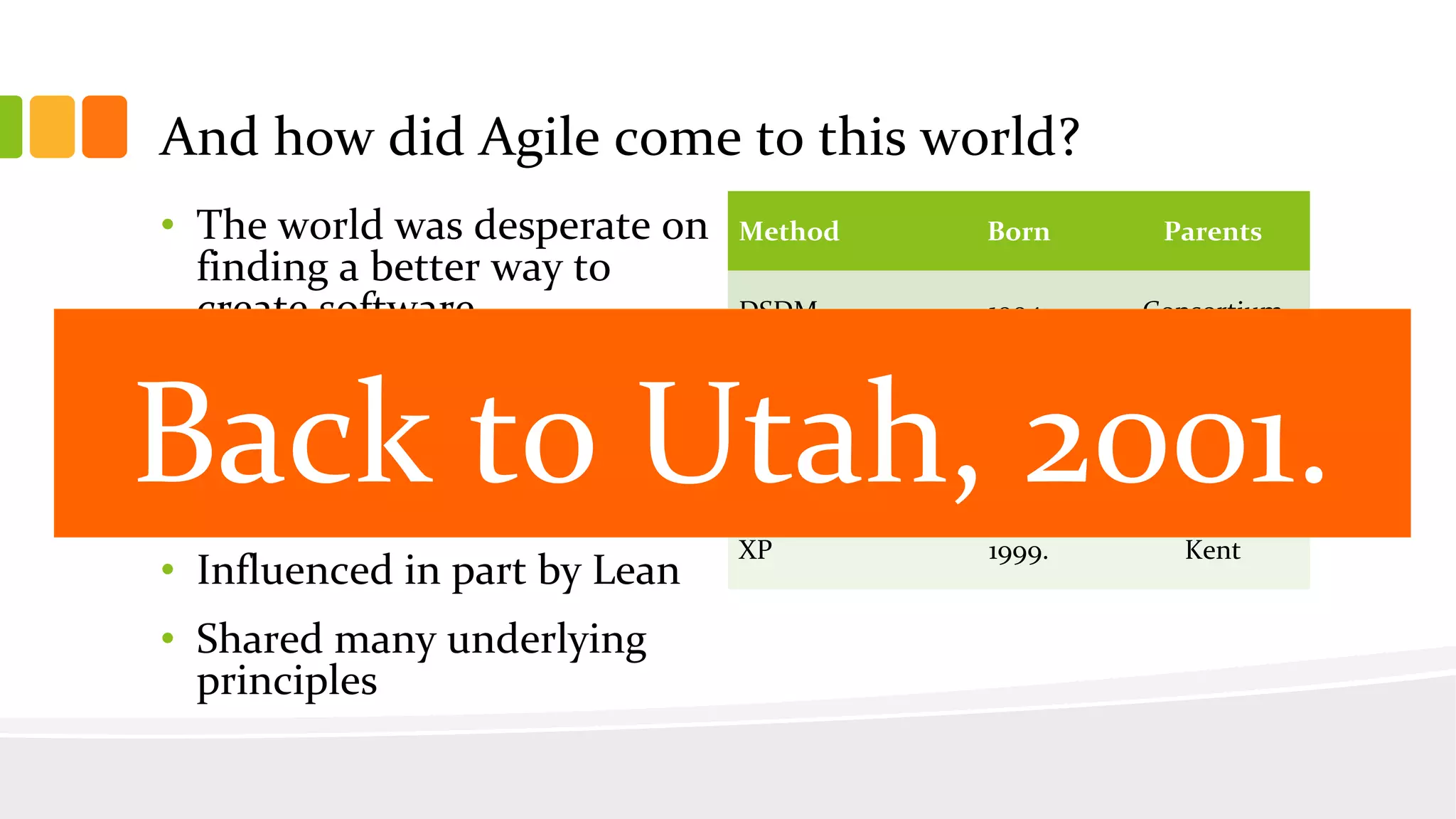
Method Born Parents
DSDM 1994. Consortium
Scrum 1995.
Sutherland
&Schwaber
ASD 1999. Highsmith
XP 1999. Kent
• The world was desperate on
finding a better way to
create software
• Many lightweight
methodologies emerged as
a response to “not so good”
waterfall principles
• Influenced in part by Lean
• Shared many underlying
principles
Back to Utah, 2001.
The Agile Manifesto, Utah 2001.
Principles of Agile thought
What is under the hood
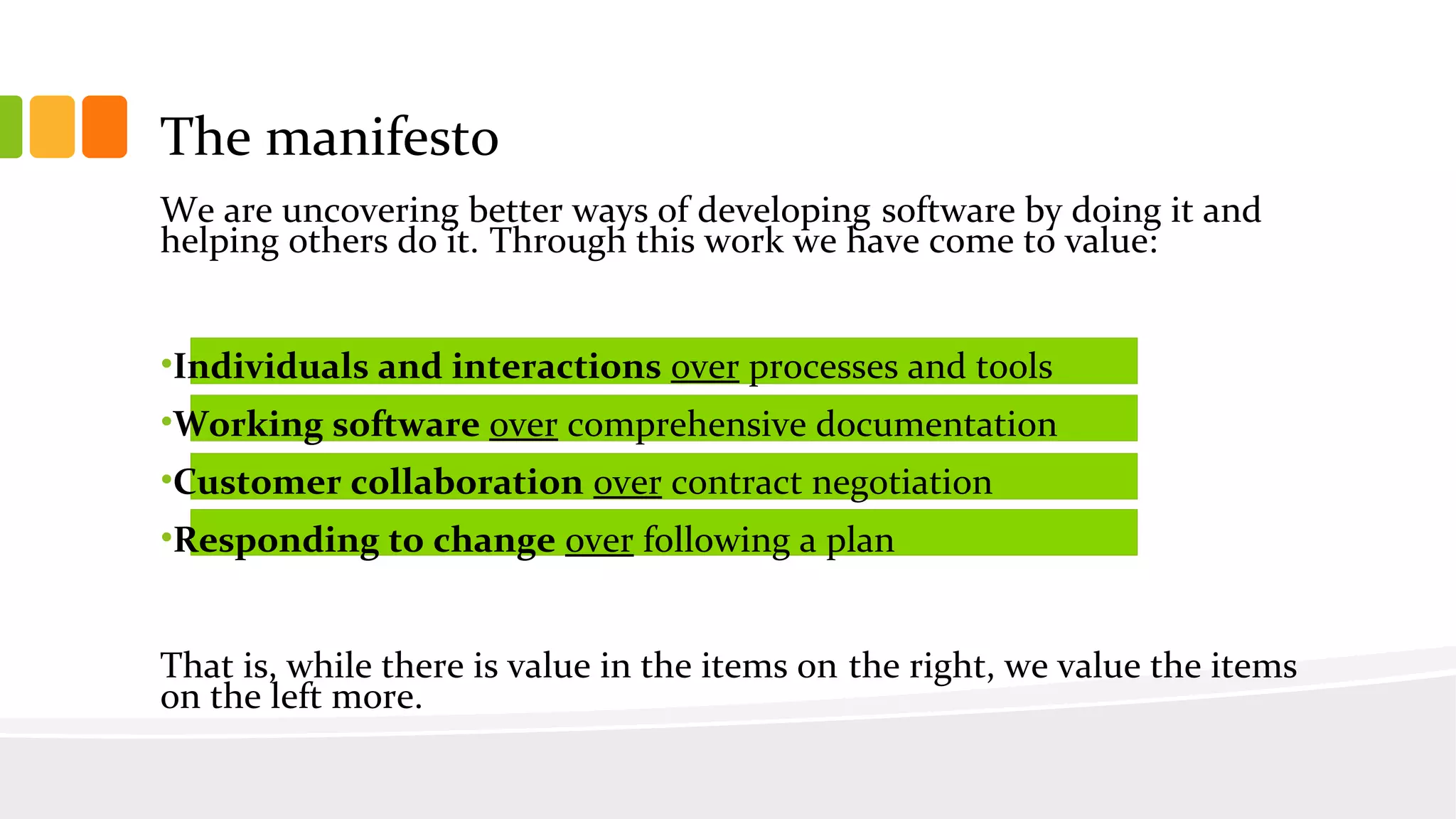
The manifesto
We are uncovering better ways of developing software by doing it and
helping others do it. Through this work we have come to value:
•Individuals and interactions over processes and tools
•Working software over comprehensive documentation
•Customer collaboration over contract negotiation
•Responding to change over following a plan
That is, while there is value in the items on the right, we value the items
on the left more.
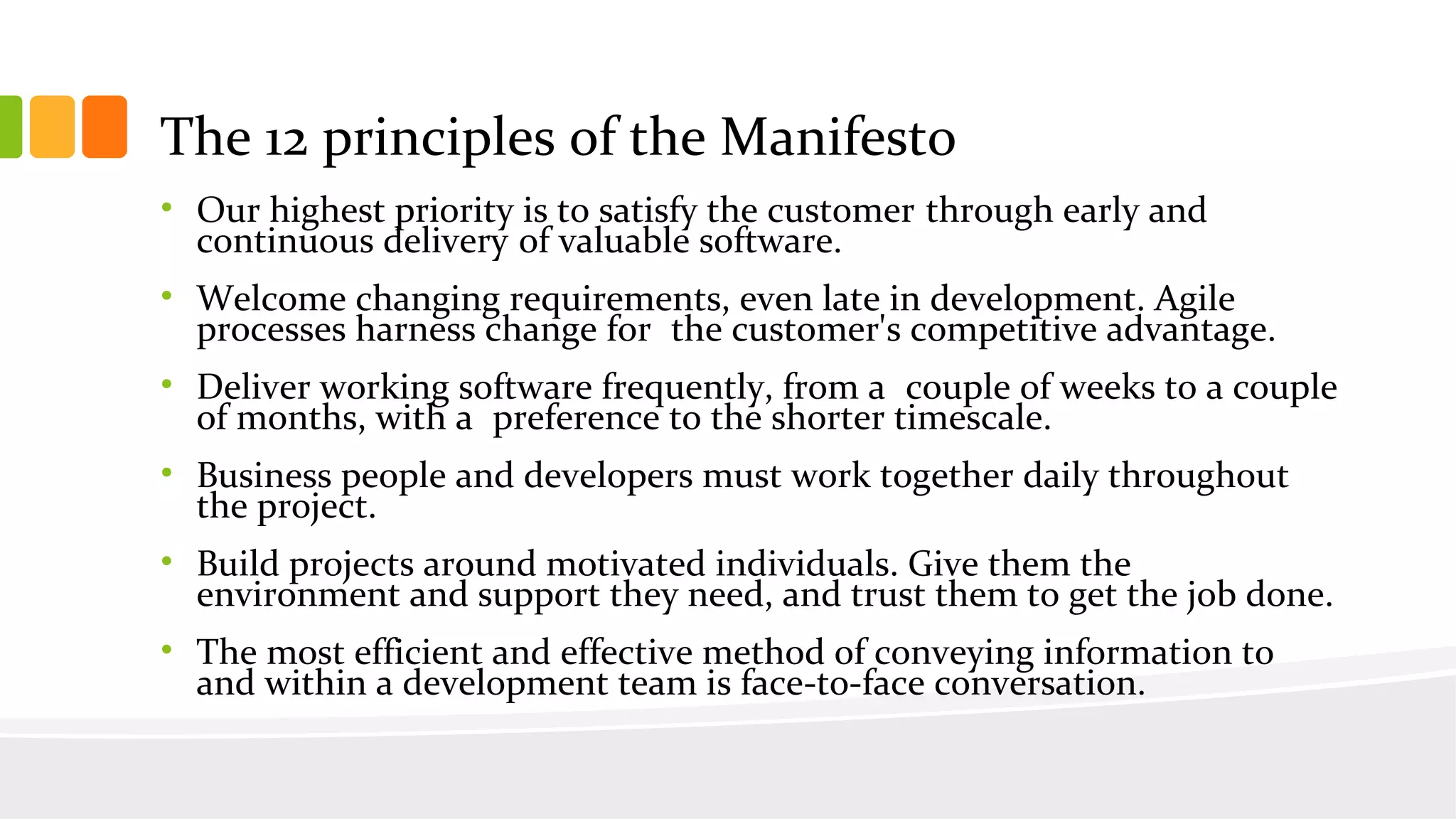
• Our highest priority is to satisfy the customer through early and
continuous delivery of valuable software.
• Welcome changing requirements, even late in development. Agile
processes harness change for the customer's competitive advantage.
• Deliver working software frequently, from a couple of weeks to a couple
of months, with a preference to the shorter timescale.
• Business people and developers must work together daily throughout
the project.
• Build projects around motivated individuals. Give them the
environment and support they need, and trust them to get the job done.
• The most efficient and effective method of conveying information to
and within a development team is face-to-face conversation.
The 12 principles of the Manifesto
• Working software is the primary measure of progress.
• Agile processes promote sustainable development. The sponsors,
developers, and users should be able to maintain a constant pace
indefinitely.
• Continuous attention to technical excellence and good design enhances
agility.
• Simplicity--the art of maximizing the amount of work not done--is
essential.
• The best architectures, requirements, and designs emerge from self-
organizing teams.
• At regular intervals, the team reflects on how to become more effective,
then tunes and adjusts its behavior accordingly.
The 12 principles of the Manifesto
A new methodology?
No, choose one!
• A common name for methodologies
following the said principles. Most
popular include Scrum, XP, DaD
• They share many common practices
So what IS agile then?
And what it is NOT?
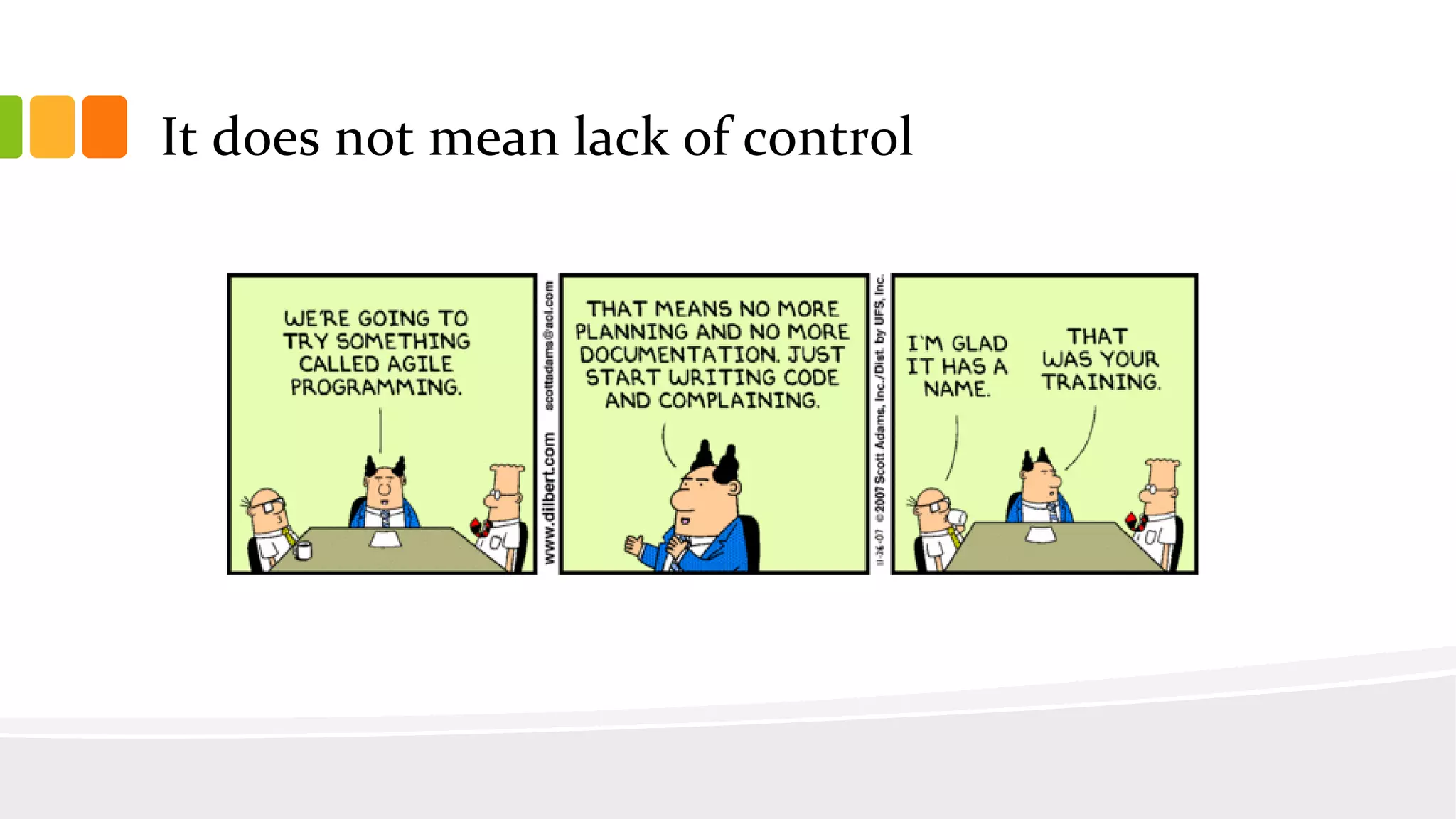
It does not mean lack of control
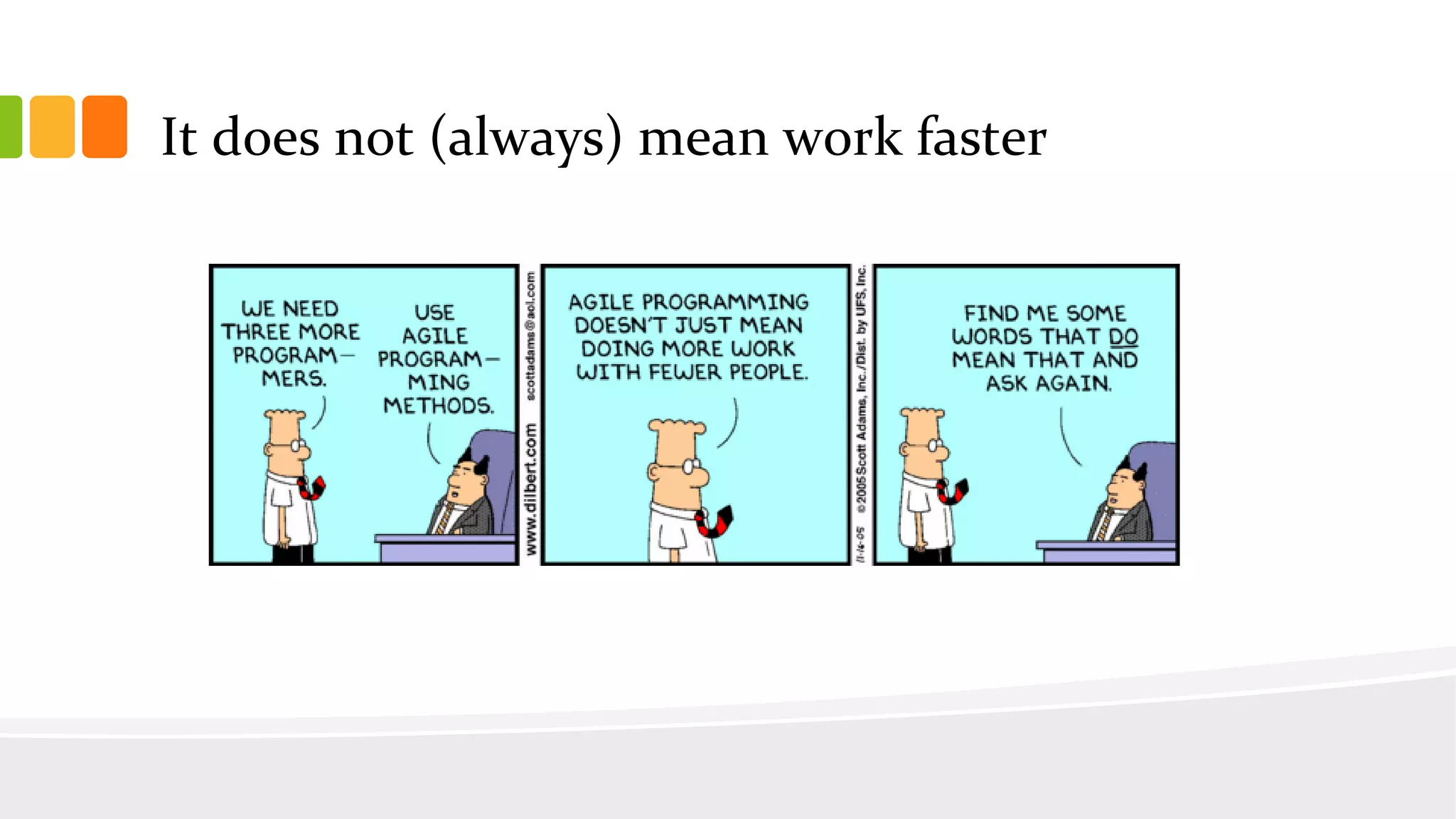
It does not (always) mean work faster
Highlighted ceremonies
and artefacts
By no means a comprehensive guide of practices
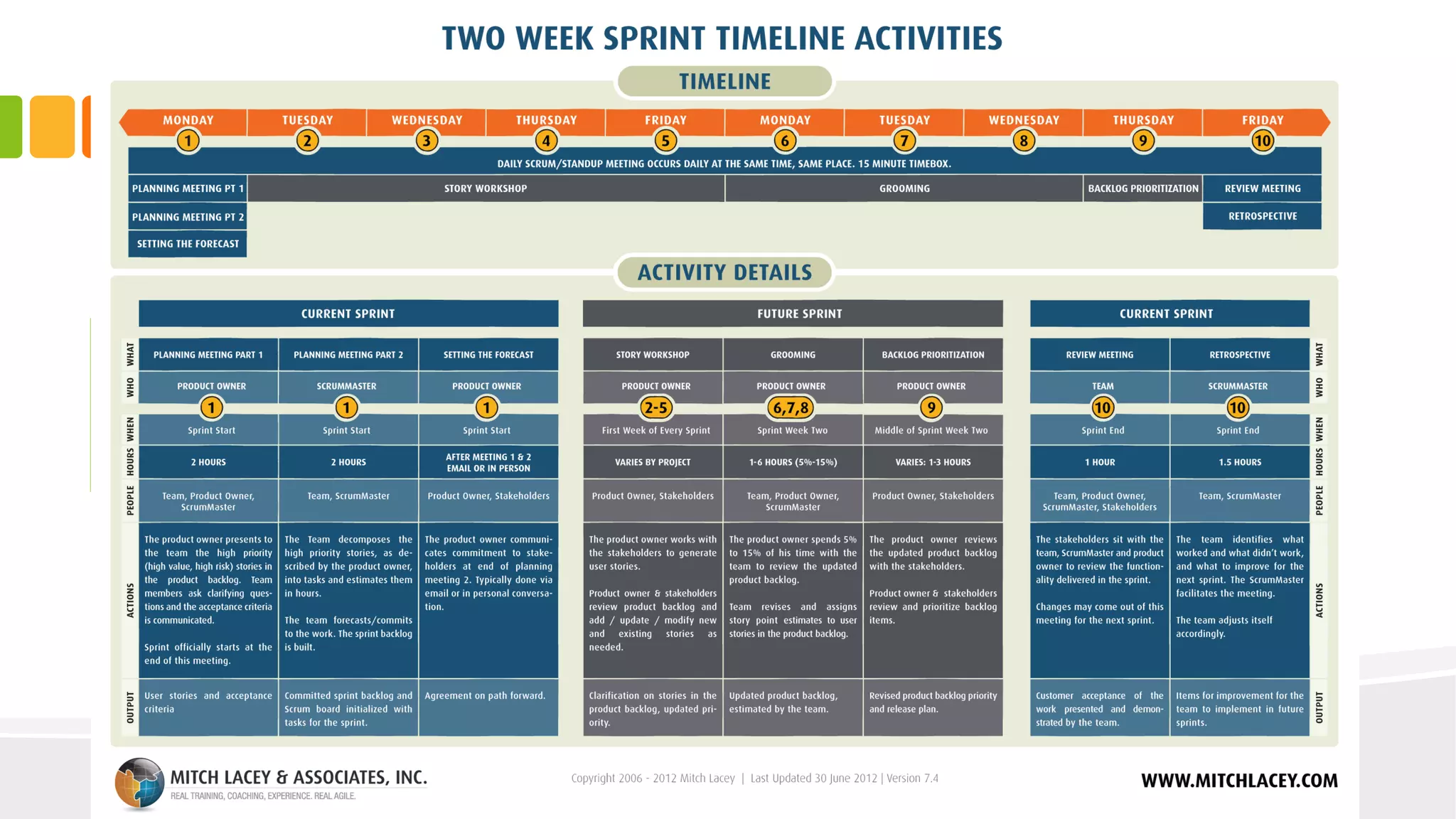
Scrum Ceremonies
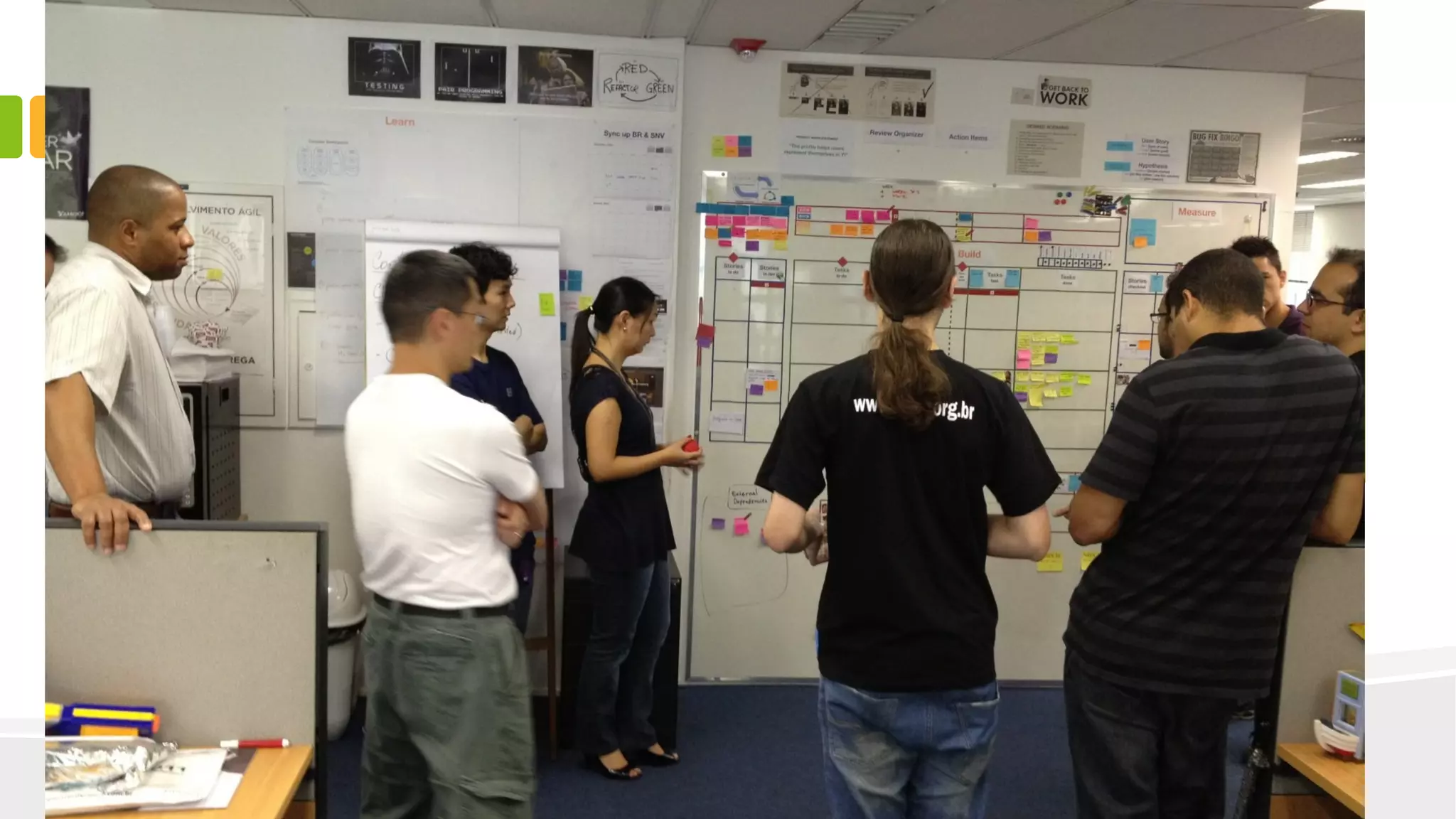
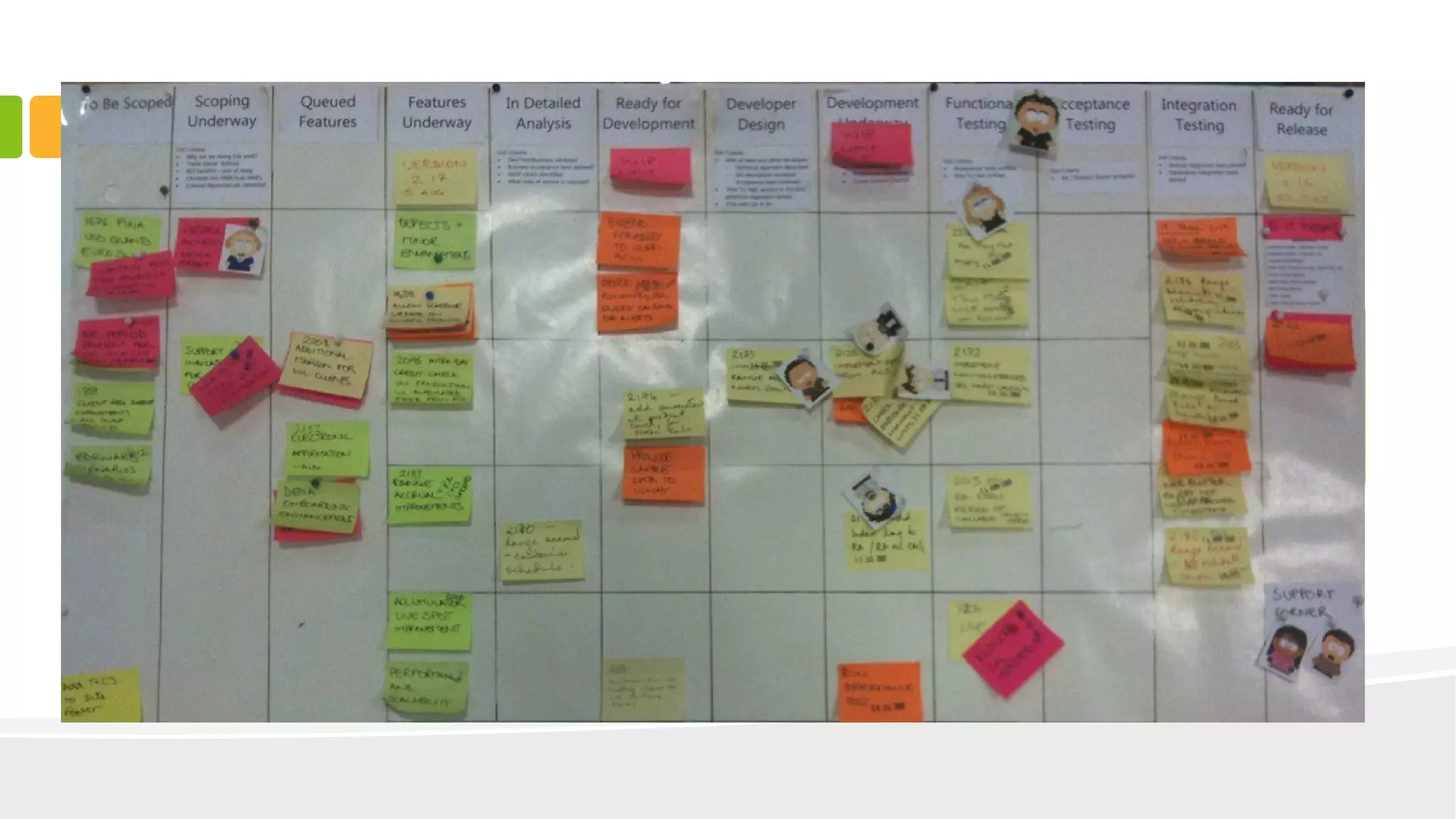
Kanban board
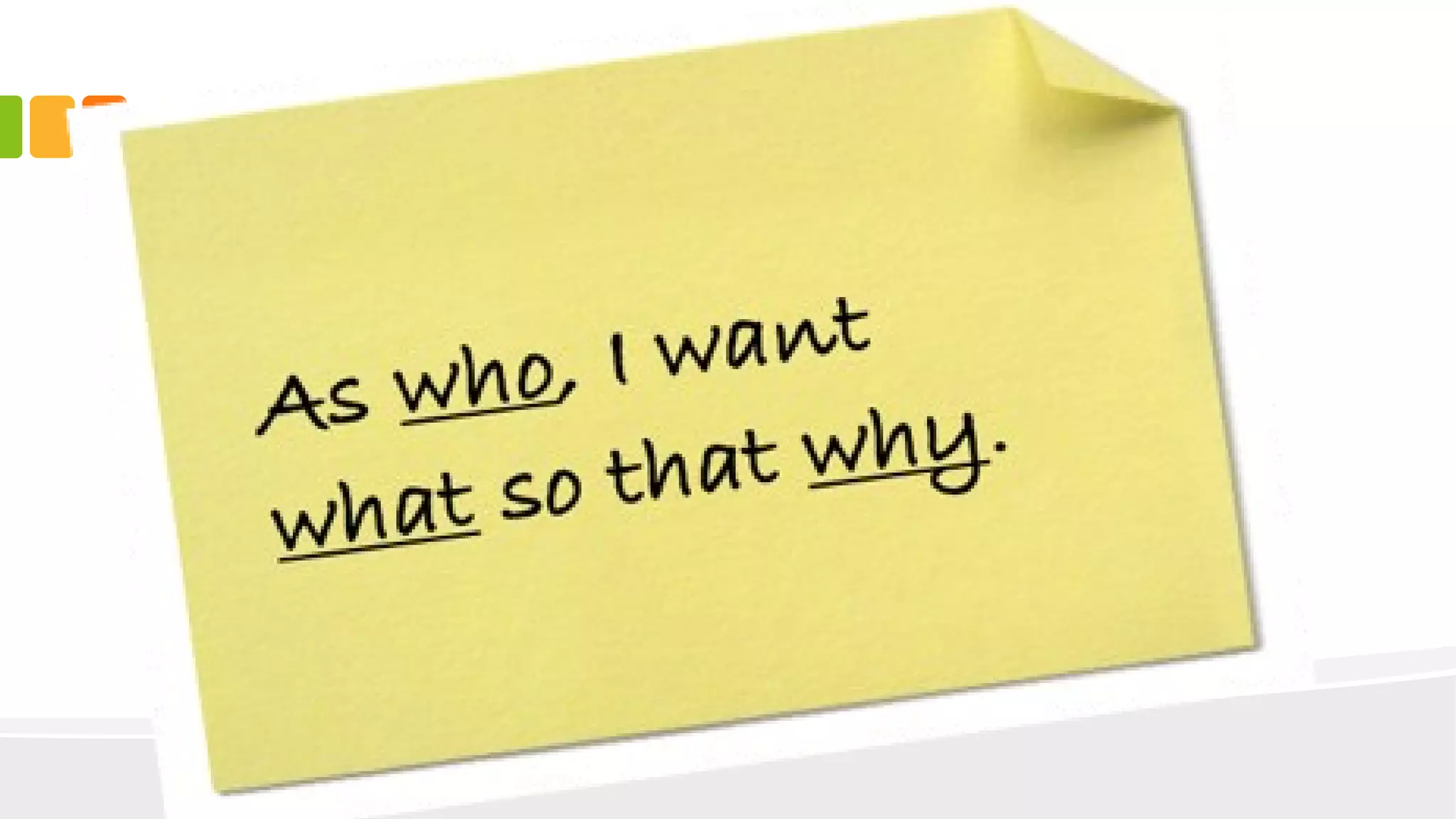
User Story
Standup meeting
Enjoy the show
Hope I helped
• Focus on communication
within your projects
• Try to look for anti patterns
in your work
• Agile can be applied
principle by principle
Thanks for listening
• Implementation that fits
you?
• Just Kanban or the entire
Scrum ceremonies pack?–
let continuous
improvement guide you
step by step
Agile is mainstream
Agile is lightweight
There is a better way

Introduction to agile presentation @AgileAdria 2013

  • 1.
    Introduction to Agile RokoRoić, Agile Adria 2013. Tweet @rroic, Mail rroic@croz.net, Visit www.croz.net
  • 2.
    Agenda • Why arewe here today • Principles of Agile thought • Highlighted ceremonies and artefacts • Enjoy the show
  • 3.
    Why are wehere today Also known as The History Of Agile and Lean
  • 4.
    Why are wehere today? there is a better way Because to create products
  • 5.
    Why are wehere today? battle-tested It has been globally and locally
  • 6.
    Why are wehere today? this way is already & mainstream
  • 7.
    It all beganin 2001. in a resort in Utah BUT WAIT!BUT LET’S GO BACK A BIT FURTHER
  • 8.
    The year isnow 1908. Ford produces Model T and focuses on eliminating waste in production. Introduces Just In Time practice. Henry writes a book “Today and Tomorrow”
  • 9.
    In come theJapanese. Time is just after WW2. Toyota Production System is born. The age of Lean Manufacturing has begun. Japanese read the book ;) Visit some supermarkets And start thinking...
  • 10.
    Key Concepts ofthe Toyota Production System • Kiichiro Toyoda names JIT, a principle based on USA supermarkets and Ford • In 1950. Kanban is introduced as a visual aid • Continuous Improvement and Kaizen are at the core • Eliminating Waste in production is at the core
  • 11.
    Timeline of whatis to become “Lean” • 1973. first internal manual describes TPS • 1977. first english article on TPS • 1979. MIT starts investigating TPS • 1982. TPS first translated to English • 1983. Toyota and GM implement TPS for the 1st time out of Japan • 1987. Term “Lean” coined to explain the underlying principles of TPS And then again, some books got written
  • 12.
    Lean is bornand we are back from Japan And how is this connected to Agile? Lean and Agile share ideas
  • 13.
    And how didAgile come to this world? Method Born Parents DSDM 1994. Consortium Scrum 1995. Sutherland &Schwaber ASD 1999. Highsmith XP 1999. Kent • The world was desperate on finding a better way to create software • Many lightweight methodologies emerged as a response to “not so good” waterfall principles • Influenced in part by Lean • Shared many underlying principles Back to Utah, 2001.
  • 14.
  • 15.
    Principles of Agilethought What is under the hood
  • 16.
    The manifesto We areuncovering better ways of developing software by doing it and helping others do it. Through this work we have come to value: •Individuals and interactions over processes and tools •Working software over comprehensive documentation •Customer collaboration over contract negotiation •Responding to change over following a plan That is, while there is value in the items on the right, we value the items on the left more.
  • 17.
    • Our highestpriority is to satisfy the customer through early and continuous delivery of valuable software. • Welcome changing requirements, even late in development. Agile processes harness change for the customer's competitive advantage. • Deliver working software frequently, from a couple of weeks to a couple of months, with a preference to the shorter timescale. • Business people and developers must work together daily throughout the project. • Build projects around motivated individuals. Give them the environment and support they need, and trust them to get the job done. • The most efficient and effective method of conveying information to and within a development team is face-to-face conversation. The 12 principles of the Manifesto
  • 18.
    • Working softwareis the primary measure of progress. • Agile processes promote sustainable development. The sponsors, developers, and users should be able to maintain a constant pace indefinitely. • Continuous attention to technical excellence and good design enhances agility. • Simplicity--the art of maximizing the amount of work not done--is essential. • The best architectures, requirements, and designs emerge from self- organizing teams. • At regular intervals, the team reflects on how to become more effective, then tunes and adjusts its behavior accordingly. The 12 principles of the Manifesto A new methodology? No, choose one!
  • 19.
    • A commonname for methodologies following the said principles. Most popular include Scrum, XP, DaD • They share many common practices So what IS agile then? And what it is NOT?
  • 20.
    It does notmean lack of control
  • 21.
    It does not(always) mean work faster
  • 22.
    Highlighted ceremonies and artefacts Byno means a comprehensive guide of practices
  • 23.
  • 24.
  • 25.
  • 26.
  • 27.
  • 28.
    • Focus oncommunication within your projects • Try to look for anti patterns in your work • Agile can be applied principle by principle Thanks for listening • Implementation that fits you? • Just Kanban or the entire Scrum ceremonies pack?– let continuous improvement guide you step by step Agile is mainstream Agile is lightweight There is a better way

Editor's Notes

  • #5 It has been in the industry for 13years under that name and for around 18 under other predecesor names There are certification streams, alliances, conferences such as this one C ompanies focusing on coaching for it, representatives of some are here
  • #6 Colleagues with experiences are around you Books are gallore Multi hundred million $ projects being done this way Locally and globally!
  • #7 When you look around, this is not “ an alternative ” , this is mainstream There are more books and publications coming out on Agile methodologies than any other The adoption rate is larger than any other methodology Today you can not get any funding in silicone waley if you are not Agile
  • #9 First car to be produced on the assembly line The price started with 850$ but dropped to 550$ due to the line becoming more efficient All parts were interchangeable It changed the automotive industryIt was so cheap that an assembly line worker could buy it with just 4 monthly pays This automated and streamlined process allowed Henry and his coworkers to think about optimization