Definishion of organizational
behavior (OB).
• Organizational behavior (often
abbreviated OB) is a field of study that
investigates the impact that individuals,
groups, and structure have on behavior
within organizations, for the purpose of
applying such knowledge toward
improving an organization’s effectiveness.
Goals and tasks of OB
• OB is the study of what people do in an
organization and how their behavior affects the
organization’s performance.
• OB is concerned specifically with employmentrelated situations, it emphasizes behavior as
related to concerns such as jobs, work,
absenteeism, employment turnover, productivity,
human performance, and management.
• OB applies the knowledge gained about
individuals, groups, and the effect of structure on
behavior in order to make organizations work
more effectively.
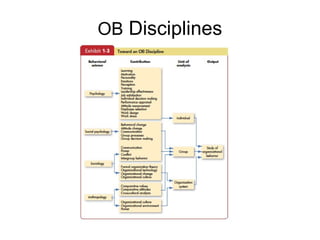
OB Disciplines
Challenges and Opportunities for OB
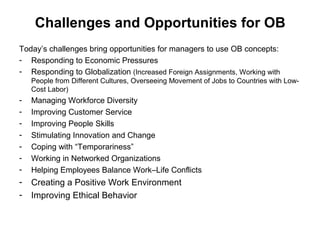
Today’s challenges bring opportunities for managers to use OB concepts:
- Responding to Economic Pressures
- Responding to Globalization (Increased Foreign Assignments, Working with
People from Different Cultures, Overseeing Movement of Jobs to Countries with LowCost Labor)

-

Managing Workforce Diversity
Improving Customer Service
Improving People Skills
Stimulating Innovation and Change
Coping with “Temporariness”
Working in Networked Organizations
Helping Employees Balance Work–Life Conflicts

-

Creating a Positive Work Environment
Improving Ethical Behavior
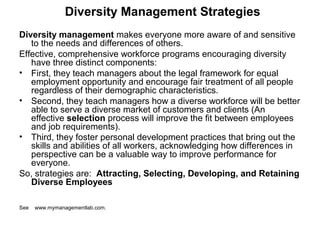
Diversity Management Strategies
Diversity management makes everyone more aware of and sensitive
to the needs and differences of others.
Effective, comprehensive workforce programs encouraging diversity
have three distinct components:
• First, they teach managers about the legal framework for equal
employment opportunity and encourage fair treatment of all people
regardless of their demographic characteristics.
• Second, they teach managers how a diverse workforce will be better
able to serve a diverse market of customers and clients (An
effective selection process will improve the fit between employees
and job requirements).
• Third, they foster personal development practices that bring out the
skills and abilities of all workers, acknowledging how differences in
perspective can be a valuable way to improve performance for
everyone.
So, strategies are: Attracting, Selecting, Developing, and Retaining
Diverse Employees
See

www.mymanagementlab.com.
Tree levels of OB studies
• Organizational behavior studies three
determinants of behavior in organizations:
individuals, groups, and structure.
• OB model proposes three types of
variables (inputs, processes, and
outcomes) at three levels of analysis
(individual, group, and organizational).
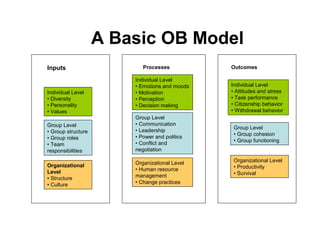
A Basic OB Model
Inputs

Individual Level
• Diversity
• Personality
• Values

Processes
Individual Level
• Emotions and moods
• Motivation
• Perception
• Decision making

Group Level
• Group structure
• Group roles
• Team
responsibilities

Group Level
• Communication
• Leadership
• Power and politics
• Conflict and
negotiation

Organizational
Level
• Structure
• Culture

Organizational Level
• Human resource
management
• Change practices

Outcomes
Individual Level
• Attitudes and stress
• Task performance
• Citizenship behavior
• Withdrawal behavior
Group Level
• Group cohesion
• Group functioning

Organizational Level
• Productivity
• Survival
OB model
Inputs are the variables like personality, group structure,
and organizational culture that lead to processes.
Processes are actions that individuals, groups, and
organizations engage in as a result of inputs and that
lead to certain outcomes.
Outcomes are the key variables that you want to explain or
predict, and that are affected by some other variables.
individual-level outcomes like attitudes and satisfaction,
task performance, citizenship behavior, and withdrawal
behavior. At the group level, cohesion and functioning
are the dependent variables. Finally, at the
organizational level we look at overall profitability and
survival

Introduction (OB)

  • 1.
    Definishion of organizational behavior(OB). • Organizational behavior (often abbreviated OB) is a field of study that investigates the impact that individuals, groups, and structure have on behavior within organizations, for the purpose of applying such knowledge toward improving an organization’s effectiveness.
  • 2.
    Goals and tasksof OB • OB is the study of what people do in an organization and how their behavior affects the organization’s performance. • OB is concerned specifically with employmentrelated situations, it emphasizes behavior as related to concerns such as jobs, work, absenteeism, employment turnover, productivity, human performance, and management. • OB applies the knowledge gained about individuals, groups, and the effect of structure on behavior in order to make organizations work more effectively.
  • 3.
  • 4.
    Challenges and Opportunitiesfor OB Today’s challenges bring opportunities for managers to use OB concepts: - Responding to Economic Pressures - Responding to Globalization (Increased Foreign Assignments, Working with People from Different Cultures, Overseeing Movement of Jobs to Countries with LowCost Labor) - Managing Workforce Diversity Improving Customer Service Improving People Skills Stimulating Innovation and Change Coping with “Temporariness” Working in Networked Organizations Helping Employees Balance Work–Life Conflicts - Creating a Positive Work Environment Improving Ethical Behavior
  • 5.
    Diversity Management Strategies Diversitymanagement makes everyone more aware of and sensitive to the needs and differences of others. Effective, comprehensive workforce programs encouraging diversity have three distinct components: • First, they teach managers about the legal framework for equal employment opportunity and encourage fair treatment of all people regardless of their demographic characteristics. • Second, they teach managers how a diverse workforce will be better able to serve a diverse market of customers and clients (An effective selection process will improve the fit between employees and job requirements). • Third, they foster personal development practices that bring out the skills and abilities of all workers, acknowledging how differences in perspective can be a valuable way to improve performance for everyone. So, strategies are: Attracting, Selecting, Developing, and Retaining Diverse Employees See www.mymanagementlab.com.
  • 6.
    Tree levels ofOB studies • Organizational behavior studies three determinants of behavior in organizations: individuals, groups, and structure. • OB model proposes three types of variables (inputs, processes, and outcomes) at three levels of analysis (individual, group, and organizational).
  • 7.
    A Basic OBModel Inputs Individual Level • Diversity • Personality • Values Processes Individual Level • Emotions and moods • Motivation • Perception • Decision making Group Level • Group structure • Group roles • Team responsibilities Group Level • Communication • Leadership • Power and politics • Conflict and negotiation Organizational Level • Structure • Culture Organizational Level • Human resource management • Change practices Outcomes Individual Level • Attitudes and stress • Task performance • Citizenship behavior • Withdrawal behavior Group Level • Group cohesion • Group functioning Organizational Level • Productivity • Survival
  • 8.
    OB model Inputs arethe variables like personality, group structure, and organizational culture that lead to processes. Processes are actions that individuals, groups, and organizations engage in as a result of inputs and that lead to certain outcomes. Outcomes are the key variables that you want to explain or predict, and that are affected by some other variables. individual-level outcomes like attitudes and satisfaction, task performance, citizenship behavior, and withdrawal behavior. At the group level, cohesion and functioning are the dependent variables. Finally, at the organizational level we look at overall profitability and survival