1
Chapter 3
Introduction to
Organizational Behavior
2
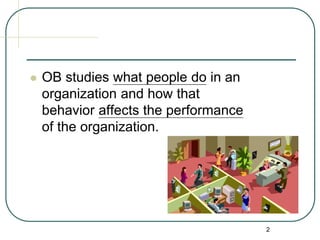
 OB studies what people do in an
organization and how that
behavior affects the performance
of the organization.
3
 Effective manager vs. successful manager
 Management duties
• What managers do
• Management roles
• Management skills
4
Management functions
 Planning
 Organizing
 Leading
 Controlling
5
Management functions
 Interpersonal roles
 Informational roles
 Decisional roles
6
Management skills
 Technical skills
 Human skills
 Conceptual skills
7
 investigates the impact of individuals,
groups and structure
 It is a systematic study of the behaviour
and attitudes of both individuals and
groups
 scientific study or the behavioral process
which occurs in work settings”
8
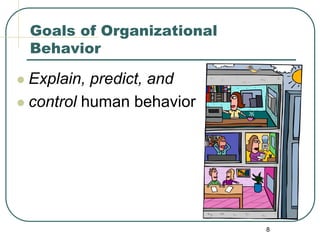
Goals of Organizational
Behavior
 Explain, predict, and
 control human behavior
9
The field of OB seeks to replace
intuitive explanations with
systematic study
10
What other knowledge
help us understand OB?
11
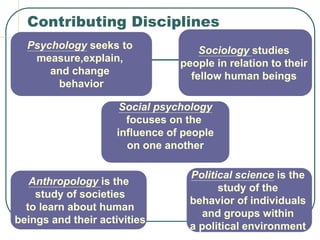
Psychology seeks to
measure,explain,
and change
behavior
Sociology studies
people in relation to their
fellow human beings
Social psychology
focuses on the
influence of people
on one another
Anthropology is the
study of societies
to learn about human
beings and their activities
Political science is the
study of the
behavior of individuals
and groups within
a political environment
Contributing Disciplines
12
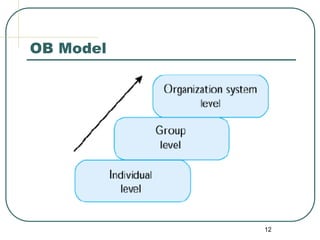
OB Model
13
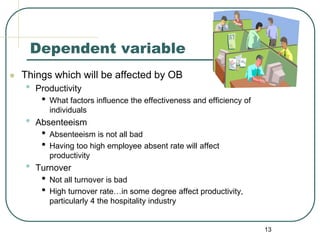
Dependent variable
 Things which will be affected by OB
• Productivity
• What factors influence the effectiveness and efficiency of
individuals
• Absenteeism
• Absenteeism is not all bad
• Having too high employee absent rate will affect
productivity
• Turnover
• Not all turnover is bad
• High turnover rate…in some degree affect productivity,
particularly 4 the hospitality industry
14
• Organizational citizenship behavior (OCB)
• No one will want to pick up the slack
• No one would want to walk extra miles to achieve
the goals.
• Job satisfaction
• Unhappy employees…what else can you say?
15
Organizational citizenship
 Discretionary behavior
 Not part of an employee's formal job
requirements
 Promotes the effective functioning of the
organization
16
Examples of Organizational
Citizenship
 Helping others on one's work team
 Volunteering for extra job activities
 Avoiding unnecessary conflicts
 Making constructive statements about
one's work group and the overall
organization
17
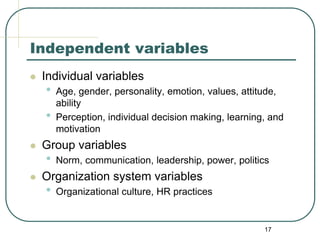
Independent variables
 Individual variables
• Age, gender, personality, emotion, values, attitude,
ability
• Perception, individual decision making, learning, and
motivation
 Group variables
• Norm, communication, leadership, power, politics
 Organization system variables
• Organizational culture, HR practices
18
Challenges and
Opportunities for OB
19
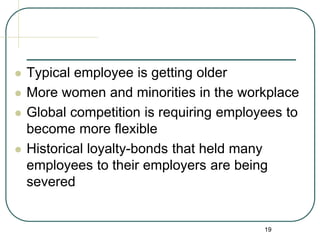
 Typical employee is getting older
 More women and minorities in the workplace
 Global competition is requiring employees to
become more flexible
 Historical loyalty-bonds that held many
employees to their employers are being
severed
20
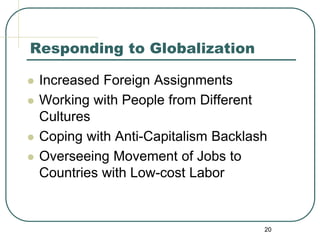
Responding to Globalization
 Increased Foreign Assignments
 Working with People from Different
Cultures
 Coping with Anti-Capitalism Backlash
 Overseeing Movement of Jobs to
Countries with Low-cost Labor
21
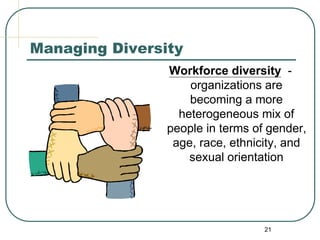
Managing Diversity
Workforce diversity -
organizations are
becoming a more
heterogeneous mix of
people in terms of gender,
age, race, ethnicity, and
sexual orientation
22
Diversity Implications
 Managers have to shift their philosophy
from treating everyone alike to
recognizing differences and responding
to those differences in ways that ensure
employee retention and greater
productivity.
23
OB Insights
 Improving People Skills
 Improving Customer Service
 Empowering People
 Working in Networked Organizations
 Stimulating Innovation and Change
24
OB Insights
 Coping with “Temporariness”
 Helping Employees Balance Work/Life
Conflicts
 Declining Employee Loyalty
 Improving Ethical Behavior

Chapter 3 Introduction OB.ppt

  • 1.
  • 2.
    2  OB studieswhat people do in an organization and how that behavior affects the performance of the organization.
  • 3.
    3  Effective managervs. successful manager  Management duties • What managers do • Management roles • Management skills
  • 4.
    4 Management functions  Planning Organizing  Leading  Controlling
  • 5.
    5 Management functions  Interpersonalroles  Informational roles  Decisional roles
  • 6.
    6 Management skills  Technicalskills  Human skills  Conceptual skills
  • 7.
    7  investigates theimpact of individuals, groups and structure  It is a systematic study of the behaviour and attitudes of both individuals and groups  scientific study or the behavioral process which occurs in work settings”
  • 8.
    8 Goals of Organizational Behavior Explain, predict, and  control human behavior
  • 9.
    9 The field ofOB seeks to replace intuitive explanations with systematic study
  • 10.
  • 11.
    11 Psychology seeks to measure,explain, andchange behavior Sociology studies people in relation to their fellow human beings Social psychology focuses on the influence of people on one another Anthropology is the study of societies to learn about human beings and their activities Political science is the study of the behavior of individuals and groups within a political environment Contributing Disciplines
  • 12.
  • 13.
    13 Dependent variable  Thingswhich will be affected by OB • Productivity • What factors influence the effectiveness and efficiency of individuals • Absenteeism • Absenteeism is not all bad • Having too high employee absent rate will affect productivity • Turnover • Not all turnover is bad • High turnover rate…in some degree affect productivity, particularly 4 the hospitality industry
  • 14.
    14 • Organizational citizenshipbehavior (OCB) • No one will want to pick up the slack • No one would want to walk extra miles to achieve the goals. • Job satisfaction • Unhappy employees…what else can you say?
  • 15.
    15 Organizational citizenship  Discretionarybehavior  Not part of an employee's formal job requirements  Promotes the effective functioning of the organization
  • 16.
    16 Examples of Organizational Citizenship Helping others on one's work team  Volunteering for extra job activities  Avoiding unnecessary conflicts  Making constructive statements about one's work group and the overall organization
  • 17.
    17 Independent variables  Individualvariables • Age, gender, personality, emotion, values, attitude, ability • Perception, individual decision making, learning, and motivation  Group variables • Norm, communication, leadership, power, politics  Organization system variables • Organizational culture, HR practices
  • 18.
  • 19.
    19  Typical employeeis getting older  More women and minorities in the workplace  Global competition is requiring employees to become more flexible  Historical loyalty-bonds that held many employees to their employers are being severed
  • 20.
    20 Responding to Globalization Increased Foreign Assignments  Working with People from Different Cultures  Coping with Anti-Capitalism Backlash  Overseeing Movement of Jobs to Countries with Low-cost Labor
  • 21.
    21 Managing Diversity Workforce diversity- organizations are becoming a more heterogeneous mix of people in terms of gender, age, race, ethnicity, and sexual orientation
  • 22.
    22 Diversity Implications  Managershave to shift their philosophy from treating everyone alike to recognizing differences and responding to those differences in ways that ensure employee retention and greater productivity.
  • 23.
    23 OB Insights  ImprovingPeople Skills  Improving Customer Service  Empowering People  Working in Networked Organizations  Stimulating Innovation and Change
  • 24.
    24 OB Insights  Copingwith “Temporariness”  Helping Employees Balance Work/Life Conflicts  Declining Employee Loyalty  Improving Ethical Behavior