
BY:
Manish Dhanraj Rangari
 Introduction
 Types of Human Resource Information System
 Function of Human Resource Information System
 Application of Human Resource Information System
 Advantages of Human Resource Information System
 A HRIS, which is also known as a human resource
information system or human resource management system
(HRMS), is basically an intersection of human resources and
information technology through HR software. This allows HR
activities and processes to occur electronically.
 To put it another way, a HRIS may be viewed as a way,
through software, for businesses big and small to take care of
a number of activities, including those related to human
resources, accounting, management, and payroll. A HRIS
allows a company to plan its HR costs more effectively, as
well as to manage them and control them without needing to
allocate too many resources toward them.
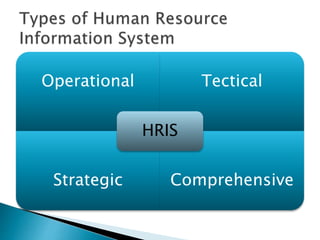
Operational Tectical
Strategic Comprehensive
HRIS
 Benefiting Administration
 Payroll Handling
 Employee Record Handling
 Recruitment
 Training
 Appraisals & Performance Management
 Attendance Record Management
 Grievance Handling
 The main purpose of maintaining HRIS
system is to gather, classify, process,
record and disseminates the information
required for efficient and effective
management of human resources in the
organization.
 Personnel Administration
 Salary Administration
 Leave/Absence Increase
 Skill Inventory
 Medical History
 Manpower Planning
 Recruitment
 Reduction in the cost of stored data in human resource.
 Higher speed of retrieval and processing of data.
 Reduction in duplication of efforts leading to reduction in
cost.
 Availability of accurate and timely data about human
resources.
 Better analysis leading to more effective decision making.
 More meaningful career planning and counselling at all
levels.
Human Resource Information System by Manish Rangari

Human Resource Information System by Manish Rangari

  • 1.
  • 2.
     Introduction  Typesof Human Resource Information System  Function of Human Resource Information System  Application of Human Resource Information System  Advantages of Human Resource Information System
  • 3.
     A HRIS,which is also known as a human resource information system or human resource management system (HRMS), is basically an intersection of human resources and information technology through HR software. This allows HR activities and processes to occur electronically.  To put it another way, a HRIS may be viewed as a way, through software, for businesses big and small to take care of a number of activities, including those related to human resources, accounting, management, and payroll. A HRIS allows a company to plan its HR costs more effectively, as well as to manage them and control them without needing to allocate too many resources toward them.
  • 4.
  • 5.
     Benefiting Administration Payroll Handling  Employee Record Handling  Recruitment  Training  Appraisals & Performance Management  Attendance Record Management  Grievance Handling
  • 6.
     The mainpurpose of maintaining HRIS system is to gather, classify, process, record and disseminates the information required for efficient and effective management of human resources in the organization.
  • 7.
     Personnel Administration Salary Administration  Leave/Absence Increase  Skill Inventory  Medical History  Manpower Planning  Recruitment
  • 8.
     Reduction inthe cost of stored data in human resource.  Higher speed of retrieval and processing of data.  Reduction in duplication of efforts leading to reduction in cost.  Availability of accurate and timely data about human resources.  Better analysis leading to more effective decision making.  More meaningful career planning and counselling at all levels.