INTRO TO LEADERSHIP
Shane Young
First Year Experience and Leadership
@ShaneYoung15
www.studentaffairsshane.com
SO YOU WANT TO BE A LEADER?
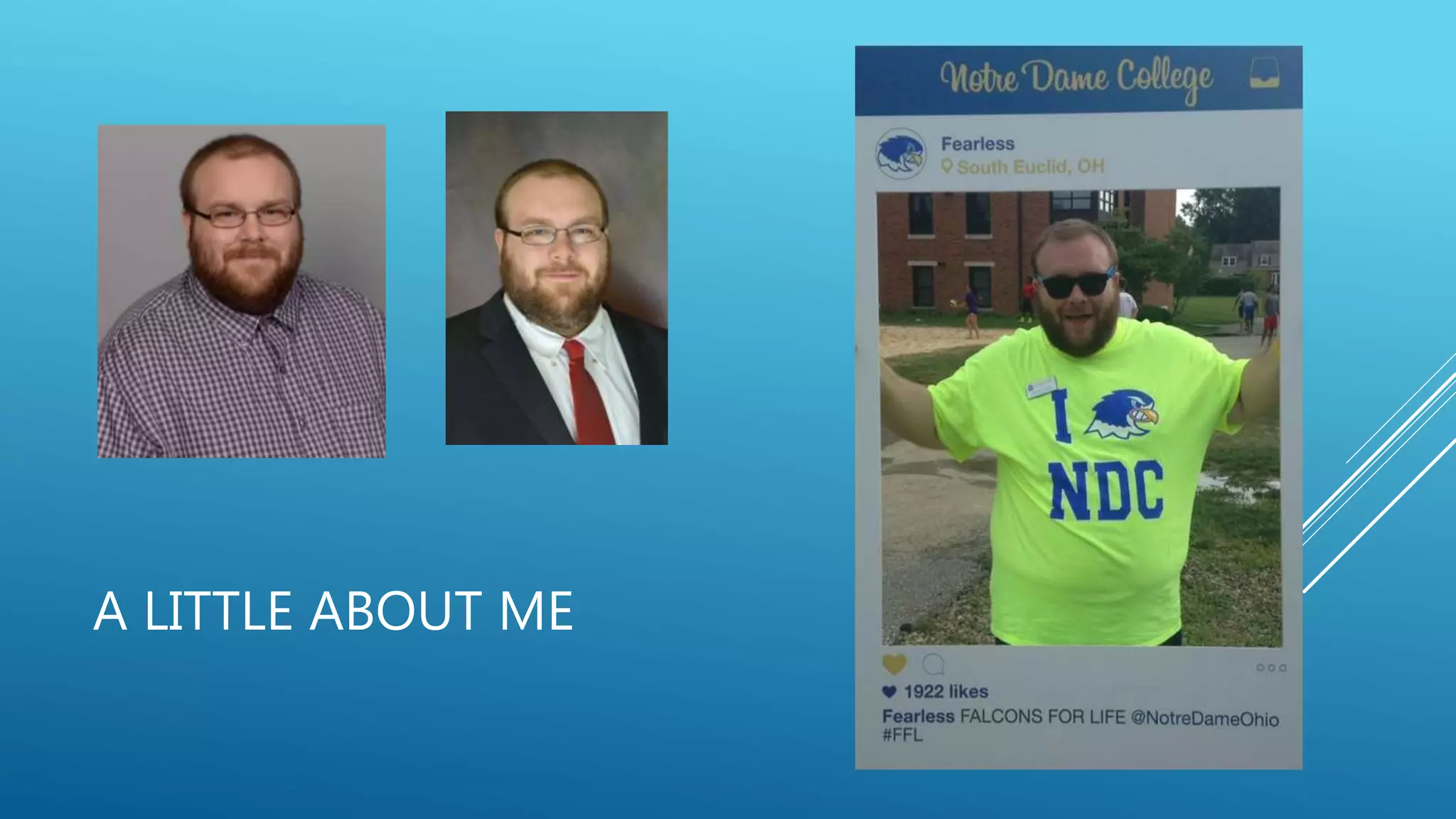
A LITTLE ABOUT ME
WHAT WILL YOU LEAVE WITH
 Students will be able to identify and articulate several theories of
leadership
 Students will be able to express their leadership style
 Students will be able to give examples of on and off campus leadership
GUIDELINES
 If you have a question, ask it.
 If you are confused, ask a question.
 Ask questions
 Be engaged by asking questions
 Insert another way to say “ask questions”
ONGOING ACTIVITY
THEORIES
 Great [Person] Theory
 Trait Theory
 Behavioral Theory
 Servant Leadership
 Situational Leadership
 Transformational Theory
GROUPWORK
1. Great [Person] Theory
2. Trait Theory
3. Behavioral Theory
4. Servant Leadership
5. Situational Leadership
6. Transformational Theory
GREAT [PERSON] THEORY
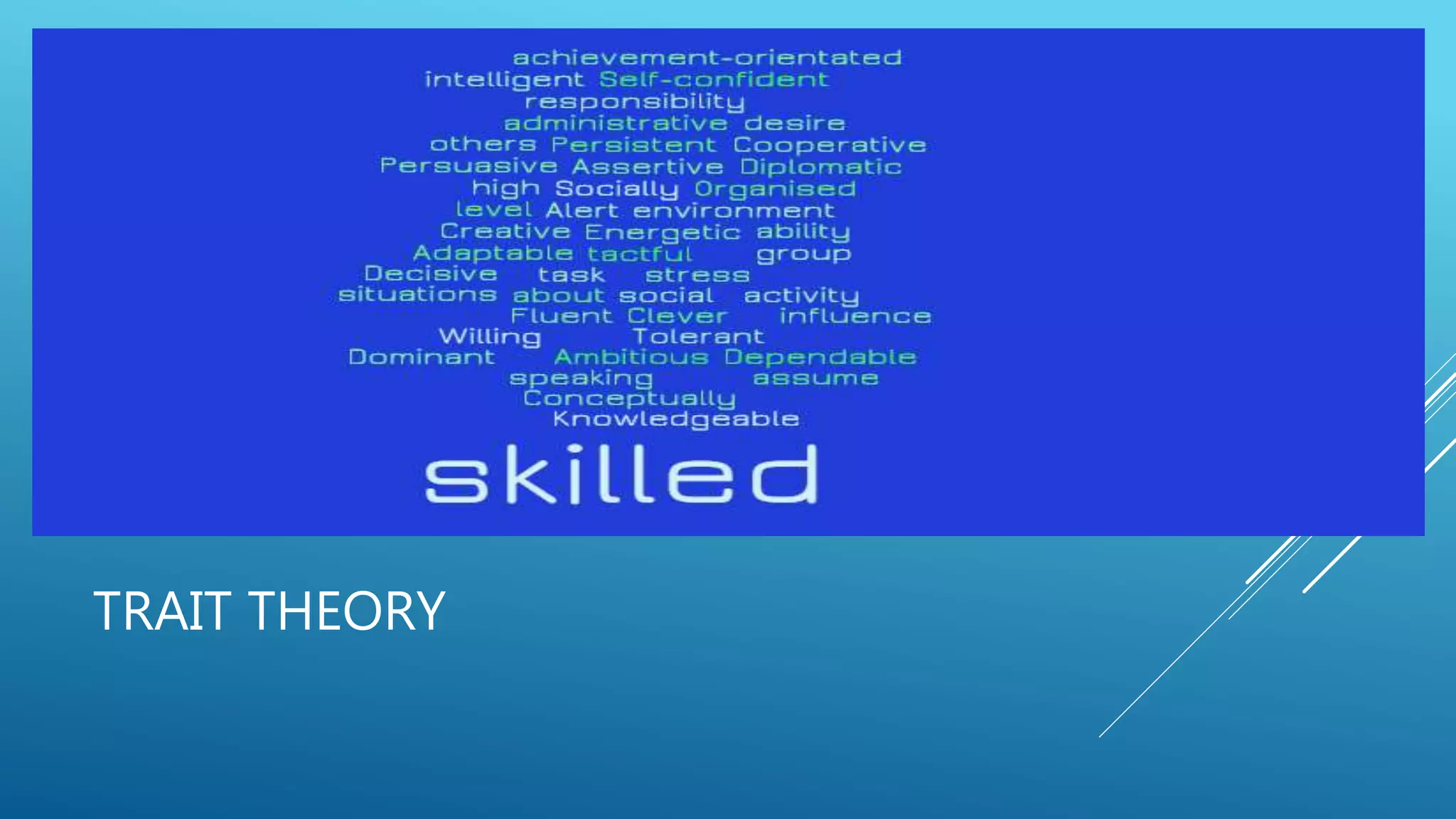
TRAIT THEORY
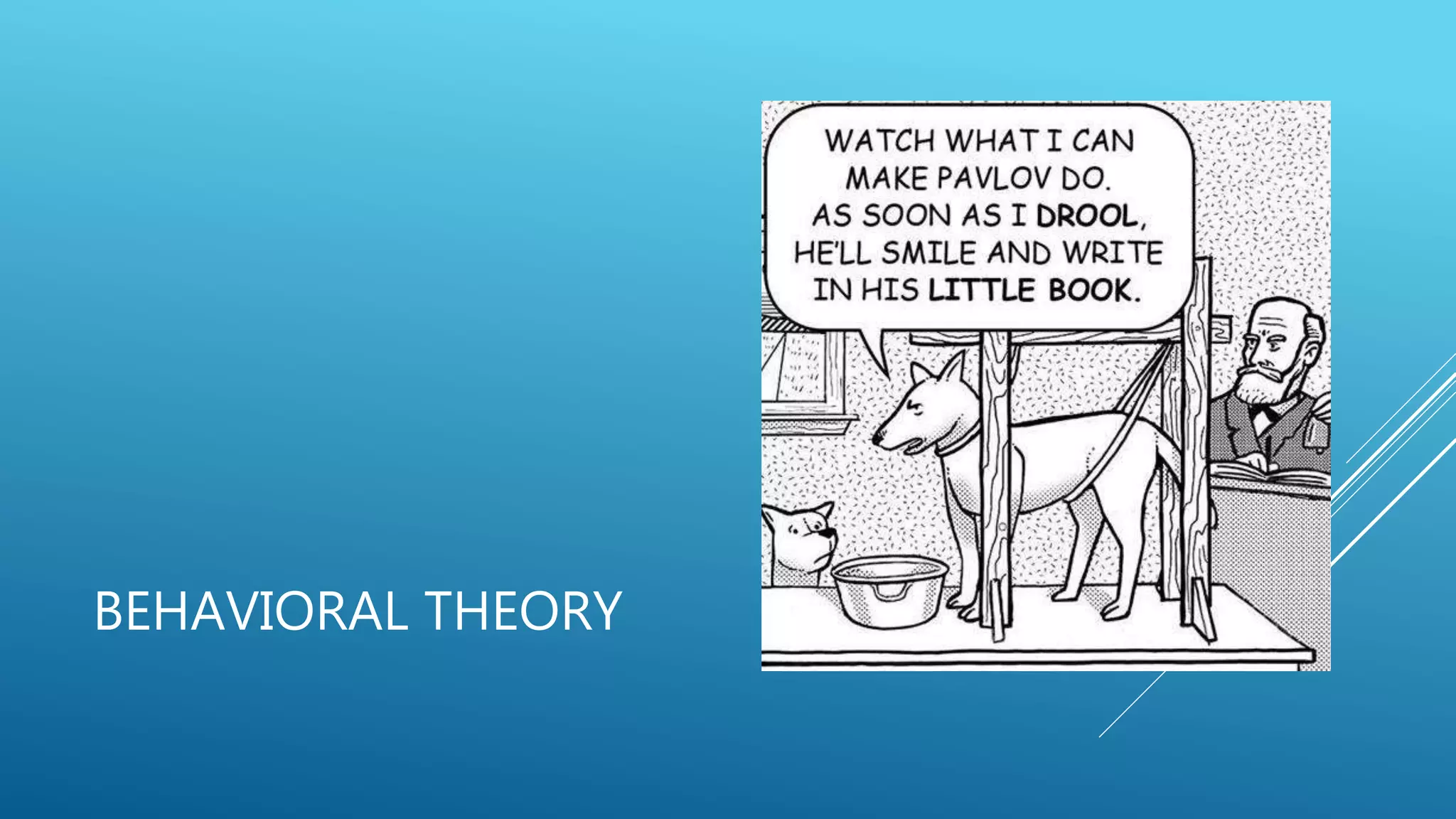
BEHAVIORAL THEORY
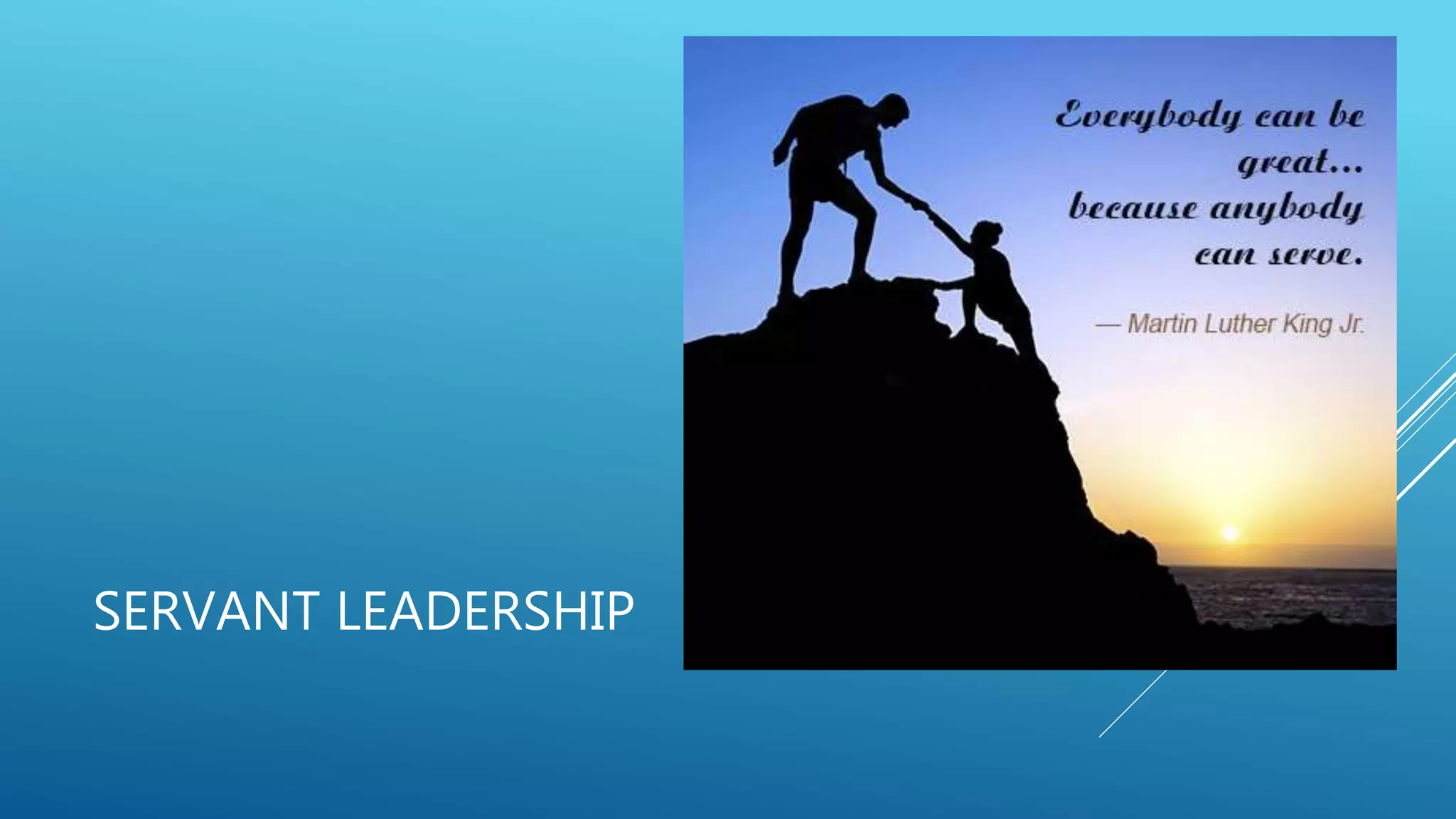
SERVANT LEADERSHIP
THE VIDEO CAN EXPLAIN…
Check out this video: https://youtu.be/XKUPDUDOBVo
During the actual presentation I only showed the information about
Servant Leadership beginning at around 4:14, but feel free to watch the
full video!
SITUATIONAL LEADERSHIP
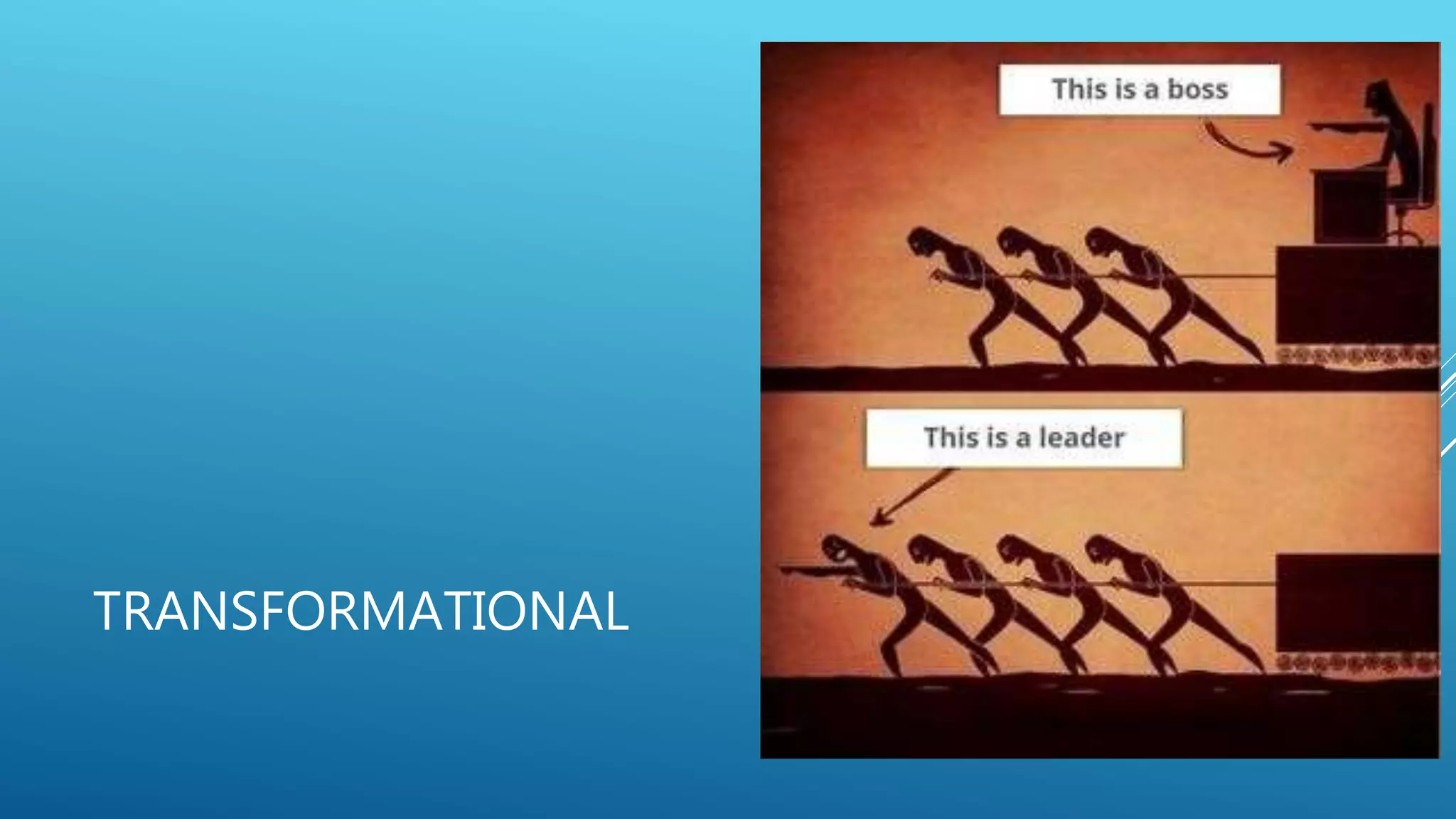
TRANSFORMATIONAL
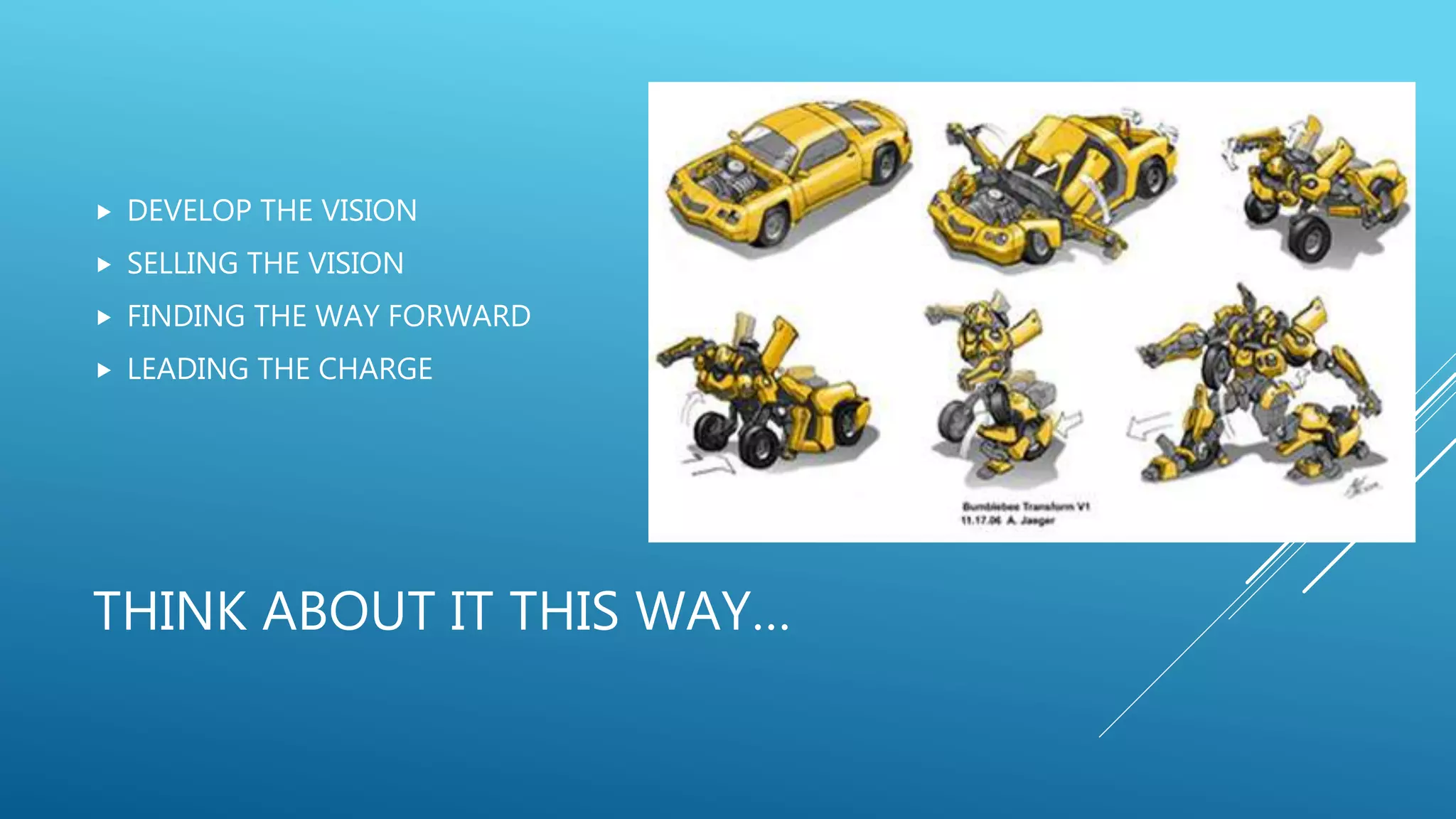
THINK ABOUT IT THIS WAY…
 DEVELOP THE VISION
 SELLING THE VISION
 FINDING THE WAY FORWARD
 LEADING THE CHARGE
ONGOING ACTIVITY 2.0
GET OUR YOUR TABLET, SMART PHONE,
OR LAPTOP!
WHY LEAD?
REASONS FOR LEADING
 Enjoyment
 Inspire Change
 Natural
 Prevent Change
 No Choice
 Money & Power
WHY BE A LEADER AT NDC?
REFERENCES
Kezar, A.A., Carducci, R., & McGavin-Contreras, M. (2006). Rethinking the “L” word in higher education: The
revolution of research on leadership. Hoboken, NJ: John Wiley & Sons.
McCall, M.W. Jr. and Lombardo, M.M. (1983). Off the track: Why and how successful executives get
derailed. Greenboro, NC: Centre for Creative Leadership
Pfeffer, Jeffrey (1994). Managing with power: Politics and influence in organizations. Boston: Harvard
Business School Press.
Yukl, G., Gordon, A., & Taber, T. (2002). A hierarchical taxonomy of leadership behavior: Integrating a half
century of behavior research. Journal of Leadership & Organizational Studies, 9(1), 15-32.
Yukl, G. A. (1989). Leadership in Organizations. Englewood Cliffs, NJ: Prentice Hall

Intro to Leadership

  • 1.
    INTRO TO LEADERSHIP ShaneYoung First Year Experience and Leadership @ShaneYoung15 www.studentaffairsshane.com
  • 2.
    SO YOU WANTTO BE A LEADER?
  • 3.
  • 4.
    WHAT WILL YOULEAVE WITH  Students will be able to identify and articulate several theories of leadership  Students will be able to express their leadership style  Students will be able to give examples of on and off campus leadership
  • 5.
    GUIDELINES  If youhave a question, ask it.  If you are confused, ask a question.  Ask questions  Be engaged by asking questions  Insert another way to say “ask questions”
  • 6.
  • 7.
    THEORIES  Great [Person]Theory  Trait Theory  Behavioral Theory  Servant Leadership  Situational Leadership  Transformational Theory
  • 8.
    GROUPWORK 1. Great [Person]Theory 2. Trait Theory 3. Behavioral Theory 4. Servant Leadership 5. Situational Leadership 6. Transformational Theory
  • 9.
  • 10.
  • 11.
  • 12.
  • 13.
    THE VIDEO CANEXPLAIN… Check out this video: https://youtu.be/XKUPDUDOBVo During the actual presentation I only showed the information about Servant Leadership beginning at around 4:14, but feel free to watch the full video!
  • 14.
  • 15.
  • 16.
    THINK ABOUT ITTHIS WAY…  DEVELOP THE VISION  SELLING THE VISION  FINDING THE WAY FORWARD  LEADING THE CHARGE
  • 17.
  • 19.
    GET OUR YOURTABLET, SMART PHONE, OR LAPTOP!
  • 20.
  • 21.
    REASONS FOR LEADING Enjoyment  Inspire Change  Natural  Prevent Change  No Choice  Money & Power
  • 22.
    WHY BE ALEADER AT NDC?
  • 24.
    REFERENCES Kezar, A.A., Carducci,R., & McGavin-Contreras, M. (2006). Rethinking the “L” word in higher education: The revolution of research on leadership. Hoboken, NJ: John Wiley & Sons. McCall, M.W. Jr. and Lombardo, M.M. (1983). Off the track: Why and how successful executives get derailed. Greenboro, NC: Centre for Creative Leadership Pfeffer, Jeffrey (1994). Managing with power: Politics and influence in organizations. Boston: Harvard Business School Press. Yukl, G., Gordon, A., & Taber, T. (2002). A hierarchical taxonomy of leadership behavior: Integrating a half century of behavior research. Journal of Leadership & Organizational Studies, 9(1), 15-32. Yukl, G. A. (1989). Leadership in Organizations. Englewood Cliffs, NJ: Prentice Hall

Editor's Notes

  • #7 Have Students write one word that they think describes their leadership style; hyphens are acceptable.
  • #10 Leaders are born and not made. Great leaders will arrive when there is a need. Note how I changed it to Great “PERSON” Theory Carlyle (1840) “On Heroes, Hero-Worship and the Heroic in History” Critiques: Leadership cannot be learned… These great men were shaped by the society that formed them, not the other way around. Non-inclusive of women.
  • #11 People who make good leaders have the right combination of traits McCall and Lombardo (1983) researched both success and failure identified four primary traits by which leaders could succeed or 'derail': Emotional stability and composure: Calm, confident and predictable, particularly when under stress. Admitting error: Owning up to mistakes, rather than putting energy into covering up. Good interpersonal skills: Able to communicate and persuade others without resort to negative or coercive tactics. Intellectual breadth: Able to understand a wide range of areas, rather than having a narrow (and narrow-minded) area of expertise. Pfeffer (1994) 1. energy, endurance, and physical stamina 2. ability to focus one's energy and avoid wasted effort 3. sensitivity that makes it possible to read and understand others (173, this requires, at least for a moment, to stop thinking about oneself and one's own needs and beliefs) 4. flexibility, particularly with respect to selecting various means to achieve one's goals 5. willingness to engage, when necessary, in conflict and confrontation, or a certain degree of personal toughness 6. ability to submerge one's ego, at least temporarily, and play the good subordinate or team player to enlist the help and support of others Critiques: Situation factors? Not all skills work in all situations Gender?
  • #12 Leaders can be made. Leadership is based in a definable, learnable behavior. This is notable because it is a large leap from great [person] theory and trait theory which focused on cultivating natural leaders. Yukl (2002) Planning short term activities Clarifying tasks and expectations Monitoring operations and performance Encouraging innovative thinking Consulting while decision making Empowering members of organization
  • #13 4:14 VIDEO
  • #14 4:14 VIDEO There are two criteria of servant leadership: The people served grow as individuals, becoming 'healthier, wiser, more autonomous and more likely themselves to become servants' (Greenleaf, 1977). The extent to which the leadership benefits those who are least advantaged in society (or at least does not disadvantage them). Principles of servant leadership defined by the Alliance for Servant Leadership are: Transformation as a vehicle for personal and institutional growth. Personal growth as a route to better serve others. Enabling environments that empower and encourage service. Service as a fundamental goals. Trusting relationships as a basic platform for collaboration and service. Creating commitment as a way to collaborative activity. Community building as a way to create environments in which people can trust each other and work together. Nurturing the spirit as a way to provide joy and fulfilment in meaningful work.
  • #15 Yukl (1989) seeks to combine other approaches and identifies six variables: Subordinate effort: the motivation and actual effort expended. Subordinate ability and role clarity: followers knowing what to do and how to do it. Organization of the work: the structure of the work and utilization of resources. Cooperation and cohesiveness: of the group in working together. Resources and support: the availability of tools, materials, people, etc. External coordination: the need to collaborate with other groups.
  • #16 Assumptions: People will follow a person who inspires them A person with vision and passion will go far Injecting enthusiasm and energy gets things done
  • #17 DEVELOP THE VISION: Engaging the community in discussion and creating a vision that the leader believes 100% SELLING THE VISION: Creating trust and sell the vision. Not everyone will buy into at the beginning.. Hence why step 1 is pretty important. FINDING THE WAY FORWARD: with a clear vision, the direction will always be knowing. Finding the steps will be more of an process. There will be mistakes, but as long as process is made it is working LEADING THE CHARGE: remain up front and central during the action “they are people-oriented and believe that success comes first and last through deep and sustained commitment.”
  • #18 Have Students write one word that they think describes their leadership style; hyphens are acceptable.
  • #21 Why do we need leaders? Why should we be leaders? Enjoy
  • #22 Enjoyment Inspire change Block change No choice
  • #23 If you lead here, you will develop the necessary skills and tools to be more successful after NDC. Budget experience Event planning Managing Leading Inspiring Accountability But, don’t think about the first job. A part of the liberal arts is teaching you skills necessary for 10, 20, 30 years down the road Also, if you begin being a leader NOW, you can have an impact here, now. Notable examples from my own life: Funding You Board Endowment Walking 18 hours at Relay