CONSUMERS
Anyone who uses goods or services
© PDST Home Economics
Goods and Services
 Goods: Products that are bought
e.g. food, clothes
 Services: Doing work for another
usually involving payment
e.g.hairdressing, car repair
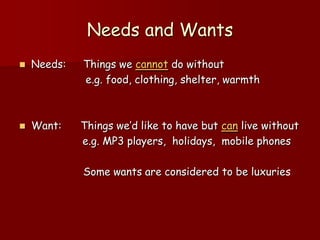
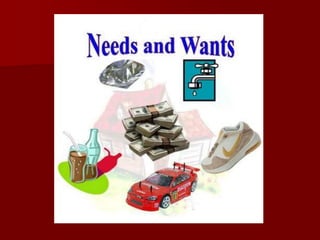
Needs and Wants
 Needs: Things we cannot do without
e.g. food, clothing, shelter, warmth
 Want: Things we’d like to have but can live without
e.g. MP3 players, holidays, mobile phones
Some wants are considered to be luxuries
Needs and wants
Needs and wants change depending on a number of things:
 Age
 Culture
 Circumstances
A priority is something that is very important to you
Consumer Rights
 The right to truthful information
 The right to choose
 The right to value for money
 The right to safety
 The right to redress
A monopoly happens when there is only one supplier of a
product or service i.e. there is no competition
Consumer Responsibilities
 To know your rights
 To know consumer law
 To inform yourself about goods and services so you can
choose wisely
 To understand the balance between cost and quality
 To read labels and follow manufacturers instructions
 To complain about faulty goods and services
 To avoid wasting resources and protect environment
Resources
Anything that is used in doing a task e.g.
 Time
 Money
 Skills
 Information
 Equipment
 Materials
Consumer Information
 Consumer information:
any knowledge that helps a consumer to buy wisely
 Consumer education:
using this knowledge to make informed decisions when
purchasing goods and services
Why do consumers need to be
informed?
 So they make wise buying decisions
 To get value for money
 To understand consumer law
 So they know how to get redress
Sources of consumer information
 Consumer Association of Ireland and
National Consumer Agency
 Advertising
 Showrooms & exhibitions
 Salespeople
 TV/radio consumer programmes
 Internet consumer sites
 Manufacturer’s leaflets
 Other consumers
 Magazines and newspapers
 Community info services
Decision Making
 Step 1 Identify the problem
 Step 2 Collect information
 Step 3 Consider alternatives
 Step 4 Consider consequences of each alternative
 Step 5 Make a decision
 Step 6 Put the decision into action
 Step 7 Evaluate results
Factors which influence our
decisions when choosing goods
Internal Factors
 Personal preferences
 Personal values
 Needs
External Factors
 Advertising /Marketing
 Peers / Friends
 Family
 Price / cost
 Fashion
 Sales people
 Time
Impulse Buying
Buying something on the spur of the moment

Intro to consumer studies

  • 1.
    CONSUMERS Anyone who usesgoods or services © PDST Home Economics
  • 2.
    Goods and Services Goods: Products that are bought e.g. food, clothes  Services: Doing work for another usually involving payment e.g.hairdressing, car repair
  • 4.
    Needs and Wants Needs: Things we cannot do without e.g. food, clothing, shelter, warmth  Want: Things we’d like to have but can live without e.g. MP3 players, holidays, mobile phones Some wants are considered to be luxuries
  • 6.
    Needs and wants Needsand wants change depending on a number of things:  Age  Culture  Circumstances A priority is something that is very important to you
  • 7.
    Consumer Rights  Theright to truthful information  The right to choose  The right to value for money  The right to safety  The right to redress A monopoly happens when there is only one supplier of a product or service i.e. there is no competition
  • 8.
    Consumer Responsibilities  Toknow your rights  To know consumer law  To inform yourself about goods and services so you can choose wisely  To understand the balance between cost and quality  To read labels and follow manufacturers instructions  To complain about faulty goods and services  To avoid wasting resources and protect environment
  • 9.
    Resources Anything that isused in doing a task e.g.  Time  Money  Skills  Information  Equipment  Materials
  • 10.
    Consumer Information  Consumerinformation: any knowledge that helps a consumer to buy wisely  Consumer education: using this knowledge to make informed decisions when purchasing goods and services
  • 11.
    Why do consumersneed to be informed?  So they make wise buying decisions  To get value for money  To understand consumer law  So they know how to get redress
  • 12.
    Sources of consumerinformation  Consumer Association of Ireland and National Consumer Agency  Advertising  Showrooms & exhibitions  Salespeople  TV/radio consumer programmes  Internet consumer sites  Manufacturer’s leaflets  Other consumers  Magazines and newspapers  Community info services
  • 14.
    Decision Making  Step1 Identify the problem  Step 2 Collect information  Step 3 Consider alternatives  Step 4 Consider consequences of each alternative  Step 5 Make a decision  Step 6 Put the decision into action  Step 7 Evaluate results
  • 15.
    Factors which influenceour decisions when choosing goods Internal Factors  Personal preferences  Personal values  Needs External Factors  Advertising /Marketing  Peers / Friends  Family  Price / cost  Fashion  Sales people  Time
  • 16.
    Impulse Buying Buying somethingon the spur of the moment