CONSUMER CHOICE
YEAR 9 COMMERCE ELECTIVE, MR SHIPP 2016
1.COMMERCE AND CHOICE
Section 1
A.DECISIONS AFFECTING THE
QUALITY OF OUR LIVES
• Commercial decisions can
be related to consumer,
financial, business,
employment, legal or
environmental factors
• A consumer is someone
who purchases goods
and services to satisfy
needs and wants
Supermarket Psychology
List the strategies used by
supermarkets to entice consumers to
buy their products
1. Do I really want this
item?
2. Can I afford it?
3. Is there another
product for a better
price?
Three basic questions should be asked before buying
something
• A major decision by
consumers is how much
to spend their income
and how much to save it
• Sticking to a budget and
choosing wise payment
methods are also
important considerations
1. Financial Decisions
What is Choice Australia?
• Many workers now work longer hours to support their
high material standard of living
• Which type of working sector, whether to run a business,
working flexible hours and adapting to changes in the
market are essential for consumers to make decisions
2. Employment Decisions
• Questions you might need to ask
2. Business Decisions
What good or service will I sell?
How much will I charge?
Where will I buy my supplies?
What marketing strategies will I use?
1Supermarket Psychology 1
• Consumers are now all protected under the
Competition and Consumer Act 2010 (Cth)
• Two major considerations when buying a product
under consumer
1. is the product of merchantable quality and what are
the terms of the sales contract
2. is the product fit the purpose of what you intended
to buy it for
4. Legal Decisions
click here for legislation
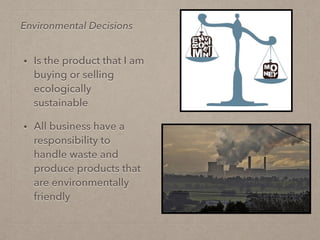
• Is the product that I am
buying or selling
ecologically
sustainable
• All business have a
responsibility to
handle waste and
produce products that
are environmentally
friendly
Environmental Decisions
Supermarket Psychology 2
In the 21st century consumers have
an abundance of choice when buying
a product or acquiring a service. Is
this a good or bad change for
consumers?
Discussion Time - Pair work Activity
8 minutes to have two points for and against
2.CONSUMER DECISIONS
COMPARISON SHOPPING
• Comparing prices from
a number of sellers
• This can be achieved
by using the internet,
magazines,
advertisements,
specialist websites
such as CHOICE,
telephone or store
visits
• There are two types of goods (tangible):
• 1. Durable Goods - such as washing machines,
TVs and Printers
• 2. Non-Durable Goods - take away packaging,
coffee and magazines
Types of Goods and Services
• Complementary goods are those goods to are
consumed concurrently e.g. cars and petrol
• Substitutes are products that can be alternative
purchases to one another e.g. butter and
margarine
• There are a range of services (intangible) that
consumers and businesses receive:
• Producer services are provided by one business for
the benefit of another e.g. transport couriers
• Consumer services, on the other hand, include the
broad range of services that individuals consume
CHOOSING WHERE TO BUY
1. General Store
2. Supermarkets
When Fresh is not Fresh
3. Department Stores
4. Category
Killers
Lowest Prices Guaranteed Advertising
5. Franchises
6. Periodic Markets
• 1. What are the benefits of using comparison
shopping? give an example for a typical
Australian Family
• 2. Argue whether price is the only factor to
consider when undertaking comparison
shopping
Question Time
• This form of shopping
has changed the way
consumers buy their
products.
• No longer does the
consumer purchase on a
local level but has access
to regional and
international markets to
make their decisions
INTERNET PURCHASING
The Future of Shopping
Advantages Disadvantages
an increase in the range of products websites may not be permanent
comparison shopping can be done
from home at your own time
faulty products may be difficult to fix
cheaper prices may be sort with extra
competition in the market
delivery charges need to be factored
into the price
privacy issues of credit card details
Drip Pricing CHOICE
KEY FACTORS AFFECTING CONSUMER
DECISIONS
3. CONSUMER PROTECTION
• Two crucial pieces of protective legislation are the
Competition and Consumer Act 2010 (Cwlth) and
the Fair Trading Act 1987 (NSW)
• Unconscionable act by a seller is any practice that
is just not reasonable, such as scams and rip-offs.
• Every year 1 in 20 Australians fall victim to some
type of scam
Scams in Australia
Go to scamwatch.gov.au and list the
different types of scams that
consumers face in modern times
Activity Time - Class Combined Activity
ATM Skimmers
Illegal Pyramid Schemes
FEATURES OF A SIMPLE CONTRACT
LEGAL RIGHTS AND PROTECTIVE
LEGISLATION FOR CONSUMERS
• Two crucial pieces of protective legislation are the
Competition and Consumer Act 2010 (Cwlth) and
the Fair Trading Act 1987 (NSW)
• Unconscionable act by a seller is any practice that
is just not reasonable, such as scams and rip-offs.
• Every year 1 in 20 Australians fall victim to some
type of scam
Carlill v Carbolic Smoke Ball Co
Gift Cards Consumer Law
LEGAL RIGHTS AND PROTECTIVE
LEGISLATION FOR CONSUMERS
• To administer the rules that ensure transactions
between consumers and traders (businesses) are fair
• Provide consumers with current legislation
information
1. NSW Fair Trading Office
• Handles issues such as
anticompetitive and
unfair market practices,
mergers or takeovers
of companies and
product safety/liability.
• Runs at a national level
2. The Australian Competition and Consumer Commission
ACCC Role
• an independent official who has been appointed to
deal with complaints against either government
departments or private businesses
• State and Federal Level
3. Ombudsman
4. PAYMENT CHOICES
TYPE DEFINITION EXAMPLE ADVANTAGES DISADVANTAGES
• Barter - the swapping or exchanging of one
good for another
• Cash/Money - exchange of a currency for a
good/service
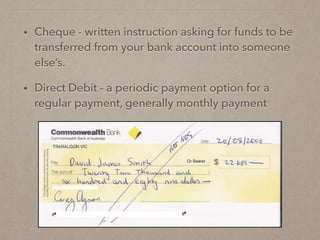
• Cheque - written instruction asking for funds to be
transferred from your bank account into someone
else’s.
• Direct Debit - a periodic payment option for a
regular payment, generally monthly payment
• Credit Cards - payment made which does not draw
from your actual money. Generally has a interest
fee period (55 Days). This may also include
Paywave
• EFTPOS - Electronic Funds Transfer At Point OF
Sale - cashless payment done with a bank card.
This may also include PayWave
• Book It Up - In isolated areas where banks may be
hard to access. Sellers allow the consumer to have
a tab before they need to pay for it.
• BPAY - payment can be made on the phone, post
office or online more easily and have access 24/7
• It is essential that you keep records of your
purchases as a consumer
• If products you purchase are related to work/tax
considerations, an annual record should be
undertaken (Budget)
Managing Your Records

Consumer Choice

  • 1.
    CONSUMER CHOICE YEAR 9COMMERCE ELECTIVE, MR SHIPP 2016
  • 2.
  • 3.
    A.DECISIONS AFFECTING THE QUALITYOF OUR LIVES • Commercial decisions can be related to consumer, financial, business, employment, legal or environmental factors • A consumer is someone who purchases goods and services to satisfy needs and wants
  • 4.
  • 5.
    List the strategiesused by supermarkets to entice consumers to buy their products
  • 6.
    1. Do Ireally want this item? 2. Can I afford it? 3. Is there another product for a better price? Three basic questions should be asked before buying something
  • 8.
    • A majordecision by consumers is how much to spend their income and how much to save it • Sticking to a budget and choosing wise payment methods are also important considerations 1. Financial Decisions
  • 10.
    What is ChoiceAustralia?
  • 12.
    • Many workersnow work longer hours to support their high material standard of living • Which type of working sector, whether to run a business, working flexible hours and adapting to changes in the market are essential for consumers to make decisions 2. Employment Decisions
  • 13.
    • Questions youmight need to ask 2. Business Decisions What good or service will I sell? How much will I charge? Where will I buy my supplies? What marketing strategies will I use?
  • 14.
  • 15.
    • Consumers arenow all protected under the Competition and Consumer Act 2010 (Cth) • Two major considerations when buying a product under consumer 1. is the product of merchantable quality and what are the terms of the sales contract 2. is the product fit the purpose of what you intended to buy it for 4. Legal Decisions click here for legislation
  • 16.
    • Is theproduct that I am buying or selling ecologically sustainable • All business have a responsibility to handle waste and produce products that are environmentally friendly Environmental Decisions
  • 17.
  • 18.
    In the 21stcentury consumers have an abundance of choice when buying a product or acquiring a service. Is this a good or bad change for consumers? Discussion Time - Pair work Activity 8 minutes to have two points for and against
  • 19.
  • 20.
    COMPARISON SHOPPING • Comparingprices from a number of sellers • This can be achieved by using the internet, magazines, advertisements, specialist websites such as CHOICE, telephone or store visits
  • 21.
    • There aretwo types of goods (tangible): • 1. Durable Goods - such as washing machines, TVs and Printers • 2. Non-Durable Goods - take away packaging, coffee and magazines Types of Goods and Services
  • 23.
    • Complementary goodsare those goods to are consumed concurrently e.g. cars and petrol • Substitutes are products that can be alternative purchases to one another e.g. butter and margarine
  • 24.
    • There area range of services (intangible) that consumers and businesses receive: • Producer services are provided by one business for the benefit of another e.g. transport couriers • Consumer services, on the other hand, include the broad range of services that individuals consume
  • 25.
    CHOOSING WHERE TOBUY 1. General Store
  • 26.
  • 27.
    When Fresh isnot Fresh
  • 28.
  • 29.
  • 30.
  • 31.
  • 32.
  • 33.
    • 1. Whatare the benefits of using comparison shopping? give an example for a typical Australian Family • 2. Argue whether price is the only factor to consider when undertaking comparison shopping Question Time
  • 34.
    • This formof shopping has changed the way consumers buy their products. • No longer does the consumer purchase on a local level but has access to regional and international markets to make their decisions INTERNET PURCHASING
  • 35.
    The Future ofShopping
  • 36.
    Advantages Disadvantages an increasein the range of products websites may not be permanent comparison shopping can be done from home at your own time faulty products may be difficult to fix cheaper prices may be sort with extra competition in the market delivery charges need to be factored into the price privacy issues of credit card details
  • 37.
  • 38.
    KEY FACTORS AFFECTINGCONSUMER DECISIONS
  • 39.
  • 40.
    • Two crucialpieces of protective legislation are the Competition and Consumer Act 2010 (Cwlth) and the Fair Trading Act 1987 (NSW) • Unconscionable act by a seller is any practice that is just not reasonable, such as scams and rip-offs. • Every year 1 in 20 Australians fall victim to some type of scam
  • 41.
  • 42.
    Go to scamwatch.gov.auand list the different types of scams that consumers face in modern times Activity Time - Class Combined Activity
  • 43.
  • 45.
  • 46.
    FEATURES OF ASIMPLE CONTRACT
  • 47.
    LEGAL RIGHTS ANDPROTECTIVE LEGISLATION FOR CONSUMERS • Two crucial pieces of protective legislation are the Competition and Consumer Act 2010 (Cwlth) and the Fair Trading Act 1987 (NSW) • Unconscionable act by a seller is any practice that is just not reasonable, such as scams and rip-offs. • Every year 1 in 20 Australians fall victim to some type of scam
  • 50.
    Carlill v CarbolicSmoke Ball Co
  • 55.
  • 57.
    LEGAL RIGHTS ANDPROTECTIVE LEGISLATION FOR CONSUMERS • To administer the rules that ensure transactions between consumers and traders (businesses) are fair • Provide consumers with current legislation information 1. NSW Fair Trading Office
  • 61.
    • Handles issuessuch as anticompetitive and unfair market practices, mergers or takeovers of companies and product safety/liability. • Runs at a national level 2. The Australian Competition and Consumer Commission
  • 62.
  • 63.
    • an independentofficial who has been appointed to deal with complaints against either government departments or private businesses • State and Federal Level 3. Ombudsman
  • 64.
  • 65.
    TYPE DEFINITION EXAMPLEADVANTAGES DISADVANTAGES
  • 66.
    • Barter -the swapping or exchanging of one good for another • Cash/Money - exchange of a currency for a good/service
  • 67.
    • Cheque -written instruction asking for funds to be transferred from your bank account into someone else’s. • Direct Debit - a periodic payment option for a regular payment, generally monthly payment
  • 68.
    • Credit Cards- payment made which does not draw from your actual money. Generally has a interest fee period (55 Days). This may also include Paywave • EFTPOS - Electronic Funds Transfer At Point OF Sale - cashless payment done with a bank card. This may also include PayWave
  • 70.
    • Book ItUp - In isolated areas where banks may be hard to access. Sellers allow the consumer to have a tab before they need to pay for it. • BPAY - payment can be made on the phone, post office or online more easily and have access 24/7
  • 71.
    • It isessential that you keep records of your purchases as a consumer • If products you purchase are related to work/tax considerations, an annual record should be undertaken (Budget) Managing Your Records