Analyse significant aspects of visual and/or oral text(s) through close viewing 
and/or listening, supported by evidence. 
English 2.10 
Focus on film 
Credits: 3
WHAT DO WE HAVE TO DO? 
You will select a sequence 
from a film and analyse it. 
You will publish your 
analysis on your blog. 
You can work on this both 
in and out of class. 
2
Conditions 
This is an individual 
assessment but we will 
practise with another 
film first. 
You can collect 
information, watch the 
film and develop ideas 
in and out of class. 
You will select the 
sequence to analyse. You 
can choose one from the 
YouTube links on our 
class Ultranet page. 
3
1. Watch a film 
2. Choose a sequence from the film and practise answering the analysis 
questions. 
3. Watch another film. 
4. Choose a sequence from the Ultranet YouTube links to analyse. 
5. Choose 6 analysis questions to answer. 
6. Create a blog post with the questions, answers and screen shots from the 
sequence. 
4 
The Procedure
Aspects to analyse: choose 6 questions. 
1. Analyse the key idea in the extract. How is each key idea developed? What links with 
yourself or the world can you identify? 
2. Analyse the purpose of the extract. What is the director aiming to achieve, and 
how? What links with yourself or the world can you identify? 
3. Analyse the attitudes of the characters in the extract. What do they tell us about 
society and how do you know this? 
4. Analyse the context of the extract. What does it show about the social, cultural, 
political, or historical context and how? What links with your own world can you identify? 
5. Analyse the genre of the extract. How are elements of the genre being shown and 
why? What links with other films in the genre can you identify? 
5
6 
Aspects to analyse 
6. Analyse the use of at least two shots and/or camera movements in the 
extract. What is the purpose of each and how is this developed? 
7. Analyse the use of lighting in the extract. How does it create mood or 
develop character/ideas in the extract? How does it manipulate or affect the 
audience? 
8. Analyse the use of music in the extract. How is it used to develop character, 
ideas, or mood? 
9. Analyse the use of at least two costumes in the extract. How are they used 
to develop character or ideas? 
10. Analyse the use of at least two pieces of dialogue and/or voiceover in the 
extract. How is each piece used to develop characters or ideas?
Aspects to analyse 
11. Analyse the use of mise-en-scene in at least two shots in the extract. How is it 
developed to convey meaning? 
12. Analyse the use of setting combined with camera shot in the extract. How is it 
developed to convey meaning? 
13. Analyse the way two film elements work together to create meaning. How do they 
compliment/contrast with each other, and why? 
14. Analyse the editing in the extract. How are the shots sequenced, and why? How does 
the editing contribute to meaning? 
15. Analyse how any other film convention(s) not mentioned above have been used to 
develop the characters or ideas in the text. 
Important! 
Use supporting evidence in each answer. Your answers must show analysis. 
Information should not be repeated, so choose the focus of each answer carefully. 
7
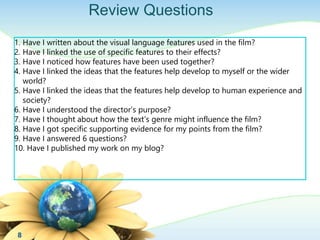
Review Questions 
1. Have I written about the visual language features used in the film? 
2. Have I linked the use of specific features to their effects? 
3. Have I noticed how features have been used together? 
4. Have I linked the ideas that the features help develop to myself or the wider 
world? 
5. Have I linked the ideas that the features help develop to human experience and 
society? 
6. Have I understood the director’s purpose? 
7. Have I thought about how the text’s genre might influence the film? 
8. Have I got specific supporting evidence for my points from the film? 
9. Have I answered 6 questions? 
10. Have I published my work on my blog? 
8
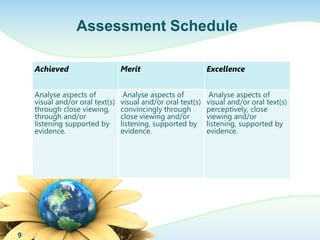
Assessment Schedule 
9 
Achieved Merit Excellence 
Analyse aspects of 
visual and/or oral text(s) 
through close viewing, 
through and/or 
listening supported by 
evidence. 
Analyse aspects of 
visual and/or oral text(s) 
convincingly through 
close viewing and/or 
listening, supported by 
evidence. 
Analyse aspects of 
visual and/or oral text(s) 
perceptively, close 
viewing and/or 
listening, supported by 
evidence.
Bibliography 
Adapted from NZQA resources. 
10

2.10 Close Read Visual Texts

  • 1.
    Analyse significant aspectsof visual and/or oral text(s) through close viewing and/or listening, supported by evidence. English 2.10 Focus on film Credits: 3
  • 2.
    WHAT DO WEHAVE TO DO? You will select a sequence from a film and analyse it. You will publish your analysis on your blog. You can work on this both in and out of class. 2
  • 3.
    Conditions This isan individual assessment but we will practise with another film first. You can collect information, watch the film and develop ideas in and out of class. You will select the sequence to analyse. You can choose one from the YouTube links on our class Ultranet page. 3
  • 4.
    1. Watch afilm 2. Choose a sequence from the film and practise answering the analysis questions. 3. Watch another film. 4. Choose a sequence from the Ultranet YouTube links to analyse. 5. Choose 6 analysis questions to answer. 6. Create a blog post with the questions, answers and screen shots from the sequence. 4 The Procedure
  • 5.
    Aspects to analyse:choose 6 questions. 1. Analyse the key idea in the extract. How is each key idea developed? What links with yourself or the world can you identify? 2. Analyse the purpose of the extract. What is the director aiming to achieve, and how? What links with yourself or the world can you identify? 3. Analyse the attitudes of the characters in the extract. What do they tell us about society and how do you know this? 4. Analyse the context of the extract. What does it show about the social, cultural, political, or historical context and how? What links with your own world can you identify? 5. Analyse the genre of the extract. How are elements of the genre being shown and why? What links with other films in the genre can you identify? 5
  • 6.
    6 Aspects toanalyse 6. Analyse the use of at least two shots and/or camera movements in the extract. What is the purpose of each and how is this developed? 7. Analyse the use of lighting in the extract. How does it create mood or develop character/ideas in the extract? How does it manipulate or affect the audience? 8. Analyse the use of music in the extract. How is it used to develop character, ideas, or mood? 9. Analyse the use of at least two costumes in the extract. How are they used to develop character or ideas? 10. Analyse the use of at least two pieces of dialogue and/or voiceover in the extract. How is each piece used to develop characters or ideas?
  • 7.
    Aspects to analyse 11. Analyse the use of mise-en-scene in at least two shots in the extract. How is it developed to convey meaning? 12. Analyse the use of setting combined with camera shot in the extract. How is it developed to convey meaning? 13. Analyse the way two film elements work together to create meaning. How do they compliment/contrast with each other, and why? 14. Analyse the editing in the extract. How are the shots sequenced, and why? How does the editing contribute to meaning? 15. Analyse how any other film convention(s) not mentioned above have been used to develop the characters or ideas in the text. Important! Use supporting evidence in each answer. Your answers must show analysis. Information should not be repeated, so choose the focus of each answer carefully. 7
  • 8.
    Review Questions 1.Have I written about the visual language features used in the film? 2. Have I linked the use of specific features to their effects? 3. Have I noticed how features have been used together? 4. Have I linked the ideas that the features help develop to myself or the wider world? 5. Have I linked the ideas that the features help develop to human experience and society? 6. Have I understood the director’s purpose? 7. Have I thought about how the text’s genre might influence the film? 8. Have I got specific supporting evidence for my points from the film? 9. Have I answered 6 questions? 10. Have I published my work on my blog? 8
  • 9.
    Assessment Schedule 9 Achieved Merit Excellence Analyse aspects of visual and/or oral text(s) through close viewing, through and/or listening supported by evidence. Analyse aspects of visual and/or oral text(s) convincingly through close viewing and/or listening, supported by evidence. Analyse aspects of visual and/or oral text(s) perceptively, close viewing and/or listening, supported by evidence.
  • 10.
    Bibliography Adapted fromNZQA resources. 10