NASIF A P
B.Sc MRT Intern
MALABAR CANCER CENTRE
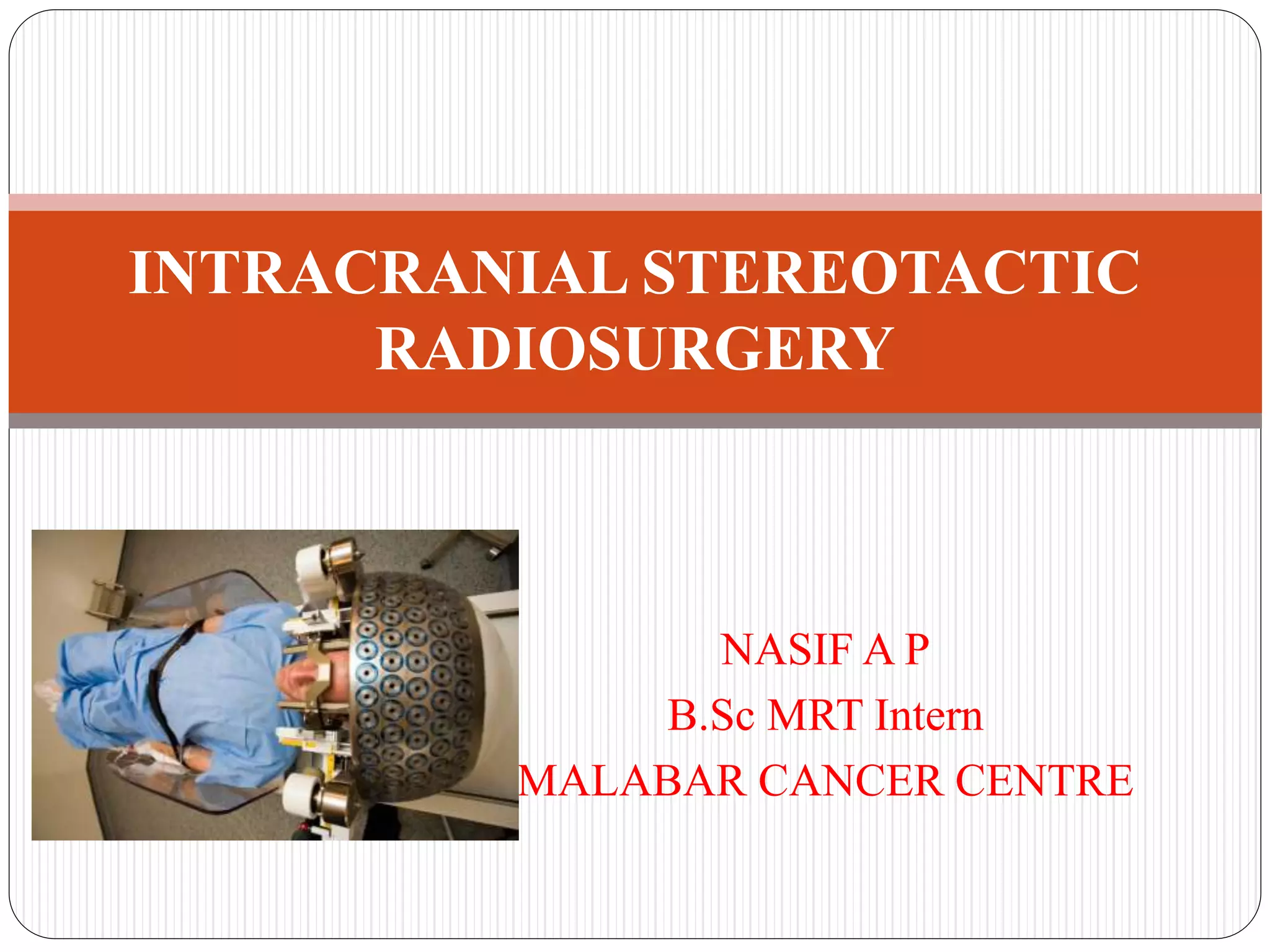
INTRACRANIAL STEREOTACTIC
RADIOSURGERY
Introduction
 SRS refers to the precise and focused delivery of a
single high dose of radiation in a single session and
has been used to treat various intracranial lesions and
skull base lesions.
 SRS combines stereotactic localization with multiple
cross –fired beams from a highly collimated high
energy radiation source.
 This method of non invasive ablation has proven to be
an effective alternative to the conventional
neurosurgery.
History
Gamma knife was invented
By professor Lars Leksell
in stockholm,sweden.
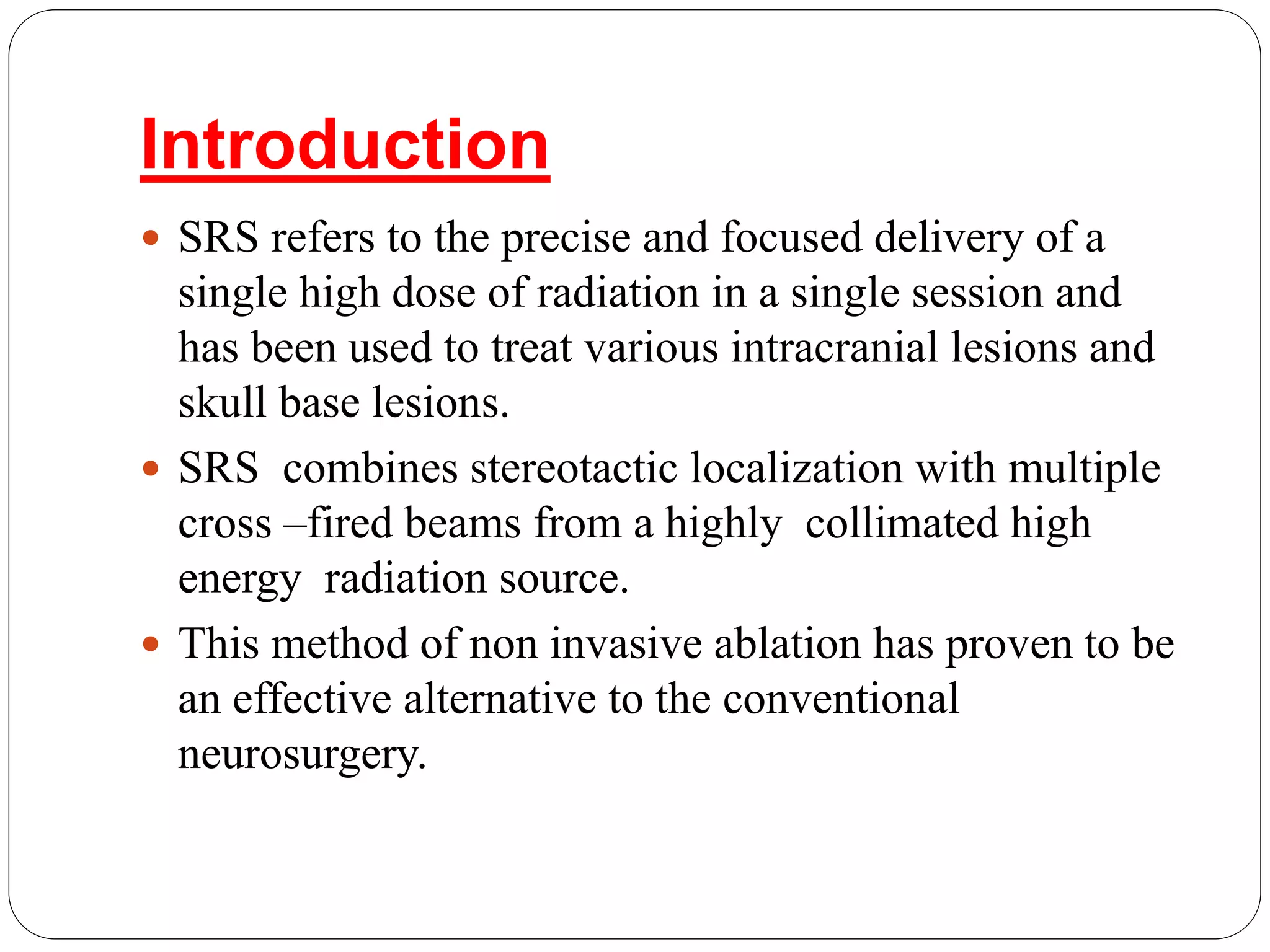
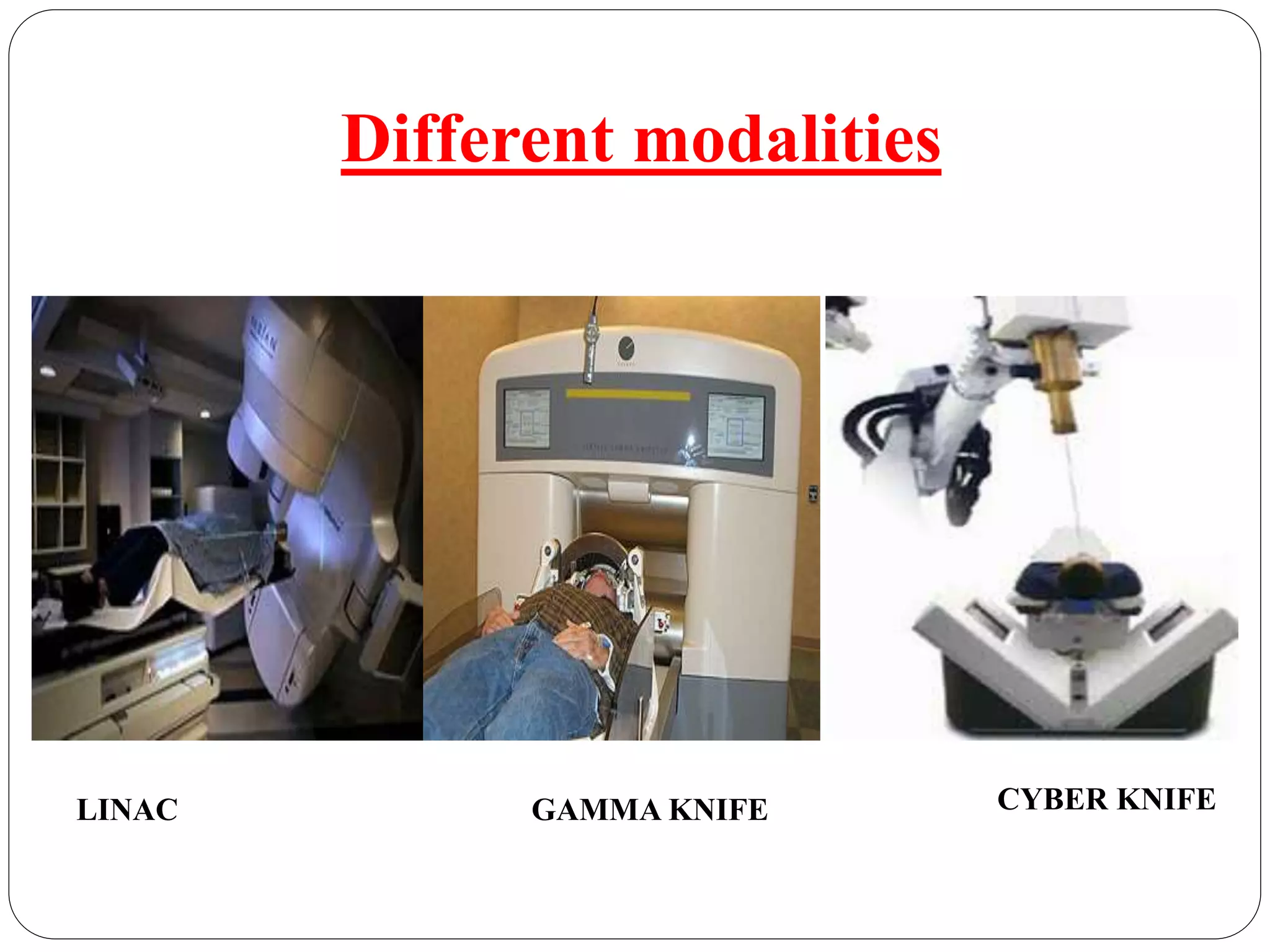
Different modalities
LINAC GAMMA KNIFE CYBER KNIFE
TYPES
Frame based Frameless
Intracranial SRS
 Indications
*Arteriovenous
malformations
*Meningiomas
*Pituitary adenomas
*Acoustic neuroma
*Pineal tumor
*Acoustic tumours
*Craniopharyngioma
*Brain metastases
 Contraindications
*Tumours 4cm or larger in
diameter.
*Tumours adjacent to
eloquent structures such
as brain stem&optic
chiasma.
*Pediatric cranial lesions.
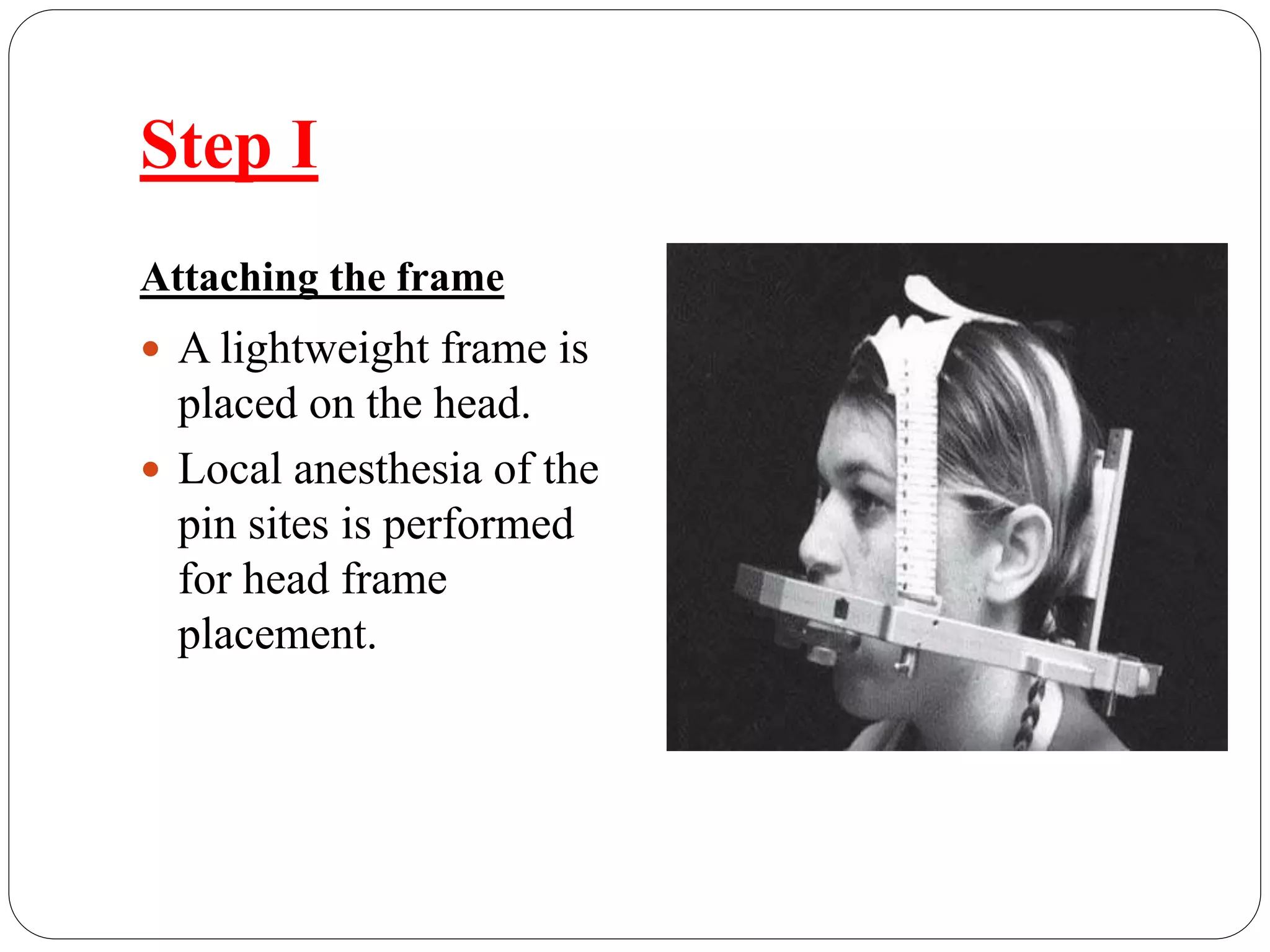
Step I
Attaching the frame
 A lightweight frame is
placed on the head.
 Local anesthesia of the
pin sites is performed
for head frame
placement.
Step II
Imaging
 A co-ordinate box is
used during imaging,for
precisely define
location,size and shape
of the target area.
 Imaging may be
MRI,CT or
Angiography.
Step III
Treatment planning
 The positioning of the head
frame relative to the Gamma
Knife for each shot is
documented by the x-, y- and
z-coordinates and the
Gamma angle and is
determined by treatment
planning parameters required
to satisfy the therapeutic
goals, namely, target
coverage and sparing of
critical structures.
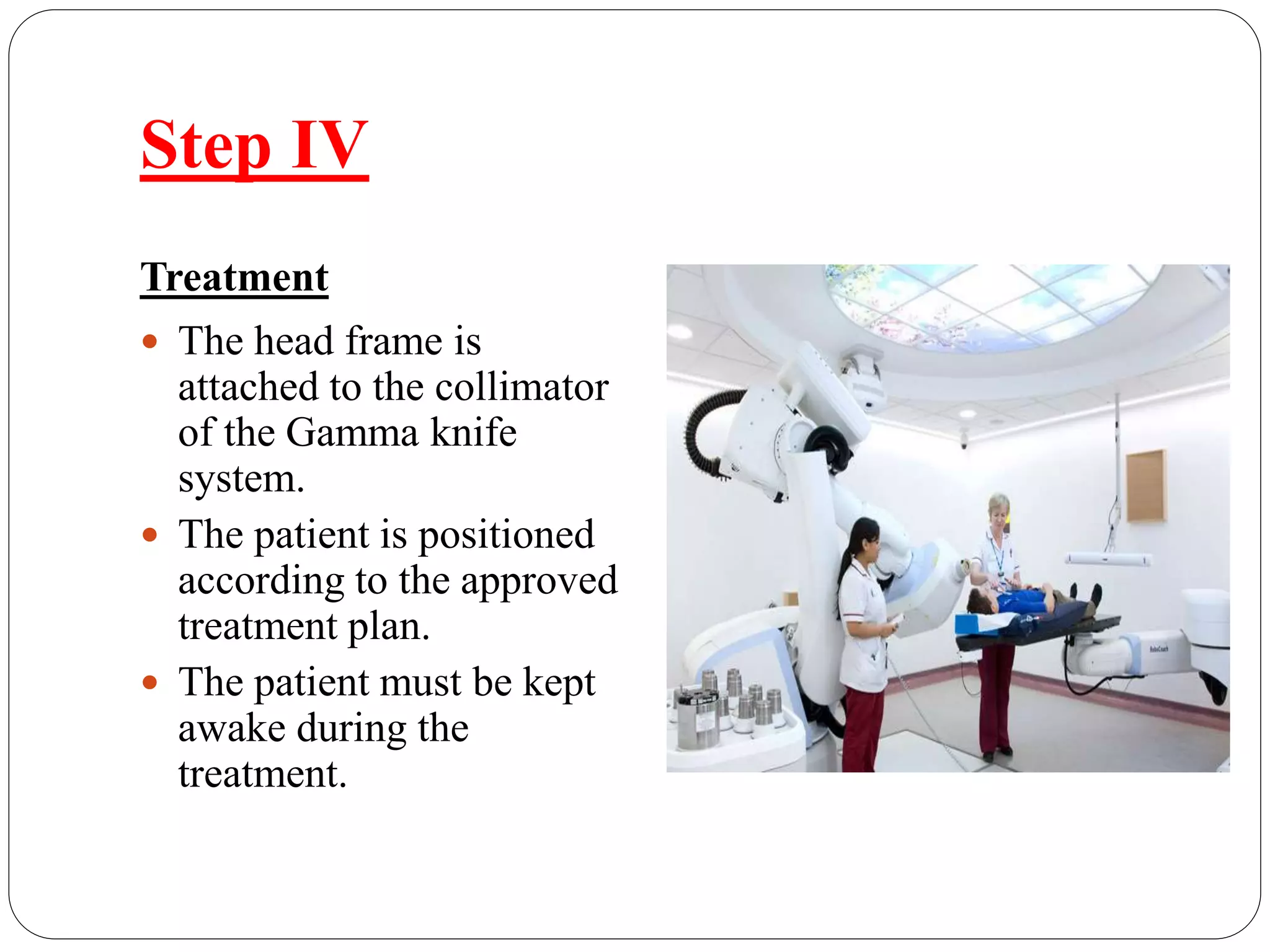
Step IV
Treatment
 The head frame is
attached to the collimator
of the Gamma knife
system.
 The patient is positioned
according to the approved
treatment plan.
 The patient must be kept
awake during the
treatment.
Advantages
 Reduce the hazards of open surgery.
 Destroy any deep brain structure without risk of
bleeding and infection.
 Precise localisation of the target.
 Ensures high mechanical accuracy by means of
collimator helmet.
 Anaesthesia is not required unless the patient is
restless.
 Shorter recovery periods.
 Late toxicities are low.
 High rate of local tumour.
References
 Lars Leksell,Stereotactic radiosurgery,Journal of
Neurology,Neurosurgery and Psychiatry.
 William R Hendee,Stereotactic radiosurgery and
stereotactic body radiation therapy.
 L Dade Lunsford,Jason Sheehan,Intracranial
stereotactic radiosurgery.

Intracranial stereotactic radiosurgery

  • 1.
    NASIF A P B.ScMRT Intern MALABAR CANCER CENTRE INTRACRANIAL STEREOTACTIC RADIOSURGERY
  • 2.
    Introduction  SRS refersto the precise and focused delivery of a single high dose of radiation in a single session and has been used to treat various intracranial lesions and skull base lesions.  SRS combines stereotactic localization with multiple cross –fired beams from a highly collimated high energy radiation source.  This method of non invasive ablation has proven to be an effective alternative to the conventional neurosurgery.
  • 3.
    History Gamma knife wasinvented By professor Lars Leksell in stockholm,sweden.
  • 4.
  • 5.
  • 6.
    Intracranial SRS  Indications *Arteriovenous malformations *Meningiomas *Pituitaryadenomas *Acoustic neuroma *Pineal tumor *Acoustic tumours *Craniopharyngioma *Brain metastases  Contraindications *Tumours 4cm or larger in diameter. *Tumours adjacent to eloquent structures such as brain stem&optic chiasma. *Pediatric cranial lesions.
  • 7.
    Step I Attaching theframe  A lightweight frame is placed on the head.  Local anesthesia of the pin sites is performed for head frame placement.
  • 8.
    Step II Imaging  Aco-ordinate box is used during imaging,for precisely define location,size and shape of the target area.  Imaging may be MRI,CT or Angiography.
  • 9.
    Step III Treatment planning The positioning of the head frame relative to the Gamma Knife for each shot is documented by the x-, y- and z-coordinates and the Gamma angle and is determined by treatment planning parameters required to satisfy the therapeutic goals, namely, target coverage and sparing of critical structures.
  • 10.
    Step IV Treatment  Thehead frame is attached to the collimator of the Gamma knife system.  The patient is positioned according to the approved treatment plan.  The patient must be kept awake during the treatment.
  • 11.
    Advantages  Reduce thehazards of open surgery.  Destroy any deep brain structure without risk of bleeding and infection.  Precise localisation of the target.  Ensures high mechanical accuracy by means of collimator helmet.  Anaesthesia is not required unless the patient is restless.  Shorter recovery periods.  Late toxicities are low.  High rate of local tumour.
  • 12.
    References  Lars Leksell,Stereotacticradiosurgery,Journal of Neurology,Neurosurgery and Psychiatry.  William R Hendee,Stereotactic radiosurgery and stereotactic body radiation therapy.  L Dade Lunsford,Jason Sheehan,Intracranial stereotactic radiosurgery.