Dr. Louise A. Stanger
2017
Greetings
Turn To Your neighbor
Introduce Yourself
Say one or two words that pop up in your
head when you say the word
Family
How is your Family Really
Doing?
Talking and Listening
Expressing Feeling
Adapting to Change
Sharing Time Together
Who’s in Charge ?
How is Your Family Doing?
Balancing Closeness and Difference
Accepting Difference
Seeing The Positive
Effective Problem Solving
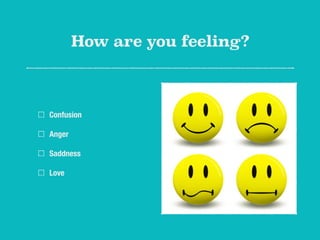
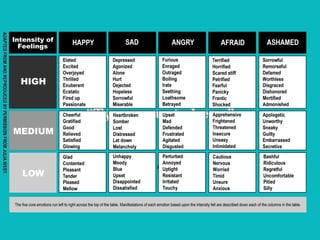
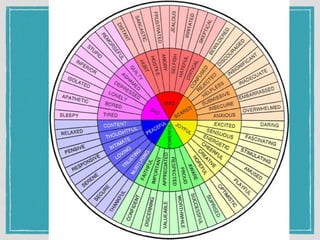
How are you feeling?
Confusion
Anger
Saddness
Love 

–Johnny Appleseed
“Type a quote here.”
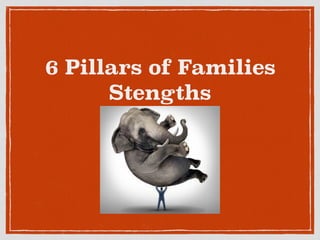
6 Pillars of Families
Stengths
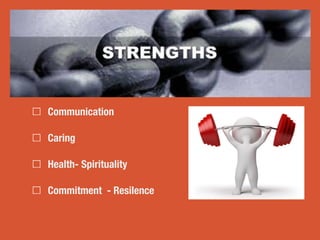
Communication
Caring
Health- Spirituality
Commitment - Resilence
What Research has taught
Brene Brown
This research has taught me that if we
really want to start practicing
compassion, we have to start by setting
boundaries and holding people
accountable for their behavior
B
Interactions with others-How far can we go with comfort in a relationship
Judeo-Christian Beliefs
Stresses Importance Of Living
Life as true self
Connect God to all things
You do not have to stay with
People who Mistreat You
PEOPLE-PlACES -THINGS-
THOUGHTS -FEELINGS & ACTION
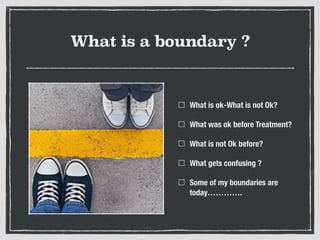
What is a boundary ?
What is ok-What is not Ok?
What was ok before Treatment?
What is not Ok before?
What gets confusing ?
Some of my boundaries are
today………….
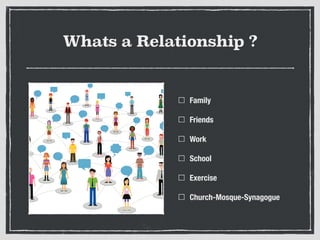
Whats a Relationship ?
Family
Friends
Work
School
Exercise
Church-Mosque-Synagogue
Boundaries and Relationships
Physical Closeness-Touching-
Privacy-mail -bathroom-
clothes-shelter-physical
differences-Time -energy
Emotional -Beliefs-Thoughts-
Secrets-Rules-Sexuality-Time
Alone-Gender Preferences
Spirtuality-Definition of ,
Personal Experiences and
Practices
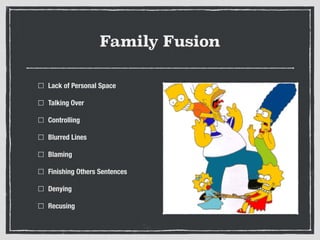
Family Fusion
Lack of Personal Space
Talking Over
Controlling
Blurred Lines
Blaming
Finishing Others Sentences
Denying
Recusing
Stories and Confabulations
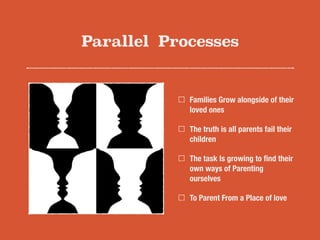
Parallel Processes
Families Grow alongside of their
loved ones
The truth is all parents fail their
children
The task Is growing to find their
own ways of Parenting
ourselves
To Parent From a Place of love
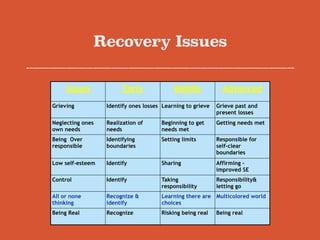
Recovery Issues
Issues Early Middle Advanced
Grieving Identify ones losses Learning to grieve Grieve past and
present losses
Neglecting ones
own needs
Realization of
needs
Beginning to get
needs met
Getting needs met
Being Over
responsible
Identifying
boundaries
Setting limits Responsible for
self-clear
boundaries
Low self-esteem Identify Sharing Affirming –
improved SE
Control Identify Taking
responsibility
Responsibility&
letting go
All or none
thinking
Recognize &
identify
Learning there are
choices
Multicolored world
Being Real Recognize Risking being real Being real
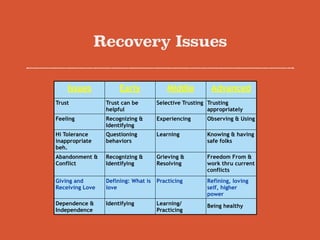
Recovery Issues
Issues Early Middle Advanced
Trust Trust can be
helpful
Selective Trusting Trusting
appropriately
Feeling Recognizing &
Identifying
Experiencing Observing & Using
Hi Tolerance
inappropriate
beh.
Questioning
behaviors
Learning Knowing & having
safe folks
Abandonment &
Conflict
Recognizing &
Identifying
Grieving &
Resolving
Freedom From &
work thru current
conflicts
Giving and
Receiving Love
Defining: What is
love
Practicing Refining, loving
self, higher
power
Dependence &
Independence
Identifying Learning/
Practicing
Being healthy
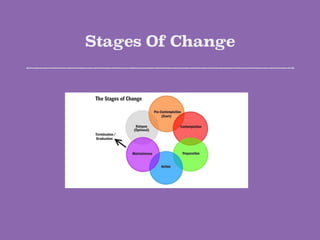
Stages Of Change
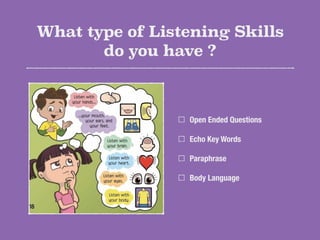
What type of Listening Skills
do you have ?
Open Ended Questions
Echo Key Words
Paraphrase
Body Language
Roadblocks To Listening
Personal Roadblocks
I am ill-kids are ill
Had a fight with my partner
Have lots of work
My phone is ringing
I am making dinner etc
Roadblocks to Listening
Ordering, Directing, Commanding
Warning or Threatening
Giving advice, suggestions, solutions
Persuading with logic, arguing
Moralizing or preaching
Disagreeing, judging, criticizing, blaming
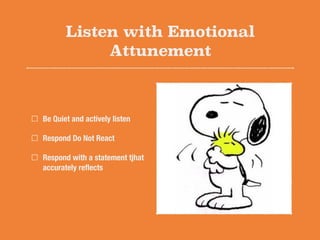
Listen with Emotional
Attunement
Be Quiet and actively listen
Respond Do Not React
Respond with a statement tjhat
accurately reflects
Reflections
Repeating what someone has just said
Rephase-Substitute a New Word
Paraphase
Reflecting a feeling-rephrase a feeling not necessarily
the content- Sounds like you are struggling, are
frustrated etc
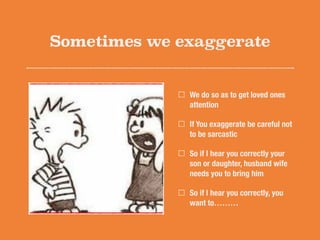
Sometimes we exaggerate
We do so as to get loved ones
attention
If You exaggerate be careful not
to be sarcastic
So if I hear you correctly your
son or daughter, husband wife
needs you to bring him
So if I hear you correctly, you
want to………
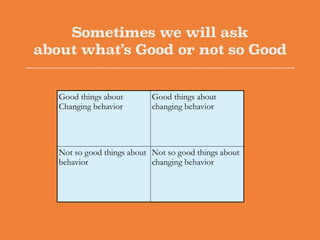
Sometimes we will ask
about what’s Good or not so Good
Good things about
Changing behavior
Good things about
changing behavior
Not so good things about
behavior
Not so good things about
changing behavior
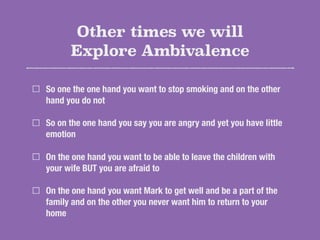
Other times we will
Explore Ambivalence
So one the one hand you want to stop smoking and on the other
hand you do not
So on the one hand you say you are angry and yet you have little
emotion
On the one hand you want to be able to leave the children with
your wife BUT you are afraid to
On the one hand you want Mark to get well and be a part of the
family and on the other you never want him to return to your
home
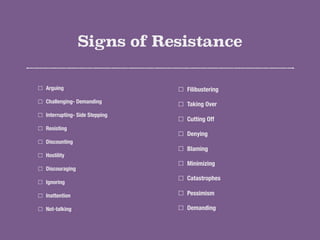
Signs of Resistance
Filibustering
Taking Over
Cutting Off
Denying
Blaming
Minimizing
Catastrophes
Pessimism
Demanding
Arguing
Challenging- Demanding
Interrupting- Side Stepping
Resisting
Discounting
Hostility
Discouraging
Ignoring
Inattention
Not-talking
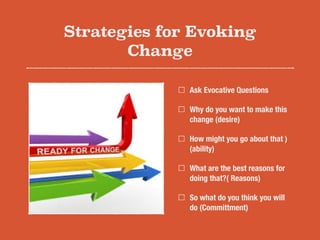
Strategies for Evoking
Change
Ask Evocative Questions
Why do you want to make this
change (desire)
How might you go about that )
(ability)
What are the best reasons for
doing that?( Reasons)
So what do you think you will
do (Committment)
Change Strategies
Ask For Elaboration -In What ways
Ask for specific Examples -Tell me what you did, when
wa the last time that happened
Was there ever a time that things were good / What was
that like for you?
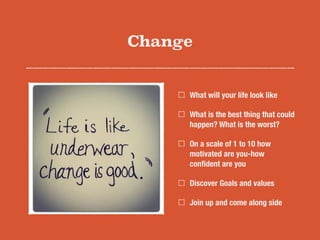
Change
What will your life look like
What is the best thing that could
happen? What is the worst?
On a scale of 1 to 10 how
motivated are you-how
confident are you
Discover Goals and values
Join up and come along side
Be an Explorer
Explore
Suspend Judgement and Fear
Affirm
Summarize -And if I heard you
correctly, son, daughter, wife,
husband, brother, sister
Words That
Matter
Yes
No
OH
Really
Whatever
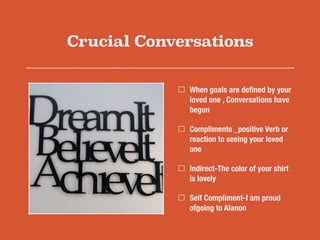
Crucial Conversations
When goals are defined by your
loved one , Conversations have
begun
Compliments _positive Verb or
reaction to seeing your loved
one
Indirect-The color of your shirt
is lovely
Self Compliment-I am proud
ofgoing to Alanon
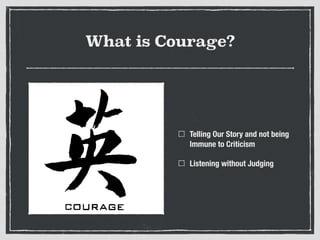
What is Courage?
Telling Our Story and not being
Immune to Criticism
Listening without Judging
Let’s Take a Few Minutes
Lets Practice Listening Skills
How are you today? What are your major concerns? How
do you handle disagreements with your loved ones?
Letting Go

Family

  • 1.
    Dr. Louise A.Stanger 2017
  • 2.
    Greetings Turn To Yourneighbor Introduce Yourself Say one or two words that pop up in your head when you say the word Family
  • 3.
    How is yourFamily Really Doing? Talking and Listening Expressing Feeling Adapting to Change Sharing Time Together Who’s in Charge ?
  • 4.
    How is YourFamily Doing? Balancing Closeness and Difference Accepting Difference Seeing The Positive Effective Problem Solving
  • 5.
    How are youfeeling? Confusion Anger Saddness Love 

  • 6.
  • 8.
    6 Pillars ofFamilies Stengths
  • 9.
  • 10.
    What Research hastaught Brene Brown This research has taught me that if we really want to start practicing compassion, we have to start by setting boundaries and holding people accountable for their behavior
  • 11.
    B Interactions with others-Howfar can we go with comfort in a relationship
  • 13.
    Judeo-Christian Beliefs Stresses ImportanceOf Living Life as true self Connect God to all things You do not have to stay with People who Mistreat You PEOPLE-PlACES -THINGS- THOUGHTS -FEELINGS & ACTION
  • 14.
    What is aboundary ? What is ok-What is not Ok? What was ok before Treatment? What is not Ok before? What gets confusing ? Some of my boundaries are today………….
  • 15.
    Whats a Relationship? Family Friends Work School Exercise Church-Mosque-Synagogue
  • 16.
    Boundaries and Relationships PhysicalCloseness-Touching- Privacy-mail -bathroom- clothes-shelter-physical differences-Time -energy Emotional -Beliefs-Thoughts- Secrets-Rules-Sexuality-Time Alone-Gender Preferences Spirtuality-Definition of , Personal Experiences and Practices
  • 17.
    Family Fusion Lack ofPersonal Space Talking Over Controlling Blurred Lines Blaming Finishing Others Sentences Denying Recusing
  • 18.
  • 19.
    Parallel Processes Families Growalongside of their loved ones The truth is all parents fail their children The task Is growing to find their own ways of Parenting ourselves To Parent From a Place of love
  • 20.
    Recovery Issues Issues EarlyMiddle Advanced Grieving Identify ones losses Learning to grieve Grieve past and present losses Neglecting ones own needs Realization of needs Beginning to get needs met Getting needs met Being Over responsible Identifying boundaries Setting limits Responsible for self-clear boundaries Low self-esteem Identify Sharing Affirming – improved SE Control Identify Taking responsibility Responsibility& letting go All or none thinking Recognize & identify Learning there are choices Multicolored world Being Real Recognize Risking being real Being real
  • 21.
    Recovery Issues Issues EarlyMiddle Advanced Trust Trust can be helpful Selective Trusting Trusting appropriately Feeling Recognizing & Identifying Experiencing Observing & Using Hi Tolerance inappropriate beh. Questioning behaviors Learning Knowing & having safe folks Abandonment & Conflict Recognizing & Identifying Grieving & Resolving Freedom From & work thru current conflicts Giving and Receiving Love Defining: What is love Practicing Refining, loving self, higher power Dependence & Independence Identifying Learning/ Practicing Being healthy
  • 22.
  • 23.
    What type ofListening Skills do you have ? Open Ended Questions Echo Key Words Paraphrase Body Language
  • 24.
    Roadblocks To Listening PersonalRoadblocks I am ill-kids are ill Had a fight with my partner Have lots of work My phone is ringing I am making dinner etc
  • 25.
    Roadblocks to Listening Ordering,Directing, Commanding Warning or Threatening Giving advice, suggestions, solutions Persuading with logic, arguing Moralizing or preaching Disagreeing, judging, criticizing, blaming
  • 26.
    Listen with Emotional Attunement BeQuiet and actively listen Respond Do Not React Respond with a statement tjhat accurately reflects
  • 27.
    Reflections Repeating what someonehas just said Rephase-Substitute a New Word Paraphase Reflecting a feeling-rephrase a feeling not necessarily the content- Sounds like you are struggling, are frustrated etc
  • 28.
    Sometimes we exaggerate Wedo so as to get loved ones attention If You exaggerate be careful not to be sarcastic So if I hear you correctly your son or daughter, husband wife needs you to bring him So if I hear you correctly, you want to………
  • 29.
    Sometimes we willask about what’s Good or not so Good Good things about Changing behavior Good things about changing behavior Not so good things about behavior Not so good things about changing behavior
  • 30.
    Other times wewill Explore Ambivalence So one the one hand you want to stop smoking and on the other hand you do not So on the one hand you say you are angry and yet you have little emotion On the one hand you want to be able to leave the children with your wife BUT you are afraid to On the one hand you want Mark to get well and be a part of the family and on the other you never want him to return to your home
  • 31.
    Signs of Resistance Filibustering TakingOver Cutting Off Denying Blaming Minimizing Catastrophes Pessimism Demanding Arguing Challenging- Demanding Interrupting- Side Stepping Resisting Discounting Hostility Discouraging Ignoring Inattention Not-talking
  • 32.
    Strategies for Evoking Change AskEvocative Questions Why do you want to make this change (desire) How might you go about that ) (ability) What are the best reasons for doing that?( Reasons) So what do you think you will do (Committment)
  • 33.
    Change Strategies Ask ForElaboration -In What ways Ask for specific Examples -Tell me what you did, when wa the last time that happened Was there ever a time that things were good / What was that like for you?
  • 34.
    Change What will yourlife look like What is the best thing that could happen? What is the worst? On a scale of 1 to 10 how motivated are you-how confident are you Discover Goals and values Join up and come along side
  • 35.
    Be an Explorer Explore SuspendJudgement and Fear Affirm Summarize -And if I heard you correctly, son, daughter, wife, husband, brother, sister
  • 36.
  • 37.
    Crucial Conversations When goalsare defined by your loved one , Conversations have begun Compliments _positive Verb or reaction to seeing your loved one Indirect-The color of your shirt is lovely Self Compliment-I am proud ofgoing to Alanon
  • 38.
    What is Courage? TellingOur Story and not being Immune to Criticism Listening without Judging
  • 39.
    Let’s Take aFew Minutes Lets Practice Listening Skills How are you today? What are your major concerns? How do you handle disagreements with your loved ones?
  • 40.