“INTONATION”
WHAT IS INTONATION?
•Refer to the rise and fall of the pitch of the
voice. It plays a crucial role in conveying
emotions, attitudes, and meaning of the
spoken language.
WHAT IS THE USE OF INTONATION?
•The use of intonation is important in
communication as it help to express different
emotions, attitude and intentions. It can change
the meaning of the sentence or question, indicate
sarcasm, excitement and uncertainty.
DIFFERENT TYPES OF
INTONATION PATTERNS
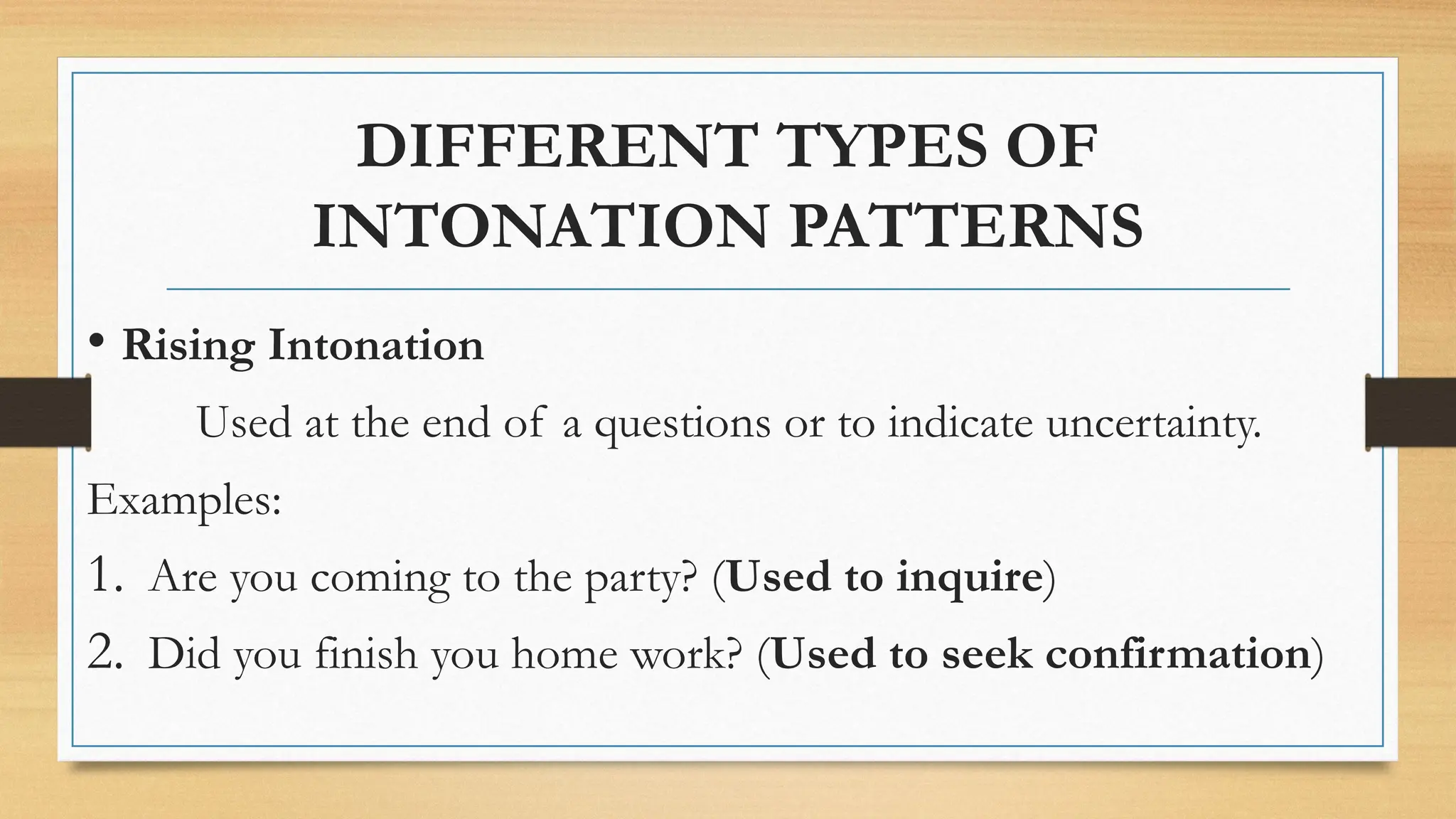
• Rising Intonation
Used at the end of a questions or to indicate uncertainty.
Examples:
1. Are you coming to the party? (Used to inquire)
2. Did you finish you home work? (Used to seek confirmation)
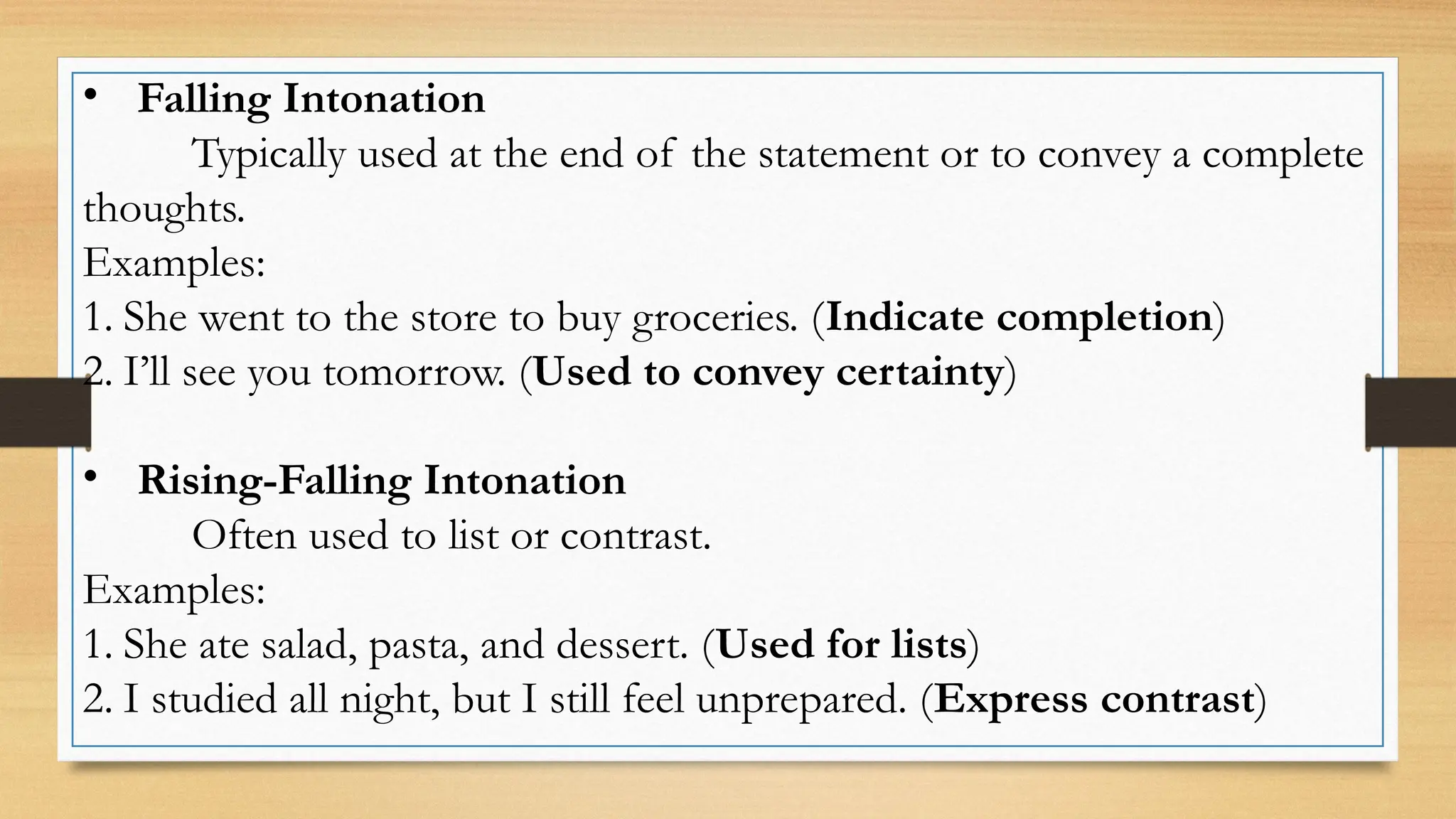
• Falling Intonation
Typically used at the end of the statement or to convey a complete
thoughts.
Examples:
1. She went to the store to buy groceries. (Indicate completion)
2. I’ll see you tomorrow. (Used to convey certainty)
• Rising-Falling Intonation
Often used to list or contrast.
Examples:
1. She ate salad, pasta, and dessert. (Used for lists)
2. I studied all night, but I still feel unprepared. (Express contrast)
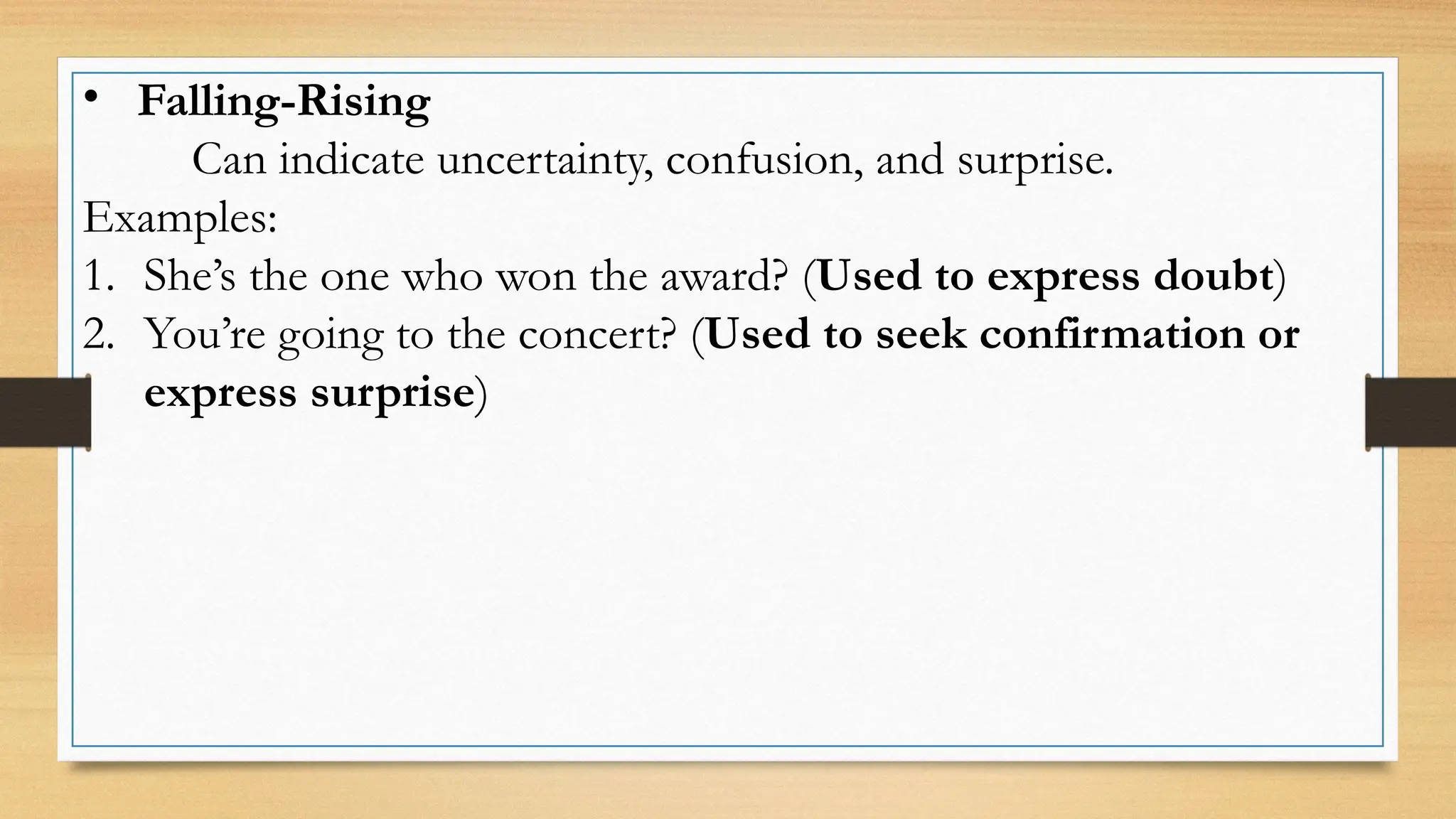
• Falling-Rising
Can indicate uncertainty, confusion, and surprise.
Examples:
1. She’s the one who won the award? (Used to express doubt)
2. You’re going to the concert? (Used to seek confirmation or
express surprise)

INTONATION Basic Information PPT KO.pptx

  • 1.
  • 2.
    WHAT IS INTONATION? •Referto the rise and fall of the pitch of the voice. It plays a crucial role in conveying emotions, attitudes, and meaning of the spoken language.
  • 3.
    WHAT IS THEUSE OF INTONATION? •The use of intonation is important in communication as it help to express different emotions, attitude and intentions. It can change the meaning of the sentence or question, indicate sarcasm, excitement and uncertainty.
  • 4.
    DIFFERENT TYPES OF INTONATIONPATTERNS • Rising Intonation Used at the end of a questions or to indicate uncertainty. Examples: 1. Are you coming to the party? (Used to inquire) 2. Did you finish you home work? (Used to seek confirmation)
  • 5.
    • Falling Intonation Typicallyused at the end of the statement or to convey a complete thoughts. Examples: 1. She went to the store to buy groceries. (Indicate completion) 2. I’ll see you tomorrow. (Used to convey certainty) • Rising-Falling Intonation Often used to list or contrast. Examples: 1. She ate salad, pasta, and dessert. (Used for lists) 2. I studied all night, but I still feel unprepared. (Express contrast)
  • 6.
    • Falling-Rising Can indicateuncertainty, confusion, and surprise. Examples: 1. She’s the one who won the award? (Used to express doubt) 2. You’re going to the concert? (Used to seek confirmation or express surprise)