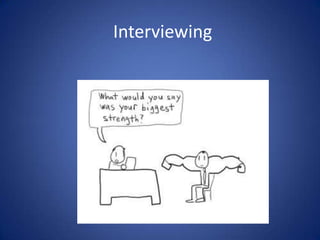
Interviewing
Successful Interview Attire for Men & Women
                       Review
•   Conservative two-piece business suit
•   Conservative long-sleeved shirt/blouse
•   Clean, polished conservative shoes
•   Well-groomed hairstyle
•   Clean, trimmed fingernails
•   Minimal cologne or perfume
•   Empty pockets – no bulges or change
•   No gum, candy, or cigarettes
•   Light portfolio case
•   No visible body piercings or tattoos.
Specifically for Men
•   Necktie should be silk with a conservative tie.
•   Dark shoes (black lace up or best)
•   Dark socks (black again)
•   Get a haircut
•   Fresh shaved: be neat and trim
•   No rings other than wedding ring or college ring
•   No earrings, nose rings, or any other piercings.
•   Cover ALL tattoos
Specifically for Women
• Wear a suit with a jacket & skirt or slacks (no
  dresses)
• Shoes with conservative heels
• Conservative hosiery
• No purses, briefcase instead
• Nail polish- clear or conservative
• Make-up simple & natural
• One ring per hand
• One set of earrings – studs. No other piercings.
• Cover ALL tattoos
Personal Commercial
• Sells your skills in a brief statement.

• Doesn’t include personal information.

• Takes about 2 minutes

• Used when they ask you “Tell us a little about
  yourself & To sum things up at the end.”
Be Prepared for the Call
• Regularly check and respond to email and
  phone

• Have a professional voice mail. (No music
  instead of ringing.)
When they call…
• Try to figure out whom will be interviewing
  you.

• Try to get the first or last appointment.
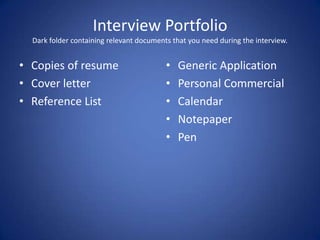
Interview Portfolio
  Dark folder containing relevant documents that you need during the interview.


• Copies of resume                        •   Generic Application
• Cover letter                            •   Personal Commercial
• Reference List                          •   Calendar
                                          •   Notepaper
                                          •   Pen
During the Interview
Portfolio                      Personal Commercial
• Should be kept on your lap   • Placed on the top of your
                                 portfolio for easy use.
                               • Should never be read
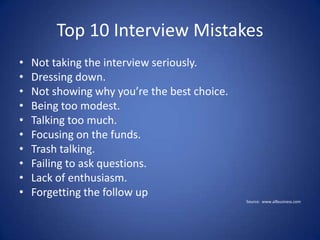
Top 10 Interview Mistakes
•   Not taking the interview seriously.
•   Dressing down.
•   Not showing why you’re the best choice.
•   Being too modest.
•   Talking too much.
•   Focusing on the funds.
•   Trash talking.
•   Failing to ask questions.
•   Lack of enthusiasm.
•   Forgetting the follow up
                                              Source: www.allbusiness.com
One of the biggest mistakes….


Not practicing!
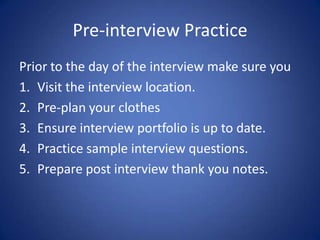
Pre-interview Practice
Prior to the day of the interview make sure you
1. Visit the interview location.
2. Pre-plan your clothes
3. Ensure interview portfolio is up to date.
4. Practice sample interview questions.
5. Prepare post interview thank you notes.
Answering the Question
•   Use Specific Examples
•   Keep it Short
•   Tell a Story
•   Be Passionate
•   Relax
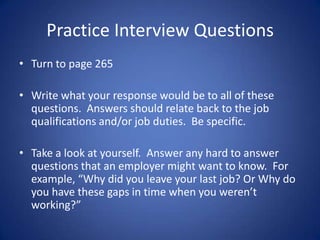
Practice Interview Questions
• Turn to page 265

• Write what your response would be to all of these
  questions. Answers should relate back to the job
  qualifications and/or job duties. Be specific.

• Take a look at yourself. Answer any hard to answer
  questions that an employer might want to know. For
  example, “Why did you leave your last job? Or Why do
  you have these gaps in time when you weren’t
  working?”
Day of the interview
• Arrive 15 minutes early.
• Introduce yourself. “Hi, I’m Kristi Tucker, and
  I’m here for my 9:00 a.m. interview with Mr.
  Smith for the Collision Repair position.”
• Don’t bring your phone!
During the interview
•   Stand Tall
•   Make Eye Contact
•   Shake Hands firmly
•   Be polite, use Mr. or Ms.
•   Sit straight and tall
•   Look attentive
Interview checklist
• Introduce yourself to anyone you haven’t met
  when entering the room.
• Repeat back the name of the person to help
  you remember it.
• Do NOT be seated until you are invited.
• Write down the names of the individuals you
  have met.
• Don’t accept beverages.
• Think before you speak.
• Provide specific examples when answering.
• Do not ask questions that imply you did not
  research.
• Use good grammar (no slang)
• Don’t share too much.
• Don’t fidget
End of Interview
• Ask 2-3 questions.
• Follow up their answers with a closing
  response.
• Thank the interviewer for their time.
• Ask for a personal business card.
Sample Questions for You to Ask
Do Ask                           Don’t Ask
• When will you be making a      • How much is the pay?
  hiring decision?               • What benefits do you have?
                                 • How many sick days do I
• What is the next step in the     get?
  interview process?
• What type of person are
  you seeking?
• Who is the manager I would
  be working for and what is
  their management style?
How do you overcome the tough
            questions?
• Gaps in employment

• Negative previous work experience

• Prior felony convictions
Discrimination and Employee Rights
               Page 271
• Title VII of the Civil Rights Act – protects the
  rights of employees based on
  race, color, religion, sex, or national origin.

• Other laws prohibit pay inequity and
  discrimination against individuals over 40
  years of age; individuals with disabilities, and
  individuals who are pregnant.
Illegal Questions
•   What is your marital status?
•   How many, if any, kids do you have?
•   Do you have a baby sitter?
•   What is your nationality/heritage?
•   What is your native language?
•   Have you been arrested?
•   Do you have any physical or mental disabilities?
•   Do you smoke or drink?
•   Do you work out regularly?
Legal Questions
• What days can you work?
• What languages do you speak or write
  fluently?
• Have you ever been convicted of a crime?
• What is your educational background?

Interviewing

  • 1.
  • 2.
    Successful Interview Attirefor Men & Women Review • Conservative two-piece business suit • Conservative long-sleeved shirt/blouse • Clean, polished conservative shoes • Well-groomed hairstyle • Clean, trimmed fingernails • Minimal cologne or perfume • Empty pockets – no bulges or change • No gum, candy, or cigarettes • Light portfolio case • No visible body piercings or tattoos.
  • 3.
    Specifically for Men • Necktie should be silk with a conservative tie. • Dark shoes (black lace up or best) • Dark socks (black again) • Get a haircut • Fresh shaved: be neat and trim • No rings other than wedding ring or college ring • No earrings, nose rings, or any other piercings. • Cover ALL tattoos
  • 4.
    Specifically for Women •Wear a suit with a jacket & skirt or slacks (no dresses) • Shoes with conservative heels • Conservative hosiery • No purses, briefcase instead • Nail polish- clear or conservative • Make-up simple & natural • One ring per hand • One set of earrings – studs. No other piercings. • Cover ALL tattoos
  • 9.
    Personal Commercial • Sellsyour skills in a brief statement. • Doesn’t include personal information. • Takes about 2 minutes • Used when they ask you “Tell us a little about yourself & To sum things up at the end.”
  • 10.
    Be Prepared forthe Call • Regularly check and respond to email and phone • Have a professional voice mail. (No music instead of ringing.)
  • 11.
    When they call… •Try to figure out whom will be interviewing you. • Try to get the first or last appointment.
  • 12.
    Interview Portfolio Dark folder containing relevant documents that you need during the interview. • Copies of resume • Generic Application • Cover letter • Personal Commercial • Reference List • Calendar • Notepaper • Pen
  • 13.
    During the Interview Portfolio Personal Commercial • Should be kept on your lap • Placed on the top of your portfolio for easy use. • Should never be read
  • 14.
    Top 10 InterviewMistakes • Not taking the interview seriously. • Dressing down. • Not showing why you’re the best choice. • Being too modest. • Talking too much. • Focusing on the funds. • Trash talking. • Failing to ask questions. • Lack of enthusiasm. • Forgetting the follow up Source: www.allbusiness.com
  • 15.
    One of thebiggest mistakes…. Not practicing!
  • 16.
    Pre-interview Practice Prior tothe day of the interview make sure you 1. Visit the interview location. 2. Pre-plan your clothes 3. Ensure interview portfolio is up to date. 4. Practice sample interview questions. 5. Prepare post interview thank you notes.
  • 17.
    Answering the Question • Use Specific Examples • Keep it Short • Tell a Story • Be Passionate • Relax
  • 18.
    Practice Interview Questions •Turn to page 265 • Write what your response would be to all of these questions. Answers should relate back to the job qualifications and/or job duties. Be specific. • Take a look at yourself. Answer any hard to answer questions that an employer might want to know. For example, “Why did you leave your last job? Or Why do you have these gaps in time when you weren’t working?”
  • 19.
    Day of theinterview • Arrive 15 minutes early. • Introduce yourself. “Hi, I’m Kristi Tucker, and I’m here for my 9:00 a.m. interview with Mr. Smith for the Collision Repair position.” • Don’t bring your phone!
  • 20.
    During the interview • Stand Tall • Make Eye Contact • Shake Hands firmly • Be polite, use Mr. or Ms. • Sit straight and tall • Look attentive
  • 21.
    Interview checklist • Introduceyourself to anyone you haven’t met when entering the room. • Repeat back the name of the person to help you remember it. • Do NOT be seated until you are invited. • Write down the names of the individuals you have met. • Don’t accept beverages.
  • 22.
    • Think beforeyou speak. • Provide specific examples when answering. • Do not ask questions that imply you did not research. • Use good grammar (no slang) • Don’t share too much. • Don’t fidget
  • 23.
    End of Interview •Ask 2-3 questions. • Follow up their answers with a closing response. • Thank the interviewer for their time. • Ask for a personal business card.
  • 24.
    Sample Questions forYou to Ask Do Ask Don’t Ask • When will you be making a • How much is the pay? hiring decision? • What benefits do you have? • How many sick days do I • What is the next step in the get? interview process? • What type of person are you seeking? • Who is the manager I would be working for and what is their management style?
  • 25.
    How do youovercome the tough questions? • Gaps in employment • Negative previous work experience • Prior felony convictions
  • 26.
    Discrimination and EmployeeRights Page 271 • Title VII of the Civil Rights Act – protects the rights of employees based on race, color, religion, sex, or national origin. • Other laws prohibit pay inequity and discrimination against individuals over 40 years of age; individuals with disabilities, and individuals who are pregnant.
  • 27.
    Illegal Questions • What is your marital status? • How many, if any, kids do you have? • Do you have a baby sitter? • What is your nationality/heritage? • What is your native language? • Have you been arrested? • Do you have any physical or mental disabilities? • Do you smoke or drink? • Do you work out regularly?
  • 28.
    Legal Questions • Whatdays can you work? • What languages do you speak or write fluently? • Have you ever been convicted of a crime? • What is your educational background?