2019 MOHIMA ANNUAL MEETING
PRESENTS
Interoperability State
of the Union
Dave Lingerfelt, MBA, FHIMSS
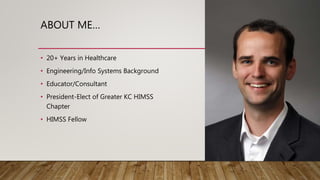
ABOUT ME…
• 20+ Years in Healthcare
• Engineering/Info Systems Background
• Educator/Consultant
• President-Elect of Greater KC HIMSS
Chapter
• HIMSS Fellow
CONFLICT OF INTEREST
• I have no conflict of interest with this event or presentation
• Content is of my own professional opinion and does not reflect opinions or
positions of:
• MoHIMA/AHIMA
• HIMSS/GKC HIMSS
• Rockhurst University
THE WHY…
• EHR market to reach 33,294 mill by 2023
• Cloud based segment accounts for more than two-fifths.
• Ambulatory expected to be fasted growing at 5.56%
• New opportunities in inpatient sector continue to diminish
• Continued increasing demands on the system
Healthcare is out of step with other industries: we can access our
money from ATM machines anywhere in the world; we can send
text messages to any mobile network; and we can use
applications to service a myriad of needs (whether dietary,
fitness or entertainment) on our smart phones. But they’re still
keeping paper notes in some hospitals.
-Interoperability Showcase
BUT ITS COMPLEX
A clinical record can contain more than 100,000 different data
fields and elements including numeric data, structured text,
unstructured text and scanned files and images. Often EHRs
have also been tinkered with by internal IT departments to
evolve software products to a specific organization’s needs –
which means different data fields have been defined that aren’t
necessarily the same as what a comparable EHR has.
FURTHERMORE….
• State funded and special purpose HIE’s don’t talk well to each
other
• Many provide limited information
• Lack of sharing and standardization across vendors
• Too much info still stored in unstructured data format
INTEROPERABILITY….DEFINED
The ability of computer systems or
software to exchange and make use
of information
PER AHIMA…
Interoperability is the ability of different information
technology systems and software applications to
communicate, to exchange data accurately,
effectively, consistently, and to use the information
that has been exchanged.
PER HIMSS…
Interoperability is the ability of different information
systems, devices or applications to connect, in a
coordinated manner, within and across
organizational boundaries to access, exchange and
cooperatively use data amongst stakeholders, with
the goal of optimizing the health of individuals and
populations.
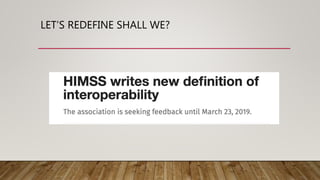
LET’S REDEFINE SHALL WE?
NEW PROPOSAL…
Interoperability is the ability of different information
systems, devices or applications to connect, in a
coordinated manner, within and across
organizational boundaries to access, exchange and
cooperatively use data amongst stakeholders, with
the goal of optimizing the health of individuals and
populations.
LET’S DECONSTRUCT
Interoperability is the ability of different information
systems, devices or applications to connect, in a
coordinated manner, within and across
organizational boundaries to access, exchange and
cooperatively use data amongst stakeholders, with
the goal of optimizing the health of individuals and
populations.
FURTHER DEFINES INTO 4 COMPONENTS
• Foundational
• Structural
• Semantic
• Organizational
FOUNDATIONAL
Foundational: interoperability develops the building blocks of
information exchange between disparate systems by
establishing the inter-connectivity requirements needed for one
system or application to share data with and receive data from
another. It does not outline the ability for the receiving
information technology system to interpret the data without
interventions from the end user or other technologies.
STRUCTURAL
Structural: interoperability defines the structure or format of data
exchange (i.e., the message format standards) where there is uniform
movement of healthcare data from one system to another such that
the clinical or operational purpose and meaning of the data is
preserved and unaltered. Structural interoperability defines the syntax
of the data exchange. It ensures that data exchanges between
information technology systems can be interpreted at the data field
level.
SEMANTIC
Semantic: interoperability is the ability of two or more systems to
exchange information and to interpret and use that information.
Semantic interoperability takes advantage of both the structuring of
the data exchange and the codification of the data, including
standard, publicly available vocabulary, so that the receiving
information management systems can interpret the data. Semantic
interoperability supports the electronic exchange of patient data and
information among authorized parties via potentially disparate health
information and technology systems and products to improve quality,
costs, safety, efficiency, experience and efficacy of healthcare delivery.
ORGANIZATIONAL
Organizational: interoperability encompasses the technical
components as well as clear policy, social and organizational
components. These components facilitate the secure, seamless
and timely communication and use of data within and between
organizations and individuals. Inclusion of these non-technical
considerations enables interoperability that is integrated into
end-user processes and workflows in a manner that supports
efficiencies, relationships and overall health and wellness
through cooperative use of shared data both across and within
organizational boundaries.
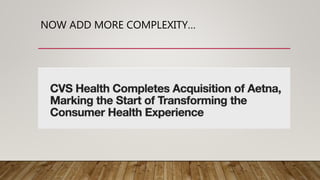
NOW ADD MORE COMPLEXITY…
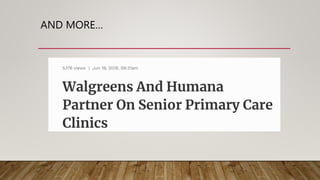
AND MORE…
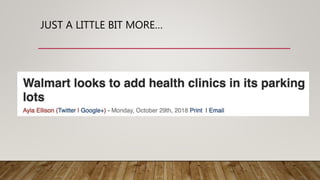
JUST A LITTLE BIT MORE…
WHAT ABOUT FHIR?
FHIR-DEFINED
Fast Healthcare Interoperability Resource (FHIR), a draft data
standard developed and nurtured by HL7 International. Was
designed to support the complexity of healthcare.
Philosophy: To build a base set of resources that, either by
themselves or when combined, satisfy the majority of common
use cases.
WHY FHIR?
• Other current options to make systems talk rely on document
exchange, not allowing the complete picture
• FHIR allows developers to move beyond the document
exchange layer
• Reduces the burden of data reconciliation
WHO’S USING IT
• In use in varying degrees by all major vendors (Cerner, Epic,
etc)
• Part of ONC Interoperability Roadmap
• ONC FHIR App challenges
PATIENTS AND PROVIDERS
• Help to bridge the missing link between personal devices
• Great for situation specific apps
• Reduce portal complexity
DRIVING FORCES
• Strong desire for pluggable apps and consumer facing
innovation (i.e. Apple Health App)
• API Requirements of 21st Century Cures Act
• ONCs Trusted Exchange Framework
• Payer-to-Provider relationships (i.e. DaVinci Project)
• FHIR at Scale Taskforce (FAST)
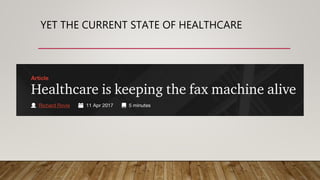
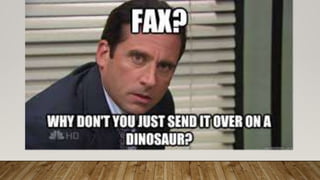
YET THE CURRENT STATE OF HEALTHCARE
TO CONCLUDE
• Still much progress to be made
• Landscape more dynamic than ever
• Continued competing interests
THANK YOU
Dave Lingerfelt; MBA, FHIMSS
Director/Professor Rockhurst University
Dave.Lingerfelt@Gmail.com
913-221-7956

Interoperability2019 MoHIMA Annual Meeting

  • 1.
    2019 MOHIMA ANNUALMEETING PRESENTS Interoperability State of the Union Dave Lingerfelt, MBA, FHIMSS
  • 2.
    ABOUT ME… • 20+Years in Healthcare • Engineering/Info Systems Background • Educator/Consultant • President-Elect of Greater KC HIMSS Chapter • HIMSS Fellow
  • 3.
    CONFLICT OF INTEREST •I have no conflict of interest with this event or presentation • Content is of my own professional opinion and does not reflect opinions or positions of: • MoHIMA/AHIMA • HIMSS/GKC HIMSS • Rockhurst University
  • 4.
    THE WHY… • EHRmarket to reach 33,294 mill by 2023 • Cloud based segment accounts for more than two-fifths. • Ambulatory expected to be fasted growing at 5.56% • New opportunities in inpatient sector continue to diminish • Continued increasing demands on the system
  • 6.
    Healthcare is outof step with other industries: we can access our money from ATM machines anywhere in the world; we can send text messages to any mobile network; and we can use applications to service a myriad of needs (whether dietary, fitness or entertainment) on our smart phones. But they’re still keeping paper notes in some hospitals. -Interoperability Showcase
  • 7.
    BUT ITS COMPLEX Aclinical record can contain more than 100,000 different data fields and elements including numeric data, structured text, unstructured text and scanned files and images. Often EHRs have also been tinkered with by internal IT departments to evolve software products to a specific organization’s needs – which means different data fields have been defined that aren’t necessarily the same as what a comparable EHR has.
  • 9.
    FURTHERMORE…. • State fundedand special purpose HIE’s don’t talk well to each other • Many provide limited information • Lack of sharing and standardization across vendors • Too much info still stored in unstructured data format
  • 10.
    INTEROPERABILITY….DEFINED The ability ofcomputer systems or software to exchange and make use of information
  • 11.
    PER AHIMA… Interoperability isthe ability of different information technology systems and software applications to communicate, to exchange data accurately, effectively, consistently, and to use the information that has been exchanged.
  • 12.
    PER HIMSS… Interoperability isthe ability of different information systems, devices or applications to connect, in a coordinated manner, within and across organizational boundaries to access, exchange and cooperatively use data amongst stakeholders, with the goal of optimizing the health of individuals and populations.
  • 13.
  • 15.
    NEW PROPOSAL… Interoperability isthe ability of different information systems, devices or applications to connect, in a coordinated manner, within and across organizational boundaries to access, exchange and cooperatively use data amongst stakeholders, with the goal of optimizing the health of individuals and populations.
  • 16.
    LET’S DECONSTRUCT Interoperability isthe ability of different information systems, devices or applications to connect, in a coordinated manner, within and across organizational boundaries to access, exchange and cooperatively use data amongst stakeholders, with the goal of optimizing the health of individuals and populations.
  • 17.
    FURTHER DEFINES INTO4 COMPONENTS • Foundational • Structural • Semantic • Organizational
  • 18.
    FOUNDATIONAL Foundational: interoperability developsthe building blocks of information exchange between disparate systems by establishing the inter-connectivity requirements needed for one system or application to share data with and receive data from another. It does not outline the ability for the receiving information technology system to interpret the data without interventions from the end user or other technologies.
  • 19.
    STRUCTURAL Structural: interoperability definesthe structure or format of data exchange (i.e., the message format standards) where there is uniform movement of healthcare data from one system to another such that the clinical or operational purpose and meaning of the data is preserved and unaltered. Structural interoperability defines the syntax of the data exchange. It ensures that data exchanges between information technology systems can be interpreted at the data field level.
  • 20.
    SEMANTIC Semantic: interoperability isthe ability of two or more systems to exchange information and to interpret and use that information. Semantic interoperability takes advantage of both the structuring of the data exchange and the codification of the data, including standard, publicly available vocabulary, so that the receiving information management systems can interpret the data. Semantic interoperability supports the electronic exchange of patient data and information among authorized parties via potentially disparate health information and technology systems and products to improve quality, costs, safety, efficiency, experience and efficacy of healthcare delivery.
  • 21.
    ORGANIZATIONAL Organizational: interoperability encompassesthe technical components as well as clear policy, social and organizational components. These components facilitate the secure, seamless and timely communication and use of data within and between organizations and individuals. Inclusion of these non-technical considerations enables interoperability that is integrated into end-user processes and workflows in a manner that supports efficiencies, relationships and overall health and wellness through cooperative use of shared data both across and within organizational boundaries.
  • 22.
    NOW ADD MORECOMPLEXITY…
  • 23.
  • 24.
    JUST A LITTLEBIT MORE…
  • 25.
  • 26.
    FHIR-DEFINED Fast Healthcare InteroperabilityResource (FHIR), a draft data standard developed and nurtured by HL7 International. Was designed to support the complexity of healthcare. Philosophy: To build a base set of resources that, either by themselves or when combined, satisfy the majority of common use cases.
  • 27.
    WHY FHIR? • Othercurrent options to make systems talk rely on document exchange, not allowing the complete picture • FHIR allows developers to move beyond the document exchange layer • Reduces the burden of data reconciliation
  • 28.
    WHO’S USING IT •In use in varying degrees by all major vendors (Cerner, Epic, etc) • Part of ONC Interoperability Roadmap • ONC FHIR App challenges
  • 29.
    PATIENTS AND PROVIDERS •Help to bridge the missing link between personal devices • Great for situation specific apps • Reduce portal complexity
  • 30.
    DRIVING FORCES • Strongdesire for pluggable apps and consumer facing innovation (i.e. Apple Health App) • API Requirements of 21st Century Cures Act • ONCs Trusted Exchange Framework • Payer-to-Provider relationships (i.e. DaVinci Project) • FHIR at Scale Taskforce (FAST)
  • 31.
    YET THE CURRENTSTATE OF HEALTHCARE
  • 33.
    TO CONCLUDE • Stillmuch progress to be made • Landscape more dynamic than ever • Continued competing interests
  • 34.
    THANK YOU Dave Lingerfelt;MBA, FHIMSS Director/Professor Rockhurst University Dave.Lingerfelt@Gmail.com 913-221-7956