Cloud Computing in Healthcare
Cloud technology is widely adopted by healthcare organizations worldwide. Over the
past few years, healthcare industries have realized the potential of cloud computing and how it
can help them provide quality services to patients. The cloud technology has accelerated the
way healthcare industry can use or share information across a network. The question is, will
cloud computing affect all healthcare areas? According to expert analysis, cloud technology will
affect all health care areas in the nearest future. Healthcare sector has been moved to digital
platform today where it collects plenty of data. The most popular IT Companies offer cloud
computing services that mainly focused on healthcare data to transform it into meaningful
information. Further, it makes data sharing easy and more accessible for the users.
Cloud Technology - Addressing Challenges in Healthcare
Most healthcare organizations depend on workflows that consist of paper medical records,
duplicate tests, film-based radiological images, handwritten notes, and silos of information.
Information sharing across providers is inefficient and data portability is rare. Care providers
rely on outdated technology for their communication needs. Collaboration and coordination of
care processes is a major challenge.
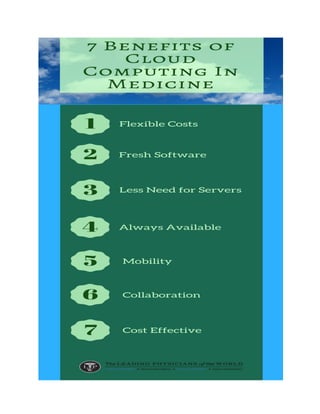
Cloud transforms the economics of IT from capital-intensive to pay-as-you-go. Service level
agreements guarantee the capabilities needed, when needed. Costs are tiered and metered to
accurately reflect requirements and usage. All applications, including legacy, run more
efficiently and sustainably with greater utilization of the underlying infrastructure. Here are
some areas in which health clouds are resolving crucial challenges for the healthcare
community.
1. Medication adherence
Patients not following the drug regimen prescribed by the doctor, results in avoidable re-
admissions to the hospital costing the U.S. healthcare system close to $290 billion annually.
Market for products that remind the patient when it is time to take the medicine, keep a log
and automatically order refills and is expanding at a rapid pace.
2. Personal data privacy
Each healthcare organization maintaining their own medical records is a nightmare for data
security and compliance to Health Insurance Portability and Accountability Act (HIPAA). It also
adds significant cost for organizations to maintain their own IT infrastructure and be liable for
all the data directly. Using cloud-based solutions provides access to latest security technologies
and reduces individual liability.
3. Resource inefficiency
Rising cost of healthcare is always an important topic among policy makers and no real solution
has been implanted to date. One of the major factors adding to the cost of healthcare is
inefficiency of resources like medical staff, equipment and easy access to patient resource pool
for clinical studies. With the use of artificial intelligence in the healthcare environment, a
doctor’s bandwidth can be stretched since data can be augmented with smart machine-based
analytics for doctor to evaluate.
Regardless of what cloud service platform is used or which cloud provider has
unmatched virtualized applications as a service via the cloud, the delivery of computing and
service must permit sharing of propriety data resources to help physicians and health care
providers to do their jobs effectively. Both the cloud platform and provider must ensure all
health data remains secure and private. If these conditions are met, there will no longer be
resistance to cloud computing adoption in the healthcare industry.

Cloud computing in healthcare

  • 2.
    Cloud Computing inHealthcare Cloud technology is widely adopted by healthcare organizations worldwide. Over the past few years, healthcare industries have realized the potential of cloud computing and how it can help them provide quality services to patients. The cloud technology has accelerated the way healthcare industry can use or share information across a network. The question is, will cloud computing affect all healthcare areas? According to expert analysis, cloud technology will affect all health care areas in the nearest future. Healthcare sector has been moved to digital platform today where it collects plenty of data. The most popular IT Companies offer cloud computing services that mainly focused on healthcare data to transform it into meaningful information. Further, it makes data sharing easy and more accessible for the users. Cloud Technology - Addressing Challenges in Healthcare Most healthcare organizations depend on workflows that consist of paper medical records, duplicate tests, film-based radiological images, handwritten notes, and silos of information. Information sharing across providers is inefficient and data portability is rare. Care providers rely on outdated technology for their communication needs. Collaboration and coordination of care processes is a major challenge. Cloud transforms the economics of IT from capital-intensive to pay-as-you-go. Service level agreements guarantee the capabilities needed, when needed. Costs are tiered and metered to accurately reflect requirements and usage. All applications, including legacy, run more efficiently and sustainably with greater utilization of the underlying infrastructure. Here are some areas in which health clouds are resolving crucial challenges for the healthcare community. 1. Medication adherence Patients not following the drug regimen prescribed by the doctor, results in avoidable re- admissions to the hospital costing the U.S. healthcare system close to $290 billion annually. Market for products that remind the patient when it is time to take the medicine, keep a log and automatically order refills and is expanding at a rapid pace.
  • 3.
    2. Personal dataprivacy Each healthcare organization maintaining their own medical records is a nightmare for data security and compliance to Health Insurance Portability and Accountability Act (HIPAA). It also adds significant cost for organizations to maintain their own IT infrastructure and be liable for all the data directly. Using cloud-based solutions provides access to latest security technologies and reduces individual liability. 3. Resource inefficiency Rising cost of healthcare is always an important topic among policy makers and no real solution has been implanted to date. One of the major factors adding to the cost of healthcare is inefficiency of resources like medical staff, equipment and easy access to patient resource pool for clinical studies. With the use of artificial intelligence in the healthcare environment, a doctor’s bandwidth can be stretched since data can be augmented with smart machine-based analytics for doctor to evaluate. Regardless of what cloud service platform is used or which cloud provider has unmatched virtualized applications as a service via the cloud, the delivery of computing and service must permit sharing of propriety data resources to help physicians and health care providers to do their jobs effectively. Both the cloud platform and provider must ensure all health data remains secure and private. If these conditions are met, there will no longer be resistance to cloud computing adoption in the healthcare industry.