FUTURE OF IOT
RAHEEM UNNISA
160317742004
Internet of Things|
A Place Where
Machines talk to
Machines
How 24 hours
in the future with IoT will be like?
What is IoT?
The Internet of Things (IoT) is the network of
physical devices, vehicles, home appliances and
other items embedded with electronics, software,
sensors, actuators, and connectivity which enables
these things to connect and exchange data, creating
opportunities for more direct integration of the
physical world into computer-based systems,
resulting in efficiency improvements, economic
benefits and reduced human intervention.
Anything
Anytime
Anywhere
Anyone
Internet
ofThings
Internet Usage and Population
Statistics
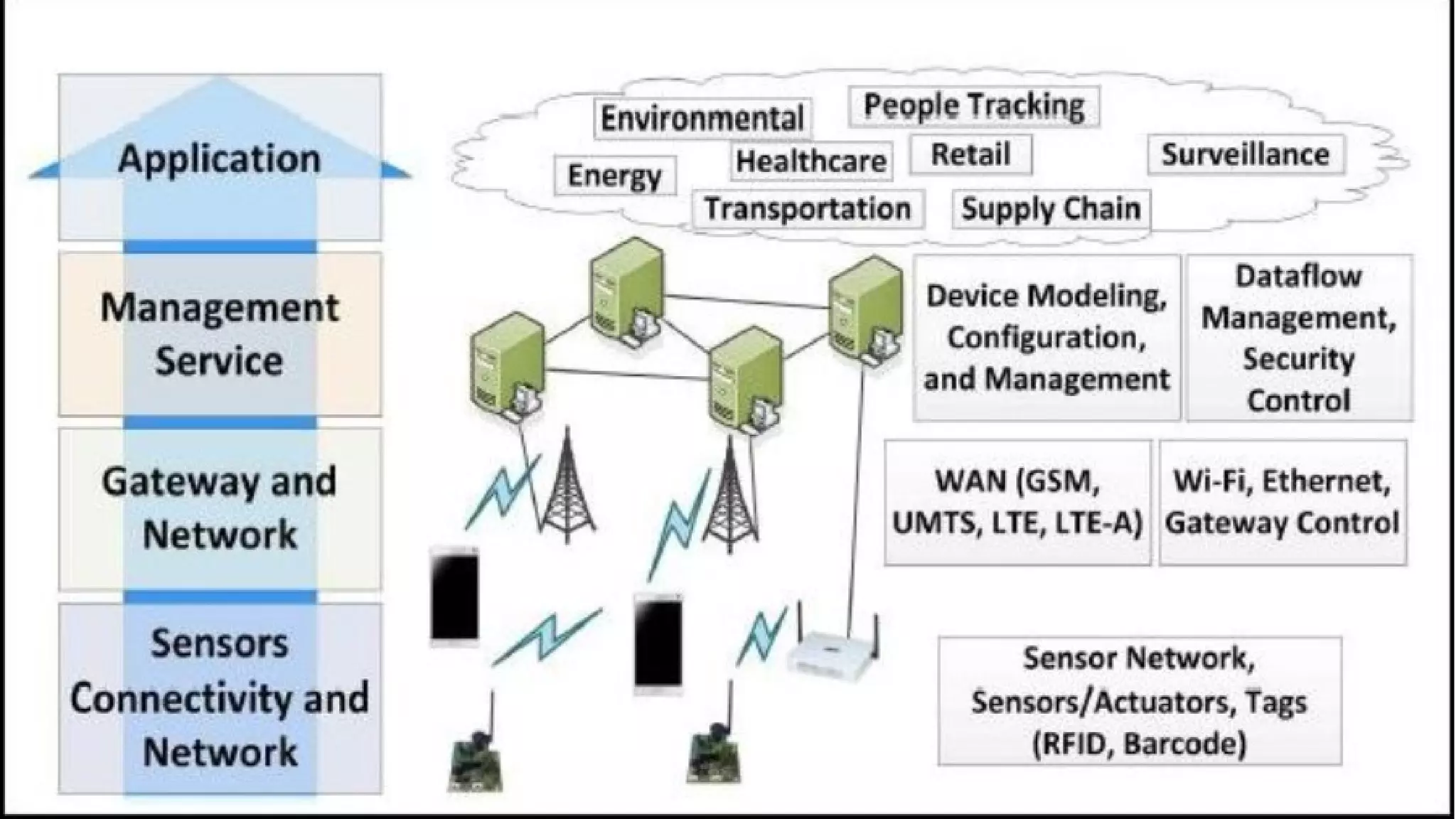
Application Layer
Management Service Layer
Gateway & Network Layer
Sensor Layer
Architecture of IoT
Sensor Layer
 Lowest Abstraction Layer
 With sensors we are creating digital nervous system.
 Incorporated to measure physical quantities
 Interconnects the physical and digital world
 Collects and process the real time information
Sensor Layer
Gateway &
Network Layer
Gateway and Network Layer
 Robust and High performance network
infrastructure
 Supports the communication requirements for
latency, bandwidth or security
 Allows multiple organizations to share and use the
same network independently
Management Service
Layer
Management Service Layer
 Capturing of periodic sensory data
 Data Analytics (Extracts relevant information from
massive amount of raw data)
 Streaming Analytics (Process real time data)
 Ensures security and privacy of data.
Application
Layer
Application Layer
 Provides a user interface for using IoT.
 Different applications for various sectors
like Transportation, Healthcare, Agriculture, Supply
chains, Government, Retail etc.
HOW IOT WORKS
 First, it acquires information with respect to basic resources and related attributes of
objects by means of automatic identification and perception technologies such as RFID.
 Second, by virtue of many kinds of communications technologies, it integrates object-
related information into the information network and realizes the intelligent indexing and
integration of the information related to masses of objects by resorting to fundamental
resource services.
 Finally, utilizing intelligent computing technologies such as cloud computing, fuzzy
recognition, data mining and semantic analysis, it analyzes and processes the information
related to masses of objects so as to eventually realize intelligent decision and control in
the physical world.
TECHNICAL CHALLENGES OF IOT
Scalability
Technological Standardization
Inter operability
Discovery
Software complexity
Data volumes and interpretation
Power Supply
Interaction and short range communication
Wireless communication
Fault tolerance
APPLICATIONS OF IOT
Smart homes
Wearable's
Smart City
Smart Grids
Connected Cars
Connected Health
Smart Retail
Smart Supply Chain
Smart Farming
Pros & Cons of IoT
Pros:
Automation and control
Cost savings
Information
Communication
Efficiency
Instant data access
Cons:
Over dependency on technology
Losing security on privacy
Complexity
Compatibility
Lesser Employment
CONCLUSION
The future of IoT is virtually unlimited due to advances in technology
and consumers' desire to integrate devices such as smart phones with
household machines.
The possibilities of IoT are exciting, productivity will increase and
amazing things will come by connecting the world.
THANK
YOU

Iot

  • 1.
    FUTURE OF IOT RAHEEMUNNISA 160317742004
  • 2.
    Internet of Things| APlace Where Machines talk to Machines How 24 hours in the future with IoT will be like?
  • 3.
    What is IoT? TheInternet of Things (IoT) is the network of physical devices, vehicles, home appliances and other items embedded with electronics, software, sensors, actuators, and connectivity which enables these things to connect and exchange data, creating opportunities for more direct integration of the physical world into computer-based systems, resulting in efficiency improvements, economic benefits and reduced human intervention. Anything Anytime Anywhere Anyone Internet ofThings
  • 4.
    Internet Usage andPopulation Statistics
  • 5.
    Application Layer Management ServiceLayer Gateway & Network Layer Sensor Layer Architecture of IoT
  • 6.
    Sensor Layer  LowestAbstraction Layer  With sensors we are creating digital nervous system.  Incorporated to measure physical quantities  Interconnects the physical and digital world  Collects and process the real time information Sensor Layer
  • 7.
    Gateway & Network Layer Gatewayand Network Layer  Robust and High performance network infrastructure  Supports the communication requirements for latency, bandwidth or security  Allows multiple organizations to share and use the same network independently
  • 8.
    Management Service Layer Management ServiceLayer  Capturing of periodic sensory data  Data Analytics (Extracts relevant information from massive amount of raw data)  Streaming Analytics (Process real time data)  Ensures security and privacy of data.
  • 9.
    Application Layer Application Layer  Providesa user interface for using IoT.  Different applications for various sectors like Transportation, Healthcare, Agriculture, Supply chains, Government, Retail etc.
  • 11.
    HOW IOT WORKS First, it acquires information with respect to basic resources and related attributes of objects by means of automatic identification and perception technologies such as RFID.  Second, by virtue of many kinds of communications technologies, it integrates object- related information into the information network and realizes the intelligent indexing and integration of the information related to masses of objects by resorting to fundamental resource services.  Finally, utilizing intelligent computing technologies such as cloud computing, fuzzy recognition, data mining and semantic analysis, it analyzes and processes the information related to masses of objects so as to eventually realize intelligent decision and control in the physical world.
  • 13.
    TECHNICAL CHALLENGES OFIOT Scalability Technological Standardization Inter operability Discovery Software complexity Data volumes and interpretation Power Supply Interaction and short range communication Wireless communication Fault tolerance
  • 14.
    APPLICATIONS OF IOT Smarthomes Wearable's Smart City Smart Grids Connected Cars Connected Health Smart Retail Smart Supply Chain Smart Farming
  • 16.
    Pros & Consof IoT Pros: Automation and control Cost savings Information Communication Efficiency Instant data access Cons: Over dependency on technology Losing security on privacy Complexity Compatibility Lesser Employment
  • 17.
    CONCLUSION The future ofIoT is virtually unlimited due to advances in technology and consumers' desire to integrate devices such as smart phones with household machines. The possibilities of IoT are exciting, productivity will increase and amazing things will come by connecting the world.
  • 18.