
Internet Of Things
9/22/2017 1
What exactlyisthe
Internetof Things?
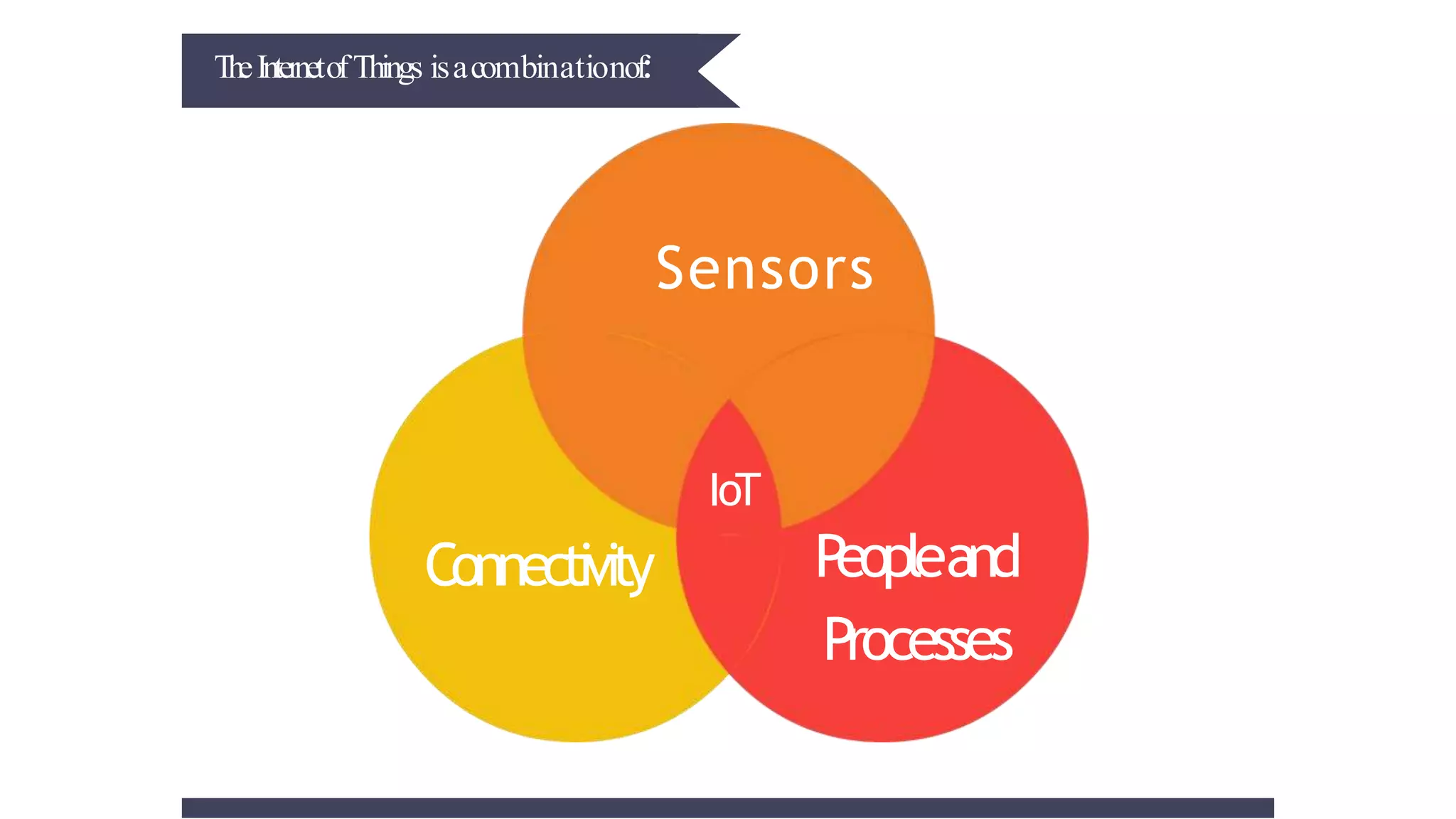
TheInternetofThings isacombinationof:
Sensors
Peopleand
Processes
Connectivity
IoT
HOW IT IS DONE?
• Online network of physical objects is accomplished through the use of
RFID tags and other types of sensors.
• Implanting these tags inside a physical object gives it the power to be
monitored and controlled remotely through the Internet.
• Eliminates the need for humans to constantly enter and monitor data.
• Object interacting digitally.
RFID
TAGS
 Radio-frequency identification (RFID)
 INTELLIGENT BAR CODES
 Wireless non-contact use of radio-
frequency electromagnetic fields to
transfer data, for the purposes of
automatically identifying and tracking
tags attached to objects.
 Chip typically is capable of carrying
2,000 bytes of data or less.
Enabling Technologies for IOT
• Zigbee
• QR Codes Barcodes
• Wi-Fi
• Li-Fi
• LTE Advanced
• Bluetooth Low Energy(BLE) etc.
Challenges with IOT
• Connectivity
Variety of wired and wireless connectivity standards are required to enable different
application need
• Sensing a complex environment
Innovative ways to sense and deliver information
from the physical world to the cloud
• Power is critical
Many IoT applications need to run for years over
batteries and reduce the overall energy consumption
• Security is vital
Protecting user’s privacy and manufacturers' IP; detecting and blocking
malicious activity
• IoT is complex
IoT application development needs to be easy
for all developers, not just to experts
• Cloud is important
IoT applications require end-to-end solutions including cloud service
WHO CARES???
Application of
IOT
GoogleGlass
Wearable computer with an optical
head-mounted display (OHMD) that is
being developed by Google
Displays information in a
smartphone-like hands-free format,that
can communicate with the Internet via
natural language voice commands.
Smart Lighting
Intelligent and weather adaptive
lighting in street lights.
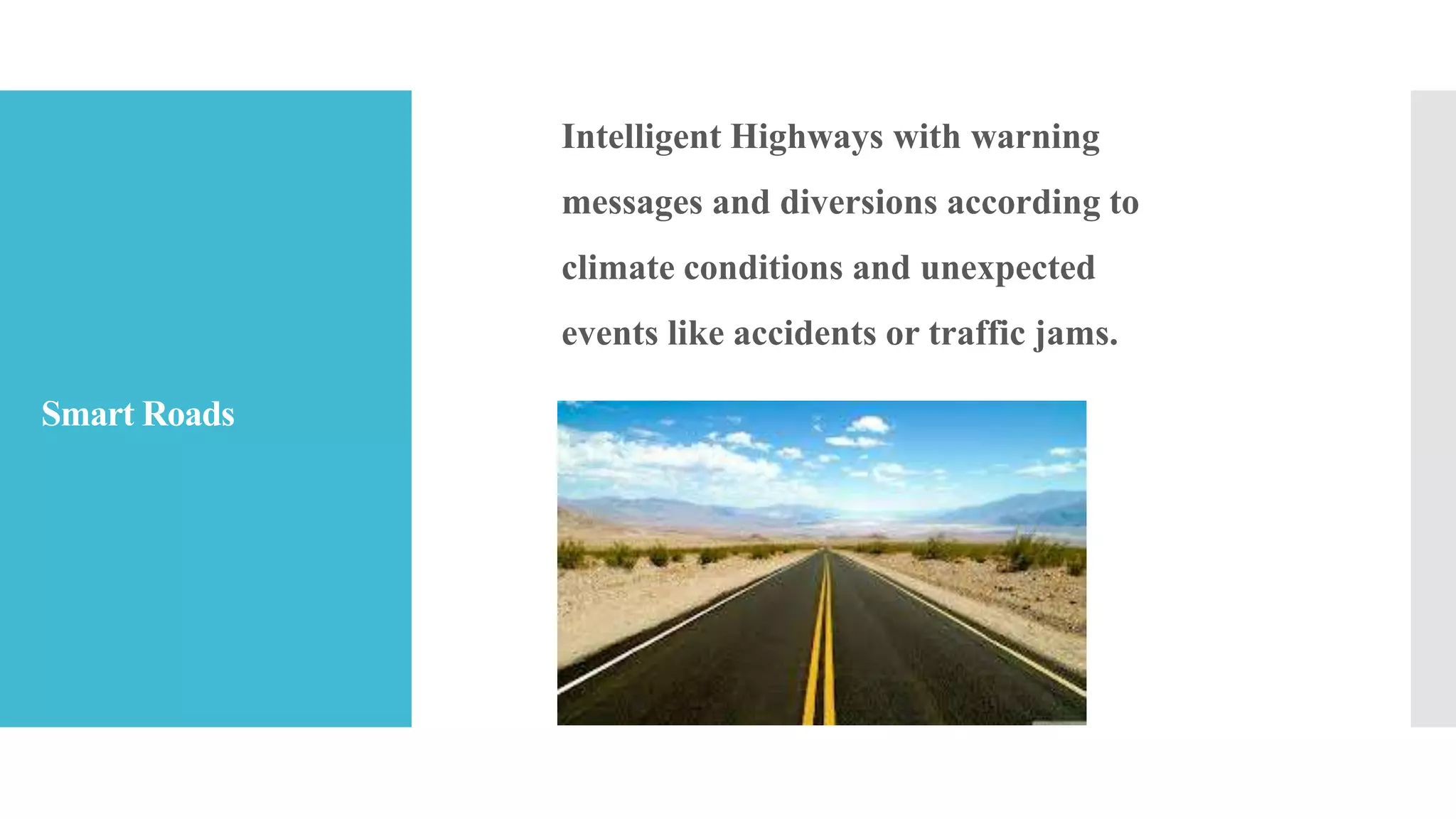
Smart Roads
Intelligent Highways with warning
messages and diversions according to
climate conditions and unexpected
events like accidents or traffic jams.
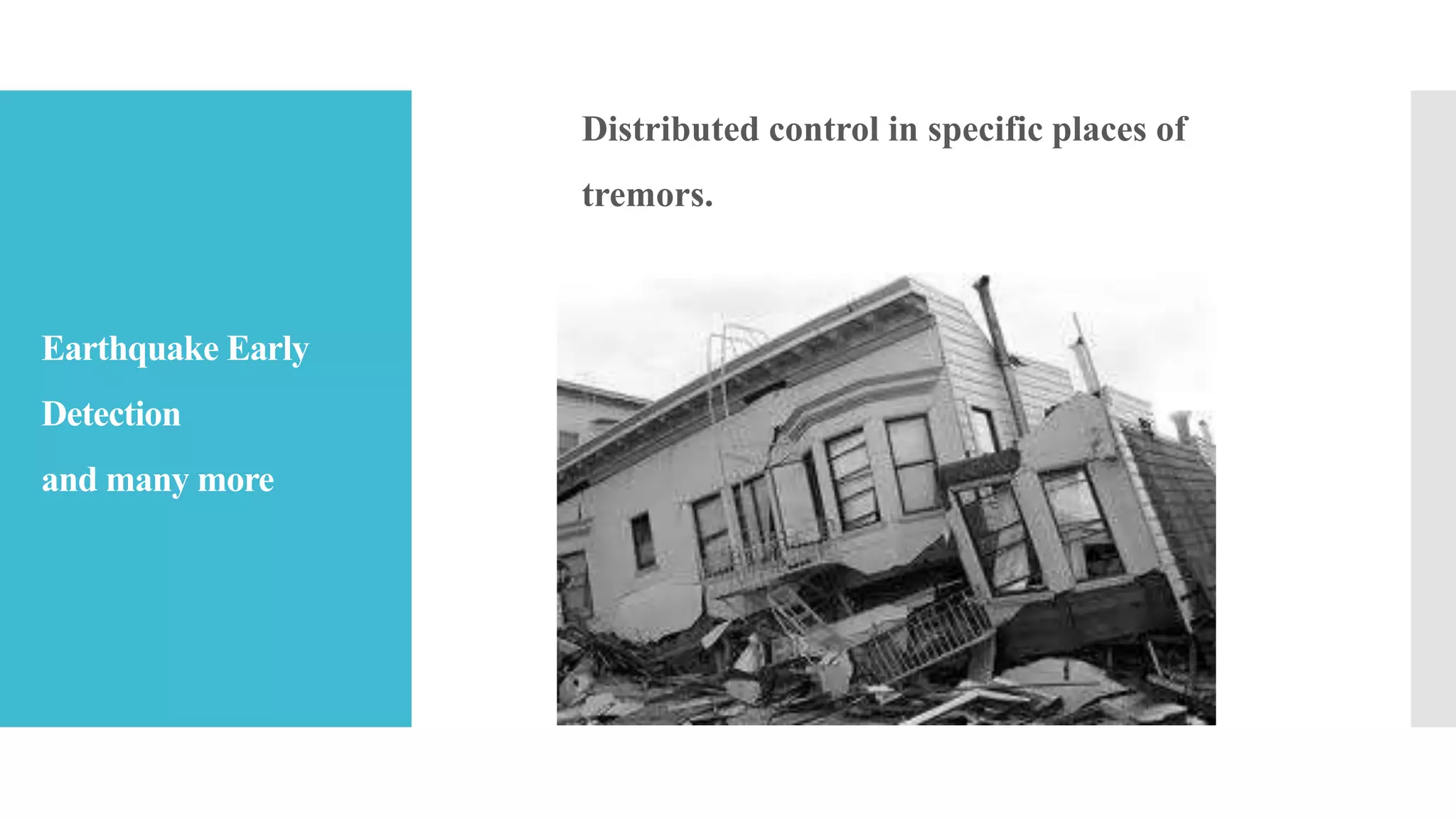
Earthquake Early
Detection
and many more
Distributed control in specific places of
tremors.
ADVANTAGES
 Smart devices connected on a social
network for machines will help homes
save energy
DISADVANTAGES
 Breach of privacy,
 there is always the possibility of hackers breaking
into the system and stealing the data.
 Over-reliance on technology,
 No system is robust and fault-free.
 The loss of jobs.
 will have a devastating impact on the employment
prospects of less-educated workers
IOT

IOT

  • 1.
  • 2.
  • 4.
  • 8.
    HOW IT ISDONE? • Online network of physical objects is accomplished through the use of RFID tags and other types of sensors. • Implanting these tags inside a physical object gives it the power to be monitored and controlled remotely through the Internet. • Eliminates the need for humans to constantly enter and monitor data. • Object interacting digitally.
  • 9.
    RFID TAGS  Radio-frequency identification(RFID)  INTELLIGENT BAR CODES  Wireless non-contact use of radio- frequency electromagnetic fields to transfer data, for the purposes of automatically identifying and tracking tags attached to objects.  Chip typically is capable of carrying 2,000 bytes of data or less.
  • 10.
    Enabling Technologies forIOT • Zigbee • QR Codes Barcodes • Wi-Fi • Li-Fi • LTE Advanced • Bluetooth Low Energy(BLE) etc.
  • 11.
    Challenges with IOT •Connectivity Variety of wired and wireless connectivity standards are required to enable different application need • Sensing a complex environment Innovative ways to sense and deliver information from the physical world to the cloud • Power is critical Many IoT applications need to run for years over batteries and reduce the overall energy consumption
  • 12.
    • Security isvital Protecting user’s privacy and manufacturers' IP; detecting and blocking malicious activity • IoT is complex IoT application development needs to be easy for all developers, not just to experts • Cloud is important IoT applications require end-to-end solutions including cloud service
  • 13.
  • 15.
    Application of IOT GoogleGlass Wearable computerwith an optical head-mounted display (OHMD) that is being developed by Google Displays information in a smartphone-like hands-free format,that can communicate with the Internet via natural language voice commands.
  • 16.
    Smart Lighting Intelligent andweather adaptive lighting in street lights.
  • 17.
    Smart Roads Intelligent Highwayswith warning messages and diversions according to climate conditions and unexpected events like accidents or traffic jams.
  • 18.
    Earthquake Early Detection and manymore Distributed control in specific places of tremors.
  • 19.
    ADVANTAGES  Smart devicesconnected on a social network for machines will help homes save energy
  • 20.
    DISADVANTAGES  Breach ofprivacy,  there is always the possibility of hackers breaking into the system and stealing the data.  Over-reliance on technology,  No system is robust and fault-free.  The loss of jobs.  will have a devastating impact on the employment prospects of less-educated workers