Class 11
  Students will analyze events on the Internet
   and collaborate to develop methods to help
   students deal with negative Internet
   experiences.
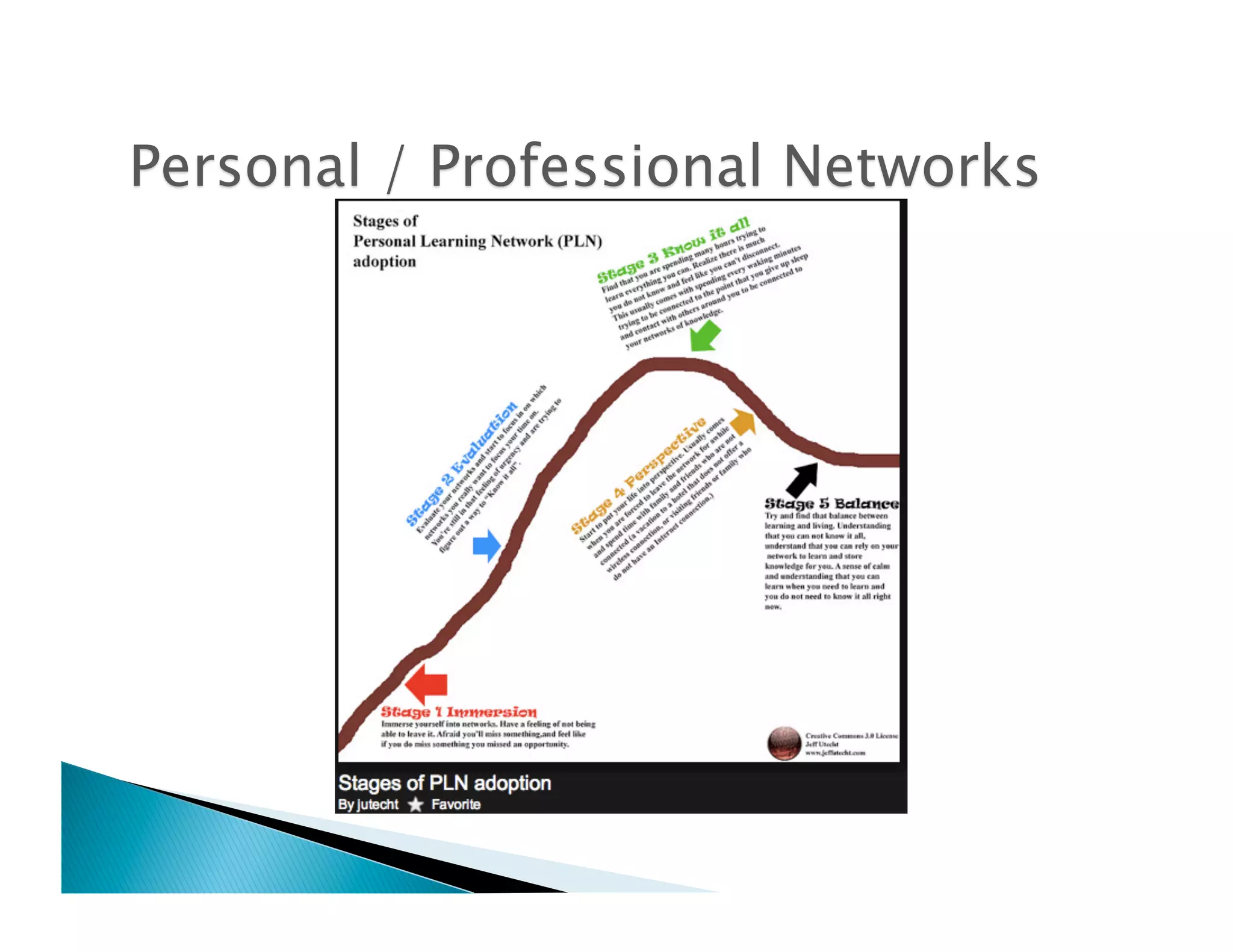
  Students will evaluate the concept of Personal
   Learning Networks (PLN) to establish an
   Internet PLN for continuing education.
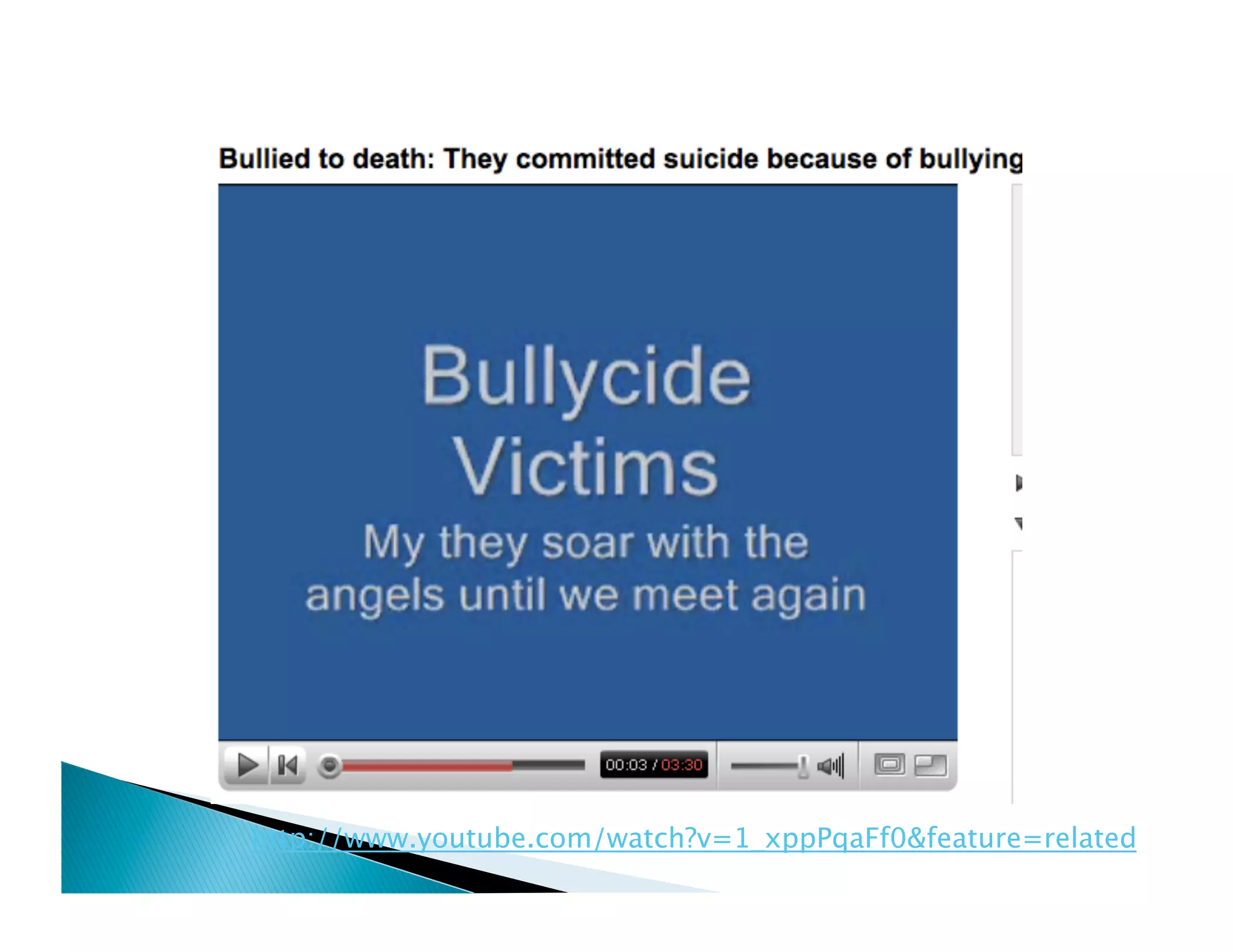
http://www.youtube.com/watch?v=1_xppPqaFf0&feature=related
    Definition:
     ◦  “The use of interactive technologies . . . to
        deliberately and repeatedly deliver slanderous,
        harrassing, obsessive, or obscene messages that
        result in harm to the recipient” (Walker, et al. 2011).


    Plethora of Technology
     ◦  276.6 million wireless subscribers, June 2009
     ◦  1.36 trillion SMS messages in 2009
     ◦  3.5 billion pieces of content every week (Facebook,
     2010)
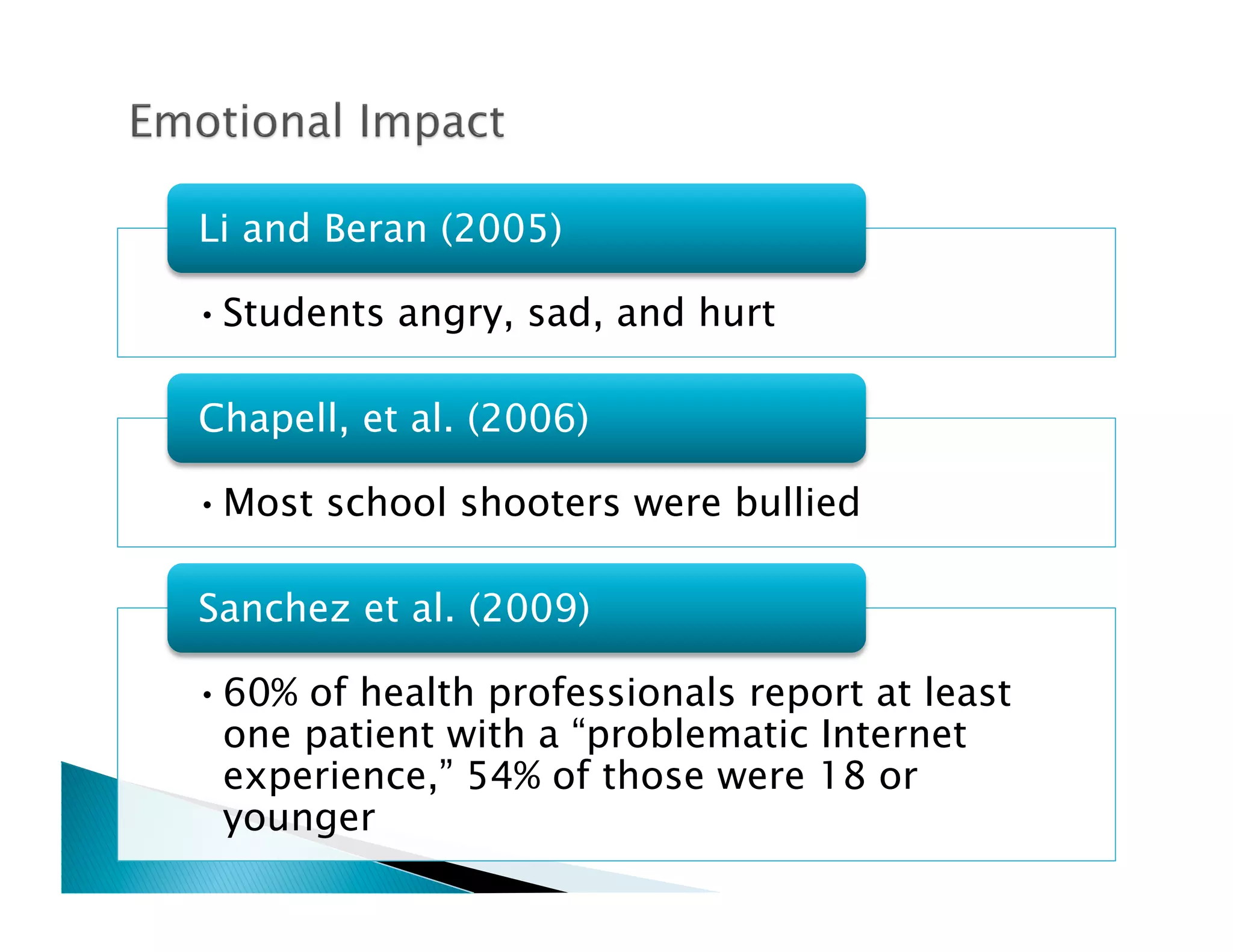
Li and Beran (2005)

• Students angry, sad, and hurt

Chapell, et al. (2006)

• Most school shooters were bullied

Sanchez et al. (2009)

• 60% of health professionals report at least
  one patient with a “problematic Internet
  experience,” 54% of those were 18 or
  younger
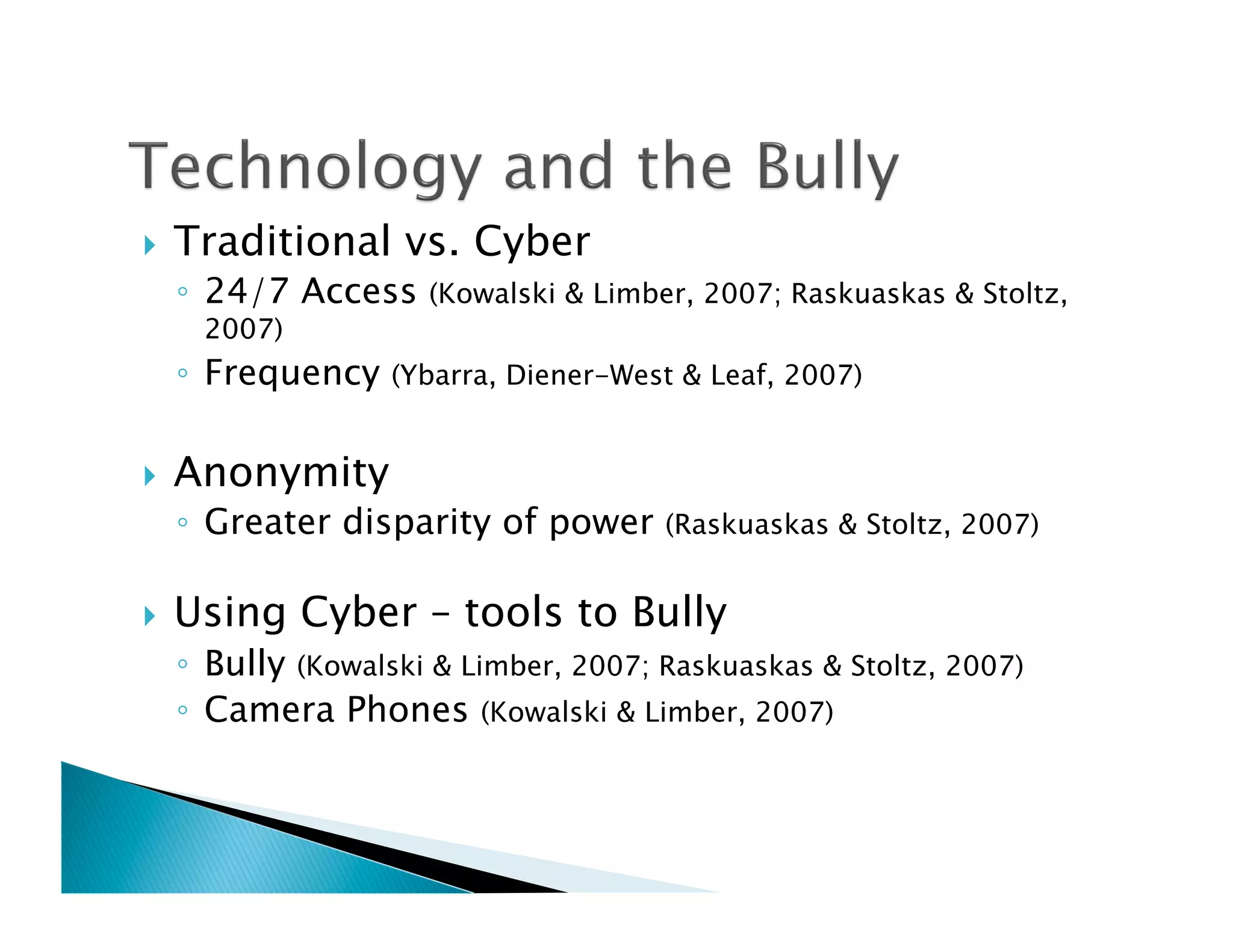
    Traditional vs. Cyber
     ◦  24/7 Access    (Kowalski & Limber, 2007; Raskuaskas & Stoltz,
      2007)
     ◦  Frequency   (Ybarra, Diener-West & Leaf, 2007)


    Anonymity
     ◦  Greater disparity of power      (Raskuaskas & Stoltz, 2007)


    Using Cyber – tools to Bully
     ◦  Bully (Kowalski & Limber, 2007; Raskuaskas & Stoltz, 2007)
     ◦  Camera Phones (Kowalski & Limber, 2007)
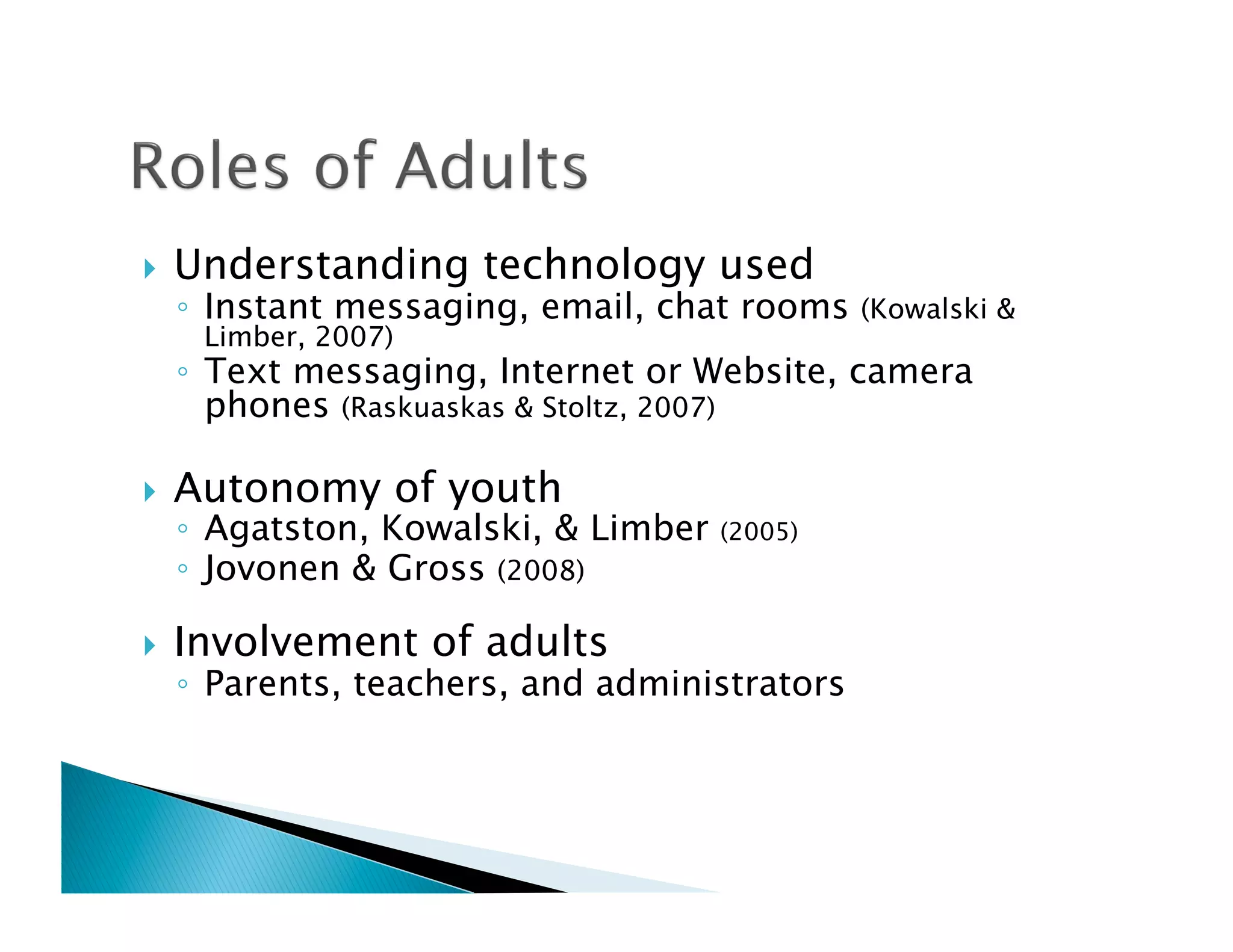
    Understanding technology used
     ◦  Instant messaging, email, chat rooms    (Kowalski &
      Limber, 2007)
     ◦  Text messaging, Internet or Website, camera
        phones (Raskuaskas & Stoltz, 2007)

    Autonomy of youth
     ◦  Agatston, Kowalski, & Limber   (2005)
     ◦  Jovonen & Gross (2008)

    Involvement of adults
     ◦  Parents, teachers, and administrators
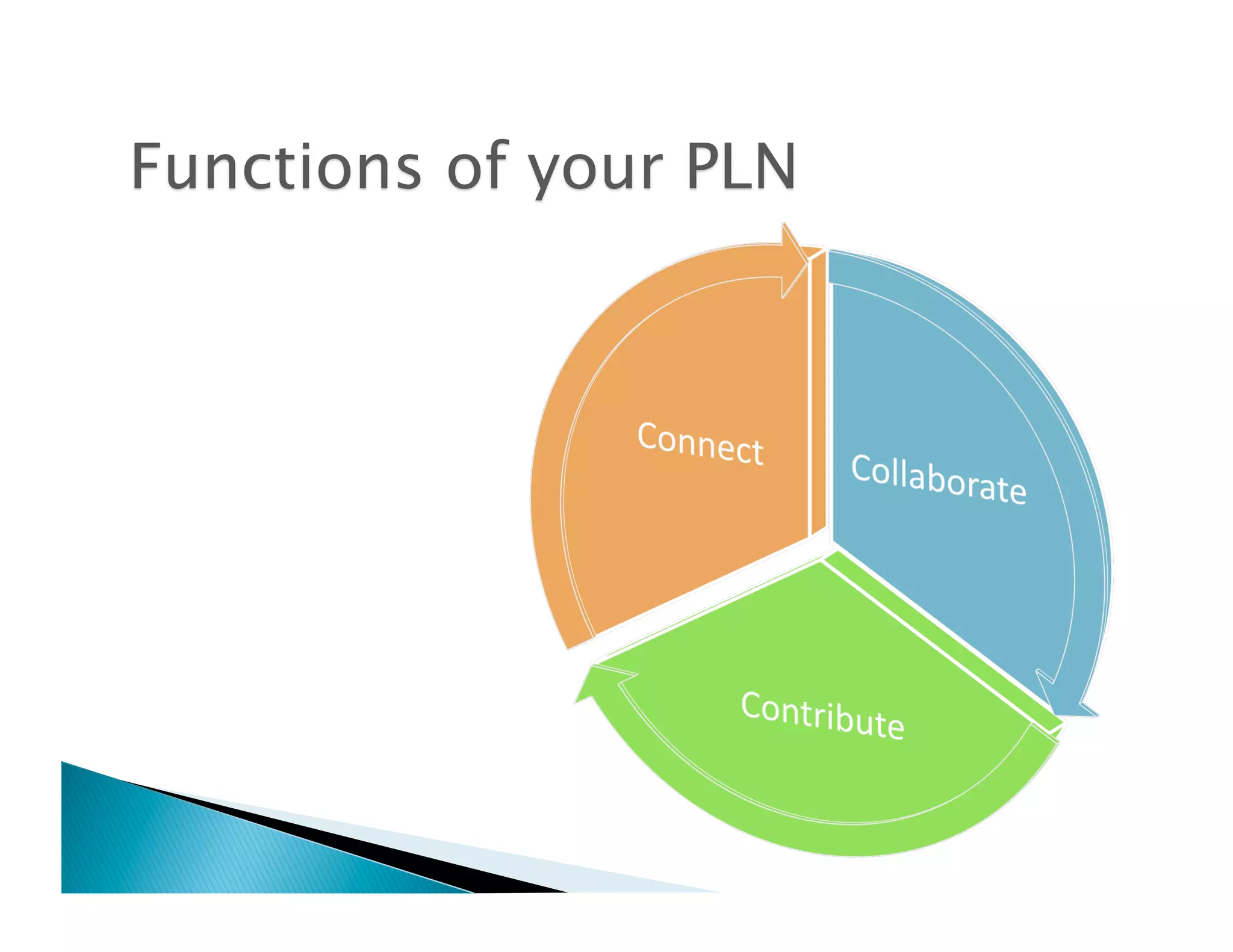
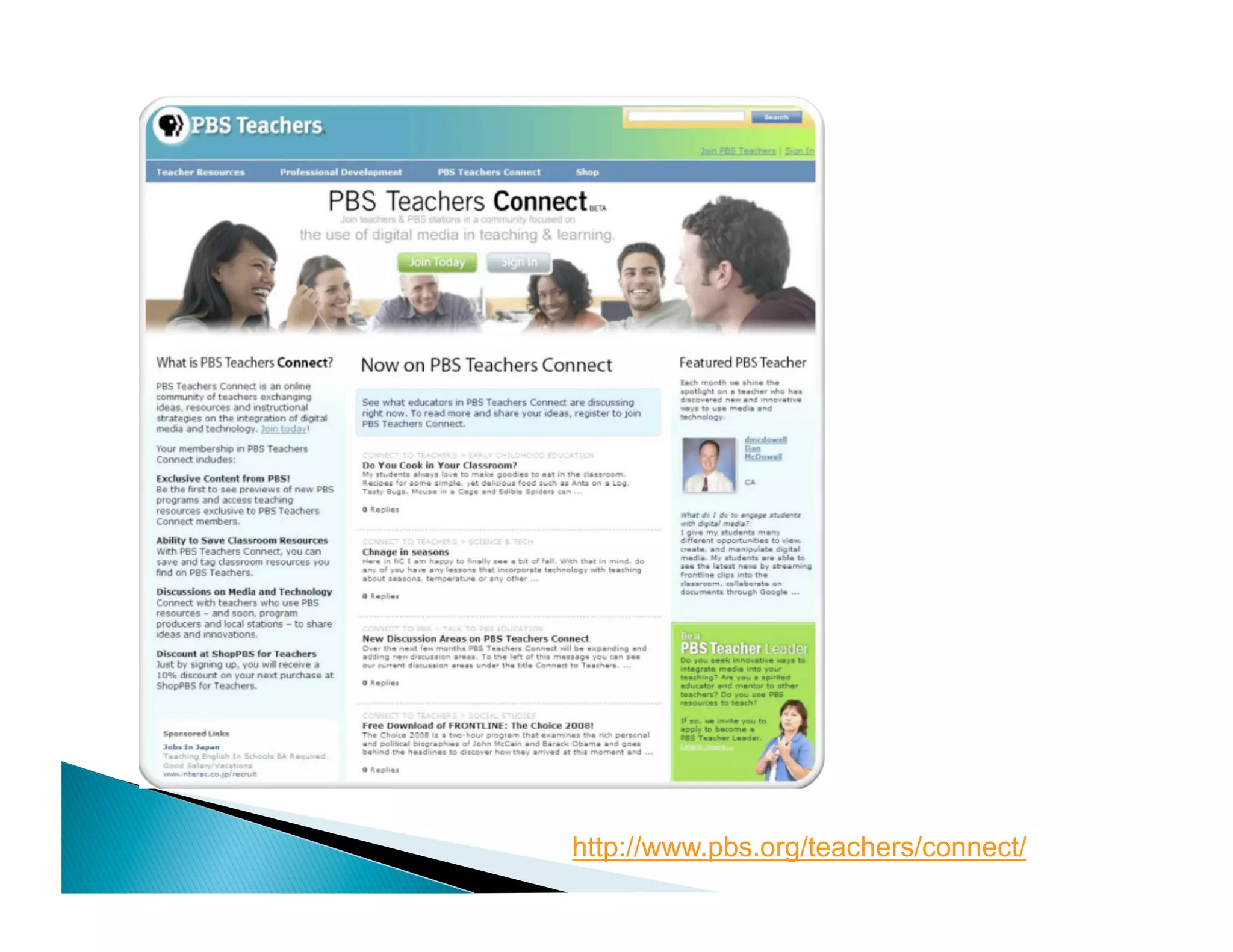
Your Personal Learning Network
http://www.pbs.org/teachers/connect/
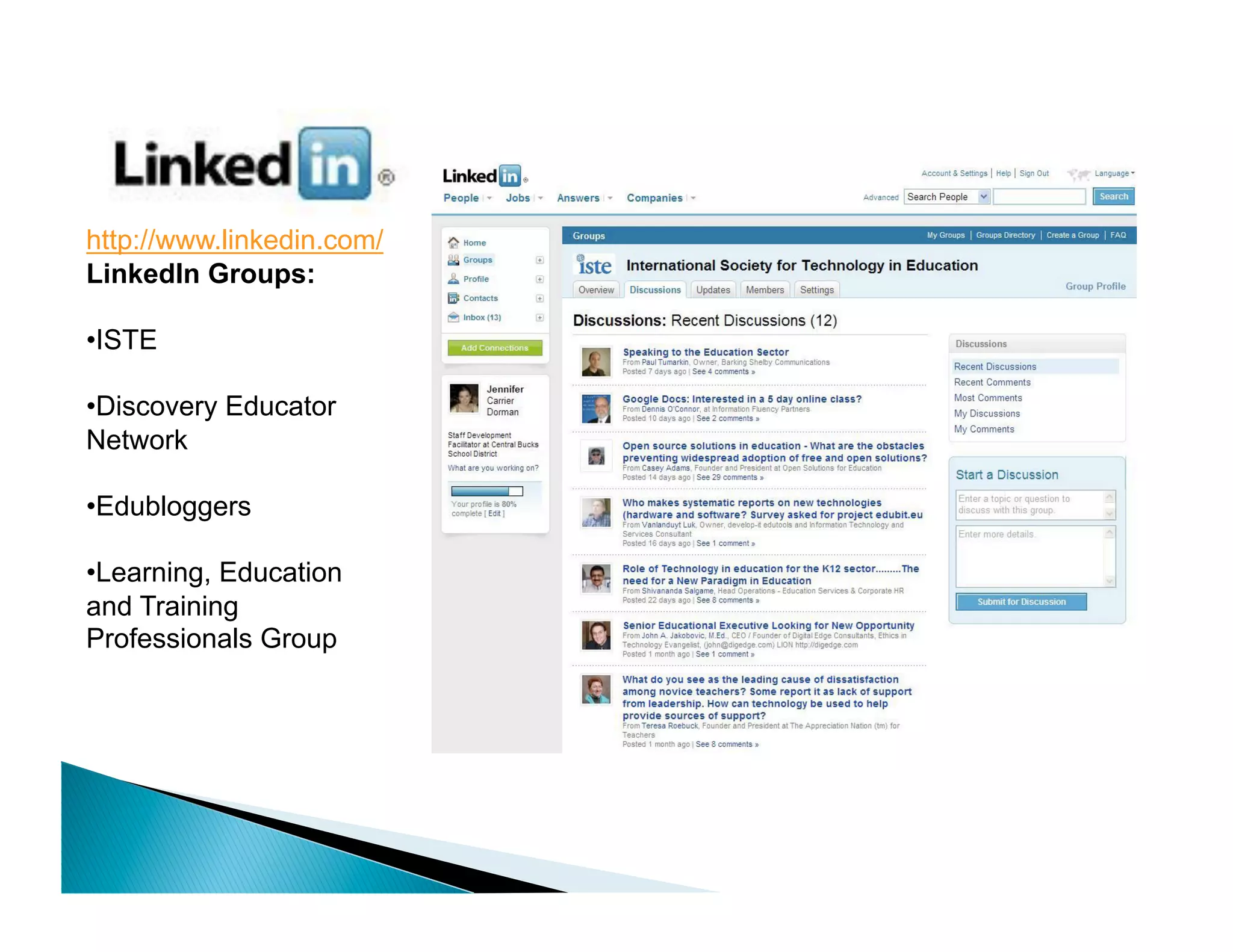
http://www.linkedin.com/
LinkedIn Groups:

•ISTE

•Discovery Educator
Network

•Edubloggers

•Learning, Education
and Training
Professionals Group
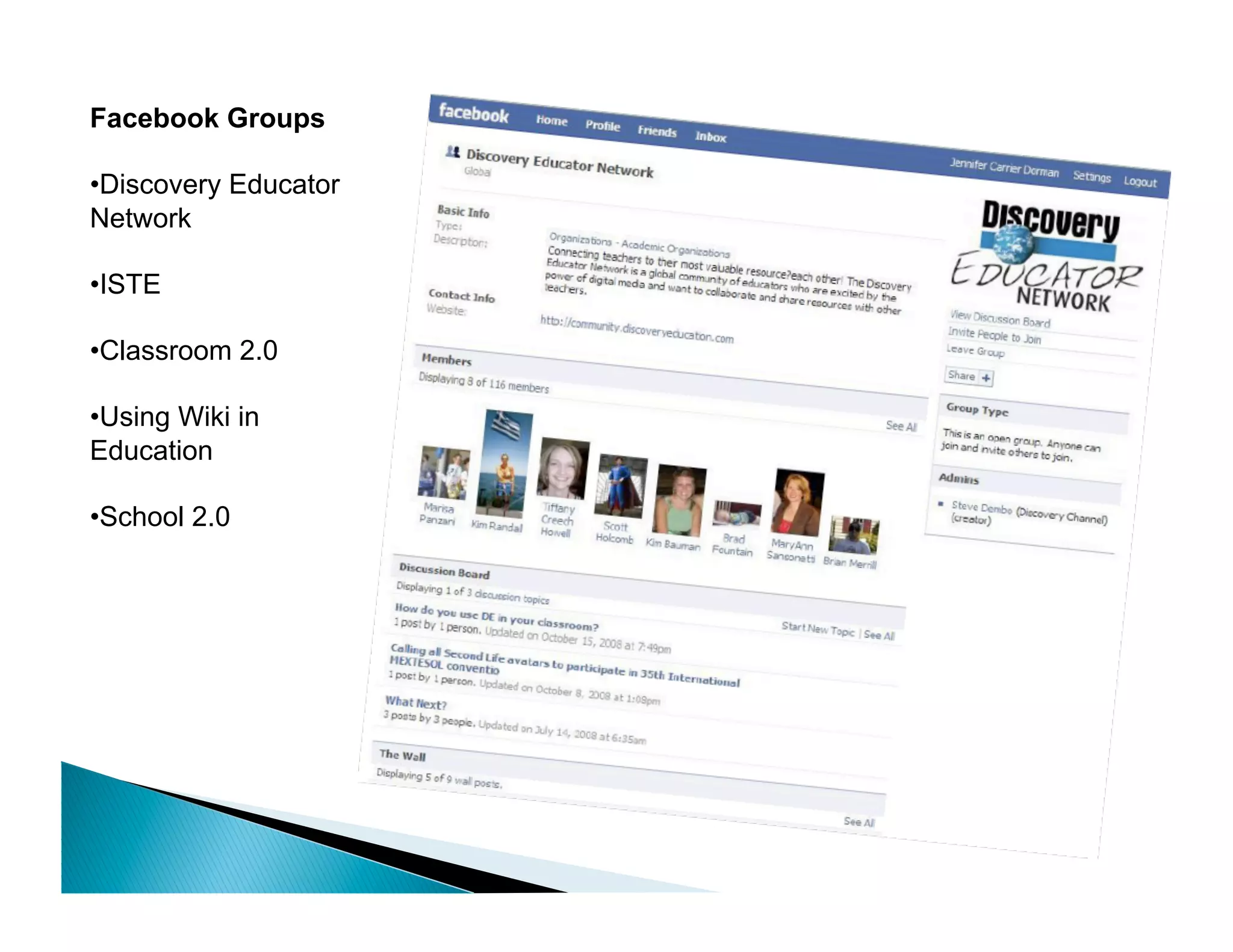
Facebook Groups

•Discovery Educator
Network

•ISTE

•Classroom 2.0

•Using Wiki in
Education

•School 2.0
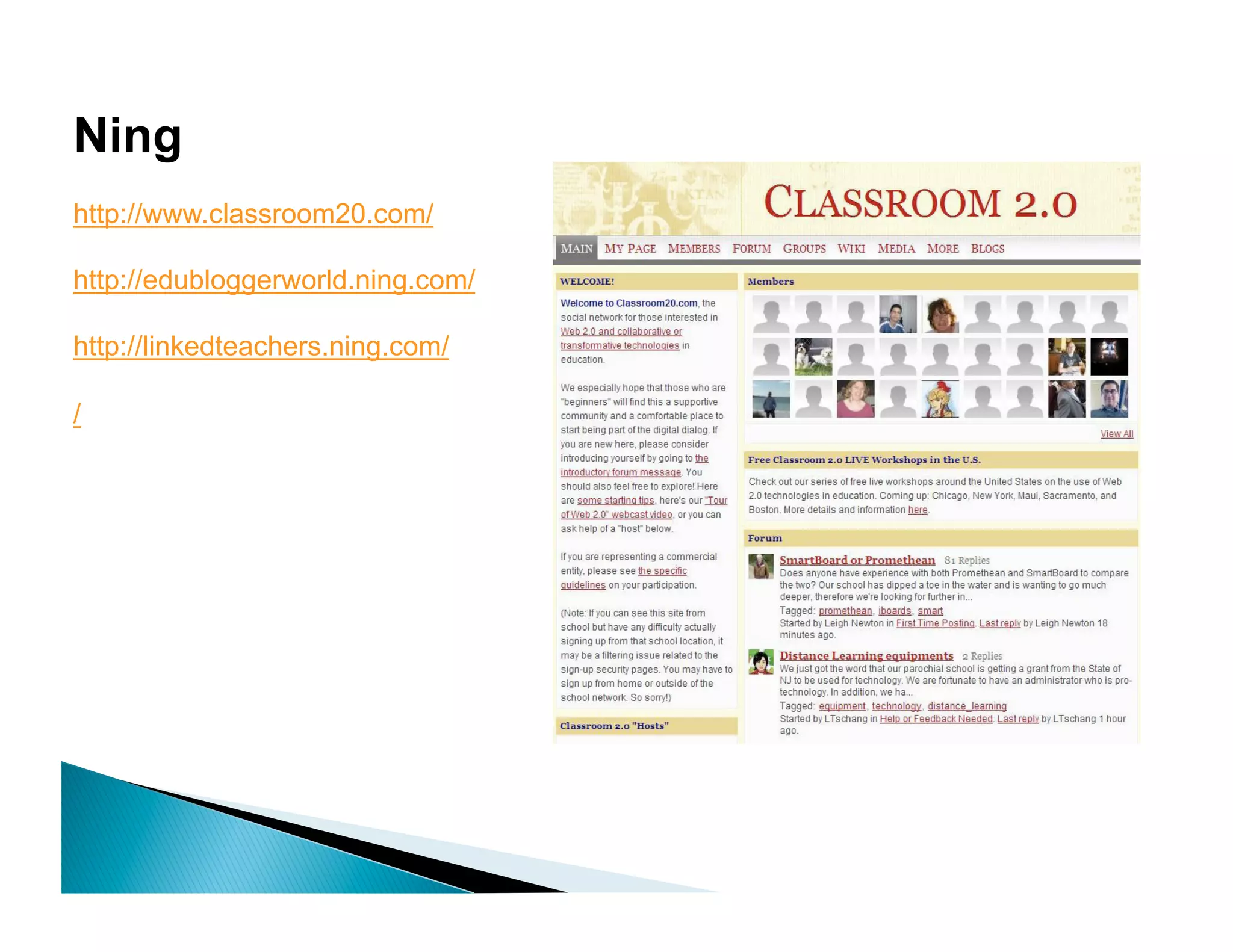
Ning
http://www.classroom20.com/

http://edubloggerworld.ning.com/

http://linkedteachers.ning.com/

/
    Consider what your national, state, and
     regional professional organizations offer for
     educators

    •List of Professional Organizations:

    http://snipurl.com/proforg
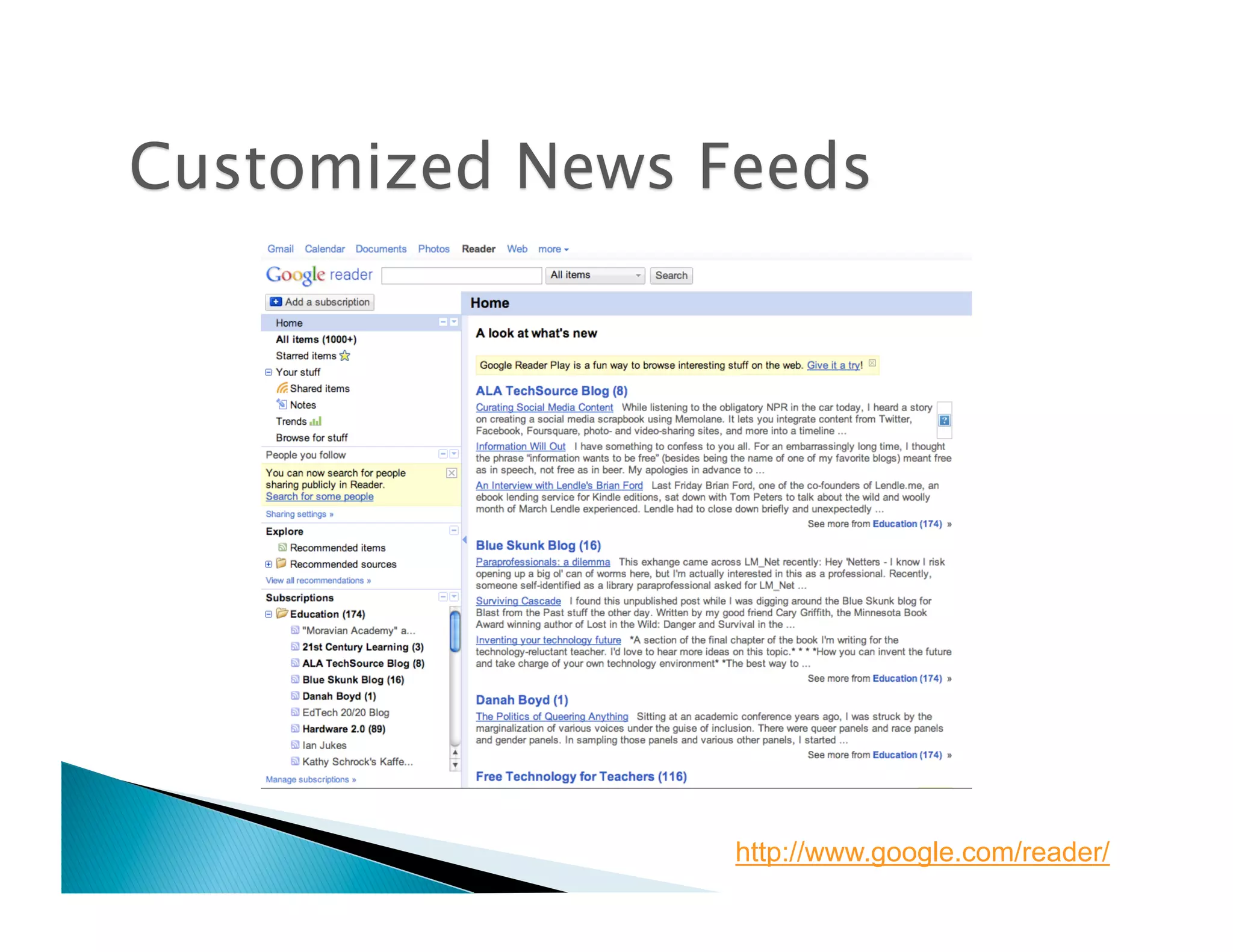
http://www.google.com/reader/
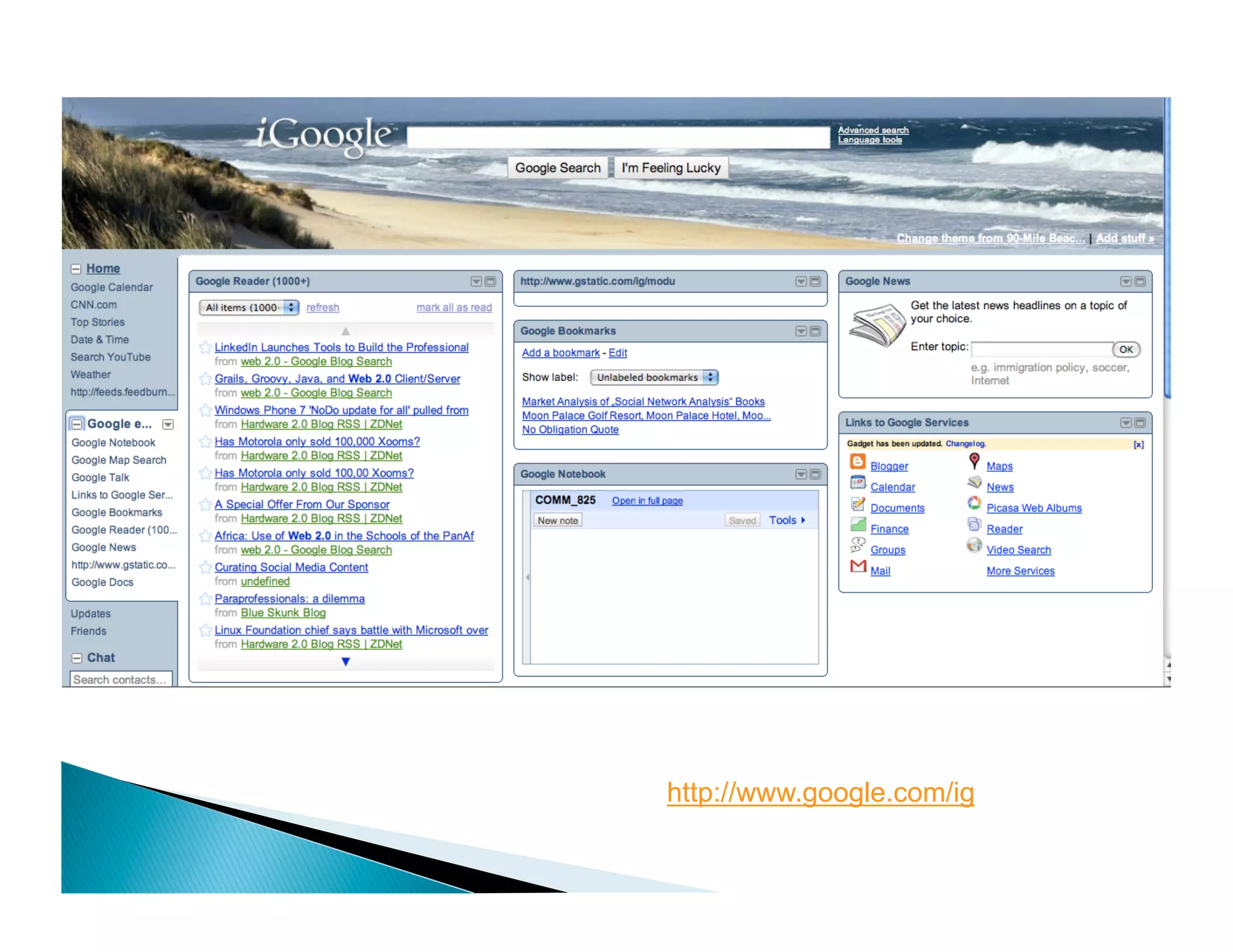
http://www.google.com/ig
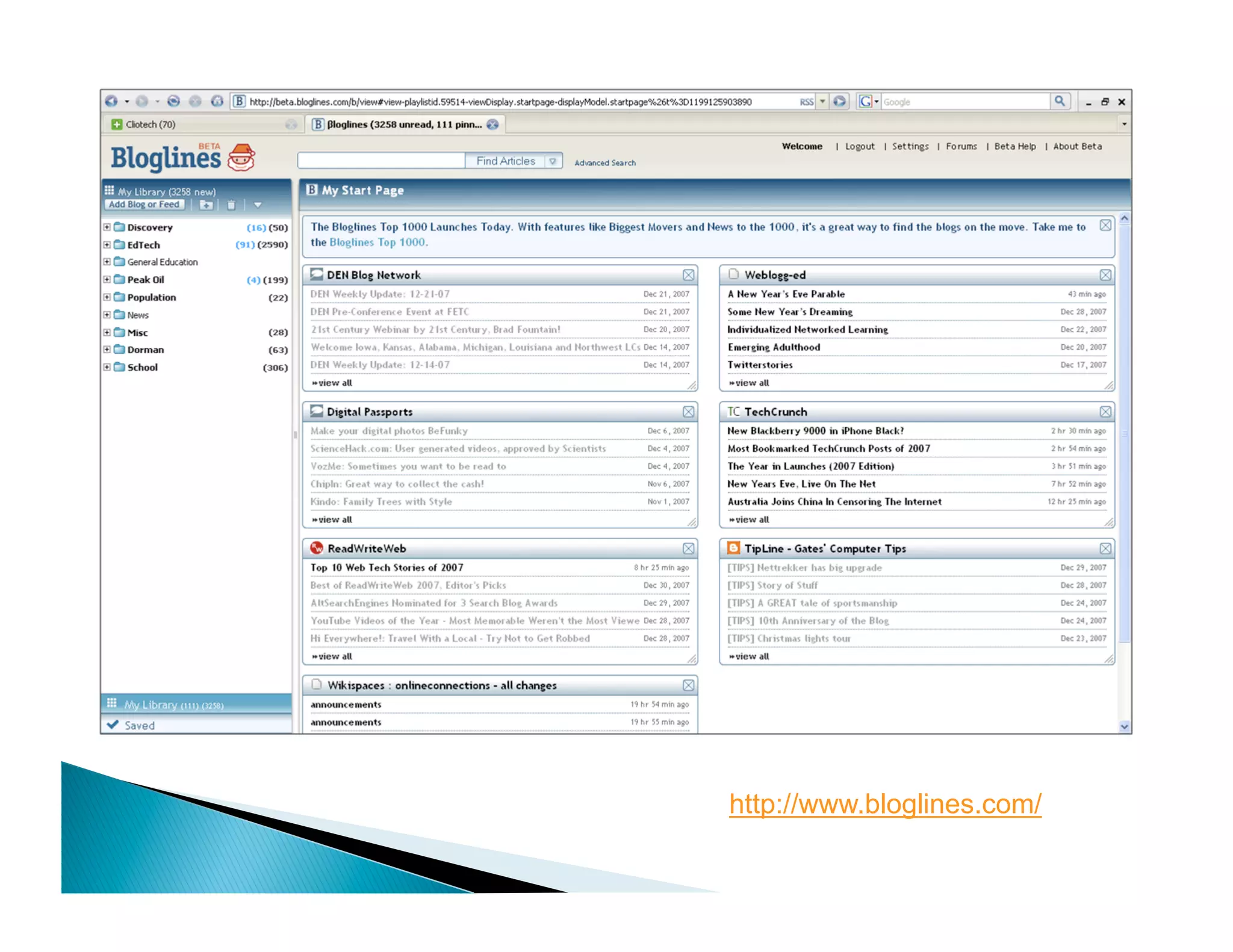
http://www.bloglines.com/
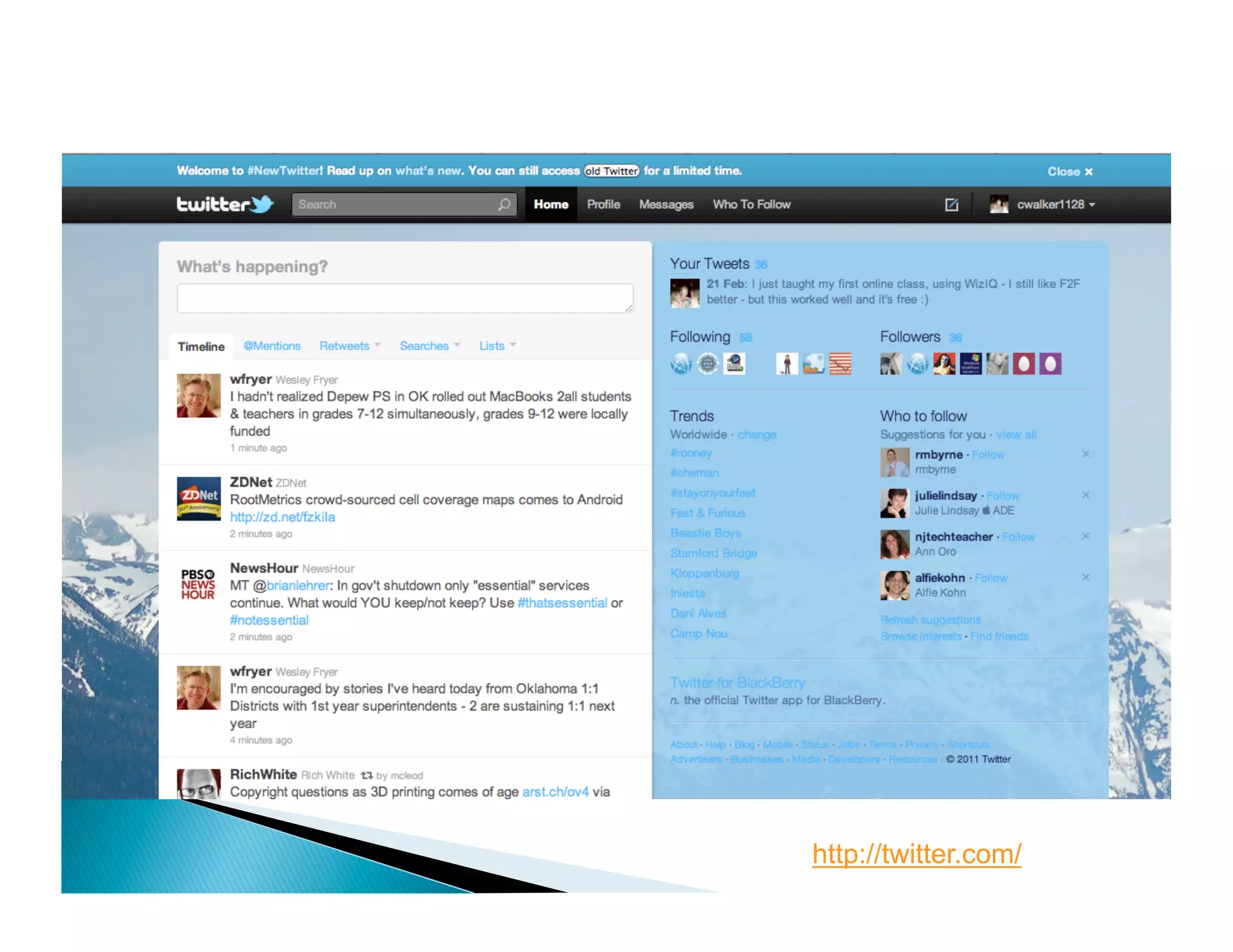
http://twitter.com/
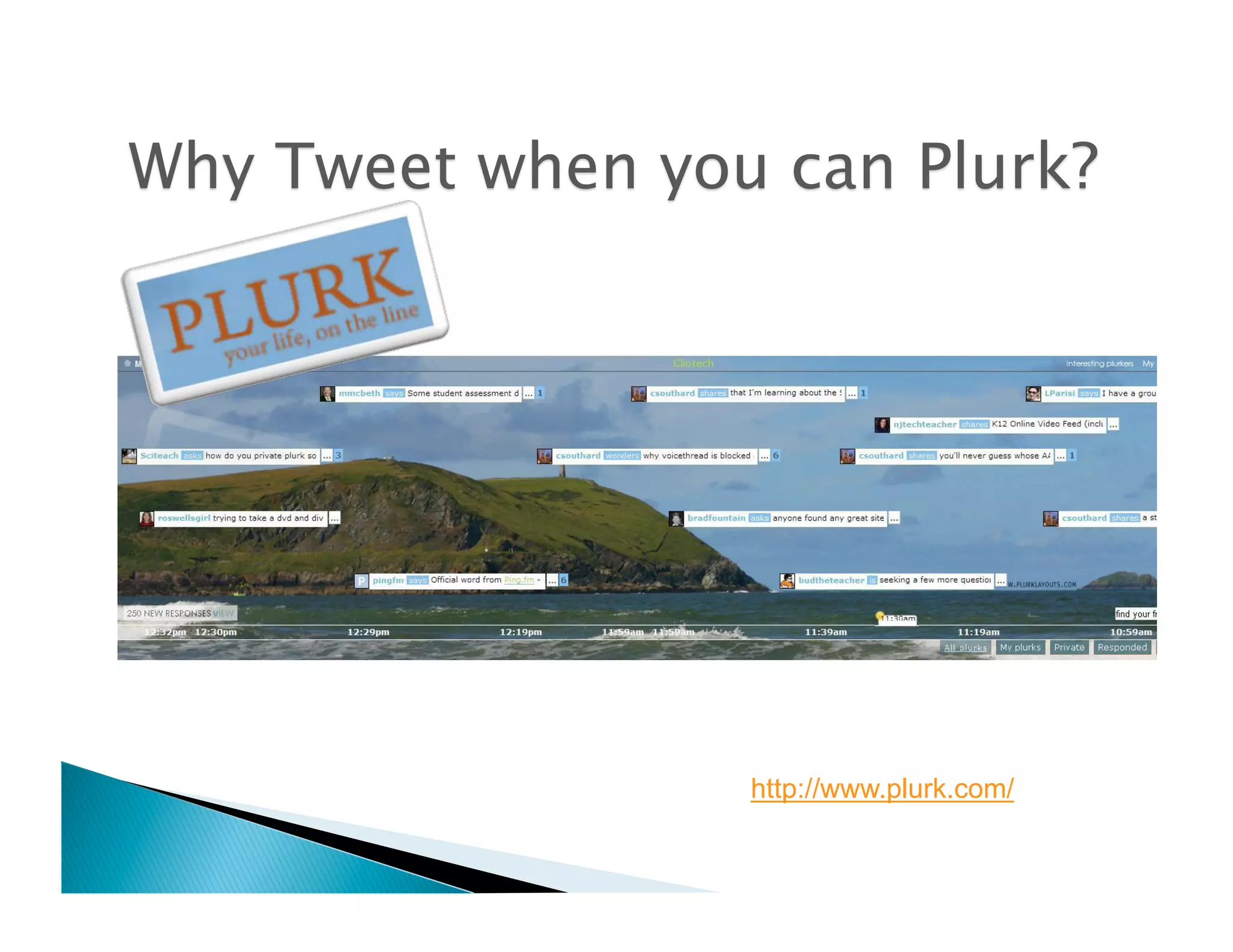
http://www.plurk.com/
    •Wikispaces
     ◦  http://www.wikispaces.com/site/for/teachers

    •PB Wiki
     ◦  http://pbwiki.com/education.wiki
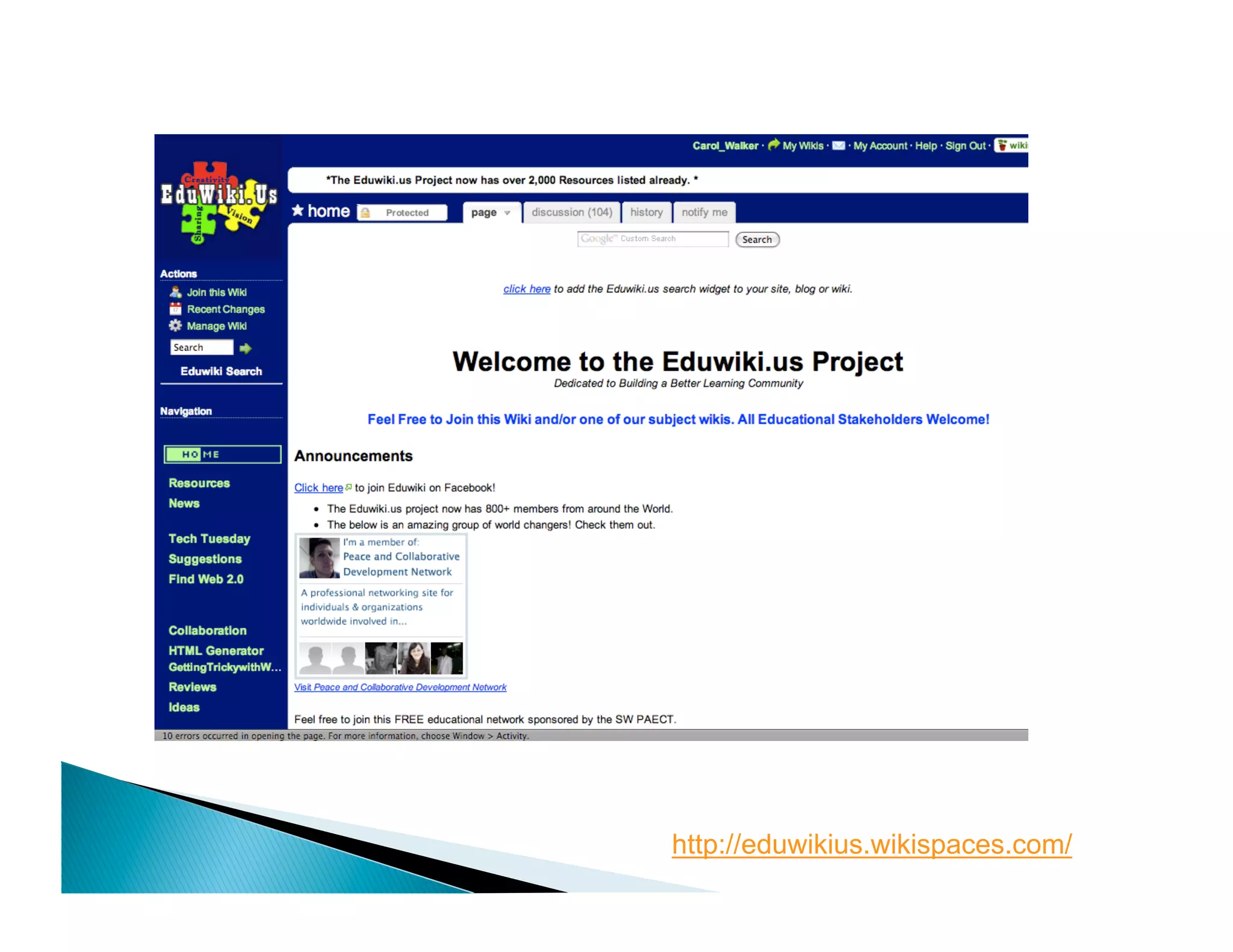
http://eduwikius.wikispaces.com/
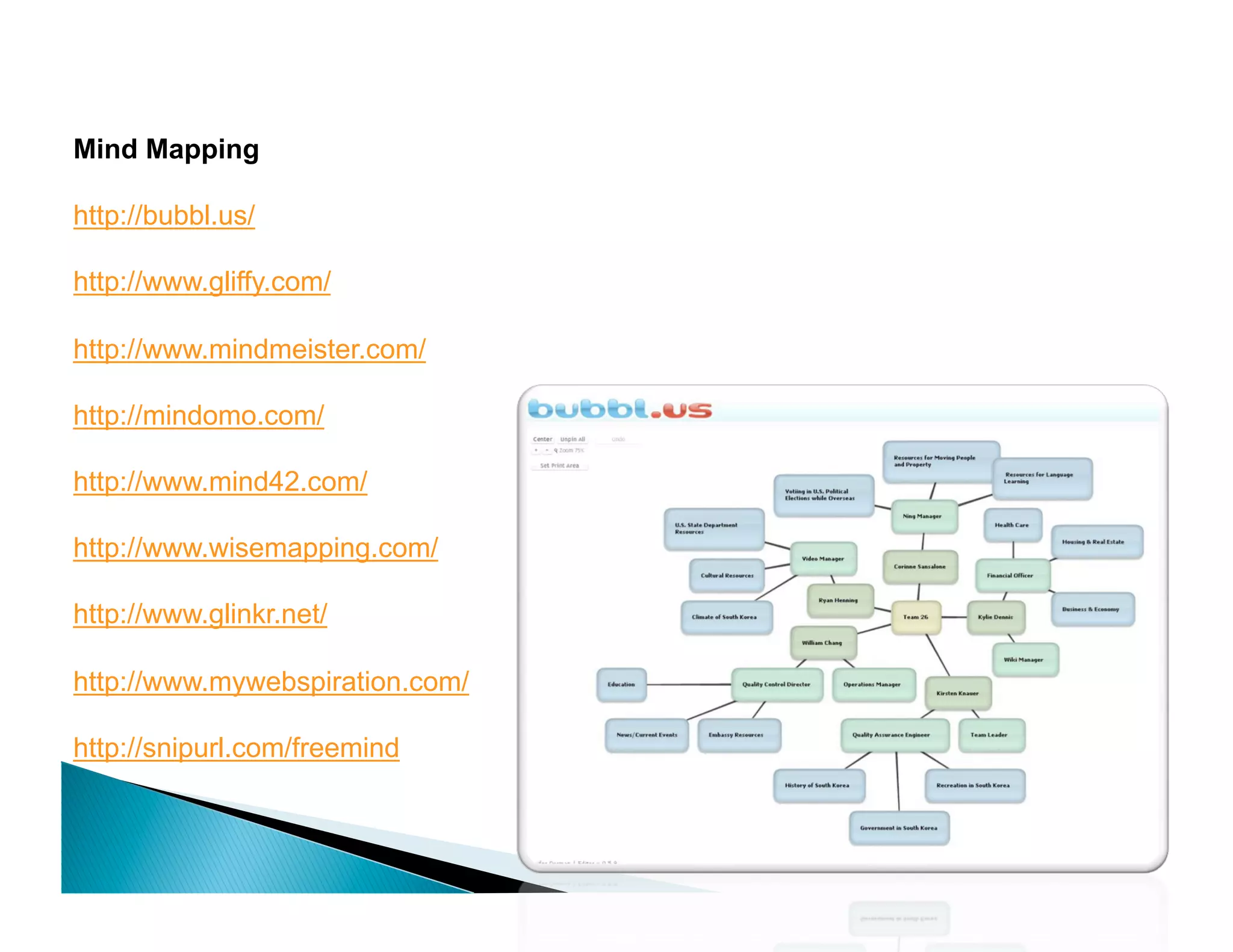
Mind Mapping

http://bubbl.us/

http://www.gliffy.com/

http://www.mindmeister.com/

http://mindomo.com/

http://www.mind42.com/

http://www.wisemapping.com/

http://www.glinkr.net/

http://www.mywebspiration.com/

http://snipurl.com/freemind
Beran, T., & Li, Q. (2005). Cyber-harassment: A study of a new method for an old behavior. Journal of
   Educational Computing Research, 32(3), 265 – 277. Retrieved from http://navigator-iup.passhe.edu/
   login?url=http://search.ebscohost.com/login.aspx?direct=true&db=ehh&jid=E69&site=ehost-live
Dilmac, B. (2009). Psychological needs as a predictor or cyber bullying: a Preliminary report on college
   students. Educational Sciences: Theory and Practice, 9(3), 1307 – 1325. Retrieved from http://
   www.eric.ed.gov:80/ERICDocs/data/ericdocs2sql/content_storage_01/0000019b/80/45/98/43.pdf
Haber, J. D. & Haber, S. B. (2007). Cyberbullying: A “virtual” camp nightmare? Camping Magazine, 80, 52 –
   57.
Juvonen, J., & Gross, E. F. (2008). Extending the school grounds? – Bullying experiences in cyberspace.
   Journal of School Health, 78(9), 496 – 505. doi:10.1111/j.1746-1561.2008.00335.x
Kowalski, R. M., & Limber, S. P. (2007). Electronic bullying among middle school students. Journal of
   Adolescent Health 41, 22 – 30. doi:10.1016/j.jadohealth.2007.08.018
Li, Q. (2008). A cross-cultural comparison of adolescents’ experience related to cyberbullying. Educational
    Research, 50(3), 223 – 234. doi:10.1080/00131880802309333
Raskauskas, J., & Stoltz, A.D. (2007). Involvement in traditional and electronic bullying among adolescents.
   Developmental Psychology, 43(3), 564 – 575. doi:10.1037/0012-1649.43.3.564
Ybarra, M.L., & Mitchell, K. J. (2004). Youth engaging in online harassment: Associations with caregiver-
   child relationships, Internet use, and personal characteristics. Journal of Adolescence, 27, 319 – 336.
   doi:10.1016/j.adolescence.2004.03.2007
Walker, C.M., Rajan Sockman, B., & Koehn, S. (2011) An Exploratory Study or Cyberbullying with
   Undergraduate College Students. Tech Trends: Leading and Learning in Education, 55(2), 31 – 38.
http://jdorman.wikispaces.com/

Internet and Education: The good and bad

  • 1.
  • 2.
      Students willanalyze events on the Internet and collaborate to develop methods to help students deal with negative Internet experiences.   Students will evaluate the concept of Personal Learning Networks (PLN) to establish an Internet PLN for continuing education.
  • 3.
  • 4.
      Definition: ◦  “The use of interactive technologies . . . to deliberately and repeatedly deliver slanderous, harrassing, obsessive, or obscene messages that result in harm to the recipient” (Walker, et al. 2011).   Plethora of Technology ◦  276.6 million wireless subscribers, June 2009 ◦  1.36 trillion SMS messages in 2009 ◦  3.5 billion pieces of content every week (Facebook, 2010)
  • 5.
    Li and Beran(2005) • Students angry, sad, and hurt Chapell, et al. (2006) • Most school shooters were bullied Sanchez et al. (2009) • 60% of health professionals report at least one patient with a “problematic Internet experience,” 54% of those were 18 or younger
  • 6.
      Traditional vs. Cyber ◦  24/7 Access (Kowalski & Limber, 2007; Raskuaskas & Stoltz, 2007) ◦  Frequency (Ybarra, Diener-West & Leaf, 2007)   Anonymity ◦  Greater disparity of power (Raskuaskas & Stoltz, 2007)   Using Cyber – tools to Bully ◦  Bully (Kowalski & Limber, 2007; Raskuaskas & Stoltz, 2007) ◦  Camera Phones (Kowalski & Limber, 2007)
  • 7.
      Understanding technology used ◦  Instant messaging, email, chat rooms (Kowalski & Limber, 2007) ◦  Text messaging, Internet or Website, camera phones (Raskuaskas & Stoltz, 2007)   Autonomy of youth ◦  Agatston, Kowalski, & Limber (2005) ◦  Jovonen & Gross (2008)   Involvement of adults ◦  Parents, teachers, and administrators
  • 8.
  • 11.
  • 12.
  • 13.
    Facebook Groups •Discovery Educator Network •ISTE •Classroom2.0 •Using Wiki in Education •School 2.0
  • 14.
  • 15.
      Consider what your national, state, and regional professional organizations offer for educators   •List of Professional Organizations:   http://snipurl.com/proforg
  • 17.
  • 18.
  • 19.
  • 22.
  • 23.
  • 27.
      •Wikispaces ◦  http://www.wikispaces.com/site/for/teachers   •PB Wiki ◦  http://pbwiki.com/education.wiki
  • 28.
  • 29.
  • 30.
    Beran, T., &Li, Q. (2005). Cyber-harassment: A study of a new method for an old behavior. Journal of Educational Computing Research, 32(3), 265 – 277. Retrieved from http://navigator-iup.passhe.edu/ login?url=http://search.ebscohost.com/login.aspx?direct=true&db=ehh&jid=E69&site=ehost-live Dilmac, B. (2009). Psychological needs as a predictor or cyber bullying: a Preliminary report on college students. Educational Sciences: Theory and Practice, 9(3), 1307 – 1325. Retrieved from http:// www.eric.ed.gov:80/ERICDocs/data/ericdocs2sql/content_storage_01/0000019b/80/45/98/43.pdf Haber, J. D. & Haber, S. B. (2007). Cyberbullying: A “virtual” camp nightmare? Camping Magazine, 80, 52 – 57. Juvonen, J., & Gross, E. F. (2008). Extending the school grounds? – Bullying experiences in cyberspace. Journal of School Health, 78(9), 496 – 505. doi:10.1111/j.1746-1561.2008.00335.x Kowalski, R. M., & Limber, S. P. (2007). Electronic bullying among middle school students. Journal of Adolescent Health 41, 22 – 30. doi:10.1016/j.jadohealth.2007.08.018 Li, Q. (2008). A cross-cultural comparison of adolescents’ experience related to cyberbullying. Educational Research, 50(3), 223 – 234. doi:10.1080/00131880802309333 Raskauskas, J., & Stoltz, A.D. (2007). Involvement in traditional and electronic bullying among adolescents. Developmental Psychology, 43(3), 564 – 575. doi:10.1037/0012-1649.43.3.564 Ybarra, M.L., & Mitchell, K. J. (2004). Youth engaging in online harassment: Associations with caregiver- child relationships, Internet use, and personal characteristics. Journal of Adolescence, 27, 319 – 336. doi:10.1016/j.adolescence.2004.03.2007 Walker, C.M., Rajan Sockman, B., & Koehn, S. (2011) An Exploratory Study or Cyberbullying with Undergraduate College Students. Tech Trends: Leading and Learning in Education, 55(2), 31 – 38. http://jdorman.wikispaces.com/