Class 11
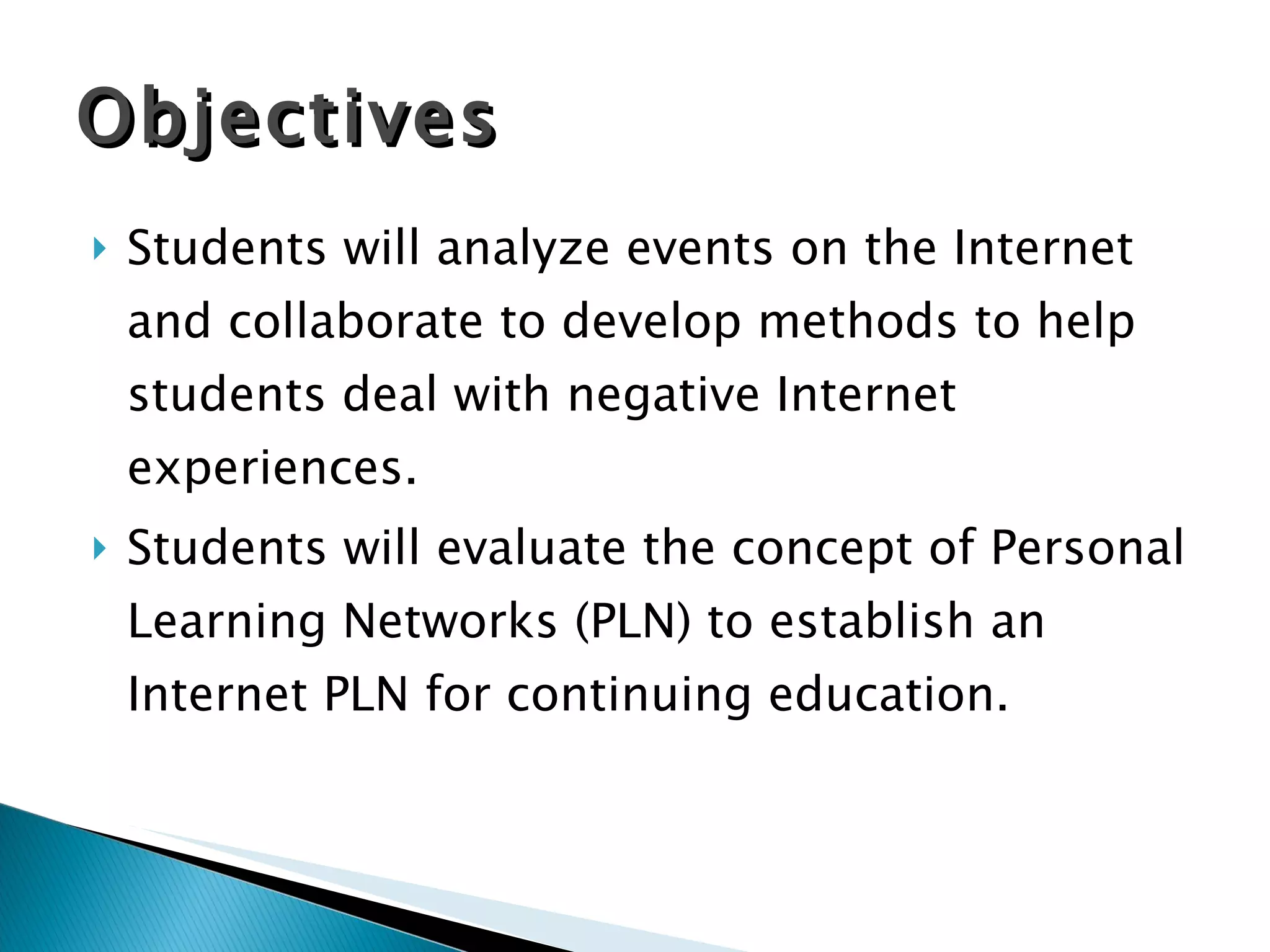
Students will analyze events on the Internet and collaborate to develop methods to help students deal with negative Internet experiences. Students will evaluate the concept of Personal Learning Networks (PLN) to establish an Internet PLN for continuing education.  Objectives
 
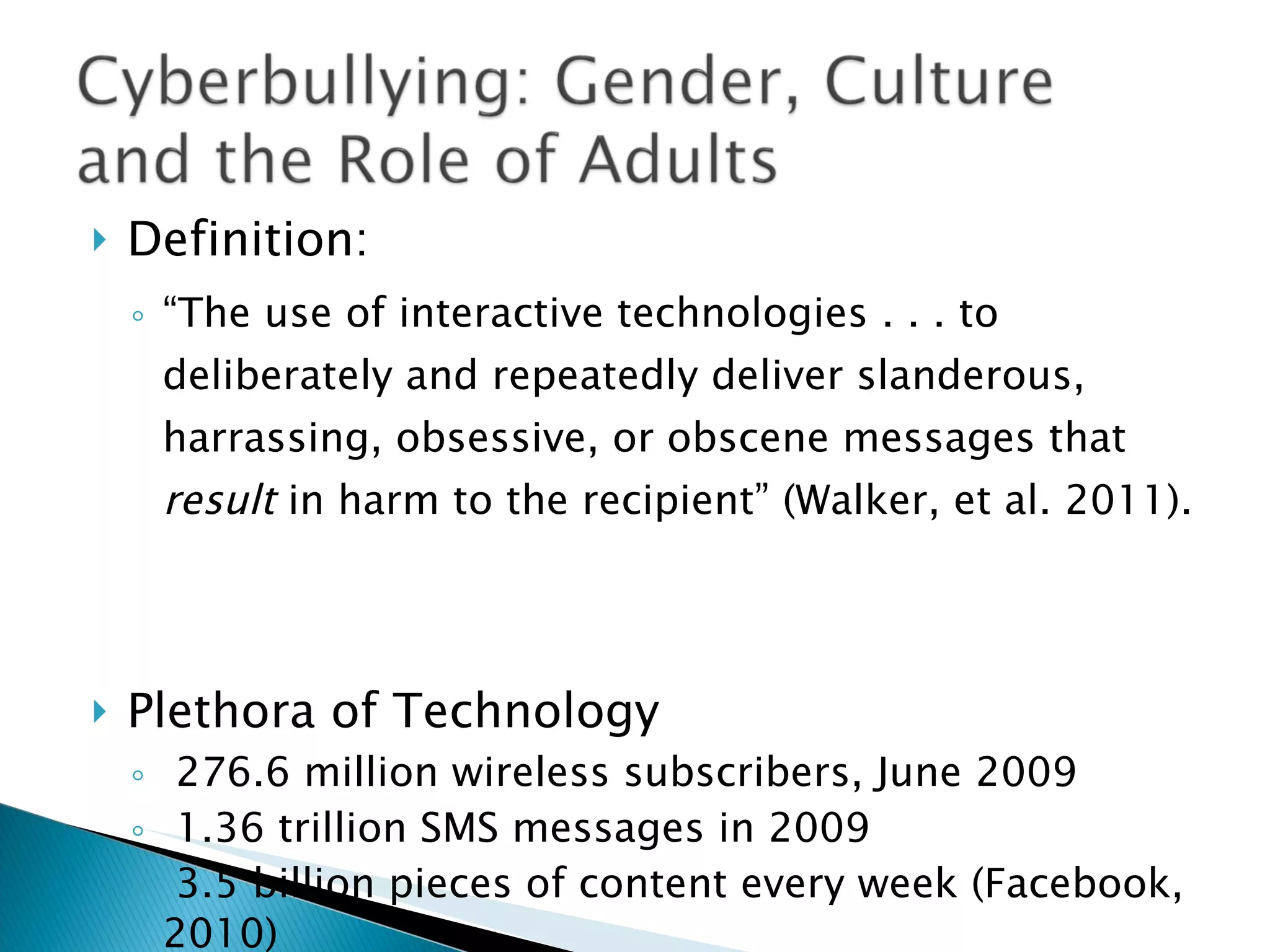
Definition:  “ The use of interactive technologies . . . to deliberately and repeatedly deliver slanderous, harrassing, obsessive, or obscene messages that  result  in harm to the recipient” (Walker, et al. 2011). Plethora of Technology  276.6 million wireless subscribers, June 2009 1.36 trillion SMS messages in 2009 3.5 billion pieces of content every week (Facebook, 2010)
 
Traditional vs. Cyber 24/7 Access  (Kowalski & Limber, 2007; Raskuaskas & Stoltz, 2007) Frequency  (Ybarra, Diener-West & Leaf, 2007) Anonymity Greater disparity of power  (Raskuaskas & Stoltz, 2007) Using Cyber – tools to Bully Bully  (Kowalski & Limber, 2007; Raskuaskas & Stoltz, 2007) Camera Phones  (Kowalski & Limber, 2007)
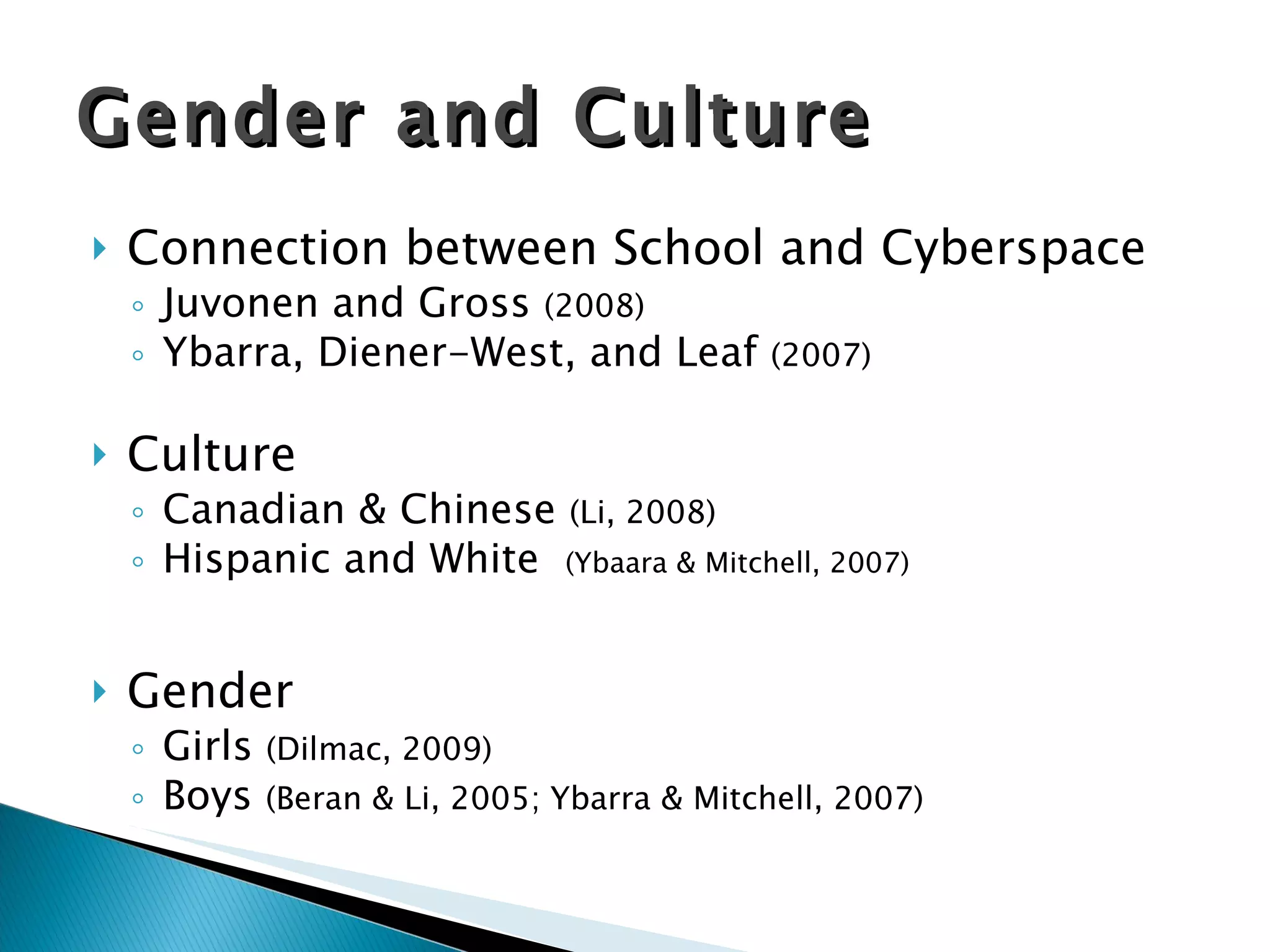
Connection between School and Cyberspace Juvonen and Gross  (2008) Ybarra, Diener-West, and Leaf  (2007) Culture Canadian & Chinese  (Li, 2008) Hispanic and White  (Ybaara & Mitchell, 2007) Gender Girls  (Dilmac, 2009) Boys  (Beran & Li, 2005; Ybarra & Mitchell, 2007) Gender and Culture
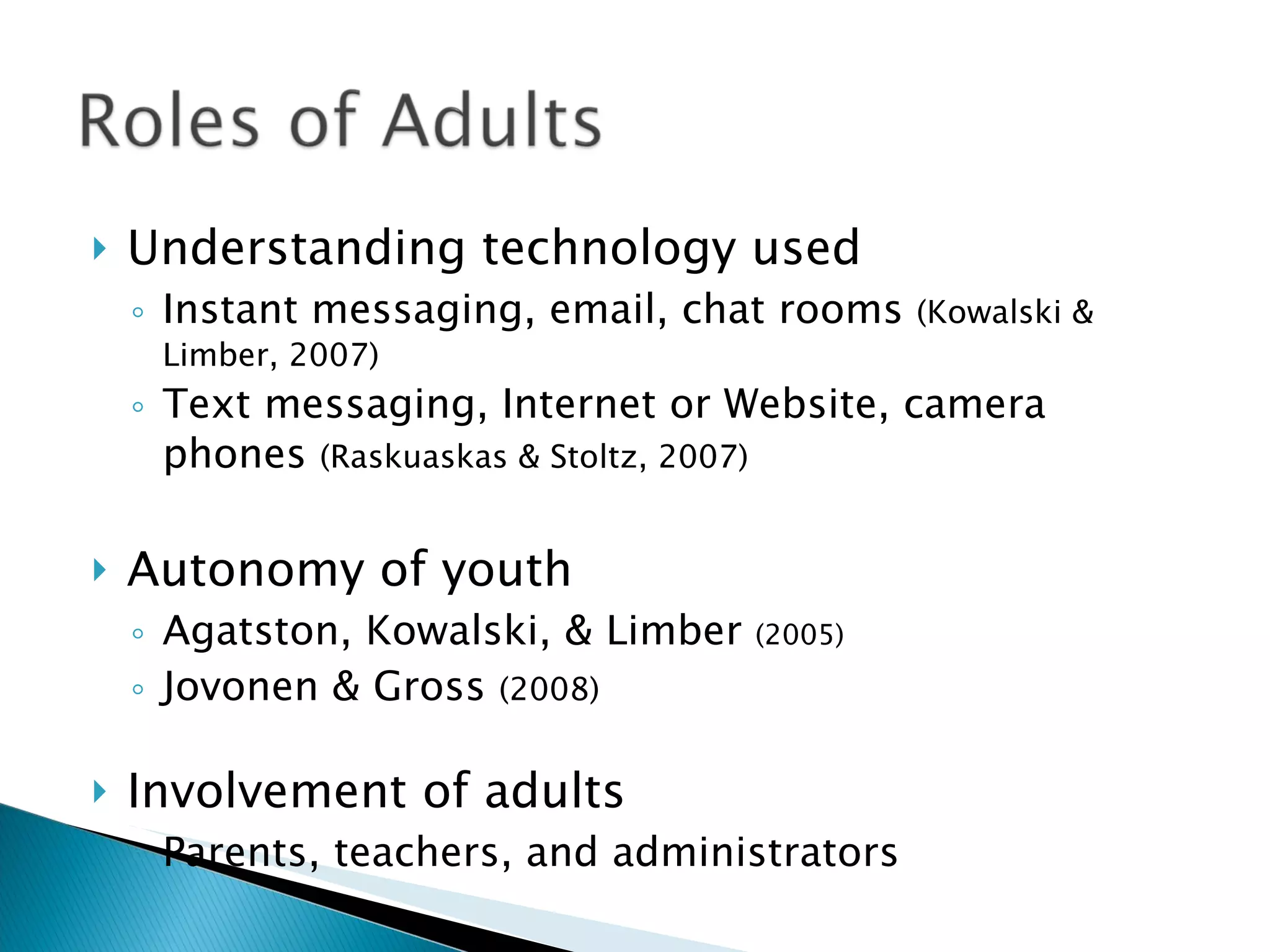
Understanding technology used Instant messaging, email, chat rooms  (Kowalski & Limber, 2007) Text messaging, Internet or Website, camera phones  (Raskuaskas & Stoltz, 2007) Autonomy of youth Agatston, Kowalski, & Limber  (2005) Jovonen & Gross  (2008) Involvement of adults Parents, teachers, and administrators
POWER IT UP! Your Personal Learning Network
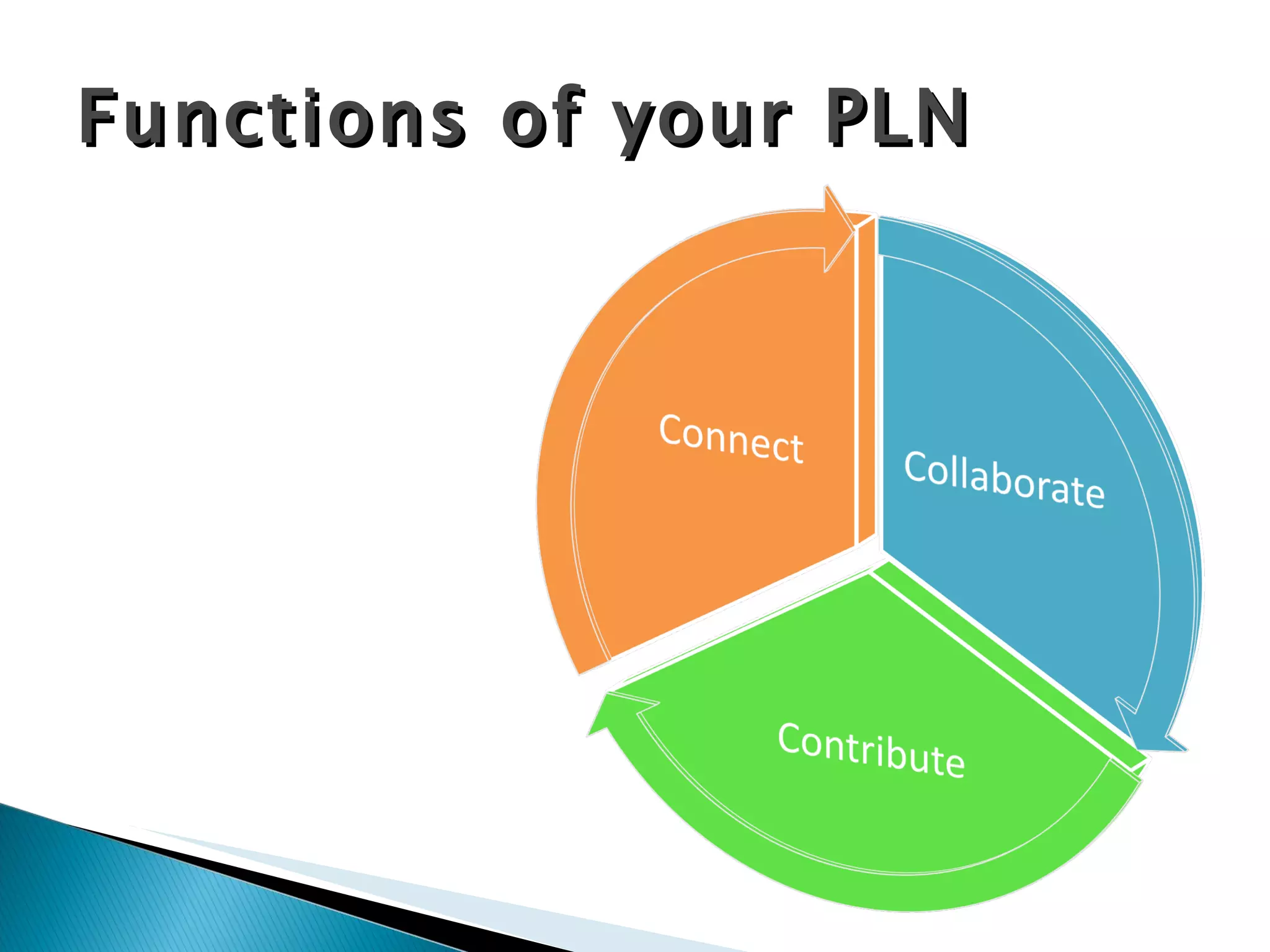
Functions of your PLN
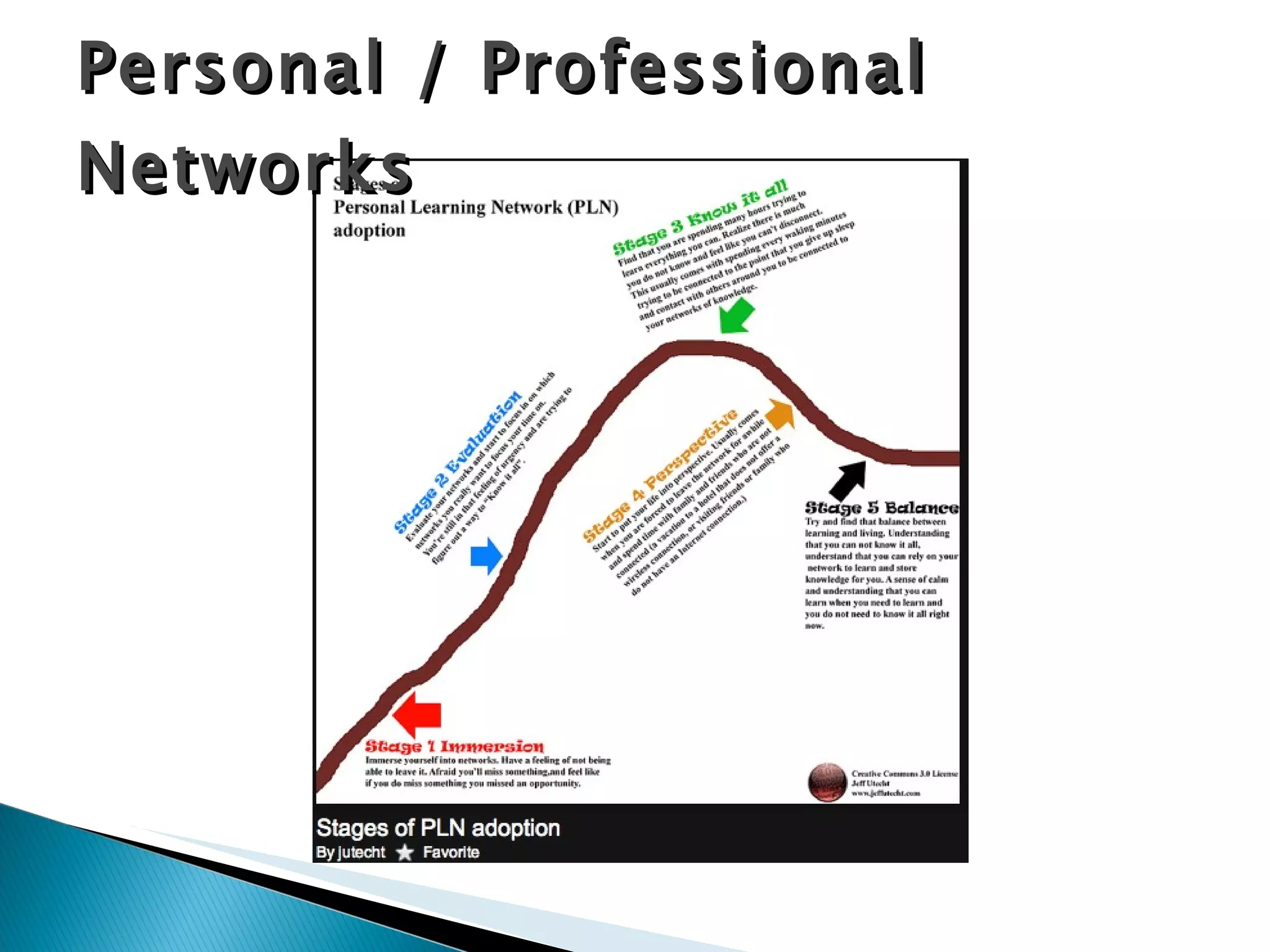
Personal / Professional Networks
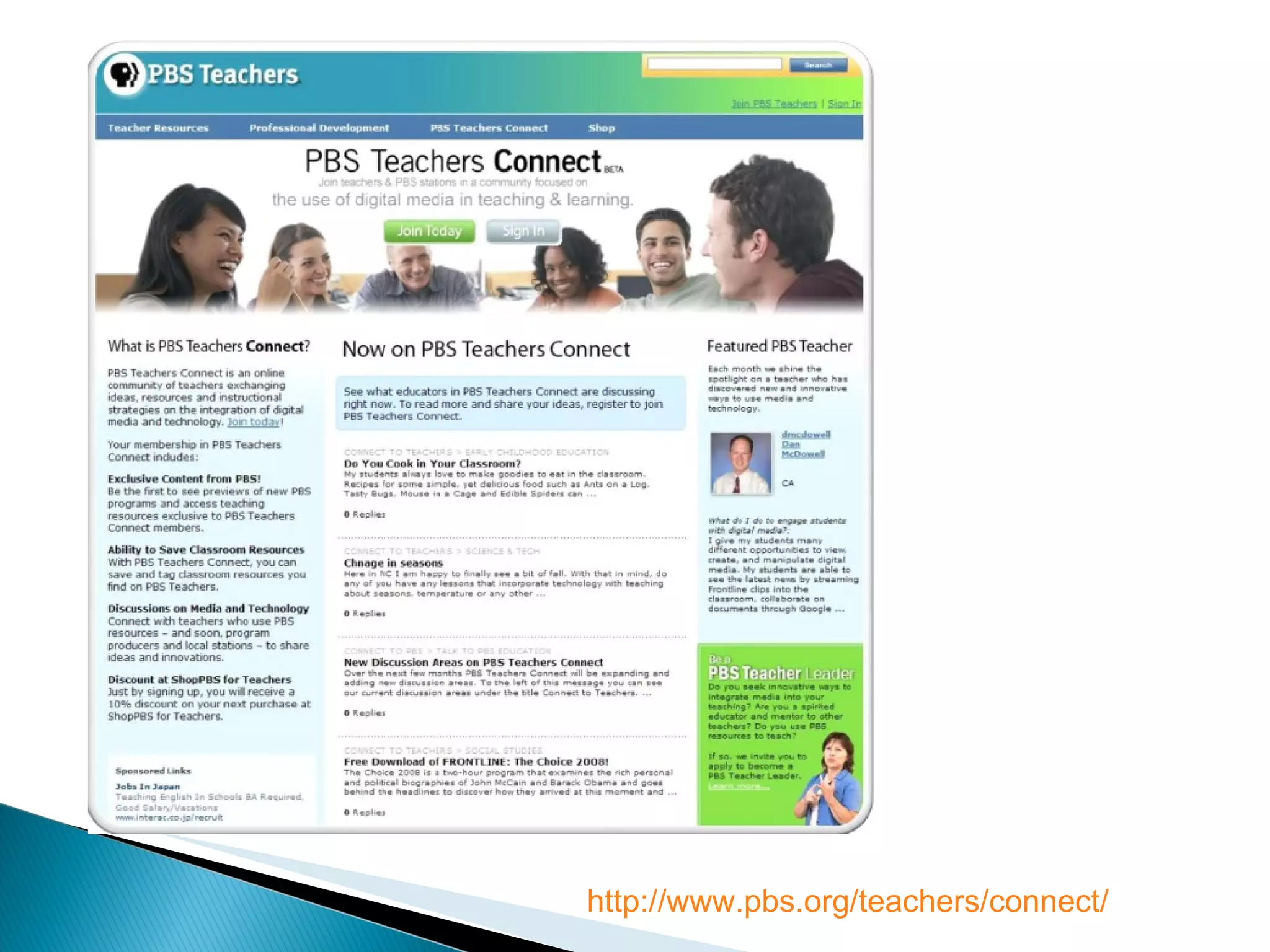
http://www.pbs.org/teachers/connect/
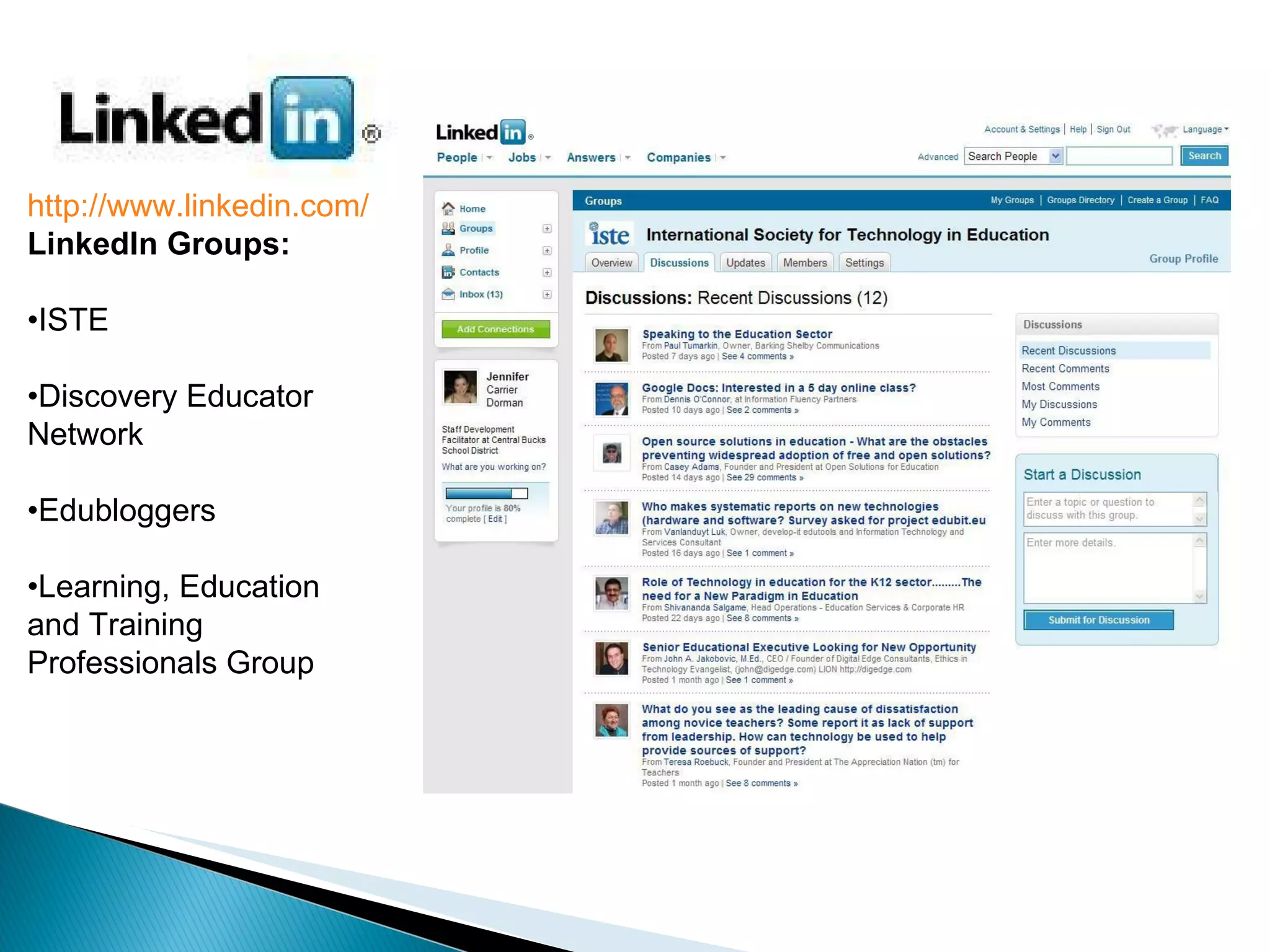
http://www.linkedin.com/ LinkedIn Groups: • ISTE • Discovery Educator Network • Edubloggers • Learning, Education and Training Professionals Group
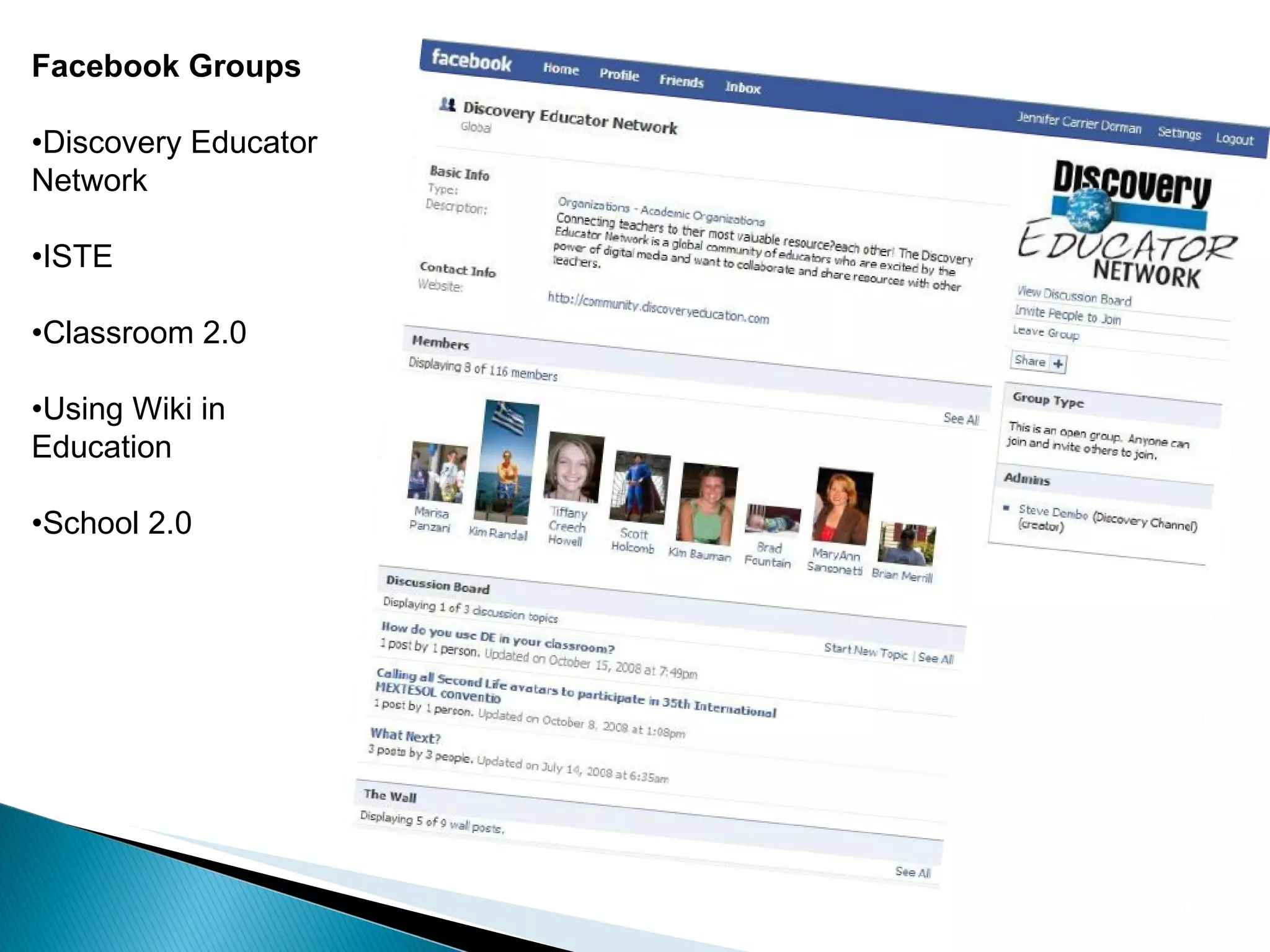
Facebook Groups • Discovery Educator Network • ISTE • Classroom 2.0 • Using Wiki in Education • School 2.0
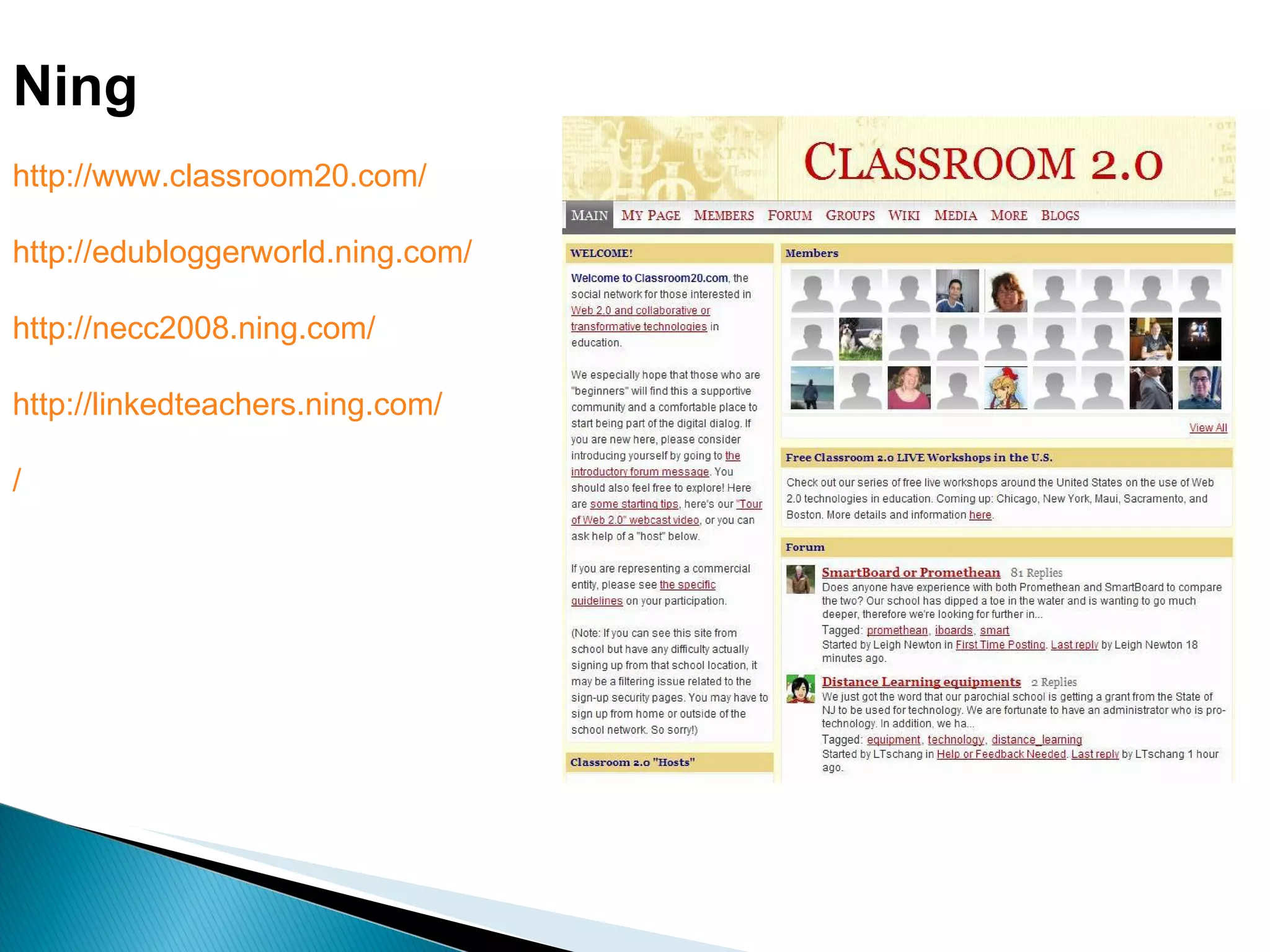
Ning http://www.classroom20.com/ http://edubloggerworld.ning.com/ http://necc2008.ning.com/ http://linkedteachers.ning.com/ /
Consider what your national, state, and regional professional organizations offer for educators • List of Professional Organizations: http://snipurl.com/proforg Professional Organizations
RSS Aggregators & Internet Start Pages
Customized News Feeds http://www.google.com/reader/
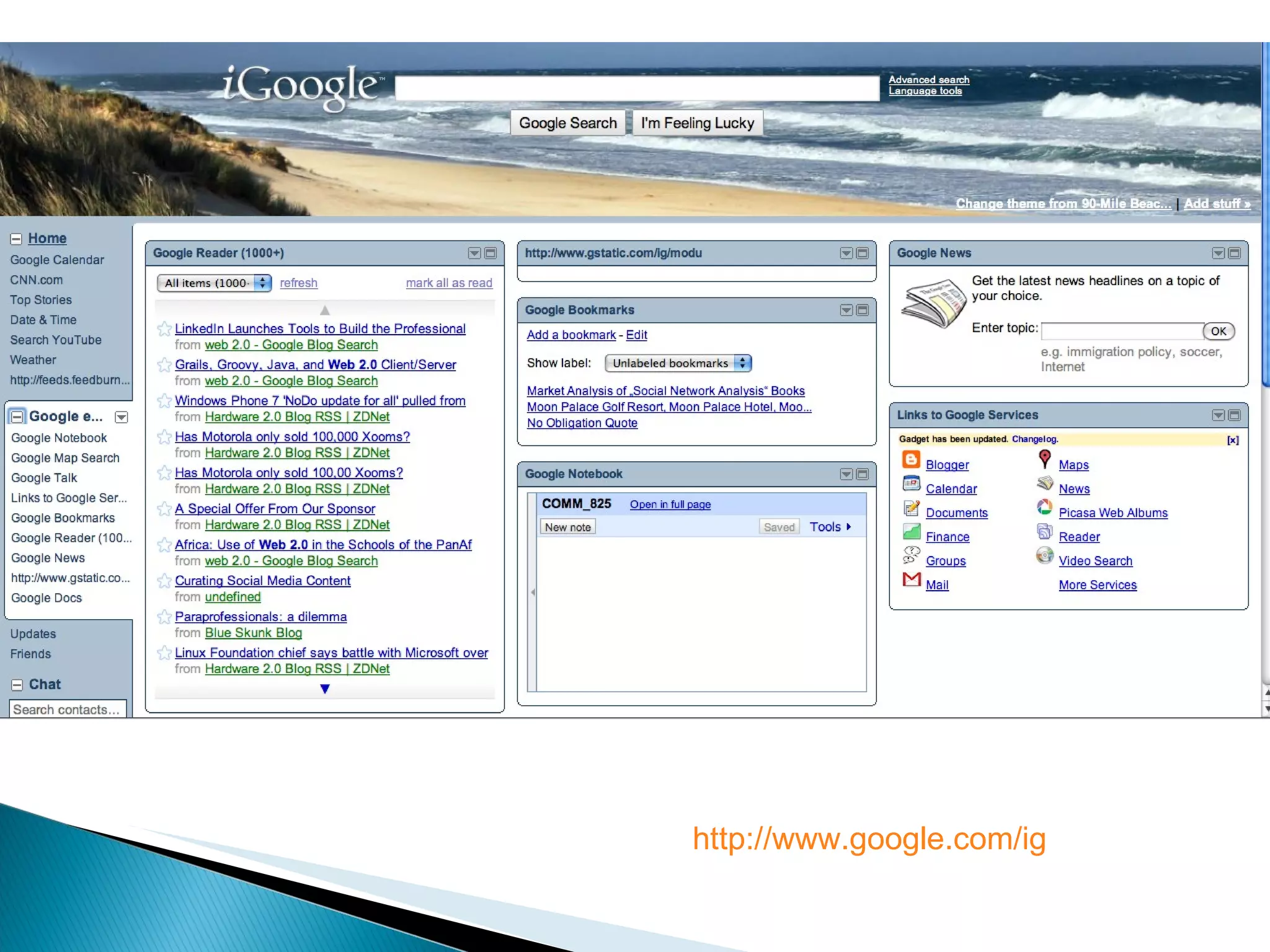
http://www.google.com/ig
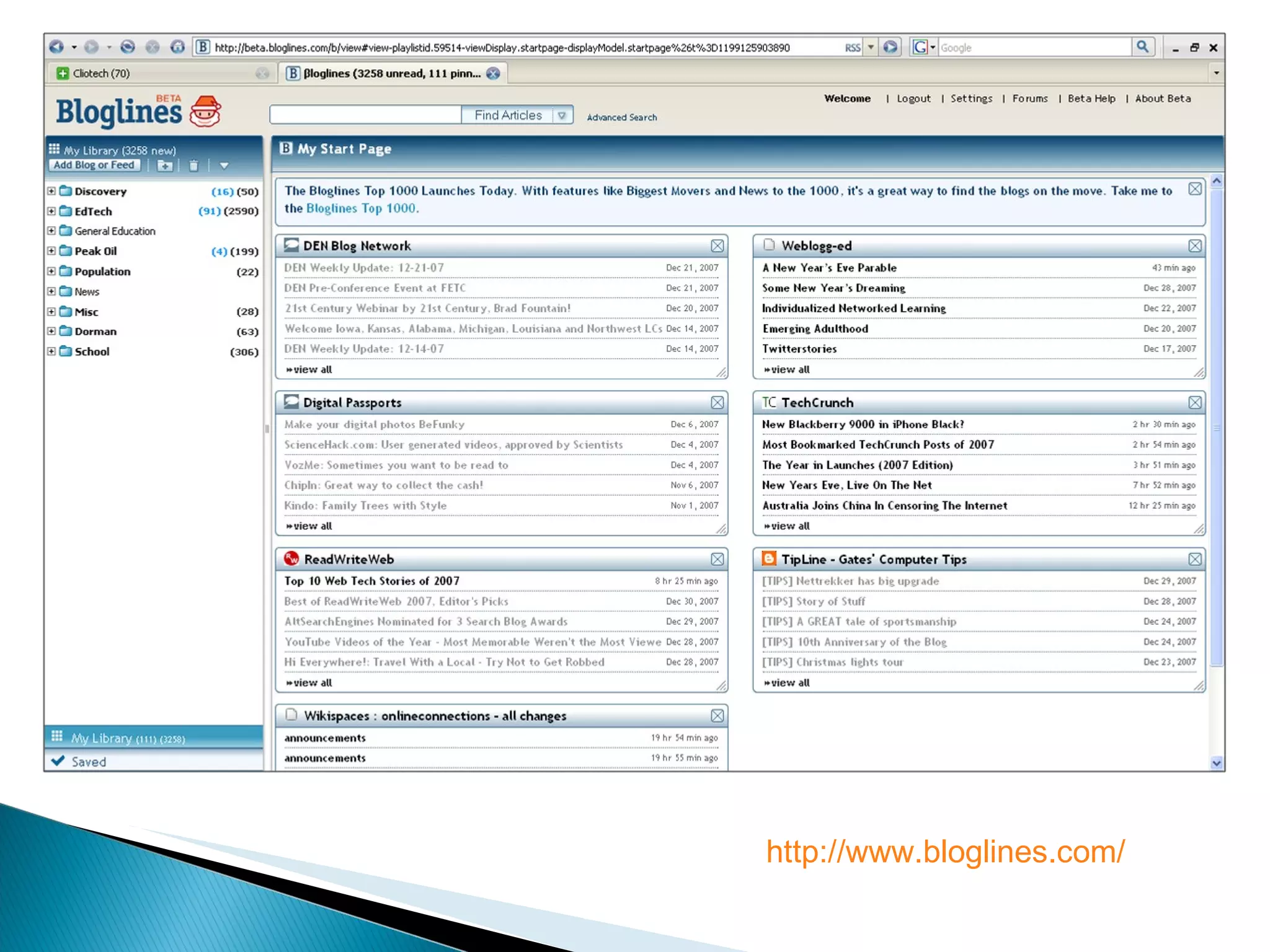
http://www.bloglines.com/
Microblogs
How one principal uses Twitter
http://twitter.com/
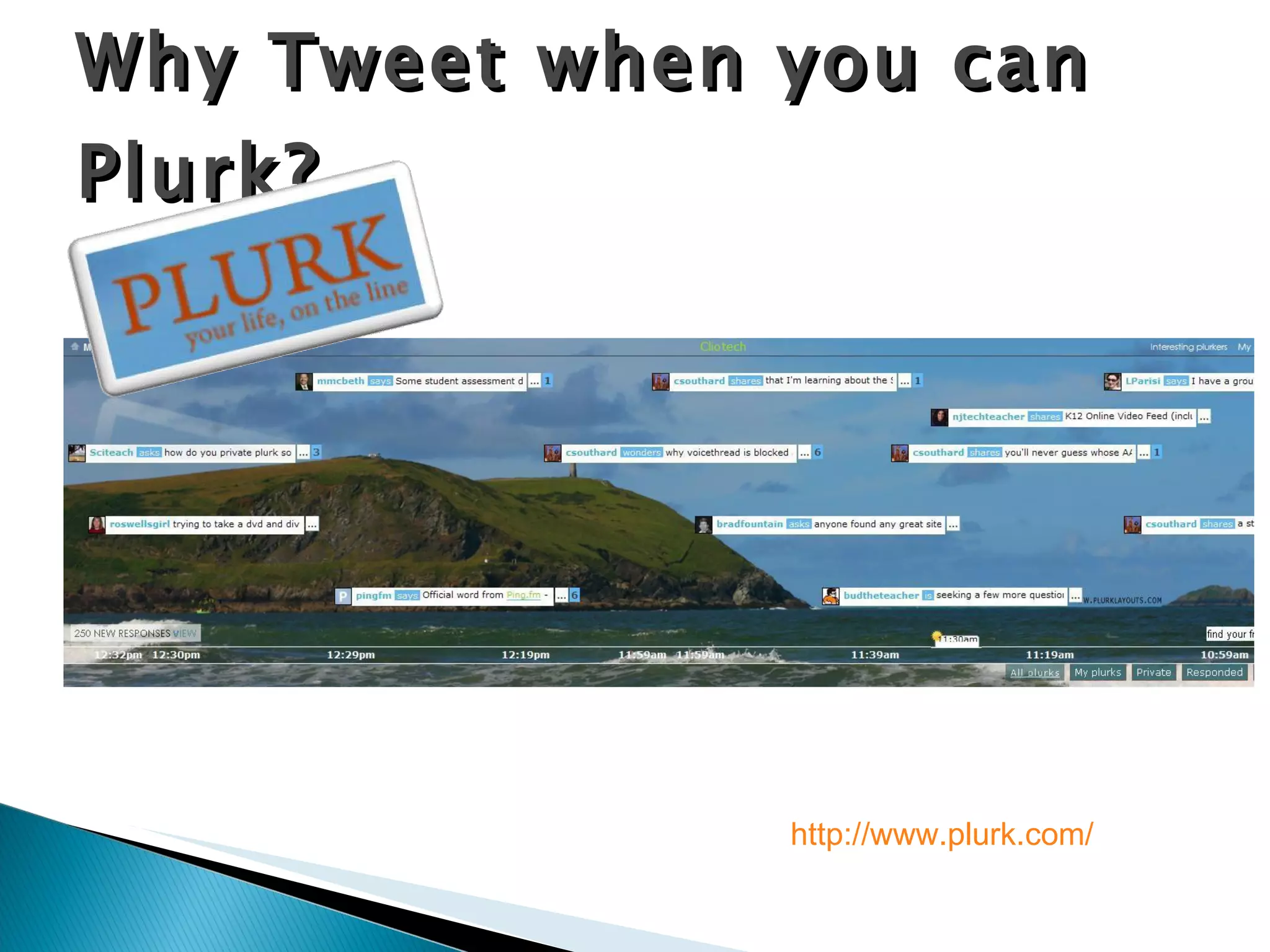
Why Tweet when you can Plurk? http://www.plurk.com/
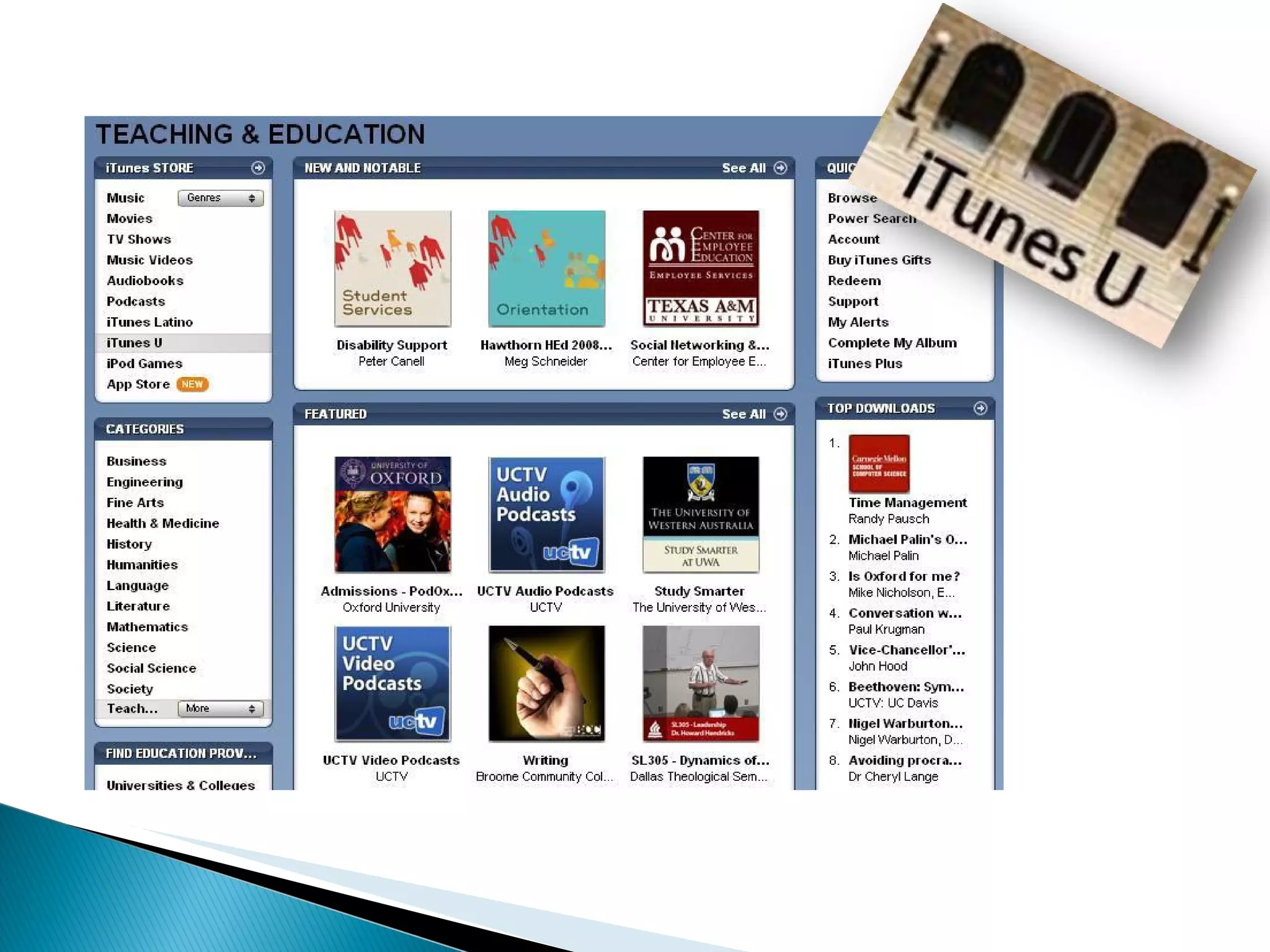
Podcasts
 
 
• Wikispaces http://www.wikispaces.com/site/for/teachers • PB Wiki http://pbwiki.com/education.wiki Education-Friendly Wikis
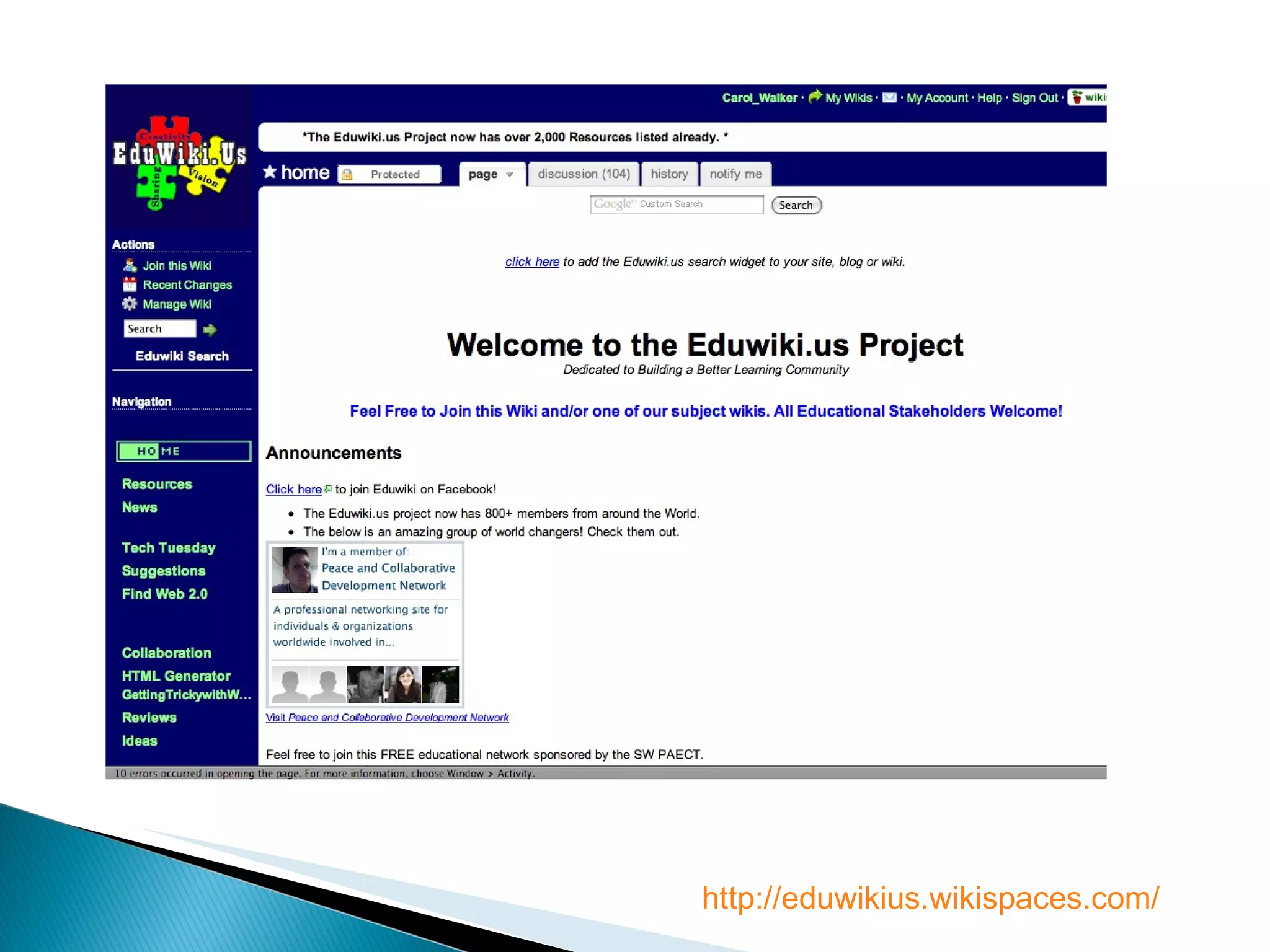
http://eduwikius.wikispaces.com/
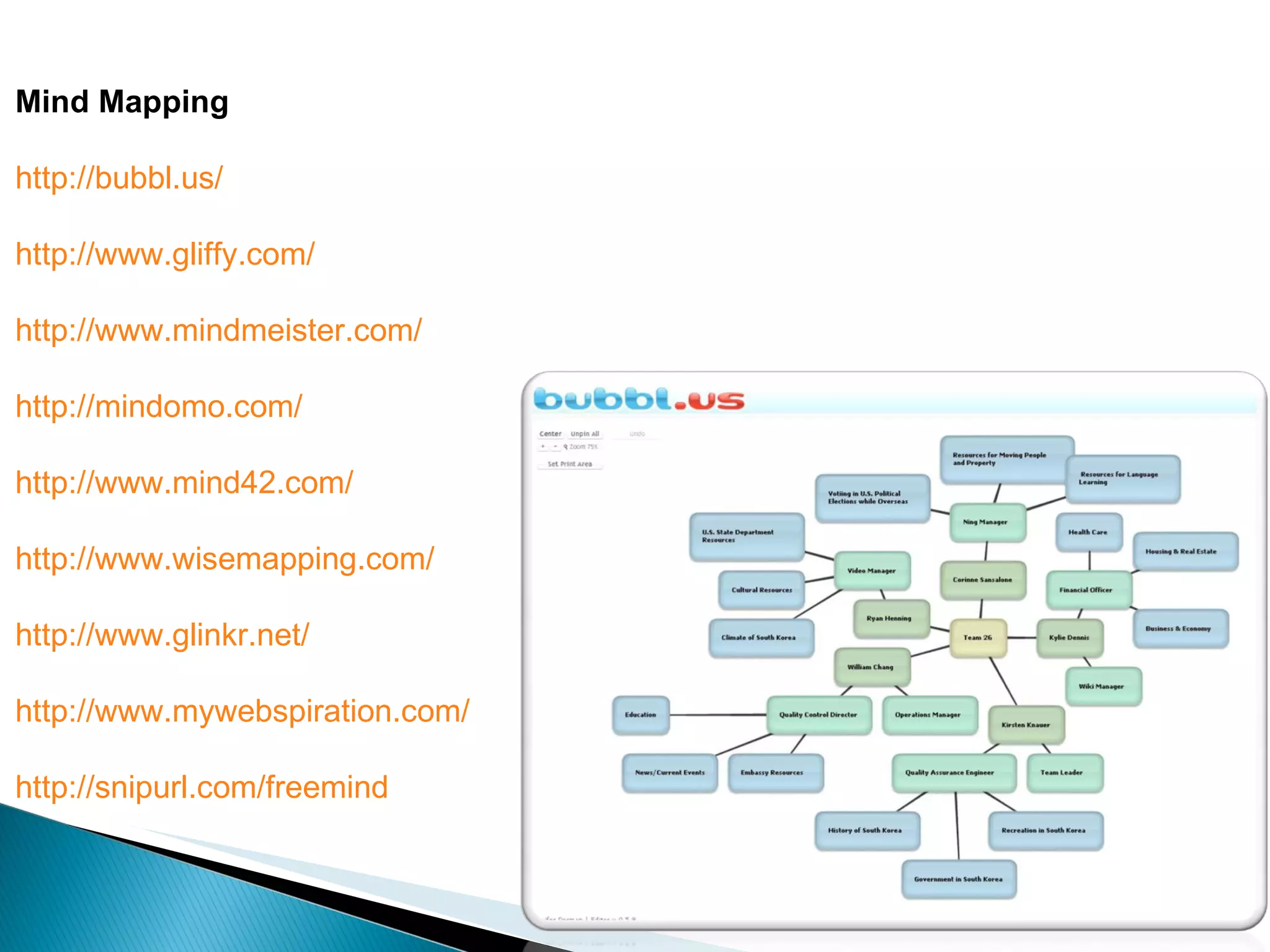
Mind Mapping http://bubbl.us/ http://www.gliffy.com/ http://www.mindmeister.com/ http://mindomo.com/ http://www.mind42.com/ http://www.wisemapping.com/ http://www.glinkr.net/ http://www.mywebspiration.com/ http://snipurl.com/freemind
Beran, T., & Li, Q. (2005). Cyber-harassment: A study of a new method for an old behavior.  Journal of Educational Computing Research,  32(3), 265 – 277. Retrieved from http://navigator-iup.passhe.edu/login?url=http://search.ebscohost.com/login.aspx?direct=true&db=ehh&jid=E69&site=ehost-live Dilmac, B. (2009). Psychological needs as a predictor or cyber bullying: a Preliminary report on college students.  Educational Sciences: Theory and Practice , 9(3), 1307 – 1325. Retrieved from http://www.eric.ed.gov:80/ERICDocs/data/ericdocs2sql/content_storage_01/0000019b/80/45/98/43.pdf Haber, J. D. & Haber, S. B. (2007). Cyberbullying: A “virtual” camp nightmare?  Camping Magazine,  80, 52 – 57. Juvonen, J., & Gross, E. F. (2008). Extending the school grounds? – Bullying experiences in cyberspace.  Journal of School Health , 78(9), 496 – 505. doi:10.1111/j.1746-1561.2008.00335.x Kowalski, R. M., & Limber, S. P. (2007). Electronic bullying among middle school students.  Journal of Adolescent Health  41, 22 – 30. doi:10.1016/j.jadohealth.2007.08.018 Li, Q. (2008). A cross-cultural comparison of adolescents’ experience related to cyberbullying.  Educational Research , 50(3), 223 – 234. doi:10.1080/00131880802309333 Raskauskas, J., & Stoltz, A.D. (2007). Involvement in traditional and electronic bullying among adolescents.  Developmental Psychology,  43(3), 564 – 575. doi:10.1037/0012-1649.43.3.564 Ybarra, M.L., & Mitchell, K. J. (2004). Youth engaging in online harassment: Associations with caregiver-child relationships, Internet use, and personal characteristics.  Journal of Adolescence , 27, 319 – 336. doi:10.1016/j.adolescence.2004.03.2007 Walker, C.M., Rajan Sockman, B., & Koehn, S. (2011) An Exploratory Study or Cyberbullying with Undergraduate College Students.  Tech Trends: Leading and Learning in Education, 55(2), 31 – 38. http://jdorman.wikispaces.com/ Sources Cited

MCOM 510 Class 11

  • 1.
  • 2.
    Students will analyzeevents on the Internet and collaborate to develop methods to help students deal with negative Internet experiences. Students will evaluate the concept of Personal Learning Networks (PLN) to establish an Internet PLN for continuing education. Objectives
  • 3.
  • 4.
    Definition: “The use of interactive technologies . . . to deliberately and repeatedly deliver slanderous, harrassing, obsessive, or obscene messages that result in harm to the recipient” (Walker, et al. 2011). Plethora of Technology 276.6 million wireless subscribers, June 2009 1.36 trillion SMS messages in 2009 3.5 billion pieces of content every week (Facebook, 2010)
  • 5.
  • 6.
    Traditional vs. Cyber24/7 Access (Kowalski & Limber, 2007; Raskuaskas & Stoltz, 2007) Frequency (Ybarra, Diener-West & Leaf, 2007) Anonymity Greater disparity of power (Raskuaskas & Stoltz, 2007) Using Cyber – tools to Bully Bully (Kowalski & Limber, 2007; Raskuaskas & Stoltz, 2007) Camera Phones (Kowalski & Limber, 2007)
  • 7.
    Connection between Schooland Cyberspace Juvonen and Gross (2008) Ybarra, Diener-West, and Leaf (2007) Culture Canadian & Chinese (Li, 2008) Hispanic and White (Ybaara & Mitchell, 2007) Gender Girls (Dilmac, 2009) Boys (Beran & Li, 2005; Ybarra & Mitchell, 2007) Gender and Culture
  • 8.
    Understanding technology usedInstant messaging, email, chat rooms (Kowalski & Limber, 2007) Text messaging, Internet or Website, camera phones (Raskuaskas & Stoltz, 2007) Autonomy of youth Agatston, Kowalski, & Limber (2005) Jovonen & Gross (2008) Involvement of adults Parents, teachers, and administrators
  • 9.
    POWER IT UP!Your Personal Learning Network
  • 10.
  • 11.
  • 12.
  • 13.
    http://www.linkedin.com/ LinkedIn Groups:• ISTE • Discovery Educator Network • Edubloggers • Learning, Education and Training Professionals Group
  • 14.
    Facebook Groups •Discovery Educator Network • ISTE • Classroom 2.0 • Using Wiki in Education • School 2.0
  • 15.
    Ning http://www.classroom20.com/ http://edubloggerworld.ning.com/http://necc2008.ning.com/ http://linkedteachers.ning.com/ /
  • 16.
    Consider what yournational, state, and regional professional organizations offer for educators • List of Professional Organizations: http://snipurl.com/proforg Professional Organizations
  • 17.
    RSS Aggregators &Internet Start Pages
  • 18.
    Customized News Feedshttp://www.google.com/reader/
  • 19.
  • 20.
  • 21.
  • 22.
    How one principaluses Twitter
  • 23.
  • 24.
    Why Tweet whenyou can Plurk? http://www.plurk.com/
  • 25.
  • 26.
  • 27.
  • 28.
    • Wikispaces http://www.wikispaces.com/site/for/teachers• PB Wiki http://pbwiki.com/education.wiki Education-Friendly Wikis
  • 29.
  • 30.
    Mind Mapping http://bubbl.us/http://www.gliffy.com/ http://www.mindmeister.com/ http://mindomo.com/ http://www.mind42.com/ http://www.wisemapping.com/ http://www.glinkr.net/ http://www.mywebspiration.com/ http://snipurl.com/freemind
  • 31.
    Beran, T., &Li, Q. (2005). Cyber-harassment: A study of a new method for an old behavior. Journal of Educational Computing Research, 32(3), 265 – 277. Retrieved from http://navigator-iup.passhe.edu/login?url=http://search.ebscohost.com/login.aspx?direct=true&db=ehh&jid=E69&site=ehost-live Dilmac, B. (2009). Psychological needs as a predictor or cyber bullying: a Preliminary report on college students. Educational Sciences: Theory and Practice , 9(3), 1307 – 1325. Retrieved from http://www.eric.ed.gov:80/ERICDocs/data/ericdocs2sql/content_storage_01/0000019b/80/45/98/43.pdf Haber, J. D. & Haber, S. B. (2007). Cyberbullying: A “virtual” camp nightmare? Camping Magazine, 80, 52 – 57. Juvonen, J., & Gross, E. F. (2008). Extending the school grounds? – Bullying experiences in cyberspace. Journal of School Health , 78(9), 496 – 505. doi:10.1111/j.1746-1561.2008.00335.x Kowalski, R. M., & Limber, S. P. (2007). Electronic bullying among middle school students. Journal of Adolescent Health 41, 22 – 30. doi:10.1016/j.jadohealth.2007.08.018 Li, Q. (2008). A cross-cultural comparison of adolescents’ experience related to cyberbullying. Educational Research , 50(3), 223 – 234. doi:10.1080/00131880802309333 Raskauskas, J., & Stoltz, A.D. (2007). Involvement in traditional and electronic bullying among adolescents. Developmental Psychology, 43(3), 564 – 575. doi:10.1037/0012-1649.43.3.564 Ybarra, M.L., & Mitchell, K. J. (2004). Youth engaging in online harassment: Associations with caregiver-child relationships, Internet use, and personal characteristics. Journal of Adolescence , 27, 319 – 336. doi:10.1016/j.adolescence.2004.03.2007 Walker, C.M., Rajan Sockman, B., & Koehn, S. (2011) An Exploratory Study or Cyberbullying with Undergraduate College Students. Tech Trends: Leading and Learning in Education, 55(2), 31 – 38. http://jdorman.wikispaces.com/ Sources Cited

Editor's Notes

  • #5 Plethora of tech CTIA – International assoc. for wireless telecommunication industry (2010) - # of wireless subscribers increased 78% from 1995 – 2009, with 276.6 million in june 2009 1.36 trillion SMS messages (short message service) in 2009, recent article teenage girls send ave of 100 text messages daily FB – more than 3.5 billion pieces of content (web links, news stories, posts, pics, etc) every week
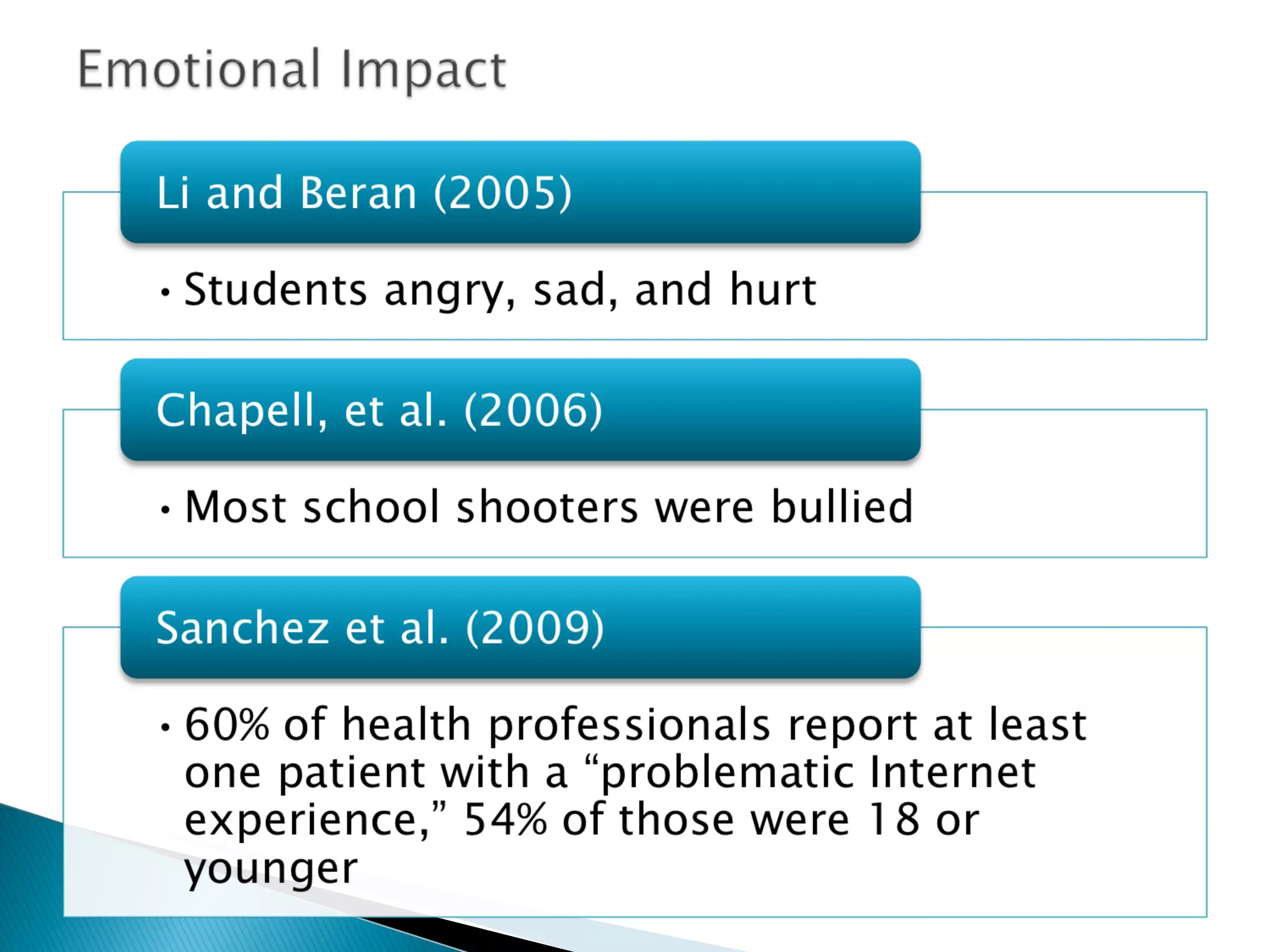
  • #6 Emotional impact Li and Beran (2005) - Students report feeling angry, sad and hurt when CB Chapell et al (2006) – number of studies found that most school shooters had been bullied Sanchez et al (2009) – 60% of health professional report at least one patient with a “problematic internet experience,” 54% of those reported were 18 0r younger News reports of teens turning to suicide (Megan Meier – mom acted like BF, 2007); Phoebe Prince (2 teenagers suspended in Mass for CB, 2010)
  • #7 Trad vs. CB Kowalski & Limber (2007) – 24/7 access – unlike trad when students could be safe at home Ybarra, Diener-West & Leaf (2007) – CB 12 or more times a year may result in increased behavior problems; 1 in 5 reported bringing weapon to school within month before survey Juvonen & Gross (2008) – survey 1,454 12 – 17 year old; 19% CB 7 or more times in past year Anonymity Ability to bully w/o victim knowing who the bully is gives bully more power Kowalski & Limber (2007) – victim doesn’t know if there is one, or several bullies Emotional Impact Bully is buffered from concern about victim b/c no personal contact w/ CB (Kowalski & Limber, 2007); may believe they are just joking, can’t see the emotional response of victim (Kowalski & Raskuaskas) Camera phones – intimate pics are quickly disseminated via cell phones and social networking (Kowalski & Limber)
  • #8 Connection Juvonen – N = 1,454, 72% of youth reported being CB at least once in the past year, youth bullied in school face higher probability of being CB Ybarra – N = 1500, 64% who reported CB were not being harassed in school Culture Li – Middle school students in Canada and China – 157 students 25% of Cnadian and 202 students, 60% of chinese had been CB Ybarra & Mitchell (2007) – Hispanic and white youth were most likely to frequently harass others using the Internet Gender – Girls – (Dilmac, 2009) -covert style, less evident, but reported more concern Boys – (Li, 2005, Ybarra & Mitchell, 2007) - overt CB, less likely to see a problem with it
  • #9 Understanding technology used Kowalksi – 3,767 middle school students Raskuaskas – 84 students 13 – 18 years Autonomy of youth – Jovonen & Gross (2008) – those being bullied think they are capable of dealing w/ it alone by blocking screen names or ignoring & don’t turn to parents b/c afraid of losing access to technology Agatston, Kowalski, & Limber (2005) – students unlikely to report CB to the school, don’t think adults can help resolve the issue Involvement of adults Kowalski & Limber (2007) – admin has to educate teachers and youth of issue Rasuaskas & Stoltz, Ybarra, Diener-West, & Leaf (2007) – parents need to be willing to assist admin DISCUSS
  • #10 Free response – type your concept or understanding of what a PLN is Discuss, then click for all images
  • #18 Finding Feeds • Blogs, podcasts, news sites, and many other media services syndicate their content through RSS feeds
  • #19 Open Google, go to Reader and show how to search for cyberbullying news feed Click Add a subscription and type in CB
  • #22 A microblog differs from a traditional blog in that its content is typically smaller in both actual and aggregate file size. Microblogs "allow users to exchange small elements of content such as short sentences, individual images, or video links".[1]
  • #27 iTunes and Podcasts