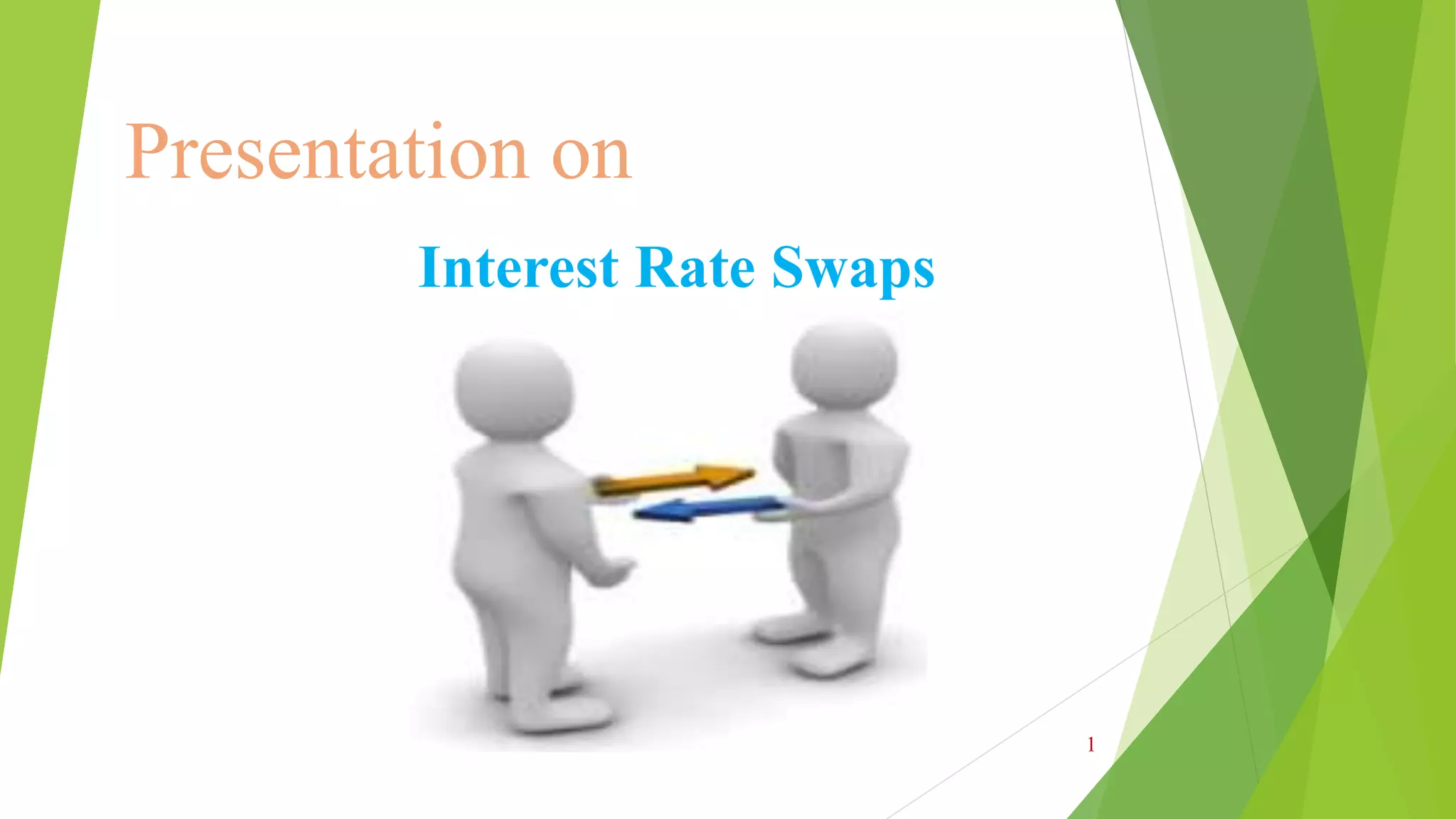


Interest Rate Swaps
1
Presentation on
Prepared for
Mozaffar Alam Chowdhury
Presented by
Md. Manik Mia
ID-12202146
What is a Swap?
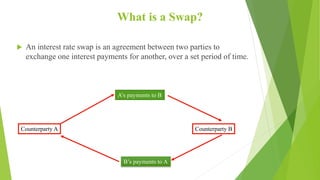
 An interest rate swap is an agreement between two parties to
exchange one interest payments for another, over a set period of time.
Counterparty A Counterparty B
B’s payments to A
A’s payments to B
Cont.
 Swaps are derivative contracts and trade over-the-
counter.
 A swap is an exchange of cash flows, CFs.
Interest Rate Swaps: Types
 There are four types of swaps:
1. Interest Rate Swaps: Exchange of fixed-rate payments for
floating-rate payments
2. Currency Swaps: Exchange of liabilities in different
currencies
3. Cross-Currency Swaps: Combination of Interest rate and
Currency swap
4. Credit Default Swaps: Exchange of premium payments for
default protection 5
Uses for Swaps
Interest rate swaps became an essential tool for many types of investors,
as well as corporate treasurers, risk managers and banks, because they
have so many potential uses.
These include on:
 Portfolio management
 Speculation
 Corporate finance
 Risk management
 Rate on bond issuance.
Risks Associated with Interest Rate Swaps
Like most non-government fixed income investments, interest-rate
swaps involve two primary risks:
 Interest rate risk and
 Credit Risk
Conclusion
 The interest rate swaps market started decades ago as a way for
corporations to manage their debt and has since grown into one of
the most useful and liquid derivatives markets in the world.
Interest rate swap

Interest rate swap

  • 1.
  • 2.
    Prepared for Mozaffar AlamChowdhury Presented by Md. Manik Mia ID-12202146
  • 3.
    What is aSwap?  An interest rate swap is an agreement between two parties to exchange one interest payments for another, over a set period of time. Counterparty A Counterparty B B’s payments to A A’s payments to B
  • 4.
    Cont.  Swaps arederivative contracts and trade over-the- counter.  A swap is an exchange of cash flows, CFs.
  • 5.
    Interest Rate Swaps:Types  There are four types of swaps: 1. Interest Rate Swaps: Exchange of fixed-rate payments for floating-rate payments 2. Currency Swaps: Exchange of liabilities in different currencies 3. Cross-Currency Swaps: Combination of Interest rate and Currency swap 4. Credit Default Swaps: Exchange of premium payments for default protection 5
  • 6.
    Uses for Swaps Interestrate swaps became an essential tool for many types of investors, as well as corporate treasurers, risk managers and banks, because they have so many potential uses. These include on:  Portfolio management  Speculation  Corporate finance  Risk management  Rate on bond issuance.
  • 7.
    Risks Associated withInterest Rate Swaps Like most non-government fixed income investments, interest-rate swaps involve two primary risks:  Interest rate risk and  Credit Risk
  • 8.
    Conclusion  The interestrate swaps market started decades ago as a way for corporations to manage their debt and has since grown into one of the most useful and liquid derivatives markets in the world.