FOREIGN EXCHANGE RISK
 Also known as exchange rate risk or currency
  risk.
 Financial risk posed by an exposure to
  unanticipated changes in the exchange rate
  between two currencies.
 Investors and multinational businesses exporting
  or importing goods and services or making
  foreign investments throughout the global
  economy are faced with an exchange rate risk
  which can have severe financial consequences if
  not managed appropriately.
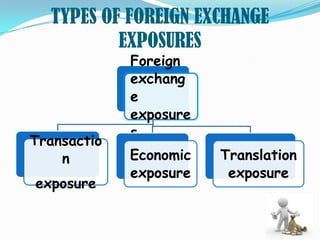
TYPES OF FOREIGN EXCHANGE
          EXPOSURES
             Foreign
             exchang
             e
             exposure
             s
Transactio
    n        Economic   Translation
             exposure    exposure
exposure
TRANSACTION EXPOSURE
 Involves the possible exchange on loss or gain
  on existing    foreign currency-denominated
  transactions.
 To realize the domestic value of its foreign-
  denominated cash flows, the firm must
  exchange foreign currency for domestic
  currency.
 Exchange rates may move by up to 10% within
  any single year, which can significantly affect
  a firm's cash flows, meaning a 10% decline in
  the value of a receivable or a 10% rise in the
  value of a payable. Such outcomes could be
  troublesome as export profits could be negated
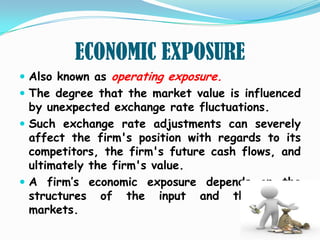
ECONOMIC EXPOSURE
 Also known as operating exposure.
 The degree that the market value is influenced
  by unexpected exchange rate fluctuations.
 Such exchange rate adjustments can severely
  affect the firm's position with regards to its
  competitors, the firm's future cash flows, and
  ultimately the firm's value.
 A firm’s economic exposure depends on the
  structures of the input and the output
  markets.
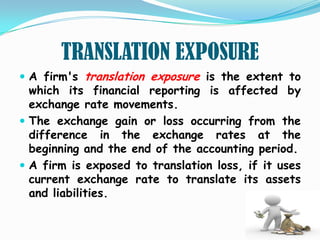
TRANSLATION EXPOSURE
 A firm's translation exposure is the extent to
  which its financial reporting is affected by
  exchange rate movements.
 The exchange gain or loss occurring from the
  difference in the exchange rates at the
  beginning and the end of the accounting period.
 A firm is exposed to translation loss, if it uses
  current exchange rate to translate its assets
  and liabilities.
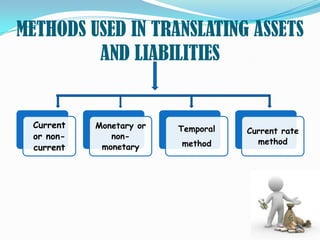
METHODS USED IN TRANSLATING ASSETS
         AND LIABILITIES


 Current   Monetary or   Temporal   Current rate
 or non-      non-
                         method       method
 current    monetary
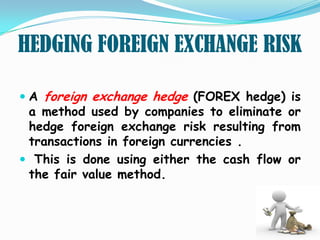
HEDGING FOREIGN EXCHANGE RISK

 A foreign exchange hedge (FOREX hedge) is
  a method used by companies to eliminate or
  hedge foreign exchange risk resulting from
  transactions in foreign currencies .
 This is done using either the cash flow or
 the fair value method.
ALTERNATIVES
 Three alternatives available to companies to
 hedge against the foreign exchange exposure:

 Forward contract
 Foreign currency option
 Money market operations
Foreign exchange risk and hedging

Foreign exchange risk and hedging

  • 2.
    FOREIGN EXCHANGE RISK Also known as exchange rate risk or currency risk.  Financial risk posed by an exposure to unanticipated changes in the exchange rate between two currencies.  Investors and multinational businesses exporting or importing goods and services or making foreign investments throughout the global economy are faced with an exchange rate risk which can have severe financial consequences if not managed appropriately.
  • 3.
    TYPES OF FOREIGNEXCHANGE EXPOSURES Foreign exchang e exposure s Transactio n Economic Translation exposure exposure exposure
  • 4.
    TRANSACTION EXPOSURE  Involvesthe possible exchange on loss or gain on existing foreign currency-denominated transactions.  To realize the domestic value of its foreign- denominated cash flows, the firm must exchange foreign currency for domestic currency.  Exchange rates may move by up to 10% within any single year, which can significantly affect a firm's cash flows, meaning a 10% decline in the value of a receivable or a 10% rise in the value of a payable. Such outcomes could be troublesome as export profits could be negated
  • 5.
    ECONOMIC EXPOSURE  Alsoknown as operating exposure.  The degree that the market value is influenced by unexpected exchange rate fluctuations.  Such exchange rate adjustments can severely affect the firm's position with regards to its competitors, the firm's future cash flows, and ultimately the firm's value.  A firm’s economic exposure depends on the structures of the input and the output markets.
  • 6.
    TRANSLATION EXPOSURE  Afirm's translation exposure is the extent to which its financial reporting is affected by exchange rate movements.  The exchange gain or loss occurring from the difference in the exchange rates at the beginning and the end of the accounting period.  A firm is exposed to translation loss, if it uses current exchange rate to translate its assets and liabilities.
  • 7.
    METHODS USED INTRANSLATING ASSETS AND LIABILITIES Current Monetary or Temporal Current rate or non- non- method method current monetary
  • 8.
    HEDGING FOREIGN EXCHANGERISK  A foreign exchange hedge (FOREX hedge) is a method used by companies to eliminate or hedge foreign exchange risk resulting from transactions in foreign currencies .  This is done using either the cash flow or the fair value method.
  • 9.
    ALTERNATIVES  Three alternativesavailable to companies to hedge against the foreign exchange exposure:  Forward contract  Foreign currency option  Money market operations