Interactive Science Notebooks
What is an Interactive  Science Notebook (ISN)? A student thinking tool – one that allows you to organize your thoughts & reflections in a fun and creative way A way to access and process the information using different parts of your brain (done through writing, drawing and discussion) A means for all students to work at their level A formative assessment tool for teachers KEY TO SCIENCE SUCCESS!!
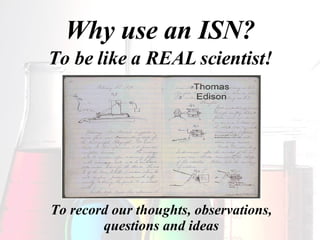
Why use an ISN? To be like a REAL scientist! To record our thoughts, observations, questions and ideas
How does it work? Your ISN will be only used for science class and a new one will be created for each unit It will be divided into 2 parts – a left side and a right side It will contain a detailed table of contents Every page will be numbered and dated It will be the  key  to your success in 7 th  grade science
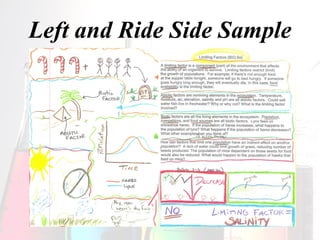
Left Side-Right Side:  Which Side? The left side of your ISN  LOVES   student work This side allows you to  c r e a t i v e l y  interact with what we are learning The right side of  your ISN is RESTRICTED This side contains ONLY information given to you by your teacher – nothing else
The Right Side   This is the information given to you by your teacher during class Examples may include: Lecture, video or textbook Notes  Lab Activities Summaries Data from Experiments Classroom Specific Information Vocabulary  Information on this side is TESTABLE material
The Left Side Let your   c r e a t i v i t y  shine
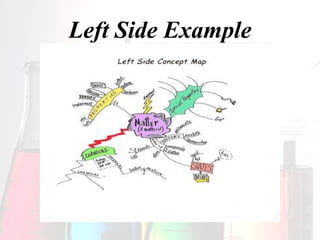
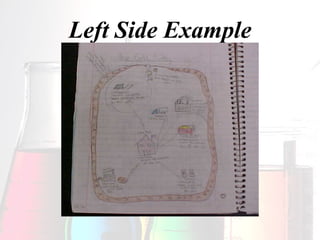
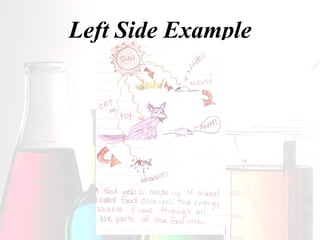
Left Side Options This is  your  side to show you understand  the material This   c o l o r f u l  and creative interaction helps your brain to process and remember the information better The result is greater success in science!! Left side choices Concept Maps Drawings/illustrations Poems/raps/songs Flow Charts Graphs Teach your parent
Left Side Example
Left Side Example
Left Side Example
Left and Ride Side Sample
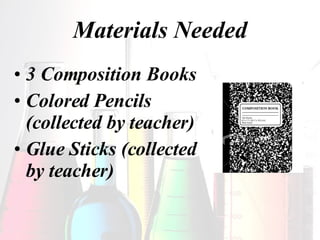
Materials Needed 3 Composition Books Colored Pencils (collected by teacher) Glue Sticks (collected by teacher)
Setting up the ISN Be sure to follow along CAREFULLY
1 st  Page In the top right hand corner of the page Your name Your class period The name of the unit centered on the page:  Populations & Ecosystems A colored illustration (or two) representing your ideas of the unit topic
Back of 1 st  Page Neatly center and glue the page titled  Left-Side Options
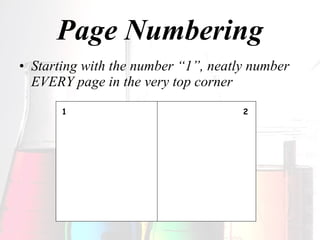
Page Numbering Starting with the number “1”, neatly number EVERY page in the very top corner 1 2
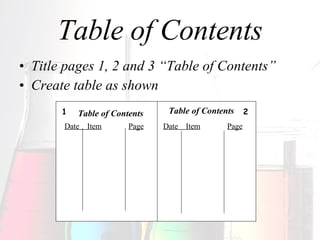
Table of Contents Title pages 1, 2 and 3 “Table of Contents” Create table as shown Table of Contents Table of Contents Date  Item Page Date  Item Page 1 2
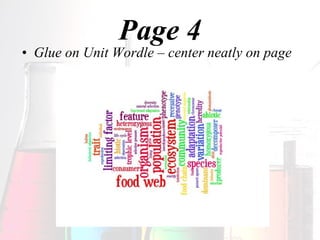
Page 4 Glue on Unit Wordle – center neatly on page
Pages 6 & 7 Center and Glue Safety Information
Page 8 Center and Glue Notebook Guidelines
Page 9 & Beyond Each page from this point on needs to have a date below the page number Odd numbered pages (right side) are for information from your ODD teacher Even numbered pages (left side) are for you to interact and creatively/colorfully respond to the information we’re discussing

Interactive Science Notebooks

  • 1.
  • 2.
    What is anInteractive Science Notebook (ISN)? A student thinking tool – one that allows you to organize your thoughts & reflections in a fun and creative way A way to access and process the information using different parts of your brain (done through writing, drawing and discussion) A means for all students to work at their level A formative assessment tool for teachers KEY TO SCIENCE SUCCESS!!
  • 3.
    Why use anISN? To be like a REAL scientist! To record our thoughts, observations, questions and ideas
  • 4.
    How does itwork? Your ISN will be only used for science class and a new one will be created for each unit It will be divided into 2 parts – a left side and a right side It will contain a detailed table of contents Every page will be numbered and dated It will be the key to your success in 7 th grade science
  • 5.
    Left Side-Right Side: Which Side? The left side of your ISN LOVES student work This side allows you to c r e a t i v e l y interact with what we are learning The right side of your ISN is RESTRICTED This side contains ONLY information given to you by your teacher – nothing else
  • 6.
    The Right Side This is the information given to you by your teacher during class Examples may include: Lecture, video or textbook Notes Lab Activities Summaries Data from Experiments Classroom Specific Information Vocabulary Information on this side is TESTABLE material
  • 7.
    The Left SideLet your c r e a t i v i t y shine
  • 8.
    Left Side OptionsThis is your side to show you understand the material This c o l o r f u l and creative interaction helps your brain to process and remember the information better The result is greater success in science!! Left side choices Concept Maps Drawings/illustrations Poems/raps/songs Flow Charts Graphs Teach your parent
  • 9.
  • 10.
  • 11.
  • 12.
    Left and RideSide Sample
  • 13.
    Materials Needed 3Composition Books Colored Pencils (collected by teacher) Glue Sticks (collected by teacher)
  • 14.
    Setting up theISN Be sure to follow along CAREFULLY
  • 15.
    1 st Page In the top right hand corner of the page Your name Your class period The name of the unit centered on the page: Populations & Ecosystems A colored illustration (or two) representing your ideas of the unit topic
  • 16.
    Back of 1st Page Neatly center and glue the page titled Left-Side Options
  • 17.
    Page Numbering Startingwith the number “1”, neatly number EVERY page in the very top corner 1 2
  • 18.
    Table of ContentsTitle pages 1, 2 and 3 “Table of Contents” Create table as shown Table of Contents Table of Contents Date Item Page Date Item Page 1 2
  • 19.
    Page 4 Glueon Unit Wordle – center neatly on page
  • 20.
    Pages 6 &7 Center and Glue Safety Information
  • 21.
    Page 8 Centerand Glue Notebook Guidelines
  • 22.
    Page 9 &Beyond Each page from this point on needs to have a date below the page number Odd numbered pages (right side) are for information from your ODD teacher Even numbered pages (left side) are for you to interact and creatively/colorfully respond to the information we’re discussing