Interactive Student
Notebooks
Amy Schwartz &
Katherine Leatherman
HAVE YOU EVER HEARD
YOUR STUDENTS SAY . . .I can’t
remember
what we did
in class
yesterday.
I was absent last week; did I miss anything?
WHAT IS AN INTERACTIVE
STUDENT NOTEBOOK?
What is the purpose of the notebook?
The purpose of the interactive student notebook
(ISN) is to enable the student to be a creative,
independent, and reflective thinker and writer
throughout the year. Interactive student notebooks can
be used for class notes, as well as for other activities
where students will be asked to express their own ideas
and process and/or apply the information and skills
learned in class. It also helps students review for tests.
HOW Do I
Set it up
???
STUDENT MATERIALS
●
●5 Star (or comparable) 5-subject
college-ruled notebook, 8.5” x 11”
●Highlighters (multi-colored)
●Glue stick/Elmer’s glue
●Assorted color pencils
●Colored markers
●Pencil sharpener/pencil (mechanical
accepted, too)
●Scotch Tape
COVER
Your cover must be clearly labeled to
include:
•Class Name (SS or full Social Studies)
•Your Name (First and Last)
•Period
•School Year (2013-2014)
Please include pictures, drawings, designs,
etc. that express who you are as a person.
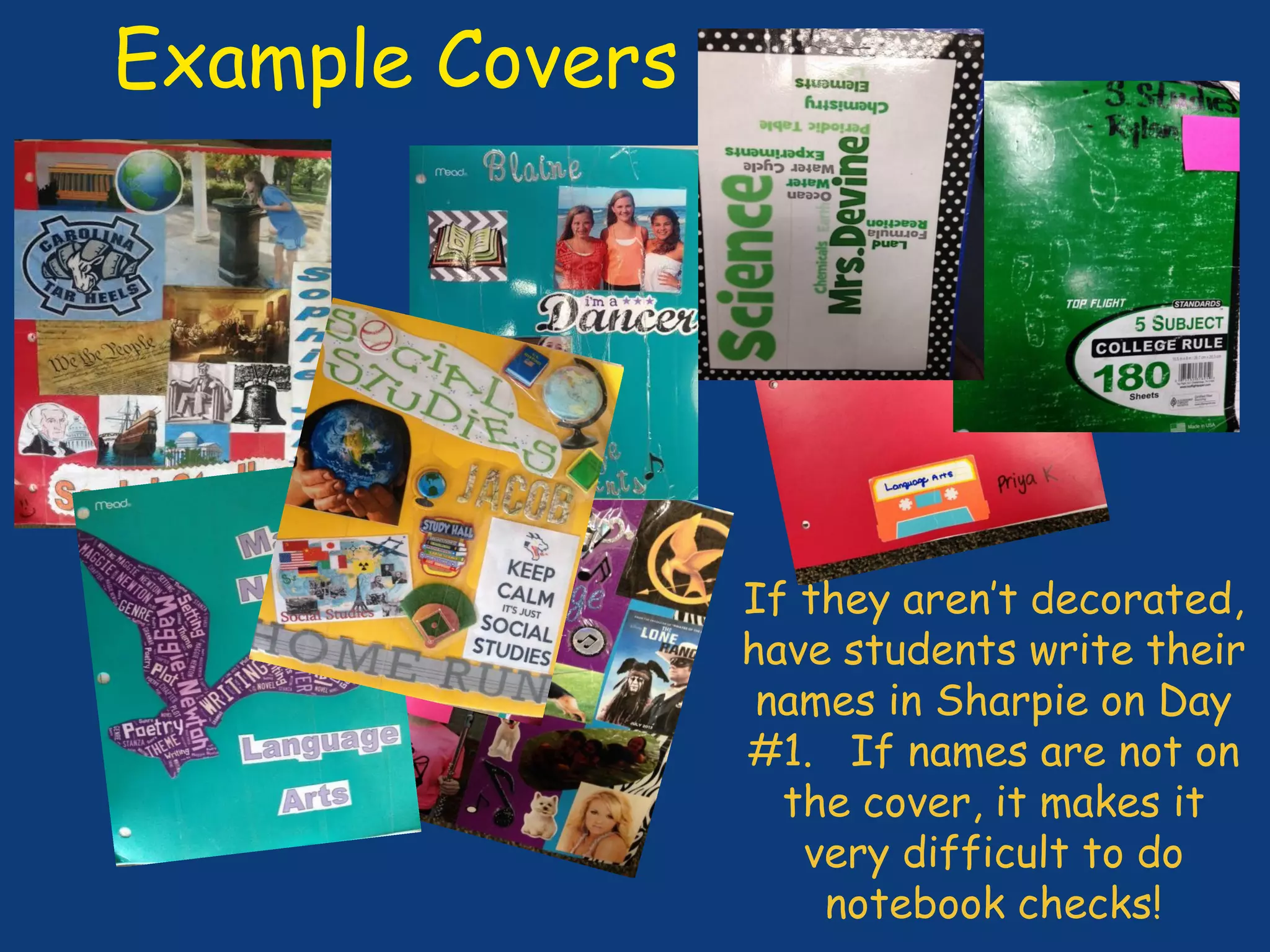
Example Covers
If they aren’t decorated,
have students write their
names in Sharpie on Day
#1. If names are not on
the cover, it makes it
very difficult to do
notebook checks!
INITIAL SETUP
Think about the assignments you use already! Divide
them into categories, such as:
1.Ancient Civilizations
2.Renaissance
3.World Wars
or
1. 1st Semester
2. 2nd Semester
3. Cumlulative Review
or
1. Notes
2. Literature
3. Writing/Grammar
INITIAL SETUP (CONT.)
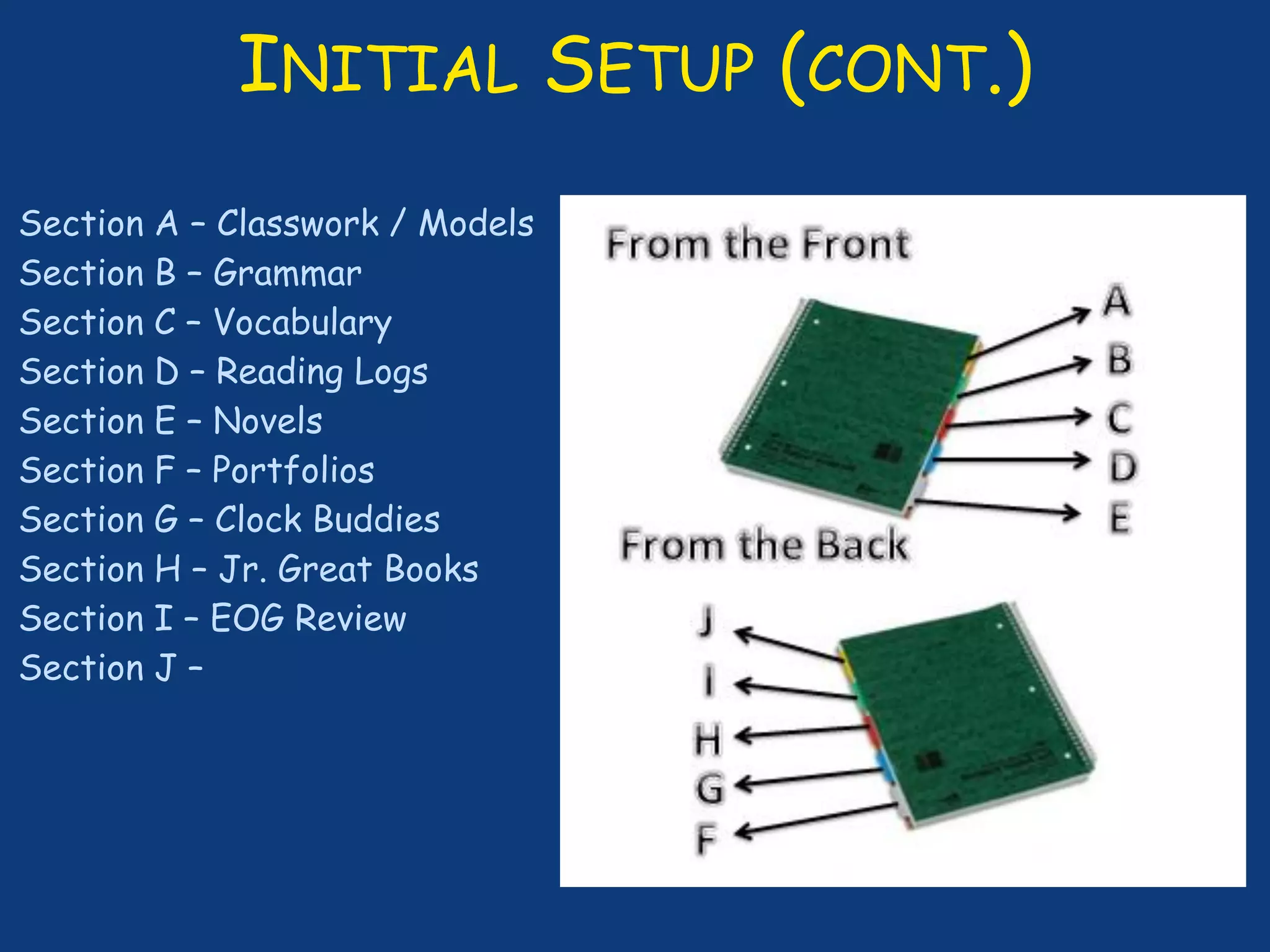
Section A – Classwork / Models
Section B – Grammar
Section C – Vocabulary
Section D – Reading Logs
Section E – Novels
Section F – Portfolios
Section G – Clock Buddies
Section H – Jr. Great Books
Section I – EOG Review
Section J –
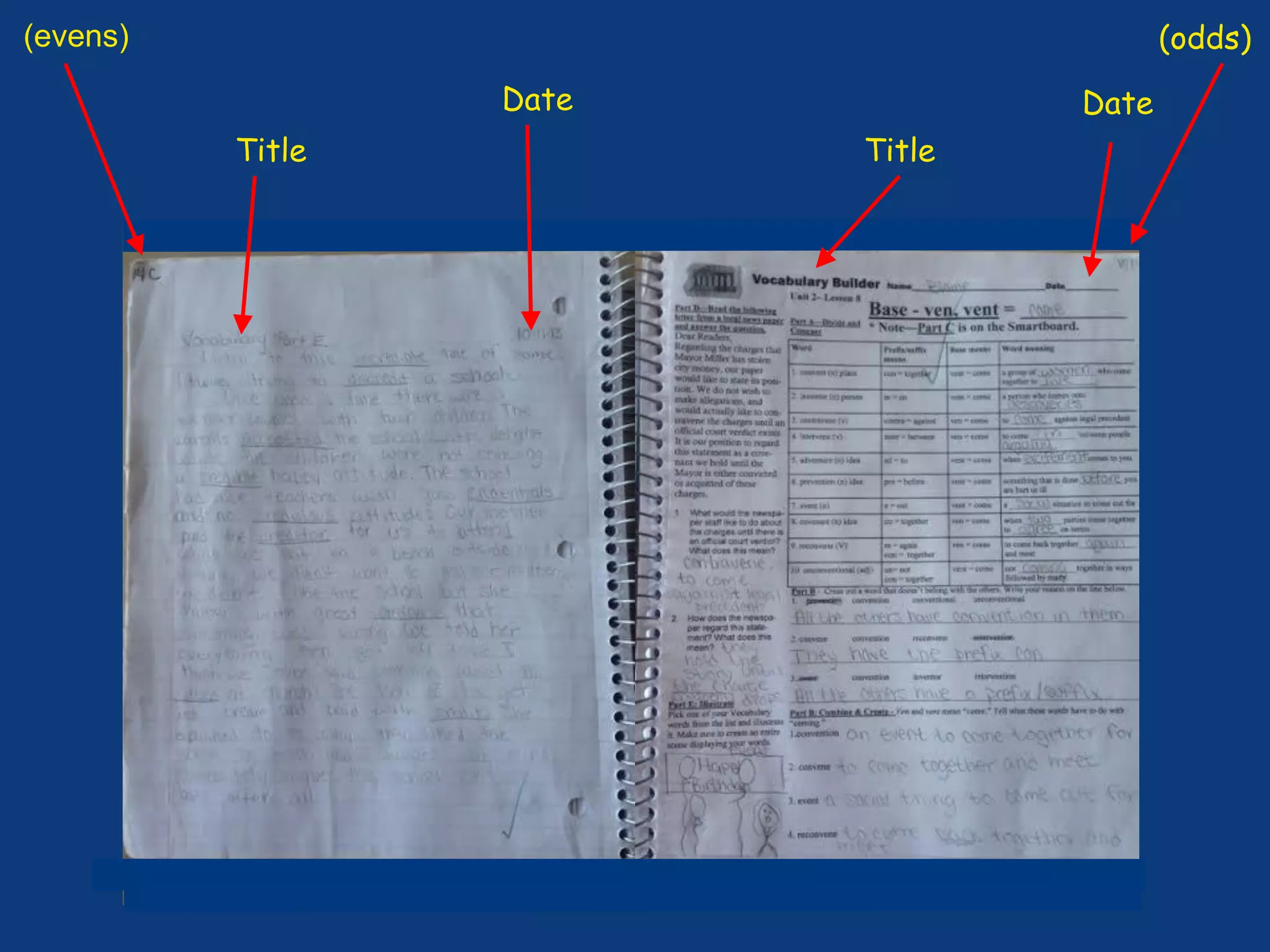
(evens) (odds)
Date
Title Title
Date
HOW IS IT
Interactive
???
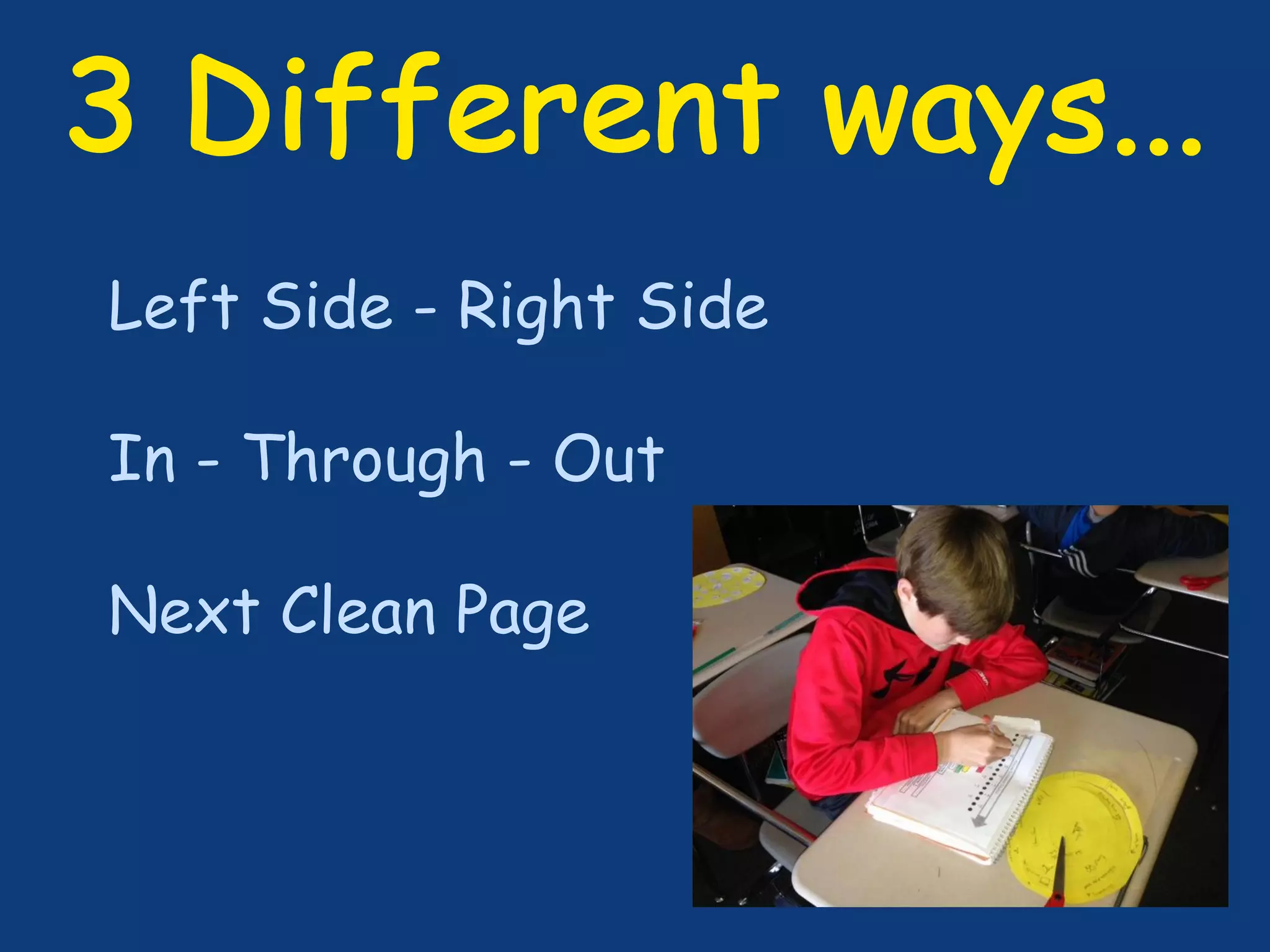
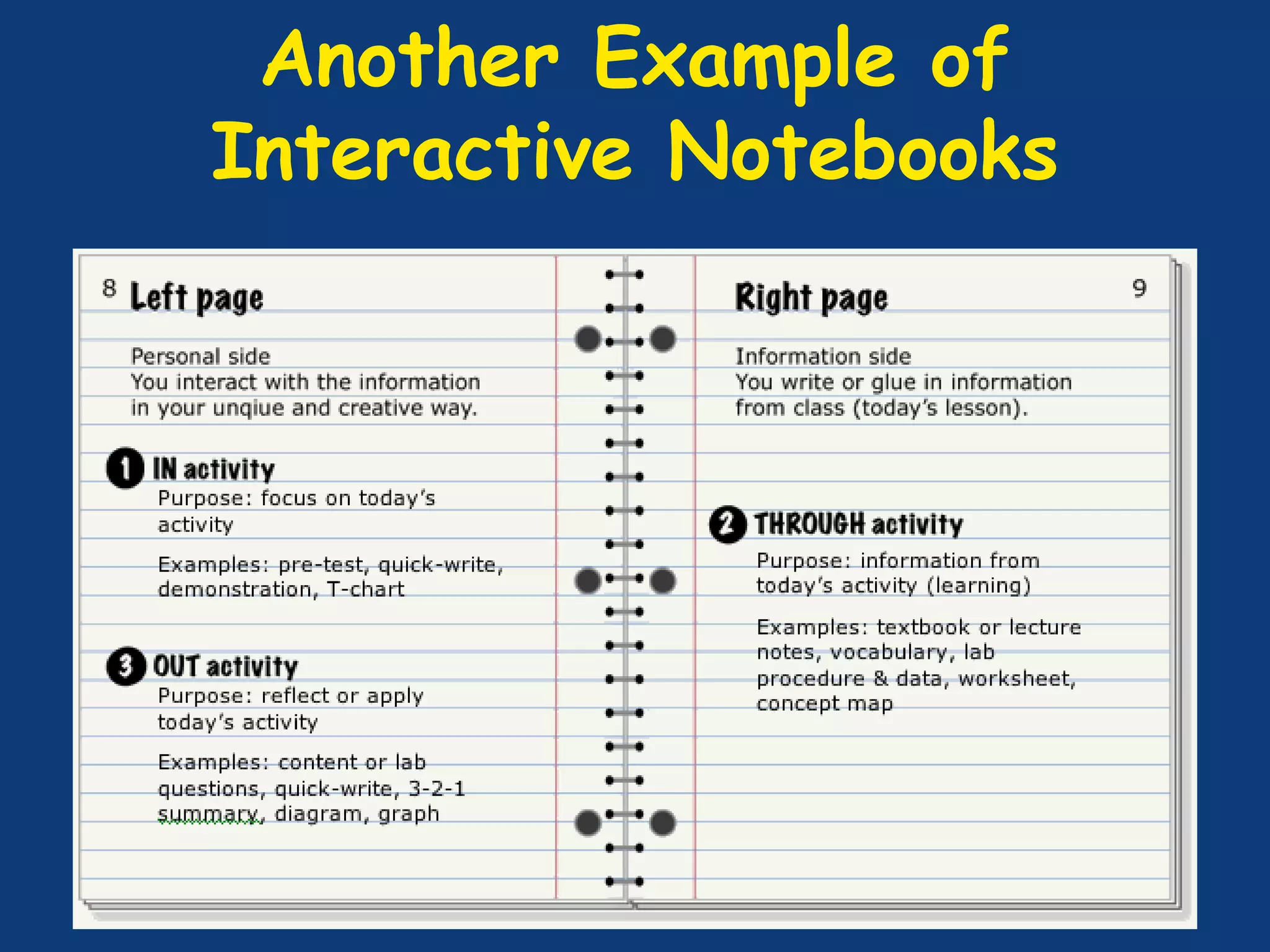
Left Side - Right Side
In - Through - Out
Next Clean Page
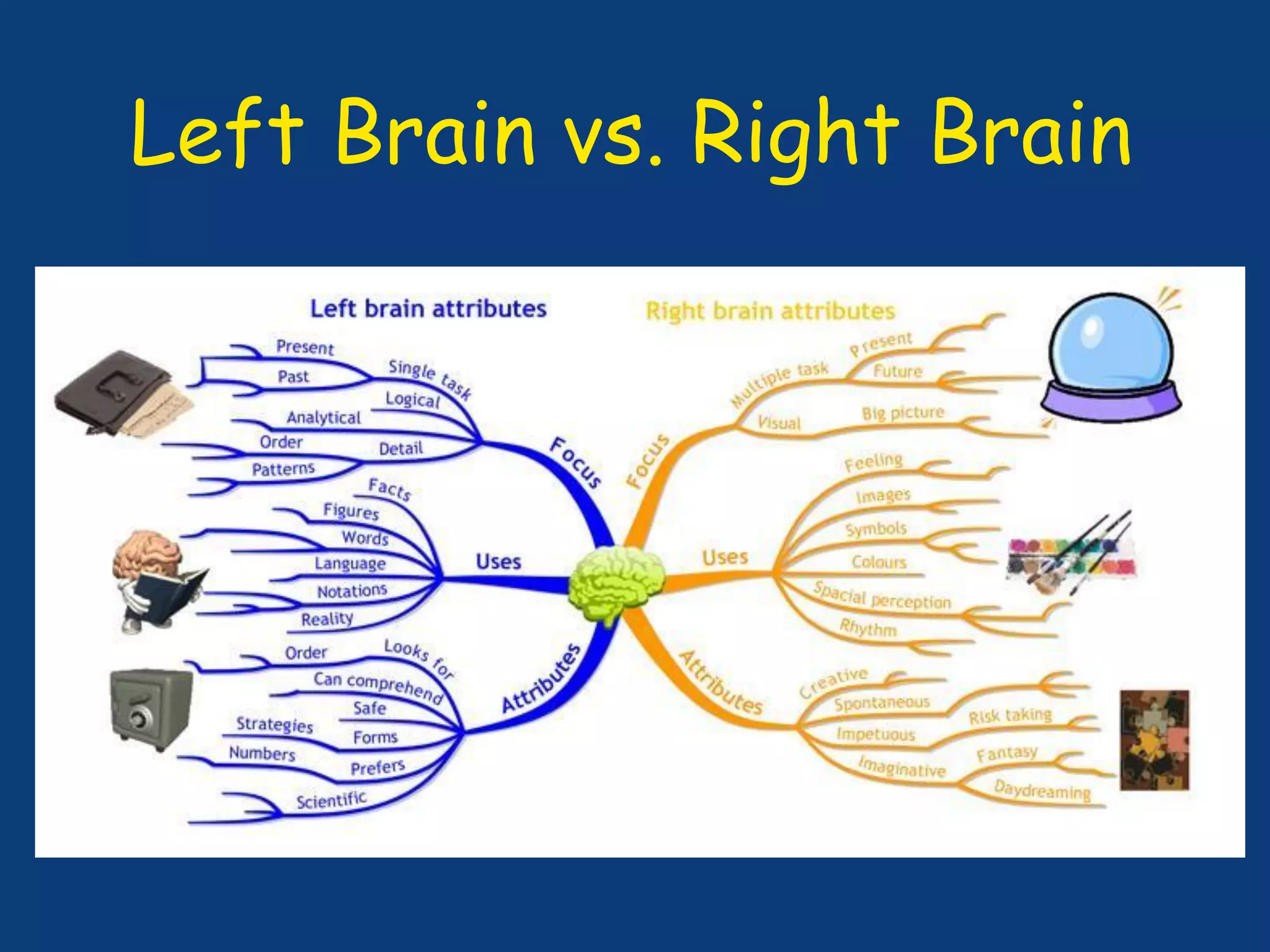
Left Brain vs. Right Brain
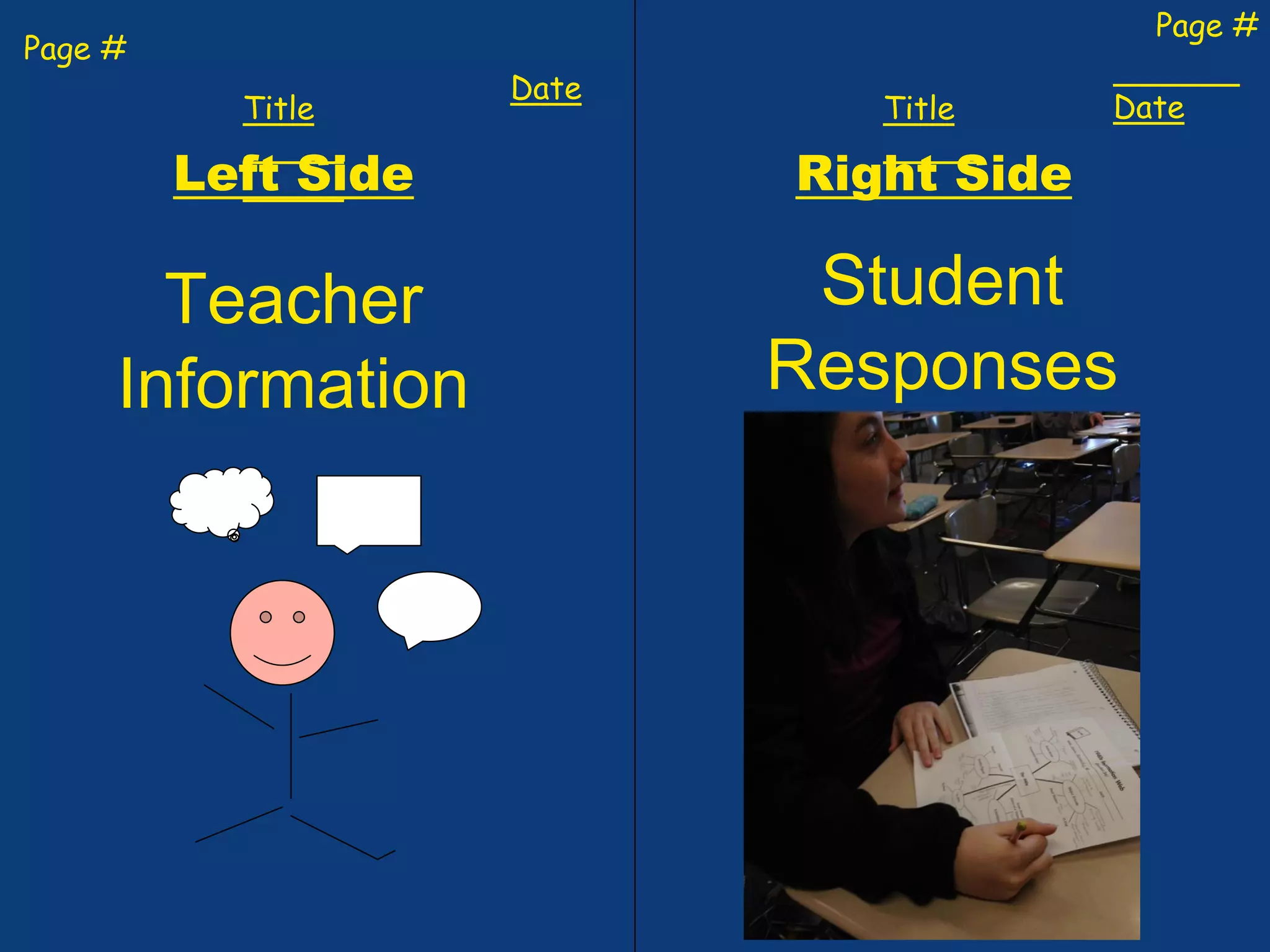
Left Side Right Side
Page #
Teacher
Information
Page #
Title Title
Date
Date
Student
Responses
LEFT SIDE
The Left Side belongs to the teacher
The Left Side has all “testable” information; it’s
what you will be learning:
● Title and Unit pages
● Table of Contents
● Vocabulary
● Notes (class, reading, and discussion)
● Worksheets
● Study Guides
● Quizzes (formative)
● Content and Language Objectives
● Other relevant information
LEFT SIDE GUIDELINES
1. Should be completely done.
1. Should clearly have both the title of the
assignment at the top and the date centered to
the right of the title. The page should be
numbered at the bottom right-hand and left-
hand corner.
1. All assignments should be in chronological order
by the times they were assigned.
1. All work should be completed in neat, legible
handwriting.
EXAMPLES OF LEFT SIDE
ASSIGNMENTS (TEACHER)
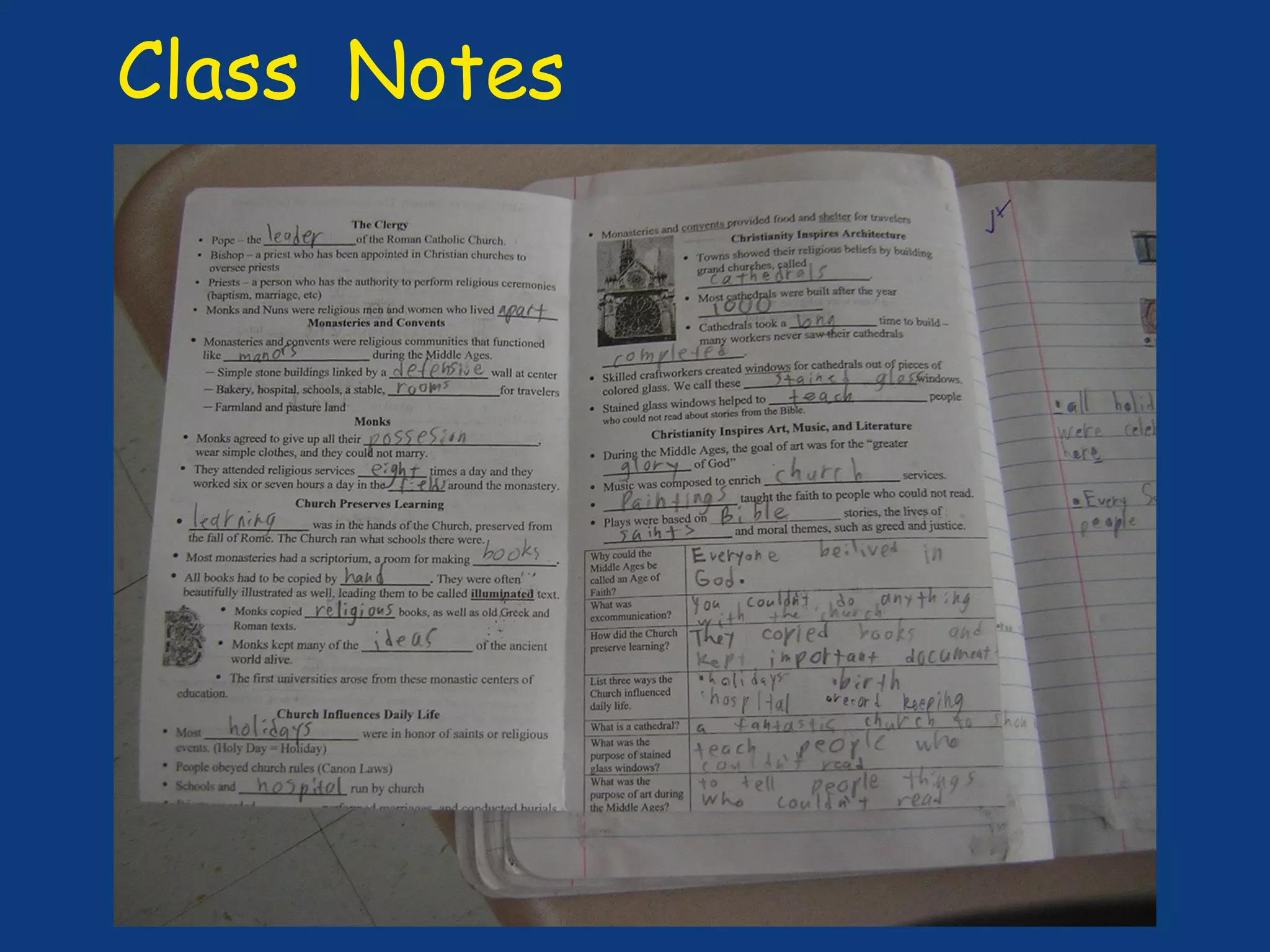
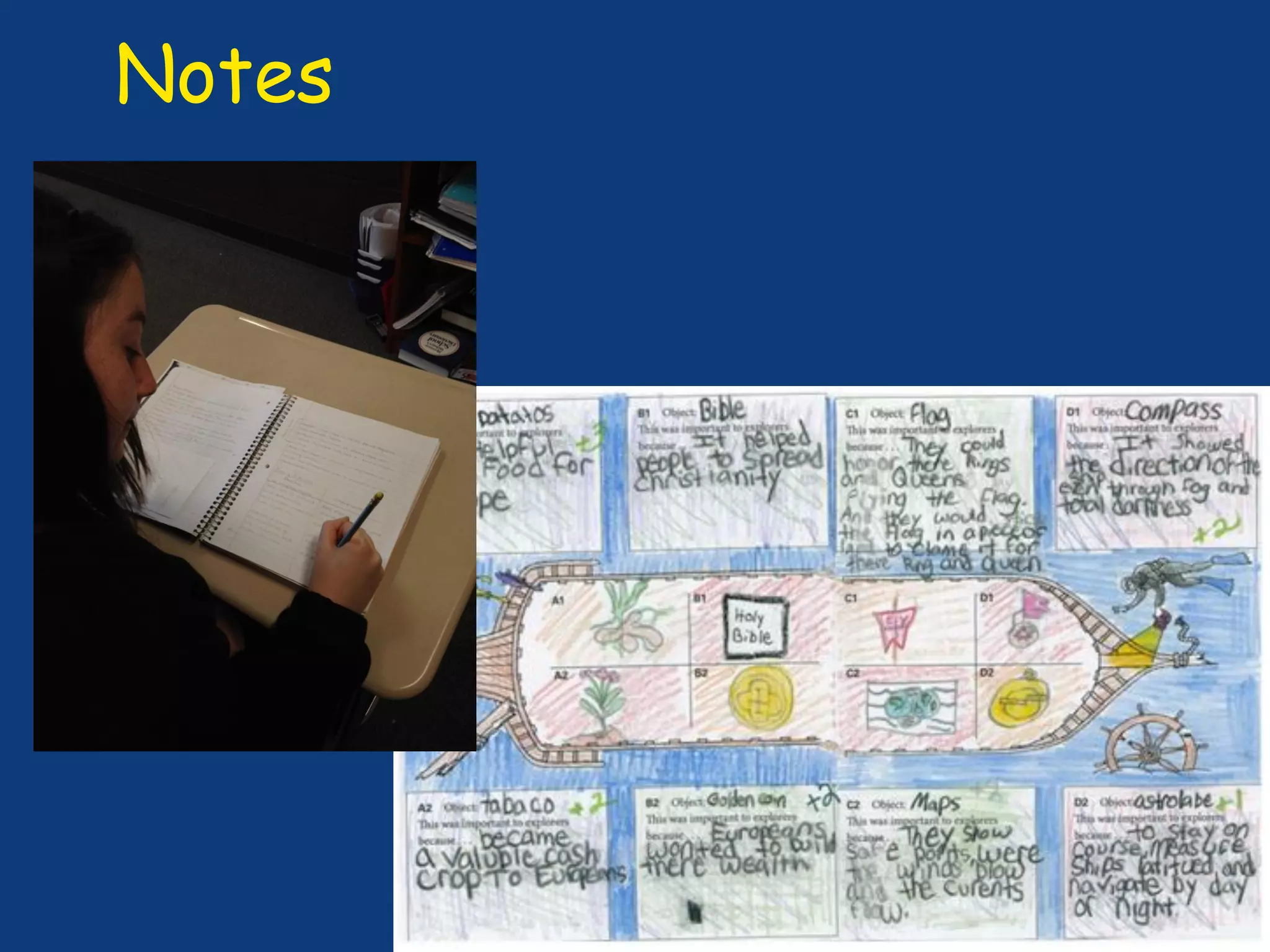
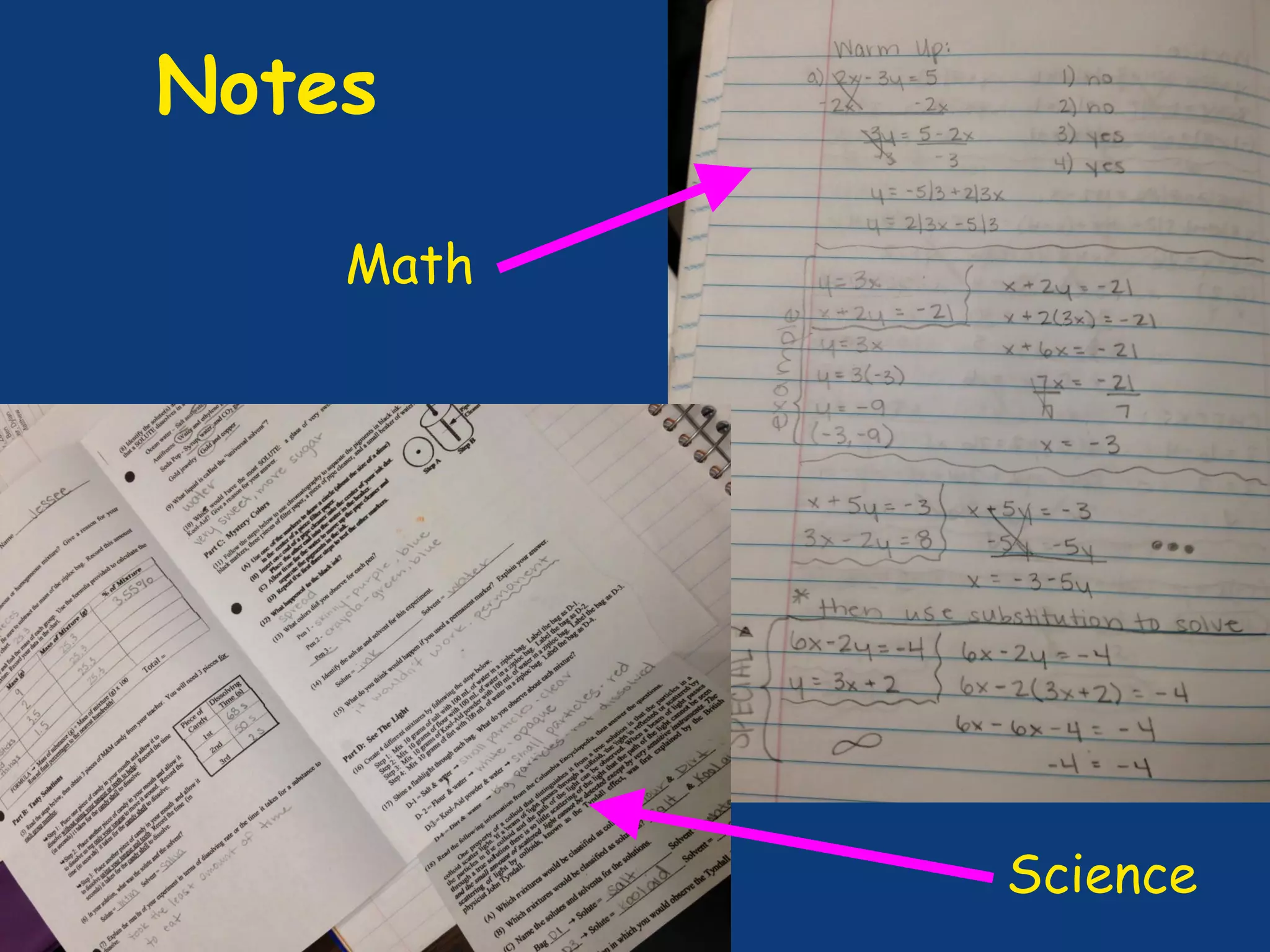
•Class notes
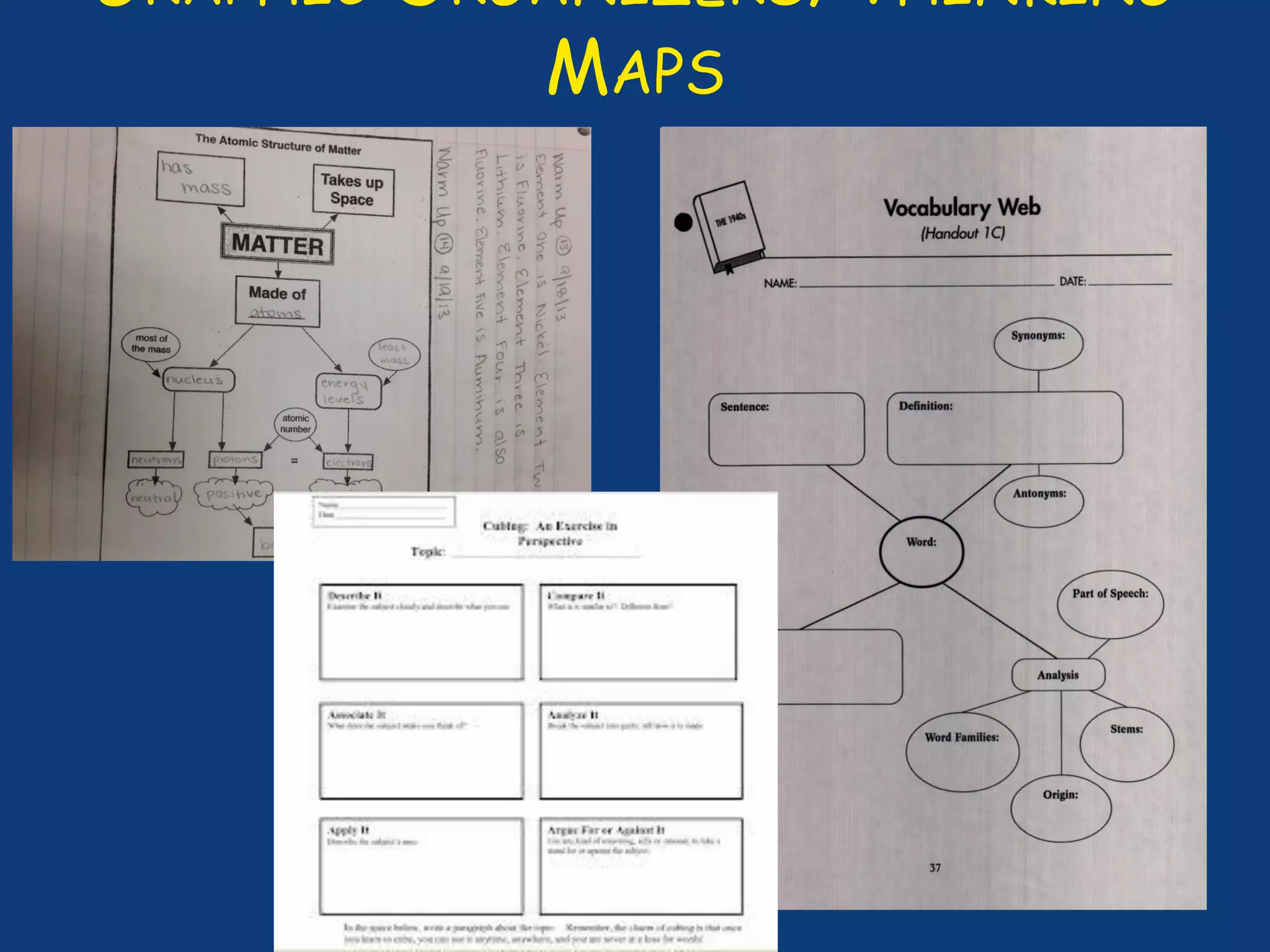
•Graphic Organizers / Thinking Maps
•Articles, graphs, charts, diagrams
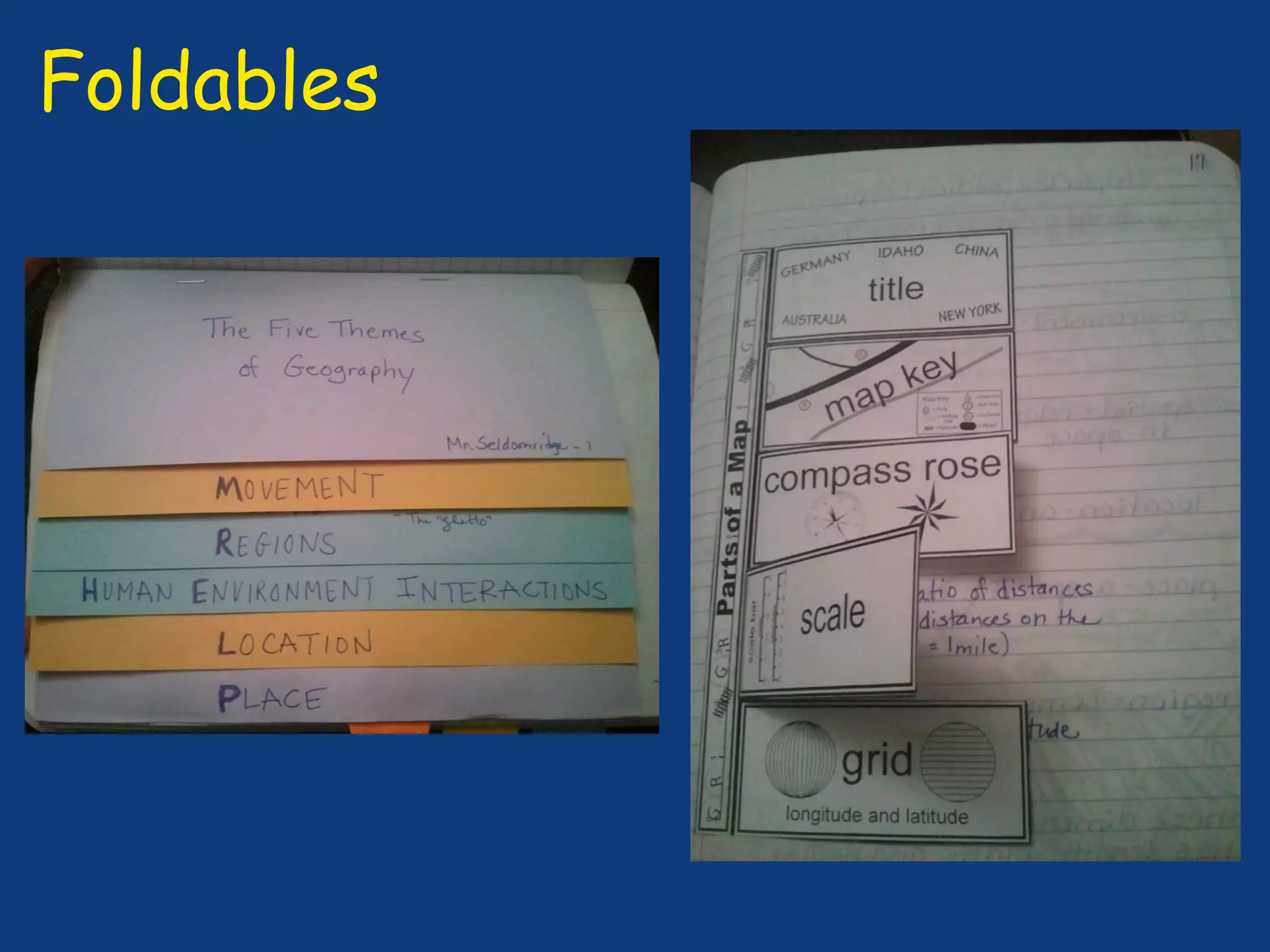
•Foldables
•Quizzes/Tests
•In-class Assignments, mini-lessons
•Recording Sheets
•Etc.
Class Notes
Notes
Notes
Math
Science
GRAPHIC ORGANIZERS/THINKING
MAPS
Foldables
RIGHT SIDE
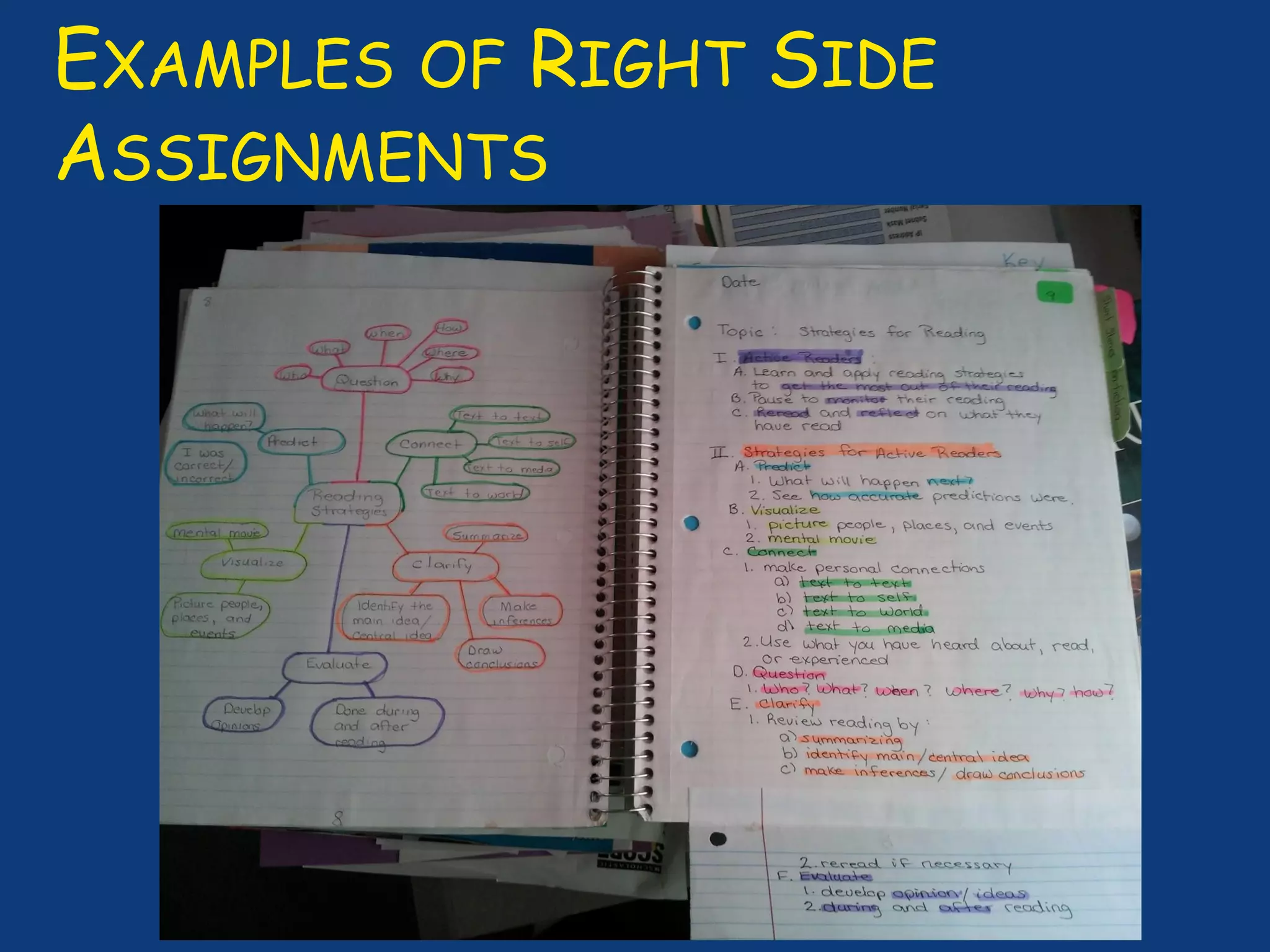
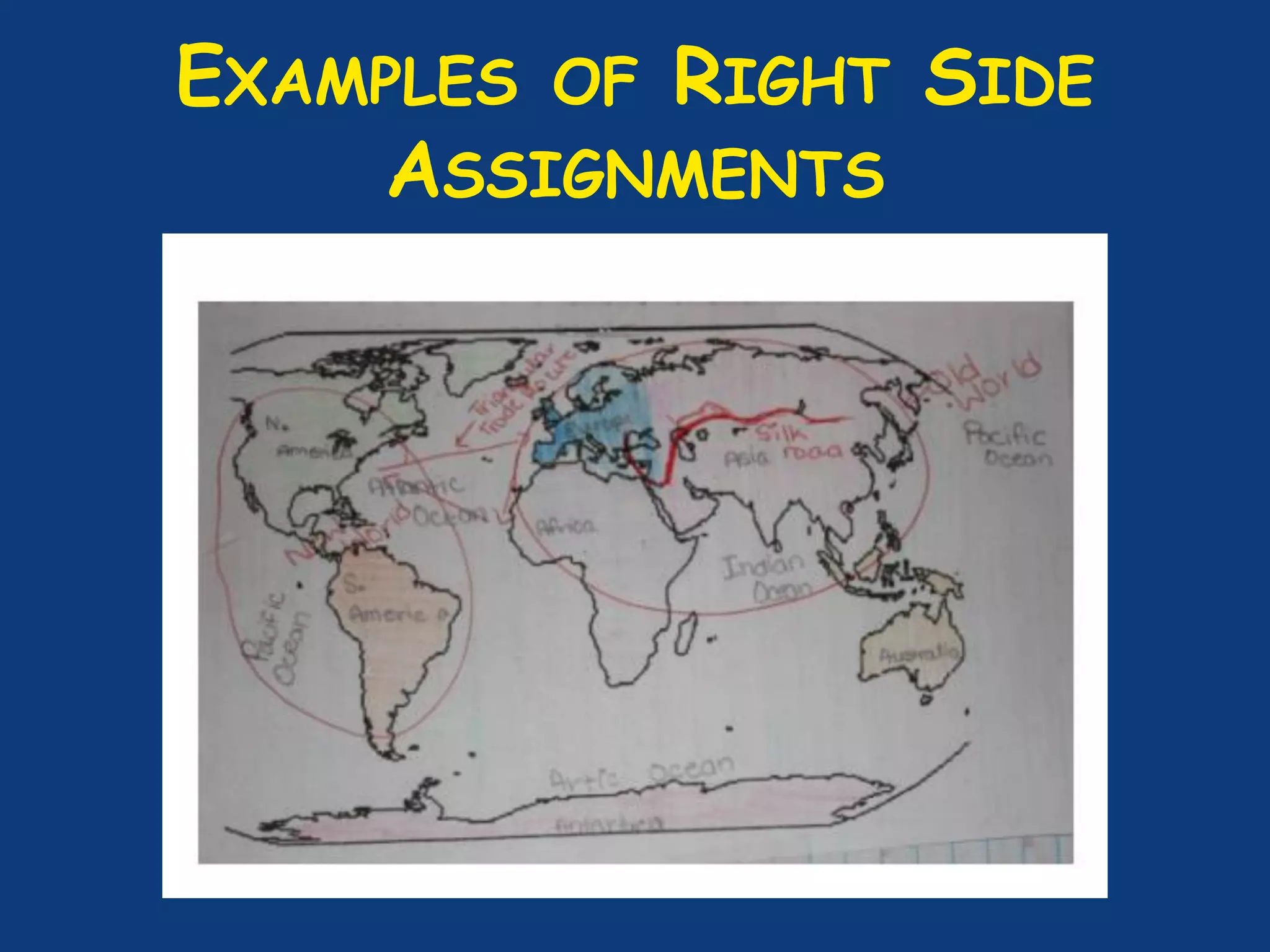
Right Side is to record students’ thinking, reflections,
questions, thoughts, impressions, connections, and
wonderings.
The Right Side belongs to the student!
•Apply skills learned in class
•Use graphs, charts, Venn Diagrams, research from
internet
•Make connections between new and old learning
•Questions
•Thinking Maps
•Poems
•Songs
•Homework
1. Format is the same as Left Side (title, date,
neatness, completed, etc.)
1. Activities can be done individually, in pairs, small
groups, centers, etc.
1. Student is responsible for completing anything
not done in class.
1. Each fully-completed and correct Right Side
assignment earns a grade.
Any missing part (date, title, incomplete, etc.) will cause
points to be deducted.
Right Side Guidelines
• Classwork
• Brainstorming
• Sketches related to learning
• Collages
• Project Plans/Outlines
• Reflections
• Poem, lab, etc. analysis
Examples of Right Side
Assignments (Students)
EXAMPLES OF RIGHT SIDE
ASSIGNMENTS
EXAMPLES OF RIGHT SIDE
ASSIGNMENTS
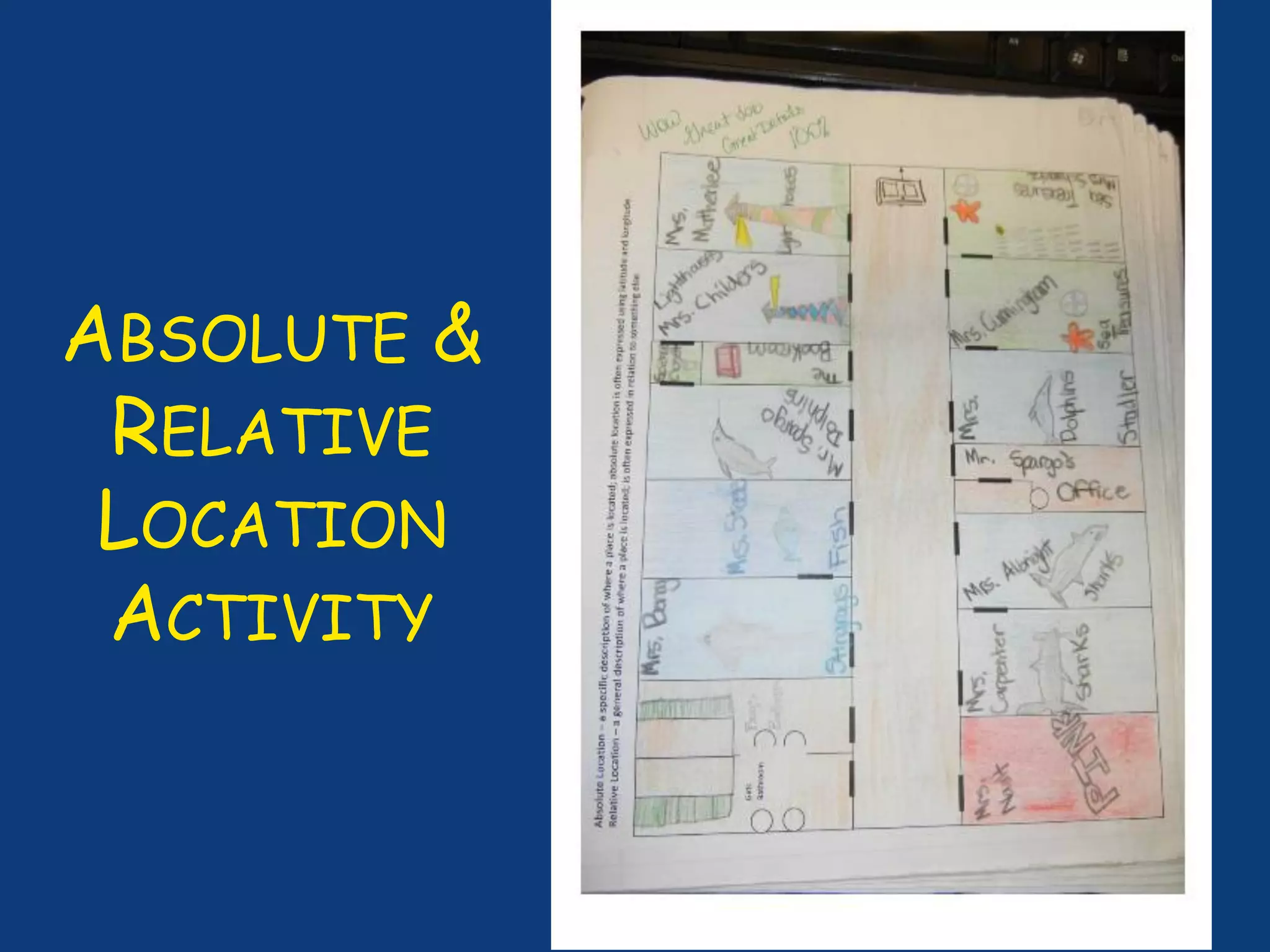
ABSOLUTE &
RELATIVE
LOCATION
ACTIVITY
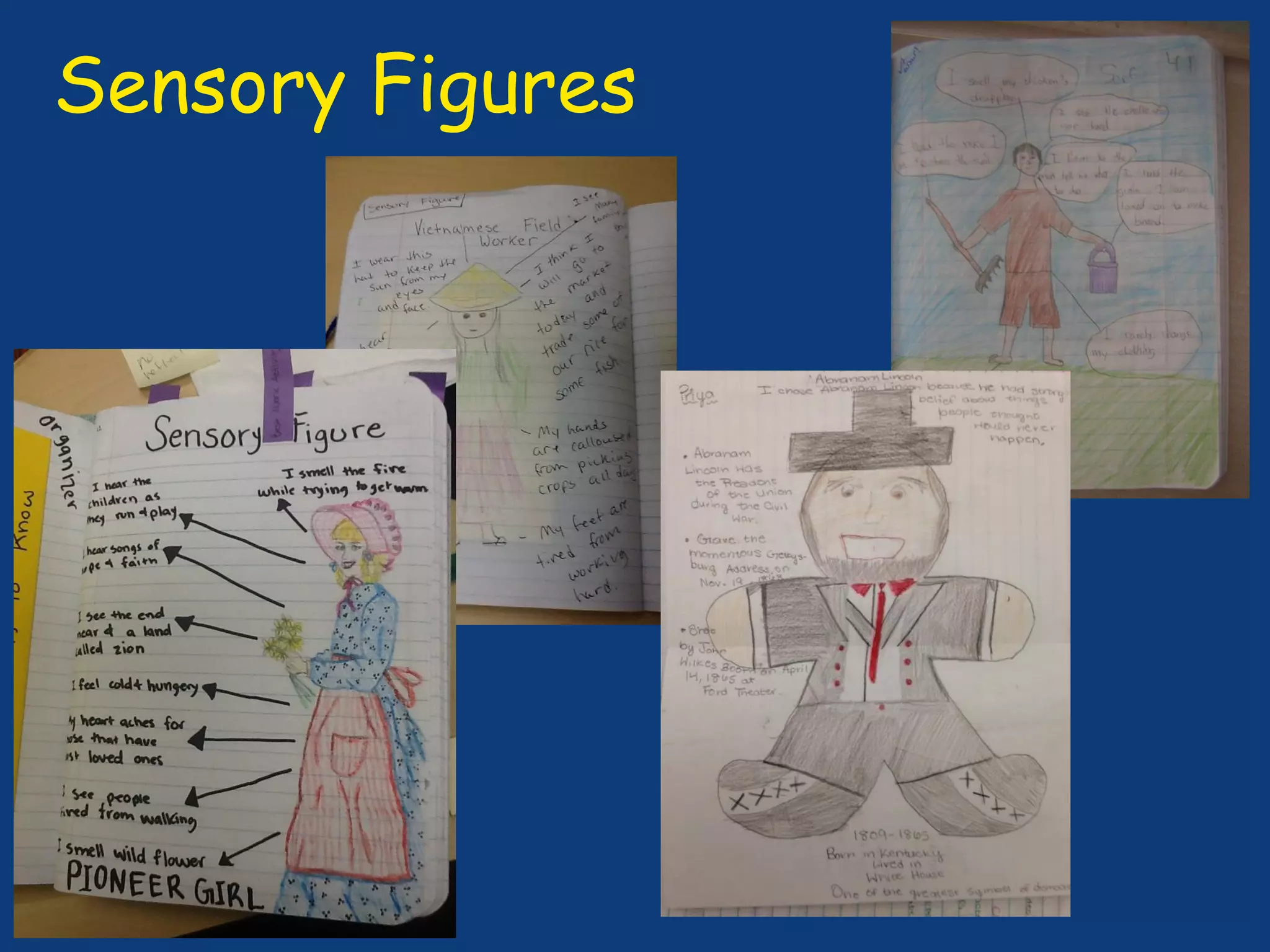
Sensory Figures
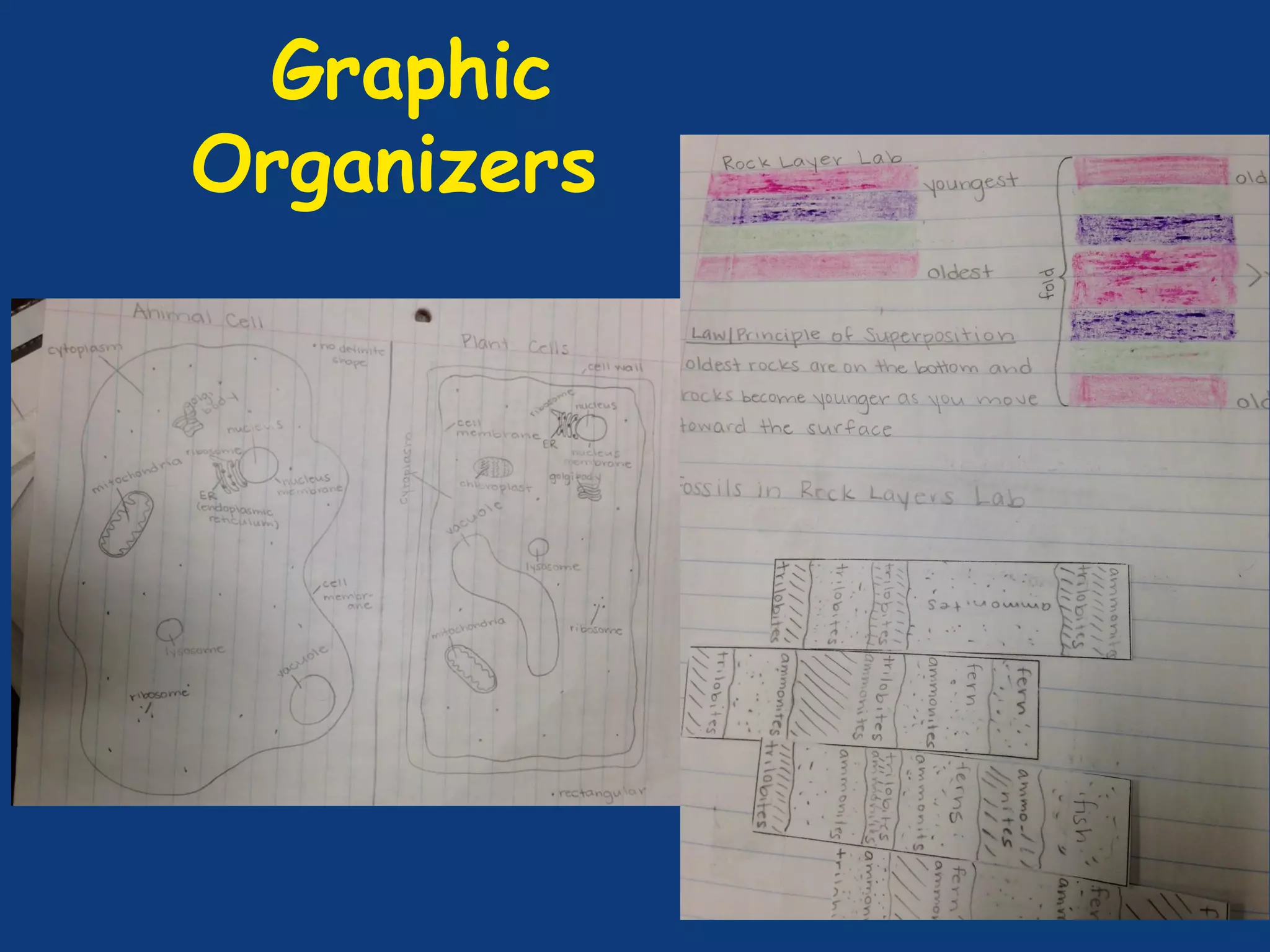
Graphic
Organizers
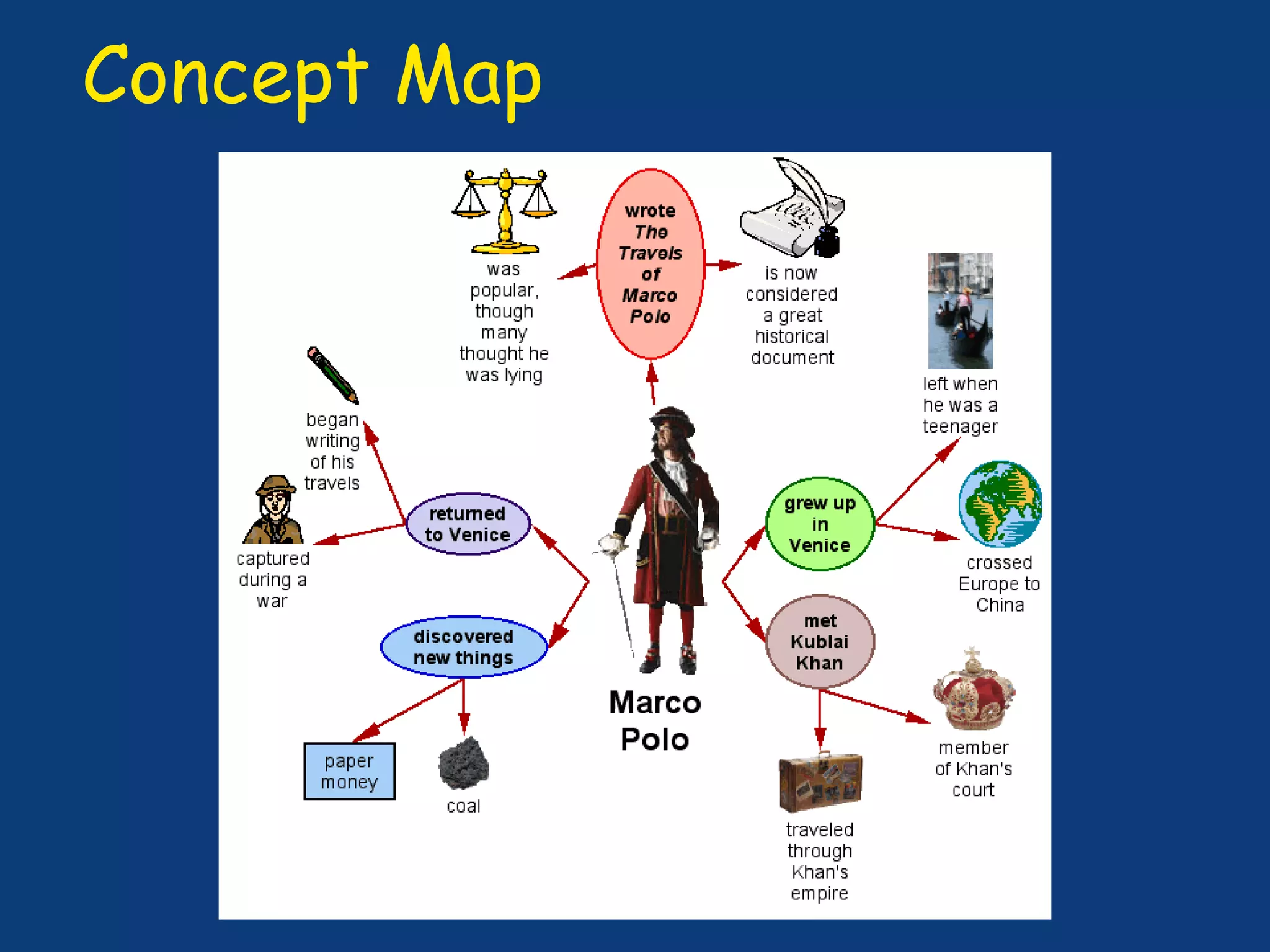
Concept Map
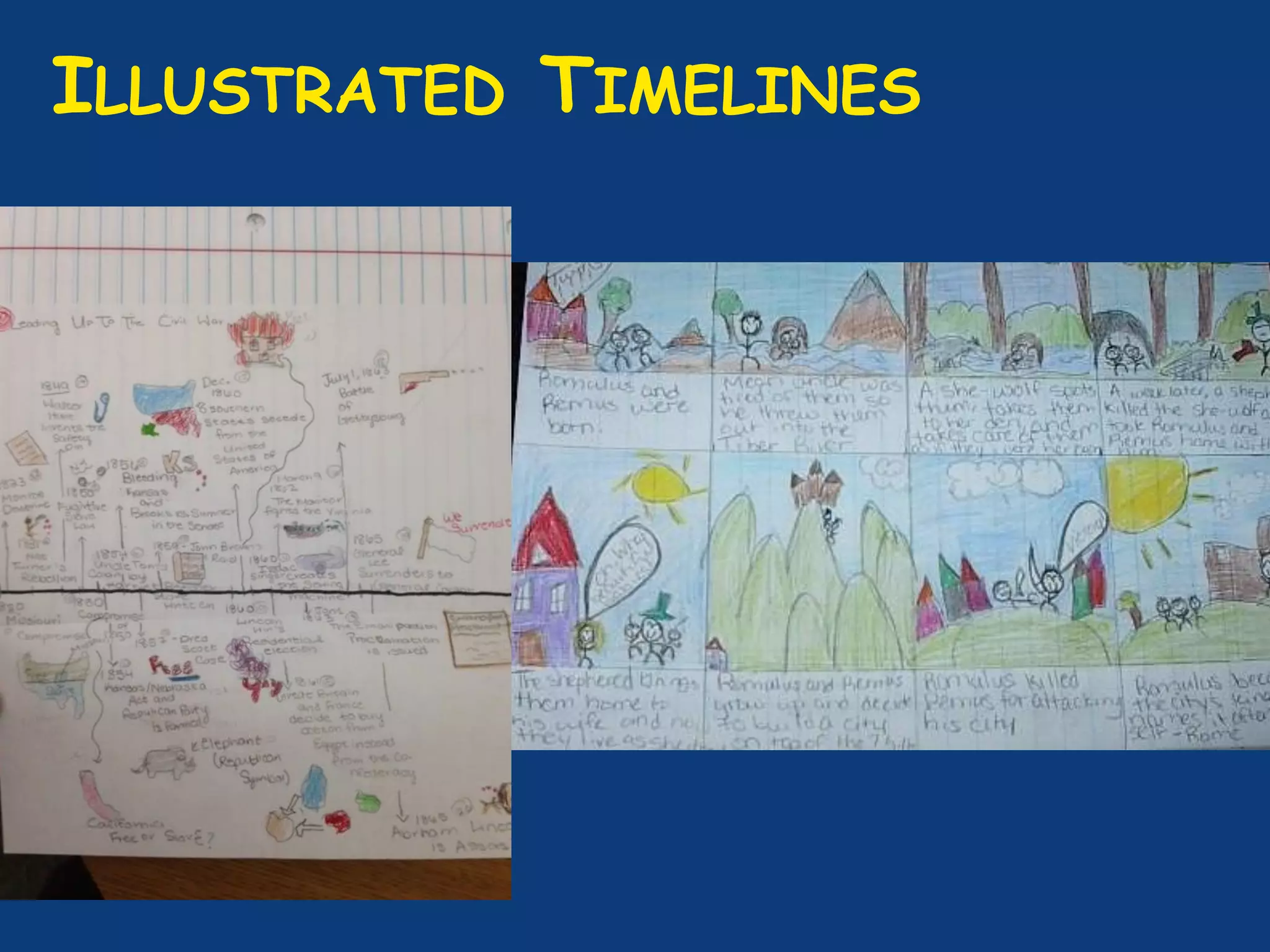
ILLUSTRATED TIMELINES
Another Example of
Interactive Notebooks
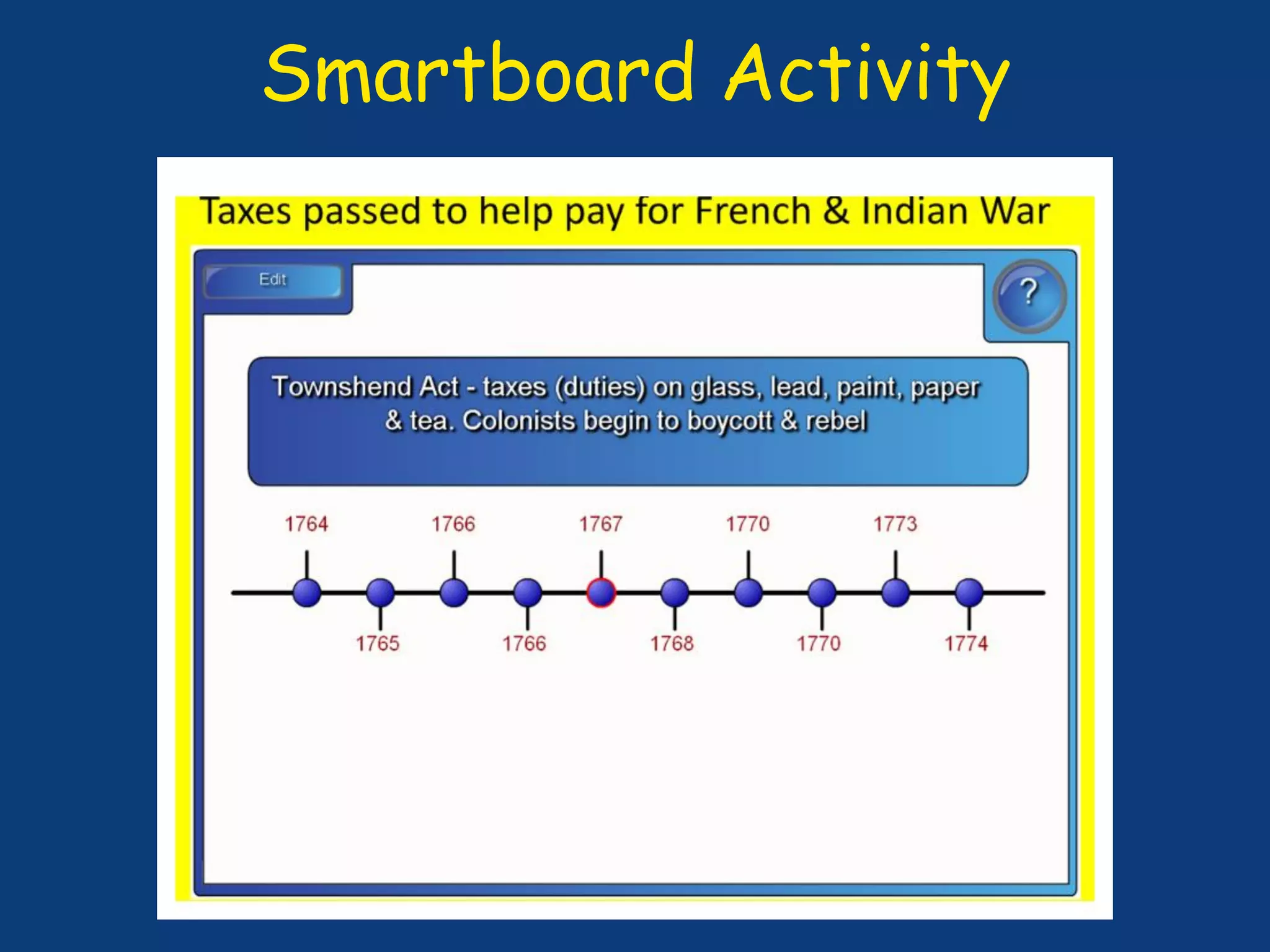
Final Example of
Interactive Notebooks
Next clean page: It may fit your teaching style
to just go page by page. This is when a Table of
Contents for each chapter/unit comes in handy.
THIS IS
ON THE
SMART-BOARD...
How is it Interactive?
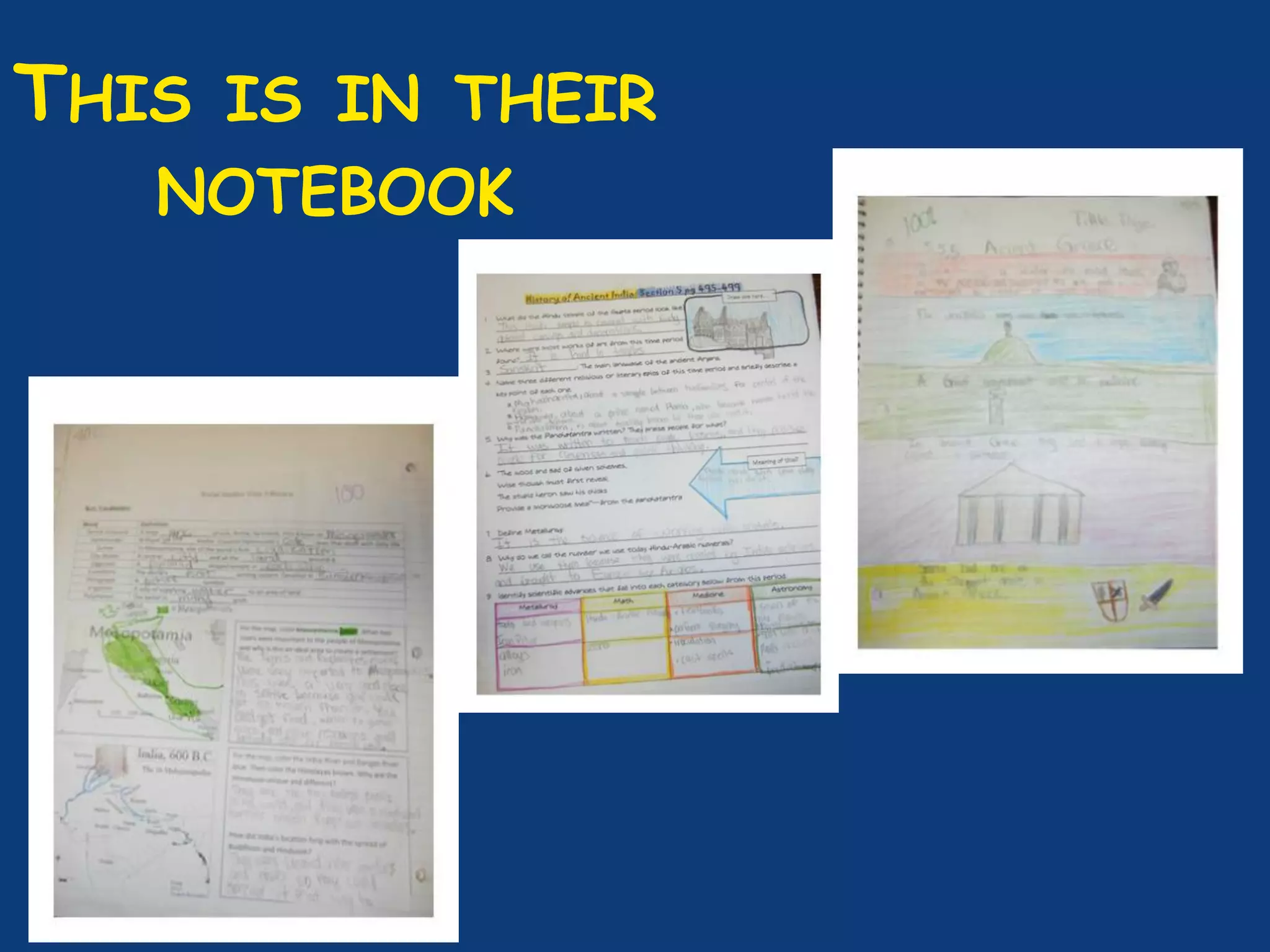
THIS IS IN THEIR
NOTEBOOK
Smartboard Activity
If a student
is up at the
board, every
student in
their seat is
working in
their
notebook
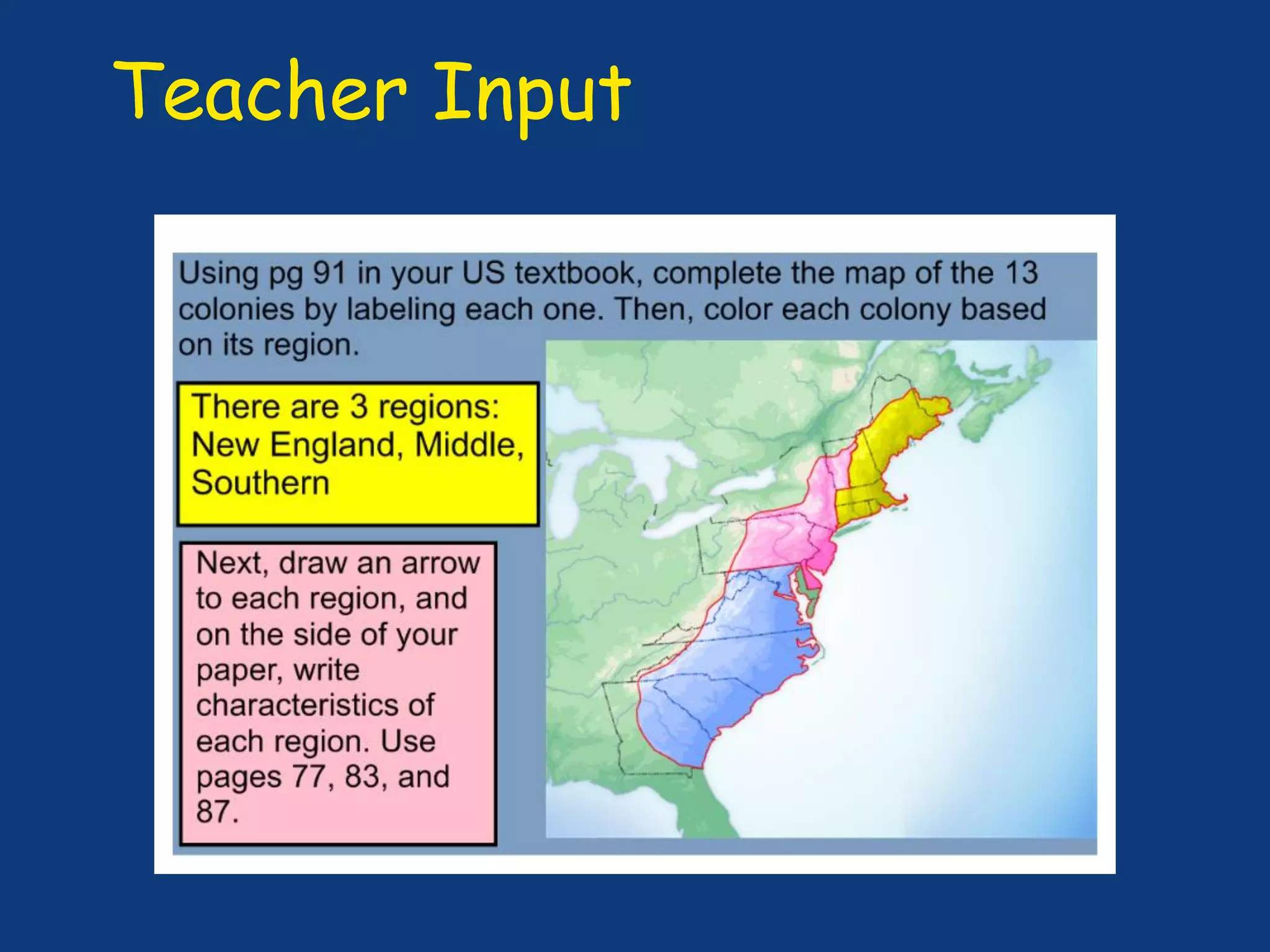
Teacher Input
Student
Output
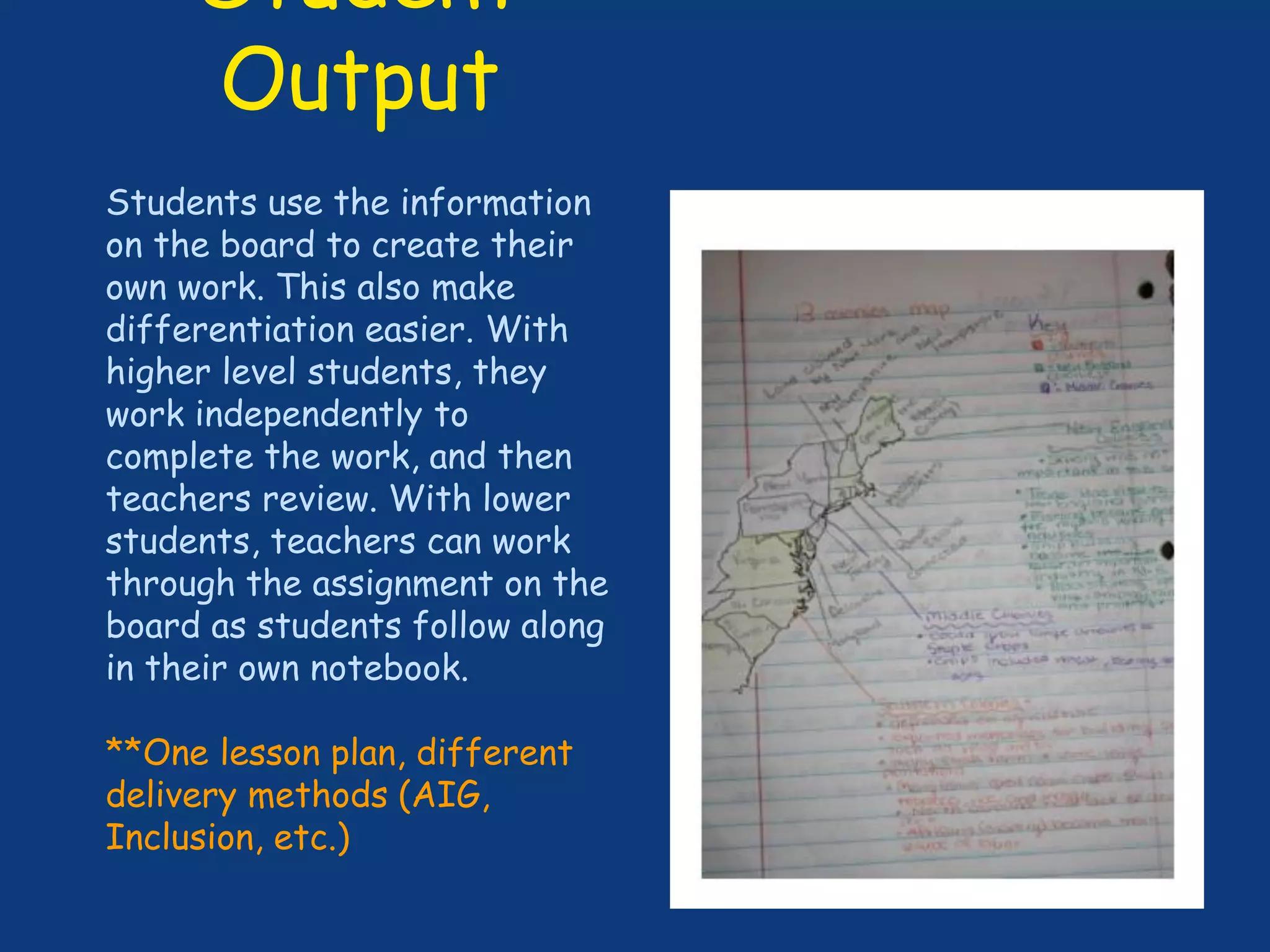
Students use the information
on the board to create their
own work. This also make
differentiation easier. With
higher level students, they
work independently to
complete the work, and then
teachers review. With lower
students, teachers can work
through the assignment on the
board as students follow along
in their own notebook.
**One lesson plan, different
delivery methods (AIG,
Inclusion, etc.)
MAINTAINING THE
INTERACTIVE NOTEBOOK
•No ripped out pages or torn corners
•No doodling that doesn’t relate to notes
•Date, title, and number each page
Everyone’s ISN must MATCH!
After being absent, be sure to check the
teacher notebook and get caught up!
Creativity is Important
TAKE TO WORK ON
NOTEBOOKS?
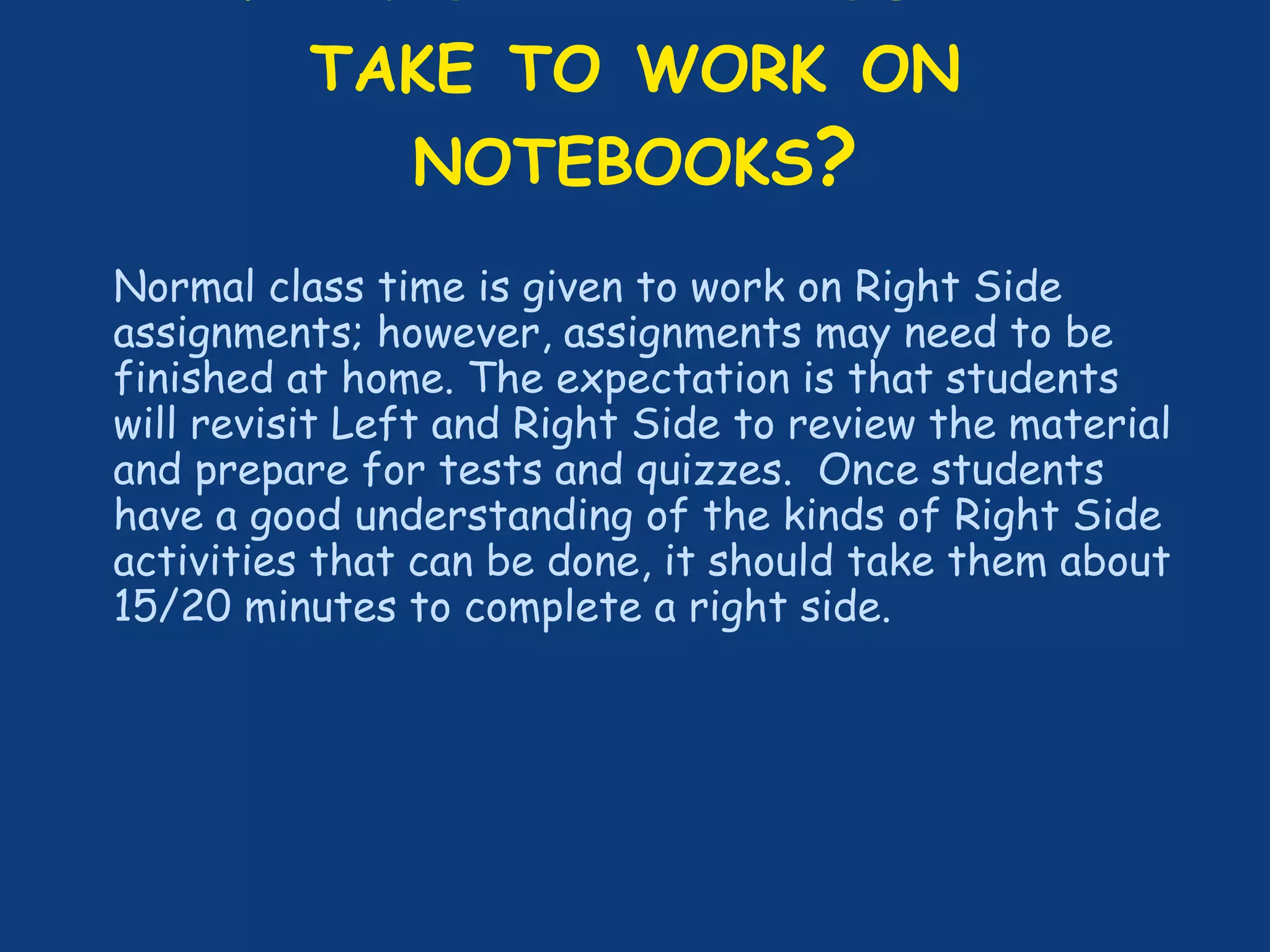
Normal class time is given to work on Right Side
assignments; however, assignments may need to be
finished at home. The expectation is that students
will revisit Left and Right Side to review the material
and prepare for tests and quizzes. Once students
have a good understanding of the kinds of Right Side
activities that can be done, it should take them about
15/20 minutes to complete a right side.
BREAK OUT
GRADING
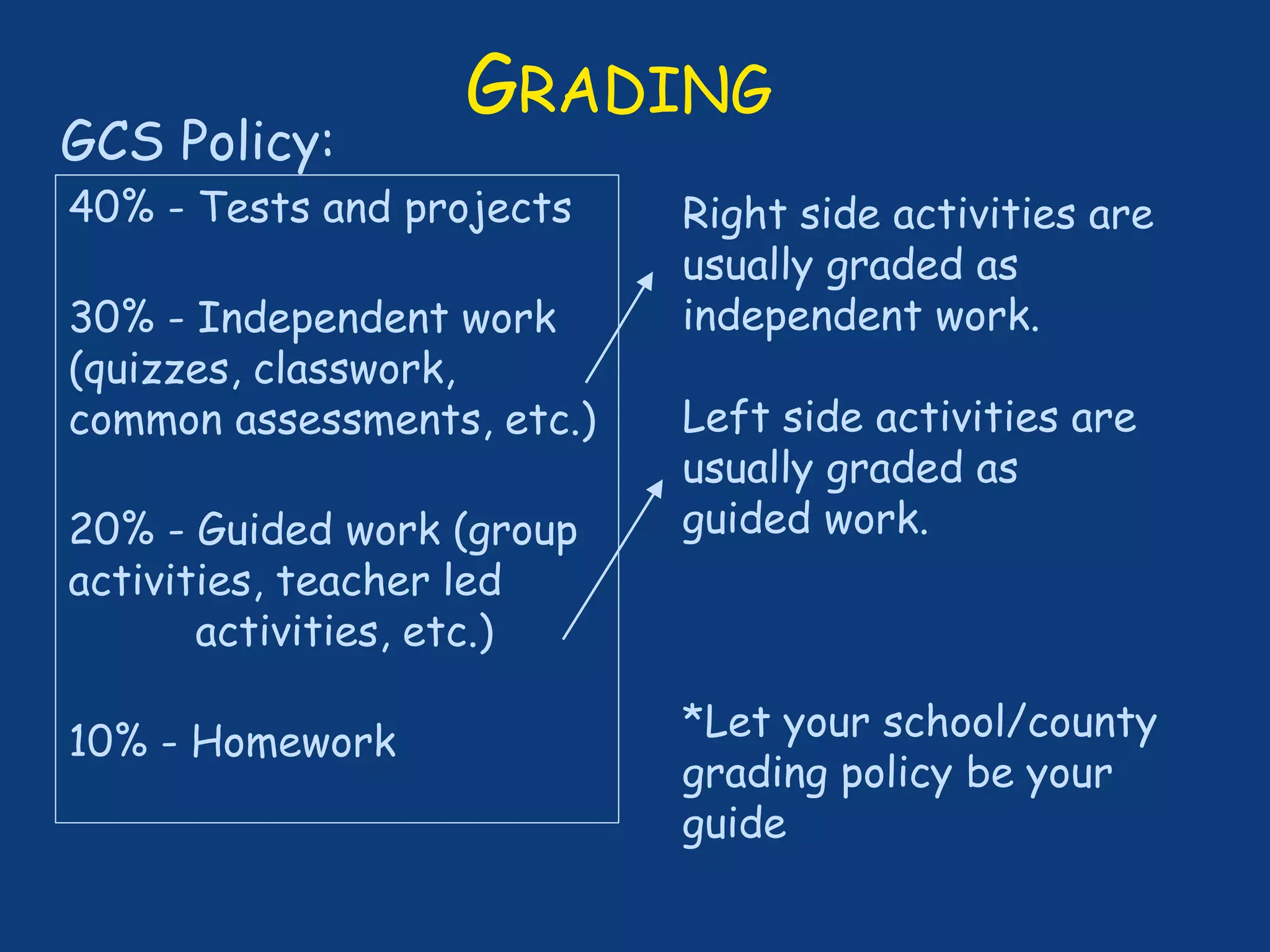
40% - Tests and projects
30% - Independent work
(quizzes, classwork,
common assessments, etc.)
20% - Guided work (group
activities, teacher led
activities, etc.)
10% - Homework
Right side activities are
usually graded as
independent work.
Left side activities are
usually graded as
guided work.
*Let your school/county
grading policy be your
guide
GCS Policy:
DEDUCTIONS FOR LATENESS
AND LACK OF CHRONOLOGICAL
ORDER
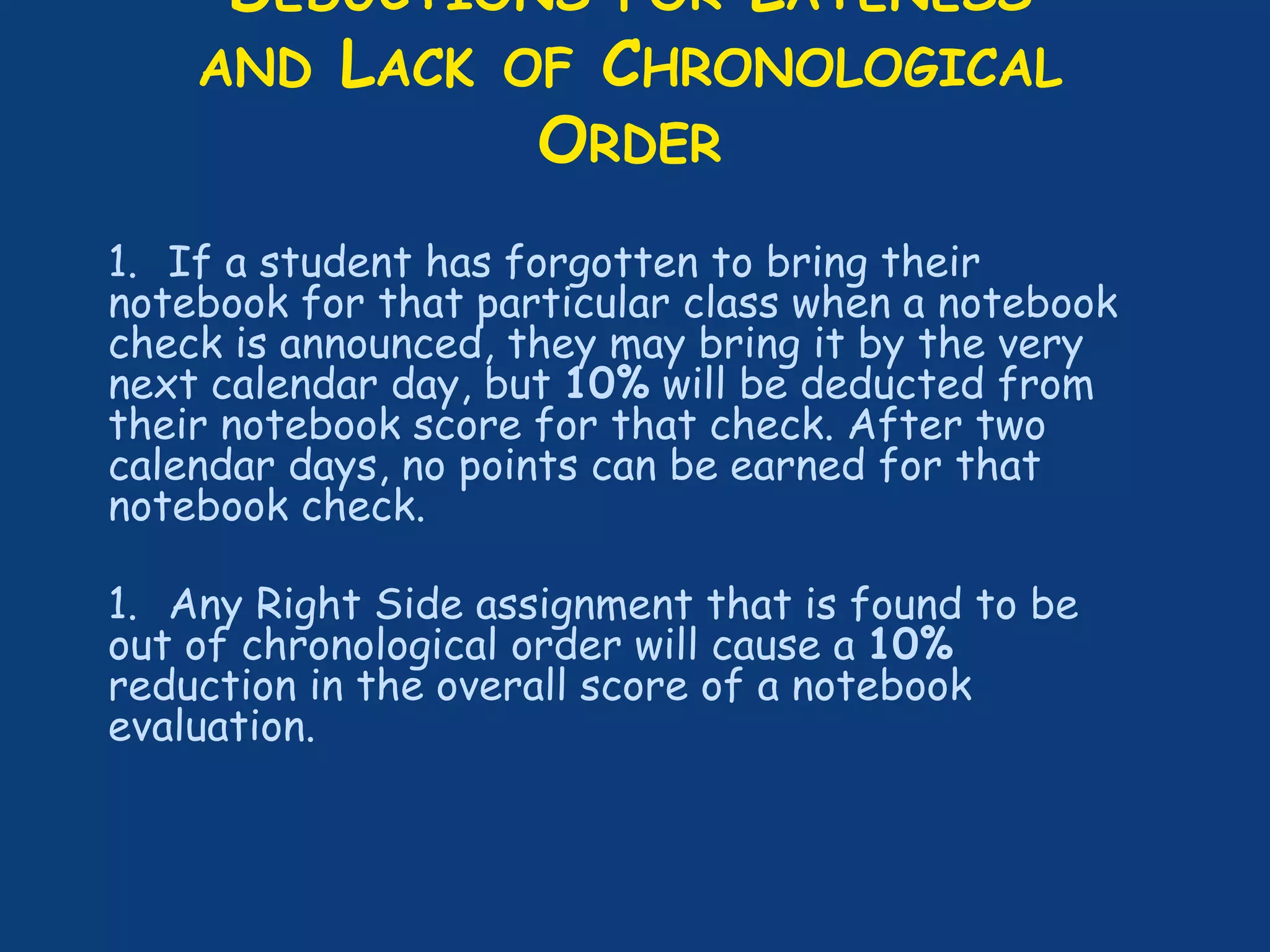
1. If a student has forgotten to bring their
notebook for that particular class when a notebook
check is announced, they may bring it by the very
next calendar day, but 10% will be deducted from
their notebook score for that check. After two
calendar days, no points can be earned for that
notebook check.
1. Any Right Side assignment that is found to be
out of chronological order will cause a 10%
reduction in the overall score of a notebook
evaluation.
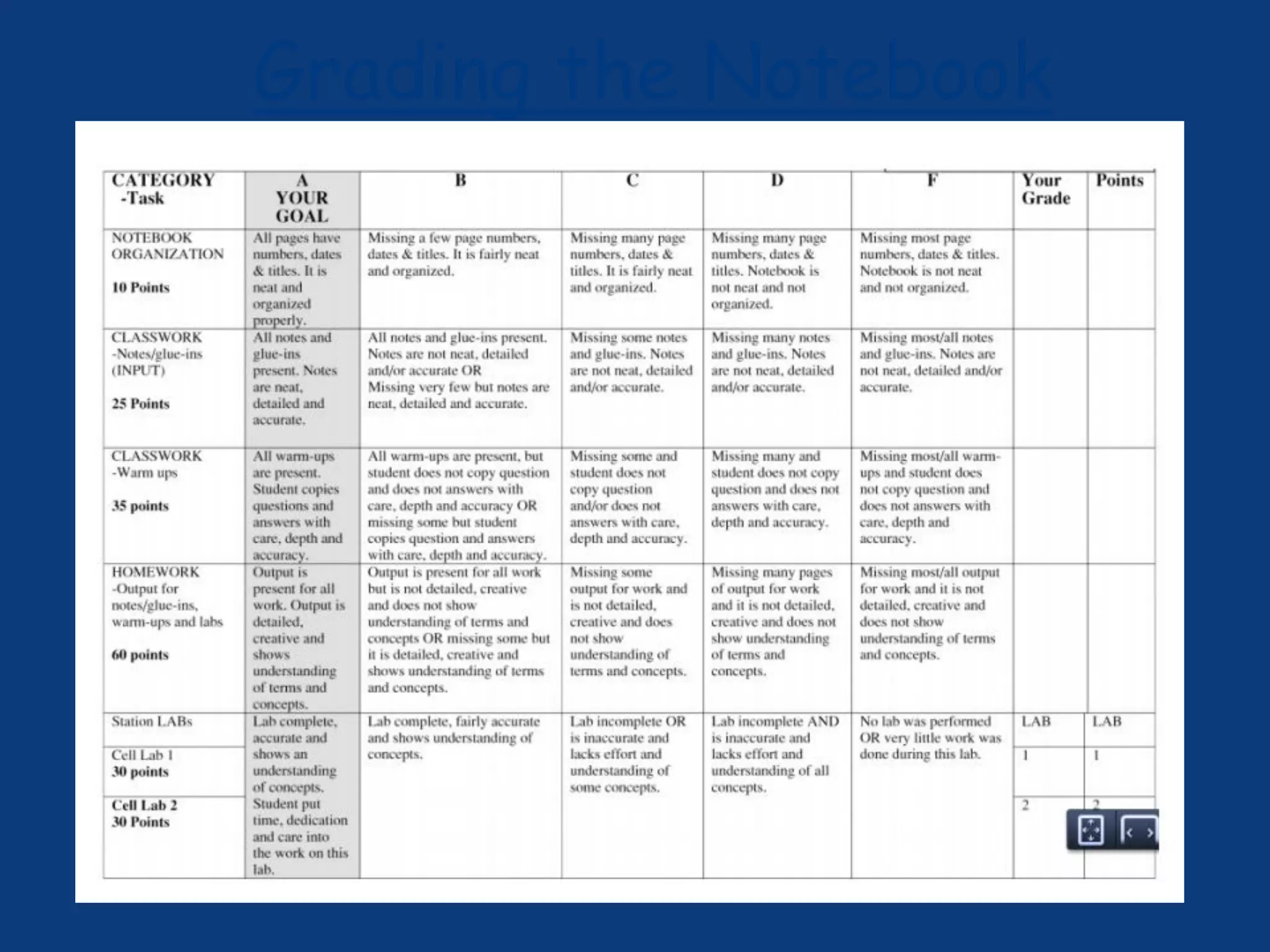
Grading the Notebook
GRADING THE NOTEBOOK
Grading the Notebook
10 Excellent-Above and beyond
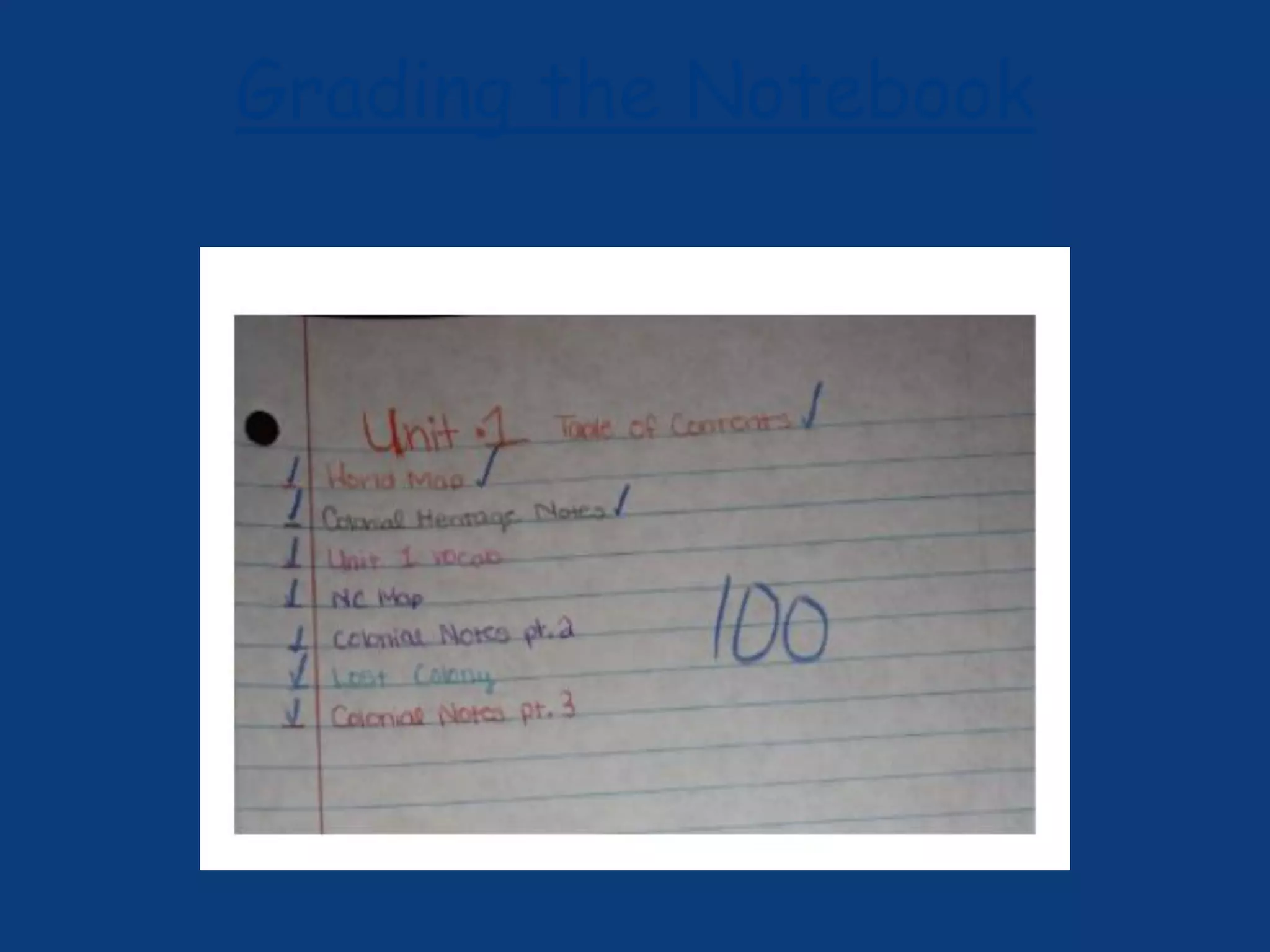
Notebook contents are complete, dated, and labeled (+100%)
Pages are numbered (odd-right side, even-left side)
Right-side/ left-side topics are correct and contents are organized
Notes and writing go beyond basic requirements.(typed, neat)
Uses color and effective diagrams
Notebook is neat and shows attention to detail
Shows impressive, in-depth self reflection about work.
I give it a
10
VS…
Grading the Notebook
2 Inadequate- complete lack of effort
Notebook contents are incomplete (70% or less)
Pages are numbered incorrectly, Right-side, left-side is inconsistent
Contents unorganized
Information shows only superficial understanding of contents or
shows serious inaccuracies
Notebook is not neat, sloppiness prevails
Shows little self- reflection
1 Incomplete
Notebook turned in, but too incomplete to evaluate properly
Grading the Notebook
How do students like it?
● “They are very organized and help me study
when I’m getting ready for a test” - Priya K.
● “I like that my notes are so organized are in
one spot and easy to find” - Jessee K.
● “Notebooks are easier to keep up with. Plus,
they keep all your papers together and don’t
fall out like a binder” - Barbara E.
● “They last a lot longer. My binders always pop
open and my notebook doesn’t” - Morgan H.
● “They are easier to write in” - Rylan S.
● “Notebooks are much easier to deal with when
carrying large amounts of books” - Jared G.
QUESTIONS &
COMMENTS?

Middle school conference interactive student notebooks

  • 1.
  • 2.
    HAVE YOU EVERHEARD YOUR STUDENTS SAY . . .I can’t remember what we did in class yesterday. I was absent last week; did I miss anything?
  • 3.
    WHAT IS ANINTERACTIVE STUDENT NOTEBOOK? What is the purpose of the notebook? The purpose of the interactive student notebook (ISN) is to enable the student to be a creative, independent, and reflective thinker and writer throughout the year. Interactive student notebooks can be used for class notes, as well as for other activities where students will be asked to express their own ideas and process and/or apply the information and skills learned in class. It also helps students review for tests.
  • 4.
    HOW Do I Setit up ???
  • 5.
    STUDENT MATERIALS ● ●5 Star(or comparable) 5-subject college-ruled notebook, 8.5” x 11” ●Highlighters (multi-colored) ●Glue stick/Elmer’s glue ●Assorted color pencils ●Colored markers ●Pencil sharpener/pencil (mechanical accepted, too) ●Scotch Tape
  • 6.
    COVER Your cover mustbe clearly labeled to include: •Class Name (SS or full Social Studies) •Your Name (First and Last) •Period •School Year (2013-2014) Please include pictures, drawings, designs, etc. that express who you are as a person.
  • 7.
    Example Covers If theyaren’t decorated, have students write their names in Sharpie on Day #1. If names are not on the cover, it makes it very difficult to do notebook checks!
  • 8.
    INITIAL SETUP Think aboutthe assignments you use already! Divide them into categories, such as: 1.Ancient Civilizations 2.Renaissance 3.World Wars or 1. 1st Semester 2. 2nd Semester 3. Cumlulative Review or 1. Notes 2. Literature 3. Writing/Grammar
  • 9.
    INITIAL SETUP (CONT.) SectionA – Classwork / Models Section B – Grammar Section C – Vocabulary Section D – Reading Logs Section E – Novels Section F – Portfolios Section G – Clock Buddies Section H – Jr. Great Books Section I – EOG Review Section J –
  • 10.
  • 11.
  • 12.
    Left Side -Right Side In - Through - Out Next Clean Page
  • 13.
    Left Brain vs.Right Brain
  • 14.
    Left Side RightSide Page # Teacher Information Page # Title Title Date Date Student Responses
  • 15.
    LEFT SIDE The LeftSide belongs to the teacher The Left Side has all “testable” information; it’s what you will be learning: ● Title and Unit pages ● Table of Contents ● Vocabulary ● Notes (class, reading, and discussion) ● Worksheets ● Study Guides ● Quizzes (formative) ● Content and Language Objectives ● Other relevant information
  • 16.
    LEFT SIDE GUIDELINES 1.Should be completely done. 1. Should clearly have both the title of the assignment at the top and the date centered to the right of the title. The page should be numbered at the bottom right-hand and left- hand corner. 1. All assignments should be in chronological order by the times they were assigned. 1. All work should be completed in neat, legible handwriting.
  • 17.
    EXAMPLES OF LEFTSIDE ASSIGNMENTS (TEACHER) •Class notes •Graphic Organizers / Thinking Maps •Articles, graphs, charts, diagrams •Foldables •Quizzes/Tests •In-class Assignments, mini-lessons •Recording Sheets •Etc.
  • 18.
  • 19.
  • 20.
  • 21.
  • 22.
  • 23.
    RIGHT SIDE Right Sideis to record students’ thinking, reflections, questions, thoughts, impressions, connections, and wonderings. The Right Side belongs to the student! •Apply skills learned in class •Use graphs, charts, Venn Diagrams, research from internet •Make connections between new and old learning •Questions •Thinking Maps •Poems •Songs •Homework
  • 24.
    1. Format isthe same as Left Side (title, date, neatness, completed, etc.) 1. Activities can be done individually, in pairs, small groups, centers, etc. 1. Student is responsible for completing anything not done in class. 1. Each fully-completed and correct Right Side assignment earns a grade. Any missing part (date, title, incomplete, etc.) will cause points to be deducted. Right Side Guidelines
  • 25.
    • Classwork • Brainstorming •Sketches related to learning • Collages • Project Plans/Outlines • Reflections • Poem, lab, etc. analysis Examples of Right Side Assignments (Students)
  • 26.
    EXAMPLES OF RIGHTSIDE ASSIGNMENTS
  • 27.
    EXAMPLES OF RIGHTSIDE ASSIGNMENTS
  • 28.
  • 29.
  • 30.
  • 31.
  • 32.
  • 33.
  • 34.
    Final Example of InteractiveNotebooks Next clean page: It may fit your teaching style to just go page by page. This is when a Table of Contents for each chapter/unit comes in handy.
  • 35.
  • 36.
    THIS IS INTHEIR NOTEBOOK
  • 37.
  • 38.
    If a student isup at the board, every student in their seat is working in their notebook
  • 39.
  • 40.
    Student Output Students use theinformation on the board to create their own work. This also make differentiation easier. With higher level students, they work independently to complete the work, and then teachers review. With lower students, teachers can work through the assignment on the board as students follow along in their own notebook. **One lesson plan, different delivery methods (AIG, Inclusion, etc.)
  • 41.
    MAINTAINING THE INTERACTIVE NOTEBOOK •Noripped out pages or torn corners •No doodling that doesn’t relate to notes •Date, title, and number each page Everyone’s ISN must MATCH!
  • 42.
    After being absent,be sure to check the teacher notebook and get caught up! Creativity is Important
  • 43.
    TAKE TO WORKON NOTEBOOKS? Normal class time is given to work on Right Side assignments; however, assignments may need to be finished at home. The expectation is that students will revisit Left and Right Side to review the material and prepare for tests and quizzes. Once students have a good understanding of the kinds of Right Side activities that can be done, it should take them about 15/20 minutes to complete a right side.
  • 44.
  • 45.
    GRADING 40% - Testsand projects 30% - Independent work (quizzes, classwork, common assessments, etc.) 20% - Guided work (group activities, teacher led activities, etc.) 10% - Homework Right side activities are usually graded as independent work. Left side activities are usually graded as guided work. *Let your school/county grading policy be your guide GCS Policy:
  • 46.
    DEDUCTIONS FOR LATENESS ANDLACK OF CHRONOLOGICAL ORDER 1. If a student has forgotten to bring their notebook for that particular class when a notebook check is announced, they may bring it by the very next calendar day, but 10% will be deducted from their notebook score for that check. After two calendar days, no points can be earned for that notebook check. 1. Any Right Side assignment that is found to be out of chronological order will cause a 10% reduction in the overall score of a notebook evaluation.
  • 47.
  • 48.
    Grading the Notebook 10Excellent-Above and beyond Notebook contents are complete, dated, and labeled (+100%) Pages are numbered (odd-right side, even-left side) Right-side/ left-side topics are correct and contents are organized Notes and writing go beyond basic requirements.(typed, neat) Uses color and effective diagrams Notebook is neat and shows attention to detail Shows impressive, in-depth self reflection about work. I give it a 10
  • 49.
    VS… Grading the Notebook 2Inadequate- complete lack of effort Notebook contents are incomplete (70% or less) Pages are numbered incorrectly, Right-side, left-side is inconsistent Contents unorganized Information shows only superficial understanding of contents or shows serious inaccuracies Notebook is not neat, sloppiness prevails Shows little self- reflection 1 Incomplete Notebook turned in, but too incomplete to evaluate properly
  • 50.
  • 51.
    How do studentslike it? ● “They are very organized and help me study when I’m getting ready for a test” - Priya K. ● “I like that my notes are so organized are in one spot and easy to find” - Jessee K. ● “Notebooks are easier to keep up with. Plus, they keep all your papers together and don’t fall out like a binder” - Barbara E. ● “They last a lot longer. My binders always pop open and my notebook doesn’t” - Morgan H. ● “They are easier to write in” - Rylan S. ● “Notebooks are much easier to deal with when carrying large amounts of books” - Jared G.
  • 52.