Intelligent Instrumentation and
Power Plant Training Simulators
Dr. S Selvam
Director, NPTI (SR)
Intelligent Instrumentation and Power Plant
Training Simulators
With the development of the Instrumentation, Electronics and digital
communication, the power plant control has witnessed enormous changes.
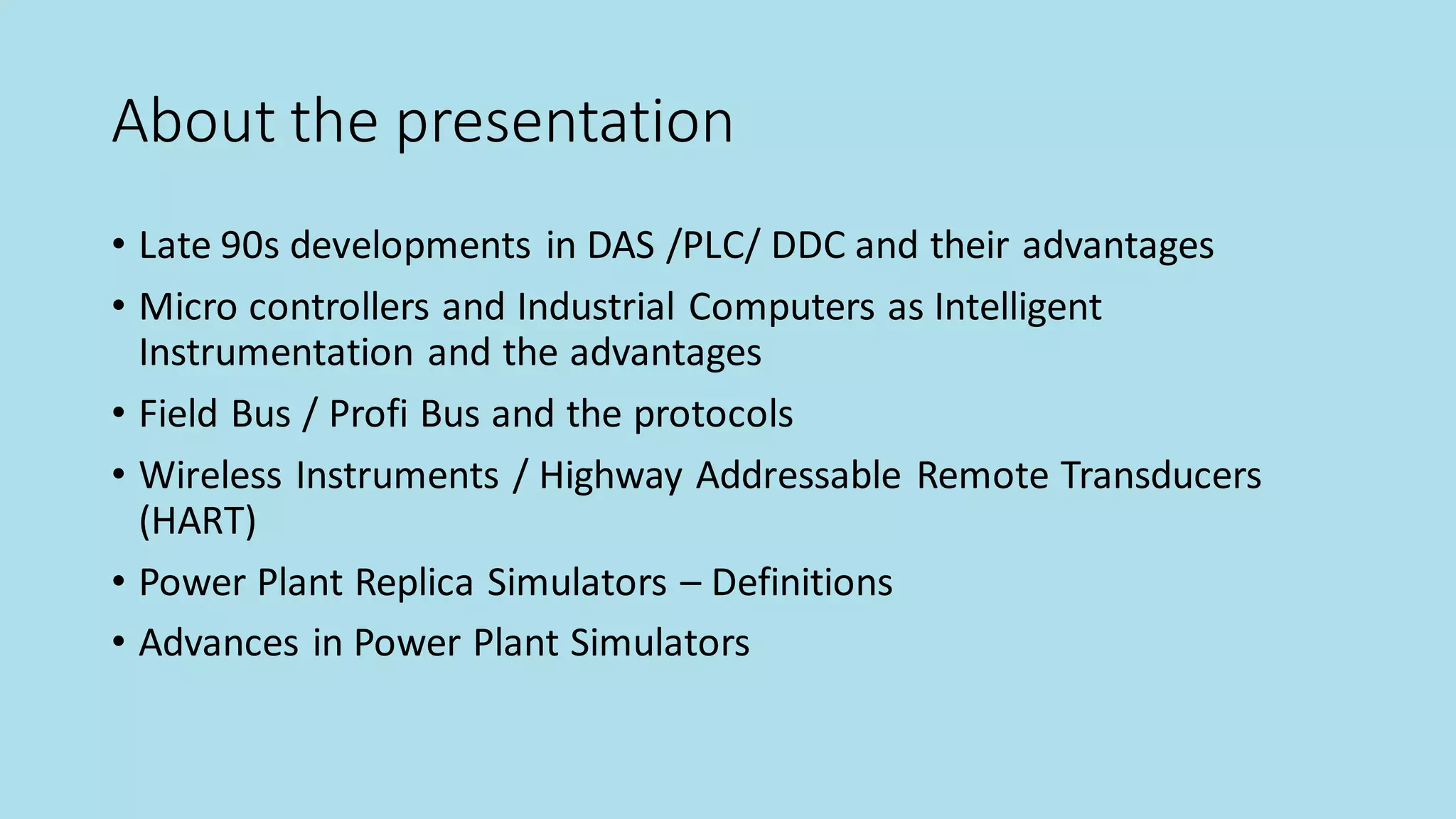
Starting from the pneumatic control (0.2 to 2 kg/cm2) in the late 70s, the
instrumentation lines have changed the signal control to Instrumentation
loop lines (4-20mA) and concentrated bus structure using Data concentrators
with Profi Bus / Field Bus Data structure. As a whole, the connections to the
control room is made with these Bus structures.
The Instrument transducers have also become smart with self check and
control mechanisms.
The presentation is aimed to show the latest developmentsalong with
power plant trainingsimulators for the skill enhancement.
About the presentation
• Late 90s developments in DAS /PLC/ DDC and their advantages
• Micro controllers and Industrial Computers as Intelligent
Instrumentation and the advantages
• Field Bus / Profi Bus and the protocols
• Wireless Instruments / Highway Addressable Remote Transducers
(HART)
• Power Plant Replica Simulators – Definitions
• Advances in Power Plant Simulators
Power Plant Control
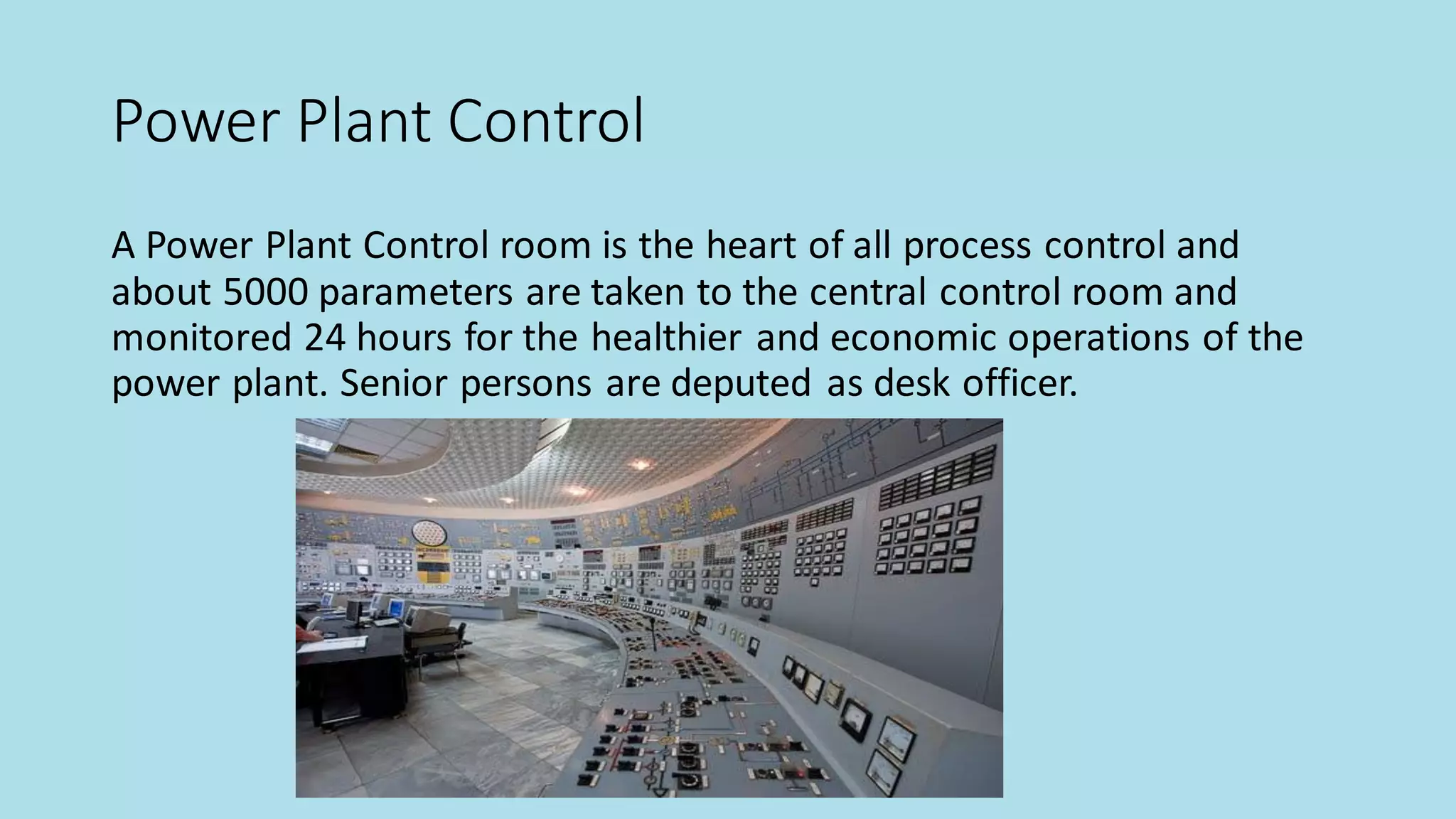
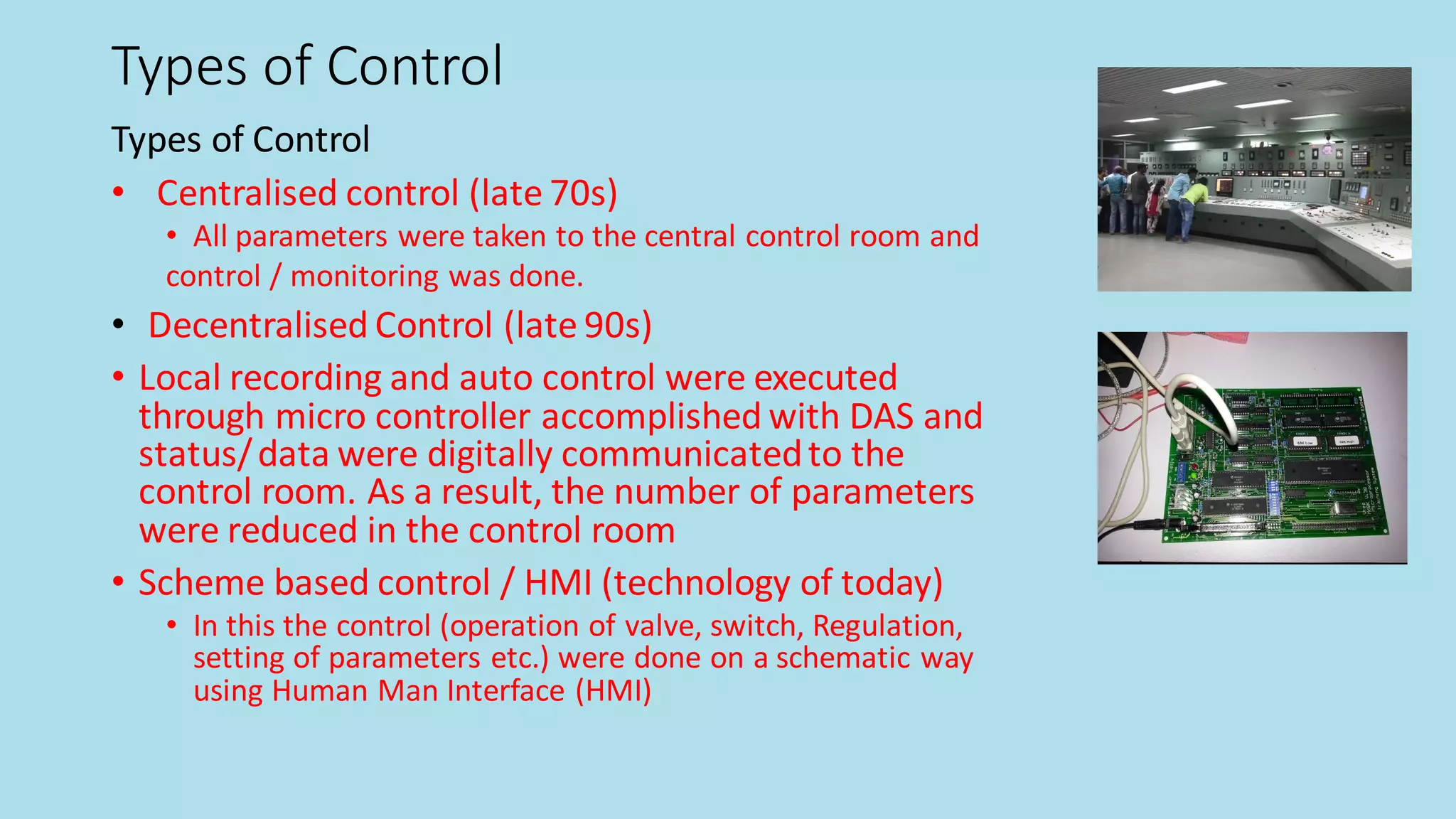
A Power Plant Control room is the heart of all process control and
about 5000 parameters are taken to the central control room and
monitored 24 hours for the healthier and economic operations of the
power plant. Senior persons are deputed as desk officer.
Types of Control
Types of Control
• Centralised control (late 70s)
• All parameters were taken to the central control room and
control / monitoring was done.
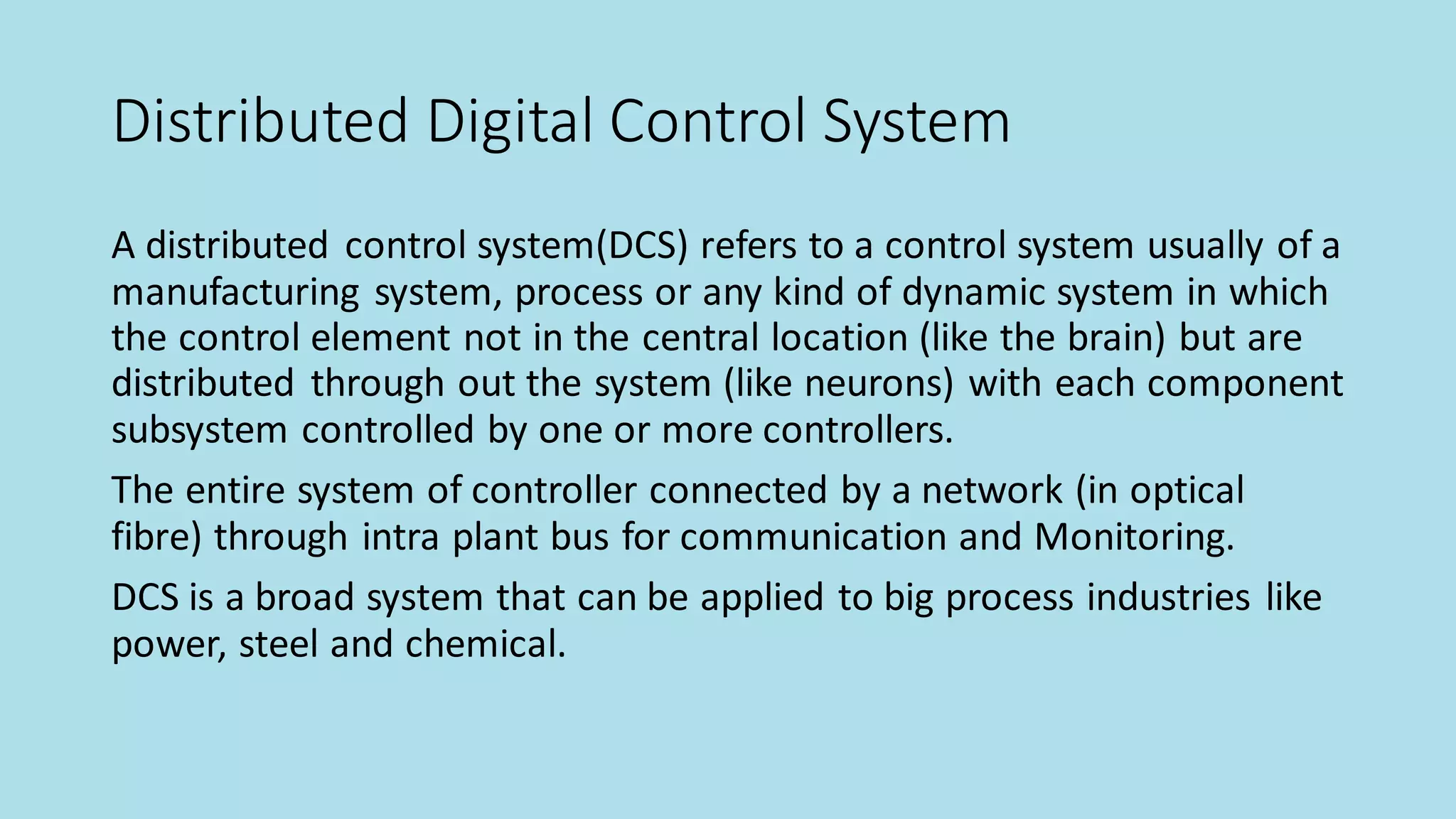
• Decentralised Control (late 90s)
• Local recording and auto control were executed
through micro controller accomplished with DAS and
status/data were digitally communicatedto the
control room. As a result, the number of parameters
were reduced in the control room
• Scheme based control / HMI (technology of today)
• In this the control (operation of valve, switch, Regulation,
setting of parameters etc.) were done on a schematic way
using Human Man Interface (HMI)
Need for recording Parameter Data
• At least one week of parameter data (temp, flow, pressure,
frequency, Vibration, Gas analyser, Ph value)are required in the
critical equipments
• Data recording is required for monitoring efficiency, safety and
maintenance purposes. Hence log book was created which was
maintained by local operator & central departments. A few
examples are : Manual Log Book, 2-3 point recorders and multi
point recorders used in measuring winding temperatures.
Distributed Digital Control System
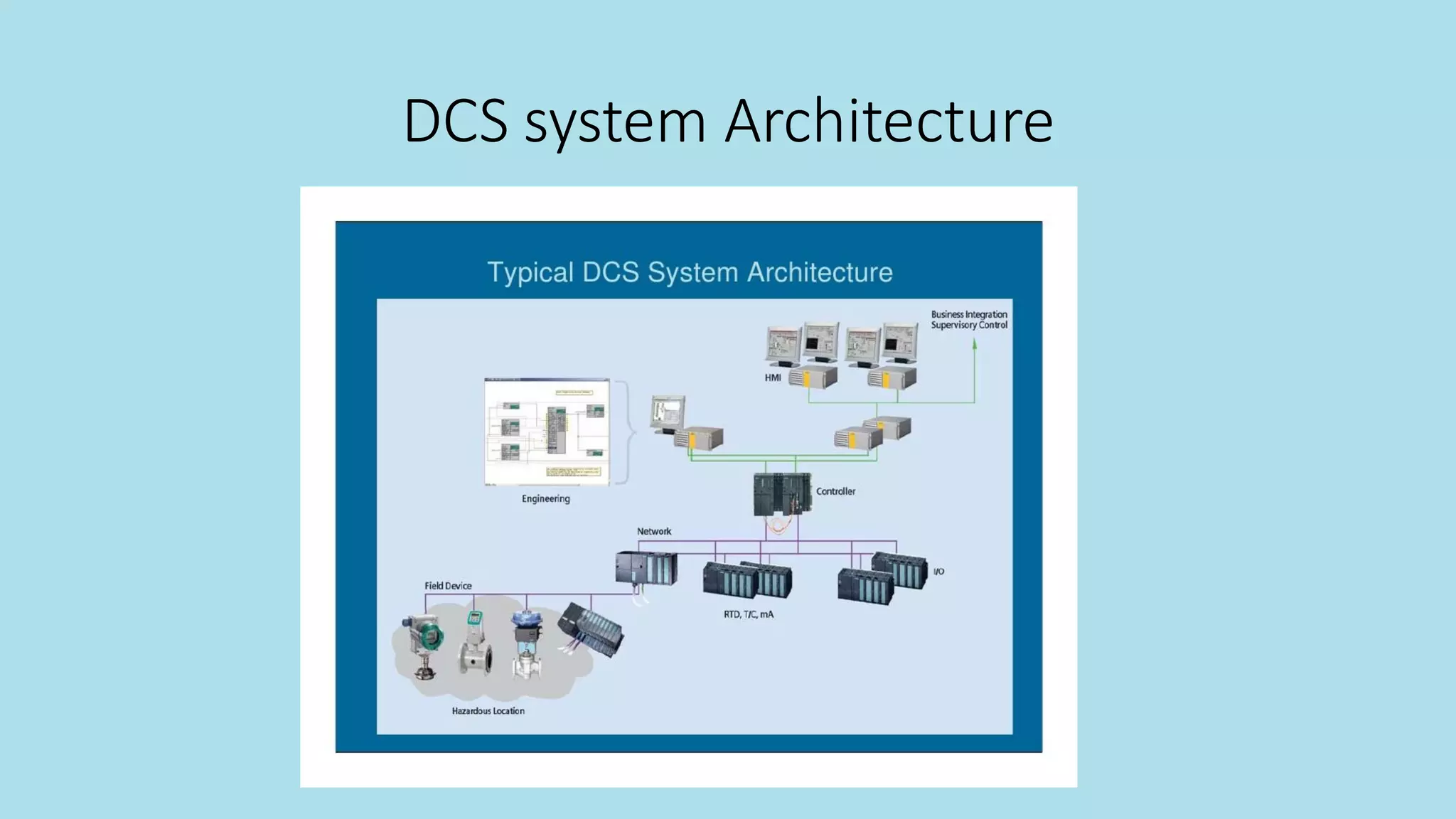
A distributed control system(DCS) refers to a control system usually of a
manufacturing system, process or any kind of dynamic system in which
the control element not in the central location (like the brain) but are
distributed through out the system (like neurons) with each component
subsystem controlled by one or more controllers.
The entire system of controller connected by a network (in optical
fibre) through intra plant bus for communication and Monitoring.
DCS is a broad system that can be applied to big process industries like
power, steel and chemical.
DCS system Architecture
Advantages of DCS
• Easy monitoring
• Number of parameters taken to the control room reduced
• Auto self check
• Zero drift
• Easy Expansion
• Better than PLC control
Applications of DCS
• Electrical power grids and electrical generation
plants
• Environmental Control systems
• Traffic signals
• Radio signal
• Furnace supervisory and safeguard system
• Substation Automation
• Pharmaceutical manufacturing
• Chemical plants
Field Bus systems
Field Bus
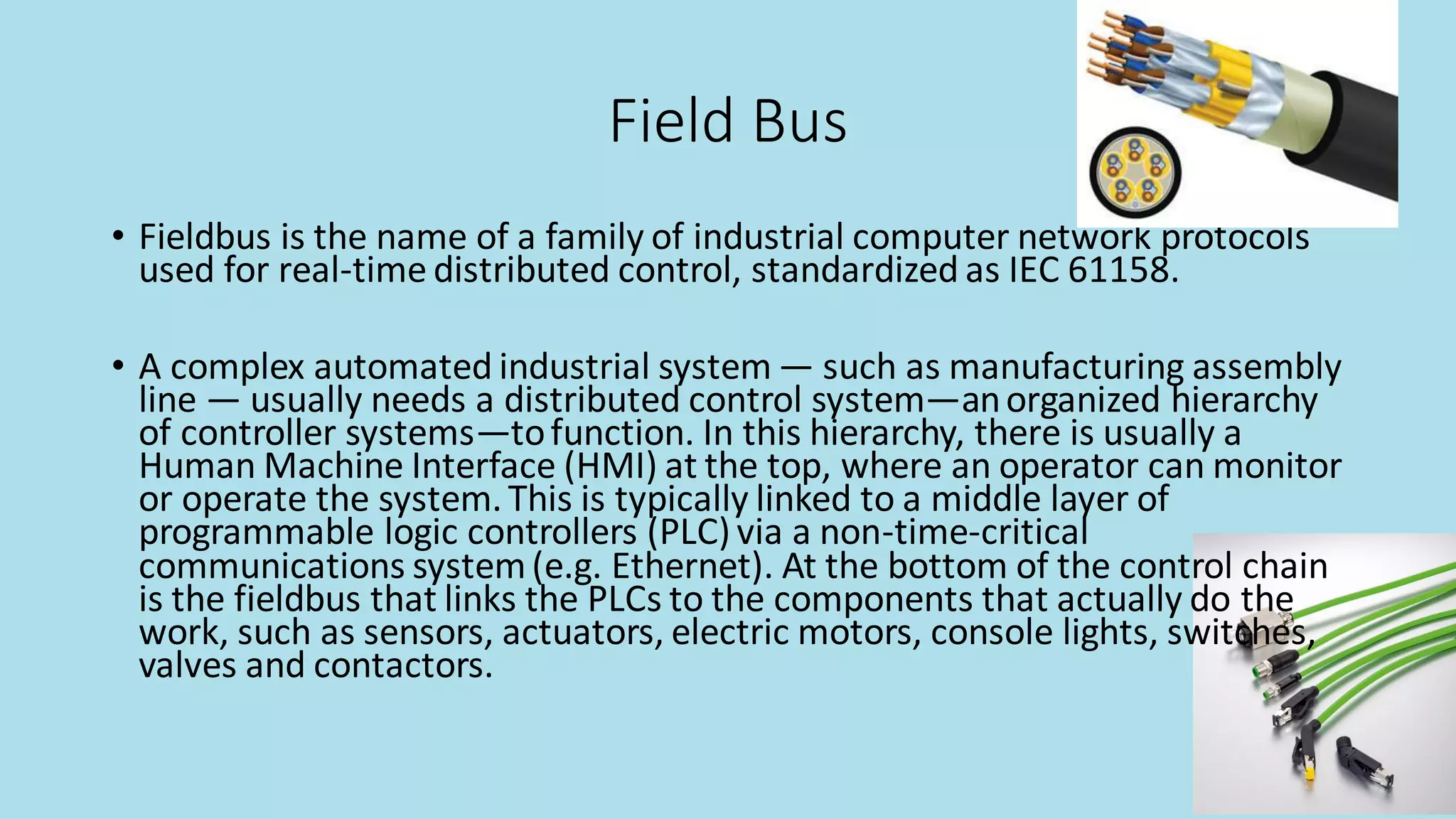
• Fieldbus is the name of a family of industrial computer network protocols
used for real-time distributed control, standardized as IEC 61158.
• A complex automated industrial system — such as manufacturing assembly
line — usually needs a distributed control system—anorganized hierarchy
of controller systems—tofunction. In this hierarchy, there is usually a
Human Machine Interface (HMI) at the top, where an operator can monitor
or operate the system.This is typically linked to a middle layer of
programmable logic controllers (PLC) via a non-time-critical
communications system(e.g. Ethernet). At the bottom of the control chain
is the fieldbus that links the PLCs to the components that actually do the
work, such as sensors, actuators, electric motors, console lights, switches,
valves and contactors.
Field Bus (Foundation)with different devices
Comparison of field Bus and 4-20mA current loop
Field Bus Architecture
Thermal Power Plant Simulators
If you say that computer was the best invention by human then the
best application of Computer is in replica Simulators used in Nuclear ,
Aviation, Thermal and Hydro Plants.
Are they real?
What is the need for the Replica Simulators?
What are the operations you can do with simulators?
Can we test the skill for the person in the simulators?
And why it is made as a mandate to have training in a simulator before
actual hands on working in a Plant?
A replica simulator is a replica of the power plant control room and the
process is 99% similar to a model power plant! Of course there is 1 %
exception on local parameters that can be neglected.
Thermal Power Plant Simulators
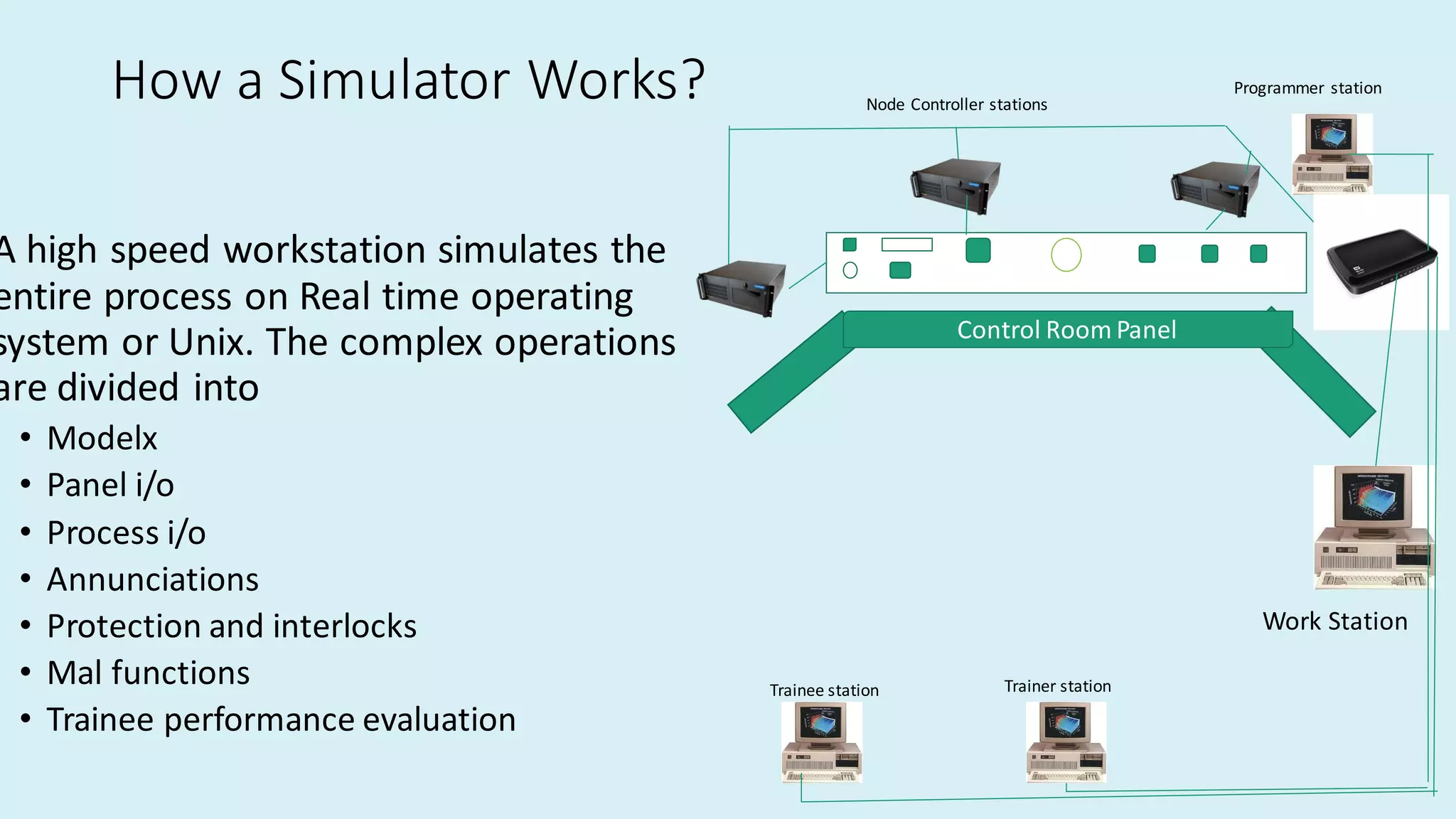
How a Simulator Works?
A high speed workstation simulates the
entire process on Real time operating
system or Unix. The complex operations
are divided into
• Modelx
• Panel i/o
• Process i/o
• Annunciations
• Protection and interlocks
• Mal functions
• Trainee performance evaluation
Control Room Panel
Work Station
Trainer stationTrainee station
Programmer station
Node Controller stations
Advantages of Simulator
• Backtrack
• Initial Conditions
• Snapshots
• Halt and Continue after lunch break
• Save the current conditions and resume after some day
• Malfunctions
• The life time malfunctions in the entire service of the desk operator can be insjected
with the time variant as a function
• Created failures : puncturing of super heater, failure of motor, pump etc. with variable
time linearly, logarithmically and randomly
Thank you .

Intelligent instrumentation and power plant simulators

  • 1.
    Intelligent Instrumentation and PowerPlant Training Simulators Dr. S Selvam Director, NPTI (SR)
  • 2.
    Intelligent Instrumentation andPower Plant Training Simulators With the development of the Instrumentation, Electronics and digital communication, the power plant control has witnessed enormous changes. Starting from the pneumatic control (0.2 to 2 kg/cm2) in the late 70s, the instrumentation lines have changed the signal control to Instrumentation loop lines (4-20mA) and concentrated bus structure using Data concentrators with Profi Bus / Field Bus Data structure. As a whole, the connections to the control room is made with these Bus structures. The Instrument transducers have also become smart with self check and control mechanisms. The presentation is aimed to show the latest developmentsalong with power plant trainingsimulators for the skill enhancement.
  • 3.
    About the presentation •Late 90s developments in DAS /PLC/ DDC and their advantages • Micro controllers and Industrial Computers as Intelligent Instrumentation and the advantages • Field Bus / Profi Bus and the protocols • Wireless Instruments / Highway Addressable Remote Transducers (HART) • Power Plant Replica Simulators – Definitions • Advances in Power Plant Simulators
  • 4.
    Power Plant Control APower Plant Control room is the heart of all process control and about 5000 parameters are taken to the central control room and monitored 24 hours for the healthier and economic operations of the power plant. Senior persons are deputed as desk officer.
  • 5.
    Types of Control Typesof Control • Centralised control (late 70s) • All parameters were taken to the central control room and control / monitoring was done. • Decentralised Control (late 90s) • Local recording and auto control were executed through micro controller accomplished with DAS and status/data were digitally communicatedto the control room. As a result, the number of parameters were reduced in the control room • Scheme based control / HMI (technology of today) • In this the control (operation of valve, switch, Regulation, setting of parameters etc.) were done on a schematic way using Human Man Interface (HMI)
  • 6.
    Need for recordingParameter Data • At least one week of parameter data (temp, flow, pressure, frequency, Vibration, Gas analyser, Ph value)are required in the critical equipments • Data recording is required for monitoring efficiency, safety and maintenance purposes. Hence log book was created which was maintained by local operator & central departments. A few examples are : Manual Log Book, 2-3 point recorders and multi point recorders used in measuring winding temperatures.
  • 7.
    Distributed Digital ControlSystem A distributed control system(DCS) refers to a control system usually of a manufacturing system, process or any kind of dynamic system in which the control element not in the central location (like the brain) but are distributed through out the system (like neurons) with each component subsystem controlled by one or more controllers. The entire system of controller connected by a network (in optical fibre) through intra plant bus for communication and Monitoring. DCS is a broad system that can be applied to big process industries like power, steel and chemical.
  • 8.
  • 9.
    Advantages of DCS •Easy monitoring • Number of parameters taken to the control room reduced • Auto self check • Zero drift • Easy Expansion • Better than PLC control
  • 10.
    Applications of DCS •Electrical power grids and electrical generation plants • Environmental Control systems • Traffic signals • Radio signal • Furnace supervisory and safeguard system • Substation Automation • Pharmaceutical manufacturing • Chemical plants
  • 11.
  • 12.
    Field Bus • Fieldbusis the name of a family of industrial computer network protocols used for real-time distributed control, standardized as IEC 61158. • A complex automated industrial system — such as manufacturing assembly line — usually needs a distributed control system—anorganized hierarchy of controller systems—tofunction. In this hierarchy, there is usually a Human Machine Interface (HMI) at the top, where an operator can monitor or operate the system.This is typically linked to a middle layer of programmable logic controllers (PLC) via a non-time-critical communications system(e.g. Ethernet). At the bottom of the control chain is the fieldbus that links the PLCs to the components that actually do the work, such as sensors, actuators, electric motors, console lights, switches, valves and contactors.
  • 13.
    Field Bus (Foundation)withdifferent devices
  • 14.
    Comparison of fieldBus and 4-20mA current loop
  • 15.
    Comparison of fieldBus and 4-20mA current loop
  • 16.
  • 17.
    Thermal Power PlantSimulators If you say that computer was the best invention by human then the best application of Computer is in replica Simulators used in Nuclear , Aviation, Thermal and Hydro Plants. Are they real? What is the need for the Replica Simulators? What are the operations you can do with simulators? Can we test the skill for the person in the simulators? And why it is made as a mandate to have training in a simulator before actual hands on working in a Plant?
  • 18.
    A replica simulatoris a replica of the power plant control room and the process is 99% similar to a model power plant! Of course there is 1 % exception on local parameters that can be neglected. Thermal Power Plant Simulators
  • 19.
    How a SimulatorWorks? A high speed workstation simulates the entire process on Real time operating system or Unix. The complex operations are divided into • Modelx • Panel i/o • Process i/o • Annunciations • Protection and interlocks • Mal functions • Trainee performance evaluation Control Room Panel Work Station Trainer stationTrainee station Programmer station Node Controller stations
  • 20.
    Advantages of Simulator •Backtrack • Initial Conditions • Snapshots • Halt and Continue after lunch break • Save the current conditions and resume after some day • Malfunctions • The life time malfunctions in the entire service of the desk operator can be insjected with the time variant as a function • Created failures : puncturing of super heater, failure of motor, pump etc. with variable time linearly, logarithmically and randomly
  • 21.