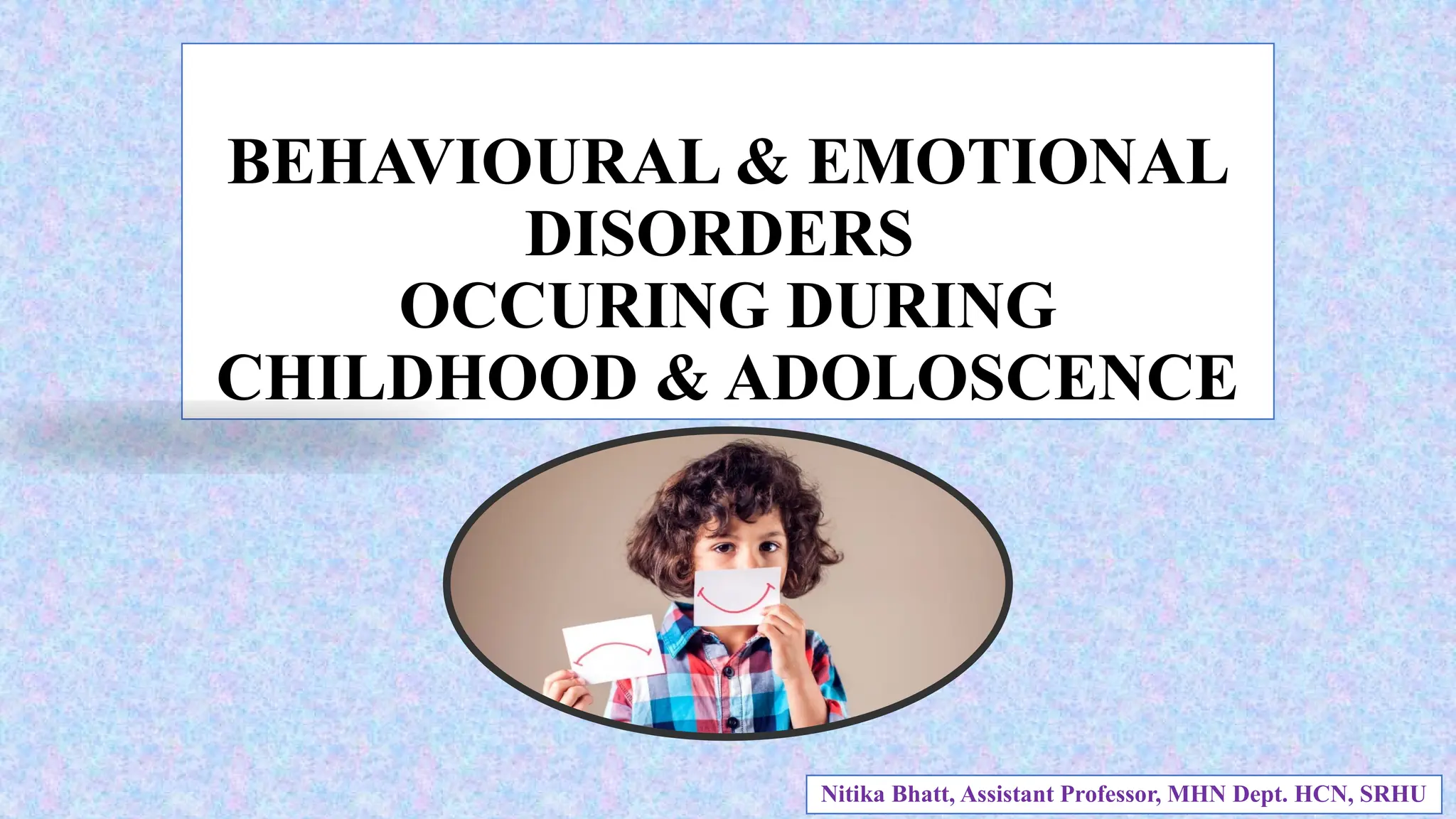
BEHAVIOURAL & EMOTIONAL
DISORDERS
OCCURING DURING
CHILDHOOD & ADOLOSCENCE
Nitika Bhatt, Assistant Professor, MHN Dept. HCN, SRHU
INTRODUCTION
• It has been estimated that approximately one-third of the childhood
suffering not from physical but primarily from psychological illness.
• Identification and handling of the emotional, behavioral and
developmental disorders problems of the childhood and adolescents is
very essential for any health care workers including nurses.
Nitika Bhatt, Assistant Professor, MHN Dept. HCN, SRHU
CONT…
• However, Disorders in which the symptoms usually first become
evident during infancy, childhood or adolescence does not mean that
they do not appear later in life or that symptoms associated with other
disorders such as major depression or schizophrenia.
• Any nurse working with children or adolescents should be
knowledgeable about “normal” stages of growth and development.
Nitika Bhatt, Assistant Professor, MHN Dept. HCN, SRHU
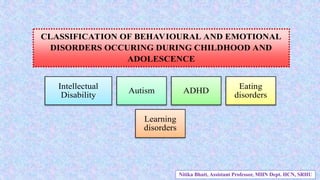
ICD 11 CLASSIFICATION OF BEHAVIOURAL
Intellectual
Disability
Autism ADHD
Eating
disorders
Learning
disorders
CLASSIFICATION OF BEHAVIOURAL AND EMOTIONAL
DISORDERS OCCURING DURING CHILDHOOD AND
ADOLESCENCE
Nitika Bhatt, Assistant Professor, MHN Dept. HCN, SRHU
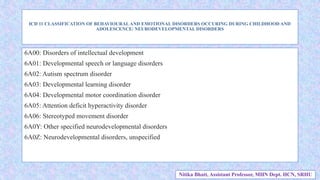
ICD 11 CLASSIFICATION OF BEHAVIOURALAND EMOTIONAL DISORDERS OCCURING DURING CHILDHOOD AND
ADOLESCENCE/ NEURODEVELOPMENTAL DISORDERS
6A00: Disorders of intellectual development
6A01: Developmental speech or language disorders
6A02: Autism spectrum disorder
6A03: Developmental learning disorder
6A04: Developmental motor coordination disorder
6A05: Attention deficit hyperactivity disorder
6A06: Stereotyped movement disorder
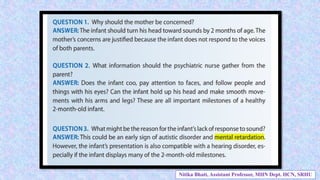
6A0Y: Other specified neurodevelopmental disorders
6A0Z: Neurodevelopmental disorders, unspecified
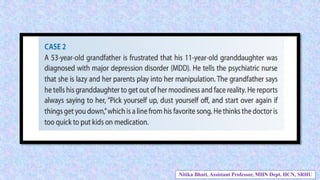
Nitika Bhatt, Assistant Professor, MHN Dept. HCN, SRHU
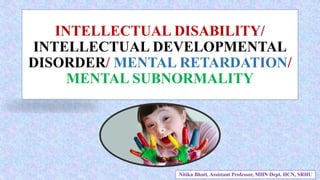
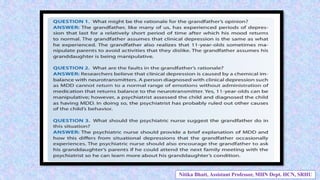
INTELLECTUAL DISABILITY/
INTELLECTUAL DEVELOPMENTAL
DISORDER/ MENTAL RETARDATION/
MENTAL SUBNORMALITY
Nitika Bhatt, Assistant Professor, MHN Dept. HCN, SRHU
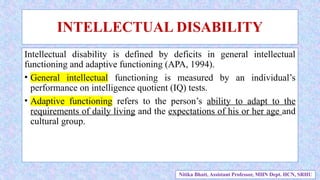
INTELLECTUAL DISABILITY
Intellectual disability is defined by deficits in general intellectual
functioning and adaptive functioning (APA, 1994).
• General intellectual functioning is measured by an individual’s
performance on intelligence quotient (IQ) tests.
• Adaptive functioning refers to the person’s ability to adapt to the
requirements of daily living and the expectations of his or her age and
cultural group.
Nitika Bhatt, Assistant Professor, MHN Dept. HCN, SRHU
DEFINITION
Intellectual disability is defined as a “disorder with onset during the developmental
period that includes both intellectual and adaptive functioning deficits in
conceptual, social and practical domains.
1. Conceptual – language, reading, writing, math, reasoning, knowledge, memory.
2. Social – empathy, social judgment, communication skills, the ability to follow
rules and the ability to make and keep friendships.
3. Practical – independence in areas such as personal care, job responsibilities,
managing money, recreation and organizing school and work tasks.
American Psychiatric Association [APA], 2013
Nitika Bhatt, Assistant Professor, MHN Dept. HCN, SRHU
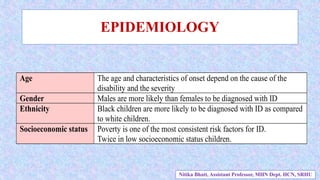
EPIDEMIOLOGY
Age The age and characteristics of onset depend on the cause of the
disability and the severity
Gender Males are more likely than females to be diagnosed with ID
Ethnicity Black children are more likely to be diagnosed with ID as compared
to white children.
Socioeconomic status Poverty is one of the most consistent risk factors for ID.
Twice in low socioeconomic status children.
Nitika Bhatt, Assistant Professor, MHN Dept. HCN, SRHU
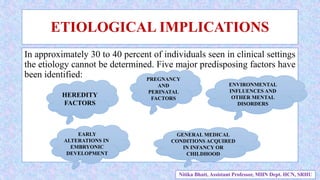
ETIOLOGICAL IMPLICATIONS
In approximately 30 to 40 percent of individuals seen in clinical settings
the etiology cannot be determined. Five major predisposing factors have
been identified:
HEREDITY
FACTORS
EARLY
ALTERATIONS IN
EMBRYONIC
DEVELOPMENT
PREGNANCY
AND
PERINATAL
FACTORS
GENERAL MEDICAL
CONDITIONS ACQUIRED
IN INFANCY OR
CHILDHOOD
ENVIRONMENTAL
INFLUENCES AND
OTHER MENTAL
DISORDERS
Nitika Bhatt, Assistant Professor, MHN Dept. HCN, SRHU
1. HEREDITY FACTORS
Heredity factors are implicated as the cause in approximately 5 percent of the cases.
• These factors include inborn errors of metabolism, such as phenylketonuria and
hyperglycinemia.
• Also include are chromosomal disorders such as Down’s syndrome.
Nitika Bhatt, Assistant Professor, MHN Dept. HCN, SRHU
Down Syndrome:
It is caused due to trisomy 21, i.e. person have 47 chromosomes, with an extra
chromosome 21.
• Intellectual disability is the overriding feature of Down syndrome. Majority of
patients belong to moderately & severely retarded group.
• They seem normal from birth to 6 months of age.
CONT…
Nitika Bhatt, Assistant Professor, MHN Dept. HCN, SRHU
Phenylketonuria (P.K.U):
• PKU is a genetically inherited metabolic disorder in which the body lacks the enzyme, phenylalanine
hydroxylase (PAH), which is responsible for metabolizing the amino acid called phenylalanine.
• Phenylalanine is involved in the production of the neurotransmitters norepinephrine and dopamine,
which are essential for the proper functioning of the brain and nervous system.
• Patients are severely retarded but some are with borderline/normal intelligence.
• PKU children are hyperactive, with unpredictable behaviours which make them difficult to be
managed.
CONT…
Nitika Bhatt, Assistant Professor, MHN Dept. HCN, SRHU
Maple syrup urine disease:
• Maple syrup urine disease (MSUD) is a rare but serious inherited
condition. It means the body cannot process certain amino acids (the
"building blocks" of protein), causing a harmful build-up of substances
in the blood. leucine, isoleucine and valine
• Symptoms appear during first week of life.
• Infant deteriorates rapidly and develops rigidity, seizures, respiratory
irregularity and hypoglycaemia.
• If untraced most of the infant die in the first month of life and the
survivors are severely retarded.
CONT…
Nitika Bhatt, Assistant Professor, MHN Dept. HCN, SRHU
• Prenatal factors that result in early alterations in embryonic development account
for approximately 30 percent of intellectual disability cases.
• Damages may occur in response to toxicity associated with maternal ingestion of
alcohol or other drugs.
• Maternal illnesses and infections during pregnancy (e.g. rubella and
cytomegalovirus) can also result in congenital intellectual disability, as can
complications of pregnancy such as uncontrolled diabetes.
2. EARLY ALTERATIONS IN
EMBRYONIC DEVELOPMENT
Nitika Bhatt, Assistant Professor, MHN Dept. HCN, SRHU
• Approximately 10 percent of cases of intellectual disability are the
result of factors that occur during pregnancy (e.g. fetal malnutrition,
viral and other infections and prematurity) or during the birth process.
• Examples of the latter include trauma to the head incurred during the
process of birth, premature separation of the placenta and prolapsed of
the cord.
3. PREGNANCY AND PERINATAL
FACTORS
Nitika Bhatt, Assistant Professor, MHN Dept. HCN, SRHU
• These conditions account for approximately 5 percent of cases of
intellectual disability.
• They include infections such as meningitis and encephalitis;
poisonings such as from insecticides, medications, lead and physical
trauma such as head injuries, hyperpyrexia.
4. GENERAL MEDICAL CONDITIONS
ACQUIRED IN INFANCY OR CHILDHOOD
Nitika Bhatt, Assistant Professor, MHN Dept. HCN, SRHU
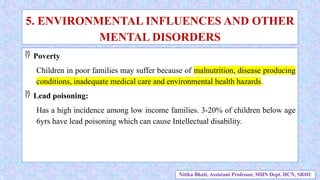
 Poverty
Children in poor families may suffer because of malnutrition, disease producing
conditions, inadequate medical care and environmental health hazards.
 Lead poisoning:
Has a high incidence among low income families. 3-20% of children below age
6yrs have lead poisoning which can cause Intellectual disability.
5. ENVIRONMENTAL INFLUENCES AND OTHER
MENTAL DISORDERS
Nitika Bhatt, Assistant Professor, MHN Dept. HCN, SRHU
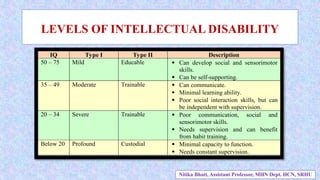
LEVELS OF INTELLECTUAL DISABILITY
IQ Type I Type II Description
50 – 75 Mild Educable  Can develop social and sensorimotor
skills.
 Can be self-supporting.
35 – 49 Moderate Trainable  Can communicate.
 Minimal learning ability.
 Poor social interaction skills, but can
be independent with supervision.
20 – 34 Severe Trainable  Poor communication, social and
sensorimotor skills.
 Needs supervision and can benefit
from habit training.
Below 20 Profound Custodial  Minimal capacity to function.
 Needs constant supervision.
Nitika Bhatt, Assistant Professor, MHN Dept. HCN, SRHU
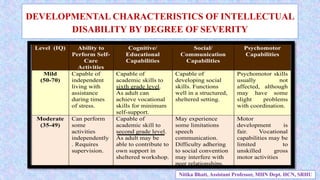
DEVELOPMENTAL CHARACTERISTICS OF INTELLECTUAL
DISABILITY BY DEGREE OF SEVERITY
Level (IQ) Ability to
Perform Self-
Care
Activities
Cognitive/
Educational
Capabilities
Social/
Communication
Capabilities
Psychomotor
Capabilities
Mild
(50-70)
Capable of
independent
living with
assistance
during times
of stress.
Capable of
academic skills to
sixth grade level.
As adult can
achieve vocational
skills for minimum
self-support.
Capable of
developing social
skills. Functions
well in a structured,
sheltered setting.
Psychomotor skills
usually not
affected, although
may have some
slight problems
with coordination.
Moderate
(35-49)
Can perform
some
activities
independently
. Requires
supervision.
Capable of
academic skill to
second grade level.
As adult may be
able to contribute to
own support in
sheltered workshop.
May experience
some limitations
speech
communication.
Difficulty adhering
to social convention
may interfere with
peer relationships.
Motor
development is
fair. Vocational
capabilities may be
limited to
unskilled gross
motor activities
Nitika Bhatt, Assistant Professor, MHN Dept. HCN, SRHU
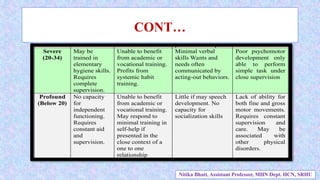
CONT…
Moderate
(35-49)
Can perform
some
activities
independently
. Requires
supervision.
Capable of
academic skill to
second grade level.
As adult may be
able to contribute to
own support in
sheltered workshop.
May experience
some limitations
speech
communication.
Difficulty adhering
to social convention
may interfere with
peer relationships.
Motor
development is
fair. Vocational
capabilities may be
limited to
unskilled gross
motor activities
Severe
(20-34)
May be
trained in
elementary
hygiene skills.
Requires
complete
supervision.
Unable to benefit
from academic or
vocational training.
Profits from
systemic habit
training.
Minimal verbal
skills Wants and
needs often
communicated by
acting-out behaviors.
Poor psychomotor
development only
able to perform
simple task under
close supervision
Profound
(Below 20)
No capacity
for
independent
functioning.
Requires
constant aid
and
supervision.
Unable to benefit
from academic or
vocational training.
May respond to
minimal training in
self-help if
presented in the
close context of a
one to one
relationship
Little if may speech
development. No
capacity for
socialization skills
Lack of ability for
both fine and gross
motor movements.
Requires constant
supervision and
care. May be
associated with
other physical
disorders.
Nitika Bhatt, Assistant Professor, MHN Dept. HCN, SRHU
• Nurses should assess and focus on each client’s strengths and
individual abilities.
• Knowledge regarding level of independence in the
performance of self care activities is essential to the
development of an adequate plan for the provision of nursing
care.
CONT…
Nitika Bhatt, Assistant Professor, MHN Dept. HCN, SRHU
 Delays in oral language development.
 Deficits in memory skills.
 Difficulty with learning social rules.
 Difficulty with problem solving skills.
 Delays in the development of adaptive behaviour such as self-help or self care
skills.
 Lack of social interests.
OTHER SIGNS
Nitika Bhatt, Assistant Professor, MHN Dept. HCN, SRHU
 A head that is too large or too small.
 Deformities of the hands or feet.
 Some have normal appearance but have other signs such as seizures,
lethargy, vomiting, abnormal urine odour & failure to feed.
 Usually, the first problem parents notice is a delay in language
development.
 May be gullible and easily taken advantage of or led into minor
misbehaviour.
SYMPTOMS
Nitika Bhatt, Assistant Professor, MHN Dept. HCN, SRHU
 Delayed development of motor skills, & are slow to roll, sit and stand.
 Slower to use words, put them together & speak complete sentences.
 Development is sometimes slow.
 May be slow to learn to dress & feed themselves.
 Unable to keep up with age-appropriate expectations.
 Have behavioural problems, such as explosive outbursts, temper
tantrums, and physically aggressive behaviour.
CONT…
Nitika Bhatt, Assistant Professor, MHN Dept. HCN, SRHU
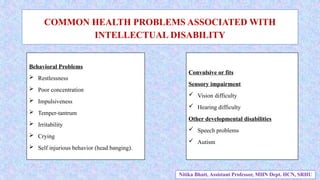
COMMON HEALTH PROBLEMS ASSOCIATED WITH
INTELLECTUAL DISABILITY
Behavioral Problems
 Restlessness
 Poor concentration
 Impulsiveness
 Temper-tantrum
 Irritability
 Crying
 Self injurious behavior (head banging).
Convulsive or fits
Sensory impairment
 Vision difficulty
 Hearing difficulty
Other developmental disabilities
 Speech problems
 Autism
Nitika Bhatt, Assistant Professor, MHN Dept. HCN, SRHU
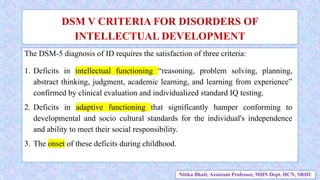
The DSM-5 diagnosis of ID requires the satisfaction of three criteria:
1. Deficits in intellectual functioning “reasoning, problem solving, planning,
abstract thinking, judgment, academic learning, and learning from experience”
confirmed by clinical evaluation and individualized standard IQ testing.
2. Deficits in adaptive functioning that significantly hamper conforming to
developmental and socio cultural standards for the individual's independence
and ability to meet their social responsibility.
3. The onset of these deficits during childhood.
DSM V CRITERIA FOR DISORDERS OF
INTELLECTUAL DEVELOPMENT
Nitika Bhatt, Assistant Professor, MHN Dept. HCN, SRHU
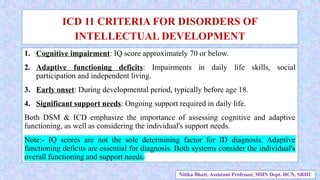
1. Cognitive impairment: IQ score approximately 70 or below.
2. Adaptive functioning deficits: Impairments in daily life skills, social
participation and independent living.
3. Early onset: During developmental period, typically before age 18.
4. Significant support needs: Ongoing support required in daily life.
Both DSM & ICD emphasize the importance of assessing cognitive and adaptive
functioning, as well as considering the individual's support needs.
Note:- IQ scores are not the sole determining factor for ID diagnosis. Adaptive
functioning deficits are essential for diagnosis. Both systems consider the individual's
overall functioning and support needs.
ICD 11 CRITERIA FOR DISORDERS OF
INTELLECTUAL DEVELOPMENT
Nitika Bhatt, Assistant Professor, MHN Dept. HCN, SRHU
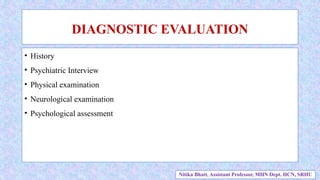
• History
• Psychiatric Interview
• Physical examination
• Neurological examination
• Psychological assessment
DIAGNOSTIC EVALUATION
Nitika Bhatt, Assistant Professor, MHN Dept. HCN, SRHU
• The history is most often obtained from the parents or the caretaker,
with particular attention to the mother's pregnancy, labor, and delivery;
the presence of a family history of intellectual disability,
consanguinity of the parents and hereditary disorders.
• As part of the history, the clinician assesses the overall level of
functioning and intellectual capacity of the parents and the emotional
climate of the home.
HISTORY
Nitika Bhatt, Assistant Professor, MHN Dept. HCN, SRHU
• Two factors are of paramount importance when interviewing the patient: the
interviewer's attitude and manner of communicating.
• The patient's verbal abilities, including receptive and expressive language, should be
assessed as soon as possible by observing the communication between the caretakers
and the patient and by taking the history.
• The patient's control over motility patterns should be ascertained, and clinical evidence
of distractibility and distortions in perception and memory may be evaluated.
• In general, the psychiatric examination of a retarded person should reveal how the
patient has coped with the stages of development.
PSYCHIATRIC INTERVIEW
Nitika Bhatt, Assistant Professor, MHN Dept. HCN, SRHU
• For example, the configuration and the size of the head offer clues to a
variety of conditions, such as microcephaly, hydrocephalus and Down
syndrome.
• The patient's face may have some signs of intellectual disability that
greatly facilitate the diagnosis, such as hypertelorism, a flat nasal
bridge, prominent eyebrows, epicanthal folds, retinal changes, low set
and small or misshapen ears, a protruding tongue, and a disturbance in
dentition.
PHYSICAL EXAMINATION
Nitika Bhatt, Assistant Professor, MHN Dept. HCN, SRHU
 Hearing impairment
 Visual disturbances
 Seizure disorder
 Poor coordination
NEUROLOGICAL EXAMINATION
Nitika Bhatt, Assistant Professor, MHN Dept. HCN, SRHU
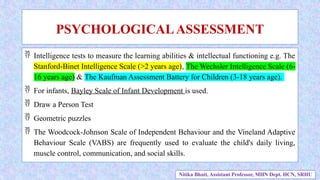
 Intelligence tests to measure the learning abilities & intellectual functioning e.g. The
Stanford-Binet Intelligence Scale (>2 years age), The Wechsler Intelligence Scale (6-
16 years age) & The Kaufman Assessment Battery for Children (3-18 years age).
 For infants, Bayley Scale of Infant Development is used.
 Draw a Person Test
 Geometric puzzles
 The Woodcock-Johnson Scale of Independent Behaviour and the Vineland Adaptive
Behaviour Scale (VABS) are frequently used to evaluate the child's daily living,
muscle control, communication, and social skills.
PSYCHOLOGICALASSESSMENT
Nitika Bhatt, Assistant Professor, MHN Dept. HCN, SRHU
TIPS FOR PARENTS
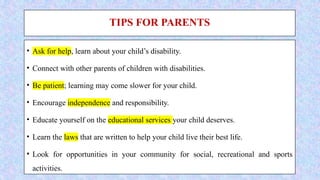
• Ask for help, learn about your child’s disability.
• Connect with other parents of children with disabilities.
• Be patient; learning may come slower for your child.
• Encourage independence and responsibility.
• Educate yourself on the educational services your child deserves.
• Learn the laws that are written to help your child live their best life.
• Look for opportunities in your community for social, recreational and sports
activities.
NURSING MANAGEMENT
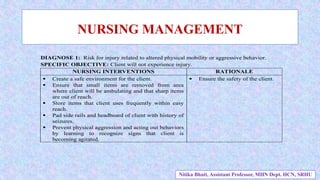
DIAGNOSE 1: Risk for injury related to altered physical mobility or aggressive behavior.
SPECIFIC OBJECTIVE: Client will not experience injury.
NURSING INTERVENTIONS RATIONALE
 Create a safe environment for the client.
 Ensure that small items are removed from area
where client will be ambulating and that sharp items
are out of reach.
 Store items that client uses frequently within easy
reach.
 Pad side rails and headboard of client with history of
seizures.
 Prevent physical aggression and acting out behaviors
by learning to recognize signs that client is
becoming agitated.
 Ensure the safety of the client.
Nitika Bhatt, Assistant Professor, MHN Dept. HCN, SRHU
CONT…
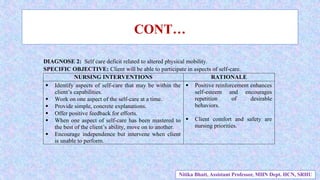
DIAGNOSE 2: Self care deficit related to altered physical mobility.
SPECIFIC OBJECTIVE: Client will be able to participate in aspects of self-care.
NURSING INTERVENTIONS RATIONALE
 Identify aspects of self-care that may be within the
client’s capabilities.
 Work on one aspect of the self-care at a time.
 Provide simple, concrete explanations.
 Offer positive feedback for efforts.
 When one aspect of self-care has been mastered to
the best of the client’s ability, move on to another.
 Encourage independence but intervene when client
is unable to perform.
 Positive reinforcement enhances
self-esteem and encourages
repetition of desirable
behaviors.
 Client comfort and safety are
nursing priorities.
Nitika Bhatt, Assistant Professor, MHN Dept. HCN, SRHU
CONT…
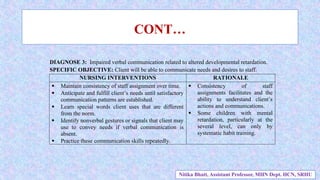
DIAGNOSE 3: Impaired verbal communication related to altered developmental retardation.
SPECIFIC OBJECTIVE: Client will be able to communicate needs and desires to staff.
NURSING INTERVENTIONS RATIONALE
 Maintain consistency of staff assignment over time.
 Anticipate and fulfill client’s needs until satisfactory
communication patterns are established.
 Learn special words client uses that are different
from the norm.
 Identify nonverbal gestures or signals that client may
use to convey needs if verbal communication is
absent.
 Practice these communication skills repeatedly.
 Consistency of staff
assignments facilitates and the
ability to understand client’s
actions and communications.
 Some children with mental
retardation, particularly at the
several level, can only by
systematic habit training.
Nitika Bhatt, Assistant Professor, MHN Dept. HCN, SRHU
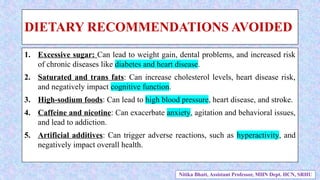
DIETARY RECOMMENDATIONS AVOIDED
1. Excessive sugar: Can lead to weight gain, dental problems, and increased risk
of chronic diseases like diabetes and heart disease.
2. Saturated and trans fats: Can increase cholesterol levels, heart disease risk,
and negatively impact cognitive function.
3. High-sodium foods: Can lead to high blood pressure, heart disease, and stroke.
4. Caffeine and nicotine: Can exacerbate anxiety, agitation and behavioral issues,
and lead to addiction.
5. Artificial additives: Can trigger adverse reactions, such as hyperactivity, and
negatively impact overall health.
Nitika Bhatt, Assistant Professor, MHN Dept. HCN, SRHU
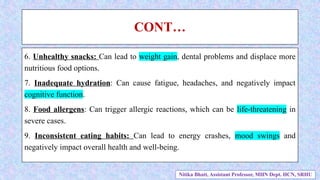
CONT…
6. Unhealthy snacks: Can lead to weight gain, dental problems and displace more
nutritious food options.
7. Inadequate hydration: Can cause fatigue, headaches, and negatively impact
cognitive function.
8. Food allergens: Can trigger allergic reactions, which can be life-threatening in
severe cases.
9. Inconsistent eating habits: Can lead to energy crashes, mood swings and
negatively impact overall health and well-being.
Nitika Bhatt, Assistant Professor, MHN Dept. HCN, SRHU
THANKYOU 

Intellectual disability (Childhood disorder)

  • 1.
    BEHAVIOURAL & EMOTIONAL DISORDERS OCCURINGDURING CHILDHOOD & ADOLOSCENCE Nitika Bhatt, Assistant Professor, MHN Dept. HCN, SRHU
  • 2.
    INTRODUCTION • It hasbeen estimated that approximately one-third of the childhood suffering not from physical but primarily from psychological illness. • Identification and handling of the emotional, behavioral and developmental disorders problems of the childhood and adolescents is very essential for any health care workers including nurses. Nitika Bhatt, Assistant Professor, MHN Dept. HCN, SRHU
  • 3.
    CONT… • However, Disordersin which the symptoms usually first become evident during infancy, childhood or adolescence does not mean that they do not appear later in life or that symptoms associated with other disorders such as major depression or schizophrenia. • Any nurse working with children or adolescents should be knowledgeable about “normal” stages of growth and development. Nitika Bhatt, Assistant Professor, MHN Dept. HCN, SRHU
  • 4.
    ICD 11 CLASSIFICATIONOF BEHAVIOURAL Intellectual Disability Autism ADHD Eating disorders Learning disorders CLASSIFICATION OF BEHAVIOURAL AND EMOTIONAL DISORDERS OCCURING DURING CHILDHOOD AND ADOLESCENCE Nitika Bhatt, Assistant Professor, MHN Dept. HCN, SRHU
  • 5.
    ICD 11 CLASSIFICATIONOF BEHAVIOURALAND EMOTIONAL DISORDERS OCCURING DURING CHILDHOOD AND ADOLESCENCE/ NEURODEVELOPMENTAL DISORDERS 6A00: Disorders of intellectual development 6A01: Developmental speech or language disorders 6A02: Autism spectrum disorder 6A03: Developmental learning disorder 6A04: Developmental motor coordination disorder 6A05: Attention deficit hyperactivity disorder 6A06: Stereotyped movement disorder 6A0Y: Other specified neurodevelopmental disorders 6A0Z: Neurodevelopmental disorders, unspecified Nitika Bhatt, Assistant Professor, MHN Dept. HCN, SRHU
  • 6.
    INTELLECTUAL DISABILITY/ INTELLECTUAL DEVELOPMENTAL DISORDER/MENTAL RETARDATION/ MENTAL SUBNORMALITY Nitika Bhatt, Assistant Professor, MHN Dept. HCN, SRHU
  • 7.
    INTELLECTUAL DISABILITY Intellectual disabilityis defined by deficits in general intellectual functioning and adaptive functioning (APA, 1994). • General intellectual functioning is measured by an individual’s performance on intelligence quotient (IQ) tests. • Adaptive functioning refers to the person’s ability to adapt to the requirements of daily living and the expectations of his or her age and cultural group. Nitika Bhatt, Assistant Professor, MHN Dept. HCN, SRHU
  • 8.
    DEFINITION Intellectual disability isdefined as a “disorder with onset during the developmental period that includes both intellectual and adaptive functioning deficits in conceptual, social and practical domains. 1. Conceptual – language, reading, writing, math, reasoning, knowledge, memory. 2. Social – empathy, social judgment, communication skills, the ability to follow rules and the ability to make and keep friendships. 3. Practical – independence in areas such as personal care, job responsibilities, managing money, recreation and organizing school and work tasks. American Psychiatric Association [APA], 2013 Nitika Bhatt, Assistant Professor, MHN Dept. HCN, SRHU
  • 9.
    EPIDEMIOLOGY Age The ageand characteristics of onset depend on the cause of the disability and the severity Gender Males are more likely than females to be diagnosed with ID Ethnicity Black children are more likely to be diagnosed with ID as compared to white children. Socioeconomic status Poverty is one of the most consistent risk factors for ID. Twice in low socioeconomic status children. Nitika Bhatt, Assistant Professor, MHN Dept. HCN, SRHU
  • 10.
    ETIOLOGICAL IMPLICATIONS In approximately30 to 40 percent of individuals seen in clinical settings the etiology cannot be determined. Five major predisposing factors have been identified: HEREDITY FACTORS EARLY ALTERATIONS IN EMBRYONIC DEVELOPMENT PREGNANCY AND PERINATAL FACTORS GENERAL MEDICAL CONDITIONS ACQUIRED IN INFANCY OR CHILDHOOD ENVIRONMENTAL INFLUENCES AND OTHER MENTAL DISORDERS Nitika Bhatt, Assistant Professor, MHN Dept. HCN, SRHU
  • 11.
    1. HEREDITY FACTORS Heredityfactors are implicated as the cause in approximately 5 percent of the cases. • These factors include inborn errors of metabolism, such as phenylketonuria and hyperglycinemia. • Also include are chromosomal disorders such as Down’s syndrome. Nitika Bhatt, Assistant Professor, MHN Dept. HCN, SRHU
  • 12.
    Down Syndrome: It iscaused due to trisomy 21, i.e. person have 47 chromosomes, with an extra chromosome 21. • Intellectual disability is the overriding feature of Down syndrome. Majority of patients belong to moderately & severely retarded group. • They seem normal from birth to 6 months of age. CONT… Nitika Bhatt, Assistant Professor, MHN Dept. HCN, SRHU
  • 13.
    Phenylketonuria (P.K.U): • PKUis a genetically inherited metabolic disorder in which the body lacks the enzyme, phenylalanine hydroxylase (PAH), which is responsible for metabolizing the amino acid called phenylalanine. • Phenylalanine is involved in the production of the neurotransmitters norepinephrine and dopamine, which are essential for the proper functioning of the brain and nervous system. • Patients are severely retarded but some are with borderline/normal intelligence. • PKU children are hyperactive, with unpredictable behaviours which make them difficult to be managed. CONT… Nitika Bhatt, Assistant Professor, MHN Dept. HCN, SRHU
  • 14.
    Maple syrup urinedisease: • Maple syrup urine disease (MSUD) is a rare but serious inherited condition. It means the body cannot process certain amino acids (the "building blocks" of protein), causing a harmful build-up of substances in the blood. leucine, isoleucine and valine • Symptoms appear during first week of life. • Infant deteriorates rapidly and develops rigidity, seizures, respiratory irregularity and hypoglycaemia. • If untraced most of the infant die in the first month of life and the survivors are severely retarded. CONT… Nitika Bhatt, Assistant Professor, MHN Dept. HCN, SRHU
  • 15.
    • Prenatal factorsthat result in early alterations in embryonic development account for approximately 30 percent of intellectual disability cases. • Damages may occur in response to toxicity associated with maternal ingestion of alcohol or other drugs. • Maternal illnesses and infections during pregnancy (e.g. rubella and cytomegalovirus) can also result in congenital intellectual disability, as can complications of pregnancy such as uncontrolled diabetes. 2. EARLY ALTERATIONS IN EMBRYONIC DEVELOPMENT Nitika Bhatt, Assistant Professor, MHN Dept. HCN, SRHU
  • 16.
    • Approximately 10percent of cases of intellectual disability are the result of factors that occur during pregnancy (e.g. fetal malnutrition, viral and other infections and prematurity) or during the birth process. • Examples of the latter include trauma to the head incurred during the process of birth, premature separation of the placenta and prolapsed of the cord. 3. PREGNANCY AND PERINATAL FACTORS Nitika Bhatt, Assistant Professor, MHN Dept. HCN, SRHU
  • 17.
    • These conditionsaccount for approximately 5 percent of cases of intellectual disability. • They include infections such as meningitis and encephalitis; poisonings such as from insecticides, medications, lead and physical trauma such as head injuries, hyperpyrexia. 4. GENERAL MEDICAL CONDITIONS ACQUIRED IN INFANCY OR CHILDHOOD Nitika Bhatt, Assistant Professor, MHN Dept. HCN, SRHU
  • 18.
     Poverty Children inpoor families may suffer because of malnutrition, disease producing conditions, inadequate medical care and environmental health hazards.  Lead poisoning: Has a high incidence among low income families. 3-20% of children below age 6yrs have lead poisoning which can cause Intellectual disability. 5. ENVIRONMENTAL INFLUENCES AND OTHER MENTAL DISORDERS Nitika Bhatt, Assistant Professor, MHN Dept. HCN, SRHU
  • 19.
    LEVELS OF INTELLECTUALDISABILITY IQ Type I Type II Description 50 – 75 Mild Educable  Can develop social and sensorimotor skills.  Can be self-supporting. 35 – 49 Moderate Trainable  Can communicate.  Minimal learning ability.  Poor social interaction skills, but can be independent with supervision. 20 – 34 Severe Trainable  Poor communication, social and sensorimotor skills.  Needs supervision and can benefit from habit training. Below 20 Profound Custodial  Minimal capacity to function.  Needs constant supervision. Nitika Bhatt, Assistant Professor, MHN Dept. HCN, SRHU
  • 20.
    DEVELOPMENTAL CHARACTERISTICS OFINTELLECTUAL DISABILITY BY DEGREE OF SEVERITY Level (IQ) Ability to Perform Self- Care Activities Cognitive/ Educational Capabilities Social/ Communication Capabilities Psychomotor Capabilities Mild (50-70) Capable of independent living with assistance during times of stress. Capable of academic skills to sixth grade level. As adult can achieve vocational skills for minimum self-support. Capable of developing social skills. Functions well in a structured, sheltered setting. Psychomotor skills usually not affected, although may have some slight problems with coordination. Moderate (35-49) Can perform some activities independently . Requires supervision. Capable of academic skill to second grade level. As adult may be able to contribute to own support in sheltered workshop. May experience some limitations speech communication. Difficulty adhering to social convention may interfere with peer relationships. Motor development is fair. Vocational capabilities may be limited to unskilled gross motor activities Nitika Bhatt, Assistant Professor, MHN Dept. HCN, SRHU
  • 21.
    CONT… Moderate (35-49) Can perform some activities independently . Requires supervision. Capableof academic skill to second grade level. As adult may be able to contribute to own support in sheltered workshop. May experience some limitations speech communication. Difficulty adhering to social convention may interfere with peer relationships. Motor development is fair. Vocational capabilities may be limited to unskilled gross motor activities Severe (20-34) May be trained in elementary hygiene skills. Requires complete supervision. Unable to benefit from academic or vocational training. Profits from systemic habit training. Minimal verbal skills Wants and needs often communicated by acting-out behaviors. Poor psychomotor development only able to perform simple task under close supervision Profound (Below 20) No capacity for independent functioning. Requires constant aid and supervision. Unable to benefit from academic or vocational training. May respond to minimal training in self-help if presented in the close context of a one to one relationship Little if may speech development. No capacity for socialization skills Lack of ability for both fine and gross motor movements. Requires constant supervision and care. May be associated with other physical disorders. Nitika Bhatt, Assistant Professor, MHN Dept. HCN, SRHU
  • 22.
    • Nurses shouldassess and focus on each client’s strengths and individual abilities. • Knowledge regarding level of independence in the performance of self care activities is essential to the development of an adequate plan for the provision of nursing care. CONT… Nitika Bhatt, Assistant Professor, MHN Dept. HCN, SRHU
  • 23.
     Delays inoral language development.  Deficits in memory skills.  Difficulty with learning social rules.  Difficulty with problem solving skills.  Delays in the development of adaptive behaviour such as self-help or self care skills.  Lack of social interests. OTHER SIGNS Nitika Bhatt, Assistant Professor, MHN Dept. HCN, SRHU
  • 24.
     A headthat is too large or too small.  Deformities of the hands or feet.  Some have normal appearance but have other signs such as seizures, lethargy, vomiting, abnormal urine odour & failure to feed.  Usually, the first problem parents notice is a delay in language development.  May be gullible and easily taken advantage of or led into minor misbehaviour. SYMPTOMS Nitika Bhatt, Assistant Professor, MHN Dept. HCN, SRHU
  • 25.
     Delayed developmentof motor skills, & are slow to roll, sit and stand.  Slower to use words, put them together & speak complete sentences.  Development is sometimes slow.  May be slow to learn to dress & feed themselves.  Unable to keep up with age-appropriate expectations.  Have behavioural problems, such as explosive outbursts, temper tantrums, and physically aggressive behaviour. CONT… Nitika Bhatt, Assistant Professor, MHN Dept. HCN, SRHU
  • 26.
    COMMON HEALTH PROBLEMSASSOCIATED WITH INTELLECTUAL DISABILITY Behavioral Problems  Restlessness  Poor concentration  Impulsiveness  Temper-tantrum  Irritability  Crying  Self injurious behavior (head banging). Convulsive or fits Sensory impairment  Vision difficulty  Hearing difficulty Other developmental disabilities  Speech problems  Autism Nitika Bhatt, Assistant Professor, MHN Dept. HCN, SRHU
  • 27.
    The DSM-5 diagnosisof ID requires the satisfaction of three criteria: 1. Deficits in intellectual functioning “reasoning, problem solving, planning, abstract thinking, judgment, academic learning, and learning from experience” confirmed by clinical evaluation and individualized standard IQ testing. 2. Deficits in adaptive functioning that significantly hamper conforming to developmental and socio cultural standards for the individual's independence and ability to meet their social responsibility. 3. The onset of these deficits during childhood. DSM V CRITERIA FOR DISORDERS OF INTELLECTUAL DEVELOPMENT Nitika Bhatt, Assistant Professor, MHN Dept. HCN, SRHU
  • 28.
    1. Cognitive impairment:IQ score approximately 70 or below. 2. Adaptive functioning deficits: Impairments in daily life skills, social participation and independent living. 3. Early onset: During developmental period, typically before age 18. 4. Significant support needs: Ongoing support required in daily life. Both DSM & ICD emphasize the importance of assessing cognitive and adaptive functioning, as well as considering the individual's support needs. Note:- IQ scores are not the sole determining factor for ID diagnosis. Adaptive functioning deficits are essential for diagnosis. Both systems consider the individual's overall functioning and support needs. ICD 11 CRITERIA FOR DISORDERS OF INTELLECTUAL DEVELOPMENT Nitika Bhatt, Assistant Professor, MHN Dept. HCN, SRHU
  • 29.
    • History • PsychiatricInterview • Physical examination • Neurological examination • Psychological assessment DIAGNOSTIC EVALUATION Nitika Bhatt, Assistant Professor, MHN Dept. HCN, SRHU
  • 30.
    • The historyis most often obtained from the parents or the caretaker, with particular attention to the mother's pregnancy, labor, and delivery; the presence of a family history of intellectual disability, consanguinity of the parents and hereditary disorders. • As part of the history, the clinician assesses the overall level of functioning and intellectual capacity of the parents and the emotional climate of the home. HISTORY Nitika Bhatt, Assistant Professor, MHN Dept. HCN, SRHU
  • 31.
    • Two factorsare of paramount importance when interviewing the patient: the interviewer's attitude and manner of communicating. • The patient's verbal abilities, including receptive and expressive language, should be assessed as soon as possible by observing the communication between the caretakers and the patient and by taking the history. • The patient's control over motility patterns should be ascertained, and clinical evidence of distractibility and distortions in perception and memory may be evaluated. • In general, the psychiatric examination of a retarded person should reveal how the patient has coped with the stages of development. PSYCHIATRIC INTERVIEW Nitika Bhatt, Assistant Professor, MHN Dept. HCN, SRHU
  • 32.
    • For example,the configuration and the size of the head offer clues to a variety of conditions, such as microcephaly, hydrocephalus and Down syndrome. • The patient's face may have some signs of intellectual disability that greatly facilitate the diagnosis, such as hypertelorism, a flat nasal bridge, prominent eyebrows, epicanthal folds, retinal changes, low set and small or misshapen ears, a protruding tongue, and a disturbance in dentition. PHYSICAL EXAMINATION Nitika Bhatt, Assistant Professor, MHN Dept. HCN, SRHU
  • 33.
     Hearing impairment Visual disturbances  Seizure disorder  Poor coordination NEUROLOGICAL EXAMINATION Nitika Bhatt, Assistant Professor, MHN Dept. HCN, SRHU
  • 34.
     Intelligence teststo measure the learning abilities & intellectual functioning e.g. The Stanford-Binet Intelligence Scale (>2 years age), The Wechsler Intelligence Scale (6- 16 years age) & The Kaufman Assessment Battery for Children (3-18 years age).  For infants, Bayley Scale of Infant Development is used.  Draw a Person Test  Geometric puzzles  The Woodcock-Johnson Scale of Independent Behaviour and the Vineland Adaptive Behaviour Scale (VABS) are frequently used to evaluate the child's daily living, muscle control, communication, and social skills. PSYCHOLOGICALASSESSMENT Nitika Bhatt, Assistant Professor, MHN Dept. HCN, SRHU
  • 35.
    TIPS FOR PARENTS •Ask for help, learn about your child’s disability. • Connect with other parents of children with disabilities. • Be patient; learning may come slower for your child. • Encourage independence and responsibility. • Educate yourself on the educational services your child deserves. • Learn the laws that are written to help your child live their best life. • Look for opportunities in your community for social, recreational and sports activities.
  • 36.
    NURSING MANAGEMENT DIAGNOSE 1:Risk for injury related to altered physical mobility or aggressive behavior. SPECIFIC OBJECTIVE: Client will not experience injury. NURSING INTERVENTIONS RATIONALE  Create a safe environment for the client.  Ensure that small items are removed from area where client will be ambulating and that sharp items are out of reach.  Store items that client uses frequently within easy reach.  Pad side rails and headboard of client with history of seizures.  Prevent physical aggression and acting out behaviors by learning to recognize signs that client is becoming agitated.  Ensure the safety of the client. Nitika Bhatt, Assistant Professor, MHN Dept. HCN, SRHU
  • 37.
    CONT… DIAGNOSE 2: Selfcare deficit related to altered physical mobility. SPECIFIC OBJECTIVE: Client will be able to participate in aspects of self-care. NURSING INTERVENTIONS RATIONALE  Identify aspects of self-care that may be within the client’s capabilities.  Work on one aspect of the self-care at a time.  Provide simple, concrete explanations.  Offer positive feedback for efforts.  When one aspect of self-care has been mastered to the best of the client’s ability, move on to another.  Encourage independence but intervene when client is unable to perform.  Positive reinforcement enhances self-esteem and encourages repetition of desirable behaviors.  Client comfort and safety are nursing priorities. Nitika Bhatt, Assistant Professor, MHN Dept. HCN, SRHU
  • 38.
    CONT… DIAGNOSE 3: Impairedverbal communication related to altered developmental retardation. SPECIFIC OBJECTIVE: Client will be able to communicate needs and desires to staff. NURSING INTERVENTIONS RATIONALE  Maintain consistency of staff assignment over time.  Anticipate and fulfill client’s needs until satisfactory communication patterns are established.  Learn special words client uses that are different from the norm.  Identify nonverbal gestures or signals that client may use to convey needs if verbal communication is absent.  Practice these communication skills repeatedly.  Consistency of staff assignments facilitates and the ability to understand client’s actions and communications.  Some children with mental retardation, particularly at the several level, can only by systematic habit training. Nitika Bhatt, Assistant Professor, MHN Dept. HCN, SRHU
  • 39.
    DIETARY RECOMMENDATIONS AVOIDED 1.Excessive sugar: Can lead to weight gain, dental problems, and increased risk of chronic diseases like diabetes and heart disease. 2. Saturated and trans fats: Can increase cholesterol levels, heart disease risk, and negatively impact cognitive function. 3. High-sodium foods: Can lead to high blood pressure, heart disease, and stroke. 4. Caffeine and nicotine: Can exacerbate anxiety, agitation and behavioral issues, and lead to addiction. 5. Artificial additives: Can trigger adverse reactions, such as hyperactivity, and negatively impact overall health. Nitika Bhatt, Assistant Professor, MHN Dept. HCN, SRHU
  • 40.
    CONT… 6. Unhealthy snacks:Can lead to weight gain, dental problems and displace more nutritious food options. 7. Inadequate hydration: Can cause fatigue, headaches, and negatively impact cognitive function. 8. Food allergens: Can trigger allergic reactions, which can be life-threatening in severe cases. 9. Inconsistent eating habits: Can lead to energy crashes, mood swings and negatively impact overall health and well-being. Nitika Bhatt, Assistant Professor, MHN Dept. HCN, SRHU
  • 41.
    Nitika Bhatt, AssistantProfessor, MHN Dept. HCN, SRHU
  • 42.
    Nitika Bhatt, AssistantProfessor, MHN Dept. HCN, SRHU
  • 43.
    Nitika Bhatt, AssistantProfessor, MHN Dept. HCN, SRHU
  • 44.
    Nitika Bhatt, AssistantProfessor, MHN Dept. HCN, SRHU
  • 45.

Editor's Notes

  • #10 Predisposing factors are the risk factors that make a person more susceptible to developing a disease.
  • #11 Glycine encephalopathy- The excess glycine builds up in tissues and organs, particularly the brain & leads to serious neurological problems. Glycine is an amino acid, a compound that your body uses to create protein.  Tay-Sachs disease is a fatal genetic condition that affects nerve cells in your child's brain.
  • #19 Custodial-services for basic needs
  • #20 social convention- turns when speaking, using acceptable table manners, and waiting patiently in line 
  • #21 acting out behaviors- Such behaviors may include arguing, fighting, stealing, threatening, or throwing tantrums
  • #24 Gullible- believing and trusting people too easily, and therefore easily tricked
  • #32 Hypertelorism is an abnormally increased distance between two organs or bodily parts (eyes). 
  • #42 Coo- soft sound like dove or pigeon