2019 Bonner CEL
and Fall Meeting Integrative Pathways
Our Session
1.Social Learning Mixer
2.Lessons and Themes from Bonner
3.Promising Progress in Integrative Pathways
4.Key Challenges
5.Strategies to Move Forward
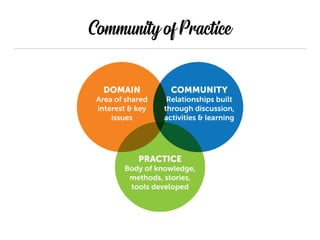
Community of Practice
Sources
• First developed by Lave and Wenger (1991), communities of
practice refer to both intentional and incidental learning that takes
place when people of varying levels of expertise come together to
solve problems. A community of practice shares three important
characteristics (Wenger & Wenger-Trayner, 2015).
• The group has a common focus or goal they are working
towards (Wenger & Wenger-Trayner, 2015).
• It is possible for leaders to cultivate a community of practice (Printy,
2008).
• Learning is social, relational and reciprocal (Printy, 2008;Wenger &
Wenger-Trayner, 2015)
Characteristics
• Overlapping Histories
• Mutual Interdependence
• Respect for Diversity and Divergent Perspectives
• Seeking Experience
• Reusing Assets
• Coordination and Synergy
• Documentation Projects
• Mapping Knowledge and Gaps
A
Social
Mixer
Question
“What is
something
you’ve read
recently that’s
inspired you as
an educator?”
Question
“Who was
one of your
most
influential
educators?”
Question
“What is one
way you’re
hoping to
improve your
work as an
educator within
the next year?”
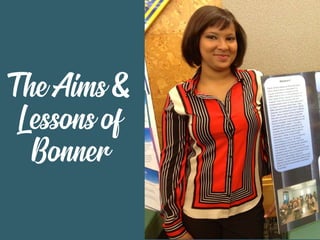
The Aims &
Lessons of
Bonner
100% Bonners and 20-25% of
entire graduating class each year
completes a capstone-level
community-engagement project
Our Goal
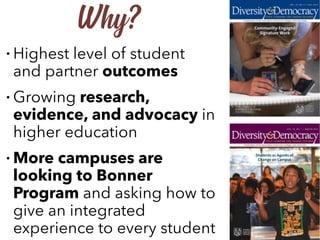
• Highest level of student
and partner outcomes
• Growing research,
evidence, and advocacy in
higher education
• More campuses are
looking to Bonner
Program and asking how to
give an integrated
experience to every student
Why?
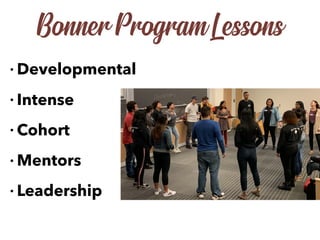
• Developmental
• Intense
• Cohort
• Mentors
• Leadership
Bonner Program Lessons
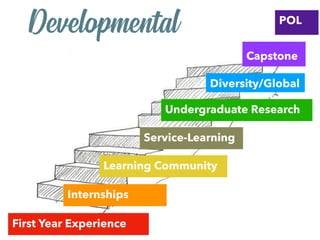
First Year Experience
Learning Community
Internships
Undergraduate Research
Diversity/Global
Capstone
Developmental POL
Service-Learning
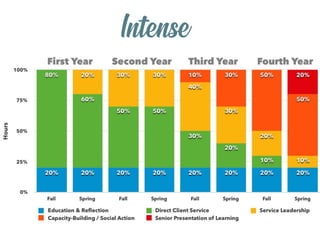
Intense
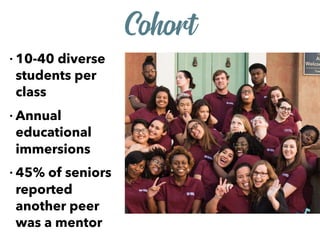
• 10-40 diverse
students per
class
• Annual
educational
immersions
• 45% of seniors
reported
another peer
was a mentor
Cohort
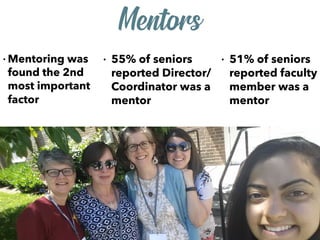
• Mentoring was
found the 2nd
most important
factor
Mentors
• 55% of seniors
reported Director/
Coordinator was a
mentor
• 51% of seniors
reported faculty
member was a
mentor
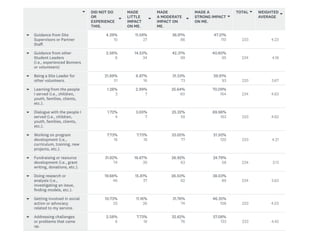
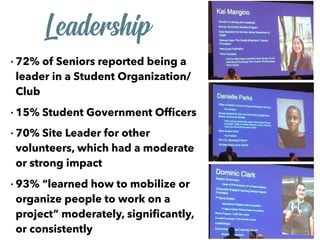
• 72% of Seniors reported being a
leader in a Student Organization/
Club
• 15% Student Government Officers
• 70% Site Leader for other
volunteers, which had a moderate
or strong impact
• 93% “learned how to mobilize or
organize people to work on a
project” moderately, significantly,
or consistently
Leadership
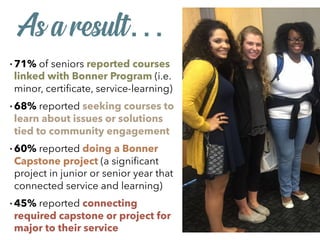
• 71% of seniors reported courses
linked with Bonner Program (i.e.
minor, certificate, service-learning)
• 68% reported seeking courses to
learn about issues or solutions
tied to community engagement
• 60% reported doing a Bonner
Capstone project (a significant
project in junior or senior year that
connected service and learning)
• 45% reported connecting
required capstone or project for
major to their service
As a result…
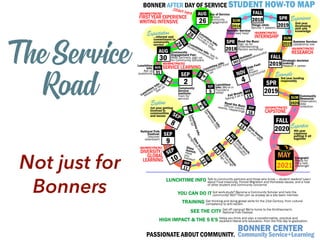
The Service
Road
Not just for
Bonners
• Discuss your reactions to these
themes and their implications for
your program and campus
• Identify places that are ripe for
more integration
Talk with another campus
Promising
Progress
1) Majors, Minors and Certificates
2) Civic General Education Requirements
3) Internships or Problem-Based Learning
4) Academic & Student Affairs Partnerships
5) Nonprofit Partnerships
Promising Progress
on Integrative Pathways
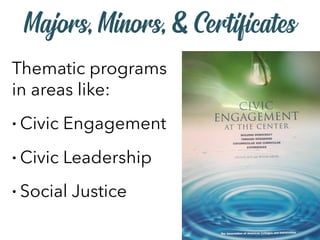
Thematic programs
in areas like:
• Civic Engagement
• Civic Leadership
• Social Justice
Majors, Minors, & Certificates
Majors
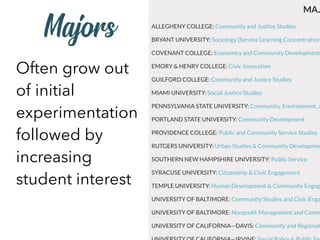
Often grow out
of initial
experimentation
followed by
increasing
student interest
One List
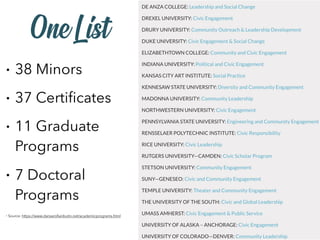
• 38 Minors
• 37 Certificates
• 11 Graduate
Programs
• 7 Doctoral
Programs
• Source: https://www.dansarofianbutin.net/academicprograms.html
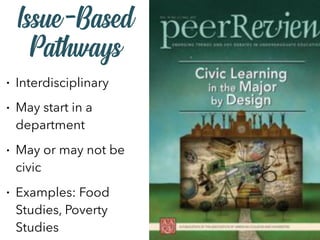
Issue-Based
Pathways
• Interdisciplinary
• May start in a
department
• May or may not be
civic
• Examples: Food
Studies, Poverty
Studies
Does your campus
have a similar
major, minor, or
certificate?
Name it and its
focus.
Stand and Share
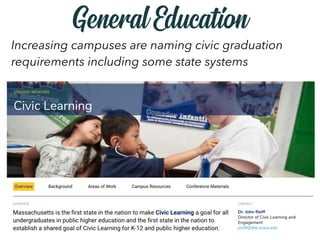
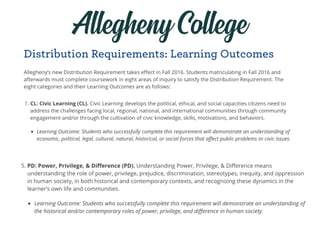
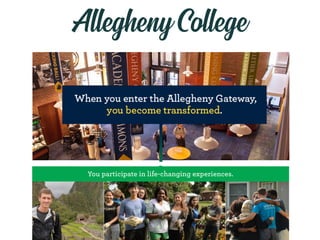
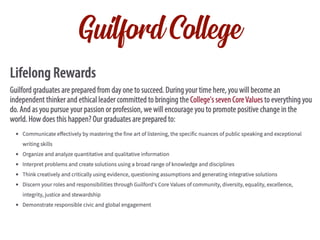
Increasing campuses are naming civic graduation
requirements including some state systems
General Education
Allegheny College
Allegheny College
Guilford College
Guilford College
Is your campus
attempting to
make similar
changes? What is
the project and
purpose?
Stand and Share
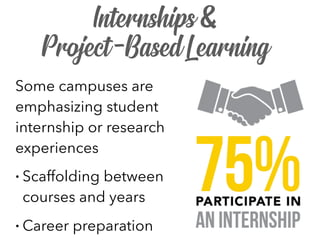
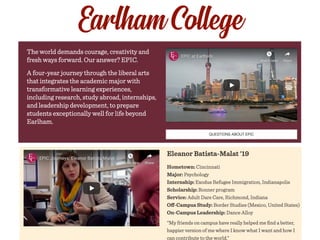
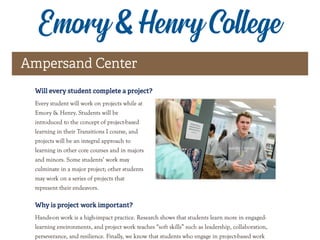
Internships &
Project-Based Learning
Some campuses are
emphasizing student
internship or research
experiences
• Scaffolding between
courses and years
• Career preparation
Earlham College
Emory & Henry College
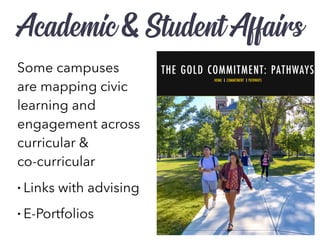
Academic & Student Affairs
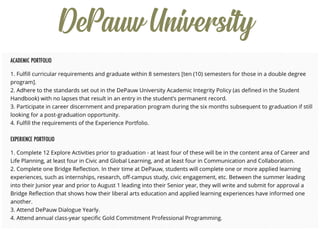
Some campuses
are mapping civic
learning and
engagement across
curricular & 

co-curricular
• Links with advising
• E-Portfolios
DePauw University
Non-Profit Partnerships
Relevant nonprofit partners, including
local and national organizations, also
have begun to develop sophisticated
research-based educational
materials on issues that might inform
and connect with curriculum
Each of these models has potential
successes and challenges. Let’s
exchange reactions and questions.
Pair and Share
Key
Challenges
Key Challenges
• What comes to your mind?
Scaling
Scaling effort to reach significant percentage
of students while maintaining quality of
experience for community and students
• Developing enough project opportunities
• Creating optional pathways for students
• Managing community engagement for each
developmental stage, from entry level
experience to capstone-level project
Integrating
Integrating efforts across institution:
• How to fit in departments, disciplines?
• How to fit with credit hour?
• How to link campus infrastructure for
curricular and co-curricular programming/
courses?
Tracking
Documenting and sharing expanded efforts
• a lot is happening that is hard to track
Strategies
to Move
Forward
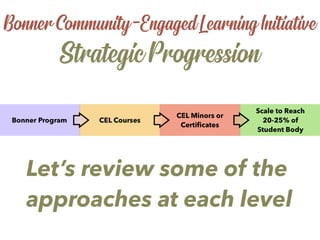
Bonner Community-Engaged Learning Initiative
Strategic Progression
Let’s review some of the
approaches at each level
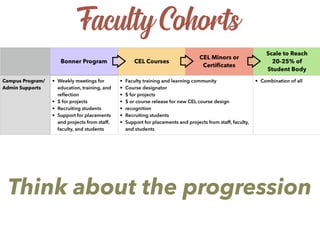
Faculty Cohorts
Think about the progression
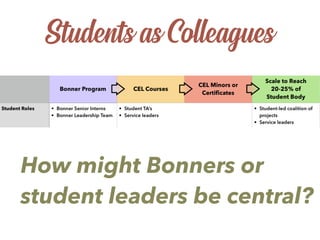
Students as Colleagues
How might Bonners or
student leaders be central?
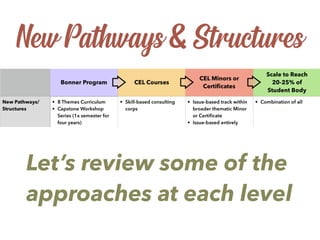
New Pathways & Structures
Let’s review some of the
approaches at each level
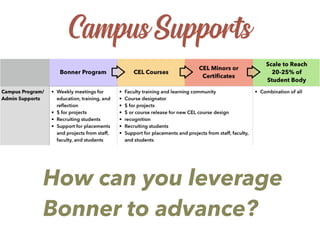
Campus Supports
How can you leverage
Bonner to advance?
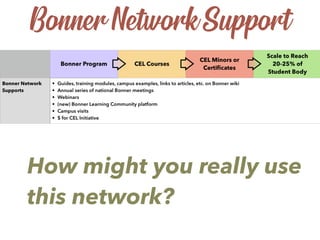
Bonner Network Support
How might you really use
this network?
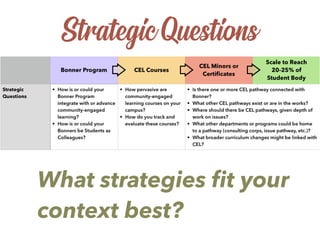
Strategic Questions
What strategies fit your
context best?

Integrative Pathways

  • 1.
    2019 Bonner CEL andFall Meeting Integrative Pathways
  • 2.
    Our Session 1.Social LearningMixer 2.Lessons and Themes from Bonner 3.Promising Progress in Integrative Pathways 4.Key Challenges 5.Strategies to Move Forward
  • 3.
  • 4.
    Sources • First developedby Lave and Wenger (1991), communities of practice refer to both intentional and incidental learning that takes place when people of varying levels of expertise come together to solve problems. A community of practice shares three important characteristics (Wenger & Wenger-Trayner, 2015). • The group has a common focus or goal they are working towards (Wenger & Wenger-Trayner, 2015). • It is possible for leaders to cultivate a community of practice (Printy, 2008). • Learning is social, relational and reciprocal (Printy, 2008;Wenger & Wenger-Trayner, 2015)
  • 5.
    Characteristics • Overlapping Histories •Mutual Interdependence • Respect for Diversity and Divergent Perspectives • Seeking Experience • Reusing Assets • Coordination and Synergy • Documentation Projects • Mapping Knowledge and Gaps
  • 6.
  • 7.
    Question “What is something you’ve read recentlythat’s inspired you as an educator?”
  • 8.
    Question “Who was one ofyour most influential educators?”
  • 9.
    Question “What is one wayyou’re hoping to improve your work as an educator within the next year?”
  • 10.
  • 11.
    100% Bonners and20-25% of entire graduating class each year completes a capstone-level community-engagement project Our Goal
  • 12.
    • Highest levelof student and partner outcomes • Growing research, evidence, and advocacy in higher education • More campuses are looking to Bonner Program and asking how to give an integrated experience to every student Why?
  • 13.
    • Developmental • Intense •Cohort • Mentors • Leadership Bonner Program Lessons
  • 14.
    First Year Experience LearningCommunity Internships Undergraduate Research Diversity/Global Capstone Developmental POL Service-Learning
  • 15.
  • 16.
    • 10-40 diverse studentsper class • Annual educational immersions • 45% of seniors reported another peer was a mentor Cohort
  • 17.
    • Mentoring was foundthe 2nd most important factor Mentors • 55% of seniors reported Director/ Coordinator was a mentor • 51% of seniors reported faculty member was a mentor
  • 19.
    • 72% ofSeniors reported being a leader in a Student Organization/ Club • 15% Student Government Officers • 70% Site Leader for other volunteers, which had a moderate or strong impact • 93% “learned how to mobilize or organize people to work on a project” moderately, significantly, or consistently Leadership
  • 20.
    • 71% ofseniors reported courses linked with Bonner Program (i.e. minor, certificate, service-learning) • 68% reported seeking courses to learn about issues or solutions tied to community engagement • 60% reported doing a Bonner Capstone project (a significant project in junior or senior year that connected service and learning) • 45% reported connecting required capstone or project for major to their service As a result…
  • 21.
  • 22.
    • Discuss yourreactions to these themes and their implications for your program and campus • Identify places that are ripe for more integration Talk with another campus
  • 23.
  • 24.
    1) Majors, Minorsand Certificates 2) Civic General Education Requirements 3) Internships or Problem-Based Learning 4) Academic & Student Affairs Partnerships 5) Nonprofit Partnerships Promising Progress on Integrative Pathways
  • 25.
    Thematic programs in areaslike: • Civic Engagement • Civic Leadership • Social Justice Majors, Minors, & Certificates
  • 26.
    Majors Often grow out ofinitial experimentation followed by increasing student interest
  • 27.
    One List • 38Minors • 37 Certificates • 11 Graduate Programs • 7 Doctoral Programs • Source: https://www.dansarofianbutin.net/academicprograms.html
  • 28.
    Issue-Based Pathways • Interdisciplinary • Maystart in a department • May or may not be civic • Examples: Food Studies, Poverty Studies
  • 29.
    Does your campus havea similar major, minor, or certificate? Name it and its focus. Stand and Share
  • 30.
    Increasing campuses arenaming civic graduation requirements including some state systems General Education
  • 31.
  • 32.
  • 33.
  • 34.
  • 35.
    Is your campus attemptingto make similar changes? What is the project and purpose? Stand and Share
  • 36.
    Internships & Project-Based Learning Somecampuses are emphasizing student internship or research experiences • Scaffolding between courses and years • Career preparation
  • 37.
  • 38.
  • 39.
    Academic & StudentAffairs Some campuses are mapping civic learning and engagement across curricular & 
 co-curricular • Links with advising • E-Portfolios
  • 40.
  • 41.
    Non-Profit Partnerships Relevant nonprofitpartners, including local and national organizations, also have begun to develop sophisticated research-based educational materials on issues that might inform and connect with curriculum
  • 42.
    Each of thesemodels has potential successes and challenges. Let’s exchange reactions and questions. Pair and Share
  • 43.
  • 44.
    Key Challenges • Whatcomes to your mind?
  • 45.
    Scaling Scaling effort toreach significant percentage of students while maintaining quality of experience for community and students • Developing enough project opportunities • Creating optional pathways for students • Managing community engagement for each developmental stage, from entry level experience to capstone-level project
  • 46.
    Integrating Integrating efforts acrossinstitution: • How to fit in departments, disciplines? • How to fit with credit hour? • How to link campus infrastructure for curricular and co-curricular programming/ courses?
  • 47.
    Tracking Documenting and sharingexpanded efforts • a lot is happening that is hard to track
  • 48.
  • 49.
    Bonner Community-Engaged LearningInitiative Strategic Progression Let’s review some of the approaches at each level
  • 50.
  • 51.
    Students as Colleagues Howmight Bonners or student leaders be central?
  • 52.
    New Pathways &Structures Let’s review some of the approaches at each level
  • 53.
    Campus Supports How canyou leverage Bonner to advance?
  • 54.
    Bonner Network Support Howmight you really use this network?
  • 55.
    Strategic Questions What strategiesfit your context best?