Bonner Meetings
The Claggett Center • November 5-8, 2023
Bonner Fall Network Meeting:
Best Practice Sessions
Session Goals
• Collaborate with colleagues to inform your Bonner
meeting planning and curriculum.
• Apply SOAR framework to guide your calendar analysis.
• Brainstorm resources and tools to assess student
learning.
Session Agenda
• Reflective Discussion
• Calendar Review with Colleagues (Pair-Share)
• Bonner Meetings: Basics & Highlights
• SOAR Framework to Analyze Bonner Meetings Calendar
• Takeaways
Reflective Discussion
How do you feel about the effectiveness of your current Bonner
Meetings in supporting student learning?
According to you, what knowledge, skills, or values do Bonner
students need to develop as a justice-oriented community
member?
What are your 1-2 key strategies, topics, or changes to support
students’ developmental journey as justice-oriented community
members?
Calendar Review with
Colleagues
10-12 minutes
Calendar Review
• Find a partner and explain your Bonner Meetings
calendar.
• Share one thing that you do to support each cohort.
• Discuss structure, topics, challenges, possibilities etc.
Bonner Basics & Highlights
10 minutes
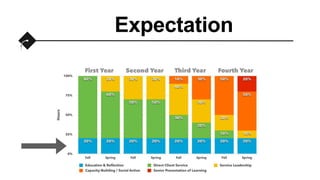
Expectation
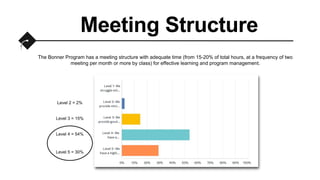
Meeting Structure
The Bonner Program has a meeting structure with adequate time (from 15-20% of total hours, at a frequency of two
meeting per month or more by class) for effective learning and program management.
Level 3 = 15%
Level 4 = 54%
Level 5 = 30%
Level 2 = 2%
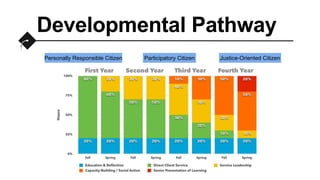
Developmental Pathway
Personally Responsible Citizen Participatory Citizen Justice-Oriented Citizen
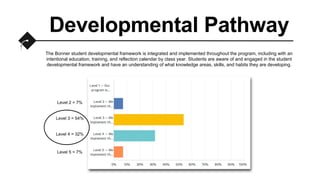
Developmental Pathway
The Bonner student developmental framework is integrated and implemented throughout the program, including with an
intentional education, training, and reflection calendar by class year. Students are aware of and engaged in the student
developmental framework and have an understanding of what knowledge areas, skills, and habits they are developing.
Level 3 = 54%
Level 4 = 32%
Level 5 = 7%
Level 2 = 7%
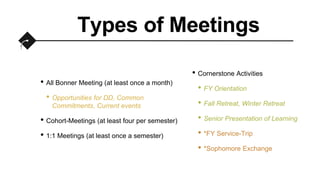
Types of Meetings
• All Bonner Meeting (at least once a month)
• Opportunities for DD, Common
Commitments, Current events
• Cohort-Meetings (at least four per semester)
• 1:1 Meetings (at least once a semester)
• Cornerstone Activities
• FY Orientation
• Fall Retreat, Winter Retreat
• Senior Presentation of Learning
• *FY Service-Trip
• *Sophomore Exchange
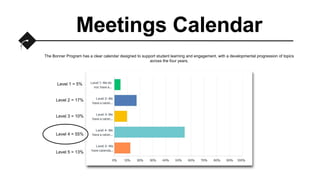
Meetings Calendar
The Bonner Program has a clear calendar designed to support student learning and engagement, with a developmental progression of topics
across the four years.
Level 3 = 10%
Level 4 = 55%
Level 5 = 13%
Level 2 = 17%
Level 1 = 5%
What are we doing well?
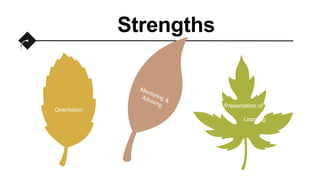
Strengths
Orientation
Presentation of
Learning
What opportunities could we
leverage to support student
leadership?
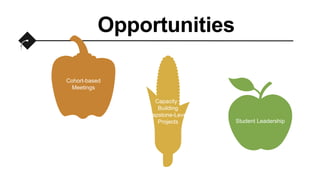
Opportunities
Cohort-based
Meetings
Capacity -
Building
Capstone-Level
Projects Student Leadership
SOAR Analysis
40 minutes
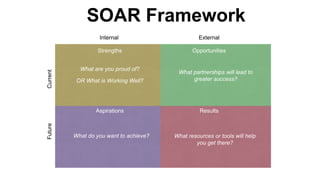
Internal External
Current
Future Strengths
What are you proud of?
Opportunities
What partnerships will lead to
greater success?
Aspirations
What do you want to achieve?
Results
What resources or tools will help
you get there?
OR What is Working Well?
SOAR Framework
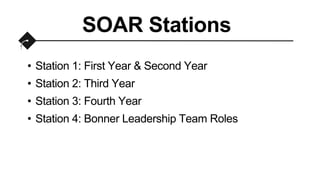
SOAR Stations
• Station 1: First Year & Second Year
• Station 2: Third Year
• Station 3: Fourth Year
• Station 4: Bonner Leadership Team Roles
Takeaways
10 minutes
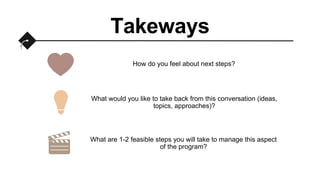
Takeways
How do you feel about next steps?
What would you like to take back from this conversation (ideas,
topics, approaches)?
What are 1-2 feasible steps you will take to manage this aspect
of the program?

Best Practices - Bonner Meetings.pptx

  • 1.
    Bonner Meetings The ClaggettCenter • November 5-8, 2023 Bonner Fall Network Meeting: Best Practice Sessions
  • 2.
    Session Goals • Collaboratewith colleagues to inform your Bonner meeting planning and curriculum. • Apply SOAR framework to guide your calendar analysis. • Brainstorm resources and tools to assess student learning.
  • 3.
    Session Agenda • ReflectiveDiscussion • Calendar Review with Colleagues (Pair-Share) • Bonner Meetings: Basics & Highlights • SOAR Framework to Analyze Bonner Meetings Calendar • Takeaways
  • 4.
    Reflective Discussion How doyou feel about the effectiveness of your current Bonner Meetings in supporting student learning? According to you, what knowledge, skills, or values do Bonner students need to develop as a justice-oriented community member? What are your 1-2 key strategies, topics, or changes to support students’ developmental journey as justice-oriented community members?
  • 5.
  • 6.
    Calendar Review • Finda partner and explain your Bonner Meetings calendar. • Share one thing that you do to support each cohort. • Discuss structure, topics, challenges, possibilities etc.
  • 7.
    Bonner Basics &Highlights 10 minutes
  • 8.
  • 9.
    Meeting Structure The BonnerProgram has a meeting structure with adequate time (from 15-20% of total hours, at a frequency of two meeting per month or more by class) for effective learning and program management. Level 3 = 15% Level 4 = 54% Level 5 = 30% Level 2 = 2%
  • 10.
    Developmental Pathway Personally ResponsibleCitizen Participatory Citizen Justice-Oriented Citizen
  • 11.
    Developmental Pathway The Bonnerstudent developmental framework is integrated and implemented throughout the program, including with an intentional education, training, and reflection calendar by class year. Students are aware of and engaged in the student developmental framework and have an understanding of what knowledge areas, skills, and habits they are developing. Level 3 = 54% Level 4 = 32% Level 5 = 7% Level 2 = 7%
  • 12.
    Types of Meetings •All Bonner Meeting (at least once a month) • Opportunities for DD, Common Commitments, Current events • Cohort-Meetings (at least four per semester) • 1:1 Meetings (at least once a semester) • Cornerstone Activities • FY Orientation • Fall Retreat, Winter Retreat • Senior Presentation of Learning • *FY Service-Trip • *Sophomore Exchange
  • 13.
    Meetings Calendar The BonnerProgram has a clear calendar designed to support student learning and engagement, with a developmental progression of topics across the four years. Level 3 = 10% Level 4 = 55% Level 5 = 13% Level 2 = 17% Level 1 = 5%
  • 14.
    What are wedoing well?
  • 15.
  • 16.
    What opportunities couldwe leverage to support student leadership?
  • 17.
  • 18.
  • 19.
    Internal External Current Future Strengths Whatare you proud of? Opportunities What partnerships will lead to greater success? Aspirations What do you want to achieve? Results What resources or tools will help you get there? OR What is Working Well? SOAR Framework
  • 20.
    SOAR Stations • Station1: First Year & Second Year • Station 2: Third Year • Station 3: Fourth Year • Station 4: Bonner Leadership Team Roles
  • 21.
  • 22.
    Takeways How do youfeel about next steps? What would you like to take back from this conversation (ideas, topics, approaches)? What are 1-2 feasible steps you will take to manage this aspect of the program?