 Instrument
classification and how
they are classified.
 Types of instrument
classification.
 The hornbostel-sachs
and its forms.
 The western
classification and its
forms.
 The Chinese
classification and
examples.
 Instrument
Classification is
when the
instruments has
being divided
according to how
the instrument
produce the
sound.
 Throughout
history, various
methods of
musical
instrument
classification have
been used
 There are three main
types of instrument
classification.Thes are;
 The hornbostel-sachs
classification of
instrument.
 The western
classification of
instrument.
 The chinese
classification of
instrument.
 Their scheme is widely
used today, and is
most often known as
the Hornbostel-Sachs
system (or the Sachs-
Hornbostel system).
The original Sachs-
Hornbostel system
classified instruments
into four main groups:
 idiophones, such as
the xylophone, which
produce sound by
vibrating themselves
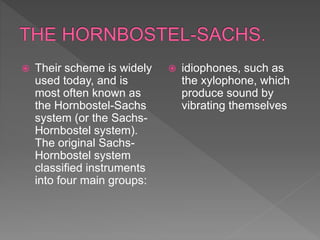
 idiophones, such as
the xylophone, which
produce sound by
vibrating themselves.
 membranophones,
such as drums or
kazoos, which produce
sound by a vibrating
membrane
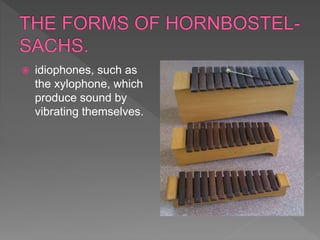
 chordophones; such
as the piano or cello,
which produce sound
by vibrating strings
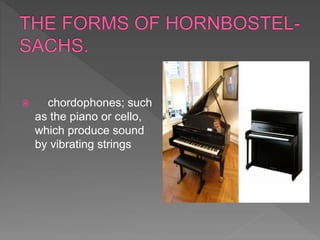
 aerophones, such
as the pipe organ or
oboe, which produce
sound by vibrating
columns of air
 The modern system of
western instrument
classification divides
the instruments into
wood, string, brass,
keyboard and
percussion
 However other ones
have been devised,
and other cultures use
varying methods.
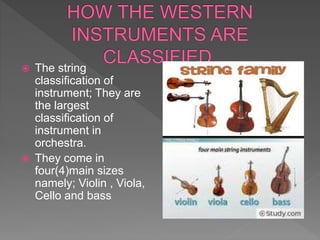
 The string
classification of
instrument; They are
the largest
classification of
instrument in
orchestra.
 They come in
four(4)main sizes
namely; Violin , Viola,
Cello and bass
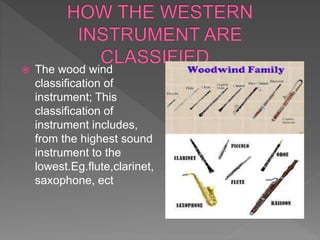
 The wood wind
classification of
instrument; This
classification of
instrument includes,
from the highest sound
instrument to the
lowest.Eg.flute,clarinet,
saxophone, ect
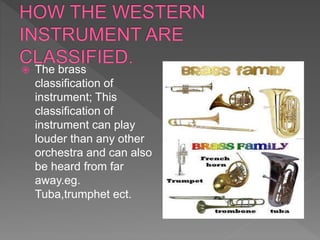
 The brass
classification of
instrument; This
classification of
instrument can play
louder than any other
orchestra and can also
be heard from far
away.eg.
Tuba,trumphet ect.
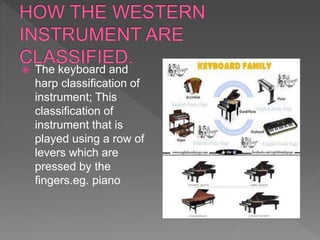
 The keyboard and
harp classification of
instrument; This
classification of
instrument that is
played using a row of
levers which are
pressed by the
fingers.eg. piano
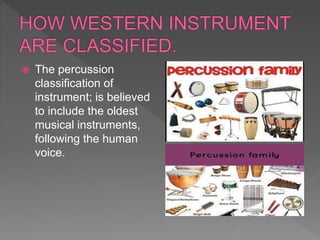
 The percussion
classification of
instrument; is believed
to include the oldest
musical instruments,
following the human
voice.
 The oldest known
scheme of classifying
instruments is Chinese
and dates from the 3rd
millennium BC. It
groups instruments
according to what they
are made out of.
 All instruments made
out of stone are in one
group, all those made
out of wood in another,
those made out of silk
are in a third, and all
those made of bamboo
in the fourth, as
recorded in the Yo Chi
(record of ritual music
and dance).
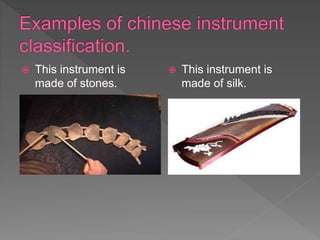
 This instrument is
made of stones.
 This instrument is
made of silk.
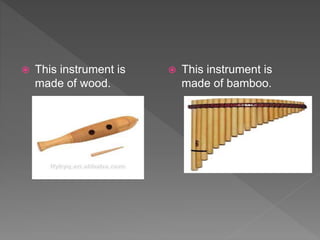
 This instrument is
made of wood.
 This instrument is
made of bamboo.
INSTRUMENTAL CLASSIFICATION 1

INSTRUMENTAL CLASSIFICATION 1

  • 2.
     Instrument classification andhow they are classified.  Types of instrument classification.  The hornbostel-sachs and its forms.  The western classification and its forms.  The Chinese classification and examples.
  • 3.
     Instrument Classification is whenthe instruments has being divided according to how the instrument produce the sound.  Throughout history, various methods of musical instrument classification have been used
  • 4.
     There arethree main types of instrument classification.Thes are;  The hornbostel-sachs classification of instrument.  The western classification of instrument.  The chinese classification of instrument.
  • 5.
     Their schemeis widely used today, and is most often known as the Hornbostel-Sachs system (or the Sachs- Hornbostel system). The original Sachs- Hornbostel system classified instruments into four main groups:  idiophones, such as the xylophone, which produce sound by vibrating themselves
  • 6.
     idiophones, suchas the xylophone, which produce sound by vibrating themselves.
  • 7.
     membranophones, such asdrums or kazoos, which produce sound by a vibrating membrane
  • 8.
     chordophones; such asthe piano or cello, which produce sound by vibrating strings
  • 9.
     aerophones, such asthe pipe organ or oboe, which produce sound by vibrating columns of air
  • 10.
     The modernsystem of western instrument classification divides the instruments into wood, string, brass, keyboard and percussion  However other ones have been devised, and other cultures use varying methods.
  • 11.
     The string classificationof instrument; They are the largest classification of instrument in orchestra.  They come in four(4)main sizes namely; Violin , Viola, Cello and bass
  • 12.
     The woodwind classification of instrument; This classification of instrument includes, from the highest sound instrument to the lowest.Eg.flute,clarinet, saxophone, ect
  • 13.
     The brass classificationof instrument; This classification of instrument can play louder than any other orchestra and can also be heard from far away.eg. Tuba,trumphet ect.
  • 14.
     The keyboardand harp classification of instrument; This classification of instrument that is played using a row of levers which are pressed by the fingers.eg. piano
  • 15.
     The percussion classificationof instrument; is believed to include the oldest musical instruments, following the human voice.
  • 16.
     The oldestknown scheme of classifying instruments is Chinese and dates from the 3rd millennium BC. It groups instruments according to what they are made out of.  All instruments made out of stone are in one group, all those made out of wood in another, those made out of silk are in a third, and all those made of bamboo in the fourth, as recorded in the Yo Chi (record of ritual music and dance).
  • 17.
     This instrumentis made of stones.  This instrument is made of silk.
  • 18.
     This instrumentis made of wood.  This instrument is made of bamboo.