INSTRUMENTAL
MUSIC
Prepared By:
Brenda E. Cachero
Kaypian National High School
BRASS BAND
The learner…
demonstrates understanding of the
musical characteristics of representative
music from the lowlands of Luzon
CONTENT STANDARDS
The learner…
performs music of the lowlands
with appropriate pitch, rhythm,
expression and style
PERFORMANCE STANDARDS
Learning Objectives
MU7LU-Ia-1
1. identifies the musical characteristics of
representative music selections from the
lowlands of Luzon after listening;
MU7LU-Ib-f-4
2. explores ways of producing sounds on a
variety of sources that is similar to the
instruments being studied;
MU7LU-Id-9
3. provides harmonic accompaniments to
selected music of the Lowlands of Luzon
Music of Luzon ( Lowlands)
Geographical and Cultural Background
2. Instrumental Music
CONTENT
BRASS
BRAND
INSTRUMENTAL
MUSIC
 It is an ensemble of woodwind, brass and
percussion instruments in the Philippines
 usually play in fiestas, religious, and
civic celebrations
 repertoire may include folk songs,
popular music, dance music.
 bands was so remarkable that every town
used to have two or more bands. They
sometimes participate and even compete
in many town band competitions.
BRASS BAND
 most fiestas are celebrated in various
provinces of the Philippines to honor
their patron saints.
 town fiesta is made more lively by band
music
 a parading brass band is called a
marching band
 provinces like Rizal and Laguna and
schools like the Philippine Military
Academy are home to prominent brass
bands in the Philippines.
BRASS BAND
WOODWINDS
1.Piccolo
2.Clarinet
3.Alto Saxophone
4.Tenor Saxophone
5.Flute
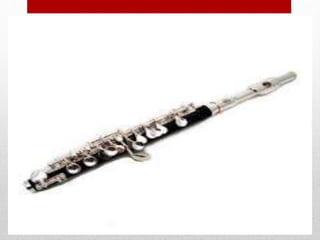
Piccolo
Piccolo
(Italian pronunciation: [ˈpikkolo]; Italian for
"small", but named ottavino in Italy
Shorter than the flute
The sounds it produces
is thinner than the flute
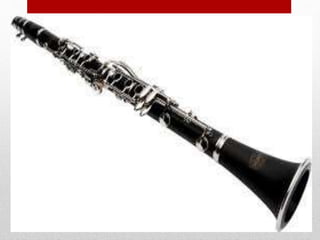
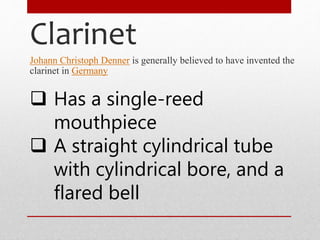
Clarinet
Johann Christoph Denner is generally believed to have invented the
clarinet in Germany
 Has a single-reed
mouthpiece
 A straight cylindrical tube
with cylindrical bore, and a
flared bell
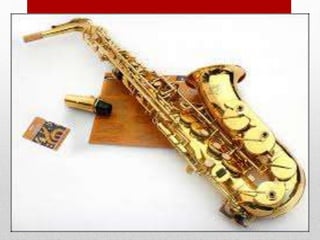
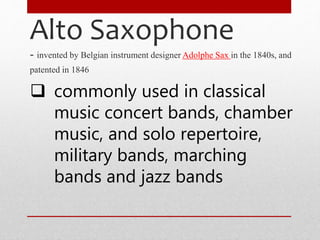
Alto Saxophone
- invented by Belgian instrument designer Adolphe Sax in the 1840s, and
patented in 1846
 commonly used in classical
music concert bands, chamber
music, and solo repertoire,
military bands, marching
bands and jazz bands
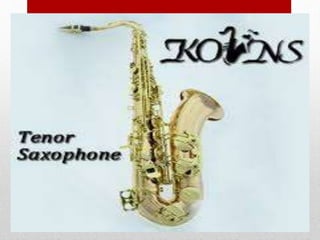
Tenor Saxophone
- a group of instruments invented by Adolphe Sax in the 1840s
 A medium sized member of the
saxophone family
 Most common types of saxophones
along with alto
 Pitched in the key B, and written as a
transposing instrument in the treble
clef
 Uses a large mouthpiece, reed
and ligature than the alto and
soprano saxophones
 Easily distinguished by the
bend I nits neck, or its crook
near the mouthpiece.
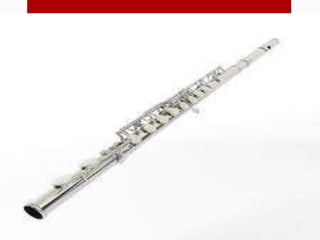
Flute
 An aerophone (wind
instrument) that produces
its sound from the flow of
air across an opening
 Sound it produces is thin in
timbre
BRASSWIINDS
1.Trombone
2.Trumpet
3.Euphonium
4.Sousaphone
5.French Horn
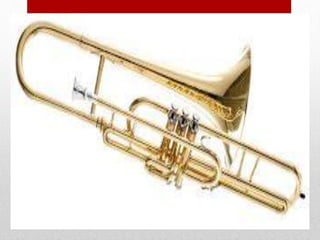
Trombone
 Sound is produced when the
player’s vibrating lips (embouchure)
cause the air column inside the
instrument to vibrate
 The name means “large trumpet”
 Pitch is produced by sliding the
valve
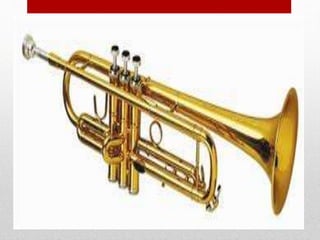
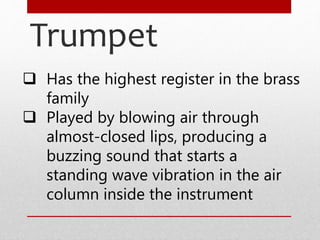
Trumpet
 Has the highest register in the brass
family
 Played by blowing air through
almost-closed lips, producing a
buzzing sound that starts a
standing wave vibration in the air
column inside the instrument
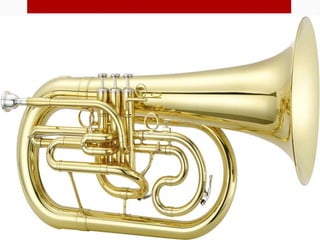
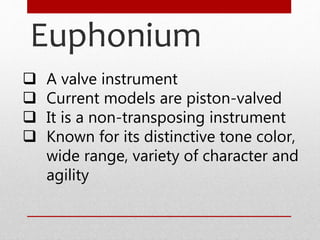
Euphonium
 A valve instrument
 Current models are piston-valved
 It is a non-transposing instrument
 Known for its distinctive tone color,
wide range, variety of character and
agility
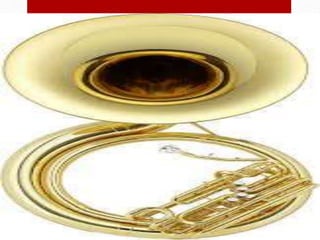
Sousaphone
 Known as the bass, is a type of tuba
designed to be easier than the concert
tuba to play while standing or marching
 Widely employed in marching bands
and various other musical genres
 The bell is above the tubist’s head and
projecting forward
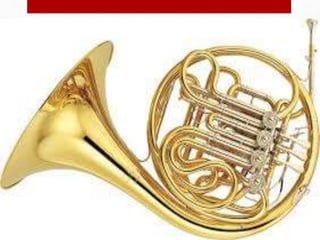
French Horn
 Commonly known as a horn
 A brass instrument made of tubing
wrapped into a coil with s flared bell
 Quality of the sound may also be
controlled trough the adjustment of lip
tension in the mouthpiece and the
operation of valves by the left hand
PERCUSSION
1. Cymbals
2.Snare Drum
3.Bass Drum
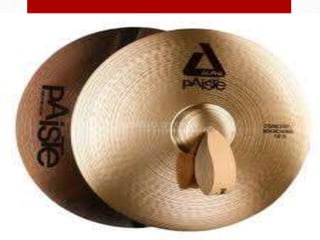
Cymbals
 Consist of thin, normally round plates of
various alloys
 Used in many ensembles ranging from the
orchestra, percussion ensembles, jazz bands,
heavy metal bands and marching groups
 The heavier the cymbals the louder the
volume
 Thin cymbals have a fuller sound, higher pitch
and faster response.
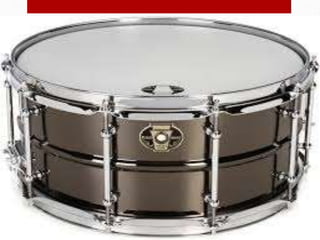
Snare Drum
 Known as a side drum is a ever present
percussion instrument known for its
cylindrical shapeand powerful, staccato
sound
 Often used in orchestras, concert bands,
marching bands, parades, drum lines,
drum corps
 Played with drum sticks or brush
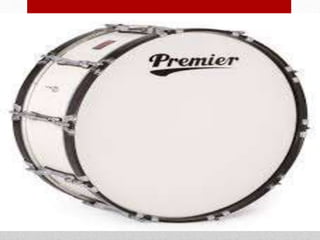
Bass Drum
 Produces a note of low
definite and indefinite pitch
 Known as percussion
instrument and vary in sizes
Activity No. 4
Viewing Activity
Malabon
Brass Band
Lupang Hinirang
It was originally entitled “ Marcha Nacional
Filipina”
It was composed by Julian Felipe n march
time tempo and initially performed by the
San Francisco de Malabon Band at the
Proclamation of Philippine Independence
on June 12, 1898 in Kawit, Cavite.
It is considered as “incidental
music” which means a background
music set into a particular
event/occasion in a dramatic mood.
Jose Palma wrote the lyrics adpted
from the Spanish poem “Filipinas”
and entitled it “Himno Nacional
Filipino”
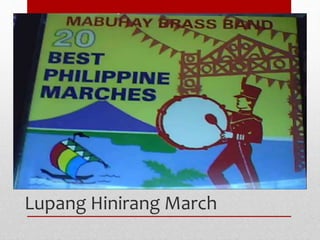
Lupang Hinirang March
Thank You
for
Listening!!

Lesson 5 brass band

  • 1.
    INSTRUMENTAL MUSIC Prepared By: Brenda E.Cachero Kaypian National High School BRASS BAND
  • 2.
    The learner… demonstrates understandingof the musical characteristics of representative music from the lowlands of Luzon CONTENT STANDARDS
  • 3.
    The learner… performs musicof the lowlands with appropriate pitch, rhythm, expression and style PERFORMANCE STANDARDS
  • 4.
    Learning Objectives MU7LU-Ia-1 1. identifiesthe musical characteristics of representative music selections from the lowlands of Luzon after listening; MU7LU-Ib-f-4 2. explores ways of producing sounds on a variety of sources that is similar to the instruments being studied; MU7LU-Id-9 3. provides harmonic accompaniments to selected music of the Lowlands of Luzon
  • 5.
    Music of Luzon( Lowlands) Geographical and Cultural Background 2. Instrumental Music CONTENT
  • 6.
  • 7.
     It isan ensemble of woodwind, brass and percussion instruments in the Philippines  usually play in fiestas, religious, and civic celebrations  repertoire may include folk songs, popular music, dance music.  bands was so remarkable that every town used to have two or more bands. They sometimes participate and even compete in many town band competitions. BRASS BAND
  • 8.
     most fiestasare celebrated in various provinces of the Philippines to honor their patron saints.  town fiesta is made more lively by band music  a parading brass band is called a marching band  provinces like Rizal and Laguna and schools like the Philippine Military Academy are home to prominent brass bands in the Philippines. BRASS BAND
  • 9.
  • 10.
  • 11.
    Piccolo (Italian pronunciation: [ˈpikkolo];Italian for "small", but named ottavino in Italy Shorter than the flute The sounds it produces is thinner than the flute
  • 13.
    Clarinet Johann Christoph Denneris generally believed to have invented the clarinet in Germany  Has a single-reed mouthpiece  A straight cylindrical tube with cylindrical bore, and a flared bell
  • 15.
    Alto Saxophone - inventedby Belgian instrument designer Adolphe Sax in the 1840s, and patented in 1846  commonly used in classical music concert bands, chamber music, and solo repertoire, military bands, marching bands and jazz bands
  • 17.
    Tenor Saxophone - agroup of instruments invented by Adolphe Sax in the 1840s  A medium sized member of the saxophone family  Most common types of saxophones along with alto  Pitched in the key B, and written as a transposing instrument in the treble clef
  • 18.
     Uses alarge mouthpiece, reed and ligature than the alto and soprano saxophones  Easily distinguished by the bend I nits neck, or its crook near the mouthpiece.
  • 20.
    Flute  An aerophone(wind instrument) that produces its sound from the flow of air across an opening  Sound it produces is thin in timbre
  • 21.
  • 23.
    Trombone  Sound isproduced when the player’s vibrating lips (embouchure) cause the air column inside the instrument to vibrate  The name means “large trumpet”  Pitch is produced by sliding the valve
  • 25.
    Trumpet  Has thehighest register in the brass family  Played by blowing air through almost-closed lips, producing a buzzing sound that starts a standing wave vibration in the air column inside the instrument
  • 27.
    Euphonium  A valveinstrument  Current models are piston-valved  It is a non-transposing instrument  Known for its distinctive tone color, wide range, variety of character and agility
  • 29.
    Sousaphone  Known asthe bass, is a type of tuba designed to be easier than the concert tuba to play while standing or marching  Widely employed in marching bands and various other musical genres  The bell is above the tubist’s head and projecting forward
  • 31.
    French Horn  Commonlyknown as a horn  A brass instrument made of tubing wrapped into a coil with s flared bell  Quality of the sound may also be controlled trough the adjustment of lip tension in the mouthpiece and the operation of valves by the left hand
  • 32.
  • 34.
    Cymbals  Consist ofthin, normally round plates of various alloys  Used in many ensembles ranging from the orchestra, percussion ensembles, jazz bands, heavy metal bands and marching groups  The heavier the cymbals the louder the volume  Thin cymbals have a fuller sound, higher pitch and faster response.
  • 36.
    Snare Drum  Knownas a side drum is a ever present percussion instrument known for its cylindrical shapeand powerful, staccato sound  Often used in orchestras, concert bands, marching bands, parades, drum lines, drum corps  Played with drum sticks or brush
  • 38.
    Bass Drum  Producesa note of low definite and indefinite pitch  Known as percussion instrument and vary in sizes
  • 39.
    Activity No. 4 ViewingActivity Malabon Brass Band
  • 40.
    Lupang Hinirang It wasoriginally entitled “ Marcha Nacional Filipina” It was composed by Julian Felipe n march time tempo and initially performed by the San Francisco de Malabon Band at the Proclamation of Philippine Independence on June 12, 1898 in Kawit, Cavite.
  • 41.
    It is consideredas “incidental music” which means a background music set into a particular event/occasion in a dramatic mood. Jose Palma wrote the lyrics adpted from the Spanish poem “Filipinas” and entitled it “Himno Nacional Filipino”
  • 42.
  • 43.