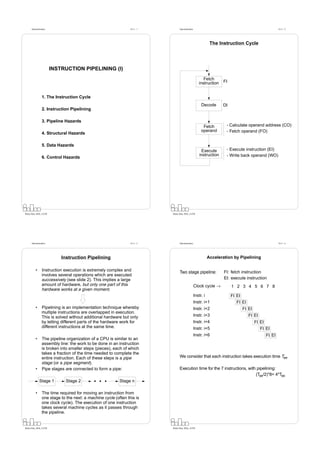
1. Instructions are executed in a sequence of steps by the CPU. Instruction pipelining substantially accelerates execution by overlapping multiple instructions across different stages.
2. A pipeline is organized into successive stages, allowing up to N instructions to be active simultaneously after the pipeline is filled.
3. Pipeline hazards like structural hazards from resource conflicts, data hazards from dependencies between instructions, and control hazards from branches prevent the pipeline from reaching maximum rate.