
Insight to Human
Resources
Management
BY Paulus Kaupolo
What is HRM
HRM is bout attracting, selecting, interviewing, developing,
monitoring and keeping record of human capital in the
organisation.
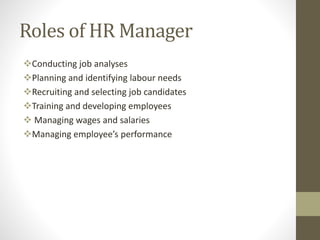
Roles of HR Manager
Conducting job analyses
Planning and identifying labour needs
Recruiting and selecting job candidates
Training and developing employees
 Managing wages and salaries
Managing employee’s performance
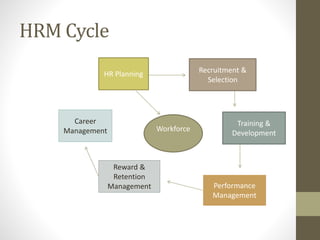
HRM Cycle
Career
Management
Reward &
Retention
Management Performance
Management
Training &
Development
Recruitment &
Selection
HR Planning
Workforce
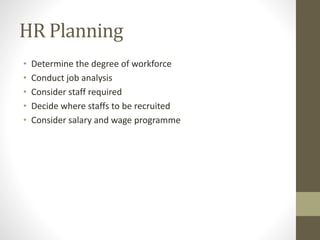
HR Planning
• Determine the degree of workforce
• Conduct job analysis
• Consider staff required
• Decide where staffs to be recruited
• Consider salary and wage programme
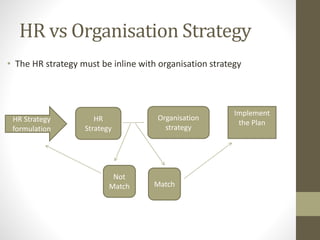
HR vs Organisation Strategy
• The HR strategy must be inline with organisation strategy
HR
Strategy
Match
Not
Match
Organisation
strategy
HR Strategy
formulation
Implement
the Plan
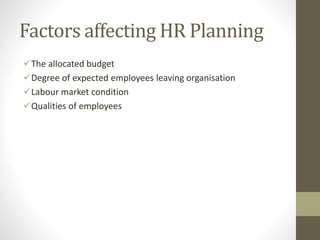
Factors affecting HR Planning
The allocated budget
Degree of expected employees leaving organisation
Labour market condition
Qualities of employees
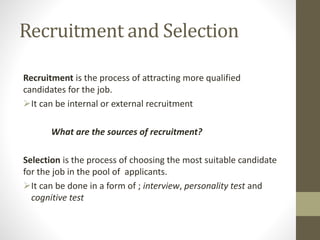
Recruitment and Selection
Recruitment is the process of attracting more qualified
candidates for the job.
It can be internal or external recruitment
What are the sources of recruitment?
Selection is the process of choosing the most suitable candidate
for the job in the pool of applicants.
It can be done in a form of ; interview, personality test and
cognitive test
Training and development
• In the world of competition, training and development of
employees are the tools to keep you ahead your competitors.
• Employees need to be trained on technical skills and
developed to assume greater position in the organisation
What are the types of training programme?
Performance Management
• It vital to establish a performance standard s
• Measure employee’s performance against those standards
• Identify top performers and reward them
Note: Employees will be motivated to their work if there is an
effective performance management system at place.
Wasthecontentuseful? Letmehearat paulus3032@gmail.com
Thank you

Insight to hrm

  • 1.
  • 2.
    What is HRM HRMis bout attracting, selecting, interviewing, developing, monitoring and keeping record of human capital in the organisation.
  • 3.
    Roles of HRManager Conducting job analyses Planning and identifying labour needs Recruiting and selecting job candidates Training and developing employees  Managing wages and salaries Managing employee’s performance
  • 4.
    HRM Cycle Career Management Reward & Retention ManagementPerformance Management Training & Development Recruitment & Selection HR Planning Workforce
  • 5.
    HR Planning • Determinethe degree of workforce • Conduct job analysis • Consider staff required • Decide where staffs to be recruited • Consider salary and wage programme
  • 6.
    HR vs OrganisationStrategy • The HR strategy must be inline with organisation strategy HR Strategy Match Not Match Organisation strategy HR Strategy formulation Implement the Plan
  • 7.
    Factors affecting HRPlanning The allocated budget Degree of expected employees leaving organisation Labour market condition Qualities of employees
  • 8.
    Recruitment and Selection Recruitmentis the process of attracting more qualified candidates for the job. It can be internal or external recruitment What are the sources of recruitment? Selection is the process of choosing the most suitable candidate for the job in the pool of applicants. It can be done in a form of ; interview, personality test and cognitive test
  • 9.
    Training and development •In the world of competition, training and development of employees are the tools to keep you ahead your competitors. • Employees need to be trained on technical skills and developed to assume greater position in the organisation What are the types of training programme?
  • 10.
    Performance Management • Itvital to establish a performance standard s • Measure employee’s performance against those standards • Identify top performers and reward them Note: Employees will be motivated to their work if there is an effective performance management system at place.
  • 11.