GROUP MEMBERS
M.ALI SAMIUDDIN [CH-010]
ZUBAIR AHMED [CH-015]
ATABAK ALI [CH-032]
SHEIKH WAQAS [CH-302]
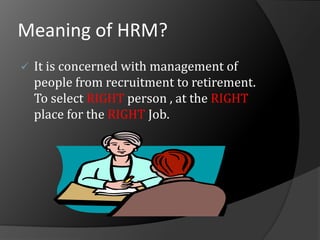
Meaning of HRM?
 It is concerned with management of
people from recruitment to retirement.
To select RIGHT person , at the RIGHT
place for the RIGHT Job.
Objectives Of HRM
1. Help the organization reach its goals
2. Employ the skills & abilities of the workforce efficiently
3. Provide the organization with well trained & motivated
employees
4. Increase to the fullest the employee's job satisfaction & self
actualization
5. Develop & maintain a quality of work life
6. Communicate HR policies to all employees
7. Ethically & socially responsive to the needs of society.
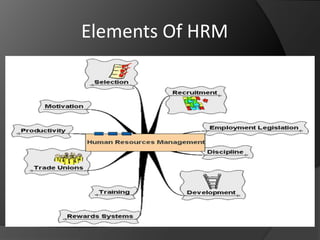
Elements Of HRM
Recruitment
 The process by which a job vacancy is identified and
potential employees are notified.
 The nature of the recruitment process is regulated and
subject to employment law.
 Main forms of recruitment through advertising in
newspapers, magazines, trade papers and internal
vacancy lists.
 Job description – outline of the role of the job holder
 Person specification – outline of the skills and qualities
required of the post holder
Selection
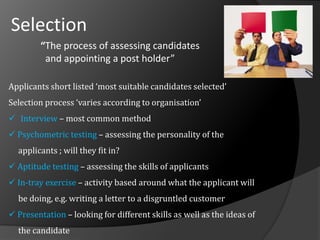
“The process of assessing candidates
and appointing a post holder”
Applicants short listed ‘most suitable candidates selected’
Selection process ‘varies according to organisation’
 Interview – most common method
 Psychometric testing – assessing the personality of the
applicants ; will they fit in?
 Aptitude testing – assessing the skills of applicants
 In-tray exercise – activity based around what the applicant will
be doing, e.g. writing a letter to a disgruntled customer
 Presentation – looking for different skills as well as the ideas of
the candidate
Employment Legislation
 Increasingly important aspect of the HRM role
 Wide range of areas for attention
 Adds to the cost of the business
 Even in a small business, the legislation relating to
employees is important – chemicals used in a
hairdressing salon for example have to be carefully
stored and handled to protect employees.
Discipline
Firms cannot just ‘sack’ workers
Wide range of procedures and steps in dealing with workplace
conflict
 Informal meetings
 Formal meetings
 Verbal warnings
 Written warnings
 Grievance procedures
 Working with external agencies
Development
Developing the employee can be regarded as investing in a valuable asset
 A source of motivation
 A source of helping the employee fulfil potential
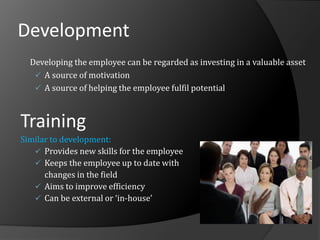
Training
Similar to development:
 Provides new skills for the employee
 Keeps the employee up to date with
changes in the field
 Aims to improve efficiency
 Can be external or ‘in-house’
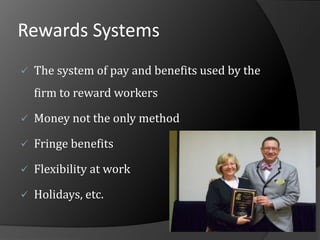
Rewards Systems
 The system of pay and benefits used by the
firm to reward workers
 Money not the only method
 Fringe benefits
 Flexibility at work
 Holidays, etc.
Trade Unions
 Importance of building relationships with
employee representatives
 Role of Trade Unions has changed
 Importance of consultation and negotiation
and working with trade unions
 Contributes to smooth change management
and leadership
Productivity
Measuring performance
 How to value the workers contribution
 Difficulty in measuring some types of output – especially in
the service industry
Appraisal
 Meant to be non-judgmental
 Involves the worker and a nominated appraiser
 Agreeing strengths, weaknesses and ways forward to
help both employee and organisation
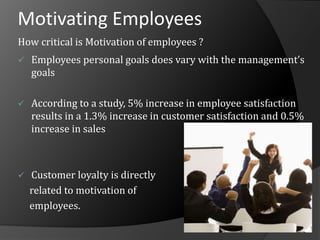
Motivating Employees
How critical is Motivation of employees ?
 Employees personal goals does vary with the management’s
goals
 According to a study, 5% increase in employee satisfaction
results in a 1.3% increase in customer satisfaction and 0.5%
increase in sales
 Customer loyalty is directly
related to motivation of
employees.
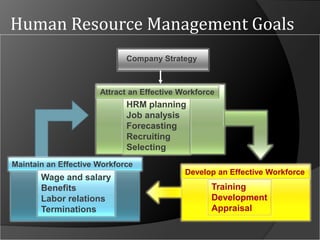
Human Resource Management Goals
Develop an Effective Workforce
Training
Development
Appraisal
Maintain an Effective Workforce
Wage and salary
Benefits
Labor relations
Terminations
HRM planning
Job analysis
Forecasting
Recruiting
Selecting
Attract an Effective Workforce
Company Strategy
Elements of Human Resource Management.pptx

Elements of Human Resource Management.pptx

  • 1.
    GROUP MEMBERS M.ALI SAMIUDDIN[CH-010] ZUBAIR AHMED [CH-015] ATABAK ALI [CH-032] SHEIKH WAQAS [CH-302]
  • 2.
    Meaning of HRM? It is concerned with management of people from recruitment to retirement. To select RIGHT person , at the RIGHT place for the RIGHT Job.
  • 3.
    Objectives Of HRM 1.Help the organization reach its goals 2. Employ the skills & abilities of the workforce efficiently 3. Provide the organization with well trained & motivated employees 4. Increase to the fullest the employee's job satisfaction & self actualization 5. Develop & maintain a quality of work life 6. Communicate HR policies to all employees 7. Ethically & socially responsive to the needs of society.
  • 4.
  • 5.
    Recruitment  The processby which a job vacancy is identified and potential employees are notified.  The nature of the recruitment process is regulated and subject to employment law.  Main forms of recruitment through advertising in newspapers, magazines, trade papers and internal vacancy lists.  Job description – outline of the role of the job holder  Person specification – outline of the skills and qualities required of the post holder
  • 6.
    Selection “The process ofassessing candidates and appointing a post holder” Applicants short listed ‘most suitable candidates selected’ Selection process ‘varies according to organisation’  Interview – most common method  Psychometric testing – assessing the personality of the applicants ; will they fit in?  Aptitude testing – assessing the skills of applicants  In-tray exercise – activity based around what the applicant will be doing, e.g. writing a letter to a disgruntled customer  Presentation – looking for different skills as well as the ideas of the candidate
  • 7.
    Employment Legislation  Increasinglyimportant aspect of the HRM role  Wide range of areas for attention  Adds to the cost of the business  Even in a small business, the legislation relating to employees is important – chemicals used in a hairdressing salon for example have to be carefully stored and handled to protect employees.
  • 8.
    Discipline Firms cannot just‘sack’ workers Wide range of procedures and steps in dealing with workplace conflict  Informal meetings  Formal meetings  Verbal warnings  Written warnings  Grievance procedures  Working with external agencies
  • 9.
    Development Developing the employeecan be regarded as investing in a valuable asset  A source of motivation  A source of helping the employee fulfil potential Training Similar to development:  Provides new skills for the employee  Keeps the employee up to date with changes in the field  Aims to improve efficiency  Can be external or ‘in-house’
  • 10.
    Rewards Systems  Thesystem of pay and benefits used by the firm to reward workers  Money not the only method  Fringe benefits  Flexibility at work  Holidays, etc.
  • 11.
    Trade Unions  Importanceof building relationships with employee representatives  Role of Trade Unions has changed  Importance of consultation and negotiation and working with trade unions  Contributes to smooth change management and leadership
  • 12.
    Productivity Measuring performance  Howto value the workers contribution  Difficulty in measuring some types of output – especially in the service industry Appraisal  Meant to be non-judgmental  Involves the worker and a nominated appraiser  Agreeing strengths, weaknesses and ways forward to help both employee and organisation
  • 13.
    Motivating Employees How criticalis Motivation of employees ?  Employees personal goals does vary with the management’s goals  According to a study, 5% increase in employee satisfaction results in a 1.3% increase in customer satisfaction and 0.5% increase in sales  Customer loyalty is directly related to motivation of employees.
  • 14.
    Human Resource ManagementGoals Develop an Effective Workforce Training Development Appraisal Maintain an Effective Workforce Wage and salary Benefits Labor relations Terminations HRM planning Job analysis Forecasting Recruiting Selecting Attract an Effective Workforce Company Strategy